How Much Is a Facial? A Complete Guide to Facial Pricing Factors
Facial prices in the United States range from around $35 for a basic spa treatment to well over $1,000 for advanced medical-grade procedures, and understanding what drives that variation can help you choose the right treatment at the right price. The national average cost of a facial sits somewhere between $63 and $134 depending on the type of treatment, the setting, and where you live — but those figures can be misleading without context. This guide breaks down facial pricing by treatment type, venue, geographic location, and the key factors that influence what you will actually pay, so you can make an informed decision before booking.
Key Takeaways
- The national average cost of a facial varies widely by treatment type, provider credentials, and geographic location — expect to pay anywhere from $35 to $1,500 or more depending on these factors.
- Basic facials at a day spa cost significantly less than medical-grade treatments at a med spa, which use prescription-strength products and advanced technology.
- Session duration, add-ons and enhancements, and the products used are among the most influential pricing factors beyond the facial type itself.
- Multi-session package discounts can reduce the per-treatment cost by 15–25%, making regular facials more affordable over time.
- Tipping etiquette for facials differs between spa settings and medical settings — understanding the difference helps you budget accurately.
How Much Does a Facial Cost? An Overview
The price you pay for a facial depends on several overlapping variables, which is why a single number rarely tells the full story. A basic or classic facial at a local day spa might cost $60–$90, while a HydraFacial at a medical spa in a major city could run $250–$300 for the same 60-minute appointment slot. At the more advanced end, treatments such as a vampire (PRP) facial or a deep chemical peel can reach $825–$6,000 depending on the depth of the peel and the provider performing it. Rather than anchoring to one average, it is more useful to understand the price range for the specific type of facial you are considering and the type of venue you plan to visit.
Geographic location and cost of living play a significant role as well. Data from booking platforms suggests that states with higher costs of living — particularly in the Northeast and on the West Coast — see facial prices that are 30–60% higher than those in rural or lower-cost states. A licensed esthetician in a major metropolitan area may charge $120 for a service that costs $65 in a smaller city, even when the treatment itself is identical. Keeping location in mind when comparing prices online helps set realistic expectations.
Facial Types and Their Price Ranges
The type of facial is the single biggest driver of cost. Treatments that require specialized equipment, medical-grade products, or a longer session duration naturally carry higher price tags. The table below outlines common facial types alongside their typical price ranges in the United States.
| Facial Type | Typical Price Range | Common Setting |
|---|---|---|
| Basic / Classic Facial | $35–$110 | Salon, day spa |
| European Facial | $35–$250 | Day spa, esthetician studio |
| Deep Cleansing Facial | $85–$165 | Day spa, med spa |
| Acne Facial | $75–$200 | Day spa, med spa |
| Hydrating Facial | $95–$150 | Day spa, med spa |
| Brightening Facial | $100–$275 | Day spa, med spa |
| Anti-Aging Facial | $110–$275 | Day spa, med spa |
| Dermaplaning | $50–$90 | Day spa, med spa |
| Microdermabrasion | $75–$325 | Day spa, med spa |
| Chemical Peel (light) | $100–$300 | Med spa, dermatologist |
| HydraFacial | $150–$300 | Med spa |
| Oxygen Facial | $75–$150 | Day spa, med spa |
| LED Light Therapy Facial | $25–$250 | Day spa, med spa |
| Glycolic Facial | $200–$400 | Med spa, dermatologist |
| Vampire / PRP Facial | $250–$1,500 | Med spa, clinical setting |
| Chemical Peel (deep) | $1,000–$6,000 | Dermatologist, plastic surgeon |
These ranges reflect national data and will vary based on the factors discussed throughout this article. A basic facial vs. specialty facial comparison illustrates the core pricing logic: simpler treatments with standard products and no specialized equipment sit at the lower end, while treatments requiring medical oversight, proprietary technology, or biological materials such as platelet-rich plasma sit at the higher end.
Cost by Venue: Day Spa vs. Med Spa and Beyond
Where you receive your facial matters as much as what type of facial you choose. The venue determines the level of provider credentials, the products available, the equipment on hand, and the overall overhead — all of which feed into the final price.
| Venue Type | Typical Price Range | Provider |
|---|---|---|
| Esthetician studio or salon | $55–$130 | Licensed esthetician |
| Day spa | $90–$225 | Licensed esthetician |
| Medical spa (med spa) | $165–$550 | Esthetician, nurse, or physician |
| Luxury or resort spa | $225–$650 | Licensed esthetician |
| Dermatologist or clinical office | $150–$6,000+ | Dermatologist, physician assistant |
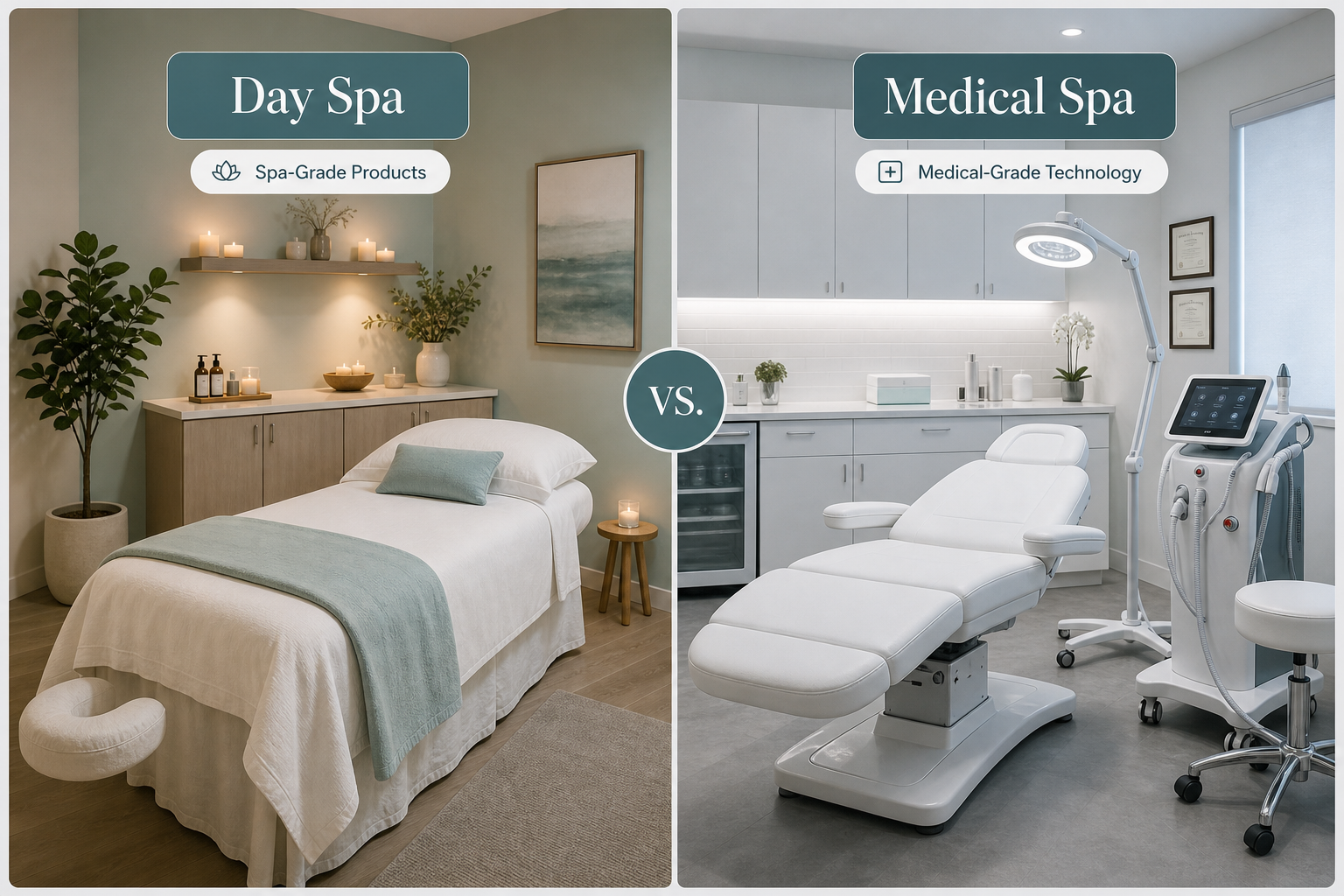
The day spa vs. med spa distinction is particularly important for patients considering more than a relaxation treatment. A medical spa operates under physician oversight and can offer prescription-strength active ingredients, devices cleared for clinical use, and treatments that a standard day spa is not licensed to provide. This expanded capability justifies the higher price point, but it also means the results — and the risks — can be more significant. A licensed esthetician at a day spa is trained and regulated, but their scope of practice is narrower than that of a nurse or physician at a medical spa. Understanding this distinction helps you match the venue to your actual skin concern rather than simply choosing based on price.
Key Factors That Affect Facial Pricing
Several variables interact to produce the final price of any facial treatment. Knowing which factors apply to your situation helps you evaluate whether a quoted price is reasonable.
Treatment Type and Complexity
Treatment complexity is the most direct pricing factor. A 30-minute express facial that involves cleansing, toning, and moisturizing requires minimal equipment and a straightforward skill set. A 90-minute anti-aging facial incorporating microcurrent stimulation, medical-grade serums, and LED light therapy requires specialized training, expensive equipment, and a longer session duration — all of which increase the cost. As a general rule, the more steps, the more technology, and the more active the ingredients involved, the higher the price.
Products Used
The products applied during a facial can significantly affect the price, sometimes more than the treatment itself. Standard spa-grade cleansers, toners, and moisturizers are relatively inexpensive in bulk. Medical-grade products — those formulated with higher concentrations of active ingredients such as retinoids, growth factors, or pharmaceutical-grade acids — cost considerably more and are typically only available through licensed medical providers. When a med spa uses medical-grade serums or prescription-strength exfoliators during your treatment, part of what you are paying for is the product itself, not just the provider’s time.
Session Duration
Most standard facials run approximately 60 minutes. Extended sessions of 90 minutes or more typically add $50–$175 to the base price, depending on the venue and the additional steps involved. Express facials of 30 minutes or less are priced lower — often $35–$60 — and are suitable for maintenance between full treatments rather than as a primary skin intervention. When comparing prices, always check whether the quoted duration matches what you expect to receive.
Add-Ons and Enhancements
Add-ons and enhancements are optional upgrades offered alongside a base facial and can substantially increase the total cost. Common add-ons include dermaplaning, LED light therapy, a targeted eye treatment, a lip treatment, or a specialized mask. Each add-on typically costs $20–$75 extra. While some add-ons provide genuine benefit for specific skin concerns, others are primarily upselling opportunities. It is worth asking your provider which add-ons are clinically relevant to your skin type and concerns before agreeing to them.
Provider Credentials and Experience
Provider credentials directly influence pricing. A newly licensed esthetician working in a training environment may charge $40–$60 for a basic facial, while a senior esthetician with 10 or more years of experience and advanced certifications may charge $150 or more for the same treatment type. At a medical spa, treatments performed or supervised by a registered nurse, nurse practitioner, or physician carry higher fees that reflect the clinical training and liability involved. Higher provider credentials do not automatically guarantee better results for every treatment, but they are particularly relevant for more complex or higher-risk procedures.
Geographic Location and Local Market
Geographic location and cost of living remain among the most consistent pricing variables. Urban markets — particularly New York, Los Angeles, San Francisco, and Washington D.C. — see facial prices that are substantially higher than those in suburban or rural areas. This reflects higher real estate costs, higher staff wages, and greater local demand. If you are comparing prices across different cities or states, adjust your expectations accordingly rather than assuming a lower price in one location means a better deal.
Venue Overhead and Brand Positioning
A luxury or resort spa charges more partly because of the environment it provides — private treatment rooms, premium amenities, and a curated experience. That overhead is built into the price of every service. A standalone esthetician studio with lower overhead may offer comparable technical quality at a lower price. Neither is inherently better; the right choice depends on whether the experience itself is part of what you are paying for.
How Often Should You Get a Facial?
Recommended facial frequency is grounded in the skin cell turnover cycle. The skin renews itself approximately every 28–40 days, which is why most estheticians and dermatologists suggest scheduling facials every four to six weeks for general skin maintenance. This timing allows each treatment to work with the natural renewal process rather than disrupting it.
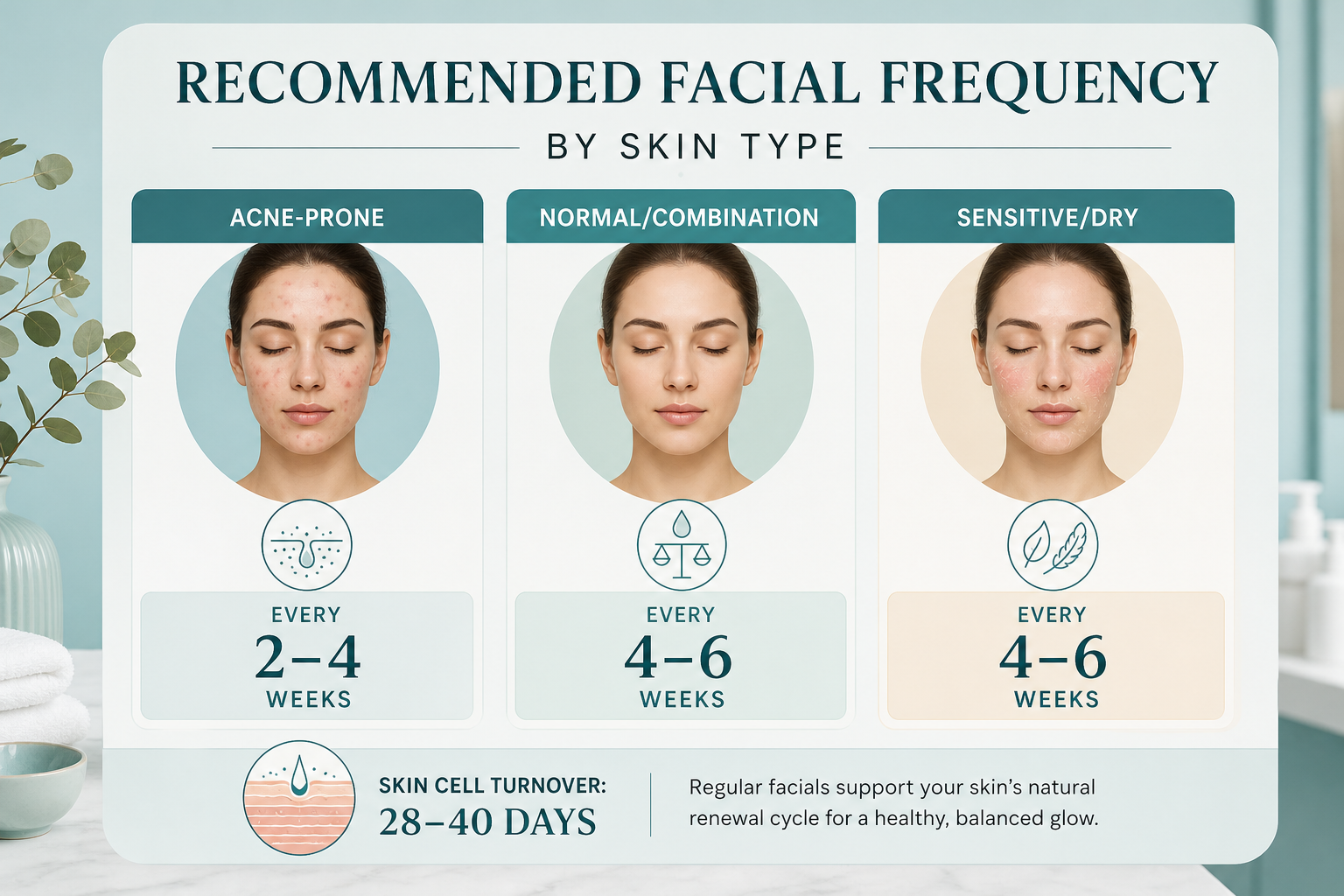
Frequency recommendations vary by skin type and concern. Acne-prone skin may benefit from more frequent treatments — every two to four weeks — particularly during active breakout phases, because regular professional extractions and targeted treatments can help manage congestion more effectively than home care alone. Sensitive or dry skin types generally do better with the standard four-to-six-week interval, as more frequent treatments can cause irritation or barrier disruption. Mature skin focused on anti-aging outcomes typically follows a monthly schedule, with some patients opting for a more intensive treatment every six to eight weeks depending on the modality used.
For event preparation, most practitioners recommend scheduling a facial seven to ten days before the event rather than immediately beforehand. This allows any temporary redness, purging, or mild peeling to resolve before the occasion. A facial performed the day before an event carries a risk of skin reactivity that could be counterproductive.
From a budgeting perspective, a monthly facial at $80 per session amounts to approximately $960 per year before tips. Understanding this annual cost helps frame the facial as a skincare investment rather than an occasional treat, and makes the case for multi-session packages more financially meaningful.
Multi-Session Packages and Membership Discounts
Many spas and medical spas offer multi-session package discounts for patients who commit to a course of treatments upfront. A typical package of three to six sessions is priced at 15–25% below the equivalent pay-per-visit cost. For example, a HydraFacial priced at $250 per session might be available as a package of four sessions for $750–$850, reducing the per-session cost to $187–$212.
Medical spa membership models take this further by offering a monthly fee — typically $99–$199 per month — that covers one or two treatments per month plus discounts on additional services and retail products. These memberships make financial sense if you plan to attend consistently and use the included treatments. They are less cost-effective if your attendance is irregular, since unused sessions may not roll over depending on the membership terms. Always read the cancellation policy before committing to a membership, as some require a minimum three- to six-month commitment.
It is also worth noting that some facial treatments — particularly those performed in a clinical setting for a documented skin condition — may qualify for payment through a Flexible Spending Account (FSA) or Health Savings Account (HSA). This is not universally applicable and depends on the specific treatment, the provider’s documentation, and your plan administrator’s rules. It is worth asking your provider whether any treatments they offer qualify before assuming they do not.
Tipping Etiquette for Facials
Tipping etiquette for facials follows the same general conventions as other personal service industries, with one important exception. In a spa or salon setting — whether a day spa, luxury spa, or esthetician studio — tipping your licensed esthetician is standard practice and generally expected. The customary range is 15–20% of the service cost. On a $150 facial, that translates to a tip of $22.50–$30. On a $90 facial, a 15–20% tip would be $13.50–$18.
The convention changes in a medical setting. When a registered nurse, nurse practitioner, or physician performs a medical-grade treatment at a medical spa or clinical office, tipping is generally not expected and is sometimes against the practice’s policy. If you are unsure, it is entirely appropriate to ask the front desk whether gratuity is accepted. Many medical spas include a note on their receipts or booking confirmations clarifying their tipping policy. When in doubt, a sincere verbal acknowledgment of a good experience is always appropriate regardless of setting.
Medical-Grade Facials vs. Spa Facials: What Is the Difference?
The term medical-grade treatment is used frequently in aesthetic medicine but is not always clearly explained. In the context of facials, a medical-grade treatment typically involves one or more of the following: products formulated with higher concentrations of active ingredients than are available over the counter or in standard spa settings; devices that are regulated and cleared for clinical use; or procedures that require a licensed medical professional to perform or supervise due to the level of skin penetration or biological risk involved.
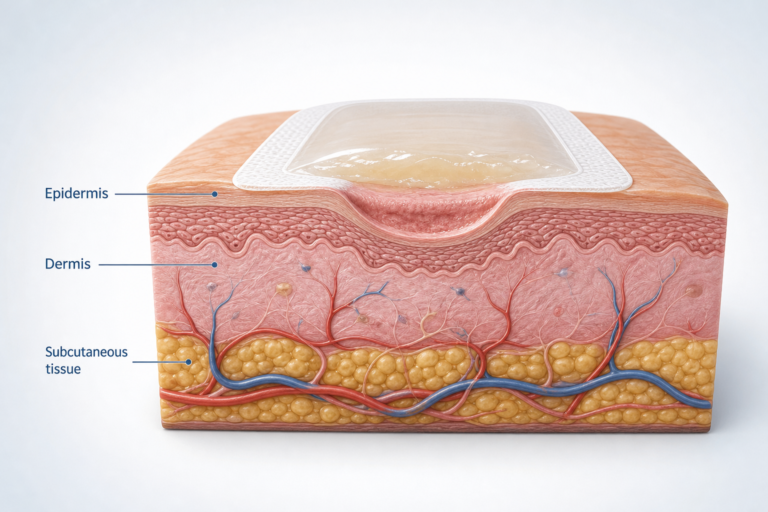
A standard spa facial uses cosmetic-grade products that are formulated to work on the surface of the skin without penetrating the dermis. These products are effective for hydration, mild brightening, and general skin maintenance, but they are not designed to produce the same depth of change as a medical-grade peel or a treatment using pharmaceutical-strength retinoids. A medical-grade facial — such as a medium-depth chemical peel, a microneedling facial, or a PRP treatment — works at a deeper level and carries a correspondingly higher risk of side effects including redness, peeling, sensitivity, and in rare cases, post-inflammatory hyperpigmentation or infection.
This does not mean medical-grade facials are inherently better for every patient. For someone seeking relaxation and general skin maintenance, a well-executed spa facial from a skilled licensed esthetician may deliver exactly what they need at a fraction of the cost. For someone managing active acne scarring, significant pigmentation, or visible signs of aging, a medical-grade treatment may offer more meaningful clinical improvement — but it requires appropriate patient selection, a proper consultation, and realistic expectations about recovery and results.
How to Avoid Overpaying: Red Flags and Practical Tips
Not every high price reflects superior quality, and not every low price reflects poor quality. A few practical considerations can help you evaluate whether a quoted price is justified.
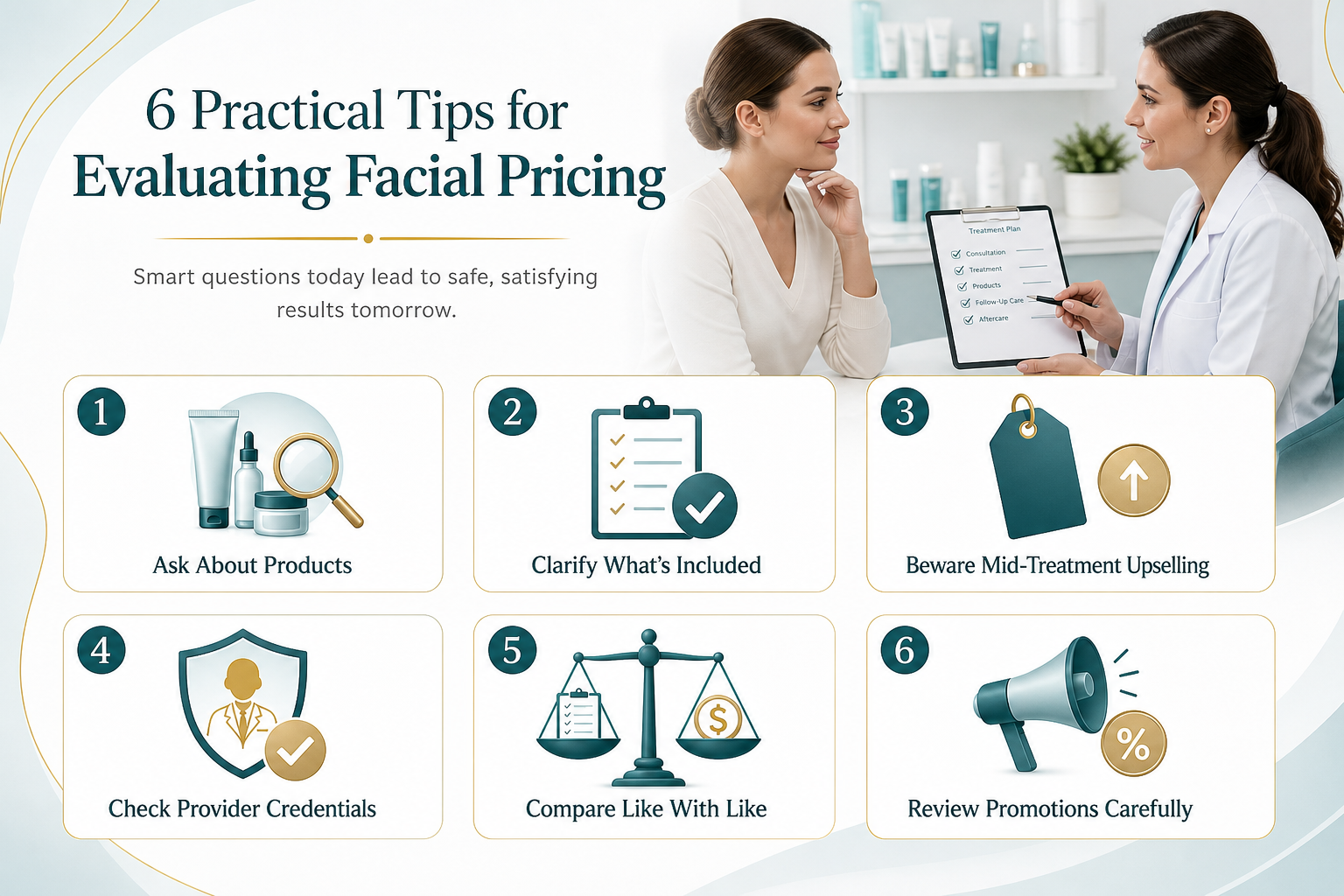
- Ask what products are being used. A provider who cannot name the brands or active ingredients in the products they apply may not be using the medical-grade formulations they are charging for.
- Clarify what is included in the base price. Some venues quote a low base price and then add on services during the appointment without clearly communicating the additional cost. Ask for a full price breakdown before the treatment begins.
- Be cautious with same-day upselling. A reputable provider will discuss recommended add-ons during a consultation, not mid-treatment when you are less able to evaluate the suggestion objectively.
- Check provider credentials. A licensed esthetician should be able to confirm their state license. A medical spa should be able to confirm physician oversight. Credentials are not a guarantee of quality, but their absence is a meaningful concern.
- Compare like with like. A $200 facial at a medical spa and a $200 facial at a luxury resort spa are not the same product. One may involve medical-grade technology; the other may involve premium amenities. Neither is wrong, but they serve different purposes.
- Consider seasonal promotions carefully. Discounted facials through deal platforms can offer genuine value, but check the provider’s reviews and confirm that the discounted service is the same as the standard service, not a shortened or reduced version.
First-Timer Guidance: What Type of Facial Should You Start With?
If you have never had a professional facial, the range of options can feel overwhelming. A practical starting point is a basic or classic facial, sometimes called a European facial, at a reputable day spa or esthetician studio. This type of treatment typically includes cleansing, exfoliation, steam, extractions if needed, a mask, and moisturizer — giving you a clear sense of what professional skin care feels like without committing to a more intensive or expensive treatment.
Before your first appointment, it is helpful to think about your primary skin concern: is it dryness, oiliness, acne, uneven tone, or general maintenance? Communicating this clearly to your esthetician allows them to tailor the treatment and recommend appropriate next steps. A good esthetician will assess your skin at the start of the appointment and adjust the products and techniques accordingly rather than applying a one-size-fits-all protocol.
If you have a specific skin condition such as active acne, rosacea, or significant hyperpigmentation, it is worth consulting a dermatologist or a medical spa before booking a standard spa facial. Some conditions respond well to professional facials; others may be aggravated by certain ingredients or techniques. A brief consultation — which many providers offer at no charge — can help you avoid a treatment that is not appropriate for your skin type.
Frequently Asked Questions
Is a more expensive facial always better?
Not necessarily. A higher price reflects factors such as venue overhead, provider credentials, product quality, and treatment complexity — but it does not automatically guarantee a better outcome for your specific skin concern. A skilled licensed esthetician performing a well-matched basic facial may deliver more benefit for your skin than an expensive treatment that is not suited to your skin type or condition.
Can I use FSA or HSA funds to pay for a facial?
In most cases, cosmetic facials are not eligible for FSA or HSA reimbursement because they are not considered medically necessary. However, some treatments performed in a clinical setting for a documented skin condition — such as acne or rosacea — may qualify depending on your plan administrator’s rules and the provider’s documentation. It is worth asking your provider and checking with your plan administrator before assuming eligibility either way.
How much should I tip for a facial?
In a spa or salon setting, a tip of 15–20% of the service cost is standard. On a $100 facial, that is $15–$20. In a medical setting where a nurse or physician performs the treatment, tipping is generally not expected and may not be accepted. When in doubt, ask the front desk about the practice’s policy.
Are facials worth the cost for acne-prone skin?
Professional facials can be a useful component of an acne management plan, particularly for patients who benefit from regular extractions and targeted treatments. However, facials alone are rarely sufficient to manage moderate to severe acne, and they work best as part of a broader skincare routine that may include topical or oral treatments recommended by a dermatologist. Results vary significantly by individual, and a consultation with a qualified provider is the most reliable way to assess whether regular facials are likely to benefit your specific situation.
What is the difference between a HydraFacial and a regular facial?
A HydraFacial is a branded, device-based treatment that uses a patented vortex technology to simultaneously cleanse, exfoliate, extract, and infuse the skin with hydrating serums. Unlike a standard facial, which relies primarily on manual techniques and topical products, a HydraFacial uses a specific machine and proprietary serums. This makes it more consistent in delivery but also more expensive — typically $150–$300 per session — and it is only available at providers who have invested in the device.
How far in advance should I book a facial before a special event?
Most practitioners recommend booking a facial seven to ten days before a significant event. This timing allows any temporary redness, mild peeling, or skin purging to resolve before the occasion. Avoid scheduling an intensive or unfamiliar treatment immediately before an important event, as skin reactions — even minor ones — can be unpredictable, particularly if it is your first time receiving that treatment.
Planning Your Facial Budget: What to Consider Before You Book
Understanding how much a facial costs is only the first step. The more useful question is whether the treatment you are considering matches your skin concern, your budget, and your expectations for results. A $65 basic facial every four to six weeks may deliver more cumulative benefit for general skin maintenance than a single $400 treatment once a year, simply because consistency matters in skincare. Conversely, if you are addressing a specific clinical concern such as acne scarring or significant pigmentation, a series of medical-grade treatments at a higher per-session cost may be more appropriate than repeated basic facials that cannot reach the depth required to make a meaningful difference.
Before booking, it is worth calculating your true annual cost: the per-session price, multiplied by your intended frequency, plus a 15–20% tip in spa settings, gives you a realistic annual skincare budget figure. If that number is higher than you expected, multi-session package discounts or a med spa membership may bring the per-treatment cost down to a more manageable level. If you are new to professional facials, starting with a single session at a reputable provider before committing to a package allows you to assess the quality of the treatment and the compatibility of the provider with your skin before making a larger financial commitment. A brief consultation with a licensed esthetician or a medical spa provider is the most reliable way to match the right treatment to your skin type, concerns, and budget.