How Long Does a Botox Headache Last? Duration, Causes & What to Do
A headache after a Botox appointment is one of the most commonly reported short-term side effects, and for most people it resolves within a day or two without any specific treatment. Understanding why it happens, how long it is likely to last, and what you can do to ease the discomfort can make the experience far less worrying — and help you recognise the rare situations where a call to your clinic is genuinely warranted.
Key Takeaways
- Most post-Botox headaches are mild and self-limiting, resolving within 24 to 48 hours of the injection appointment.
- A smaller number of patients experience a headache lasting up to one week; in rare cases, a prolonged headache after Botox can persist for two weeks or longer.
- Common causes include injection site trauma, temporary muscle spasm, and nerve irritation — not a toxic effect of the product itself.
- Over-the-counter pain relievers such as acetaminophen, rest, hydration, and a cold compress are usually sufficient for management.
- Certain warning signs — including a sudden severe headache, neurological symptoms, or a headache lasting beyond two weeks — require prompt medical assessment.
How Long Does a Post-Botox Headache Typically Last?
The duration of a post-Botox headache varies considerably between individuals, and it helps to think of it in tiers rather than a single fixed timeframe. For the majority of patients, the headache is mild and resolves within 24 to 48 hours. A smaller proportion find that discomfort lingers for up to a week, particularly after injections in the forehead, temples, or neck. Published clinical data suggest that a severe or intractable headache lasting two weeks to one month occurs in roughly 1% of cases — a genuinely uncommon outcome, but one worth knowing about.
| Duration | Likelihood | Typical Character | Usual Action |
|---|---|---|---|
| A few hours to 48 hours | Most common | Mild pressure or tension-type headache | Rest, hydration, OTC pain relief if needed |
| 3 to 7 days | Less common | Moderate tension or migraine-like headache | OTC pain relievers; contact clinic if worsening |
| 1 to 2 weeks | Uncommon | Persistent dull ache or pressure | Contact your clinic for assessment |
| Beyond 2 weeks | Rare (approx. 1%) | Severe or intractable headache | Seek medical assessment promptly |
It is also worth noting that some patients report a brief, mild headache two to three weeks after their appointment — not immediately after the injection, but as the botulinum toxin type A reaches its full effect and surrounding muscles begin to adjust. This delayed headache is less well-documented than the immediate post-injection type, but it is a recognised pattern that tends to resolve on its own within a few days.
What Causes a Headache After Botox?
Several distinct mechanisms can contribute to a headache following a Botox treatment, and in many patients more than one factor is at play simultaneously. Understanding the cause can help set realistic expectations and, in some cases, inform steps to reduce the likelihood of it happening at a future appointment.
Injection Site Trauma
The most straightforward cause is physical: inserting a needle into the skin and underlying tissue causes a small degree of local trauma. Injection site trauma triggers a brief inflammatory response, and in areas as sensitive as the forehead or temples, this can translate into a dull ache or pressure sensation that radiates across the head. This type of discomfort typically peaks within a few hours of the appointment and fades within 24 to 48 hours as the tissue settles.
Muscle Spasm and Tension
Onabotulinumtoxinā€‰A works by temporarily blocking the nerve signals that cause targeted muscles to contract. In the short period between injection and the onset of muscle relaxation — which can take two to five days — some muscles may respond with a brief muscle spasm or increased tension. This is thought to be a reflex response to the disruption of normal neuromuscular signalling. The resulting headache often has a tension-type character: a band-like tightness across the forehead or around the temples rather than a throbbing pain.
Muscle Overcompensation
Once the injected muscles begin to relax, neighbouring muscles that were not treated may temporarily work harder to compensate. This muscle tension in surrounding areas can produce a headache that develops a day or two after the appointment rather than immediately. Patients who have injections in the forehead or glabellar region (between the brows) sometimes notice this pattern, as the muscles of the scalp and neck adjust to the changed movement patterns.
Nerve Irritation
The forehead and scalp contain a dense network of sensory nerves. Nerve irritation near an injection site — caused by the needle passing close to a nerve branch or by the small volume of fluid injected into sensitive tissue — can produce a sharp or burning sensation that evolves into a broader headache. This is more likely when injections are placed in areas with high nerve density, such as the temples or along the hairline.
Procedural Stress and Anxiety
Anticipatory anxiety before a cosmetic procedure is common and can itself trigger a tension-type headache that begins before or during the appointment. Muscle bracing, shallow breathing, and elevated stress hormones during the session can all contribute. In these cases, the headache may actually precede the injections and simply continue afterwards, making it easy to attribute entirely to the treatment itself.
Immune and Inflammatory Response
A small number of patients mount a mild immune or inflammatory response to the injected material. This is more likely in first-time recipients or those with a history of sensitivity reactions, and it can produce a flu-like feeling alongside the headache. This type of response is generally mild and self-limiting, but it is worth mentioning to your practitioner if it occurs.
What Does a Post-Botox Headache Feel Like?
The character of the headache varies depending on its underlying cause and the injection sites involved. Recognising the type can help you manage it appropriately and communicate clearly with your practitioner if you need to follow up.
- Tension-type headache: A band-like pressure or tightness across the forehead, temples, or back of the head. This is the most commonly reported pattern and is closely linked to muscle spasm and injection site trauma.
- Migraine-like headache: A throbbing, often one-sided pain that may be accompanied by sensitivity to light or sound. This pattern is more likely in patients who already have a history of migraines, as the injection process can temporarily trigger their usual migraine pattern.
- Sinus-type pressure: A feeling of fullness or pressure behind the eyes, across the cheeks, or at the bridge of the nose. This can occur after injections in the forehead or glabellar area and is sometimes mistaken for a sinus infection.
- Localised injection-site pain: A sharp or aching discomfort directly at one or more injection points, which may radiate outward. This is usually the shortest-lived type and resolves within hours.
Cosmetic Botox Headache vs. Headache After Therapeutic Botox for Migraine
It is important to distinguish between two quite different clinical situations that are often conflated. A post-injection headache after cosmetic Botox — used for wrinkle reduction in the forehead, frown lines, or crow’s feet — is a temporary side effect of the injection process itself. It is not related to the therapeutic use of onabotulinumtoxinA for chronic migraine prevention.
Therapeutic Botox for chronic migraine prevention is an FDA-approved treatment for adults who experience 15 or more headache days per month, at least eight of which meet migraine criteria. In this context, the treatment is administered on a treatment cycle of every 12 weeks, with injections placed across the head, neck, and shoulders. Some patients undergoing therapeutic Botox experience a temporary worsening of their headaches in the first one to two weeks after each cycle — a recognised pattern that tends to improve with subsequent treatment cycles. This is distinct from the post-injection headache a cosmetic patient might experience after a single forehead treatment. If you are receiving Botox for chronic migraine prevention and your headaches worsen significantly after an injection cycle, discuss this with the prescribing clinician rather than managing it independently.
How to Manage a Headache After Botox
For the majority of patients, a post-Botox headache is mild enough to manage comfortably at home with simple measures. The following steps are generally considered appropriate, though you should always follow the specific aftercare instructions provided by your practitioner.
Over-the-Counter Pain Relief
Over-the-counter pain relievers are the most commonly recommended first-line option. Acetaminophen (paracetamol) is generally preferred immediately after a Botox appointment because it does not affect platelet function. Ibuprofen and naproxen are also effective for tension-type and migraine-like headaches, though some practitioners advise avoiding non-steroidal anti-inflammatory drugs (NSAIDs) for the first 24 hours after injection to minimise bruising risk. Excedrin, which combines acetaminophen, aspirin, and caffeine, is sometimes used for migraine-like post-Botox headaches, but check with your practitioner before taking it if you are unsure. Always follow the dosage instructions on the packaging and do not exceed the recommended dose.
Cold Compress
Applying a cold compress or ice pack wrapped in a cloth to the forehead or temples for 10 to 15 minutes at a time can help reduce localised discomfort and any minor swelling at the injection sites. Avoid applying ice directly to the skin, and do not press firmly on the treated areas in the first few hours after your appointment, as this could theoretically affect the distribution of the product.
Rest and Hydration
Resting in a quiet, dimly lit room and drinking adequate water are simple but genuinely useful measures, particularly for migraine-like headaches. Dehydration can worsen any type of headache, and the mild stress of a clinical appointment can leave some patients feeling depleted. Avoiding alcohol for at least 24 hours after treatment is also advisable, as alcohol can exacerbate headaches and increase bruising.
Avoiding Strenuous Activity
Most aftercare instructions recommend avoiding vigorous exercise, bending forward repeatedly, or lying flat for several hours after a Botox appointment. Increased blood flow to the head from exercise can intensify a headache, and positional changes may worsen discomfort in the early hours after injection.
Reducing the Risk at Future Appointments
If you experienced a headache after a previous Botox session, there are several practical steps that may reduce the likelihood or severity at your next appointment. Some practitioners recommend taking naproxen sodium in the hours before treatment as a preventive measure, though this should only be done on the advice of your treating clinician, as NSAIDs carry their own considerations. Staying well-hydrated before your appointment, eating a light meal beforehand to avoid low blood sugar, and discussing your headache history openly with your practitioner are all sensible precautions. Practitioner technique also plays a meaningful role: an experienced injector who uses precise needle placement and appropriate injection depths is less likely to cause significant injection site trauma or nerve irritation.
It is also worth noting that if you experienced a headache after one treatment cycle, you are statistically more likely to experience one after subsequent cycles. This does not mean the headaches will necessarily be as severe or as long-lasting — many patients find that the post-injection headache diminishes with each successive treatment as the muscles adapt — but it is useful information to share with your practitioner so they can tailor their approach.
When to Seek Medical Attention
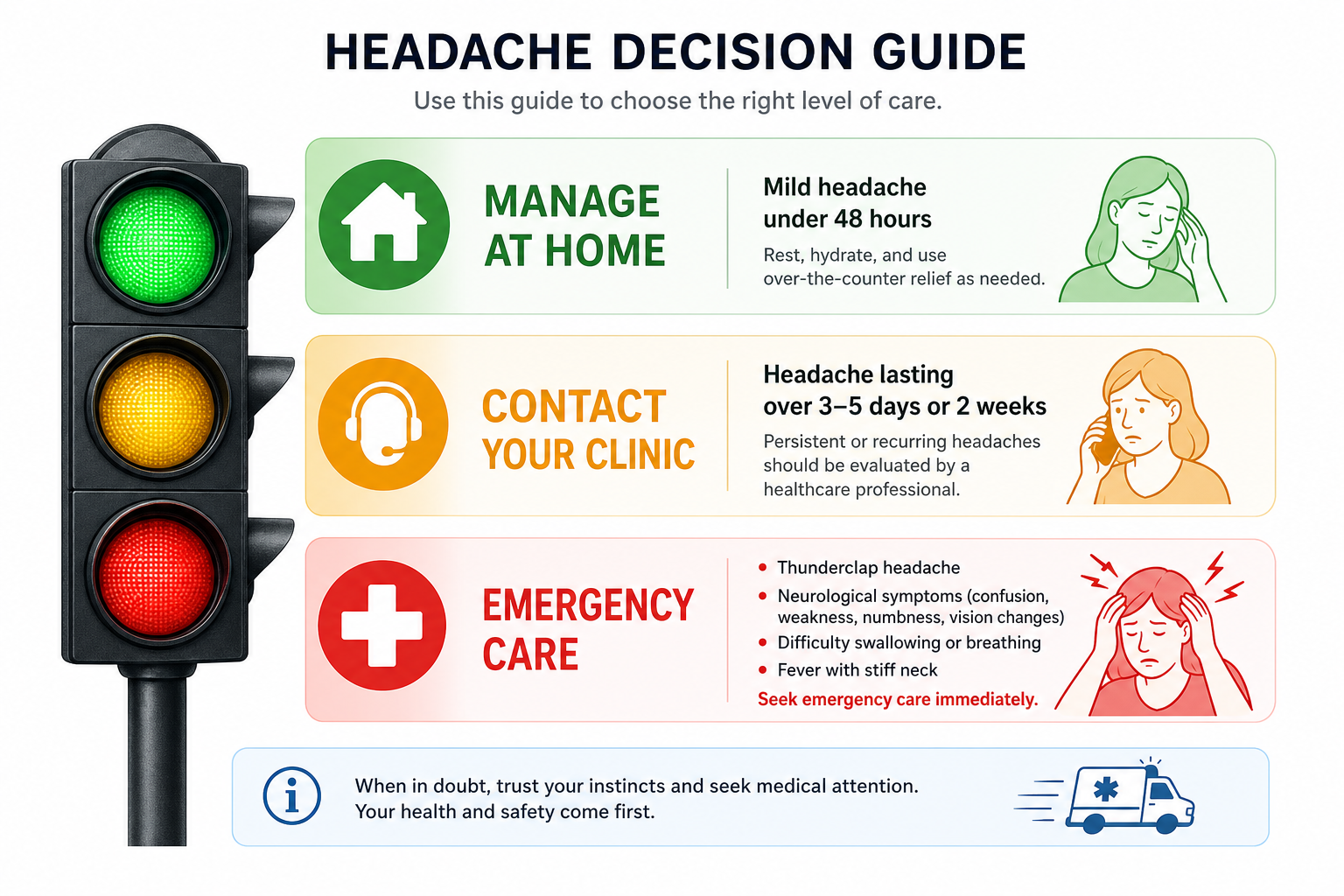
The vast majority of post-Botox headaches are benign and resolve without medical intervention. However, certain symptoms should prompt you to contact your clinic or seek urgent medical care. The table below outlines the key distinctions.
| Symptom or Pattern | Recommended Action |
|---|---|
| Mild to moderate headache resolving within 48 hours | Home management; follow aftercare instructions |
| Headache persisting beyond 3 to 5 days | Contact your clinic for advice |
| Headache lasting more than 2 weeks | Seek medical assessment promptly |
| Sudden, severe “thunderclap” headache unlike any previous headache | Seek emergency medical care immediately |
| Drooping eyelid (ptosis) or vision changes | Contact your clinic and seek medical assessment |
| Numbness, dizziness, confusion, or difficulty speaking | Seek emergency medical care immediately |
| Difficulty swallowing or breathing | Seek emergency medical care immediately |
| Fever, stiff neck, or rash alongside headache | Seek emergency medical care immediately |
| Signs of allergic reaction (hives, swelling, breathing difficulty) | Seek emergency medical care immediately |
A sudden, extremely severe headache that reaches maximum intensity within seconds — sometimes described as the worst headache of your life — is a medical emergency regardless of whether you have recently had a Botox injection. This pattern can indicate a serious neurological event and requires immediate emergency assessment. It is not a typical feature of a post-Botox headache, which tends to develop gradually and remain at a manageable intensity.
Incidence: How Common Is a Headache After Botox?
Clinical trial data for cosmetic onabotulinumtoxinA suggest that headache occurs as a reported side effect in approximately 9% of patients receiving treatment for glabellar lines. This figure is broadly consistent with real-world experience, though the actual incidence varies depending on the treatment area, the number of injection points, and individual patient factors. The majority of these headaches are mild and resolve within 48 hours. Severe or prolonged headache after Botox — lasting two weeks or more — is estimated to affect approximately 1% of recipients based on published clinical observations, making it a genuinely uncommon outcome rather than a routine risk.
Patients with a pre-existing history of migraines or tension-type headaches appear to be at somewhat higher risk of experiencing a post-injection headache, and their headaches may be more intense or longer-lasting than those in patients without a headache history. This is an important factor to disclose during your consultation, as it may influence the practitioner’s approach to injection technique and aftercare advice.
Frequently Asked Questions
Is it normal to have a headache for 2 weeks after Botox?
A headache lasting two weeks after a Botox appointment is uncommon but has been documented in clinical literature, affecting roughly 1% of patients. If your headache has persisted for two weeks, it warrants a conversation with your clinic or GP rather than continued home management. Most cases in this category do eventually resolve without lasting effects, but a medical assessment is appropriate to rule out other causes.
Can I take ibuprofen or Excedrin after Botox?
Acetaminophen is generally the preferred first choice immediately after a Botox appointment because it does not affect bleeding. Ibuprofen and naproxen are effective for headache relief but may slightly increase bruising risk in the first 24 hours. Excedrin can be useful for migraine-like headaches. Follow your practitioner’s specific aftercare instructions, and if you are unsure which medication is appropriate for you, contact your clinic before taking anything.
Will I get a headache every time I have Botox?
Not necessarily. Some patients experience a headache after their first treatment but find that subsequent sessions cause little or no discomfort as the muscles adapt. Others find the pattern consistent across treatments. Discussing your experience with your practitioner allows them to adjust their technique or recommend preventive measures for future appointments.
Why do I have a headache 2 to 3 weeks after my Botox appointment?
A delayed headache appearing two to three weeks after treatment — rather than immediately after the injection — may relate to the period when botulinum toxin type A reaches its full effect and surrounding muscles begin compensating for the reduced movement in treated areas. This pattern is less commonly discussed but is a recognised phenomenon. It is usually mild and short-lived, but mention it to your practitioner if it is significant or recurring.
Does Botox for migraines make headaches worse before it gets better?
Some patients receiving therapeutic Botox for chronic migraine prevention do experience a temporary increase in headache frequency or intensity in the first one to two weeks after an injection cycle. This is a recognised pattern and does not necessarily mean the treatment is not working. Results from therapeutic Botox for chronic migraine often become more apparent after two to three treatment cycles, each spaced 12 weeks apart. If you are concerned about worsening headaches after a therapeutic treatment cycle, speak with the prescribing clinician.
Should I avoid Botox if I have a history of migraines?
A history of migraines does not automatically disqualify someone from cosmetic Botox, but it is an important factor to disclose before treatment. Your practitioner can take your headache history into account when planning the injection approach and aftercare. In some cases, a history of chronic migraine may actually make you a candidate for therapeutic Botox under medical supervision — a separate clinical pathway from cosmetic treatment.
What to Do If Your Post-Botox Headache Is Worrying You
A post-Botox headache that is mild, develops within hours of your appointment, and fades within a day or two is a well-recognised temporary side effect that does not require alarm. Managing it with rest, hydration, a cold compress, and appropriate over-the-counter pain relievers is usually sufficient. If the headache is more persistent, more severe than expected, or accompanied by any of the warning signs listed above, contacting your clinic is always the right step — a reputable practitioner will welcome the call and can advise whether further assessment is needed. Keeping a brief note of when the headache started, its character, and any associated symptoms will help your practitioner give you the most useful guidance. If you are considering Botox and are concerned about this side effect, raising it during your consultation gives your practitioner the opportunity to discuss your individual risk and tailor their approach accordingly.