
Broken Facial Capillaries: Causes, Treatments and What to Expect
Broken capillaries on the face are one of the most common vascular skin concerns seen in aesthetic practice. They appear as fine red, pink, or purple thread-like lines, most often around the nose, cheeks, and chin, and while they are not medically dangerous, many people find them difficult to conceal and seek professional advice about reducing their appearance. This article explains what broken capillaries are, why they develop, which treatments are currently used to address them, what results are realistic, and what to consider before booking a consultation.
Key Takeaways
- Broken capillaries, also called telangiectasia or thread veins, are permanently dilated small blood vessels visible through the skin surface.
- Common causes include sun damage, rosacea, genetics, alcohol, and physical trauma to the skin.
- Laser and intense pulsed light (IPL) treatments are among the most widely used clinical options and can reduce the appearance of facial thread veins in suitable candidates.
- Results vary depending on skin type, vessel size, underlying cause, and the number of sessions completed.
- Broken capillaries are unlikely to resolve on their own; professional assessment is recommended before choosing a treatment approach.
What Are Broken Capillaries?
The term “broken capillaries” is commonly used by patients, but clinically these structures are more accurately described as telangiectasia or superficial telangiectases. They are small blood vessels, typically capillaries or venules, that have become permanently dilated and are visible through the skin as fine red, pink, or purple lines. Unlike a bruise or temporary redness, these vessels do not disappear when pressure is applied and do not resolve without treatment.
Telangiectasia on the face most frequently appear on the nose, cheeks, and chin. They can occur as isolated vessels or in clusters, and in some cases they form a web-like pattern sometimes referred to as spider veins. The vessels themselves are not broken in the literal sense; rather, the vessel wall has lost its ability to contract back to its normal diameter, leaving the capillary in a persistently dilated state that becomes visible through the overlying skin.
Facial thread veins are distinct from the deeper leg veins treated by sclerotherapy, and the treatment approaches differ accordingly. On the face, the superficial location of these vessels makes them accessible to light-based and energy-based treatments, which are the primary clinical options currently available.
What Causes Broken Capillaries on the Face?
Several factors can contribute to the development of facial telangiectasia, and in many patients more than one cause is present simultaneously. Understanding the underlying cause is relevant to treatment planning because some contributing factors, if not managed, can lead to new vessels forming after treatment.
Sun Damage
Cumulative ultraviolet exposure is one of the most significant causes of broken capillaries on the face. UV radiation damages the collagen and elastin that support the vessel walls, and repeated sun exposure over years can cause superficial blood vessels to dilate permanently. People with fair skin who have had significant lifetime sun exposure are particularly prone to developing facial telangiectasia in sun-exposed areas such as the nose and cheeks.
Rosacea
Rosacea is a chronic inflammatory skin condition that causes persistent facial redness and, in many cases, visible telangiectasia. In rosacea-associated broken capillaries, the vessels develop as part of a broader pattern of vascular instability and inflammation. Treating the visible vessels may improve cosmetic appearance, but rosacea itself requires ongoing management to reduce the likelihood of further vessel development. A dermatological assessment is advisable for anyone who suspects rosacea may be contributing to their thread veins.
Genetics and Skin Type
A genetic predisposition to telangiectasia is well recognised. People with fair or thin skin, particularly those of Celtic or Northern European heritage, tend to have more visible superficial vasculature and may develop broken capillaries earlier in life. Family history of rosacea or facial thread veins increases individual risk.
Temperature Extremes and Environmental Triggers
Repeated exposure to extreme heat or cold, including hot showers, saunas, very cold weather, and spicy foods, can cause repeated cycles of vessel dilation and contraction. Over time, this repeated stress on vessel walls may contribute to permanent dilation. Wind exposure is also a recognised environmental trigger, particularly in outdoor workers.
Alcohol Consumption
Regular alcohol consumption causes repeated vasodilation and is associated with the development and worsening of facial telangiectasia. Alcohol-related flushing is particularly common on the cheeks and nose, and chronic alcohol use can contribute to persistent vessel dilation in these areas.
Physical Trauma and Skin Injury
Trauma to the skin, including aggressive facial massage, certain cosmetic procedures performed incorrectly, or even forceful sneezing and vomiting, can rupture or permanently dilate small facial vessels. Post-procedural telangiectasia can occasionally develop after treatments that cause significant skin inflammation.
Hormonal Changes
Hormonal fluctuations associated with pregnancy, oral contraceptive use, and menopause can influence vascular tone and may contribute to the development of facial thread veins in some individuals. Pregnancy-related telangiectasia sometimes improve after delivery, though this is not guaranteed.
Treatment Options for Broken Capillaries
Several clinical treatments are used to reduce the appearance of broken capillaries on the face. The most appropriate option depends on the size and depth of the vessels, skin type, underlying cause, and the practitioner’s assessment. No single treatment is universally suitable for every patient.
Laser Treatment
Laser therapy is one of the most established approaches for facial telangiectasia. Vascular lasers, including the pulsed dye laser (PDL) and Nd:YAG laser, work by delivering a specific wavelength of light that is selectively absorbed by oxyhaemoglobin in the blood. This process, known as selective photothermolysis, heats the vessel wall and causes it to collapse and be gradually reabsorbed by the body, without significantly damaging the surrounding skin.
The pulsed dye laser is widely regarded as effective for superficial facial telangiectasia and rosacea-associated vessels. The Nd:YAG laser penetrates more deeply and may be used for larger or deeper vessels, or in patients with darker skin tones where the risk of pigmentation changes with shorter wavelengths is higher. Multiple sessions are typically required, and the number depends on vessel size, distribution, and individual response. Temporary redness, swelling, and bruising are common after laser treatment and usually resolve within days to a couple of weeks.
Intense Pulsed Light (IPL)
Intense pulsed light is a broad-spectrum light technology that uses filters to target specific chromophores in the skin, including haemoglobin in blood vessels. IPL is not a laser but works on a similar principle of selective light absorption. It is commonly used for diffuse facial redness and fine telangiectasia, particularly in patients with rosacea or sun-damaged skin.
IPL may be less precise than dedicated vascular lasers for treating individual thread veins, but it can be effective for treating widespread redness and multiple fine vessels across a larger area in a single session. Skin type is an important consideration with IPL, as the technology carries a higher risk of pigmentation changes in patients with darker skin tones. A patch test and thorough skin assessment are standard practice before IPL treatment.
Nd:YAG Laser for Facial Veins
The long-pulsed Nd:YAG laser at 1064 nm is particularly useful for treating larger facial telangiectasia and vessels that have not responded adequately to other wavelengths. Its deeper penetration makes it suitable for slightly larger vessels, and its lower melanin absorption makes it a more appropriate option for patients with medium to darker skin tones compared with shorter-wavelength vascular lasers. Discomfort during treatment is typically described as a snapping or stinging sensation, and cooling devices are usually used to protect the skin surface.
Electrocautery and Thermocoagulation
Electrocautery, also called electrodessication or thermocoagulation, uses a fine probe to deliver a small electrical current or heat directly to the vessel, causing it to coagulate and collapse. This technique can be precise and effective for individual thread veins, particularly fine isolated capillaries on the nose or cheeks. It does not require the same level of light-based technology as laser or IPL and may be available in a wider range of clinical settings. However, it requires skill to avoid post-treatment marks, and there is a small risk of scarring if performed incorrectly.
Sclerotherapy
Sclerotherapy, which involves injecting a sclerosing solution directly into a vessel to cause it to collapse, is the standard treatment for leg veins but is rarely used on the face. The small size of facial capillaries and the proximity to important facial structures make facial sclerotherapy technically challenging and generally not the preferred approach. Laser and light-based treatments are typically favoured for facial telangiectasia.
What Happens During Treatment?
The specific experience varies depending on the technology used, but most laser and IPL treatments for broken capillaries follow a broadly similar process. A consultation and skin assessment are conducted before any treatment to confirm suitability, identify contraindications, and select the appropriate device and settings.
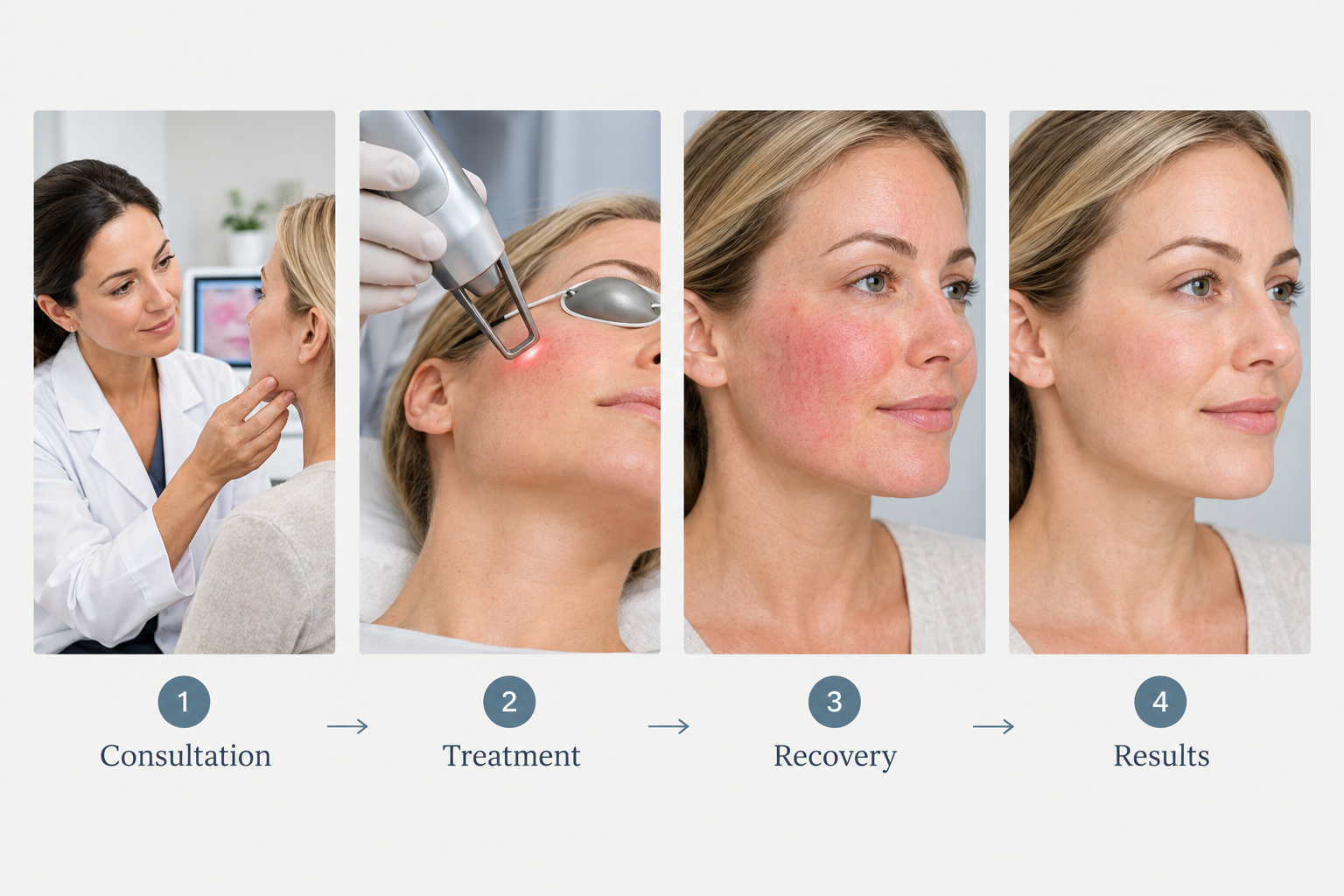
On the day of treatment, the skin is cleansed and protective eyewear is provided. A cooling gel may be applied to the treatment area. The practitioner passes the laser or IPL handpiece over the skin, delivering pulses of light to the targeted vessels. Most patients describe the sensation as a brief snapping or stinging feeling with each pulse. Treatment duration depends on the size of the area being treated but typically ranges from around fifteen minutes to an hour for larger areas of the face.
Immediately after treatment, the treated area is likely to appear red and slightly swollen, and in some cases small vessels may appear darker before they fade. A soothing cream or cooling pack may be applied. Sun protection is essential in the days and weeks following treatment, and most practitioners advise avoiding heat exposure, strenuous exercise, and certain skincare ingredients during the initial recovery period.
Recovery and Downtime
Recovery after laser or IPL treatment for facial telangiectasia is generally manageable for most patients, though the degree of downtime varies by treatment type and individual skin response. Redness and mild swelling are expected immediately after treatment and typically settle within twenty-four to seventy-two hours. Pulsed dye laser treatment can cause temporary bruising, known as purpura, which may last up to ten to fourteen days in some patients, though newer laser settings and shorter pulse durations have reduced this in many cases.
Treated vessels may appear darker or more prominent for several days before they begin to fade. This is a normal part of the healing process as the body gradually reabsorbs the coagulated vessel. Crusting or scabbing is uncommon with modern laser settings but can occasionally occur. Patients are generally advised to avoid direct sun exposure, use a broad-spectrum SPF 30 or higher sunscreen daily, and follow any specific aftercare instructions provided by their practitioner.
Most people are able to return to normal daily activities within a day or two, though social downtime from visible redness or bruising may be a consideration for some. Makeup can usually be applied after a short period, depending on the treatment used and the practitioner’s guidance.
How Many Sessions Are Needed and How Long Do Results Last?
The number of treatment sessions required depends on the extent of the telangiectasia, the size and depth of the vessels, the technology used, and the individual’s skin response. Many patients see a noticeable improvement after one to three sessions, though some cases with extensive or recurrent vessels may require additional treatments. Sessions are typically spaced four to eight weeks apart to allow the skin to recover and the treated vessels to be fully reabsorbed.
Results from laser and IPL treatment for broken capillaries can be long-lasting for the vessels that are successfully treated. However, it is important to understand that these treatments address existing vessels rather than preventing new ones from forming. If the underlying cause, such as ongoing sun exposure, rosacea, or alcohol consumption, is not managed, new telangiectasia may develop over time. Maintenance treatments may therefore be needed periodically, particularly in patients with rosacea or significant ongoing sun exposure.
Risks and Side Effects
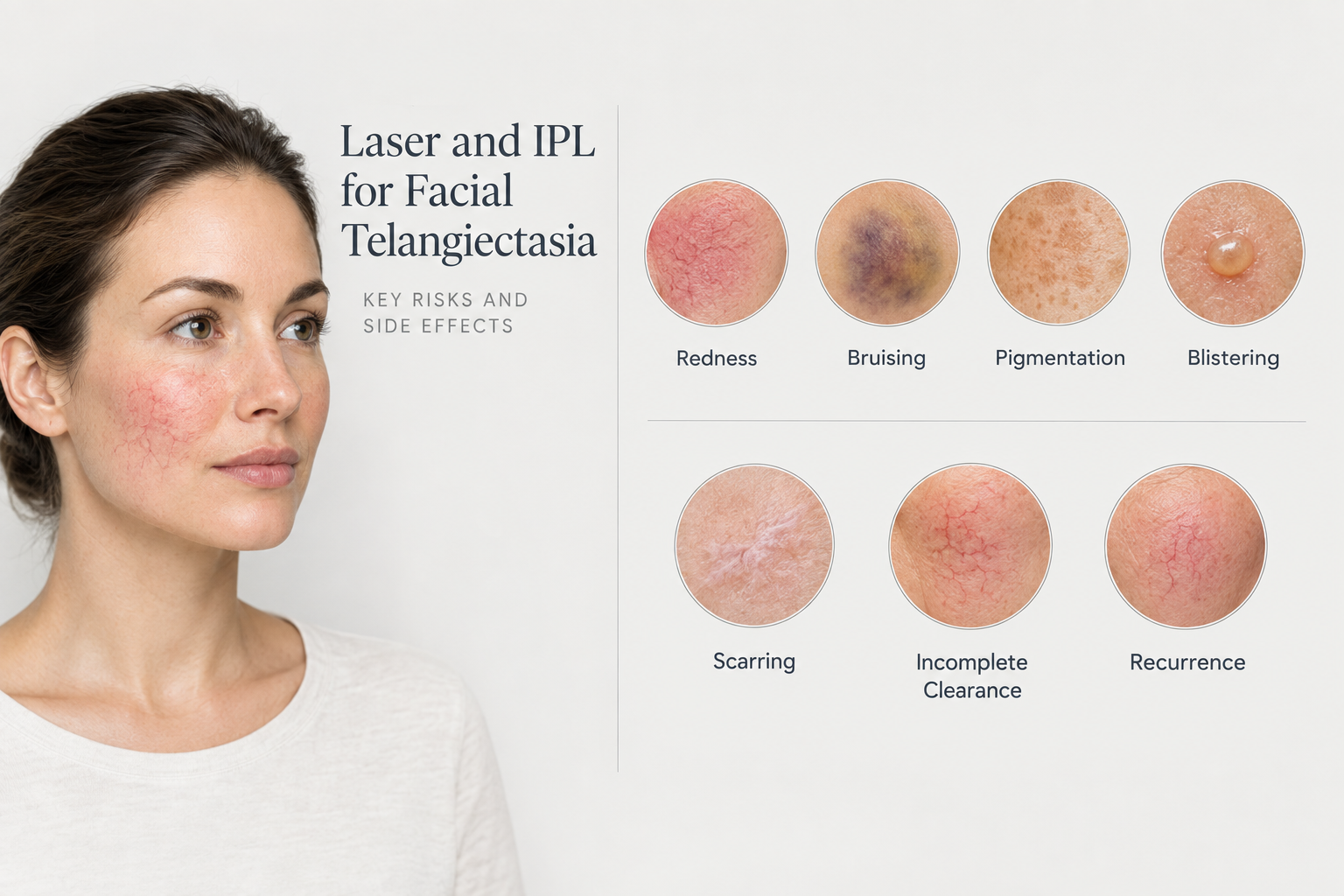
Laser and IPL treatments for facial telangiectasia are generally considered safe when performed by a trained and experienced practitioner using appropriate equipment and settings. However, as with any energy-based skin treatment, there are potential risks and side effects that patients should be aware of before proceeding.
- Temporary redness and swelling: Expected after most treatments and usually resolves within a few days.
- Bruising (purpura): More common with pulsed dye laser; can last up to two weeks.
- Pigmentation changes: Post-inflammatory hyperpigmentation (darkening) or hypopigmentation (lightening) can occur, particularly in patients with darker skin tones or those who have had recent sun exposure. This risk underlines the importance of skin type assessment before treatment.
- Blistering or crusting: Uncommon with appropriate settings but possible, particularly if the skin is not adequately cooled during treatment.
- Scarring: Rare with laser and IPL when performed correctly, but a recognised risk with electrocautery if not performed with appropriate technique.
- Incomplete clearance: Not all vessels respond equally, and some may require repeat treatment or may not clear fully.
- Recurrence: New vessels can develop over time, particularly if contributing factors are not addressed.
Patients with a history of cold sores (herpes simplex) may be advised to take antiviral medication before laser treatment in the perioral area, as laser energy can trigger a recurrence. A thorough medical history and skin assessment before treatment help to identify individual risk factors and select the safest approach.
Who May Be Suitable for Treatment?
Most adults with visible facial telangiectasia who are in good general health may be suitable candidates for laser or IPL treatment. Suitability is assessed individually and depends on several factors.
Patients with fair to medium skin tones generally have the widest range of treatment options available, as the contrast between the vessel and surrounding skin makes targeting more precise and the risk of pigmentation side effects is lower. Patients with darker skin tones can still be treated, but the choice of wavelength and device is more important, and an experienced practitioner with appropriate equipment is essential.
Patients with active skin infections, open wounds, or certain inflammatory skin conditions in the treatment area are generally not suitable for treatment until these have resolved. Recent sun exposure or tanning, whether from natural sun or sunbeds, increases the risk of pigmentation changes and is typically a reason to delay treatment. Pregnancy is usually considered a contraindication for elective laser and IPL procedures. Certain medications, including photosensitising drugs and blood thinners, may affect suitability or require discussion with a prescribing clinician before treatment.
Skincare and Prevention
While professional treatment can reduce existing broken capillaries, certain skincare and lifestyle habits may help to slow the development of new vessels and support skin health more broadly. Daily use of a broad-spectrum sunscreen with SPF 30 or higher is one of the most evidence-supported steps for reducing UV-related vascular damage over time. Avoiding known triggers such as extreme heat, very hot water, and excessive alcohol may also be beneficial, particularly for patients with rosacea.
Topical skincare ingredients such as niacinamide and azelaic acid are sometimes used as part of a rosacea management routine and may help to reduce background redness, though they do not eliminate established telangiectasia. Retinoids can improve overall skin quality but may initially cause irritation and flushing in sensitive or rosacea-prone skin, so their use should be guided by a qualified practitioner. Gentle skincare practices, avoiding harsh physical exfoliation, and protecting the skin from environmental extremes are all reasonable supportive measures.
Frequently Asked Questions
Can broken capillaries on the face go away on their own?
Established facial telangiectasia do not typically resolve without treatment. Once a vessel has permanently dilated, it is unlikely to return to its original diameter spontaneously. Some temporary redness or flushing can improve with lifestyle changes, but visible thread veins generally require a clinical treatment to reduce their appearance.
Is laser treatment painful for broken capillaries?
Most patients describe laser treatment for facial telangiectasia as uncomfortable rather than severely painful. The sensation is often compared to a brief snap or sting with each pulse. Cooling devices and topical anaesthetic creams can be used to improve comfort, and most people tolerate the procedure well without significant distress.
How soon will I see results after laser or IPL treatment?
Treated vessels may initially appear darker or more visible for several days as the body begins to reabsorb them. Visible improvement is often noticeable within two to four weeks after a session, with continued fading over the following weeks. Full results from a course of treatment may take several months to become apparent.
Can broken capillaries come back after treatment?
Successfully treated vessels are unlikely to return, but new telangiectasia can develop over time, particularly if the underlying cause such as sun damage, rosacea, or lifestyle factors is not managed. Periodic maintenance treatments may be needed in some patients.
Are there any creams or serums that can remove broken capillaries?
No topical product has been shown to eliminate established telangiectasia. Some ingredients, such as niacinamide and green tea extract, may help to reduce general redness and support skin barrier function, but they cannot close or remove dilated vessels. Professional treatment is required to address visible broken capillaries.
Is IPL or laser better for broken capillaries on the face?
Both IPL and vascular lasers can be effective for facial telangiectasia, and the better option depends on the individual patient’s skin type, vessel characteristics, and the extent of the concern. Dedicated vascular lasers such as the pulsed dye laser may offer more precise targeting for individual vessels, while IPL can be useful for treating diffuse redness and multiple fine vessels across a larger area. A practitioner assessment is needed to determine which approach is most appropriate.
How much does treatment for broken capillaries cost?
Treatment costs vary considerably depending on the technology used, the size of the area being treated, the number of sessions required, and the clinic’s location and pricing structure. A consultation with a qualified practitioner will provide a more accurate estimate based on individual assessment.
Making an Informed Decision About Broken Capillary Treatment
Broken capillaries on the face are a common and treatable concern, and for many patients laser or IPL treatment can produce a meaningful reduction in the appearance of thread veins with manageable downtime. However, realistic expectations are important. Results vary between individuals, multiple sessions are often needed, and new vessels can develop over time if contributing factors are not addressed. Treatment is not risk-free, and the choice of technology, settings, and practitioner experience all influence both the outcome and the safety of the procedure.
If you are considering treatment for facial telangiectasia, a consultation with a qualified aesthetic practitioner or dermatologist is the appropriate starting point. A thorough assessment of your skin type, vessel characteristics, medical history, and any underlying conditions such as rosacea will help to determine whether treatment is suitable, which approach is most appropriate, and what results you can realistically expect. Addressing lifestyle factors such as sun protection and known triggers alongside professional treatment is likely to give the most durable outcome.


