
Downturned Mouth Correction: Treatments, Results and What to Expect
A downturned mouth — where the corners of the lips curve downward at rest — is one of the more common concerns that brings patients to aesthetic clinics. It can create an expression that reads as sad, stern, or fatigued even when a person feels none of those things. Understanding what causes this appearance, which treatments may address it, and what realistic outcomes look like is an important first step before considering any procedure.
Key Takeaways
- A downturned mouth is most often caused by a combination of muscle activity, volume loss, and changes in skin laxity that develop gradually with age.
- Botulinum toxin injections and dermal fillers are the most commonly used non-surgical treatments; they are often combined for more balanced results.
- Results are temporary and require maintenance; neither treatment permanently corrects the underlying anatomy.
- Patient selection, practitioner skill, and individual anatomy all significantly influence outcomes.
- A thorough consultation with a qualified medical professional is essential before proceeding with any treatment.
What Causes a Downturned Mouth?
The downward turn at the corners of the mouth is rarely caused by a single factor. In most patients, it reflects a combination of anatomical and age-related changes occurring simultaneously across the lower face. Understanding these contributing factors helps explain why treatment approaches often need to be tailored rather than standardised.
The depressor anguli oris (DAO) is a paired muscle that runs from the lower jaw to the corners of the mouth. Its primary function is to pull the mouth corners downward. When this muscle is overactive or relatively dominant compared to the muscles that lift the corners — particularly the zygomaticus major — the resting position of the mouth tends to sit lower. This muscular imbalance is one of the most significant contributors to a downturned appearance and is the primary target of botulinum toxin treatment.
Volume loss in the mid-face and around the mouth also plays a meaningful role. As subcutaneous fat compartments diminish with age, the structural support beneath the skin reduces. This can cause the tissue around the mouth corners to descend, deepening the nasolabial folds and contributing to the formation of marionette lines — the vertical creases that run from the corners of the mouth toward the chin. These lines visually reinforce the downward direction of the mouth corners.
Skin laxity, changes in bone density, and the gradual descent of soft tissue structures in the lower face all compound these effects over time. In some individuals, a downturned mouth is also partly constitutional — meaning the resting position of the mouth corners has always sat slightly lower due to their natural anatomy, independent of ageing.
Who Is Likely to Seek Treatment?
Patients who enquire about downturned mouth correction typically share a common concern: they are frequently asked whether they are tired, upset, or unhappy when they are not. The resting expression created by downturned mouth corners can affect how others perceive a person’s mood and approachability, which some patients find socially or professionally significant.
The concern tends to become more noticeable from the mid-thirties onward, though some younger patients with a naturally low resting position of the mouth corners may seek assessment earlier. Patients with prominent marionette lines, significant jowling, or considerable skin laxity may find that non-surgical options provide limited improvement, and a frank discussion about realistic expectations is particularly important in these cases.
Botulinum Toxin for a Downturned Mouth
Botulinum toxin injection into the depressor anguli oris muscle is one of the most frequently used approaches for addressing a downturned mouth. By temporarily reducing the activity of the DAO, the treatment allows the muscles that elevate the mouth corners to act with less opposition, which can result in a subtle upward shift in the resting position of the mouth corners.
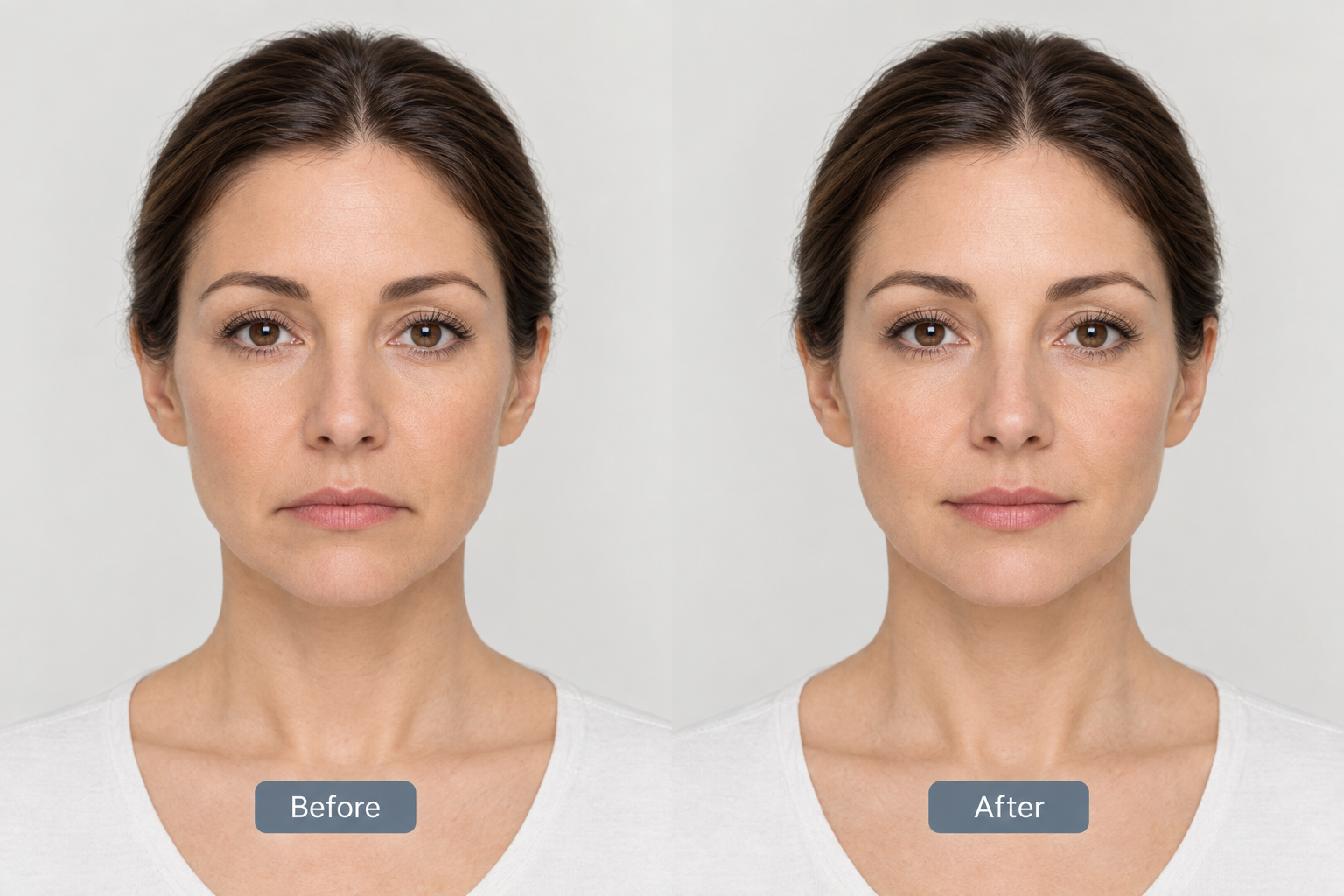
The treatment is performed using a fine needle, typically without the need for topical anaesthetic, though some practitioners offer it for patient comfort. The appointment itself is brief, usually taking no more than fifteen to thirty minutes including consultation time. Onset of effect generally occurs within two to five days, with the full result visible at around two weeks.
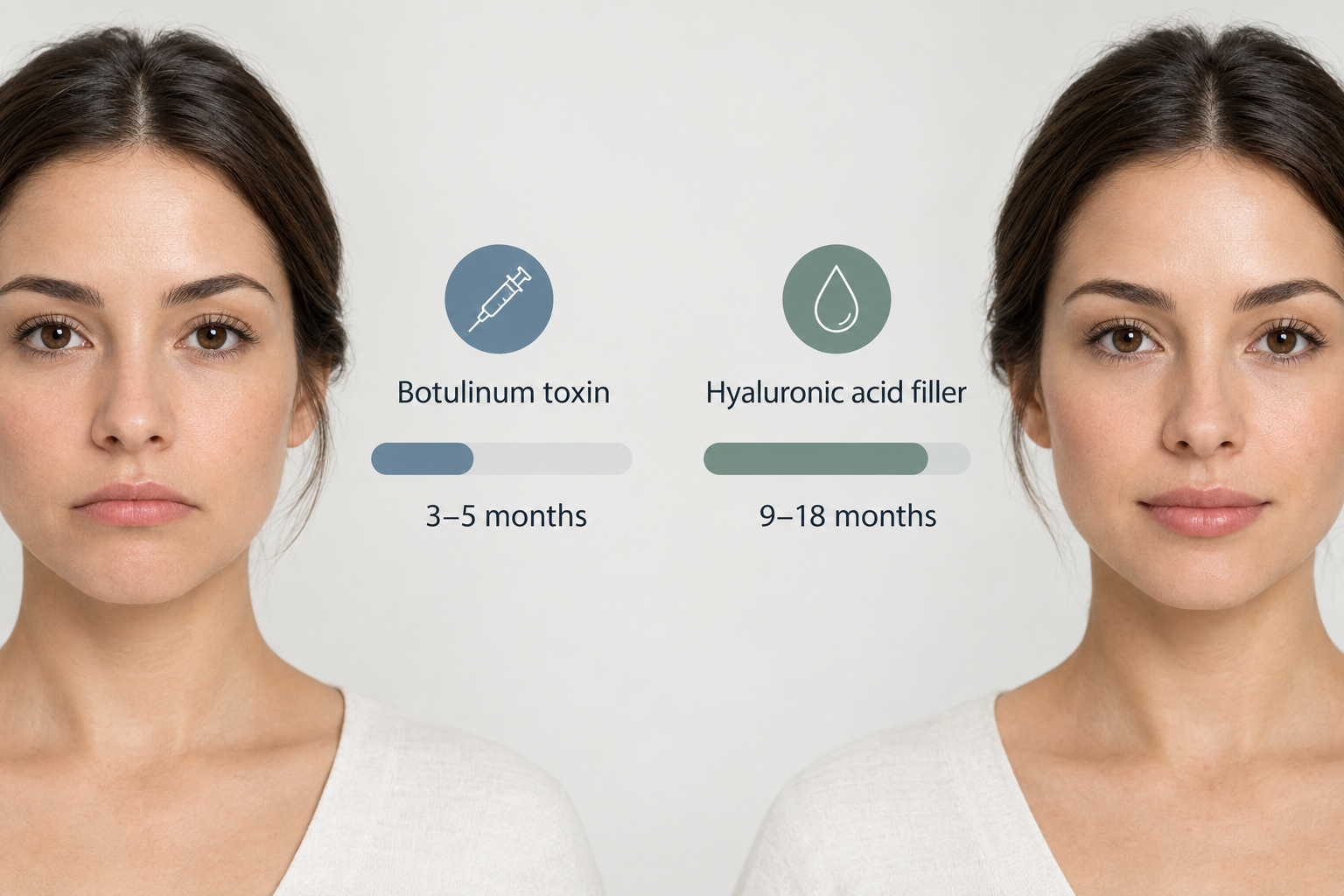
Results from botulinum toxin treatment in this area typically last between three and five months, after which the muscle activity gradually returns and the effect diminishes. Repeat treatment is required to maintain the result. The longevity of effect varies between individuals and may be influenced by factors including metabolism, muscle mass, and the specific product used. Common brands used in aesthetic practice include Botox (onabotulinumtoxinA), Dysport (abobotulinumtoxinA), and Azzalure, though the choice of product and dosing is a clinical decision made by the treating practitioner.
It is important to note that botulinum toxin in this area requires precise placement. The DAO sits in close proximity to other muscles involved in lip movement and facial expression. Inaccurate injection can affect the depressor labii inferioris or other adjacent structures, potentially causing temporary asymmetry or altered lip movement. This underscores the importance of treatment by a practitioner with specific experience in lower face anatomy.
Risks and Side Effects of Botulinum Toxin in This Area
Common side effects include temporary redness, mild swelling, and bruising at the injection site. These typically resolve within a few days. More specific risks in the lower face include temporary asymmetry of the mouth, difficulty with certain lip movements such as pursing or whistling, and, less commonly, unintended spread affecting nearby muscles. These effects are generally temporary and resolve as the product wears off. Serious complications are uncommon when treatment is performed by a qualified and experienced practitioner, but no injectable procedure is without risk.
Dermal Fillers for Mouth Corner Correction
Dermal fillers — most commonly hyaluronic acid-based products — can be used alongside or independently of botulinum toxin to address the structural contributors to a downturned mouth. Hyaluronic acid is a naturally occurring substance in the body, and injectable forms are used to restore volume, provide structural support, and soften lines in the lower face.
For a downturned mouth, filler may be placed in several areas depending on the individual’s anatomy and the practitioner’s assessment. Common treatment sites include the marionette lines, the oral commissures (the corners of the mouth themselves), and sometimes the prejowl area to improve the overall contour of the lower face. Restoring volume in these regions can help lift the appearance of the mouth corners and reduce the visual depth of lines that contribute to the downturned look.
Hyaluronic acid fillers in this area typically last between nine and eighteen months, though this varies depending on the product used, the volume injected, the treatment location, and individual factors such as metabolism and lifestyle. Results are not permanent, and repeat treatment is needed to sustain the effect.
One practical advantage of hyaluronic acid fillers is that they can be partially or fully dissolved using an enzyme called hyaluronidase if the result is unsatisfactory or if a complication occurs. This reversibility is considered an important safety feature, though dissolution is itself a medical procedure and is not without its own considerations.
Risks and Side Effects of Dermal Fillers
Common side effects include bruising, swelling, tenderness, and temporary asymmetry. The lower face and perioral area carry specific risks that patients should understand before proceeding. The oral commissure region has a relatively dense vascular supply, and there is a risk — though uncommon when performed by an experienced practitioner — of intravascular injection, which can cause tissue damage. Nodule formation, prolonged swelling, and filler migration are also possible. Patients should be informed of these risks during consultation and should ensure their practitioner is trained in the management of filler complications, including the use of hyaluronidase.
Combining Botulinum Toxin and Fillers
Many practitioners find that combining botulinum toxin with dermal filler produces more balanced results than either treatment alone. Botulinum toxin addresses the muscular component — reducing the downward pull of the DAO — while filler addresses the structural and volumetric component, softening marionette lines and supporting the oral commissures. This combination approach targets the two primary contributors to a downturned mouth simultaneously.
When both treatments are planned, the sequencing and timing may vary by practitioner preference and clinical judgement. Some practitioners prefer to treat with botulinum toxin first and assess the result before adding filler; others may perform both in the same appointment. The decision depends on the individual patient’s anatomy, the degree of correction needed, and the practitioner’s assessment.
Thread Lifts and Surgical Options
For patients with more significant skin laxity or soft tissue descent, non-surgical injectables may provide limited improvement. In these cases, a practitioner may discuss alternative or adjunctive approaches.
Absorbable thread lifts use fine sutures inserted beneath the skin to mechanically reposition tissue and stimulate collagen production. Threads placed in the lower face may help lift the mouth corners and reduce the appearance of jowling. Results from thread lifts are generally considered more modest than surgical options, and the evidence base for their long-term effectiveness remains developing. Threads carry their own risk profile, including the possibility of dimpling, thread visibility, infection, and asymmetry.
Surgical options such as a corner lip lift — a procedure that removes a small amount of skin at the mouth corners to permanently elevate their position — or a lower face lift may be appropriate for patients with significant anatomical changes that non-surgical treatments cannot adequately address. These procedures involve greater downtime, recovery, and risk, and are performed by plastic or maxillofacial surgeons rather than aesthetic practitioners. A surgical consultation would be required to assess suitability.
What to Expect at a Consultation
A thorough consultation is the essential starting point for any downturned mouth treatment. A qualified practitioner will assess the lower face in detail, considering the degree of DAO activity, the depth of marionette lines, the volume of the oral commissures, the presence of jowling, and the overall balance of the lower face. They should also review medical history, current medications, and any previous aesthetic treatments, as these factors influence both suitability and treatment planning.
Patients should be prepared to discuss their goals clearly and to ask questions about the proposed treatment, expected outcomes, and potential risks. A practitioner who provides a thorough explanation of realistic results — including the limitations of what non-surgical treatment can achieve — is demonstrating the kind of clinical transparency that supports informed consent.
Factors that may affect suitability for injectable treatments include pregnancy or breastfeeding, certain neuromuscular conditions, active infection or inflammation in the treatment area, known allergy to product components, and some medications. A full medical history review is part of responsible pre-treatment assessment.
Realistic Results and Limitations
Non-surgical treatments for a downturned mouth can produce meaningful improvements in many patients, but it is important to approach them with realistic expectations. The degree of correction achievable depends significantly on the underlying cause and severity of the concern.
Patients with mild to moderate downturning driven primarily by DAO overactivity and early volume loss tend to respond well to a combination of botulinum toxin and filler. The result is typically a subtle softening and upward shift of the mouth corners at rest, rather than a dramatic transformation. Patients with significant skin laxity, deep marionette lines, or prominent jowling may find that injectable treatments provide only partial improvement.
Results are temporary. Botulinum toxin effects in this area typically last three to five months; hyaluronic acid fillers may last nine to eighteen months depending on the product and individual factors. Ongoing maintenance treatments are required to sustain any improvement. Patients should factor this into their decision, considering both the time commitment and the cumulative cost of repeat treatments over time.
There is no non-surgical treatment that permanently corrects a downturned mouth. Surgical options offer more durable results but involve greater risk, recovery, and cost. The appropriate choice depends on the individual’s anatomy, goals, and tolerance for both the limitations of non-surgical approaches and the demands of surgical recovery.
Alternatives Worth Considering
Patients who are not ready for injectable treatment, or who want to explore all options, may ask about non-injectable alternatives. Radiofrequency and ultrasound-based skin tightening devices are sometimes used in the lower face to stimulate collagen and improve skin laxity, though their effect on the specific concern of downturned mouth corners is generally modest and the evidence for significant structural correction in this area remains limited.
Skincare approaches including retinoids and collagen-stimulating ingredients may support overall skin quality but are unlikely to meaningfully alter the resting position of the mouth corners. Facial exercises are sometimes discussed, but there is limited clinical evidence that targeted exercises reliably correct a downturned mouth caused by muscular imbalance or volume loss.
For patients whose primary concern is the appearance of marionette lines rather than the mouth corner position itself, skin resurfacing treatments such as chemical peels or laser resurfacing may be worth discussing with a practitioner, as these can improve skin texture and the appearance of fine lines in the perioral area.
Frequently Asked Questions
Can botulinum toxin alone correct a downturned mouth?
Botulinum toxin injected into the depressor anguli oris muscle can improve the resting position of the mouth corners by reducing the downward pull of that muscle. For some patients, this alone produces a satisfying result. For others — particularly those with significant volume loss or deep marionette lines — filler may also be needed to address the structural component. A practitioner will assess which approach is most appropriate for your anatomy.
Is treatment for a downturned mouth painful?
Most patients find botulinum toxin injections in this area tolerable, describing a brief sharp sensation at the injection site. Dermal filler injections may cause slightly more discomfort, particularly at the oral commissures. Topical anaesthetic cream can be applied before treatment to reduce discomfort, and many filler products contain lidocaine, a local anaesthetic, within the formulation. Discomfort during the procedure is generally short-lived.
How long does it take to see results?
Botulinum toxin typically begins to take effect within two to five days, with the full result visible at around two weeks. Dermal filler results are visible more immediately, though initial swelling may temporarily affect the appearance. The final settled result from filler is usually apparent within one to two weeks once any swelling has resolved.
Will treatment look natural?
When performed by an experienced practitioner using appropriate volumes and placement, treatment for a downturned mouth is intended to produce a subtle, natural-looking improvement rather than an obvious change. Overfilling or imprecise botulinum toxin placement can produce an unnatural result, which is one reason why practitioner experience and conservative dosing are important considerations.
How often will I need repeat treatments?
Botulinum toxin in this area typically requires repeat treatment every three to five months to maintain the effect. Hyaluronic acid fillers may last nine to eighteen months before a top-up is needed. Individual variation is significant, and your practitioner will advise on timing based on how your result progresses.
Are there any reasons I might not be suitable for these treatments?
Contraindications vary by treatment and individual. Pregnancy, breastfeeding, certain neuromuscular conditions, active skin infection in the treatment area, and some medications may affect suitability. A full medical history review at consultation is essential to determine whether treatment is appropriate for you.
Is Downturned Mouth Treatment Worth Considering?
For patients whose downturned mouth causes genuine concern about their resting expression, non-surgical treatments — particularly botulinum toxin and hyaluronic acid filler — offer a practical and relatively low-downtime option that may produce meaningful improvement. The treatments are well-established in aesthetic practice, and when performed by a qualified and experienced practitioner, the risk profile is manageable for most suitable patients.
The key limitations to weigh honestly are the temporary nature of results, the need for ongoing maintenance, the variable degree of correction achievable depending on anatomy, and the fact that significant structural changes may not respond adequately to non-surgical approaches alone. Patients with mild to moderate concerns and realistic expectations tend to be the most satisfied with outcomes.
If you are considering treatment, a consultation with a qualified medical aesthetic practitioner is the appropriate next step. A thorough assessment of your anatomy, a clear explanation of what treatment can and cannot achieve, and an honest discussion of risks will help you make an informed decision about whether this approach is right for you.


