
Dissolving Lip Filler: A Complete Guide to Hyaluronidase Lip Reversal
Dissolving lip filler with hyaluronidase is one of the few genuinely reversible options in aesthetic medicine. Whether you are unhappy with the shape or volume of existing filler, experiencing a complication, or simply want to return to your natural lip appearance, hyaluronidase enzyme treatment can break down hyaluronic acid filler relatively quickly. This article explains how the process works, what the treatment experience involves, realistic outcomes, risks, and the factors worth considering before booking a consultation.
Key Takeaways
- Hyaluronidase is an enzyme that dissolves hyaluronic acid-based lip fillers and can produce visible results within 24 to 48 hours.
- The treatment is not risk-free; allergic reactions, uneven dissolution, and temporary swelling are among the possible side effects.
- Hyaluronidase only works on hyaluronic acid fillers — it cannot dissolve permanent fillers, collagen-stimulating products, or fat.
- Most patients can have new filler placed after a waiting period, typically two to four weeks, once swelling has resolved.
- A thorough consultation with a qualified practitioner is essential to assess filler type, placement history, and individual suitability.
What Is Hyaluronidase and How Does It Dissolve Lip Filler?
Hyaluronidase is an enzyme that occurs naturally in the human body, where it helps break down hyaluronic acid — a substance found in connective tissue, skin, and joints. In aesthetic medicine, a pharmaceutical-grade form of hyaluronidase is injected directly into the area containing hyaluronic acid filler. The enzyme works by cleaving the molecular bonds within the hyaluronic acid gel, causing it to break down and be absorbed by the body’s own tissue.
Most lip fillers used in clinical practice today are hyaluronic acid-based products, which means they are, in principle, dissolvable. Common brands include Juvederm, Restylane, Belotero, and Teosyal, among others. Each product has a different cross-linking density — a measure of how tightly the hyaluronic acid molecules are bonded together — which influences how readily hyaluronidase can break them down. More densely cross-linked fillers may require a higher dose or a repeat treatment session to dissolve fully.
Hyaluronidase preparations used in the UK and many other countries include Hyalase, which is a licensed medical product. The use of hyaluronidase for filler dissolution is considered an off-label application in many jurisdictions, meaning it is used outside its originally licensed indication. This does not make it inappropriate, but it does mean the practitioner should have specific training and experience in its use.
Why Do People Choose to Dissolve Lip Filler?
The reasons patients seek lip filler dissolution are varied and equally valid from a clinical perspective. Dissatisfaction with aesthetic outcomes is the most common motivation. This may include lips that appear overfilled, asymmetrical, lumpy, or unnaturally shaped — sometimes described as a “duck lip” appearance. Filler migration, where product moves beyond the lip border over time, is another frequent concern that can create an indistinct lip edge or a puffy appearance around the mouth.
Complications provide a more urgent reason for dissolution. Vascular occlusion — where filler compresses or enters a blood vessel, restricting blood flow — is a rare but serious complication that requires immediate treatment with hyaluronidase to prevent tissue damage. In this context, hyaluronidase is used as an emergency intervention rather than an elective procedure. Practitioners trained in managing filler complications should have hyaluronidase immediately available for this reason.
Some patients simply want to return to their natural lip appearance after years of filler treatments, or they want a clean baseline before trying a different product or technique. Others may have accumulated filler from multiple sessions over time, resulting in a look they no longer find desirable.
What Happens During the Dissolving Lip Filler Appointment?
A hyaluronidase treatment appointment typically begins with a consultation to review the patient’s filler history, including the products used, the number of previous sessions, and the approximate volume placed. This information helps the practitioner estimate the likely dose of hyaluronidase required and set realistic expectations about the outcome.
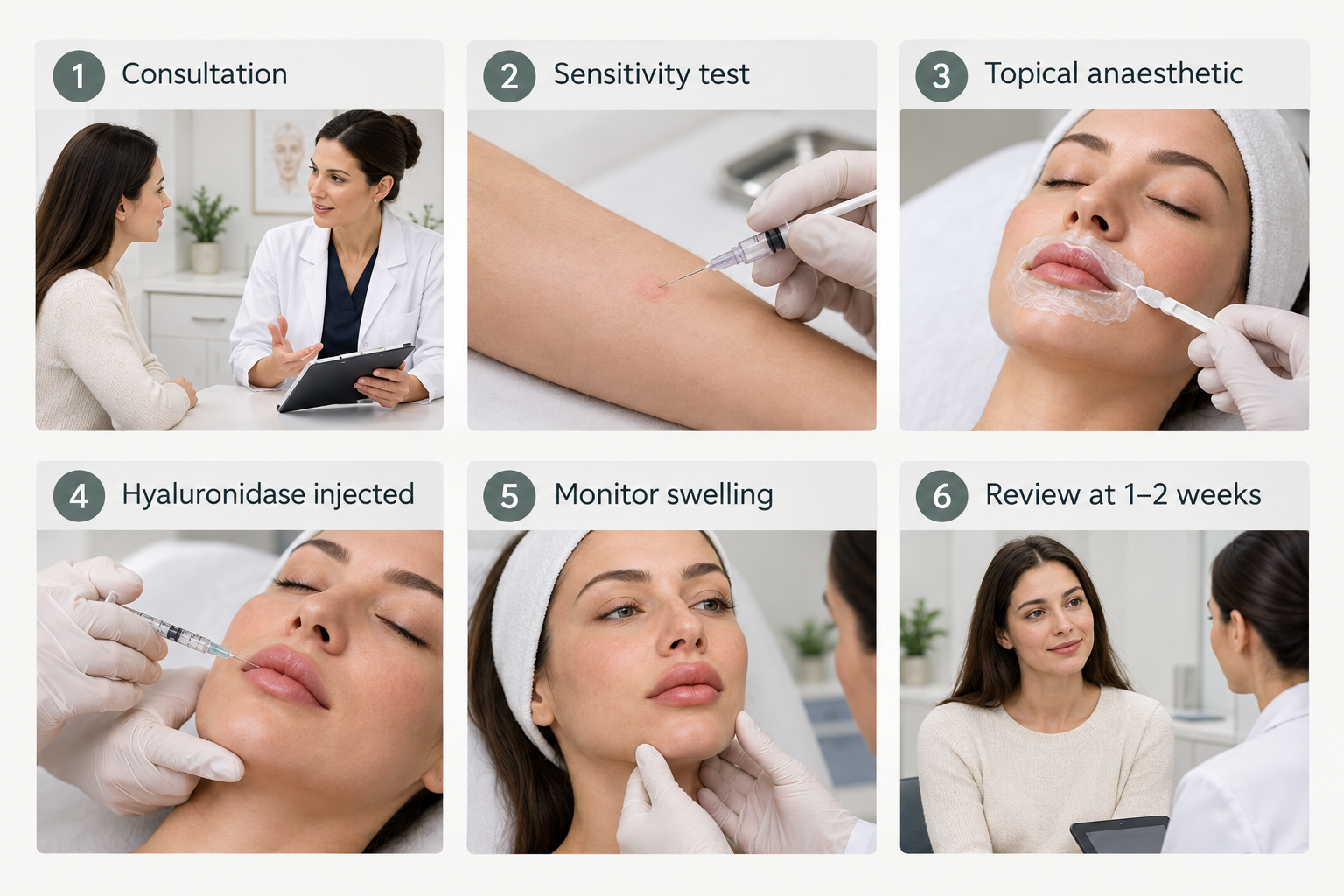
Before the enzyme is injected, many practitioners perform a skin sensitivity test, applying a small amount of hyaluronidase to the inner forearm and waiting approximately 15 to 30 minutes to check for an allergic reaction. This step is not universally performed, and its reliability as a predictor of systemic allergy is debated in the clinical literature, but it remains a common precautionary measure. Patients with a known allergy to bee stings should inform their practitioner, as hyaluronidase shares structural similarities with enzymes found in bee venom.
A topical anaesthetic cream is usually applied to the lips before the injections to reduce discomfort. Hyaluronidase is then injected into the lip tissue using a fine needle or cannula. The number of injection points and the volume used will depend on the amount and distribution of filler being dissolved. The procedure itself is generally brief, often completed within 15 to 30 minutes.
Swelling typically begins within minutes of the injections and can be pronounced in the first 24 to 48 hours. This initial swelling can make it difficult to assess the true result immediately after treatment. Most practitioners advise waiting at least one to two weeks before evaluating the outcome or deciding whether a further session is needed.
How Quickly Does Hyaluronidase Work?
Hyaluronidase begins acting on hyaluronic acid filler almost immediately after injection. Patients often notice a visible reduction in lip volume within a few hours, and the most significant changes are usually apparent within 24 to 48 hours. However, the full result — once post-treatment swelling has resolved — may not be clearly visible for one to two weeks.
The speed and completeness of dissolution depend on several factors: the specific filler product used, its cross-linking density, how long the filler has been in place, the volume present, and the dose of hyaluronidase administered. Older filler that has partially integrated with surrounding tissue may be more resistant to dissolution than recently placed product. In some cases, a second treatment session is needed to achieve the desired level of correction.
Risks and Side Effects of Dissolving Lip Filler
Hyaluronidase treatment carries its own set of risks and side effects that patients should understand before proceeding. The most common immediate effects are swelling, redness, bruising, and tenderness at the injection sites. These typically resolve within a few days to a week.
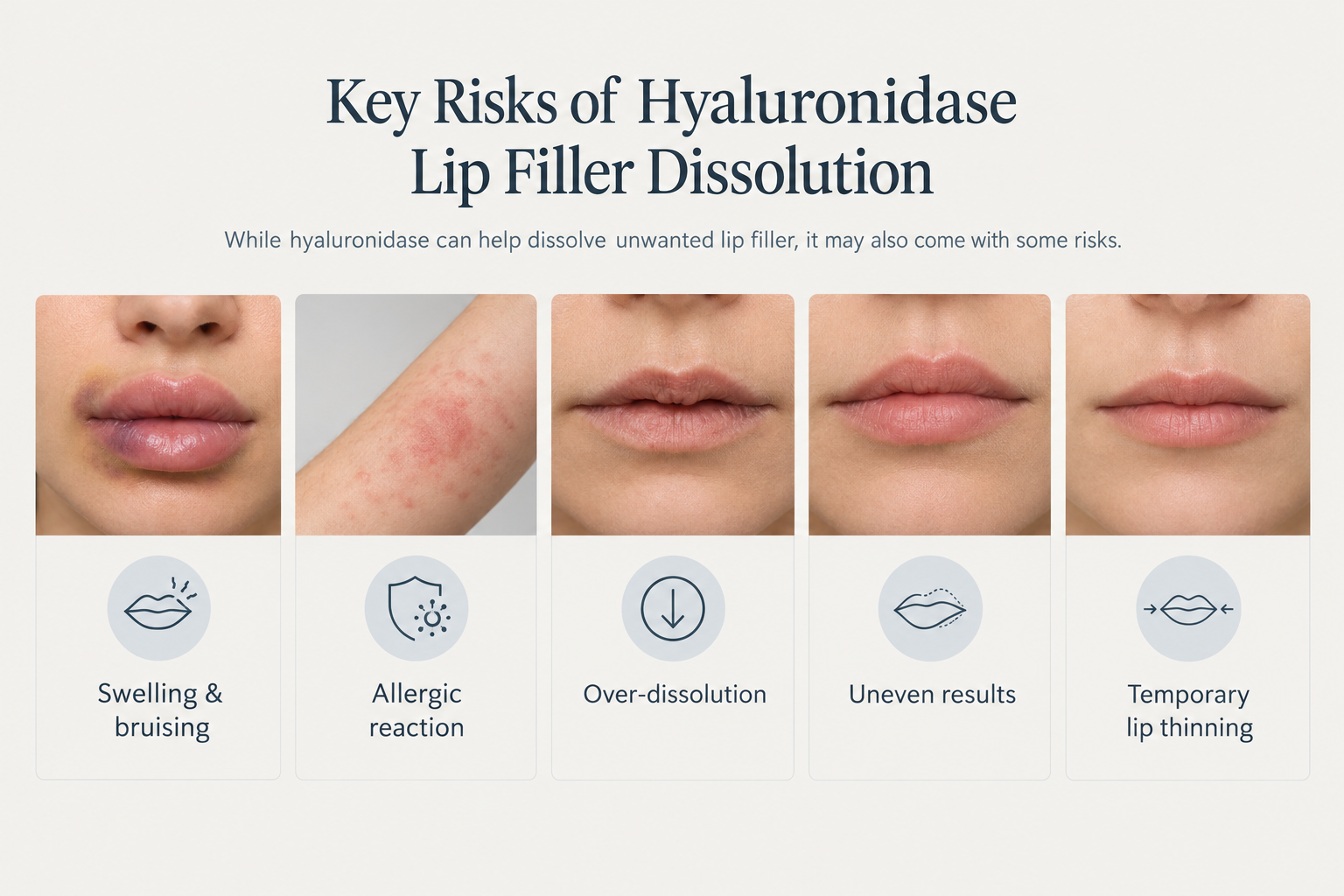
Allergic reactions are a more serious concern. These can range from localised skin reactions — such as itching, hives, or redness — to, in rare cases, a systemic allergic response. Anaphylaxis following hyaluronidase injection has been reported in the medical literature, though it is uncommon. For this reason, treatment should be carried out in a setting where emergency equipment and medications are available.
Over-dissolution is a risk that is sometimes underappreciated. Because hyaluronidase does not act exclusively on injected filler — it can also break down the body’s own naturally occurring hyaluronic acid in the surrounding tissue — excessive use may temporarily reduce natural tissue volume. This can result in the lips appearing thinner than they were before any filler was ever placed. This effect is generally temporary, as the body replenishes its natural hyaluronic acid over time, but it can be distressing for patients who were not expecting it.
Uneven dissolution is another possible outcome. If filler is distributed unevenly across the lip, or if the hyaluronidase is not distributed evenly during injection, some areas may dissolve more completely than others, resulting in asymmetry. A follow-up session can address residual filler if needed.
Infection at the injection site is a general risk associated with any injectable procedure, though it is uncommon when treatment is performed under appropriate clinical conditions.
Who May Be Suitable for Hyaluronidase Lip Reversal?
Hyaluronidase lip reversal may be appropriate for patients who have hyaluronic acid filler in their lips and are experiencing dissatisfaction with the aesthetic result, filler migration, palpable lumps or nodules, or a complication such as vascular compromise. It is also a reasonable option for patients who want to remove accumulated filler before reassessing their goals.
Suitability depends on a clinical assessment. Relevant factors include the type of filler present — hyaluronidase is only effective against hyaluronic acid products — the patient’s allergy history, and any previous reactions to hyaluronidase or bee venom. Patients who are pregnant or breastfeeding are generally advised to postpone elective injectable treatments, including dissolution, until after this period.
Patients who have had permanent fillers, such as silicone or polyacrylamide-based products, or biostimulatory fillers such as calcium hydroxylapatite or poly-L-lactic acid, should be aware that hyaluronidase will not dissolve these substances. Identifying the type of filler present is therefore an important part of the pre-treatment assessment. If there is uncertainty about what product was used — for example, if filler was placed by a different practitioner — this should be discussed openly before proceeding.
Who May Not Be Suitable
Hyaluronidase treatment may not be appropriate for patients with a known allergy to hyaluronidase or bee venom, those with active infection or inflammation in the treatment area, or those who have non-hyaluronic acid filler in the lips. Patients with certain autoimmune conditions or those taking medications that affect immune response should discuss their medical history in detail with their practitioner before treatment. As with all injectable procedures, individual medical history and current health status are central to the suitability assessment.
Recovery and Downtime After Dissolving Lip Filler
Recovery after hyaluronidase lip treatment is generally straightforward for most patients. The main concern in the first 24 to 48 hours is swelling, which can be significant and may temporarily make the lips look uneven or larger than expected before the filler has fully dissolved. Applying a cold compress gently to the area can help manage swelling, though patients should follow their practitioner’s specific aftercare instructions.
Bruising is common and may take several days to resolve. Most patients are able to return to normal daily activities immediately or within a day of treatment, though some choose to allow a few days for visible swelling and bruising to settle before social engagements. Strenuous exercise, excessive heat such as saunas or steam rooms, and alcohol are typically advised against for 24 to 48 hours after treatment, as these can increase swelling and bruising.
Patients should avoid touching or massaging the lips immediately after treatment unless specifically instructed to do so by their practitioner. Follow-up appointments are usually scheduled one to two weeks after treatment to assess the result and determine whether any further dissolution or corrective treatment is needed.
Can You Have New Filler After Dissolving?
Most patients who dissolve their lip filler with the intention of having new filler placed are advised to wait approximately two to four weeks before proceeding. This waiting period allows post-treatment swelling to fully resolve, gives the practitioner a clear view of the baseline lip anatomy, and allows any residual hyaluronidase activity to subside — since injecting new hyaluronic acid filler too soon after hyaluronidase treatment may result in the new filler being partially broken down before it has a chance to integrate.
Some practitioners recommend a longer waiting period, particularly if a large volume of filler was dissolved or if the patient experienced significant swelling. The timing of new filler placement should be guided by the treating practitioner based on individual assessment rather than a fixed universal rule.
Patients who dissolve their filler and choose not to have new product placed should be aware that their lips may appear slightly thinner than their pre-filler baseline for a period of weeks, due to the temporary reduction in natural hyaluronic acid caused by the enzyme. This typically resolves as the body replenishes its own hyaluronic acid stores.
Alternatives to Dissolving Lip Filler
For patients who are unhappy with their lip filler but uncertain about full dissolution, there are a few alternative approaches worth discussing with a qualified practitioner. In some cases, strategic placement of additional filler can correct asymmetry or improve shape without requiring full dissolution — though this approach is not always appropriate and depends on the nature of the concern and the volume already present.
Waiting for the filler to naturally degrade is another option. Hyaluronic acid fillers are temporary by nature, and most lip fillers will break down over a period of six to eighteen months, depending on the product, the individual’s metabolism, and lifestyle factors. For patients whose concerns are mild and who are not experiencing complications, allowing natural degradation may be a reasonable choice.
Massage and manual manipulation of lumps or nodules is sometimes suggested for minor irregularities in the early weeks after filler placement, but this should only be done under the guidance of the treating practitioner and is not a substitute for hyaluronidase when significant correction is needed.
For patients considering lip enhancement after dissolution, alternatives to hyaluronic acid filler include lip flip treatments using botulinum toxin — which relaxes the muscle at the upper lip border to create a subtle eversion effect — or surgical options such as lip lift procedures for longer-lasting structural changes. These alternatives have different mechanisms, outcomes, and risk profiles and should be discussed in the context of individual goals.
Frequently Asked Questions
Does dissolving lip filler hurt?
Most patients experience some discomfort during hyaluronidase injections, comparable to the sensation of having filler placed. Topical anaesthetic cream applied before the procedure helps reduce this. The lips may feel tender and swollen for a day or two after treatment.
How many sessions of hyaluronidase are needed to dissolve lip filler?
Many patients achieve satisfactory dissolution in a single session, but a second appointment is sometimes needed — particularly if a large volume of filler is present, if the filler is densely cross-linked, or if the initial dose was conservative. The need for a follow-up session is assessed at the review appointment, usually one to two weeks after the first treatment.
Will my lips look completely natural after dissolving filler?
In most cases, the lips return to an appearance close to their pre-filler baseline, though this can take a few weeks as swelling resolves and natural hyaluronic acid replenishes. Some patients notice their lips appear slightly thinner than expected in the short term due to temporary reduction of natural tissue hyaluronic acid. Results vary depending on how long filler was in place and how much was used over time.
Can hyaluronidase dissolve filler that has migrated above the lip border?
Yes. Hyaluronidase can dissolve hyaluronic acid filler wherever it is located in the tissue, including product that has migrated beyond the lip border. Accurate placement of the enzyme by an experienced practitioner is important to ensure the migrated filler is effectively targeted.
Is it safe to dissolve lip filler?
Hyaluronidase lip reversal is considered a well-established procedure in aesthetic medicine, but it is not without risk. Allergic reactions, over-dissolution, bruising, and swelling are among the possible side effects. The procedure should be performed by a qualified practitioner in an appropriate clinical setting with access to emergency equipment. Individual risk depends on medical history, allergy status, and the specific clinical circumstances.
How long after dissolving can I have new lip filler?
Most practitioners recommend waiting two to four weeks after hyaluronidase treatment before placing new hyaluronic acid filler. This allows swelling to resolve and residual enzyme activity to subside, helping to ensure the new filler integrates properly.
What if I don’t know what type of filler I have?
If you are unsure what filler product was used — for example, if it was placed by a different practitioner — it is important to disclose this during your consultation. Hyaluronidase is only effective against hyaluronic acid fillers. An experienced practitioner may be able to assess the likely filler type based on clinical examination, but in some cases the history may be genuinely unclear. This uncertainty should be discussed openly before proceeding with dissolution.
Is Dissolving Lip Filler the Right Decision for You?
Dissolving lip filler with hyaluronidase is a well-established and often effective option for patients who are unhappy with their lip filler results, experiencing complications, or simply wanting to return to a more natural appearance. The procedure works relatively quickly, and for most patients the recovery is manageable. However, it is not a trivial intervention — risks including allergic reaction, over-dissolution, and temporary changes to natural lip volume are real and should be weighed carefully.
The decision to dissolve lip filler is best made in consultation with a qualified and experienced aesthetic practitioner who can assess your filler history, identify the product type, discuss realistic outcomes, and manage any complications that may arise. If you are considering this treatment, look for a practitioner with specific training in filler complications and hyaluronidase use, and ensure the appointment takes place in a clinical setting equipped to handle adverse reactions. A thorough consultation before any treatment is the most important step toward a safe and satisfying outcome.


