Botox Nose Lift Before and After: Results, Realistic Expectations and Limitations
A Botox nose lift — sometimes called a liquid nose job or non-surgical rhinoplasty — uses small amounts of botulinum toxin to relax specific muscles around the nasal tip, producing a subtle upward shift in tip position. Before-and-after results can look impressive in the right candidate, but understanding what the treatment can and cannot achieve is essential before booking a consultation. This guide explains the mechanism, what realistic results look like, how long they last, who is likely to benefit, and where the treatment has clear limits.
Key Takeaways
- A Botox nose lift targets the depressor septi nasi muscle to reduce nasal tip drooping, particularly the downward movement that occurs when smiling or speaking.
- Results are subtle and natural-looking — the treatment improves dynamic muscle activity rather than altering bone or cartilage structure.
- Effects are temporary, typically lasting three to four months, and maintenance treatments are required to sustain the outcome.
- The procedure cannot correct a dorsal hump, a deviated septum, or a structurally wide nose — surgical rhinoplasty remains the appropriate option for those concerns.
- Choosing a qualified practitioner with detailed nasal anatomy knowledge is critical to achieving a safe and proportionate result.
What Is a Botox Nose Lift and How Does It Work?
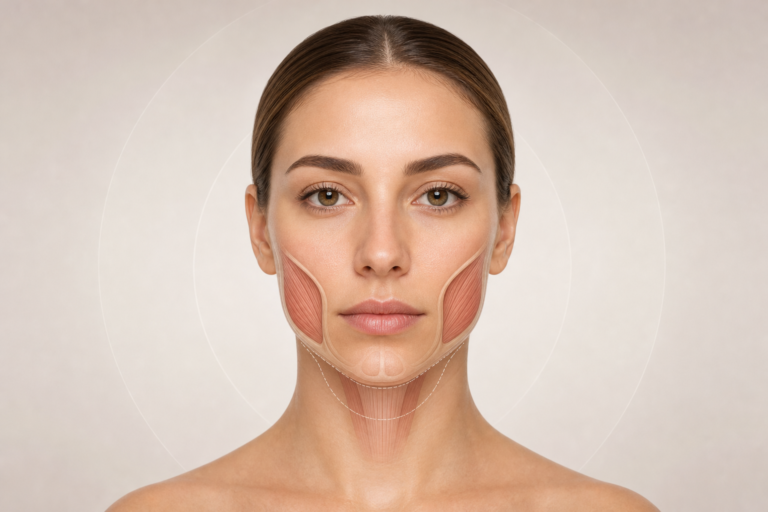
The Botox nose lift is a targeted injection technique that uses botulinum toxin to weaken the depressor septi nasi, a small muscle that runs from the base of the nasal septum to the upper lip. When this muscle contracts — which happens naturally during smiling, laughing, or speaking — it pulls the nasal tip downward, creating what is commonly described as a plunging or drooping nasal tip. By partially relaxing this muscle, the treatment reduces that downward pull and allows the tip to sit in a slightly more elevated position.
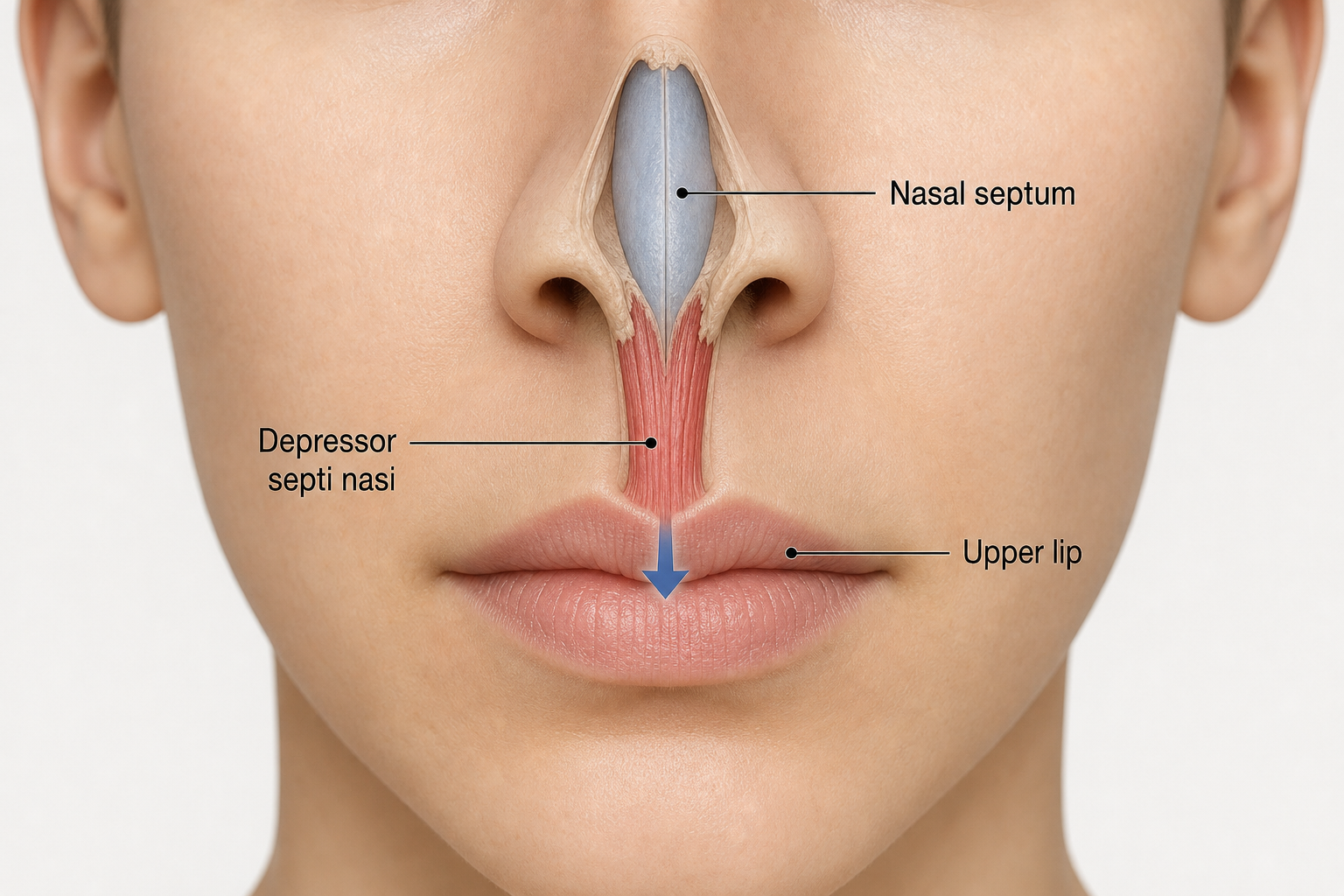
In some patients, the nasalis muscle and the levator labii superioris alaeque nasi may also be addressed, depending on whether nostril flare or nasal base width is a concern. The levator labii superioris alaeque nasi contributes to nostril flaring during facial expression, and carefully placed botulinum toxin can reduce this dynamic movement. The overall effect is a muscle-mediated effect rather than a structural change — the underlying bone and cartilage remain entirely unaffected.
The nasolabial angle — the angle between the upper lip and the base of the nose — is the measurable metric that changes with this treatment. In clinical terms, a small upward shift in this angle, even of a few degrees, can make the nasal tip appear more refined and the profile more balanced. For a lay reader, this translates to a nose that looks slightly less heavy or downturned, particularly in photographs taken during natural expression rather than at rest.
What Do Before-and-After Results Actually Show?
Before-and-after photographs for Botox nose lift treatments typically demonstrate a modest but visible improvement in nasal tip position, most apparent in profile-view images taken during smiling. At rest, the difference between treated and untreated states is often subtle — the tip may appear marginally more elevated and the overall nasal-facial proportion slightly more harmonious. The most clinically meaningful change is usually visible in dynamic shots, where the nose is photographed mid-expression, because this is where the depressor septi nasi has its greatest influence.
Patients with significant nasal tip drooping on smiling tend to show the clearest before-and-after contrast. Those whose tip position changes little during expression — meaning their concern is structural rather than muscle-driven — will see minimal difference, because the treatment addresses dynamic muscle activity rather than fixed anatomy.
How to Critically Evaluate Before-and-After Photos
Before-and-after photo interpretation requires some care. Reputable clinics use standardised clinical photography: consistent lighting, identical camera distance, the same head position, and matched facial expression across both images. When these conditions are not controlled, apparent improvements may reflect differences in lighting angle, head tilt, or expression rather than genuine treatment outcomes. Look for photos taken from the same angle — typically frontal, three-quarter, and lateral views — with the subject in a neutral expression for the resting comparison and a natural smile for the dynamic comparison.
It is also worth noting that clinic before-and-after photos represent selected outcomes and may not reflect average results across all patients. A responsible provider will show a range of results, including modest improvements, rather than only the most dramatic cases. Asking to see photos of patients with a similar concern to your own gives a more realistic indication of what you might expect.
Results Timeline: What to Expect Week by Week
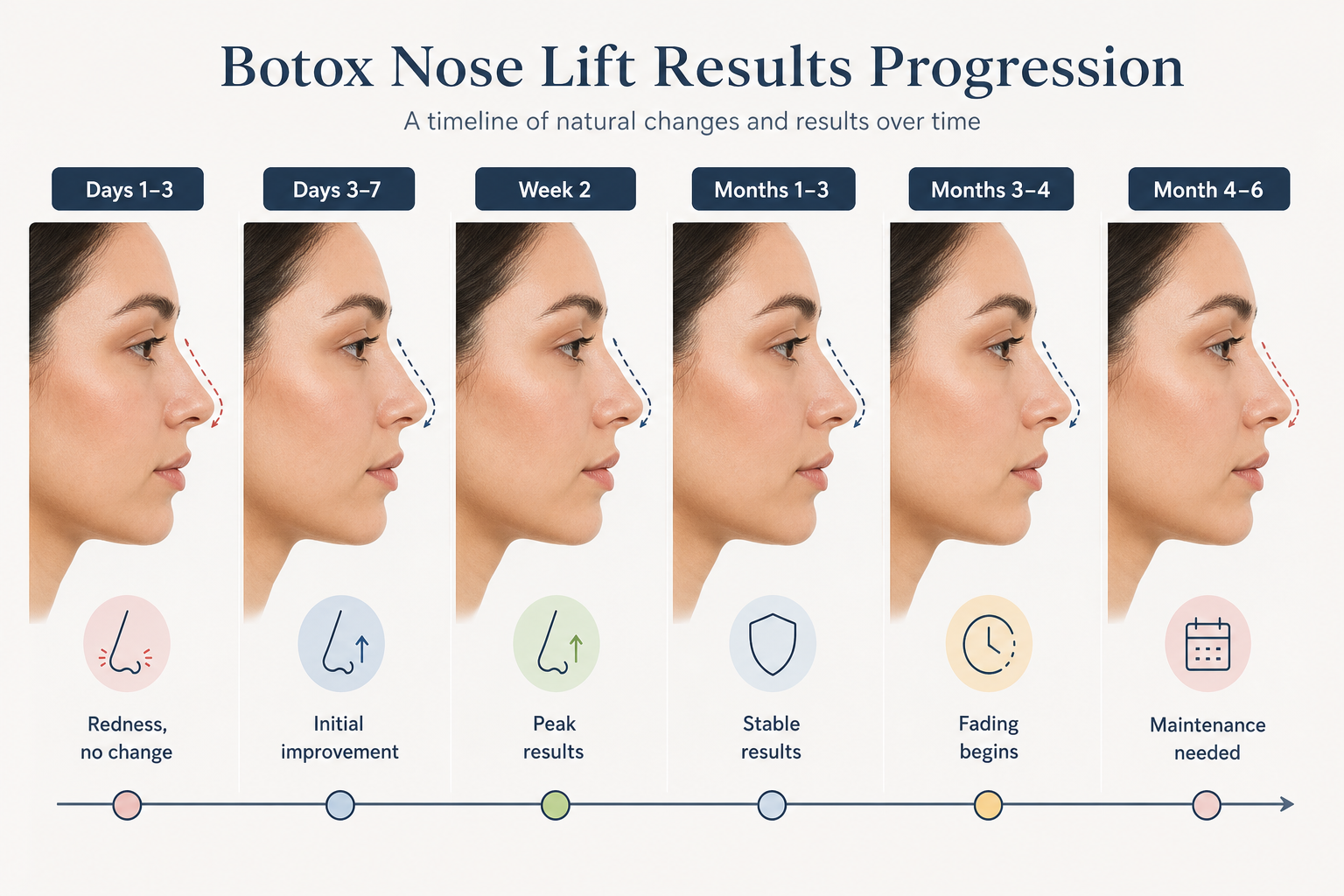
Botulinum toxin does not produce immediate results. Understanding the typical timeline helps patients avoid unnecessary concern in the early days after treatment and know when to assess the outcome accurately.
- Days 1–3: Minor redness, swelling, or tenderness at the injection site may be present. No visible change in nasal tip position at this stage.
- Days 3–7: The neurotoxin begins to take effect as the depressor septi nasi starts to relax. An initial improvement in tip position may become noticeable, particularly on smiling.
- Week 2: Peak results are typically visible by the end of the second week. This is the appropriate time for a follow-up appointment to assess the outcome and determine whether any minor adjustment is needed.
- Months 1–3: Results remain stable. The nasal tip maintains its improved position at rest and during expression.
- Months 3–4: The botulinum toxin gradually metabolises and muscle activity begins to return. Most patients notice the tip starting to resume its original position during this period.
- Month 4–6: Full muscle function has typically returned for most patients, though individual variation exists. Maintenance treatments are required to sustain the result.
How Long Do Results Last?
Botox nose lift results are temporary, which is one of the most important facts for prospective patients to understand. For most people, the effect lasts approximately three to four months, though some individuals report results persisting closer to five or six months. Duration depends on several factors, including the number of units used, individual metabolism of the toxin, the strength of the depressor septi nasi, and how frequently the patient has had previous botulinum toxin treatments.
Patients who have regular maintenance treatments over time sometimes find that the muscle gradually weakens with repeated relaxation, which may extend the interval between sessions. However, the clinical evidence for long-term muscle atrophy from repeated nasal Botox injections remains limited, and this should not be presented as a reliable or predictable outcome. A qualified practitioner will advise on an appropriate maintenance schedule based on individual response.
Who Is a Good Candidate?
The Botox nose lift produces the most meaningful results in a specific group of patients. Ideal candidates share the following characteristics:
- A nasal tip that visibly droops or plunges when smiling or speaking, indicating active depressor septi nasi involvement
- Mild to moderate tip drooping rather than severe structural ptosis
- Realistic expectations about the degree of improvement — a subtle lift rather than a dramatic transformation
- No significant structural concerns such as a dorsal hump, deviated septum, or wide bony nasal bridge
- Good general health with no contraindications to botulinum toxin
- A desire for a temporary, low-downtime option before committing to surgical rhinoplasty
Patients who are pregnant or breastfeeding, who have a known allergy to botulinum toxin or its components, or who have a neuromuscular disorder such as myasthenia gravis are not suitable candidates. A thorough medical history review at consultation is essential before proceeding.
What a Botox Nose Lift Cannot Do
Understanding the limitations of this treatment is as important as understanding its benefits. The Botox nose lift is a muscle-relaxing procedure and has no effect on the structural anatomy of the nose. Specifically, it cannot:
- Alter bone or cartilage in any way
- Reduce or smooth a dorsal hump on the nasal bridge
- Straighten a crooked or deviated nose
- Narrow a wide bony nasal bridge
- Reduce a bulbous or rounded cartilaginous tip
- Correct breathing difficulties related to structural anatomy
- Provide permanent results
- Replace surgical rhinoplasty for patients with significant structural concerns
Patients who are primarily bothered by the shape of their nasal bridge, the width of their bony nose, or a pronounced dorsal hump are unlikely to see meaningful improvement from botulinum toxin alone. In these cases, dermal filler rhinoplasty or surgical rhinoplasty may be more appropriate options to discuss with a practitioner.
Risks and Side Effects
The Botox nose lift has a generally favourable safety profile when performed by an experienced injector with detailed knowledge of nasal anatomy, but risks exist and should be discussed openly before treatment.
Common side effects include temporary bruising, swelling, redness, and mild tenderness at the injection site. These typically resolve within a few days and do not affect the final result.
Less common risks include asymmetry of the nasal tip, unintended weakness of adjacent muscles, and upper lip ptosis — a drooping or elongation of the upper lip caused by toxin diffusion into the levator labii superioris. Upper lip ptosis is one of the more functionally noticeable complications and can temporarily affect smile symmetry and lip movement. Conservative dosing and precise anatomical placement significantly reduce this risk.
Rare risks include changes to nasal airflow if toxin diffuses to muscles involved in maintaining nostril patency, and the development of resistance to botulinum toxin with repeated treatments over time. These outcomes are uncommon but underscore the importance of selecting a provider with specific experience in nasal injections rather than a generalist injector.
Botox Nose Lift vs. Dermal Filler vs. Surgical Rhinoplasty
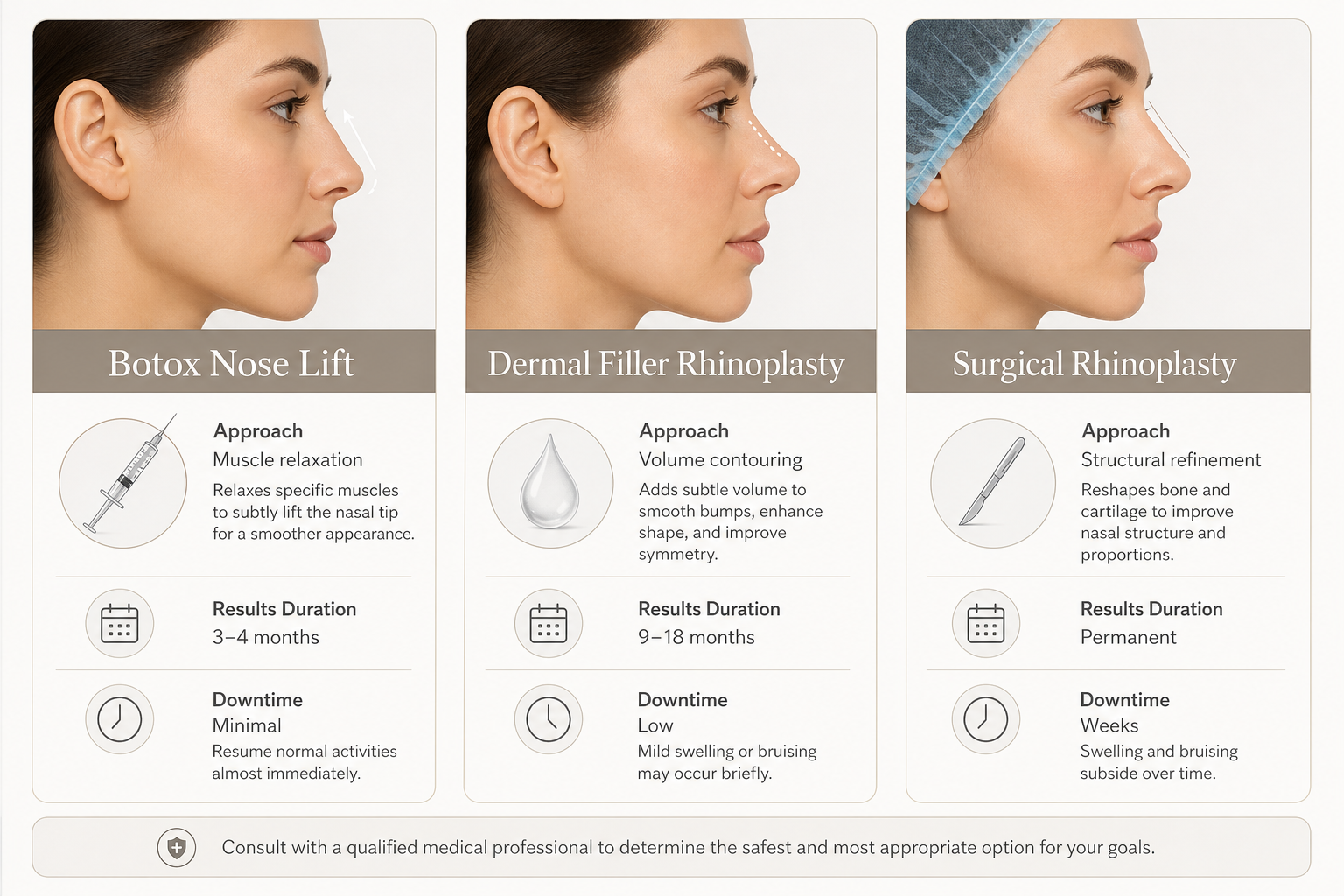
Three main options exist for non-surgical and surgical nose refinement. Each addresses different concerns and suits different patient profiles. The table below summarises the key differences to help guide an informed conversation with a practitioner.
| Feature | Botox Nose Lift | Dermal Filler Rhinoplasty | Surgical Rhinoplasty |
|---|---|---|---|
| Mechanism | Muscle relaxation (botulinum toxin) | Volume addition and contouring (hyaluronic acid) | Structural reshaping of bone and cartilage |
| Primary concern addressed | Dynamic nasal tip drooping, nostril flare | Dorsal hump camouflage, bridge asymmetry, tip projection | Structural deformity, hump, deviation, tip reshaping |
| Results duration | 3–4 months (some up to 6) | 9–18 months depending on product and area | Permanent (subject to natural ageing) |
| Downtime | Minimal to none | Minimal (bruising possible) | 2–4 weeks or more |
| Reversibility | Fully reversible (wears off naturally) | Partially reversible with hyaluronidase | Not reversible |
| Vascular risk | Lower than filler | Higher (vascular occlusion risk in nasal area) | Surgical risks apply |
| Approximate cost | £200–£600 / $250–$1,000 | £400–£900 / $600–$1,500 | £5,000–£12,000+ / $7,000–$20,000+ |
| Maintenance required | Every 3–4 months | Every 9–18 months | None (for structural result) |
A useful decision framework: choose Botox if your primary concern is a nasal tip that droops during smiling or speaking, as this is a dynamic muscle-mediated concern that botulinum toxin directly addresses. Choose dermal filler if your concern is a visible dorsal hump, a slight bridge asymmetry, or a lack of tip projection — these are contour concerns that volume can camouflage. Choose surgical rhinoplasty if your concern is structural, permanent, or involves breathing function. Many patients benefit from a combination approach, and a practitioner experienced in all three options is best placed to advise on the most appropriate route.
The Procedure: What to Expect at Your Appointment
A Botox nose lift appointment is typically brief, usually completed within 15 to 30 minutes. A topical numbing cream may be applied beforehand, though many patients find the injections tolerable without it given the small volumes and fine needle gauge used. The practitioner will assess the nasal anatomy, identify the relevant muscles, and mark the injection points before administering the botulinum toxin using a fine needle.
The number of units used varies depending on the concern being addressed. Nasal tip lifting typically requires a small number of units targeted at the depressor septi nasi, while treating nostril flare or bunny lines along the nasalis muscle may require additional units. A conservative dosing approach is standard practice for first-time treatments, with the option to assess and refine at a two-week follow-up appointment.
There is no significant downtime. Most patients return to normal activities immediately, though practitioners generally advise avoiding strenuous exercise, excessive heat, and pressure on the treated area for the first 24 to 48 hours. Lying face-down and wearing glasses that rest on the nasal bridge should also be avoided in the immediate post-treatment period to minimise the risk of toxin migration.
Aftercare in the First 48 Hours
Aftercare following a Botox nose lift is straightforward but worth following carefully to support the best possible outcome. In the first 24 hours, avoid touching or massaging the injection sites, as this can encourage the toxin to spread beyond the intended area. Avoid strenuous physical activity, saunas, steam rooms, and alcohol, all of which can increase blood flow and potentially affect how the toxin settles. Sleeping on your back rather than face-down is advisable for the first night.
Minor bruising or swelling at the injection site is normal and typically resolves within two to five days. Arnica gel or cream may help reduce bruising if applied gently around — not directly on — the injection points. If you notice any unexpected changes to lip movement, smile symmetry, or nasal airflow in the days following treatment, contact your practitioner promptly for assessment.
Choosing the Right Provider
The nasal area contains a complex network of muscles, blood vessels, and nerves in close proximity. Selecting a board-certified injector or qualified practitioner with specific experience in nasal anatomy is not a minor consideration — it is the single most important factor in both safety and outcome. When evaluating a provider, look for evidence of formal medical or dental training, postgraduate aesthetic medicine qualifications, a portfolio of nasal injection cases, and a willingness to discuss limitations and risks openly rather than focusing exclusively on results.
A reputable practitioner will conduct a thorough facial assessment before recommending treatment, explain whether your concern is dynamic or structural, and advise honestly if a Botox nose lift is unlikely to address your specific concern. Be cautious of providers who offer the treatment without a detailed consultation or who cannot explain the anatomy involved in the procedure.
Botox Nose Lift After Surgical Rhinoplasty
One patient group that is sometimes overlooked in general guides is those who have already undergone surgical rhinoplasty but retain some residual nasal tip drooping. Post-rhinoplasty tip ptosis can occur when the depressor septi nasi was not addressed during surgery or when the muscle gradually reasserts its downward pull during healing. In these patients, a Botox nose lift can serve as a useful adjunct to refine the surgical result without further intervention, provided the treating practitioner is aware of the surgical history and any anatomical changes that may affect injection placement.
Frequently Asked Questions
How soon will I see results after a Botox nose lift?
Initial changes may become noticeable from around day three to seven as the depressor septi nasi begins to relax. Peak results are typically visible by the end of week two, which is why most practitioners schedule a follow-up assessment at this point.
Can Botox make my nose look smaller?
Botox can reduce the appearance of nostril flare during expression by relaxing the nasalis and levator labii superioris alaeque nasi muscles, which may make the nasal base appear slightly narrower in dynamic photographs. It does not reduce the physical size of the nose or alter bone or cartilage structure.
Can Botox fix a crooked nose?
No. A crooked or deviated nose is a structural concern involving bone and cartilage. Botulinum toxin has no effect on these tissues and cannot correct nasal deviation. Surgical rhinoplasty is the appropriate treatment for structural asymmetry.
Is Botox or filler better for the nose?
They address different concerns. Botox is appropriate when the primary issue is dynamic nasal tip drooping or nostril flare — concerns driven by muscle activity. Dermal filler is more appropriate for camouflaging a dorsal hump, improving bridge symmetry, or adding tip projection. Some patients benefit from both, used in combination. A practitioner experienced in non-surgical rhinoplasty can advise which approach — or combination — is most suitable for your anatomy and goals.
Are there long-term effects from repeated Botox nose lift treatments?
Some practitioners observe that repeated relaxation of the depressor septi nasi over time may lead to gradual muscle weakening, potentially extending the interval between treatments. However, robust long-term clinical evidence for this effect in the nasal area specifically is limited, and it should not be relied upon as a predictable outcome. The safety profile of repeated nasal botulinum toxin injections appears favourable based on current evidence, but ongoing assessment by a qualified practitioner is advisable.
Will I be able to smile and sneeze normally after treatment?
Yes. The depressor septi nasi is a small muscle and its partial relaxation does not prevent normal facial expression, smiling, or sneezing. Some patients notice a subtle change in how their smile feels in the first few weeks, which typically normalises as they adjust to the reduced muscle pull. Significant changes to smile symmetry or lip movement should be reported to the treating practitioner.
Is a Botox Nose Lift the Right Choice for Your Concern?
A Botox nose lift offers a genuine, low-downtime option for patients whose primary concern is a nasal tip that droops during smiling or speaking. When the concern is dynamic — driven by depressor septi nasi activity — the treatment can produce a meaningful and natural-looking improvement in tip position and nasal-facial proportion. Before-and-after results in well-selected patients are consistently positive for this specific concern, even if the degree of change is modest compared with surgical outcomes.
The treatment is not appropriate for structural nasal concerns, and realistic expectations are essential. A subtle lift visible mainly in dynamic photographs is a realistic outcome; a dramatic reshaping of the nose is not. The temporary nature of the results means an ongoing commitment to maintenance treatments is required to sustain the effect, and this should be factored into any decision.
If you are considering a Botox nose lift, a consultation with a qualified practitioner who can assess whether your concern is muscle-mediated or structural is the most important first step. This assessment will determine whether botulinum toxin, dermal filler, surgical rhinoplasty, or a combination approach is most likely to achieve the outcome you are looking for.