Benefits of Lip Fillers Beyond Volume: Definition, Symmetry, Hydration and More
Most people associate lip fillers with one outcome: bigger lips. While adding volume is certainly one application, the benefits of lip fillers extend well beyond size. Modern hyaluronic acid (HA) filler techniques can refine lip shape, correct asymmetry, smooth perioral lines, improve hydration, and restore the upper-lower lip balance that changes with age — often with results that look entirely natural. This article explains each benefit in clinical terms, covers realistic expectations, and helps you decide whether a consultation is worth pursuing.
Key Takeaways
- Lip fillers using hyaluronic acid can address definition, symmetry, perioral lines, and hydration — not just volume.
- Results are temporary and reversible with hyaluronidase, making HA fillers one of the more adjustable injectable options available.
- The upper lip typically thins faster with age than the lower lip; targeted filler can restore a more balanced proportion.
- Psychological research supports a meaningful improvement in self-confidence and body image following lip filler treatment.
- Outcomes depend heavily on the skill of the injector, the product chosen, and how well the treatment is matched to your anatomy and goals.
What Lip Fillers Actually Do
Lip fillers are injectable gels, most commonly made from cross-linked hyaluronic acid — a sugar molecule that occurs naturally in skin and connective tissue. When injected into or around the lips, HA filler adds structure, attracts water molecules, and integrates with surrounding tissue to create a soft, pliable result. Cross-linking is the process that makes the gel more durable than naturally occurring HA, allowing it to remain in place for months rather than days.
Different HA filler formulations vary in their degree of cross-linking, particle size, and elasticity. Softer, more flexible gels are generally preferred for the lips because they move naturally with facial expression. A skilled injector selects the product and injection technique based on the specific outcome being targeted — whether that is adding projection to the body of the lip, sharpening the vermilion border, or softening lines around the mouth.
Lip filler treatment is performed in a clinical setting, typically takes 20 to 45 minutes, and involves topical anaesthetic or a dental block to manage discomfort. Results are visible immediately, though some swelling in the first 24 to 72 hours is normal. Final results are usually assessed at two weeks.
Improved Lip Definition and Contouring
One of the most clinically useful applications of lip filler is enhancing lip definition and contouring — particularly the vermilion border, which is the edge that separates the lip from the surrounding skin. A well-defined vermilion border creates visual contrast, makes the lips appear more structured, and reduces the need for lip liner. With age, sun exposure, and collagen depletion, this border can become less distinct, causing the lips to appear flat or undefined even when volume has not been significantly lost.
Filler placed precisely along the vermilion border can restore or enhance this edge without necessarily adding noticeable size. The cupid’s bow — the double curve at the centre of the upper lip — can also be accentuated through targeted injection, creating a more defined and aesthetically balanced upper lip. Similarly, the philtral columns, which are the two ridges running from the base of the nose to the upper lip, can be subtly reinforced to improve the three-dimensional appearance of the lip area.
This type of definition-focused treatment is particularly popular among patients in their 20s and 30s who want subtle enhancement rather than a significant increase in size. It is also relevant for patients of any age whose lips have always lacked natural definition rather than having lost it over time.
Correcting Lip Asymmetry
Lip asymmetry — where one side of the lip is fuller, higher, or differently shaped than the other — is extremely common. It may be a natural anatomical variation, the result of habitual facial expressions, or a consequence of aging changes that affect one side more than the other. Most people have some degree of left-right asymmetry, and many also have imbalance between the upper and lower lip.
A qualified practitioner can assess lip asymmetry during consultation and use filler to selectively add volume or structure where it is lacking. This is a more nuanced application than general augmentation and requires careful measurement and injection technique. When performed well, the result is a more balanced, harmonious appearance rather than a visibly altered one.
Upper-lower lip balance is a particularly important consideration that is often overlooked in general discussions of lip filler. Aesthetic guidelines suggest that the lower lip is typically slightly fuller than the upper lip — roughly in a 1:1.6 ratio in many facial types. With age, the upper lip tends to thin more rapidly than the lower lip due to greater collagen loss and the mechanical effects of orbicularis oris muscle activity. Restoring this proportion through targeted upper lip treatment can produce a noticeably more youthful appearance without making the lips look artificially enlarged.
Smoothing Perioral Lines and Smoker’s Lines
Perioral lines — also called smoker’s lines or lipstick lines — are the fine vertical lines that form above and below the lip border. Despite the common name, these lines are not exclusive to smokers. They develop as a result of repeated lip movement, collagen depletion, elastin breakdown, and thinning of the skin in the perioral region. They become more pronounced with age and can cause lipstick to bleed into the surrounding skin.
Lip filler can help reduce the appearance of perioral lines in two ways. First, filler placed along the vermilion border provides structural support that physically smooths shallow lines at the lip edge. Second, restoring volume to the lip body reduces the skin laxity that allows deeper lines to form. For more established perioral rhytids, lip filler is often combined with other treatments — such as small doses of botulinum toxin to reduce muscle activity, or laser resurfacing and microneedling to improve skin texture — for a more comprehensive result.
It is important to have realistic expectations here. Lip filler alone is unlikely to eliminate deep perioral wrinkles, and a practitioner should explain which lines are likely to respond and which may require a different or additional approach. Combination treatment planning is a sign of clinical thoroughness rather than upselling.
Hydration from Within: How HA Filler Improves Lip Texture
Hyaluronic acid has a well-established capacity to bind water molecules — a single HA molecule can attract and hold many times its own weight in water. When cross-linked HA filler is placed within the lip tissue, this water-binding property continues to function, drawing moisture into the surrounding area and improving lip texture from within. This is a meaningfully different mechanism from topical lip balms or hydrating glosses, which coat the surface but do not alter the tissue itself.
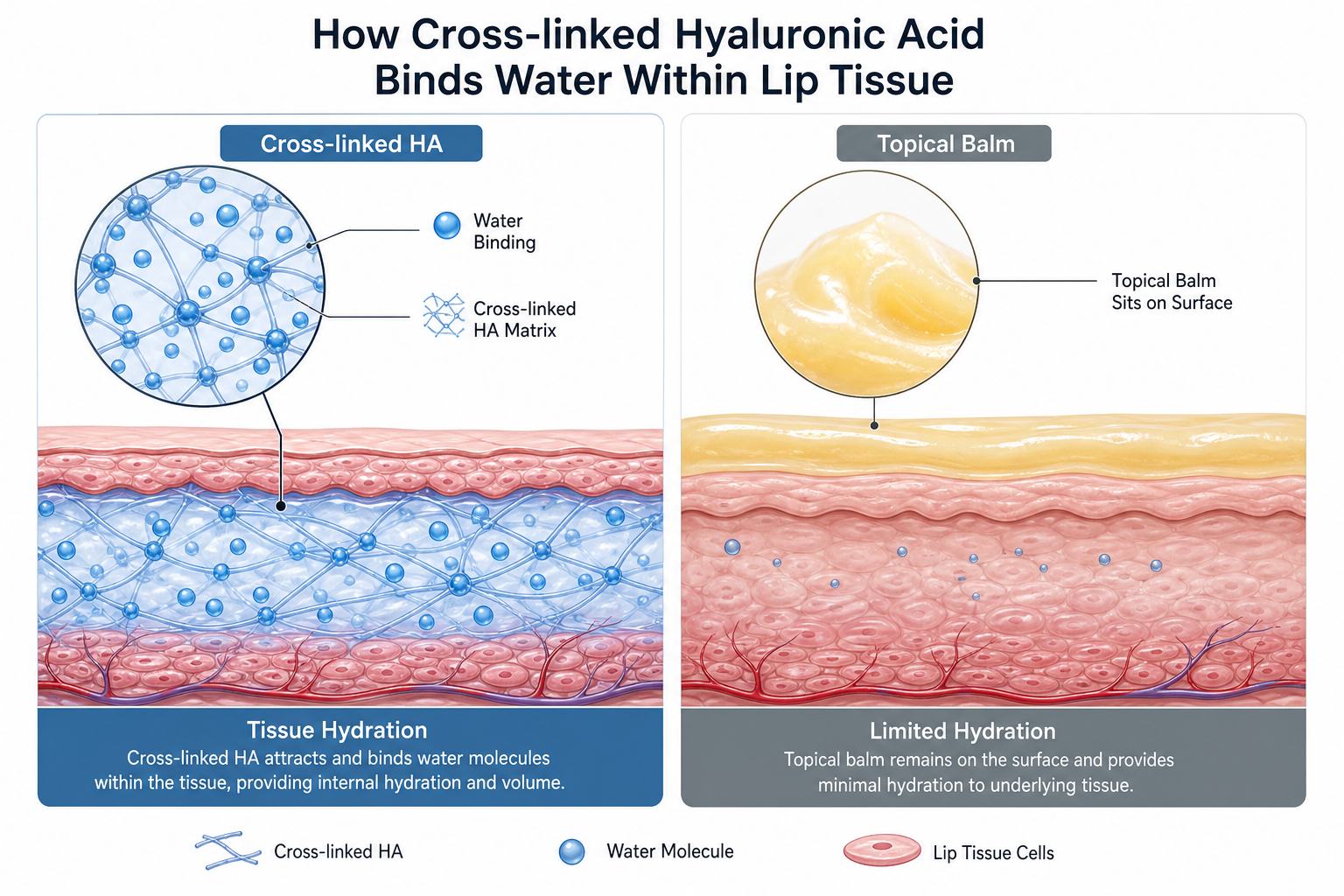
The practical result is that lips treated with HA filler often feel softer and appear more supple than before treatment. Patients frequently report an improvement in lip texture alongside any changes in shape or volume. This hydration benefit is particularly noticeable in patients whose lips have become dry, thin, or rough due to aging or environmental factors.
It is worth noting that this effect is a property of hyaluronic acid specifically. Not all dermal fillers are HA-based — calcium hydroxylapatite (CaHA) fillers, for example, work through a different mechanism and are less commonly used in the lips. If hydration and softness are among your priorities, confirming that an HA filler will be used is a reasonable question to raise during consultation.
Facial Harmony and Proportion
The lips do not exist in isolation — they are a central feature of the lower face and their size, shape, and projection influence how the entire face is perceived. Lip filler, when planned with facial harmony in mind, can improve the balance between the lips, nose, chin, and surrounding facial structures rather than simply making the lips larger.
A practitioner assessing facial balance will consider factors such as the intercommissural distance (the width of the mouth), the projection of the lips relative to the chin and nose, and the relationship between the oral commissures — the corners of the mouth — and the rest of the lower face. Subtle filler placement can improve lip projection and eversion (the degree to which the lip rolls outward), which contributes to a more defined and youthful appearance without an obvious change in size.
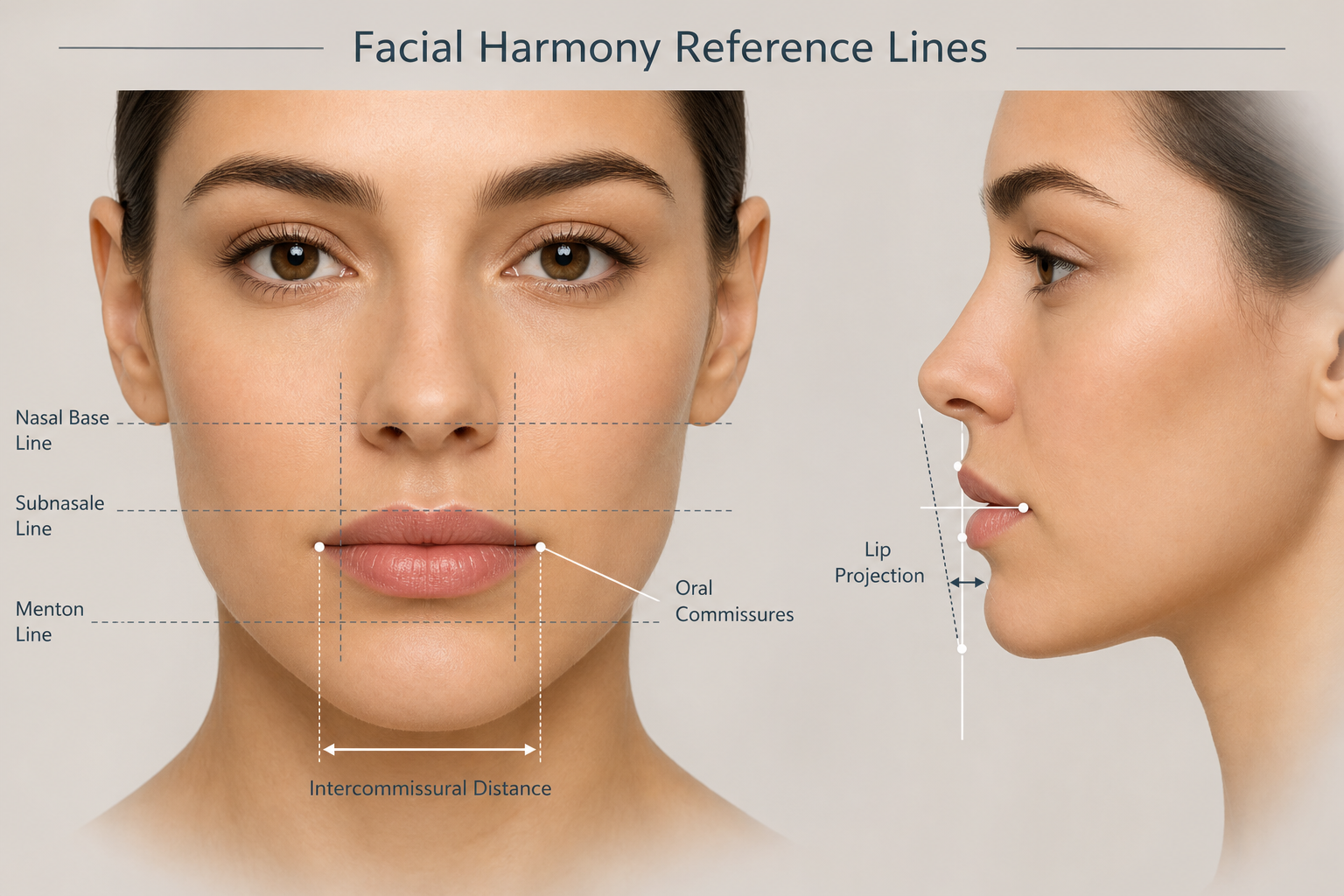
This approach to facial harmony is one reason why experienced injectors often discuss the whole face during a lip filler consultation rather than focusing exclusively on the lips. Treating the lips in the context of overall facial proportions tends to produce more natural-looking results than treating them as an isolated feature.
The Psychological and Psychosocial Benefit
The psychological benefit of aesthetic treatment is sometimes dismissed as superficial, but clinical research suggests it is a meaningful and measurable outcome. Studies examining patient-reported outcomes following dermal filler treatment — including lip augmentation — have found statistically significant improvements in self-confidence, body image, and overall satisfaction with appearance. These improvements are not simply a placebo effect; they reflect the genuine impact that feeling comfortable with one’s appearance can have on daily life and social interaction.
The psychosocial benefit of lip filler is particularly relevant for patients who have felt self-conscious about lip asymmetry, thinning, or loss of definition for years. Addressing a feature that has caused persistent dissatisfaction can have a disproportionately positive effect on confidence relative to the size of the physical change. This does not mean that aesthetic treatment is a substitute for addressing underlying psychological concerns — practitioners should screen for body dysmorphic disorder and ensure that expectations are realistic — but for appropriate candidates, the confidence benefit is a legitimate and clinically recognised outcome.
Practical Lifestyle Benefits
Beyond clinical outcomes, lip filler offers several practical lifestyle advantages that are worth considering. Patients with improved lip definition often find they need less lip liner to create a defined edge, and those with better hydration and texture may find that lipstick applies more evenly and lasts longer. These are modest but genuinely useful changes for people who wear makeup regularly.
The non-surgical nature of lip filler is also a practical benefit. Treatment requires no general anaesthetic, no surgical incision, and no extended recovery period. Most patients return to normal activities the same day, though some swelling and bruising in the first few days is common. This minimal downtime makes lip filler accessible to people who cannot take extended time away from work or social commitments.
Results from HA lip fillers typically last between six and eighteen months, depending on the product used, the volume injected, the treatment area, and individual metabolic factors. Maintenance sessions are usually shorter than the initial appointment and require less product as the practitioner is refining rather than building from scratch.
Lip Filler vs. Lip Flip: A Brief Comparison
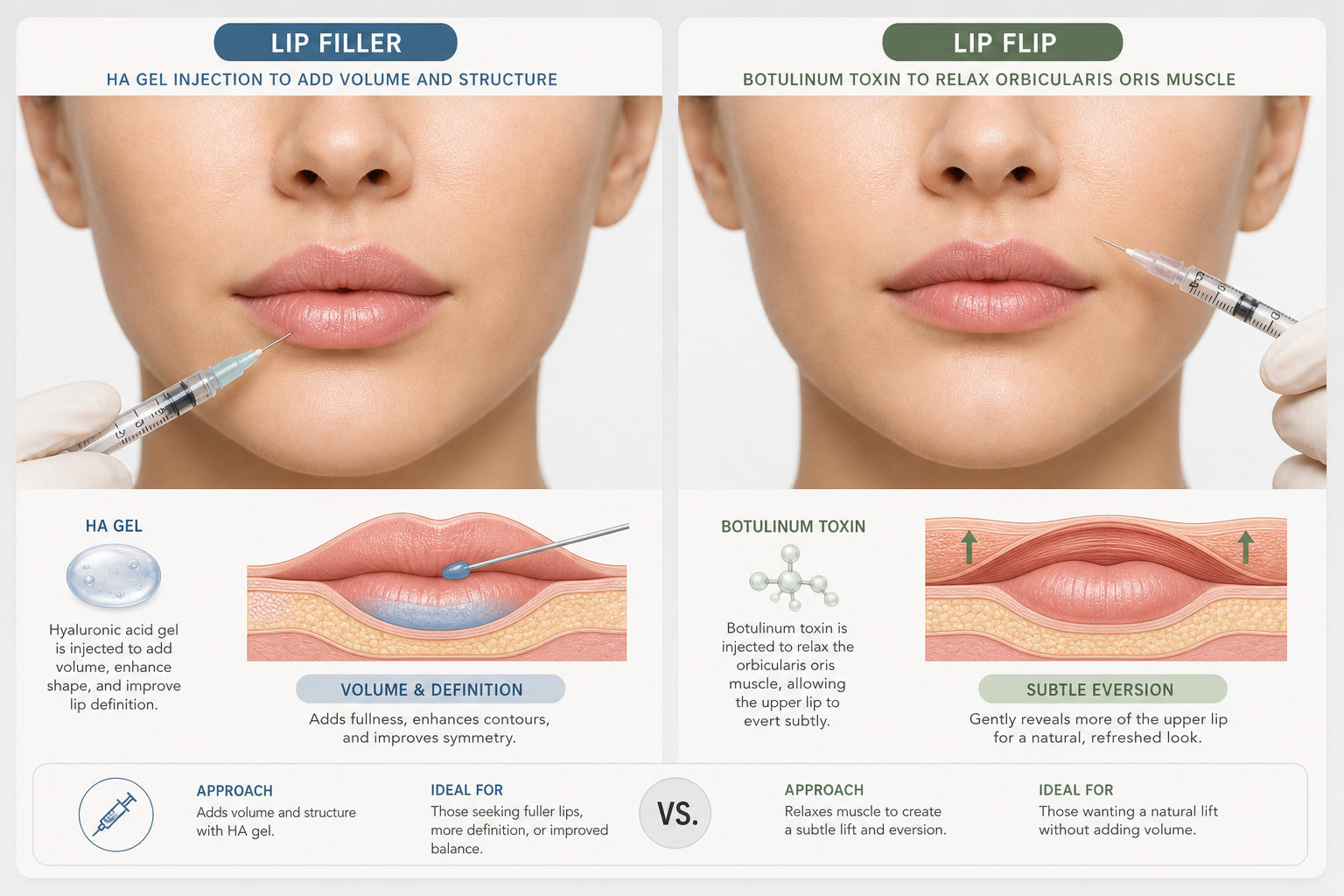
| Feature | Lip Filler (HA) | Lip Flip (Botulinum Toxin) |
|---|---|---|
| Mechanism | Adds volume and structure via injectable gel | Relaxes orbicularis oris muscle to evert the upper lip |
| Primary outcome | Volume, definition, symmetry, hydration | Subtle upper lip eversion without added volume |
| Suitable for | Volume loss, asymmetry, definition, perioral lines | Patients wanting subtle upper lip show without size increase |
| Onset | Immediate (with swelling settling over 1–2 weeks) | 3–7 days |
| Duration | 6–18 months (product and patient dependent) | Approximately 2–4 months |
| Reversibility | Reversible with hyaluronidase | Temporary; wears off naturally |
| Downtime | Minimal; some swelling and bruising possible | Minimal; temporary functional changes possible |
| Limitations | Requires skilled injector; risk of overfilling | Limited effect; may affect speech or drinking temporarily |
The lip flip and lip filler are not mutually exclusive — some practitioners combine both to achieve eversion and definition alongside volume. The right approach depends on your anatomy and goals, which is why a thorough consultation matters.
Who May Be a Suitable Candidate
Lip filler may be appropriate for adults who are in good general health, have realistic expectations, and have a specific aesthetic concern that filler can address. Suitable candidates include people experiencing age-related volume loss or thinning, those with naturally asymmetric lips, individuals who want improved definition without significant size change, and patients seeking to reduce the appearance of perioral lines.
Lip filler is generally not recommended during pregnancy or breastfeeding. It may not be suitable for people with active infection or inflammation in the treatment area, certain autoimmune conditions, a history of severe allergic reactions, or bleeding disorders. Patients taking blood-thinning medications may have an increased risk of bruising. A thorough medical history review before treatment is essential, and a reputable practitioner will conduct this as a standard part of the consultation process.
Psychological suitability is also relevant. Patients with body dysmorphic disorder or unrealistic expectations about what filler can achieve are generally not good candidates. A responsible practitioner will discuss what is and is not achievable and may decline to treat if the goals are not aligned with what the procedure can safely deliver.
Risks and Limitations to Consider
Lip filler is a minimally invasive procedure, but it carries real risks that should be understood before treatment. Common side effects include swelling, bruising, tenderness, and redness at the injection site, most of which resolve within a few days to two weeks. Less common but more serious complications include infection, nodule formation, filler migration, and vascular occlusion — a rare but serious event in which filler inadvertently enters a blood vessel and restricts blood flow to surrounding tissue.
Vascular occlusion in the lip area is uncommon but requires immediate treatment. This is one of the most important reasons to choose a qualified practitioner who has the training and the appropriate reversal agent — hyaluronidase — available. Hyaluronidase can dissolve HA filler rapidly in an emergency and is also used electively to reverse results that a patient is unhappy with.
Overfilling is a limitation that is worth discussing openly. The “duck lip” appearance associated with poorly performed lip filler is almost always the result of excessive volume rather than a flaw in the treatment itself. A staged approach — starting conservatively and adding more at a follow-up if desired — reduces this risk and allows the patient to assess results before committing to a larger change. This gradual approach is increasingly favoured by experienced practitioners and is worth requesting if you are uncertain about how much change you want.
Frequently Asked Questions
How long do lip fillers last?
Most HA lip fillers last between six and eighteen months. Duration varies depending on the specific product, the volume injected, the location of injection within the lip, and how quickly an individual metabolises the filler. Areas with more movement, such as the lip body, may break down filler faster than areas with less movement, such as the vermilion border.
Can lip fillers be dissolved if I am unhappy with the result?
Yes. Hyaluronic acid fillers can be dissolved using an enzyme called hyaluronidase, which breaks down the HA gel. Dissolution is generally effective and relatively quick, though it may require more than one session for complete removal. This reversibility is one of the key safety advantages of HA fillers over non-HA alternatives.
Do lip fillers hurt?
Most patients experience some discomfort during the procedure. Topical anaesthetic cream is applied beforehand, and many practitioners also use a dental nerve block, which significantly reduces sensation in the lips during injection. Post-procedure tenderness is common for a day or two. Pain tolerance varies between individuals.
Are lip fillers suitable for men?
Yes. Lip filler is not exclusively a female treatment. Men may seek lip filler for definition without significant volume increase, to correct asymmetry, or to address age-related thinning. Treatment goals and aesthetic preferences differ between patients regardless of gender, and a skilled injector will tailor the approach accordingly rather than applying a one-size-fits-all technique.
How soon will I see results?
Results are visible immediately after treatment, but initial swelling can make the lips appear larger than the final outcome. Most practitioners recommend assessing results at two weeks, once swelling has fully resolved and the filler has integrated with the surrounding tissue.
Can lip fillers stimulate collagen production?
Some clinical literature suggests that certain dermal fillers may encourage collagen stimulation over time, potentially contributing to improved skin quality in the treated area. This effect is better established for some filler types than others, and the evidence in the context of lip filler specifically is still developing. It should not be considered a primary reason to choose lip filler, but it may represent an additional longer-term benefit for some patients.
What is the difference between subtle enhancement and full augmentation?
Subtle enhancement typically refers to small amounts of filler used to improve definition, symmetry, or hydration with minimal change in overall size. Full augmentation involves a more noticeable increase in lip volume. Both are valid goals, and the amount of filler used, the injection technique, and the product selected will differ accordingly. Discussing your specific goals clearly during consultation helps the practitioner plan the most appropriate approach.
Is Lip Filler the Right Choice for Your Goals?
The benefits of lip fillers are broader than most people initially expect. Beyond adding volume, HA filler can sharpen the vermilion border, accentuate the cupid’s bow, correct lip asymmetry, restore upper-lower lip balance, reduce the appearance of perioral lines, and improve lip texture and hydration from within. For patients whose concerns go beyond size, these functional and aesthetic benefits are often more relevant than volume alone.
That said, lip filler is not the right choice for everyone. Results depend on the skill of the injector, the suitability of the patient, and the clarity of the treatment goal. The procedure carries real risks, requires maintenance, and produces temporary rather than permanent results. A conservative, staged approach is generally safer and more satisfying than attempting to achieve a dramatic change in a single session.
If you are considering lip filler, a consultation with a qualified and experienced practitioner is the appropriate starting point. A thorough assessment of your anatomy, a clear discussion of what is achievable, and an honest conversation about risks and alternatives will give you the information you need to make a well-informed decision.