How to Remove Birthmarks Naturally: What Works, What Doesn’t, and When to See a Doctor
Birthmarks are a common cosmetic concern, and it is entirely understandable to want to reduce their appearance, particularly when they are located on visible areas such as the face, neck, or hands. Many people search for natural approaches before considering clinical options, and while some home remedies are widely discussed online, the honest answer is that complete removal is not possible through natural methods. What may be achievable in some cases is a modest fading of certain pigmented birthmarks over time. This article explains what the evidence actually shows, which home remedies for birthmarks carry the least risk, how to use them safely, and when professional assessment becomes the more appropriate path.
Key Takeaways
- Natural remedies may help fade the appearance of some pigmented birthmarks slightly, but they cannot remove birthmarks and have no meaningful effect on vascular birthmarks.
- Results are not guaranteed, and most home remedies lack robust clinical evidence supporting their use on birthmark pigmentation specifically.
- Certain ingredients such as lemon juice and apple cider vinegar carry a real risk of skin irritation, chemical burns, or worsened pigmentation if used incorrectly.
- A patch test before applying any remedy and consistent sun protection after treatment are essential safety steps that are frequently overlooked.
- Professional laser treatment and other clinical options offer significantly more reliable outcomes and should be discussed with a qualified dermatologist, particularly for vascular birthmarks or any mark that changes in appearance.
Understanding Birthmarks: Types and What That Means for Treatment
Before exploring any remedy, it is important to understand what type of birthmark you are dealing with, because the type determines both the realistic outcome of natural approaches and the appropriate clinical pathway if professional treatment is needed.
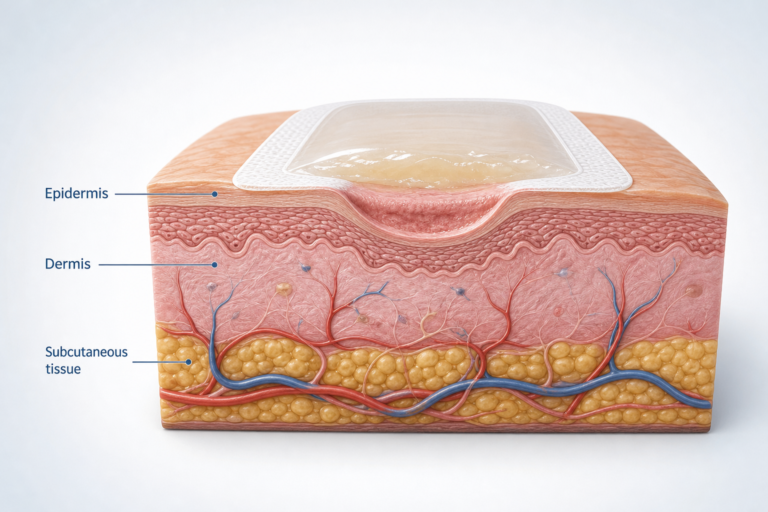
There are two main categories. Pigmented birthmarks develop when an excess of melanin-producing cells called melanocytes cluster in one area of the skin. Common examples include café-au-lait spots, which appear as flat, coffee-coloured patches; moles, which may be flat or raised; Mongolian spots, which are blue-grey marks typically found on the lower back; and congenital melanocytic nevi, which are moles present from birth. Because pigmented birthmarks involve excess skin pigment, some topical ingredients with skin-lightening properties may theoretically have a minor effect on their colour over time.
Vascular birthmarks form when blood vessels develop abnormally close to the skin surface or in greater numbers than usual. Examples include port-wine stains, which are flat, deep-red or purple marks that tend to persist and darken with age; hemangiomas, which are raised, bright-red growths that often appear in infancy; macular stains such as salmon patches, angel kisses, and stork bites; and strawberry marks, which are a type of infantile hemangioma. Vascular birthmarks involve blood vessel structure rather than pigment, so topical skin-lightening ingredients have no meaningful mechanism of action on them. Home remedies are not appropriate for vascular birthmarks, and a dermatologist should be consulted for these.
Some birthmarks, particularly strawberry hemangiomas, may fade naturally with age during childhood. Port-wine stains, café-au-lait spots, and most moles do not resolve on their own and are unlikely to respond meaningfully to natural remedies.
Do Natural Remedies Actually Work on Birthmarks?
The honest clinical position is that home remedies will not remove a birthmark, and in some cases they could cause harm. Most natural ingredients discussed in this context have mild skin-lightening or exfoliating properties that may, over many weeks, produce a subtle reduction in surface pigmentation. However, this is not the same as removing a birthmark, and the effect is typically modest at best.
Dermatologists generally caution that natural remedies lack the scientific backing needed to recommend them as a reliable treatment for birthmark pigmentation. The melanocytes responsible for pigmented birthmarks sit in the deeper layers of the skin, and most topical ingredients do not penetrate deeply enough to meaningfully alter their activity. Any visible lightening is more likely to reflect surface-level exfoliation or temporary brightening rather than a genuine change in the underlying pigment cells.
That said, some people choose to try low-risk natural approaches for mild pigmented birthmarks, particularly when professional treatment is not immediately accessible. If you do so, the priority must be safety: using ingredients correctly, performing a patch test before applying anything to the birthmark, and protecting the skin from sun exposure afterwards.
Natural Remedies That Are Commonly Discussed
The following remedies are frequently mentioned in the context of fading pigmented birthmarks. Each is described with an honest assessment of its proposed mechanism, realistic expectations, and relevant safety considerations.
Lemon Juice
Lemon juice is one of the most widely cited natural bleaching agents for skin pigmentation. It contains citric acid and vitamin C, both of which have mild exfoliating and antioxidant properties that may contribute to a gradual brightening effect on surface pigmentation. Lemon juice application is most commonly suggested for pigmented birthmarks such as café-au-lait spots, where excess melanin is the primary concern. To use it, apply fresh lemon juice to the area using a cotton ball, leave it on for 15 to 20 minutes, then rinse thoroughly with cool water. If your skin is sensitive, dilute the lemon juice with an equal amount of water before applying. Sun protection after treatment is essential, as citric acid increases photosensitivity and can worsen pigmentation if the skin is exposed to UV light. Lemon juice has no effect on vascular birthmarks and should not be applied to broken, irritated, or inflamed skin.
Aloe Vera Gel
Aloe vera gel is well established for its soothing and healing properties, and it contains compounds such as aloesin that have shown some ability to inhibit melanin production in laboratory studies. It is one of the gentler options available and is unlikely to cause irritation in most skin types. Apply fresh aloe vera gel directly to the birthmark, leave it on for 20 to 30 minutes, and rinse with warm water. While aloe vera is unlikely to produce dramatic results on its own, it may support skin health and is a reasonable complementary step alongside other approaches. It is not appropriate for vascular birthmarks.
Vitamin E Oil
Vitamin E oil is a fat-soluble antioxidant that is often suggested for skin lightening and improving skin texture. Its antioxidants may help neutralise free radicals that contribute to uneven pigmentation, and it has moisturising properties that support skin barrier function. Apply a small amount of vitamin E oil to the birthmark and massage gently, leaving it to absorb overnight. Evidence for its effectiveness on birthmark pigmentation specifically is limited, but it carries a low risk of irritation for most people. Those with acne-prone skin should use it cautiously, as it can be comedogenic.
Apple Cider Vinegar
Apple cider vinegar (ACV) is frequently mentioned for its natural bleaching properties due to its acetic acid content. However, it is also one of the higher-risk options on this list. Undiluted ACV can cause chemical burns, skin irritation, and scarring, particularly on sensitive or thin skin. If you choose to try it, always dilute it significantly — at least one part ACV to three parts water — apply with a cotton swab to the birthmark only, leave on for no more than five minutes, and rinse thoroughly. A patch test before applying is particularly important with ACV. Results are not guaranteed, and the risk of adverse effects is higher than with gentler alternatives such as aloe vera or vitamin E.
Turmeric Paste
Turmeric contains curcumin, a compound with anti-inflammatory and antioxidant properties that has been studied for its potential to reduce pigmentation. A simple paste can be made by mixing turmeric powder with a small amount of water or honey and applying it to the birthmark for 15 to 20 minutes before rinsing. Turmeric is generally well tolerated, though it will temporarily stain the skin yellow. Evidence for its effectiveness on birthmark pigmentation is limited to laboratory and small-scale studies, and clinical results in humans are not well established.
Castor Oil
Castor oil is sometimes suggested for its ability to moisturise deeply and is thought by some to help break down pigments over time, though clinical evidence for this specific claim is very limited. It is applied directly to the birthmark and massaged in gently, ideally left overnight. Castor oil is generally safe for most skin types and carries a low risk of irritation, making it a low-risk option even if its effectiveness on birthmarks is uncertain.
Papaya and Apricot
Papaya contains papain, a natural enzyme with mild exfoliating properties that may help with surface skin cell renewal. Apricot similarly contains gentle exfoliating compounds. Applying mashed papaya or apricot to the skin for 15 to 20 minutes before rinsing may support a gradual brightening effect on surface pigmentation. These are among the gentler options and are unlikely to cause significant irritation, though a patch test is still advisable.
Olive Oil
Olive oil is a natural moisturiser rich in antioxidants and vitamin E. While it is sometimes suggested as a skin-lightening remedy, the evidence for any meaningful effect on birthmark pigmentation is very limited. It is safe for most skin types and may support overall skin health, but expectations should be modest.
Patch Test Protocol: A Step You Should Not Skip
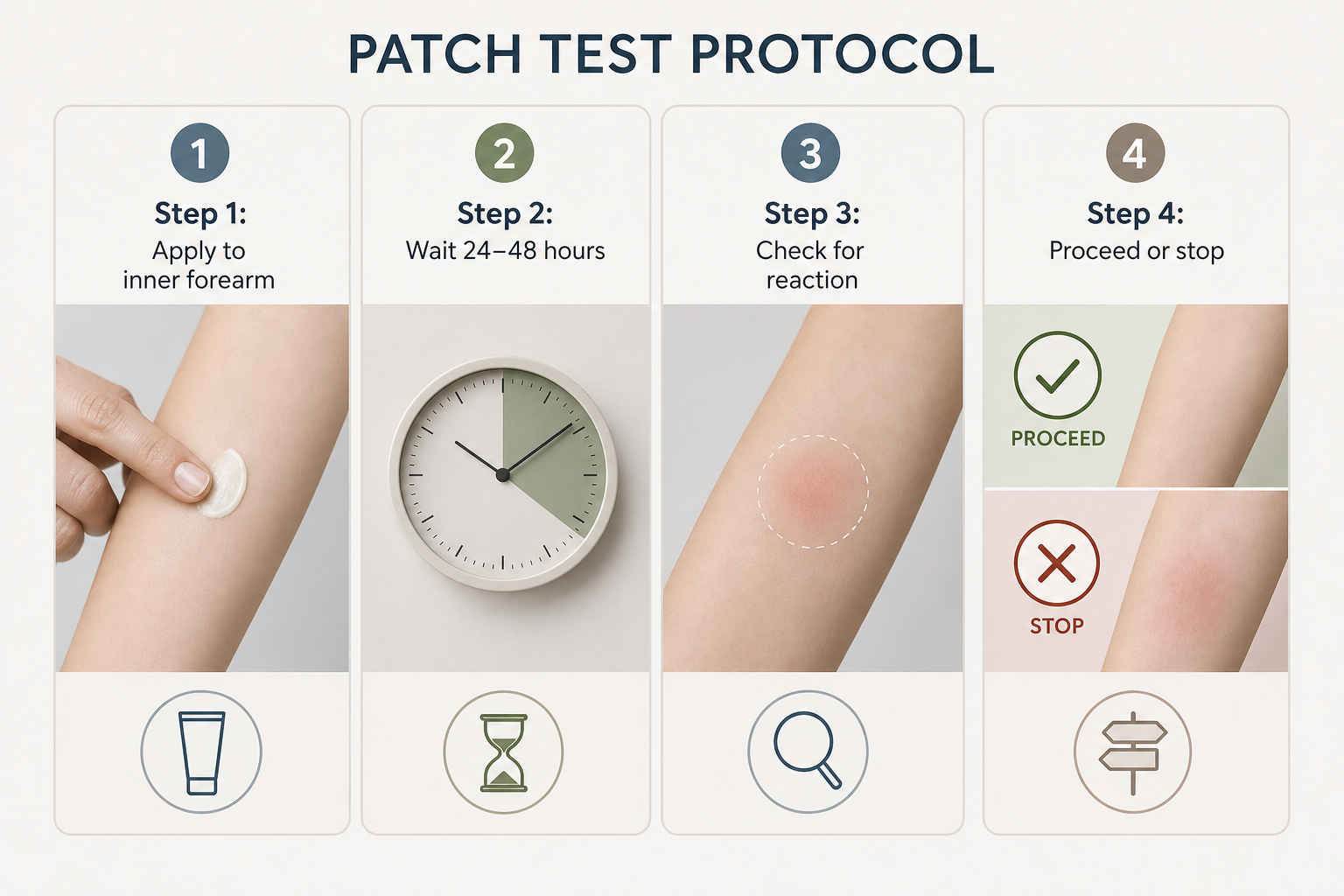
Before applying any natural remedy to a birthmark, performing a patch test is an essential safety step. Apply a small amount of the ingredient to a discreet area of skin — the inner forearm is a practical choice — and leave it on for the same duration you intend to use on the birthmark. Wait 24 to 48 hours and observe for any redness, itching, swelling, or blistering. If any reaction occurs, do not proceed with that ingredient. This step is particularly important for acidic ingredients such as lemon juice and apple cider vinegar, which carry a higher risk of irritation.
Sun Protection After Treatment: Why It Matters
Sun protection after treatment is one of the most important and most frequently overlooked aspects of any skin-lightening approach. Acidic ingredients such as lemon juice and apple cider vinegar increase the skin’s sensitivity to UV radiation, and sun exposure immediately after application can trigger a rebound darkening of the skin — the opposite of the intended effect. Apply a broad-spectrum SPF 30 or higher sunscreen to the treated area every morning, and avoid direct sun exposure for at least several hours after applying any acidic remedy. This applies even on overcast days, as UV radiation penetrates cloud cover.
Birthmark Fading: A Realistic Comparison
| Birthmark Type | Fades Naturally? | May Respond to Natural Remedies? | Professional Treatment Available? |
|---|---|---|---|
| Strawberry hemangioma | Often, by age 10 | No — vascular, not pigmented | Yes (propranolol, laser) |
| Port-wine stain | Rarely | No — vascular | Yes (pulsed-dye laser) |
| Café-au-lait spots | Occasionally lighten slightly | Possibly, very modestly | Yes (laser therapy) |
| Moles (congenital nevi) | No | Unlikely | Yes (surgical excision, laser) |
| Mongolian spots | Often fade by adolescence | Unlikely to accelerate fading | Yes (laser) |
| Salmon patches / stork bites | Many fade in infancy | No — vascular | Rarely needed |
ABCDE Warning Signs: When a Birthmark Needs Urgent Assessment
Any birthmark that changes in appearance should be assessed by a dermatologist promptly. The ABCDE warning signs provide a practical framework for identifying features that may indicate a need for medical evaluation, particularly in relation to melanoma risk in pigmented birthmarks and moles.
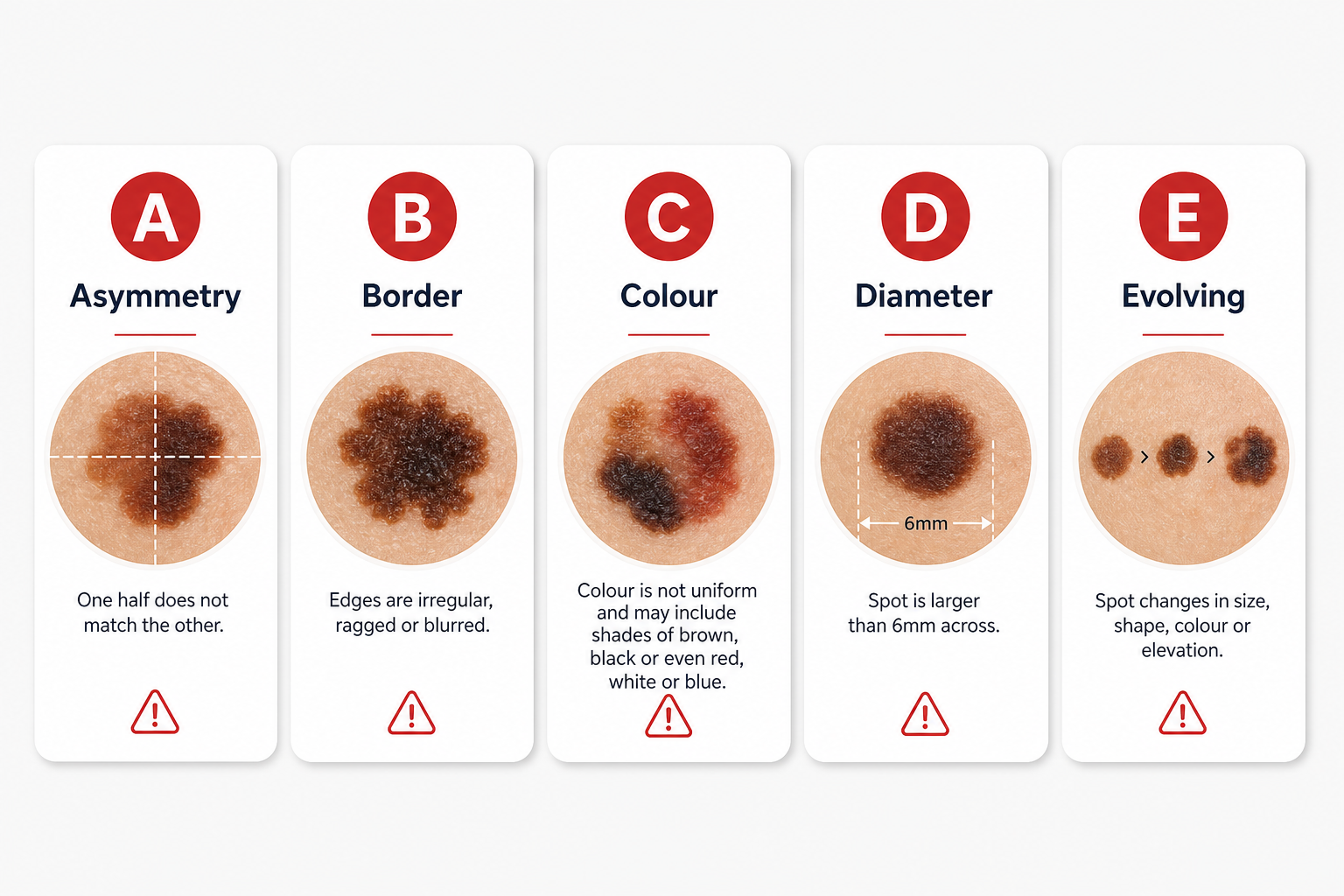
- Asymmetry: One half of the mark does not match the other in shape.
- Border: The edges are irregular, ragged, notched, or blurred rather than smooth and well-defined.
- Colour: The colour is uneven, with multiple shades of brown, black, red, white, or blue within the same mark.
- Diameter: The mark is larger than approximately 6 millimetres across — roughly the size of a pencil eraser — though melanomas can be smaller.
- Evolving: The mark is changing in size, shape, colour, or texture, or a new symptom such as bleeding, itching, or crusting has developed.
If any of these features are present, do not attempt home remedies. Seek a professional skin assessment without delay. Congenital melanocytic nevi, in particular, carry a slightly elevated risk of malignant change and should be monitored regularly by a dermatologist.
Professional Treatment Options for Birthmarks
For those seeking more reliable results, professional treatments offer significantly greater efficacy than home remedies, particularly for vascular birthmarks and larger or darker pigmented marks. A dermatologist can assess the type, depth, and characteristics of a birthmark and recommend the most appropriate approach.
Professional laser treatment is the most widely used clinical option. Pulsed-dye laser therapy is particularly effective for vascular birthmarks such as port-wine stains and hemangiomas, targeting the blood vessels responsible for the mark’s colour without damaging surrounding skin. Pigmented birthmarks such as café-au-lait spots may respond to Q-switched or Nd:YAG laser systems, which target melanin. Multiple sessions are typically required, and results vary depending on the birthmark type, depth, and individual skin characteristics.
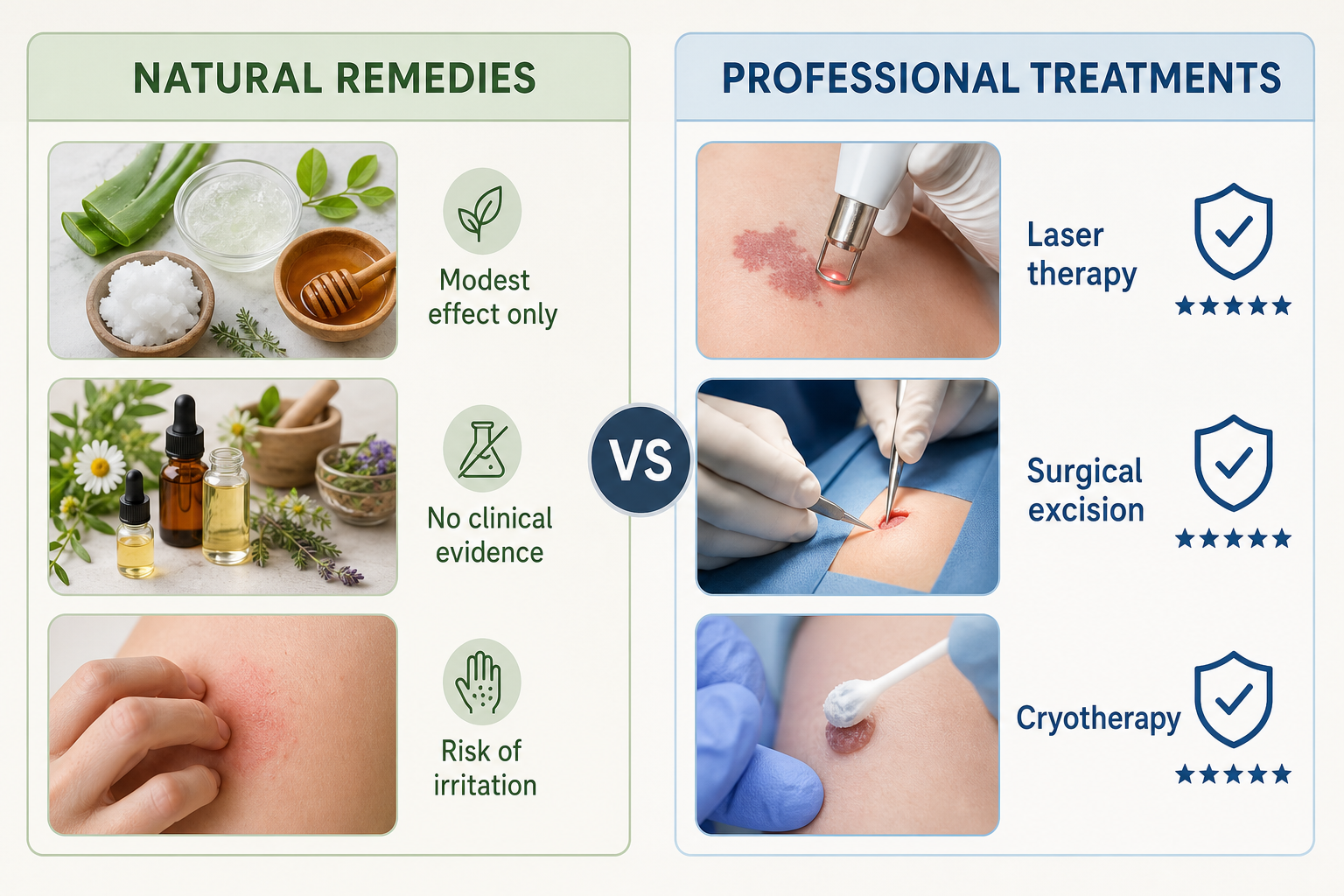
Surgical excision involves physically removing the birthmark and is most commonly used for raised moles or congenital nevi. It is effective but leaves a scar, and the size and visibility of the scar depend on the size and location of the birthmark.
Cryotherapy uses liquid nitrogen to freeze and destroy superficial skin tissue and may be used for certain types of raised or superficial birthmarks, though it is less commonly used than laser therapy for this purpose.
Corticosteroids, administered orally or by injection, and propranolol (an oral medication) are used medically to treat infantile hemangiomas, particularly those that are growing rapidly or affecting function. These are medical treatments rather than cosmetic ones and are prescribed and monitored by a physician.
Camouflage makeup is a practical, non-invasive option for managing the cosmetic appearance of birthmarks on a daily basis. Specialist camouflage products are available that provide high coverage and are formulated to be long-lasting and water-resistant. This is a valid and effective approach for many people, particularly while considering longer-term options.
The Emotional Side of Living with a Birthmark
Birthmarks can be a source of self-consciousness, particularly when they are located on the face or other visible areas. It is worth acknowledging that the desire to reduce their appearance is a legitimate cosmetic concern, not a vanity. At the same time, many people find that with time, camouflage options, or professional treatment, the impact on daily confidence diminishes significantly. If a birthmark is causing significant anxiety or affecting quality of life, speaking with both a dermatologist and, where appropriate, a mental health professional can be genuinely helpful. The decision to pursue treatment — natural or clinical — should be made on your own terms and timeline.
Frequently Asked Questions
Can birthmarks be permanently removed with natural remedies?
No. Complete removal is not possible through natural methods. Some natural ingredients may produce a modest fading of certain pigmented birthmarks over time, but they cannot eliminate the underlying melanocytes or blood vessel formations responsible for the mark. Professional treatments such as laser therapy offer more reliable and significant results.
How long does it take to see any effect from natural remedies?
If any effect occurs, it is typically gradual and may take several weeks to months of consistent daily application. Results are not guaranteed, and the degree of change is usually subtle. If no improvement is visible after two to three months of careful, consistent use, it is unlikely that continued application will produce a meaningful result.
Are natural remedies safe to use on a child’s birthmark?
Children’s skin is more sensitive than adult skin, and acidic ingredients such as lemon juice and apple cider vinegar carry a higher risk of irritation and chemical burns in younger patients. It is strongly advisable to consult a dermatologist before applying any topical remedy to a child’s birthmark. Many childhood birthmarks, including strawberry hemangiomas and salmon patches, fade naturally without any intervention.
Do birthmarks fade on their own?
Some do. Strawberry hemangiomas often fade significantly by mid-childhood. Salmon patches and stork bites frequently resolve in infancy. Mongolian spots typically fade by adolescence. However, port-wine stains, café-au-lait spots, and most moles do not fade on their own and tend to persist into adulthood.
When should I see a dermatologist about a birthmark?
You should consult a dermatologist if a birthmark changes in size, shape, colour, or texture; if it bleeds, itches, or crusts without explanation; if it displays any of the ABCDE warning signs; if it is a congenital mole that has not been assessed; or if you are considering any form of treatment, natural or professional. A dermatologist can confirm the type of birthmark, assess any risk, and advise on the most appropriate management.
Is there a birthmark removal cream that works?
Over-the-counter topical creams containing ingredients such as hydroquinone, kojic acid, or azelaic acid may produce modest lightening of some pigmented birthmarks over time, but they are not specifically formulated or clinically proven for birthmark removal. Some of these ingredients can also increase sun sensitivity or cause hypopigmentation with prolonged use. Any topical cream used for this purpose should be discussed with a dermatologist before starting.
Making an Informed Decision About Your Birthmark
If you are exploring how to remove birthmarks naturally, the most important thing to understand is that natural remedies occupy a very limited role in birthmark management. For pigmented birthmarks, certain low-risk ingredients such as aloe vera gel, vitamin E oil, and diluted lemon juice may produce a subtle fading effect over time, but results are not guaranteed and the change is unlikely to be dramatic. For vascular birthmarks — including port-wine stains and hemangiomas — home remedies have no meaningful mechanism of action and should not be relied upon.
The safest approach is to confirm the type of birthmark with a dermatologist before trying anything, perform a patch test before applying any ingredient, use sun protection consistently, and monitor the birthmark for any changes in appearance. If the birthmark is causing significant cosmetic concern or any of the ABCDE warning signs are present, professional assessment and treatment are the appropriate next step. A qualified dermatologist can discuss whether professional laser treatment, surgical excision, or another clinical option may be suitable for your specific situation and skin type.