Microneedling for Black and Darker Skin: Safety, Risks, and What to Expect
Microneedling is one of the most frequently requested skin treatments among people with darker complexions, yet it also generates some of the most cautious questions. Concerns about post-inflammatory hyperpigmentation, keloid scarring, and whether the treatment is genuinely suitable for Fitzpatrick skin types IV–VI are entirely reasonable — and the answers are more nuanced than a simple yes or no. This guide explains how microneedling works on melanin-rich skin, what the real risks are, how those risks can be meaningfully reduced, and what a well-designed treatment protocol should look like.
Key Takeaways
- Microneedling can be safe and effective for darker skin tones when performed by an experienced practitioner using appropriate settings and a melanin-conscious protocol.
- Post-inflammatory hyperpigmentation (PIH) is the most clinically significant risk for Fitzpatrick skin types IV–VI, but it can be substantially reduced with proper pre-treatment preparation and aftercare.
- Keloid scarring history is a serious contraindication that requires careful screening before any needling procedure is considered.
- Standard microneedling carries a lower PIH risk than ablative laser treatments, making it a comparatively safer resurfacing option for skin of colour when performed correctly.
- A thorough consultation, patch test, and pre-treatment brightening protocol are not optional extras — they are essential components of safe treatment for darker skin.
Why Darker Skin Requires a Different Approach
Skin across the Fitzpatrick scale differs not just in colour but in underlying biology. In Fitzpatrick skin types IV through VI — which broadly encompasses many people of Black, South Asian, Middle Eastern, and mixed heritage — melanocytes are more numerous and more reactive. Melanocytes are the cells responsible for producing melanin, the pigment that gives skin its colour. When these cells are disturbed by inflammation, injury, or heat, they can respond by overproducing melanin in the affected area, resulting in a darkened patch known as post-inflammatory hyperpigmentation.
This heightened melanocyte reactivity does not mean darker skin is fragile or unsuitable for cosmetic treatment. It means that any treatment causing controlled inflammation — including microneedling — must be planned with that reactivity in mind. Darker skin also tends to have a thicker dermis and higher sebum production, which can actually support healing, but the pigmentation response remains the primary clinical consideration that separates a well-managed treatment from a poorly managed one.
How Microneedling Works and Why It Matters for Skin of Colour
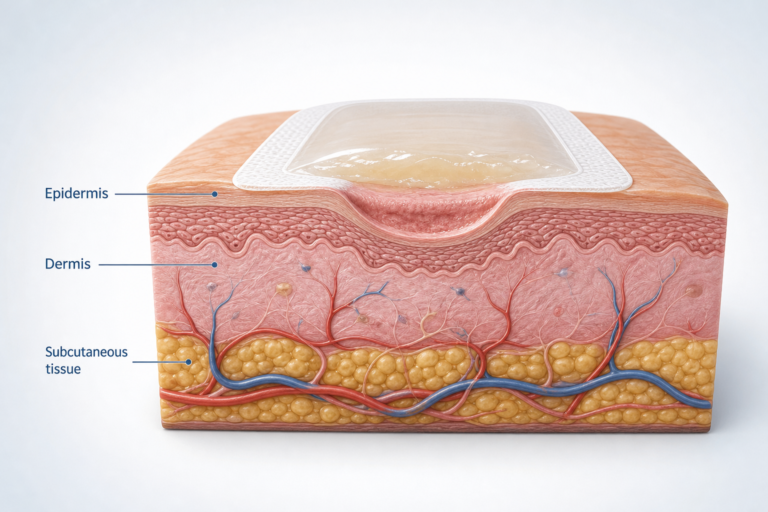
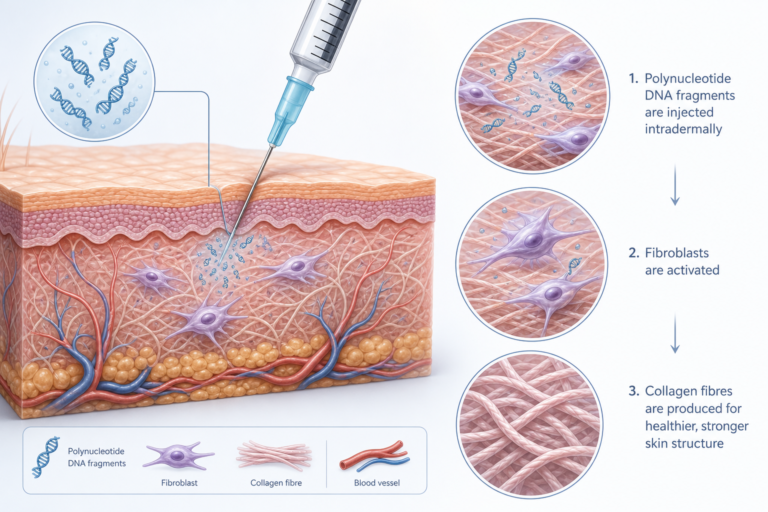
Microneedling, also called collagen induction therapy, uses a device fitted with fine needles to create controlled micro-injuries in the upper layers of the skin. These microchannels trigger the skin’s natural wound-healing cascade: the body responds by producing new collagen and elastin, gradually improving skin texture, firmness, and the appearance of scars or uneven tone. Because the process is mechanical rather than heat-based, it does not carry the same thermal risk to melanocytes that ablative laser treatments do.
This distinction — that microneedling is a mechanical, non-heat-based treatment — is clinically important for skin of colour. Ablative lasers and some intense pulsed light devices generate heat that can directly stimulate or damage melanocytes, significantly raising the risk of PIH or, in some cases, hypopigmentation (permanent lightening of the skin). Standard microneedling avoids this thermal component entirely, which is one reason it is generally considered a more appropriate resurfacing option for darker skin tones than ablative laser alternatives.
The depth to which the needles penetrate is adjustable, typically ranging from 0.25 mm to 2.5 mm depending on the treatment area and concern. For darker skin, a conservative needle depth — usually between 0.25 mm and 1.5 mm — is recommended to minimise the inflammatory response while still achieving meaningful collagen stimulation. Fewer passes over each area and a stamping technique (rather than dragging or gliding the device) further reduce unnecessary trauma to the skin.
Microneedling vs. Ablative Laser: A Comparison for Darker Skin
| Characteristic | Microneedling | Ablative Laser |
|---|---|---|
| Mechanism | Mechanical micro-injuries (non-heat-based) | Thermal energy destroys skin layers |
| PIH risk (darker skin) | Low to moderate (approx. 2–5% with standard microneedling) | High; significantly elevated for Fitzpatrick IV–VI |
| Hypopigmentation risk | Low (rare) | Moderate to high, especially Fitzpatrick V–VI |
| Downtime | 1–3 days redness and sensitivity | 7–14+ days; significant peeling and redness |
| Suitability for Fitzpatrick IV–VI | Generally suitable with appropriate protocol | Requires significant caution; often not recommended |
| Collagen stimulation | Yes, via wound-healing cascade | Yes, but with greater inflammatory burden |
| Keloid risk | Present; screening required | Present; screening required |
| Typical session interval | 4–6 weeks | 6–12 weeks or longer |
The Real Risks: PIH, Keloid Scarring, and Hypopigmentation
Post-Inflammatory Hyperpigmentation (PIH)
Post-inflammatory hyperpigmentation is the most clinically significant risk of microneedling for people with darker skin tones. PIH occurs when the skin’s inflammatory response triggers excess melanin production, leaving a darkened patch that can persist for weeks to months after the original inflammation has resolved. It is not a burn or a scar — it is a pigmentation response — but it can be distressing and slow to fade without targeted treatment.
The risk of PIH with standard microneedling is estimated at approximately 2–5% in darker skin types when appropriate protocols are followed. This figure rises considerably — to an estimated 10–15% — with radiofrequency microneedling (RF microneedling), which combines needle penetration with thermal energy delivered through the needle tips. The thermal component of RF microneedling reintroduces the heat-related melanocyte stimulation that standard microneedling avoids, making it a higher-risk option for Fitzpatrick skin types IV–VI. RF microneedling is not necessarily contraindicated in darker skin, but it requires a more experienced practitioner, lower energy settings, and a more cautious approach than in lighter skin types.
Keloid Scarring
People with darker skin tones have a statistically higher tendency toward keloid formation — an abnormal healing response in which scar tissue grows beyond the boundaries of the original wound. For individuals with a personal or family history of keloid scarring, microneedling may be contraindicated, and many practitioners consider a confirmed keloid history an absolute contraindication to needling procedures.
Effective keloid screening should go beyond simply asking whether the patient has had keloids. A thorough assessment includes asking about the behaviour of past scars — whether they have raised, spread, or itched over time — reviewing family history, and examining existing scars on the body. Some practitioners perform a patch test in a discreet area such as behind the ear or on the inner arm before proceeding with a full treatment. If there is any uncertainty, a referral to a dermatologist with experience in skin of colour is appropriate before treatment proceeds.
Hypopigmentation
While PIH receives the most attention, hypopigmentation — a loss of pigment resulting in lighter patches — is a less common but genuine risk, particularly in Fitzpatrick type VI skin. Hypopigmentation can occur if the needling is too aggressive, if the skin is treated while compromised, or if post-treatment care is inadequate. Unlike PIH, hypopigmentation can be more difficult to treat and may be permanent in some cases. This underscores the importance of conservative settings and experienced clinical judgement when treating the darkest skin tones.
Conditions Microneedling May Help on Darker Skin
When performed appropriately, microneedling can address several concerns that are particularly common in people with darker complexions. Atrophic acne scars — the depressed, pitted scars left by inflammatory acne — respond well to collagen induction therapy because the new collagen gradually fills and smooths the scar bed. This is one of the most evidence-supported applications of microneedling across all skin types.
PIH from acne or other skin trauma is another area where microneedling may help, though this requires careful management. Treating active PIH with microneedling carries the risk of worsening the pigmentation if the inflammatory response is not well controlled. A pre-treatment brightening protocol using tyrosinase inhibitors — ingredients that suppress melanin production — is typically recommended before needling is used to address existing hyperpigmentation.
Melasma, a form of hormonally influenced hyperpigmentation common in darker skin tones, can be approached with microneedling combined with topical agents such as tranexamic acid, which has shown promise in reducing melanin production without the irritation associated with some other brightening agents. Clinical evidence for microneedling combined with tranexamic acid in melasma is developing, and results vary; this combination should be discussed carefully with a practitioner experienced in treating melasma on skin of colour.
Uneven skin texture, enlarged pores, fine lines, and stretch marks on the body are additional concerns for which microneedling may be considered. Body microneedling — for stretch marks on the abdomen, thighs, or back — follows similar principles to facial treatment but may require adjusted needle depths and session intervals depending on the site and skin thickness.
Pre-Treatment Preparation: The Brightening Protocol
A structured pre-treatment brightening protocol is one of the most important steps in reducing PIH risk for darker skin. This typically begins four to six weeks before the first microneedling session and involves daily use of tyrosinase inhibitors — ingredients that reduce melanin production by blocking the enzyme tyrosinase, which is central to the pigmentation process.
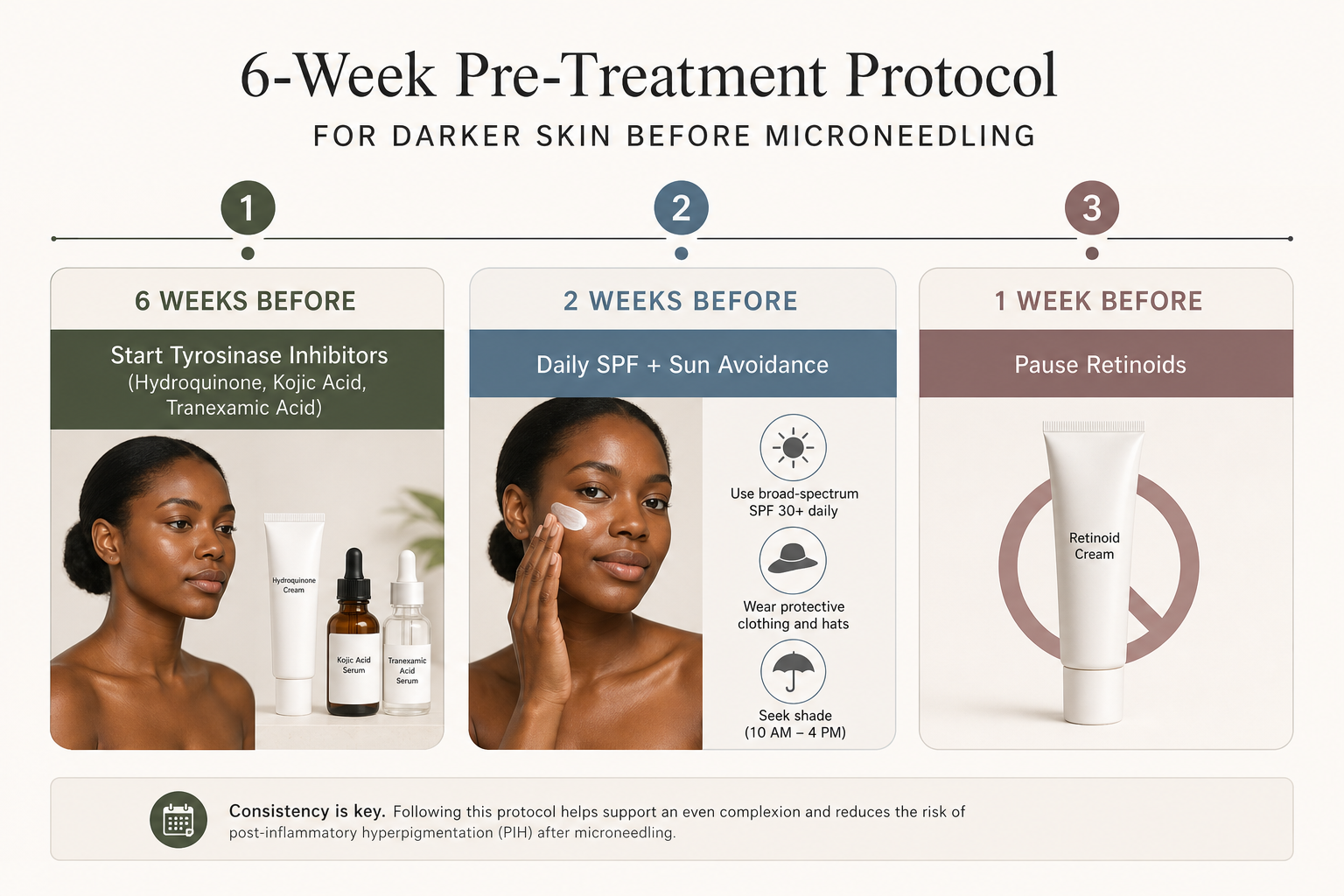
Commonly used tyrosinase inhibitors include hydroquinone (typically at 2–4% concentration under medical supervision), kojic acid, azelaic acid, tranexamic acid, and niacinamide. Vitamin C serums can also support brightening and antioxidant protection. The goal of this phase is to reduce baseline melanocyte activity so that the skin is less likely to mount an aggressive pigmentation response when needling occurs.
In the two weeks before treatment, sun avoidance and daily broad-spectrum mineral sunscreen use are essential. UV exposure stimulates melanocyte activity and can significantly increase PIH risk. Retinoids — including retinol and prescription tretinoin — should generally be paused approximately one week before treatment, as they can increase skin sensitivity and the risk of irritation during the procedure.
What to Expect During and After Treatment
A microneedling session for darker skin typically begins with the application of a topical anaesthetic cream, which is left on for 20–45 minutes to minimise discomfort. The practitioner will then use a clinical-grade device — such as an FDA-cleared device with single-use sterile cartridges — to perform the treatment. Single-use cartridges are important for hygiene and for ensuring consistent needle sharpness, which affects both comfort and the precision of the micro-injuries created.
For darker skin, the practitioner should use conservative needle depth settings, perform fewer passes over each area, and favour a stamping technique over a gliding motion to reduce lateral skin trauma. The session typically takes 30–60 minutes depending on the area treated. Immediately after, the skin will appear red and feel warm, similar to mild sunburn. A calming serum containing ingredients such as hyaluronic acid, centella asiatica, or growth factors is usually applied to support the skin barrier in the hours following treatment.
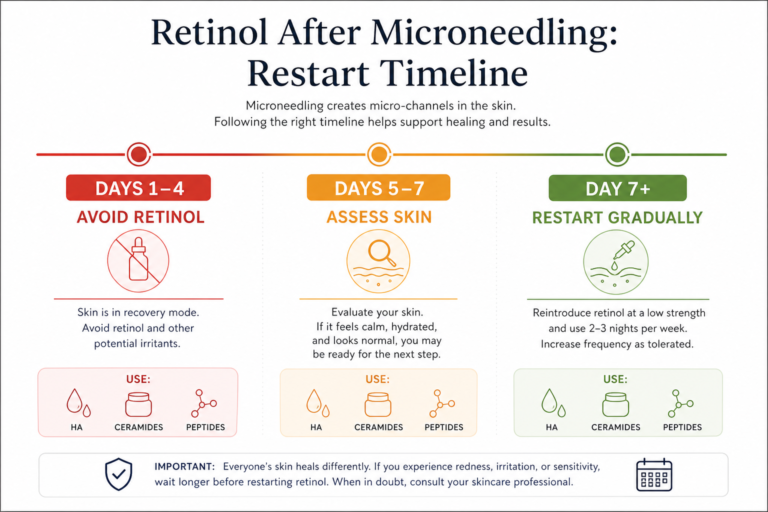
In the first 24–72 hours, redness, mild swelling, and sensitivity are normal. The skin may feel tight or slightly rough as it begins to heal. During this period, the skin barrier is temporarily compromised, which means that certain ingredients can cause irritation or trigger PIH if applied too soon. High-strength vitamin C (L-ascorbic acid), glycolic acid, retinol, and other active exfoliants should be avoided for at least one week post-treatment. Skin barrier repair products — gentle moisturisers, ceramide-containing formulas, and physical or mineral sunscreen containing zinc oxide — are the priority during recovery.
Results from microneedling develop gradually as new collagen is produced. Most patients begin to notice improvements in skin texture and tone after two to three sessions, with more significant changes becoming visible over three to six months. Sessions are typically spaced four to six weeks apart to allow adequate healing between treatments. A course of three to six sessions is commonly recommended depending on the concern being treated, though individual response varies.
At-Home Microneedling on Darker Skin: A Specific Caution
At-home dermarollers are widely available and frequently marketed as a convenient alternative to clinical microneedling. For people with darker skin tones, at-home needling carries specific risks that are worth understanding clearly. Consumer dermarollers typically use shorter needles (0.2–0.5 mm) and are generally considered lower-risk than clinical devices, but they lack the depth precision, motor consistency, and sterility controls of professional equipment.
Without a pre-treatment brightening protocol, a patch test, or clinical assessment for keloid risk, at-home needling on darker skin removes the safeguards that make professional treatment comparatively safe. Uncontrolled technique — pressing too hard, rolling too many times, or using a blunt needle — can cause disproportionate inflammation and significantly raise the risk of PIH. If at-home needling is being considered, it is worth discussing this with a practitioner first to understand whether it is appropriate for your specific skin type and concerns.
How to Find a Melanin-Competent Practitioner
The experience and training of the practitioner performing microneedling on darker skin is arguably the single most important safety factor. Not all practitioners have equivalent training in treating skin of colour, and the consequences of poorly calibrated treatment — PIH, hypopigmentation, or keloid triggering — can be significant and slow to resolve.
When assessing a practitioner, it is reasonable to ask directly about their experience treating Fitzpatrick skin types IV–VI, how many patients with darker skin they treat regularly, and whether they follow a pre-treatment brightening protocol as standard. Ask to see examples of their work on patients with similar skin tones. A practitioner who is genuinely experienced in skin of colour will be able to explain their approach to PIH prevention, keloid screening, and post-treatment care without hesitation.
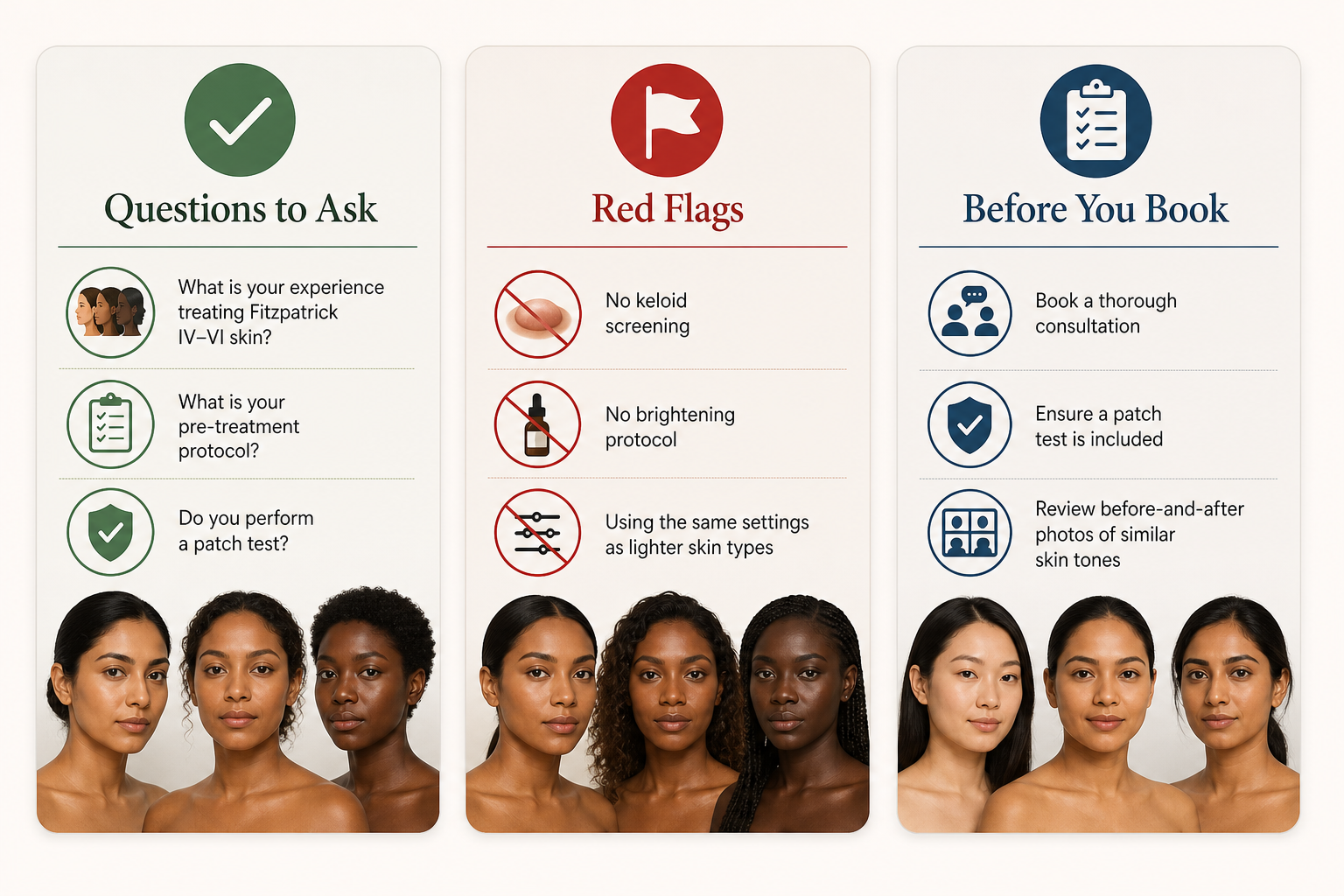
Red flags include practitioners who do not ask about keloid history, who do not recommend a pre-treatment protocol, who cannot explain why they are choosing specific needle depth settings, or who suggest that darker skin is simply treated the same as lighter skin. A thorough consultation and, where appropriate, a patch test in a discreet area should be standard practice before a full treatment is performed.
Frequently Asked Questions
Will microneedling make my skin darker?
Microneedling itself does not permanently darken skin. However, if the inflammatory response triggers post-inflammatory hyperpigmentation, temporary darkening of the treated area can occur. This risk is significantly reduced with a proper pre-treatment protocol, conservative treatment settings, and diligent sun protection before and after treatment. PIH, when it does occur, typically fades over weeks to months with appropriate care.
How many sessions will I need?
Most practitioners recommend a course of three to six sessions spaced four to six weeks apart, depending on the concern being treated. Acne scarring typically requires more sessions than general texture improvement. Results continue to develop for several months after the final session as collagen remodelling progresses.
Is RF microneedling safe for Black skin?
Radiofrequency microneedling carries a higher PIH risk for darker skin tones than standard microneedling because the thermal energy component can stimulate melanocyte reactivity. It is not automatically contraindicated, but it requires a practitioner with specific experience in RF protocols for skin of colour, lower energy settings, and careful patient selection. Standard microneedling is generally the more conservative starting point for Fitzpatrick skin types IV–VI.
Can microneedling treat PIH or dark spots on darker skin?
Microneedling may help improve existing PIH and uneven skin tone, particularly when combined with topical brightening agents such as tranexamic acid or vitamin C. However, treating active or recent PIH with microneedling requires careful timing and a well-managed protocol, as the procedure itself can worsen pigmentation if the skin is not adequately prepared. A practitioner experienced in skin of colour should assess whether microneedling is appropriate for your specific pigmentation concern.
What if I have a history of keloid scarring?
A personal or family history of keloid scarring is a significant contraindication to microneedling. If you have had keloids in the past, disclose this during your consultation. Many practitioners will decline to treat patients with confirmed keloid history, or will recommend a dermatology referral before any needling procedure is considered. Do not proceed with microneedling without disclosing this history.
How soon after microneedling can I use my usual skincare?
During the first week after treatment, the skin barrier is temporarily compromised. Active ingredients including retinoids, glycolic acid, high-strength vitamin C, and exfoliating acids should be avoided during this period. Gentle moisturisers, barrier-supporting ingredients such as ceramides and hyaluronic acid, and a broad-spectrum mineral sunscreen are the appropriate focus for the first seven to ten days post-treatment.
Is Microneedling the Right Choice for Your Skin?
Microneedling can be a genuinely effective and comparatively safe option for people with darker skin tones when it is performed by a practitioner who understands the specific biology of melanin-rich skin and follows a melanin-conscious protocol from start to finish. The treatment’s mechanical, non-heat-based mechanism gives it a meaningful advantage over ablative laser alternatives for Fitzpatrick skin types IV–VI, and the evidence base for its use in acne scarring, uneven texture, and PIH on darker skin continues to grow.
The risks — particularly post-inflammatory hyperpigmentation and, for those with a relevant history, keloid scarring — are real and should not be minimised. But they are also manageable with the right preparation, the right practitioner, and the right aftercare. A thorough consultation that includes keloid screening, a discussion of your pre-treatment brightening protocol, and a patch test where appropriate is the foundation of a safe treatment plan.
If you are considering microneedling and have a darker skin tone, the most important step is finding a practitioner with demonstrable experience treating skin of colour — not simply one who offers the treatment. A qualified practitioner will take the time to assess your individual skin, explain the risks honestly, and design a protocol that prioritises your safety alongside your results. That conversation is where safe, effective treatment begins.