Belly Fat Freezing (Cryolipolysis): How It Works, Results & What to Expect
Belly fat freezing — clinically known as cryolipolysis — is a non-invasive body contouring procedure that uses controlled cooling to reduce stubborn fat pockets in the abdominal area. It does not replace healthy lifestyle habits, and it is not a weight-loss treatment, but for people who are close to their target weight and struggling with localized fat that resists diet and exercise, it may offer a meaningful reduction in fat layer thickness without surgery or recovery time. This guide explains the science, realistic outcomes, candidacy criteria, risks, and practical considerations to help you decide whether a consultation is worthwhile.
Key Takeaways
- Cryolipolysis targets subcutaneous fat only — it cannot reduce visceral fat, which lies deeper around the organs.
- Clinical studies report approximately 10% to 25% fat reduction per session in the treated area, with optimal results visible at 8–12 weeks.
- The procedure involves no downtime, but side effects such as temporary numbness, redness, and swelling are common in the days following treatment.
- A rare but important risk called paradoxical adipose hyperplasia (PAH) can cause the treated area to enlarge rather than shrink; understanding this risk is essential before proceeding.
- Results depend on stable weight maintenance — the fat cells that are destroyed are gone permanently, but remaining fat cells can still expand with weight gain.
What Is Belly Fat Freezing?
Cryolipolysis is an FDA-cleared procedure that selectively destroys fat cells by exposing them to precisely controlled cold temperatures, typically around 4°C. The scientific basis for the treatment comes from the observation that fat cells are more vulnerable to cold than the surrounding skin and tissue. When cooled to this threshold, fat cells undergo a process called adipocyte apoptosis — a form of programmed cell death — while the overlying skin remains unharmed. The dead fat cells are then gradually cleared from the body through the lymphatic system over the following weeks and months.
CoolSculpting is the most widely recognised brand name for cryolipolysis devices, though other FDA-cleared systems exist. The treatment is categorised as body sculpting rather than weight loss: it reduces the volume of a specific fat deposit rather than lowering overall body weight. For the abdomen, this means a reduction in the visible bulge or thickness of the fat layer, not a change on the bathroom scale.
Subcutaneous Fat vs. Visceral Fat: A Critical Distinction
Not all abdominal fat is the same, and this distinction directly affects whether cryolipolysis can help. Subcutaneous fat sits just beneath the skin and is the soft, pinchable layer responsible for the visible belly bulge, muffin top, lower belly pooch, and love handles. This is the type of fat that cryolipolysis can reach and treat. Subcutaneous adipose tissue (SAT) is accessible to the applicator because it lies close to the skin’s surface.
Visceral fat, by contrast, is stored deep inside the abdominal cavity, surrounding the internal organs. Visceral adipose tissue (VAT) is associated with increased risk of cardiovascular disease and type 2 diabetes, but it cannot be reached by a surface cooling device. If a significant proportion of your abdominal fullness comes from visceral fat — which tends to produce a firm, rounded belly rather than a soft, pinchable one — cryolipolysis will not address it. A practitioner can help assess which type of fat is predominant during a consultation, sometimes using a simple pinch test.
This distinction matters for setting realistic expectations. Cryolipolysis can meaningfully reduce a soft, pinchable subcutaneous fat layer, but it will not flatten a belly that is primarily driven by visceral fat accumulation or bloating.
How Cryolipolysis Works: The Science
During a cryolipolysis treatment cycle, a handheld applicator is placed against the skin over the target fat deposit. The applicator uses gentle vacuum suction to draw the tissue between two cooling panels, then lowers the temperature of the fat layer to the point at which fat cell crystallisation begins. This controlled cold exposure triggers cold panniculitis — an inflammatory response within the fat tissue — which initiates the apoptosis process in the affected adipocytes.
Over the following two to three months, the immune system gradually clears the damaged fat cells through the lymphatic system. Because the process is gradual, results are not immediate. The fat layer becomes progressively thinner as cleared cells are not replaced — fat cells do not regenerate once destroyed. Clinical measurements using ultrasound imaging have documented reductions in fat layer thickness of approximately 1.25 to 1.61 cm per treated area, alongside reductions in abdominal circumference of around 3.5 cm on average, though individual outcomes vary.
A 2024 study published in a peer-reviewed journal found that cryolipolysis reduced abdominal fat mass by an average of 4.1 kg when combined with dietary control, and noted potential benefits for cardiovascular risk markers associated with abdominal adiposity. While this metabolic angle is promising, it should not be interpreted as a standalone medical treatment for obesity or metabolic disease.
Which Areas of the Abdomen Can Be Treated?
The abdomen is one of the most commonly treated areas for cryolipolysis, but it is not a single uniform zone. Different applicator shapes and sizes are used depending on the specific area and the volume of fat present. Understanding which sub-area you want to address helps set realistic expectations.
- Upper abdomen (muffin top): The fold of subcutaneous fat that sits above the waistband. This area responds well to cryolipolysis when the fat is soft and pinchable, though skin laxity in this zone can affect the final contour.
- Lower abdomen (lower belly pooch): The rounded protrusion below the navel. This is a common concern, particularly after pregnancy, and is often the primary target for abdominal cryolipolysis.
- Love handles and flanks: The fat deposits on the sides of the waist. These are frequently treated alongside the abdomen in the same session using multiple applicators, and they tend to respond predictably to cryolipolysis.
- Post-pregnancy belly fat: Subcutaneous fat that remains after pregnancy can be treated, but practitioners will typically assess for diastasis recti (separation of the abdominal muscles) and skin laxity before recommending cryolipolysis, as these factors affect the likely outcome.
Multiple applicators can be used simultaneously in some clinics, allowing the upper abdomen, lower abdomen, and flanks to be treated in a single appointment. Each placement is counted as a separate treatment cycle.
What to Expect: Before, During, and After
Before the Procedure
A consultation with a qualified practitioner should precede any treatment. During this assessment, the practitioner will evaluate the type and distribution of abdominal fat, assess skin quality, review your medical history for contraindications, and discuss realistic outcomes. Photographs are typically taken for comparison purposes. No special preparation is usually required, though some practitioners advise avoiding anti-inflammatory medications before treatment to allow the natural inflammatory response to proceed.
During the Procedure
Each treatment cycle lasts approximately 35 to 75 minutes per applicator placement, depending on the device and area. The applicator is secured to the skin with a gel pad to protect the surface tissue. Most patients describe an initial sensation of intense cold and suction, which typically subsides within the first few minutes as the area becomes numb. Some people read, use their phone, or rest during the session. At the end of each cycle, the applicator is removed and the treated area is briefly massaged.
After the Procedure
One of the most frequently cited advantages of cryolipolysis is that there is no downtime — patients can return to normal activities immediately. However, the treated area commonly experiences temporary redness, swelling, bruising, tingling, and decreased sensation in the days following treatment. These effects are generally mild and resolve within one to two weeks. The skin may feel firm or slightly irregular in texture for a short period.
The Post-Treatment Massage: Why It Matters
An often-overlooked aspect of the cryolipolysis process is what happens immediately after the applicator is removed. Research has shown that a two-minute manual massage of the treated area, performed directly after the session, can improve fat reduction results by up to 68% compared to no massage. The proposed mechanism is that the massage mechanically disrupts the crystallised fat cells while they are still in a vulnerable state, enhancing the subsequent inflammatory clearance process. Most reputable clinics include this step as standard practice, but it is worth confirming with your provider before booking.
Results: What the Evidence Shows
Clinical studies consistently report that cryolipolysis produces a measurable reduction in subcutaneous fat in the treated area. The commonly cited figure of 10% to 25% fat reduction per session reflects findings from multiple peer-reviewed trials, including systematic reviews. Results are gradual: most patients begin to notice changes at four to eight weeks, with peak results typically visible at 8 to 12 weeks after treatment as the lymphatic clearance process completes.
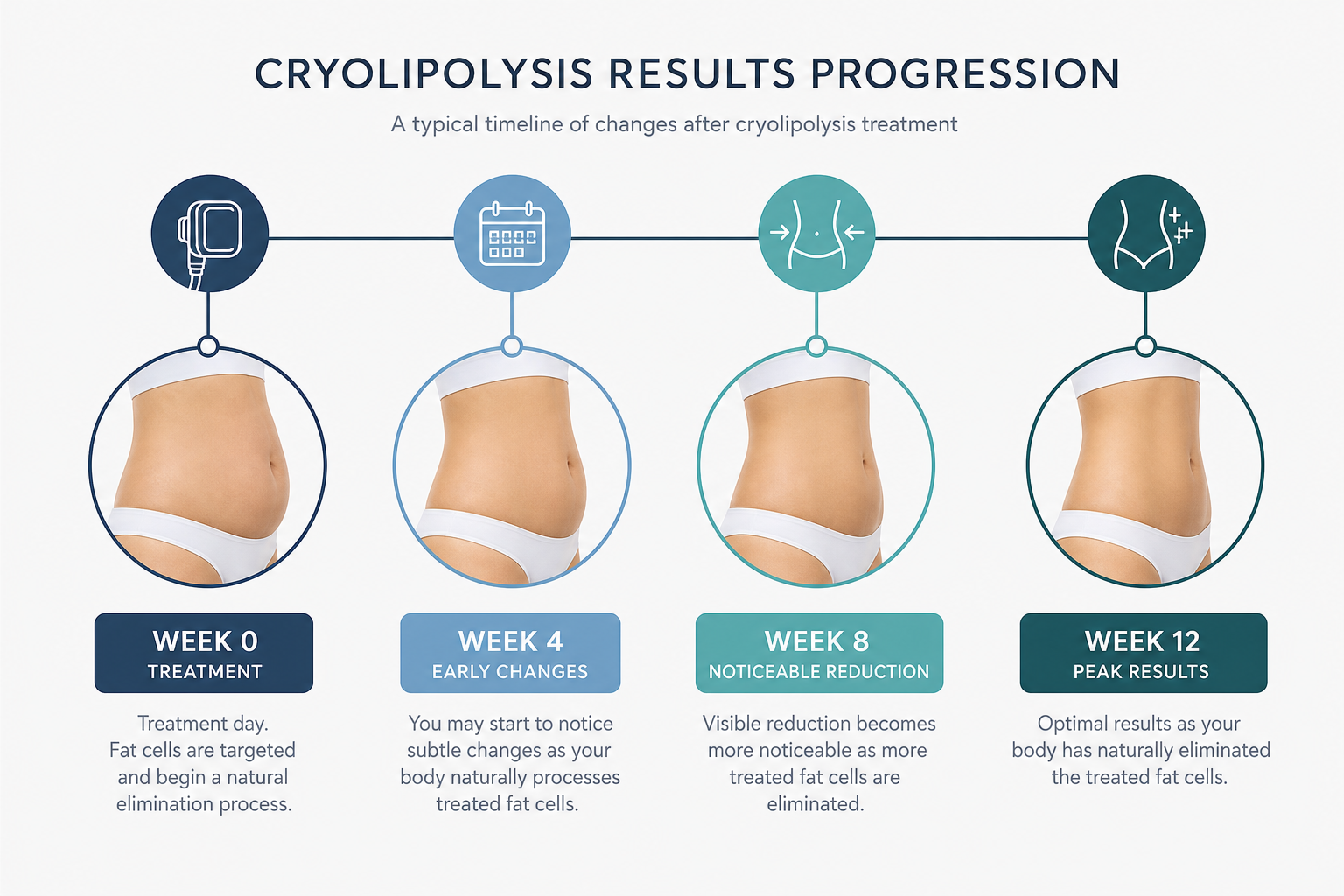
It is important to understand that these are average figures from clinical populations, and individual results vary depending on the volume of fat present, the number of treatment cycles completed, the specific device used, and the patient’s metabolic rate. Cryolipolysis is not a tool for dramatic body transformation — it is a method of localized fat reduction that works best when the target area is well-defined and the overall body weight is stable.
How Many Sessions Are Needed?
Most patients require between one and three treatment cycles per area to achieve their desired outcome. For the abdomen, which is a larger and often more complex zone than areas like the chin or inner thigh, two to four sessions are common depending on the volume of subcutaneous fat present. Sessions are typically spaced six to eight weeks apart to allow the body to clear the treated fat cells before the next cycle begins.
A practitioner should provide a personalised treatment plan after assessing the area. Be cautious of any clinic that recommends a very high number of sessions without a clear clinical rationale, or that guarantees a specific outcome.
How Long Do Results Last?
The fat cells destroyed by cryolipolysis do not regenerate. In that sense, permanent fat cell removal is an accurate description of what the treatment achieves in the treated area. However, this does not mean results are unconditionally permanent. The fat cells that remain — both in the treated area and elsewhere in the body — can still enlarge if caloric intake exceeds expenditure. Significant weight gain after treatment can diminish or reverse the visible improvement.
Patients who maintain a stable weight through a balanced diet and regular exercise after treatment tend to retain their results indefinitely. Cryolipolysis should therefore be viewed as a complement to a healthy lifestyle rather than a substitute for one.
Who Is an Ideal Candidate?
Cryolipolysis is most likely to produce satisfying results for people who meet the following criteria:
- Close to their target body weight, with a BMI generally in the healthy to mildly overweight range
- Have one or more well-defined areas of stubborn fat pockets that have not responded to diet and exercise
- Have soft, pinchable subcutaneous fat in the target area (rather than firm, deep visceral fat)
- Have reasonable skin elasticity — some degree of skin laxity is acceptable, but significant loose skin may not improve and could become more apparent after fat reduction
- Have realistic expectations about the degree of improvement achievable
- Are not pregnant or breastfeeding
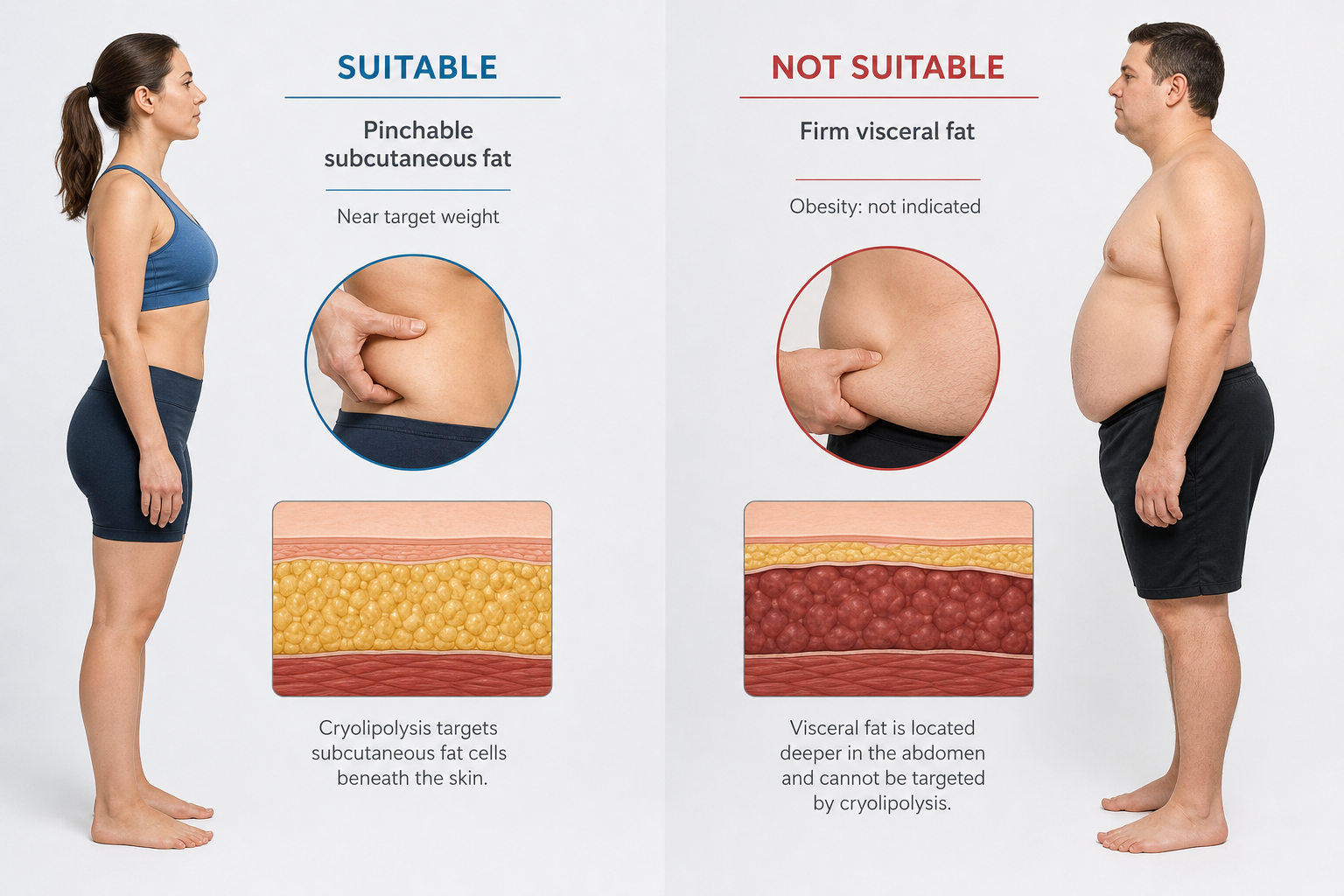
Cryolipolysis is not a treatment for obesity and is not intended to produce significant weight loss. It is a body contouring tool for people who are already managing their weight but want to address a specific area of stubborn fat.
Who May Not Be Suitable
Certain medical conditions and circumstances are contraindications for cryolipolysis. A thorough medical history review is essential before treatment. Contraindications include:
- Cryoglobulinemia — a condition in which proteins in the blood abnormally clump in cold temperatures, which could be dangerous with cold exposure
- Cold agglutinin disease — another cold-triggered blood condition
- Raynaud’s disease — a condition causing exaggerated vascular responses to cold
- Cold urticaria or cold hypersensitivity — allergic reactions triggered by cold
- Paroxysmal cold haemoglobinuria
- Active skin conditions, open wounds, or rashes in the treatment area
- Pregnancy
- Hernia in or near the treatment area
- Implanted devices such as pacemakers or defibrillators near the treatment zone
- Autoimmune conditions that may affect wound healing or inflammatory response
People with significant skin laxity, very little pinchable fat, or primarily visceral fat accumulation are unlikely to achieve satisfying results and may be better served by alternative approaches.
Risks and Side Effects
Cryolipolysis has a well-established safety profile when performed by a trained practitioner using an appropriate device, but it is not without risks. Common, temporary side effects include redness, swelling, bruising, tingling, and temporary numbness in the treated area. These typically resolve within one to two weeks and do not require medical intervention.
The most clinically significant risk is paradoxical adipose hyperplasia (PAH). PAH is a rare complication in which the treated area paradoxically enlarges rather than shrinks, typically becoming apparent two to three months after the session. Instead of the fat cells dying, they appear to proliferate, creating a firm, enlarged mass in the shape of the applicator. PAH is more commonly reported in male patients and in those treated with certain applicator types, though the exact mechanism is not fully understood. The incidence is estimated to be low but may be underreported.
PAH does not resolve on its own. When treatment is needed, liposuction is typically performed at six to nine months after the cryolipolysis session, once the abnormal fat tissue has matured sufficiently. If you notice the treated area becoming larger and firmer rather than smaller in the weeks after treatment, you should contact your practitioner promptly. Choosing an experienced, qualified provider and discussing your individual risk factors before treatment is the most effective way to minimise this risk.
A Warning About Home Fat-Freezing Devices
A number of companies market consumer-grade “fat freezing” devices for home use. Medical and aesthetic professionals do not recommend attempting cryolipolysis at home. Professional devices are calibrated to deliver a precise, controlled temperature to a specific depth of tissue for a defined duration. Home devices cannot replicate this precision, and improper cold exposure risks frostbite, skin damage, and nerve injury without producing meaningful fat reduction. If you are considering cryolipolysis, it should only be performed by a qualified practitioner using a regulated, FDA-cleared device in a clinical setting.
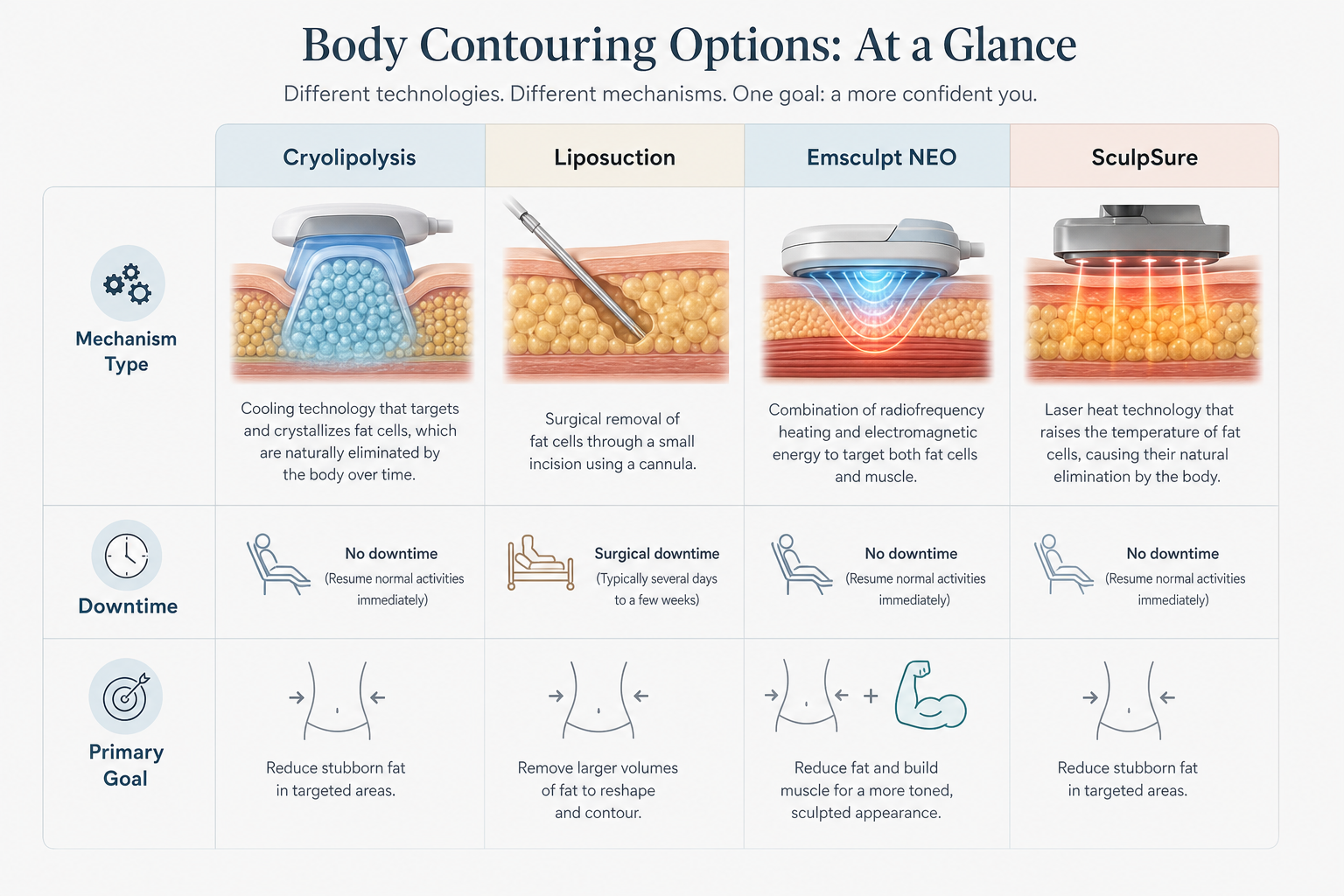
Cryolipolysis vs. Other Body Contouring Options
| Treatment | Mechanism | Target | Downtime | Sessions Needed | Key Consideration |
|---|---|---|---|---|---|
| Cryolipolysis (belly fat freezing) | Controlled cooling / fat cell apoptosis | Subcutaneous fat | None | 1–3 per area | Gradual results; PAH risk |
| Liposuction | Surgical fat removal | Subcutaneous fat | 1–2 weeks+ | Usually 1 | More fat removed; surgical risks; anaesthesia |
| SculpSure | Laser / heat-based fat disruption | Subcutaneous fat | Minimal | 1–2 per area | May suit patients with less pinchable fat |
| Emsculpt NEO | HIFEM muscle stimulation + radiofrequency | Fat reduction + muscle building | None | 4 (initial course) | Adds muscle tone; different goal to fat-only reduction |
| Radiofrequency (RF) skin tightening | Thermal energy / collagen stimulation | Skin laxity | None to minimal | Multiple | Addresses skin quality, not fat volume |
| Injection lipolysis (e.g., Kybella) | Deoxycholic acid / fat cell destruction | Small, localised fat deposits | Swelling 1–2 weeks | 2–4 | More commonly used for submental (chin) fat |
Liposuction remains the most effective single intervention for removing larger volumes of subcutaneous fat, but it carries surgical risks, requires anaesthesia, and involves a recovery period. Cryolipolysis is better suited to patients who want a non-invasive option for modest, localized fat reduction and are willing to wait several months for results. For patients who also have significant skin laxity after fat reduction — particularly those who have had pregnancies or substantial weight loss — combining cryolipolysis with radiofrequency skin tightening may improve skin firmness alongside fat reduction, though this combination approach should be discussed with a practitioner who can assess your specific anatomy.
Cost of Belly Fat Freezing
The cost of cryolipolysis for the abdomen varies depending on the clinic, the device used, the number of applicators required per session, and the number of sessions in the treatment plan. As a general guide, a single treatment cycle for one area typically costs between £600 and £1,200 (or approximately $600–$1,500 in the US). Because the abdomen often requires multiple applicator placements and more than one session, a full abdominal treatment plan commonly ranges from £1,500 to £4,500 or more.
Cryolipolysis is considered a cosmetic procedure and is not covered by health insurance or the NHS. When comparing prices between clinics, it is important to understand exactly what is included — the number of applicator placements per session, the number of sessions, and whether the post-treatment massage and follow-up consultations are included in the quoted price.
Frequently Asked Questions
Does belly fat freezing hurt?
Most patients experience an intense cold sensation and suction pressure when the applicator is first applied, which typically becomes more comfortable within a few minutes as the area numbs. The post-treatment massage can be briefly uncomfortable. Overall, the procedure is generally well tolerated without anaesthesia.
Can the fat come back after cryolipolysis?
The fat cells destroyed during treatment do not return. However, if you gain weight after treatment, the remaining fat cells in the treated area and elsewhere in the body can enlarge, which may reduce or reverse the visible improvement. Maintaining a stable weight is important for preserving results.
How soon will I see results from belly fat freezing?
Most patients begin to notice changes at four to eight weeks after treatment. Peak results are typically visible at 8 to 12 weeks, once the lymphatic system has cleared the majority of the treated fat cells. Some patients continue to see gradual improvement for up to six months.
Is cryolipolysis safe for the abdomen?
Cryolipolysis has a well-documented safety record when performed by a qualified practitioner using an FDA-cleared device. Common side effects are temporary and mild. The most serious risk is paradoxical adipose hyperplasia (PAH), which is rare but requires medical attention if it occurs. A thorough pre-treatment assessment helps identify contraindications.
Can I treat my whole stomach in one session?
The abdomen is a large area and typically requires multiple applicator placements to cover the upper abdomen, lower abdomen, and flanks. Some clinics use multiple applicators simultaneously to reduce overall appointment time. Your practitioner will design a treatment plan based on the specific areas you want to address.
Is belly fat freezing the same as liposuction?
No. Liposuction is a surgical procedure that physically removes fat through suction via small incisions, typically under anaesthesia. Cryolipolysis is a non-invasive outpatient procedure with no incisions and no recovery period. Liposuction generally removes a larger volume of fat in a single session, while cryolipolysis produces more modest, gradual results without surgical risk.
What is paradoxical adipose hyperplasia and how common is it?
Paradoxical adipose hyperplasia (PAH) is a rare complication where the treated fat tissue enlarges instead of reducing, typically becoming noticeable two to three months after treatment. It is more commonly reported in male patients. PAH does not resolve without intervention and usually requires liposuction to correct. Discussing this risk with your practitioner before treatment is important.
Is Belly Fat Freezing Worth Considering for You?
Cryolipolysis is a well-researched, FDA-cleared body contouring option that can produce meaningful localized fat reduction in the abdominal area for the right candidate. If you are close to your target weight, have soft and pinchable subcutaneous fat that has not responded to diet and exercise, and have realistic expectations about the degree of change achievable, it may be worth discussing with a qualified aesthetic practitioner.
It is not a solution for obesity, visceral fat, or significant skin laxity, and it requires patience — results develop gradually over two to three months. The risk of paradoxical adipose hyperplasia, while rare, is real and should be part of any informed consent conversation. Home devices are not a safe or effective alternative to clinical treatment.
A thorough consultation with an experienced practitioner who can assess your specific anatomy, fat distribution, and goals is the most reliable way to determine whether cryolipolysis is appropriate for you, or whether an alternative approach such as liposuction, Emsculpt NEO, or a combination treatment plan would better match your needs.