Face Tattoo Removal: What to Realistically Expect
Face tattoo removal is one of the most consequential decisions a person can make about their appearance. The face is visible in every social and professional interaction, which means the stakes — and the expectations — are higher than for tattoos anywhere else on the body. Laser technology has advanced considerably, and complete or near-complete removal is achievable for many patients, but the process is slower, more nuanced, and more emotionally loaded than most online sources acknowledge. This guide explains what the removal process actually involves, what influences your results, and how to approach the journey with realistic expectations.
Key Takeaways
- Facial tattoos often respond faster than body tattoos due to better blood circulation, but the face requires more careful technique because of thinner skin and higher visibility of side effects.
- Most patients need between 5 and 12 sessions depending on ink color, tattoo age, skin tone, and the specific facial zone being treated.
- Picosecond lasers are generally preferred for facial work, particularly for patients with darker skin tones, due to a lower risk of post-inflammatory hyperpigmentation compared with older Q-switched nanosecond devices.
- Permanent makeup and cosmetic tattoos carry a specific risk of paradoxical darkening and require a test spot before full treatment.
- Complete removal is not guaranteed; near-complete fading with faint residual ink is a realistic outcome for some patients, particularly those with multi-color or densely packed tattoos.
How Laser Tattoo Removal Works on the Face
Laser tattoo removal relies on a principle called selective photothermolysis. A laser emits pulses of light at specific wavelengths that are absorbed by tattoo ink particles in the dermal layer of the skin. The rapid absorption of energy causes the ink particles to shatter into smaller fragments through a photomechanical effect. These fragments are then gradually cleared by the body’s immune system via the lymphatic clearance process — macrophage cells engulf the debris and transport it away over the weeks following each session.
The face has a denser vascular supply than most body areas, which means blood circulation and lymphatic drainage are more efficient. This generally accelerates ink clearance between sessions and can reduce the total number of treatments needed compared with, for example, an ankle or upper arm tattoo. However, facial skin is also thinner and sits closer to underlying bone and nerve endings, which affects how the laser energy is delivered and how the skin responds to treatment.
Two main laser categories are used for facial tattoo removal. Q-switched lasers (nanosecond pulse duration) were the standard for many years and remain effective, particularly for black and dark blue ink. Picosecond lasers — such as PicoWay and PicoSure — deliver energy in shorter pulses (trillionths of a second rather than billionths), which creates a stronger photomechanical effect with less thermal energy deposited in surrounding tissue. Clinical evidence suggests picosecond devices can achieve comparable or faster fading in fewer sessions and carry a lower risk of thermal side effects, making them particularly relevant for facial work and for patients with darker skin tones.
Why the Face Is Different from Other Body Areas
Facial skin anatomy creates a distinct treatment environment. The skin on the face — particularly around the eyelids, lips, and under the eyes — is significantly thinner than skin on the back or thighs. This means laser energy reaches the dermis more readily, which can be advantageous for ink fragmentation but also increases the risk of surface-level side effects if settings are not carefully calibrated. An experienced provider will adjust fluence (energy density) and spot size accordingly.
Pain sensitivity is also higher on the face. The density of nerve endings, particularly around the forehead, nose, and lips, means that laser pulses feel sharper than on most body areas. Most clinics apply a topical numbing cream 30 to 60 minutes before treatment; for particularly sensitive zones or larger tattoos, a lidocaine injection or cold-air cooling device (such as a Zimmer cooler) may be used to manage discomfort during the session.
The high visibility of the face means that any side effects — redness, swelling, blistering, or temporary pigment changes — are immediately apparent to others. This is a practical consideration for patients with professional or social commitments, and it underscores the importance of choosing a provider with specific experience in facial laser work rather than a generalist who primarily treats body tattoos.
How Many Sessions Does Face Tattoo Removal Take?
Most facial tattoos require between 5 and 10 sessions for significant fading, with multi-color tattoos or those with dense ink saturation potentially requiring 10 to 12 or more. These are estimates; the actual number depends on several interacting factors. Session spacing of 6 to 8 weeks is standard, allowing the immune system sufficient time to clear fragmented ink before the next treatment. Rushing sessions does not accelerate results and may increase the risk of adverse effects.
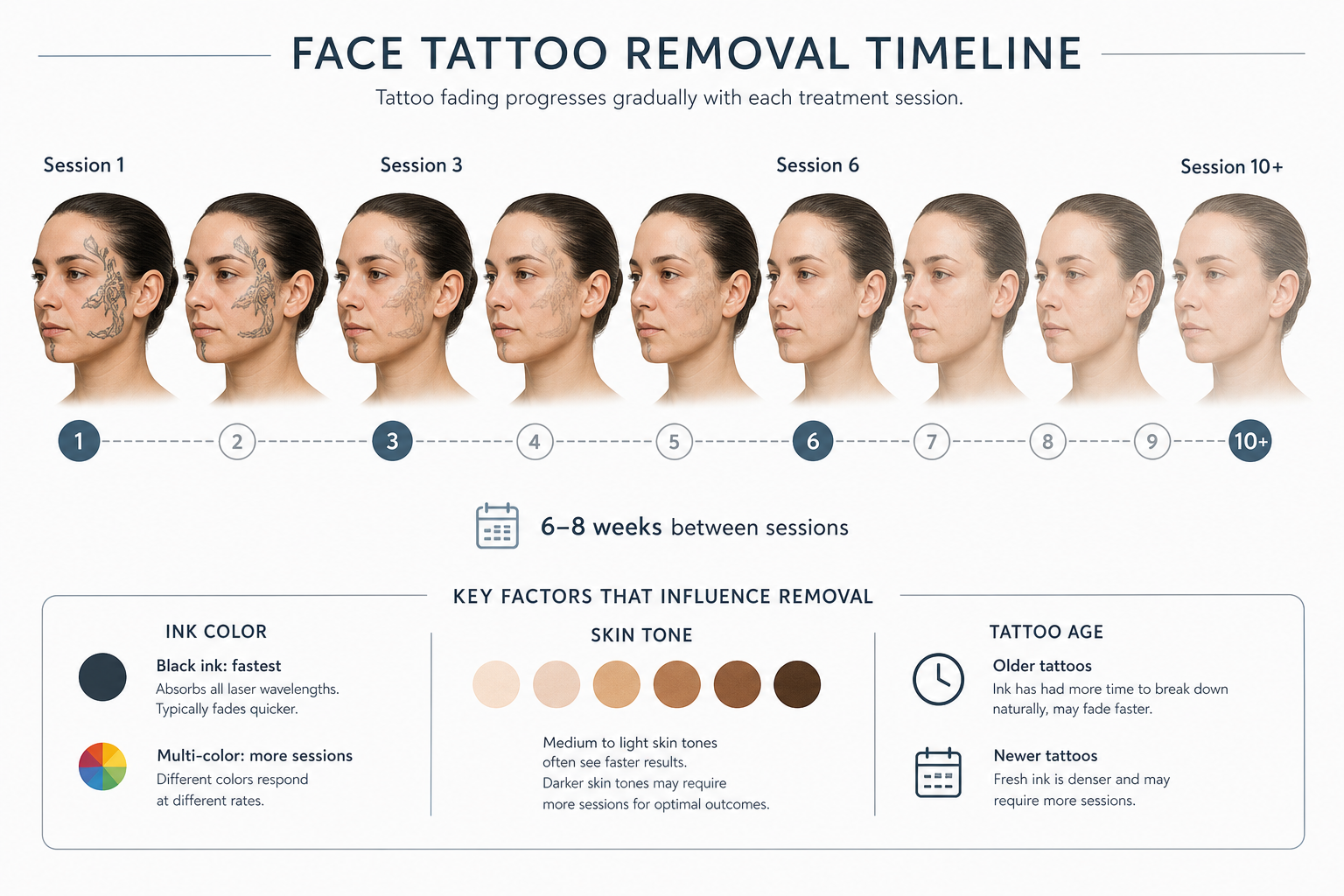
The following factors influence how many sessions a particular facial tattoo is likely to need:
- Ink color: Black ink absorbs the broadest range of laser wavelengths and is the most responsive. Dark blue and green inks respond well to specific wavelengths. Red, orange, and yellow inks are more resistant and may require a different laser wavelength or additional sessions. Fluorescent inks are the most difficult to clear.
- Tattoo age: Older tattoos have already undergone some natural fading as the body gradually breaks down ink over time. An older tattoo typically responds faster than a fresh one with the same design.
- Professional vs. amateur tattoo: Professional tattoos are applied at a consistent depth with higher ink density, which can require more sessions. Amateur tattoos are often shallower and less uniformly saturated, sometimes making them easier to clear.
- Ink density and layering: Cover-up tattoos or heavily saturated designs contain more ink particles and take longer to clear.
- Fitzpatrick skin type: Patients with lighter skin tones (Fitzpatrick types I–III) can generally be treated at higher laser fluences, which may accelerate fading. Patients with darker skin tones (Fitzpatrick types IV–VI) require more conservative settings to reduce the risk of post-inflammatory hyperpigmentation, which can extend the overall timeline.
- Facial zone: Areas with better circulation, such as the cheeks and forehead, tend to clear faster. The neck, which is sometimes treated alongside facial tattoos, typically requires more sessions due to lower vascular density.
A realistic total timeline from first session to final assessment is commonly 12 to 24 months, accounting for session spacing and the gradual nature of progressive fading.
Face Zone Considerations
The face is not a uniform treatment surface. Different zones present different technical challenges and carry different risk profiles.
Forehead and cheeks are generally the most straightforward areas to treat. Skin thickness is moderate, circulation is good, and the risk of structural complications is low. These zones tend to show progressive fading relatively predictably.
Eyelids and periorbital area require intraocular eye shields — small metal or plastic devices placed directly on the eye under topical anesthetic — to protect the cornea and retina from laser energy. This is a non-negotiable safety requirement. Not all clinics are equipped or trained to treat this zone safely; confirm this capability before booking if your tattoo extends near the eye.
Lips and perioral area are highly sensitive and have a higher density of nerve endings. Patients with a history of cold sores (herpes simplex virus) should inform their provider before treatment, as laser energy near the lips can trigger an outbreak. Antiviral prophylaxis is typically recommended in this situation.
Chin and jawline are generally manageable but may have slightly less predictable fading due to variable skin thickness and proximity to the mandible.
Neck is often treated as an extension of facial work but behaves more like a body area in terms of clearance speed. Patients should expect more sessions for neck tattoos than for equivalent tattoos on the cheeks or forehead.
Permanent Makeup and Cosmetic Tattoo Removal
Permanent makeup (PMU) — including microblading, powder brows, eyeliner tattoos, and lip liner — presents a distinct set of considerations that differ meaningfully from decorative tattoo removal. Many PMU pigments contain iron oxide or titanium dioxide, which can undergo a chemical reaction when exposed to laser energy, causing the pigment to oxidize and turn darker rather than lighter. This phenomenon is called paradoxical darkening, and it is more common with flesh-toned, white, pink, and certain brown pigments than with black or dark brown inks.
Because of this risk, a test spot on a small, inconspicuous area of the tattoo is essential before any full PMU removal session. If paradoxical darkening occurs at the test spot, it can often be addressed with subsequent laser sessions, but the patient needs to understand this possibility before committing to treatment. Some practitioners use saline-based removal techniques as an alternative or adjunct for PMU, particularly when paradoxical darkening is a concern.
PMU pigments are also typically applied more superficially than decorative tattoos, which can be an advantage for removal, but the pigment composition is less standardized than professional tattoo inks, making outcomes less predictable. A provider with specific experience in cosmetic tattoo removal — not just general tattoo removal — is important for this category of treatment.
Skin Tone and the Risk of Pigment Changes
Skin tone is one of the most clinically significant factors in facial tattoo removal planning. The Fitzpatrick skin type scale (types I through VI, from very fair to very dark) helps practitioners assess the risk of pigment-related side effects. The primary concern for patients with Fitzpatrick types IV through VI is post-inflammatory hyperpigmentation — a darkening of the treated skin that occurs as a response to laser-induced inflammation. This is distinct from the tattoo ink itself and can take months to resolve, sometimes requiring additional treatment with topical agents such as hydroquinone or azelaic acid.
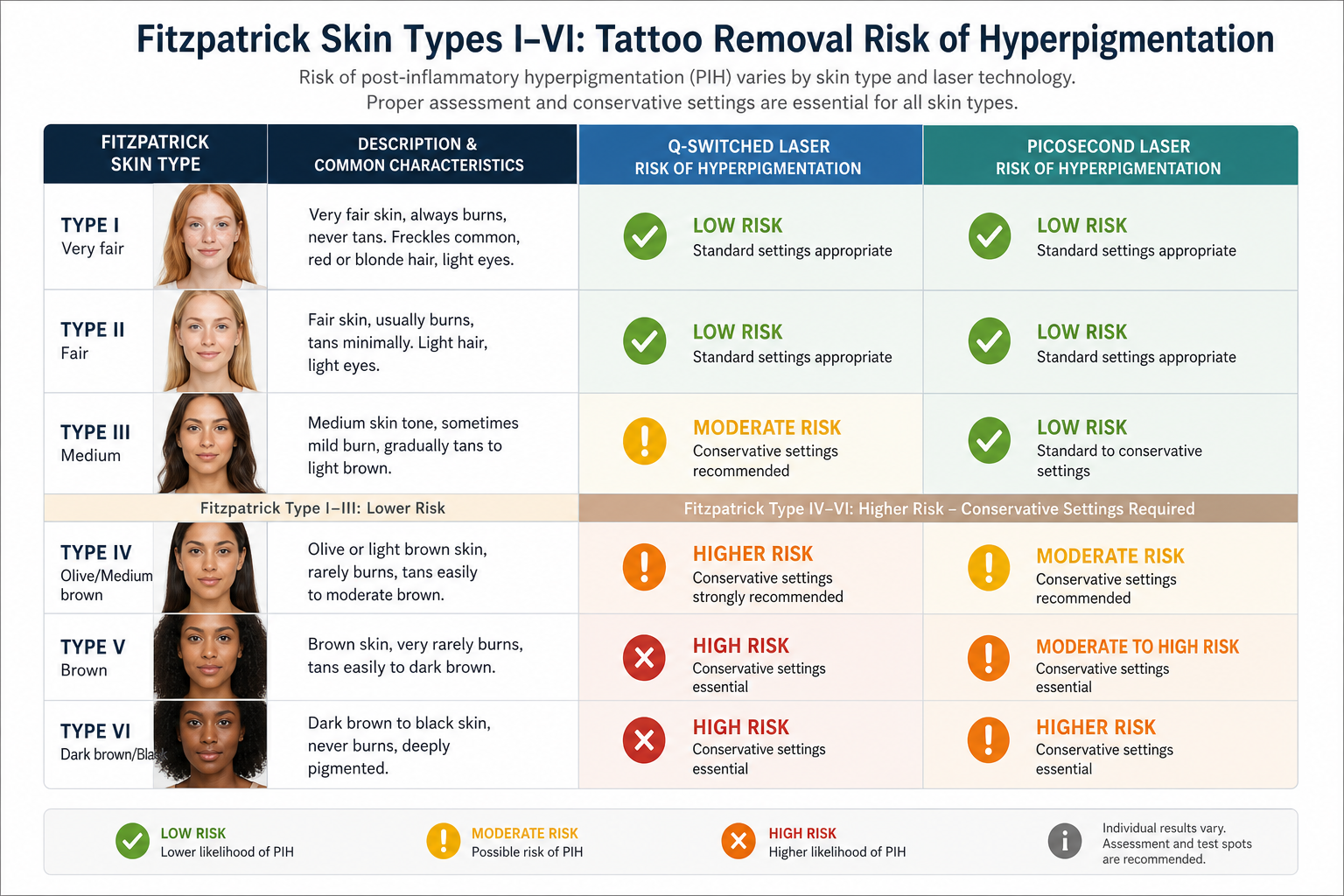
Hypopigmentation — a lightening of the skin — is a less common but more persistent risk, particularly with aggressive treatment settings or repeated sessions in the same area. It is more visible on darker skin tones and may be permanent in some cases.
Picosecond lasers reduce (but do not eliminate) the risk of pigment changes in patients with darker skin tones by depositing less thermal energy in the surrounding tissue. The Q-switched Nd:YAG laser at 1064 nm has also been used with reasonable safety in darker skin types due to its deeper penetration and lower melanin absorption at that wavelength. Regardless of device, conservative settings, longer session spacing, and careful aftercare are essential for patients with Fitzpatrick types IV through VI. Patients in this group should specifically seek a provider with documented experience treating skin of color.
What the Treatment Experience Involves
A typical face tattoo removal session begins with a provider consultation or check-in to assess healing from the previous session and confirm the treatment plan. Topical numbing cream is applied and left for 30 to 60 minutes before the laser is used. The treated area is then cleaned, and protective eyewear is provided for both patient and practitioner. If the tattoo is near the eyes, intraocular shields are placed.
The laser handpiece is passed over the tattoo in a systematic pattern. Each pulse feels like a sharp snap or sting — often described as similar to a rubber band flicked against the skin, though sharper on the face than on most body areas. Session duration depends on the size of the tattoo; small facial tattoos may take only a few minutes. Immediately after treatment, the area typically appears red, slightly swollen, and may develop a frosted white appearance (a temporary reaction caused by gas released from the skin during laser impact). This resolves within minutes to hours.
Between sessions, the immune system gradually processes and clears the fragmented ink particles through lymphatic clearance. This is why session spacing matters: the body needs adequate time to complete this process before the next treatment. Patients often notice that the tattoo continues to fade for several weeks after each session, not just immediately afterward.
Side Effects and Risks
Common side effects after facial laser tattoo removal include redness, swelling, and tenderness, which typically resolve within a few days. Blistering and scabbing can occur and are a normal part of the healing process; picking or scratching the treated area increases the risk of scarring and infection. Temporary hyperpigmentation or hypopigmentation may develop and usually improves over months, though in some cases pigment changes can be prolonged.
Less common but more serious risks include scarring, particularly if the skin is not given adequate time to heal between sessions or if post-treatment care is not followed. Allergic reactions to fragmented ink particles are rare but possible, particularly with certain colored inks. Infection can occur if the treated area is not kept clean during healing.
Paradoxical darkening, discussed above in the context of permanent makeup, is a specific risk for certain pigment types. Incomplete removal — where faint residual ink remains after a full course of treatment — is a realistic outcome for some patients, particularly those with multi-color tattoos, dense ink saturation, or certain ink colors such as green or yellow. This should be discussed openly during the provider consultation so that expectations are calibrated before treatment begins.
Aftercare Protocol Between Sessions
Aftercare following each session directly affects both healing and the quality of long-term results. In the days immediately after treatment, the area should be kept clean and dry. A gentle, fragrance-free moisturizer or prescribed healing ointment can be applied. Patients should avoid submerging the treated area in water (swimming pools, hot tubs, or baths) until the skin has fully healed, typically within one to two weeks.
Sun exposure is one of the most important aftercare considerations for facial tattoos specifically, because the face is difficult to keep covered. UV exposure on healing or recently treated skin significantly increases the risk of post-inflammatory hyperpigmentation. Broad-spectrum SPF 30 or higher should be applied daily throughout the entire course of treatment and for several months afterward. Avoiding direct sun during peak hours and wearing a hat when outdoors are practical measures that support better outcomes.
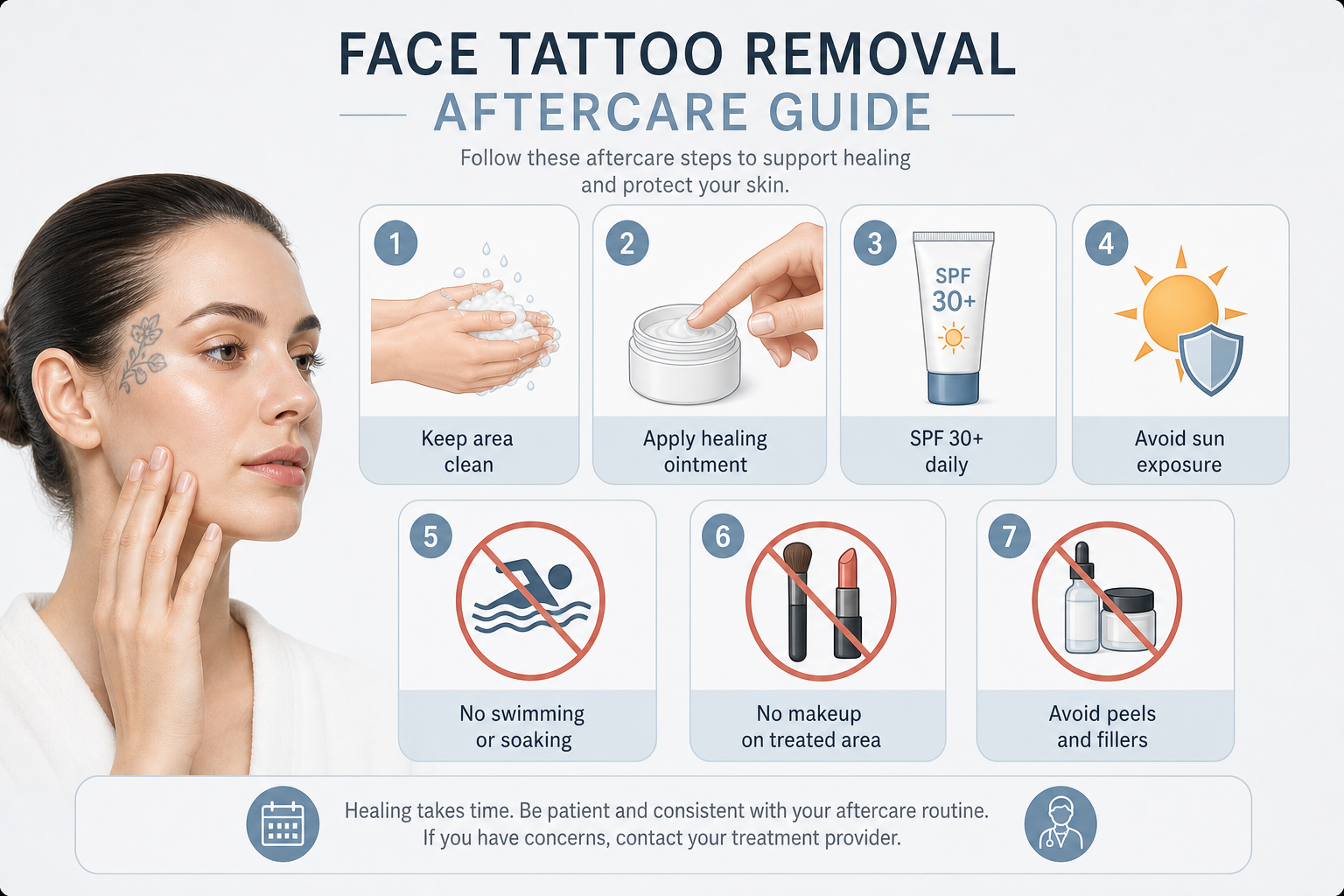
Cosmetic products, chemical peels, and injectable treatments such as dermal fillers or botulinum toxin should be avoided in the treated area until the skin has fully recovered. Patients should discuss the timing of any planned aesthetic treatments with their provider to avoid interactions that could affect healing or results.
Complete vs. Near-Complete Removal: An Honest Assessment
Complete removal — meaning no visible trace of the tattoo — is achievable for many patients, particularly those with black or dark blue ink on lighter skin tones. However, near-complete removal, where faint residual ink remains visible under certain lighting conditions, is a realistic and common outcome for others. Factors that make complete removal less likely include multi-color tattoos with resistant pigments (green, yellow, orange), very dense or layered ink, darker skin tones requiring conservative treatment settings, and tattoos in areas with lower vascular density.
Fading for cover-up is a valid alternative goal for patients who do not need complete removal. Partial fading — reducing the tattoo’s density and contrast sufficiently for a skilled tattoo artist to work over it — typically requires fewer sessions than full removal and may be a practical strategy for patients who want to replace rather than erase a facial tattoo. This option is worth discussing during the provider consultation if it aligns with the patient’s goals.
It is worth acknowledging that face tattoo removal carries an emotional dimension that body tattoo removal often does not. Facial tattoos are visible in every interaction — professional, social, and personal — and the decision to remove one is frequently tied to significant life changes. The process is gradual, and patients need to be prepared for a period of months during which the tattoo is visibly fading but not yet gone. Managing this intermediate phase, both practically and emotionally, is part of the realistic expectations conversation that a good provider should have with every patient.
Choosing the Right Provider
Provider selection is particularly important for facial tattoo removal given the visibility of the treatment area and the complexity of the variables involved. A board-certified dermatologist or a laser specialist with specific training in facial laser procedures is preferable to a general med spa with limited experience in this area. Before booking, consider asking the following questions:
- Which laser device do you use, and is it a picosecond or Q-switched system?
- Do you have experience treating facial tattoos specifically, including near the eyes?
- Do you have experience treating patients with my skin tone (Fitzpatrick type)?
- Will you perform a patch test or test spot before the first full session?
- What is your protocol for permanent makeup or cosmetic tattoo removal?
- What aftercare support do you provide between sessions?
- Can you show examples of results from patients with similar tattoos and skin tones?
A thorough provider consultation before the first session should include an assessment of the tattoo’s ink colors, age, and density; an evaluation of your skin tone and any relevant medical history; a discussion of realistic outcomes and the likely number of sessions; and a clear explanation of the risks specific to your situation.
Frequently Asked Questions
Does face tattoo removal hurt more than body tattoo removal?
Yes, in most cases. The face has a higher density of nerve endings than most body areas, making laser pulses feel sharper. Topical numbing cream significantly reduces discomfort for most patients, and cold-air cooling or lidocaine injections can be used for particularly sensitive areas. Sessions are typically short, which helps manage the overall experience.
Can all ink colors be removed from the face?
Black and dark blue inks respond best to laser treatment. Green, red, orange, and yellow inks are more resistant and may require specific laser wavelengths or additional sessions. Some colors, particularly fluorescent inks, may not clear completely. A provider consultation will help identify which colors in your tattoo are likely to respond well and which may be more challenging.
Is face tattoo removal safe for darker skin tones?
It can be, but it requires a provider with specific experience and appropriate equipment. Patients with Fitzpatrick types IV through VI face a higher risk of post-inflammatory hyperpigmentation. Picosecond lasers and conservative treatment settings reduce this risk. Longer session spacing and diligent sun protection are also important. Seeking a provider experienced with skin of color is strongly recommended.
How much does face tattoo removal cost?
Cost varies considerably depending on the size of the tattoo, the number of sessions required, the laser technology used, and the clinic’s location and pricing structure. Individual sessions typically range from approximately $75 to $500 or more. Total treatment costs for a full course can range from several hundred to several thousand dollars. Tattoo removal is generally not covered by health insurance. Some clinics offer package pricing for multiple sessions, which may reduce the per-session cost.
Will face tattoo removal leave a scar?
Scarring is a possible but uncommon risk when treatment is performed correctly by an experienced provider. The risk increases if the skin is not given adequate healing time between sessions, if aftercare instructions are not followed, or if the treated area is picked or scratched during healing. Patients with a history of keloid scarring should discuss this with their provider before beginning treatment.
What is paradoxical darkening, and does it affect all facial tattoos?
Paradoxical darkening is a reaction where certain pigments turn darker rather than lighter after laser exposure, due to a chemical change in the ink. It is most commonly associated with permanent makeup pigments containing iron oxide or titanium dioxide — such as flesh-toned, white, or certain brown pigments — rather than standard decorative tattoo inks. A test spot before full treatment is essential for any permanent makeup removal to identify this risk in advance.
Making an Informed Decision About Face Tattoo Removal
Face tattoo removal is a realistic goal for most patients, but it is a gradual process that requires commitment, patience, and careful provider selection. The combination of advanced picosecond laser technology, appropriate session spacing, and a thorough aftercare protocol gives many patients the opportunity to achieve significant or complete fading. For others — particularly those with multi-color tattoos, resistant ink shades, or darker skin tones — near-complete removal or fading for cover-up may be the most achievable outcome, and that is a valid and worthwhile result.
The most important step before beginning treatment is a detailed provider consultation with a qualified laser specialist who has specific experience in facial procedures and, where relevant, in treating your skin tone. Realistic expectations, set from the outset, make the process considerably easier to navigate — both practically and emotionally. If you are considering face tattoo removal, a consultation with a board-certified dermatologist or experienced laser specialist is the appropriate starting point for understanding what your individual treatment plan might involve.