Freckles After Sunburn: Why They Appear and What You Can Do
Noticing new freckles after sunburn is a common experience, particularly for people with fair skin or a genetic predisposition to freckling. These small, flat spots are not random — they are the result of a specific biological response to ultraviolet radiation, and understanding why they form can help you make better decisions about sun protection, skincare, and when to seek professional advice.
Key Takeaways
- Freckles after sunburn form when UV-B radiation triggers melanocytes to overproduce melanin in concentrated clusters rather than distributing it evenly across the skin.
- People with the MC1R gene variant — commonly associated with fair skin, red or blonde hair — are significantly more likely to develop freckles in response to sun exposure.
- Common freckles (ephelides) are generally harmless and often fade in winter, but they signal that your skin has been exposed to enough UV radiation to activate a pigment response.
- Broad-spectrum sunscreen with SPF 50 or higher, combined with protective clothing and shade, is the most effective way to prevent new freckles from forming or existing ones from darkening.
- Several topical and clinical treatments can help fade freckles, but results vary and ongoing sun protection is essential to prevent recurrence.
What Are Freckles, Scientifically Speaking?
Freckles — known medically as ephelides — are small, flat areas of increased pigmentation that appear on sun-exposed skin. They are not raised, do not have irregular borders, and typically measure between one and two millimetres in diameter. Unlike moles or birthmarks, ephelides are not present at birth; they develop in response to sun exposure, usually becoming noticeable in childhood and often becoming more prominent through adolescence and early adulthood.
The pigment responsible for freckle colour is melanin, produced by specialised skin cells called melanocytes. In freckled skin, melanocytes in certain areas produce and release melanin in concentrated clusters rather than distributing it uniformly. The result is a patchy, spotted appearance rather than an even tan. Importantly, people with freckles do not necessarily have more melanocytes than those without — their melanocytes simply behave differently when stimulated by ultraviolet light.
It is worth distinguishing ephelides from solar lentigines, which are sometimes called age spots, liver spots, or sunspots. Solar lentigines are larger, more irregular in shape, and tend to be permanent — they do not fade in winter the way common freckles do. Solar lentigines are associated with cumulative sun damage over many years and are more common in adults over 40. The table below summarises the key differences.
| Feature | Ephelides (Common Freckles) | Solar Lentigines (Sunspots) |
|---|---|---|
| Size | 1–2 mm, small and uniform | Larger, variable size |
| Colour | Light to medium brown | Tan to dark brown |
| Borders | Flat, well-defined | Irregular edges |
| Age of onset | Childhood, adolescence | Typically after age 40 |
| Seasonal change | Darken in summer, fade in winter | Largely permanent |
| Cause | Genetic + acute UV exposure | Cumulative sun damage |
| Skin type | Most common in fair/light skin | Any skin type with sun history |
Why Does Sunburn Specifically Trigger Freckles?
Sunburn occurs when UV-B radiation — the shorter, higher-energy wavelength of ultraviolet light — penetrates the outer layers of the skin and causes direct DNA damage to skin cells. This acute injury triggers an inflammatory response and, crucially, activates the skin’s pigmentation system as a protective mechanism. The body releases a signalling molecule called alpha-melanocyte-stimulating hormone (alpha-MSH), which binds to receptors on melanocytes and instructs them to ramp up melanin production rapidly.
In people without a genetic predisposition to freckling, this response tends to produce a relatively even distribution of melanin — what we recognise as a tan. In people with certain variants of the MC1R gene (melanocortin-1 receptor), however, the melanocytes respond differently. Instead of producing large amounts of eumelanin — the dark brown or black pigment that creates a protective tan — their melanocytes produce more pheomelanin, a red or yellow pigment that offers far less UV protection. This pheomelanin-dominant response is less efficient at distributing pigment evenly, so melanin accumulates in localised clusters, forming the spots we recognise as freckles.
This explains why sunburn is a particularly potent freckle trigger compared with gradual, moderate sun exposure. The acute, intense UV insult from a sunburn delivers a sudden, high-dose signal to melanocytes, causing a rapid and concentrated pigment response. Gradual tanning, by contrast, allows melanin to distribute more evenly over time. New freckles after sunburn typically become visible within two to six weeks as the melanin migrates from melanocytes into the surrounding keratinocytes (the outer skin cells) and reaches the skin’s surface.
The Role of the MC1R Gene and Genetic Predisposition
Not everyone who gets sunburned develops new freckles, and this difference comes down largely to genetics. The MC1R gene encodes the melanocortin-1 receptor, a protein on the surface of melanocytes that controls which type of melanin is produced. People who inherit certain variants (alleles) of this gene — particularly those associated with red or blonde hair, pale skin, and light eyes — have melanocytes that default toward pheomelanin production when stimulated by UV radiation.
This genetic predisposition means that freckling runs strongly in families. If both parents freckle easily, their children are significantly more likely to do so as well. Fitzpatrick skin types I and II (very fair to fair skin that burns easily and tans minimally) carry the highest risk of developing freckles after sun exposure. However, freckles can appear across a range of skin tones; they are simply less commonly discussed in people with Fitzpatrick types IV through VI, where the higher baseline eumelanin content means the contrast between freckled and unfreckled skin is less visible. When freckles do appear on darker skin tones, they may present as slightly deeper brown or grey-brown spots and can be more difficult to distinguish from other forms of hyperpigmentation.
Genetics also determines whether freckles will fade in winter. Because ephelides depend on ongoing UV stimulation to maintain their colour, people with the MC1R variant often notice their freckles fade significantly during months with lower UV intensity, only to return or darken again with summer sun exposure. This seasonal variation is one of the clearest distinguishing features between ephelides and the more permanent solar lentigines.
Freckles in Children vs. Adults
Childhood is the period when freckles most commonly first appear, and this is not coincidental. Children’s skin is thinner and more sensitive to UV radiation, and cumulative sun exposure during the first decade of life has a disproportionate influence on long-term pigmentation patterns. Research consistently shows that significant sun exposure in childhood — particularly episodes of sunburn — is associated with a higher density of freckles in adulthood, even in individuals who subsequently become more careful about sun protection.
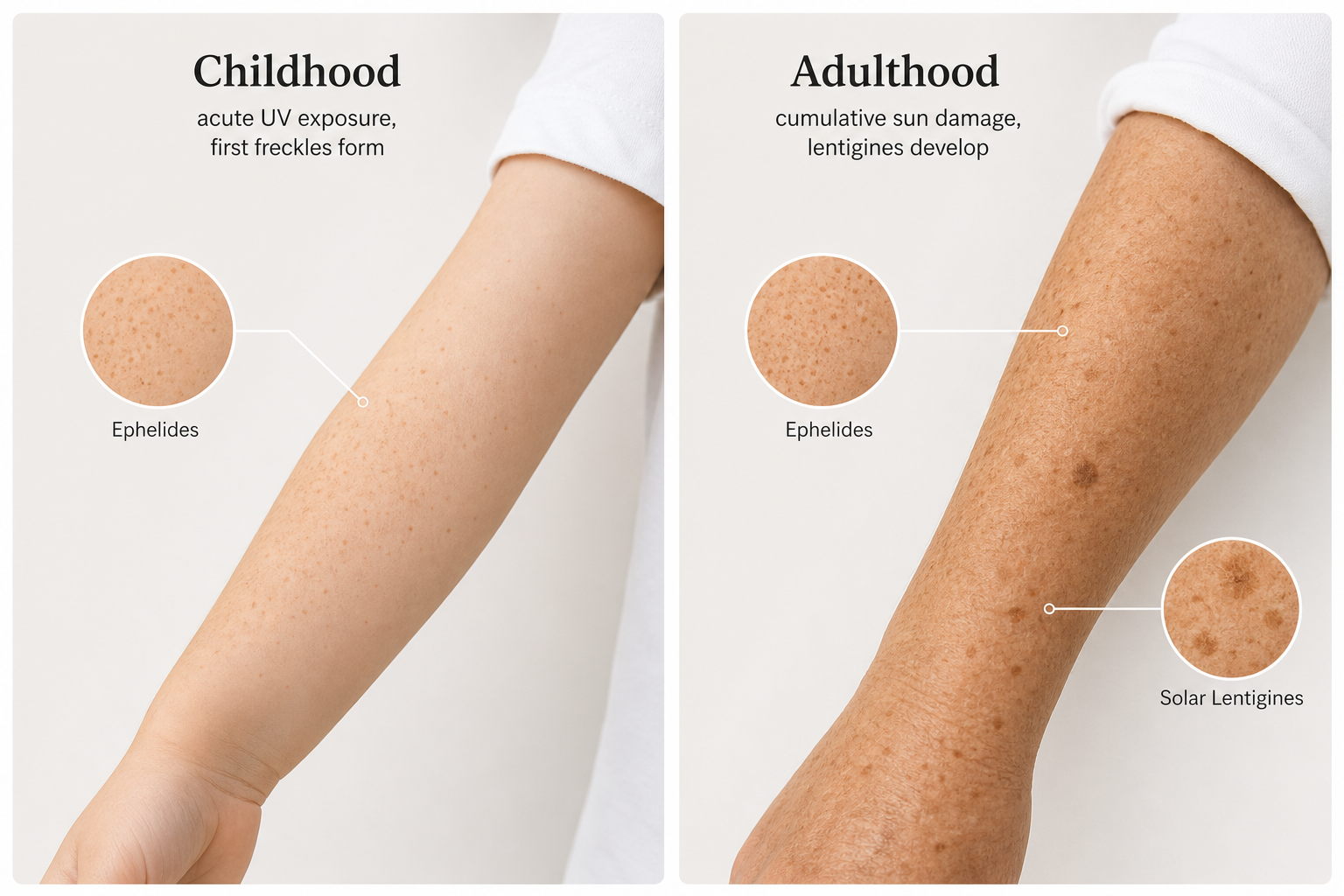
In adults, new freckles after sunburn can still appear, particularly if the individual has not previously spent much time in strong sunlight or has recently moved to a sunnier climate. Adults may also notice that existing freckles darken dramatically after a single significant burn. As people age, the pattern of sun-triggered pigmentation tends to shift: ephelides may become less prominent after the mid-thirties, while solar lentigines — reflecting decades of cumulative sun damage — become more common. This transition is gradual and varies considerably between individuals.
Are Freckles a Sign of Skin Damage?
This is one of the most common questions people ask after noticing new freckles following a sunburn, and the answer requires some nuance. Ephelides themselves are generally considered harmless — they are not precancerous lesions, and having freckles does not directly cause skin cancer. However, freckles are a visible marker that your skin has been exposed to enough UV radiation to trigger a significant melanin response, and the same UV exposure that causes freckles also causes DNA damage in skin cells.
People with fair skin and a high density of freckles do carry a statistically elevated risk of developing melanoma and other skin cancers compared with the general population. This elevated risk is not caused by the freckles themselves but by the combination of fair skin, MC1R gene variants, and the UV exposure history that produced the freckles in the first place. The practical implication is that if you freckle easily, your skin is telling you it is particularly vulnerable to UV damage, and consistent sun protection is especially important for you.
It is also worth distinguishing new freckles after sunburn from post-inflammatory hyperpigmentation (PIH). PIH occurs when skin inflammation — including the inflammation caused by sunburn — triggers excess melanin production in the affected area, resulting in darker patches that follow the exact distribution of the burn rather than appearing as discrete spots. PIH tends to be more diffuse and irregular than freckles, and it can affect any skin tone, though it is more pronounced and longer-lasting in people with medium to darker skin. If you notice broad, uneven darkening across a previously burned area rather than distinct small spots, PIH may be the more likely explanation, and a dermatologist can help distinguish between the two.
When to See a Dermatologist
Most freckles require no medical treatment, but certain changes in pigmented spots warrant professional assessment. The ABCDE rule provides a useful framework for identifying spots that should be evaluated by a dermatologist:
- Asymmetry: One half of the spot does not match the other.
- Border: Edges are irregular, ragged, notched, or blurred.
- Colour: The spot contains multiple shades of brown, black, red, white, or blue.
- Diameter: The spot is larger than 6 mm (roughly the size of a pencil eraser).
- Evolution: The spot has changed in size, shape, colour, or has started to bleed or itch.
Common freckles (ephelides) are typically uniform in colour, have smooth borders, and remain stable over time. Any spot that does not fit this description — or any new pigmented lesion that appears after sunburn and does not behave like a typical freckle — should be assessed by a qualified clinician. This is particularly important for individuals with a personal or family history of melanoma, or those who have had multiple significant sunburns over their lifetime. Actinic keratoses, which are rough, scaly patches caused by cumulative UV damage, are a separate concern that also warrants professional evaluation.
How to Prevent Freckles After Sun Exposure
Prevention is considerably more straightforward than treatment. Since freckles after sunburn are driven by UV-B radiation activating melanocytes, reducing UV exposure is the most direct and effective strategy. For people with fair skin or a known genetic predisposition to freckling, the following measures are particularly relevant:
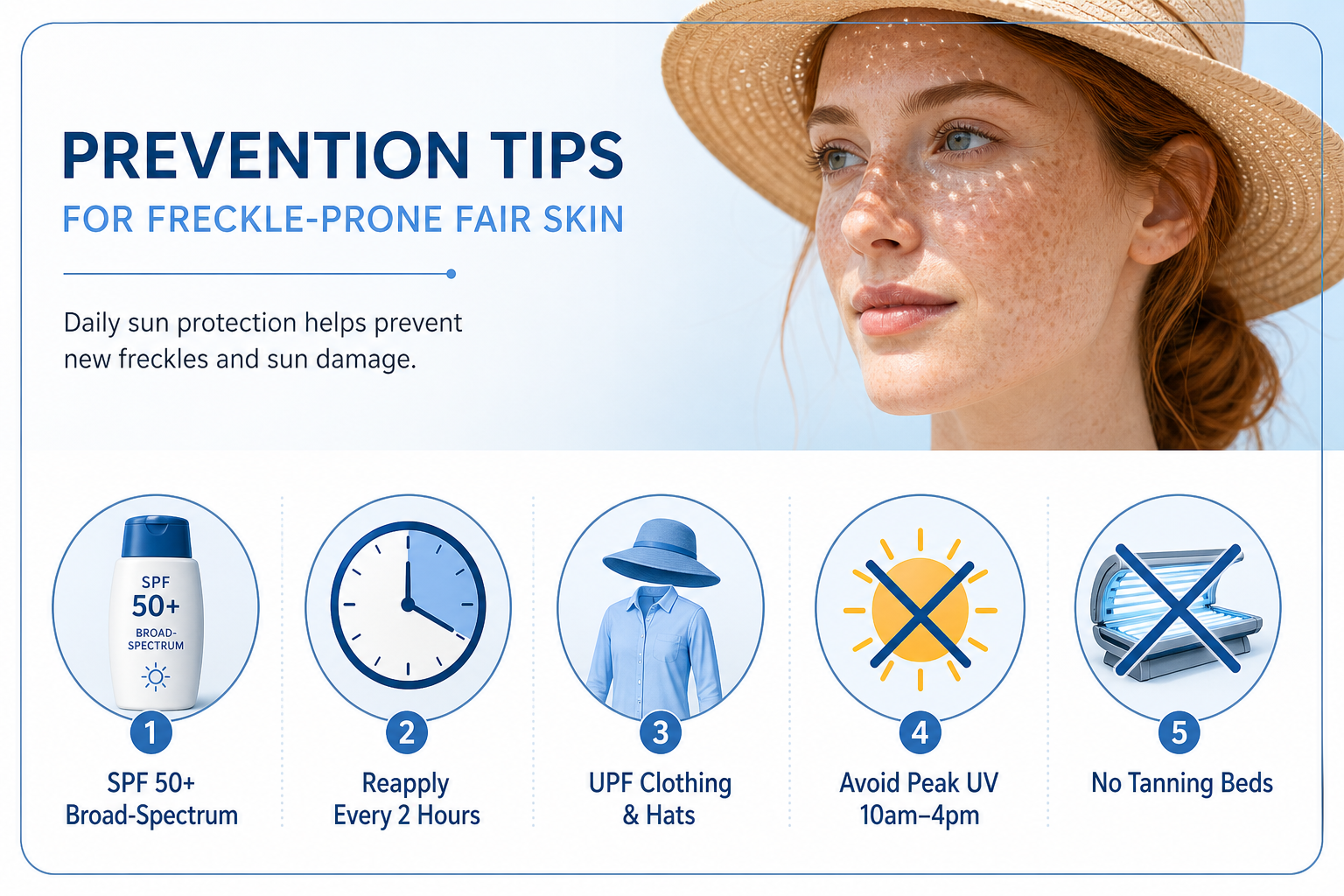
- Broad-spectrum sunscreen: Use a broad-spectrum sunscreen that protects against both UVA and UVB radiation. SPF 30 is the widely cited minimum, but for freckle-prone or fair skin, SPF 50 or higher is more appropriate. Mineral sunscreens containing zinc oxide or titanium dioxide provide physical UV deflection and are well tolerated by sensitive skin; chemical sunscreens with ingredients such as avobenzone or tinosorb absorb UV energy. Both types are effective when applied correctly.
- Application and reapplication: Apply sunscreen generously to all exposed skin at least 15–20 minutes before going outdoors, and reapply every two hours — or immediately after swimming or sweating. Most people apply far less sunscreen than the amount used in SPF testing, which significantly reduces real-world protection.
- Protective clothing: UPF-rated clothing, wide-brimmed hats, and UV-blocking sunglasses provide reliable physical protection that does not wash off or wear away.
- Shade and timing: UV radiation is most intense between 10am and 4pm. Seeking shade during these hours, particularly in summer or at high altitude, meaningfully reduces cumulative UV exposure.
- Avoid tanning beds: Artificial UV sources, including tanning beds, emit UV radiation that triggers the same melanin response as sunlight and can cause or darken freckles in susceptible individuals.
Treatment Options for Existing Freckles
For people who wish to fade existing freckles, a range of topical and clinical options are available. It is important to understand that no treatment permanently eliminates freckles if sun exposure continues without adequate protection — freckles will return or darken again with subsequent UV exposure regardless of the treatment used.
Topical Treatments
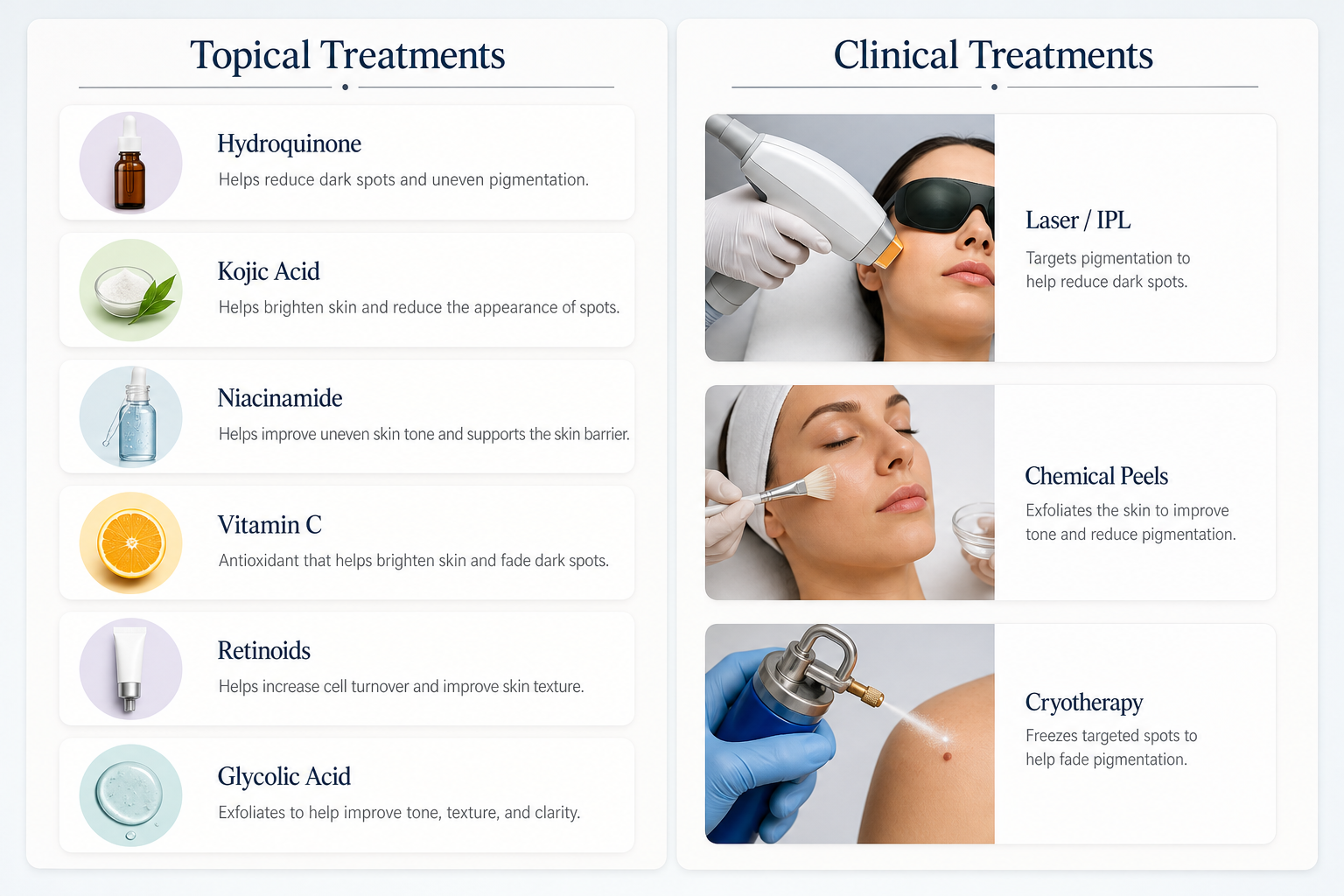
Tyrosinase inhibitors are the most widely used topical agents for reducing melanin production. Tyrosinase is the enzyme that catalyses the conversion of the amino acid tyrosine into melanin precursors; blocking it slows pigment production and can gradually lighten freckles over weeks to months. Commonly used tyrosinase inhibitors include:
- Hydroquinone: A well-established depigmenting agent available in prescription-strength formulations. It is effective but requires careful use under medical supervision, as prolonged use can cause skin irritation or, rarely, a paradoxical darkening called ochronosis.
- Kojic acid: A naturally derived tyrosinase inhibitor found in many over-the-counter brightening products. Evidence supports modest efficacy for mild hyperpigmentation.
- Niacinamide (vitamin B3): Reduces the transfer of melanin from melanocytes to keratinocytes. It is well tolerated, has a good safety profile, and is suitable for most skin types. Realistic timelines for visible improvement are typically eight to twelve weeks of consistent use.
- Vitamin C (ascorbic acid): Acts as both a tyrosinase inhibitor and an antioxidant that neutralises free radicals generated by UV exposure. Stabilised vitamin C serums can contribute to gradual brightening over several months.
- Retinoids (retinol, tretinoin): Accelerate skin cell turnover, helping to shed pigmented cells more quickly. Prescription-strength tretinoin is more potent than over-the-counter retinol. Retinoids can cause initial dryness and sensitivity, and they increase photosensitivity, making daily sunscreen use non-negotiable during treatment.
- Alpha-hydroxy acids (AHAs) such as glycolic acid: Exfoliate the skin surface and can improve the appearance of superficial pigmentation over time.
Clinical and In-Clinic Treatments
For more significant or stubborn freckles, a range of professional treatments may be considered following assessment by a qualified clinician:
- Laser therapy: Q-switched Nd:YAG lasers and intense pulsed light (IPL) devices target melanin selectively, breaking up pigment clusters. Multiple sessions are typically required, and results vary depending on freckle depth, skin type, and the specific device used. Temporary redness, crusting, and post-treatment hyperpigmentation are possible side effects.
- Chemical peels: Medium-depth peels using trichloroacetic acid (TCA) or superficial peels with glycolic or salicylic acid can improve the appearance of freckles by removing pigmented surface layers. Downtime and risk of post-inflammatory hyperpigmentation increase with peel depth.
- Cryotherapy: Liquid nitrogen is applied briefly to individual freckles to destroy pigmented cells. This approach is more commonly used for solar lentigines than for ephelides and carries a risk of hypopigmentation (lightening of the treated area beyond the freckle itself).
All clinical treatments carry the risk of side effects, and suitability depends on individual skin type, Fitzpatrick classification, medical history, and the specific characteristics of the pigmentation being treated. A thorough consultation with a qualified dermatologist or aesthetic clinician is essential before proceeding with any in-clinic pigmentation treatment.
Post-Sunburn Skin Care and Managing New Freckles
If you have recently experienced a sunburn and are concerned about new freckles developing, the immediate priority is to support skin recovery and limit further UV exposure. In the days following a burn, the skin is inflamed and more vulnerable to additional damage. Applying a gentle, fragrance-free moisturiser can help restore the skin barrier, and staying well hydrated supports overall skin recovery. Avoid further sun exposure until the burn has fully resolved.
Once the skin has healed — typically within one to two weeks for a moderate burn — you can begin introducing a consistent sun protection routine and, if desired, a topical brightening ingredient such as niacinamide or vitamin C. It is advisable to wait until the skin is no longer sensitive before introducing active ingredients such as retinoids or AHAs, as these can cause additional irritation on recently burned skin. If new spots appear that concern you, or if you are unsure whether what you are seeing is a freckle, post-inflammatory hyperpigmentation, or something else, a consultation with a dermatologist will provide clarity.
Frequently Asked Questions
Can freckles appear without any sun exposure?
Common freckles (ephelides) require UV stimulation to form and darken. However, some people with a strong genetic predisposition may develop very faint freckles with minimal sun exposure. Freckles that appear in areas never exposed to sunlight, or that develop without any UV history, may warrant medical evaluation to rule out other causes of pigmentation.
How long after a sunburn do new freckles appear?
New freckles typically become visible within two to six weeks after a significant sunburn. This delay reflects the time it takes for melanin to be produced by melanocytes, transferred to keratinocytes, and migrate to the surface of the skin as those cells mature and move upward through the epidermis.
Will my new freckles fade on their own?
Ephelides often fade in winter when UV exposure decreases, and they may become less prominent over time if you maintain consistent sun protection. However, they are unlikely to disappear entirely without treatment, and they will typically darken again with subsequent sun exposure if protection is not maintained.
Are freckles the same as sun damage?
Freckles themselves are not sun damage in the clinical sense — they are a pigmentation response, not a precancerous change. However, they indicate that your skin has received significant UV radiation, and the same UV exposure that causes freckles also causes cumulative sun damage at the cellular level. Freckle-prone individuals should treat their skin as UV-sensitive and maintain consistent photoprotection.
Is SPF 30 enough for freckle-prone skin?
SPF 30 blocks approximately 97% of UVB radiation, while SPF 50 blocks approximately 98%. For people with fair skin, MC1R gene variants, or a strong tendency to freckle, SPF 50 or higher is generally recommended, particularly during prolonged outdoor exposure or in high-UV environments. The difference between SPF 30 and SPF 50 is modest in percentage terms but meaningful for high-risk individuals.
Can freckle treatments cause side effects?
Yes. Topical treatments such as hydroquinone can cause irritation, dryness, or — with prolonged use — paradoxical darkening. Clinical treatments including laser therapy, chemical peels, and cryotherapy carry risks of redness, crusting, temporary hyperpigmentation, or hypopigmentation. The likelihood and severity of side effects depend on the treatment chosen, the clinician’s experience, and individual skin characteristics. A thorough pre-treatment assessment is essential.
Managing Sun-Triggered Pigmentation: What to Consider Next
Freckles after sunburn are a natural, genetically influenced response to UV-B radiation — not a cosmetic flaw or a medical emergency. For most people, they are harmless and simply reflect how their melanocytes respond to ultraviolet light. Understanding the biology behind sun-triggered pigmentation helps put freckles in context: they are a signal that your skin has been exposed to significant UV radiation, and that consistent, high-quality sun protection is the most important step you can take — both to prevent new freckles from forming and to protect your skin from the cumulative damage that UV exposure causes over time.
If you are concerned about the appearance of freckles, or if you have noticed pigmented spots that have changed in size, shape, or colour, a consultation with a qualified dermatologist or aesthetic clinician is the appropriate next step. A clinician can confirm whether what you are seeing is ephelides, solar lentigines, post-inflammatory hyperpigmentation, or something that warrants closer monitoring, and can recommend a treatment plan tailored to your skin type, pigmentation pattern, and goals. Any treatment for freckles or sun-triggered pigmentation should always be accompanied by a long-term commitment to broad-spectrum sun protection — without it, results from even the most effective clinical treatments are likely to be short-lived.