Glycolic Acid for Back Acne: How to Use It, What to Expect, and When It’s Not Enough
Back acne — commonly called bacne — affects a significant number of people and can be more persistent than facial acne due to the unique characteristics of back skin. Glycolic acid, a well-established alpha hydroxy acid (AHA) derived from sugarcane, is one of the most widely used chemical exfoliants for addressing clogged pores, uneven skin texture, and post-inflammatory hyperpigmentation on the body. This guide explains how glycolic acid works on back skin, which formats and concentrations are appropriate, how to apply it safely, and when over-the-counter options are unlikely to be sufficient.
Key Takeaways
- Glycolic acid is an effective chemical exfoliant for back acne because it accelerates cell turnover, unclogs pores, and may help fade dark spots left by previous breakouts.
- Back skin is thicker than facial skin and can generally tolerate higher concentrations — typically 5–10% for leave-on products and up to 15% for rinse-off body washes.
- Product format matters: body sprays and long-handled applicators help reach the back; leave-on treatments tend to deliver stronger results than rinse-off cleansers alone.
- Glycolic acid increases sun sensitivity, making broad-spectrum SPF essential on any exposed skin during treatment.
- Cystic or nodular back acne, and deep acne scarring, are unlikely to respond adequately to glycolic acid alone and warrant a dermatology consultation.
What Is Glycolic Acid and How Does It Work?
Glycolic acid belongs to the alpha hydroxy acid (AHA) family and is derived primarily from sugarcane. It has the smallest molecular size of all AHAs, which allows it to penetrate the outer layers of the skin more readily than other acids in the same class. At the skin’s surface, glycolic acid works by loosening the bonds that hold dead skin cells together, accelerating their shedding and promoting faster cell turnover. This process — chemical exfoliation — clears the surface debris that can accumulate in hair follicles and contribute to acne formation.
Beyond surface exfoliation, glycolic acid has demonstrated mild antibacterial and anti-inflammatory properties in research settings, and there is evidence that repeated use at appropriate concentrations can stimulate collagen production over time. This collagen stimulation is relevant not just for skin texture but also for the gradual improvement of shallow acne scars. The efficacy of glycolic acid depends significantly on its concentration percentage and the pH of the formulation — products with a pH between approximately 3 and 4 tend to deliver the most active exfoliation.
Why Back Acne Is Different From Facial Acne
The back presents a distinct environment compared to the face, and understanding these differences helps explain why back acne can be stubborn and why treatment approaches need to be adapted accordingly. Thicker back skin means the outer layer (stratum corneum) is more robust, which is why higher glycolic acid concentrations are generally better tolerated on the body than on the face. The back also has a higher density of sebaceous glands relative to many other body areas, producing more sebum that can mix with dead skin cells and block hair follicles.
Several back-specific triggers contribute to bacne that glycolic acid alone cannot address. Sweat trapped against the skin during exercise, friction from backpacks, sports bras, or tight clothing — a pattern known as acne mechanica — and occlusion from sitting against surfaces for extended periods all create conditions that promote bacterial growth and follicular blockage. Hormonal fluctuations, including androgen-driven sebum production in males and cyclical hormonal changes in females, also play a significant role in back acne that is more pronounced than on other body sites. Recognising these triggers is important because a chemical exfoliant can improve skin texture and pore clarity, but it will not eliminate the underlying mechanical or hormonal drivers.
Back Acne vs. Keratosis Pilaris: Knowing the Difference
A common source of confusion is distinguishing back acne from keratosis pilaris (KP), a condition where keratin plugs block hair follicles and produce small, rough bumps — often described as chicken skin. Keratosis pilaris is not acne; it is not caused by bacteria or excess sebum, and it does not produce the inflammatory papules or pustules associated with acne. However, glycolic acid is genuinely useful for both conditions because its exfoliating action helps dissolve the keratin plugs responsible for KP as well as the dead skin cell buildup that contributes to clogged pores in acne. If your back bumps are uniformly small, skin-coloured or slightly red, and not inflamed or painful, keratosis pilaris may be the more likely diagnosis — and a dermatologist can confirm this before you commit to an acne-focused treatment plan.
How Glycolic Acid Helps With Back Acne
Glycolic acid addresses back acne through several complementary mechanisms. By accelerating the shedding of dead skin cells, it prevents the accumulation of surface debris that would otherwise combine with sebum to form comedones — the blocked follicles that underlie both whiteheads and blackheads. Regular use helps keep pores clearer and reduces the frequency of new non-inflammatory acne lesions forming.
For inflammatory acne — the red, raised papules and pustules — glycolic acid’s mild anti-inflammatory properties may reduce redness and swelling around existing lesions, though it is not a primary anti-inflammatory treatment in the way that prescription options such as topical antibiotics or retinoids are. Where glycolic acid tends to perform particularly well is in addressing post-inflammatory hyperpigmentation (PIH): the dark spots or dark marks left behind after an acne lesion heals. Glycolic acid disperses excess melanin deposits in the upper layers of the skin and, through accelerated cell turnover, helps bring fresher, more evenly pigmented skin to the surface more quickly. This makes it a useful ingredient not just for preventing new breakouts but for improving the appearance of the aftermath that back acne leaves behind.
Choosing the Right Concentration for Back Acne
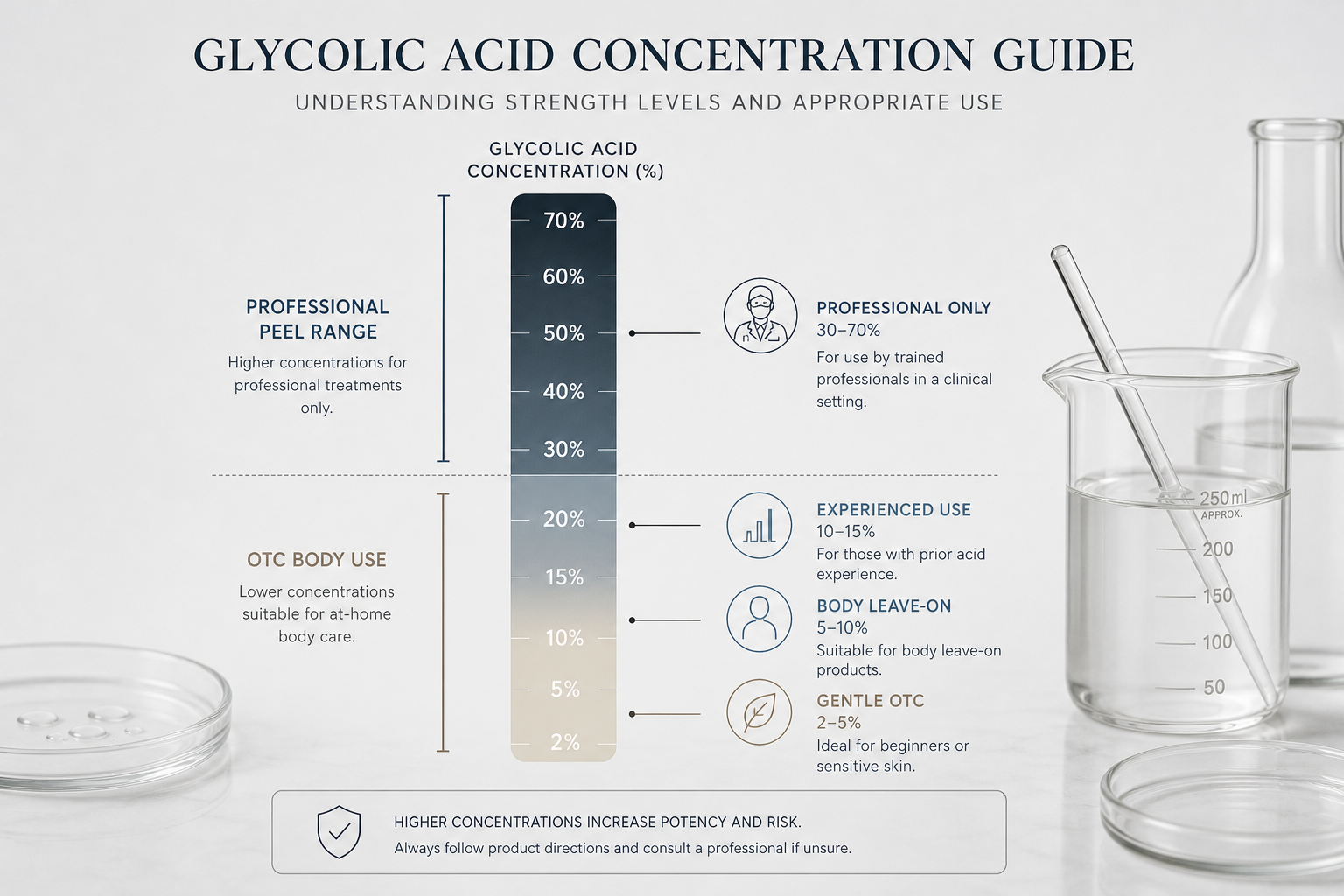
Concentration percentage is one of the most important variables when selecting a glycolic acid product for the back. The following table summarises the general guidance for different product types and experience levels.
| Experience Level | Product Format | Suggested Concentration | Frequency |
|---|---|---|---|
| Beginner | Body wash / rinse-off cleanser | 5–8% | Daily or every other day |
| Beginner to intermediate | Leave-on lotion or spray | 5–8% | 2–3 times per week |
| Intermediate | Leave-on lotion or spray | 8–12% | Every other day to daily |
| Experienced / tolerant skin | Leave-on treatment | 10–15% | As tolerated, not exceeding daily |
| Professional only | In-office chemical peel | 30–70% | Every 3–6 weeks, supervised |
Over-the-counter products for body use typically range from 2% to 15%. Starting at the lower end of this range — particularly if you have sensitive or acne-prone skin that is already inflamed — reduces the risk of irritation. High-concentration professional peels (30–70%) should only be applied by a trained practitioner; applying these at home carries a genuine risk of chemical burns, worsened PIH, and skin barrier damage.
Rinse-Off vs. Leave-On: Which Works Better for Back Acne?
The distinction between rinse-off and leave-on glycolic acid products is clinically meaningful and is rarely explained clearly in consumer-facing content. A glycolic acid body wash or cleanser is rinsed off after a short contact time — typically 30 to 60 seconds in the shower — which limits how deeply the acid can penetrate and how much exfoliation actually occurs. Rinse-off formats are a reasonable starting point for very sensitive skin or for daily maintenance, but they are unlikely to deliver the same degree of pore-clearing or PIH improvement as a leave-on treatment.
Leave-on treatments — including body lotions, body sprays, and toners applied with a cotton pad — remain in contact with the skin for hours, allowing the glycolic acid to work more thoroughly on the stratum corneum. For meaningful improvement in back acne texture, dark spots, and pore clarity, a leave-on body-specific formula is generally the more effective choice. Many people use a glycolic acid body wash as a daily cleanser and supplement it with a leave-on lotion or spray two to three times per week for more targeted results.
Practical Application: How to Reach Your Own Back
One of the most underaddressed challenges with back acne treatment is the simple logistics of applying a product to an area that is difficult to reach. Several practical approaches can help. Body sprays with a 360-degree nozzle allow application without contortion and are particularly well suited to leave-on glycolic acid treatments. Long-handled applicator pads or body brushes can be used to spread a lotion or toner across the mid and upper back. Exfoliating body sticks — solid or semi-solid formats — can be applied directly without needing to transfer product to a pad first. If none of these options is practical, asking a partner or household member to apply a leave-on treatment is a straightforward solution that is worth considering for consistent results.
When applying glycolic acid to the back, the skin should ideally be clean and dry before a leave-on product is used. Applying to damp skin immediately after showering can dilute the product and alter its pH, potentially reducing efficacy. Wait a few minutes after drying before applying a leave-on treatment, and allow it to absorb fully before dressing to avoid transferring the product to clothing.
Step-by-Step Routine for Back Acne
-
- Cleanse: Shower using a gentle or glycolic acid body wash. Rinse thoroughly and pat the back dry.
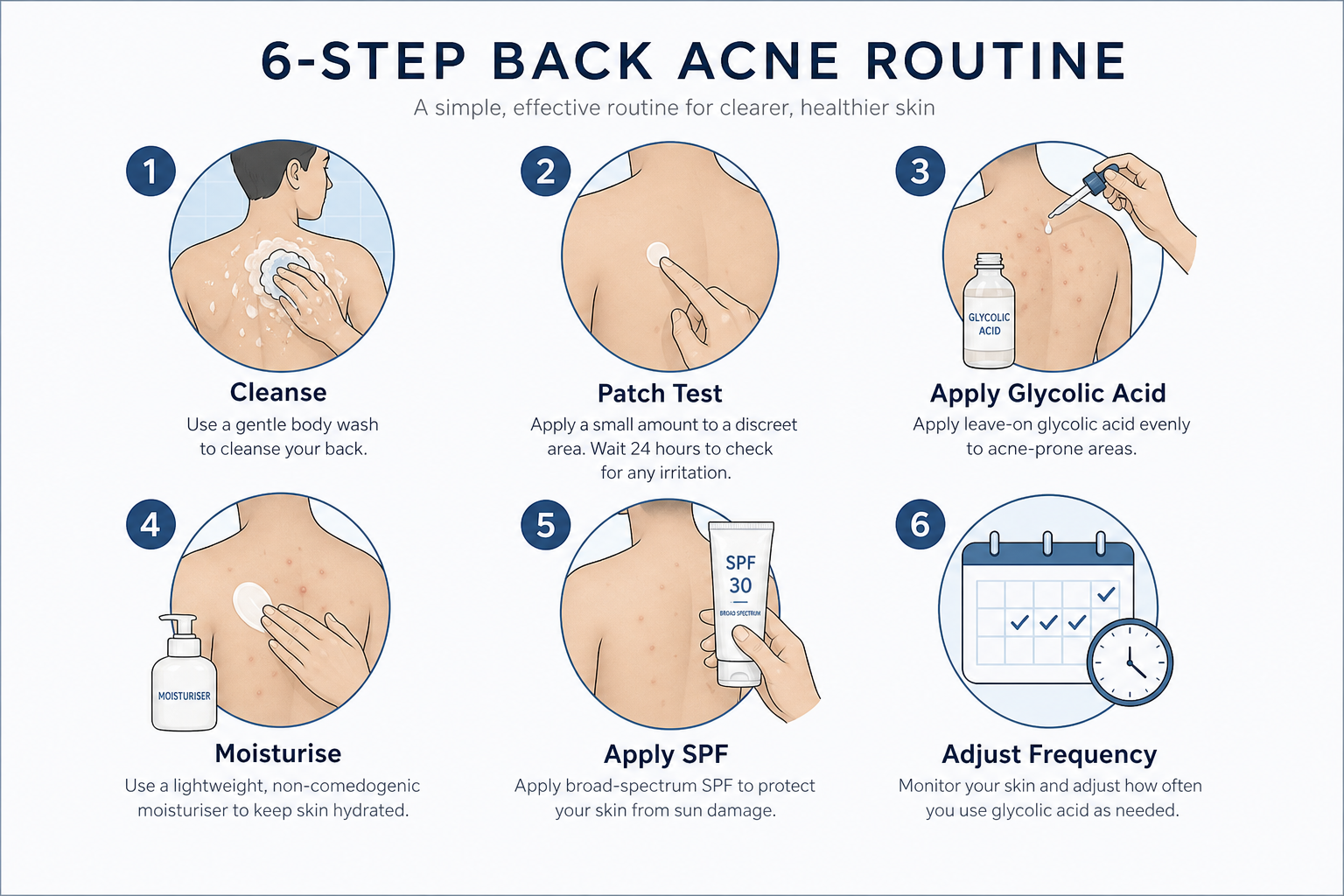
- Patch test first: Before using any new glycolic acid product across the full back, apply a small amount to a discreet area and wait 24–48 hours to check for unexpected irritation or allergy.
- Apply leave-on treatment: Using a spray, long-handled pad, or body stick, apply your chosen glycolic acid leave-on product to the affected areas of the back. Avoid broken skin, open lesions, or freshly shaved areas.
- Moisturise: Once the glycolic acid has absorbed (allow 5–10 minutes), apply a non-comedogenic moisturiser to support the skin barrier. This step is particularly important when starting out, as glycolic acid can cause dryness or mild tightness.
- Apply SPF to exposed areas: Glycolic acid increases sun sensitivity. On days when the back will be exposed to sunlight — at the beach, during outdoor exercise, or in warm weather — apply a broad-spectrum SPF 30 or higher to the treated skin.
- Frequency: Begin with two to three applications per week and increase gradually based on how your skin responds. Signs of over-exfoliation — persistent redness, tightness, a waxy or shiny appearance, or increased breakouts — indicate you should reduce frequency or concentration.
Glycolic Acid vs. Salicylic Acid for Back Acne
Salicylic acid is a beta hydroxy acid (BHA) and the most common alternative to glycolic acid for acne-prone skin. The two ingredients work differently and are not always interchangeable. Salicylic acid is oil-soluble, which means it can penetrate into the sebum inside a blocked follicle and dissolve the plug from within — making it particularly effective for comedonal acne (blackheads and whiteheads) and oily skin. Glycolic acid is water-soluble and works primarily at the skin’s surface, improving texture, cell turnover, and PIH more effectively than salicylic acid does.
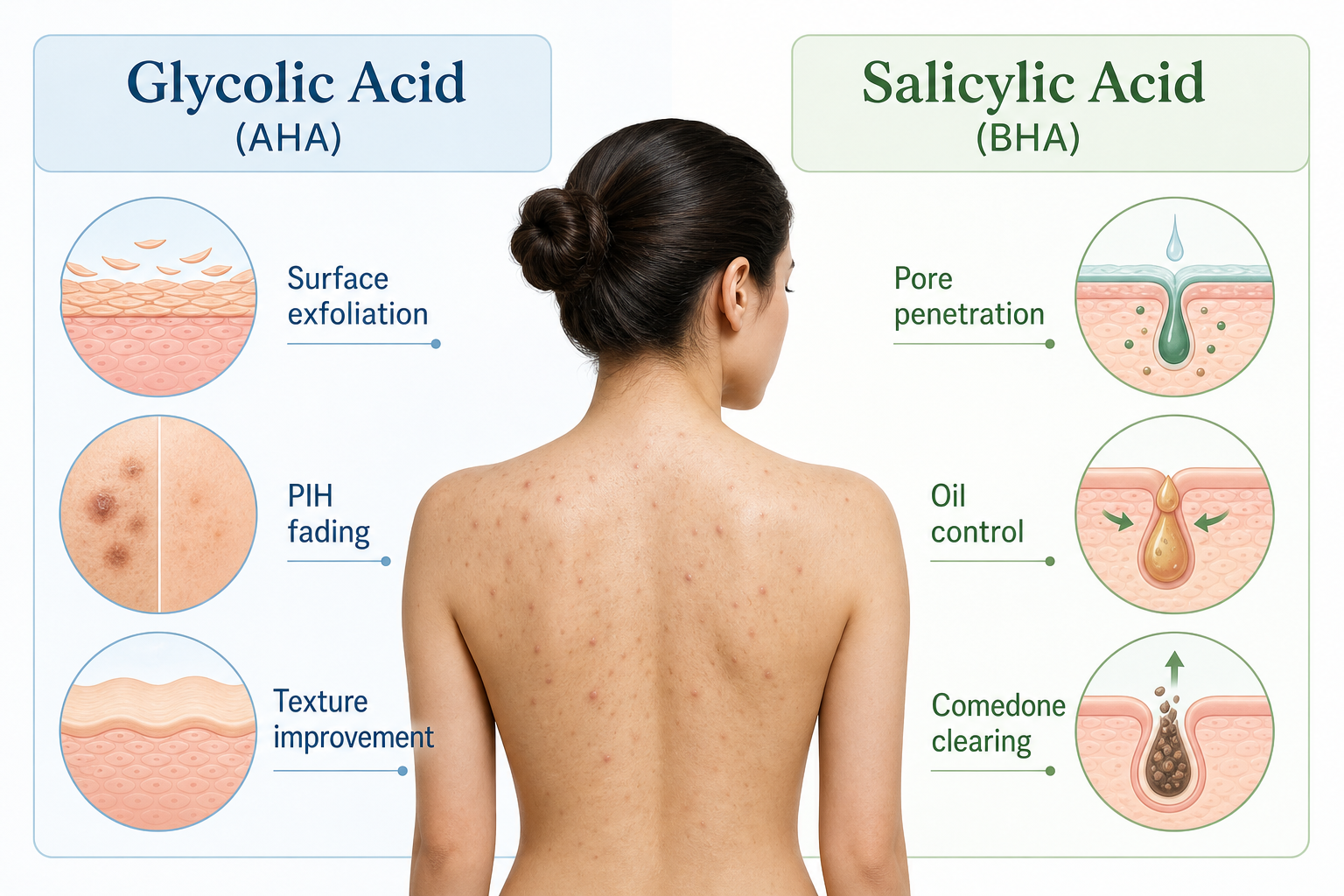
For back acne that is predominantly comedonal and oily, salicylic acid may offer a slight advantage in directly clearing blocked pores. For back acne where texture improvement, dark spot fading, and collagen stimulation are priorities, glycolic acid tends to perform better. Many effective body-specific formulas combine both acids, and using a salicylic acid body wash alongside a glycolic acid leave-on treatment is a common and generally well-tolerated approach. Benzoyl peroxide is a third option frequently used alongside chemical exfoliants; it works primarily as an antibacterial agent, reducing the bacteria (Cutibacterium acnes) that contribute to inflammatory acne lesions, and can complement glycolic acid’s exfoliating action.
Glycolic Acid and Back Acne Scars
Post-inflammatory hyperpigmentation (PIH) — the flat dark spots or dark marks that remain after an acne lesion resolves — is one of the areas where glycolic acid delivers the most noticeable results on the back. By accelerating cell turnover and dispersing melanin deposits in the upper skin layers, glycolic acid can visibly lighten PIH over a period of weeks to months. Realistic timelines vary by skin tone and the depth of pigmentation, but many people notice meaningful improvement in PIH within four to eight weeks of consistent leave-on use.
True acne scars — particularly atrophic (pitted or depressed) scars — respond more slowly and less completely to glycolic acid alone. Shallow textural irregularities may improve gradually through collagen stimulation over two to three months of regular use. Deeper pitted scars, ice-pick scars, or rolling scars are unlikely to respond adequately to over-the-counter glycolic acid and typically require professional skin resurfacing treatments such as microneedling, fractional laser, or in-office chemical peels at higher concentrations. An important note for people with darker skin tones: overuse of glycolic acid — applying it too frequently or at too high a concentration — can paradoxically worsen PIH rather than improve it. Starting at a lower concentration and building gradually is especially important for Fitzpatrick skin types IV through VI.
Complementary Ingredients That Work Well With Glycolic Acid
Several ingredients pair well with glycolic acid in a back acne routine and can enhance overall results. Niacinamide, applied after glycolic acid has absorbed, helps calm inflammation, supports the skin barrier, and has its own evidence base for reducing PIH — making it a useful addition for anyone dealing with dark marks. Vitamin C (in a stable formulation) can complement glycolic acid’s brightening effect when used at a different time of day, typically in the morning. Retinoids — including retinol and prescription tretinoin — also accelerate cell turnover and stimulate collagen, but combining them with glycolic acid requires care; using both on the same application can increase irritation and compromise the skin barrier. If you are using a retinoid, it is generally advisable to use glycolic acid on alternate evenings rather than simultaneously.
One important safety note: if you are currently taking isotretinoin (commonly known as Accutane) for severe acne, glycolic acid should be avoided or used only under medical supervision. Isotretinoin significantly thins the skin and reduces its tolerance for chemical exfoliation; combining the two carries a documented risk of excessive irritation and barrier damage. Always inform your prescribing doctor about any topical actives you are using alongside systemic acne medication.
Precautions, Side Effects, and What to Avoid
Glycolic acid is well tolerated by most people when used at appropriate concentrations and frequencies, but several precautions are worth understanding before starting. Increased sun sensitivity is the most consistently documented side effect of AHA use; this is not a reason to avoid glycolic acid, but it does make broad-spectrum SPF non-negotiable on any skin that will be exposed to sunlight. Avoid applying glycolic acid to broken skin, open acne lesions, freshly shaved areas, or skin that is already significantly irritated or sunburned — the acid will cause stinging and may worsen inflammation in these situations.
Signs of over-exfoliation include persistent redness, a tight or uncomfortable sensation that does not resolve after moisturising, a waxy or unnaturally shiny skin surface, and paradoxically increased breakouts. If any of these occur, reduce application frequency, switch to a lower concentration, and prioritise barrier repair with a gentle moisturiser for one to two weeks before reintroducing the acid. People who are pregnant or breastfeeding should consult a healthcare professional before using glycolic acid products, as guidance on topical AHA use during pregnancy varies.
When Glycolic Acid Is Not Enough
Over-the-counter glycolic acid is a useful tool for mild to moderate back acne, comedonal breakouts, and PIH, but it has clear limitations. Cystic acne — deep, painful nodules that do not come to a head — and nodular acne are inflammatory conditions driven by factors that surface exfoliation cannot adequately address. These forms of back acne typically require prescription treatment, which may include topical or oral antibiotics, topical retinoids, hormonal therapy (in appropriate candidates), or isotretinoin for severe cases. Attempting to treat cystic bacne with glycolic acid alone is unlikely to produce meaningful improvement and may delay access to more effective care.
Similarly, if back acne is clearly linked to hormonal patterns — worsening around the menstrual cycle, following discontinuation of hormonal contraception, or associated with conditions such as polycystic ovary syndrome — a dermatologist or GP can assess whether hormonal management is appropriate alongside or instead of topical treatment. Acne mechanica driven by persistent friction from equipment or clothing also requires addressing the mechanical trigger directly; no topical ingredient will fully compensate for ongoing physical irritation.
Frequently Asked Questions
Can I use glycolic acid on my back every day?
Daily use is possible with lower concentrations (5–8%) in rinse-off formats, but daily leave-on application at higher concentrations is more likely to cause over-exfoliation, particularly when starting out. Begin with two to three times per week and increase frequency only if your skin tolerates it well without signs of irritation.
How long before I see results on back acne?
For post-inflammatory hyperpigmentation and surface texture, noticeable improvement may appear within four to eight weeks of consistent use. For a meaningful reduction in active breakouts, allow at least eight to twelve weeks before assessing whether the routine is working. Collagen-related improvements in shallow scarring typically take three months or longer.
Should I stop using salicylic acid if I start glycolic acid?
Not necessarily. Many people use both — for example, a salicylic acid body wash for daily cleansing and a glycolic acid leave-on treatment several times per week. However, applying both leave-on acids to the same area at the same time increases the risk of irritation. If combining them, use them at different times of day or on alternating days.
Is glycolic acid safe for darker skin tones?
Glycolic acid can be used safely on darker skin tones, but the risk of worsening post-inflammatory hyperpigmentation through overuse is higher. Starting at a lower concentration (5–7%) and building slowly is particularly important. If PIH worsens rather than improves, reduce frequency and consider consulting a dermatologist who has experience treating acne in darker skin.
Can glycolic acid help with the bumps on my back that aren’t acne?
If the bumps are keratosis pilaris — small, rough, follicular plugs rather than inflamed acne lesions — glycolic acid is genuinely useful because it dissolves the keratin buildup responsible for KP. Consistent use of a leave-on glycolic acid lotion can significantly improve the texture of KP-affected skin over several weeks.
Do I need to use sunscreen on my back if I’m using glycolic acid?
Yes, on any occasion when the back will be exposed to sunlight. Glycolic acid increases the skin’s sensitivity to UV radiation, which can worsen pigmentation and increase the risk of sunburn on treated areas. A broad-spectrum SPF 30 or higher applied to exposed back skin is an important part of safe glycolic acid use.
Is Glycolic Acid the Right Approach for Your Back Acne?
Glycolic acid is a well-supported, accessible option for people dealing with mild to moderate back acne, comedonal breakouts, uneven skin texture, and post-inflammatory dark marks. Its ability to accelerate cell turnover, keep pores clearer, and gradually fade PIH makes it one of the more versatile chemical exfoliants available without a prescription. Choosing the right concentration, using a leave-on body-specific formula where possible, and addressing the practical challenge of back application will give you the best chance of seeing meaningful results.
That said, glycolic acid is not a complete solution for everyone. Hormonal back acne, cystic or nodular breakouts, deep acne scarring, and persistent bacne driven by mechanical friction all benefit from a broader treatment approach. If over-the-counter glycolic acid products have not produced noticeable improvement after two to three months of consistent use, or if your back acne is severe, painful, or leaving significant scarring, a consultation with a dermatologist is the appropriate next step. A qualified practitioner can assess the type and severity of your acne, identify contributing factors, and recommend prescription treatments or professional procedures — including higher-concentration in-office peels — that go beyond what home care can achieve.