Mandelic Acid Peel: Benefits, Skin Types & What to Expect
A mandelic acid peel is one of the gentler options in professional chemical exfoliation, yet it addresses a surprisingly wide range of skin concerns — from acne and post-inflammatory hyperpigmentation to uneven texture and early signs of ageing. Because mandelic acid has a larger molecular weight than most other alpha hydroxy acids, it penetrates the skin more slowly, which tends to mean less irritation and a lower risk of adverse reactions. That combination makes it particularly relevant for people with sensitive skin, acne-prone skin, or melanin-rich skin who have found stronger peels too aggressive. This article explains how mandelic acid peels work, what the evidence says about their benefits, who they may suit, and what to realistically expect before, during, and after treatment.
Key Takeaways
- Mandelic acid is an alpha hydroxy acid (AHA) derived from bitter almonds with a molecular weight of approximately 152 daltons — larger than glycolic or lactic acid — which produces slower, more controlled penetration into the skin.
- Mandelic acid peels are classified as superficial chemical peels and are associated with minimal downtime, making them suitable for a wide range of skin types including sensitive, acne-prone, and darker skin tones across Fitzpatrick skin types IV–VI.
- Key benefits include improved cell turnover, reduction in post-inflammatory hyperpigmentation (PIH), antibacterial properties that help manage acne, and mild collagen stimulation — though results depend on concentration, frequency, and individual skin response.
- Professional concentrations (30–50%+) and at-home concentrations (5–20%) are fundamentally different interventions; clinical study results from professional peels do not automatically transfer to over-the-counter serums or toners.
- A patch test before any new peel is essential, and broad-spectrum SPF must be used consistently after treatment to protect the skin barrier and prevent photosensitivity-related complications.
What Is Mandelic Acid and Where Does It Come From?
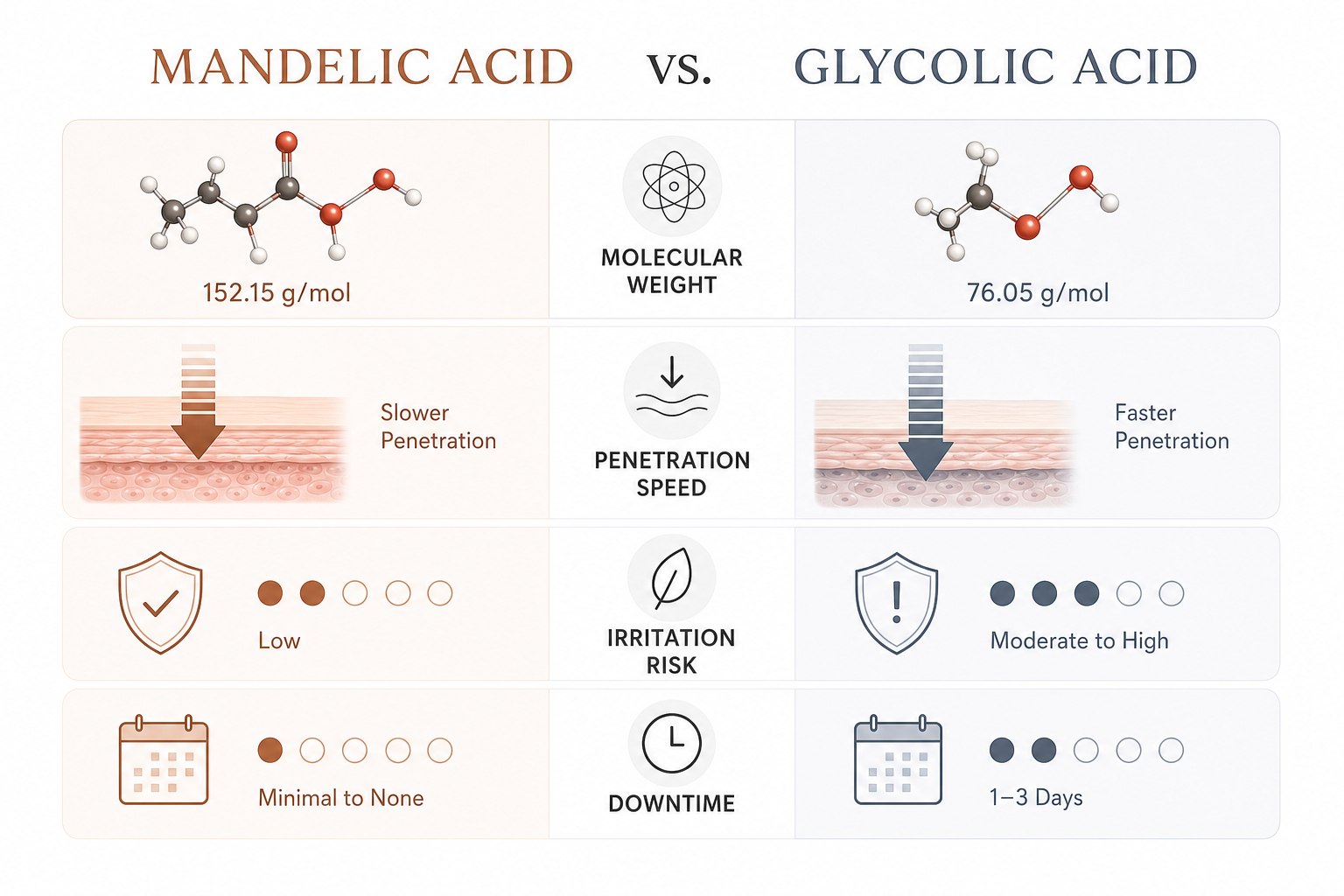
Mandelic acid is an aromatic alpha hydroxy acid (AHA) originally derived from bitter almonds. Its chemical structure gives it a molecular weight of approximately 152 daltons, which is notably larger than glycolic acid (around 76 daltons) and lactic acid (around 90 daltons). In practical terms, this larger molecular size means mandelic acid moves through the outer layers of the skin — the stratum corneum — at a slower rate than smaller AHAs. That slow penetration is the central reason mandelic acid is considered gentler: the acid has less opportunity to cause rapid, intense exfoliation that can overwhelm the skin barrier.
When formulated as a peel, mandelic acid works by loosening the bonds between dead skin cells on the surface, encouraging them to shed and accelerating cell turnover. This process reveals fresher skin underneath and, over a series of treatments, can produce meaningful improvements in texture, tone, and clarity. Mandelic acid also has documented antibacterial properties, which contribute to its effectiveness against acne-causing bacteria, and it has been shown to inhibit tyrosinase — an enzyme involved in melanin production — which is relevant to its ability to fade dark spots and hyperpigmentation.
How a Mandelic Acid Peel Works
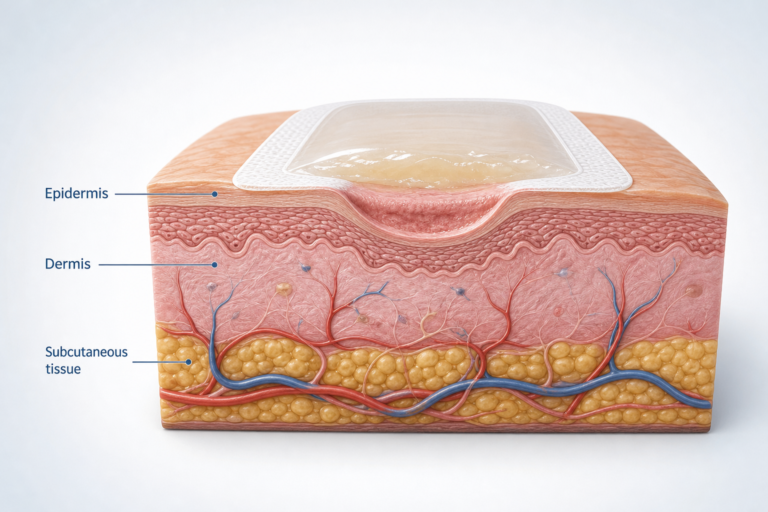
A mandelic acid peel is classified as a superficial chemical peel, meaning it acts primarily on the outermost layers of the skin rather than penetrating into the deeper dermis. The depth of action depends on the concentration of the acid, the pH of the formulation, and how long the solution remains on the skin. A buffered formula — one where the pH is adjusted to slow the release of free acid — is commonly used in professional settings to allow more controlled application and reduce the risk of over-exfoliation.
During a professional treatment, a licensed practitioner cleanses the skin, applies the mandelic acid solution for a timed period, then neutralises or removes it. The skin may experience mild tingling or warmth during application. Because mandelic acid’s slow penetration gives the practitioner more working time compared to glycolic acid, it is considered more forgiving to apply, particularly on uneven or reactive skin. At-home formulations work on the same principle but at lower concentrations, producing a milder and more gradual effect.
The tyrosinase inhibition mechanism deserves particular attention. By reducing the activity of the enzyme responsible for converting tyrosine into melanin, mandelic acid can help prevent new pigmentation from forming at the same time as it encourages the shedding of already-pigmented surface cells. This dual action — exfoliation plus pigment suppression — is one reason mandelic acid peels are frequently recommended for post-inflammatory hyperpigmentation and melasma.
Mandelic Acid vs. Other Chemical Peels
Understanding how mandelic acid compares to other common peel acids helps clarify when it may be the most appropriate choice and when an alternative might be more effective.
| Acid | Molecular Weight | Penetration Speed | Best For | Irritation Risk | Typical Downtime |
|---|---|---|---|---|---|
| Mandelic acid | ~152 daltons | Slow | Sensitive skin, PIH, acne, darker skin tones | Low | Minimal (0–3 days) |
| Glycolic acid | ~76 daltons | Fast | Fine lines, sun damage, oily skin | Moderate–High | 2–5 days |
| Lactic acid | ~90 daltons | Moderate | Dry skin, mild pigmentation, sensitive skin | Low–Moderate | 1–3 days |
| Salicylic acid | ~138 daltons (BHA) | Moderate (oil-soluble) | Acne, oily skin, pore congestion | Low–Moderate | 1–3 days |
| TCA peel | N/A (medium-depth) | Fast, deeper | Significant sun damage, deeper lines | High | 7–14 days |
Glycolic acid is the most frequently compared alternative. It penetrates quickly and can produce dramatic results for fine lines and sun damage, but its speed also increases the risk of irritation, redness, and post-inflammatory hyperpigmentation — particularly in darker skin tones. Mandelic acid’s slower penetration makes it a more predictable choice when the priority is minimising adverse reactions. Salicylic acid, a beta hydroxy acid (BHA), is oil-soluble and penetrates the pore lining directly, making it highly effective for comedonal acne and pore congestion. Mandelic acid and salicylic acid are sometimes combined in professional peels to address both surface pigmentation and deeper pore issues simultaneously.
Benefits of a Mandelic Acid Peel
The benefits of mandelic acid peels are supported by a combination of clinical evidence and established understanding of AHA mechanisms, though it is important to note that most clinical studies have used professional-strength concentrations rather than over-the-counter products.
Reduction in Post-Inflammatory Hyperpigmentation
Post-inflammatory hyperpigmentation (PIH) — the dark marks left after acne, injury, or inflammation — is one of the most common reasons patients seek mandelic acid treatment. A 2019 study published in the Journal of Cosmetic Dermatology compared 45% mandelic acid peels with 30% salicylic acid peels in patients with acne and PIH, finding that both produced significant improvement, with mandelic acid showing comparable efficacy for pigmentation reduction. The tyrosinase inhibition mechanism means mandelic acid works on the root cause of excess melanin production, not just the surface appearance. Results for PIH typically become visible after four to eight weeks of consistent treatment.
Acne Management
Mandelic acid addresses acne through several complementary pathways. Its exfoliating action is comedolytic — it helps break down the plugs of dead skin cells and sebum that block pores and lead to blackheads and whiteheads. Its antibacterial properties help reduce the population of Cutibacterium acnes (formerly Propionibacterium acnes), the bacteria associated with inflammatory acne. Additionally, mandelic acid may help regulate sebum production over time, reducing the oiliness that contributes to pore congestion. For patients with both active acne and PIH — a common combination — mandelic acid’s ability to address both concerns simultaneously is a practical advantage.
Improvement in Skin Tone and Texture
By accelerating cell turnover and encouraging the shedding of dead skin cells, mandelic acid peels can produce a noticeably smoother skin surface and a more even, luminous complexion. Patients often report improved skin radiance after even a single session, with more significant texture refinement developing over a series of treatments. Rough patches, dullness, and minor surface irregularities tend to respond well to regular superficial peeling.
Mild Anti-Ageing Effects
Like other AHAs, mandelic acid may stimulate collagen production in the dermis over time, contributing to modest improvements in fine lines and skin firmness. These effects are generally subtle with superficial peels and should not be compared to the results achievable with medium or deep peels. However, for patients seeking gentle maintenance rather than dramatic correction, the cumulative effect of a series of mandelic acid treatments can contribute to a more youthful-looking skin texture.
Suitability for Melanin-Rich Skin
Mandelic acid is widely regarded as one of the most appropriate AHAs for patients with darker skin tones across Fitzpatrick skin types IV–VI. Stronger acids such as glycolic acid carry a higher risk of triggering PIH in melanin-rich skin — precisely the condition many of these patients are trying to treat. Mandelic acid’s slower penetration produces less acute inflammation, which in turn reduces the likelihood of stimulating excess melanin production. The additional benefit of tyrosinase inhibition means mandelic acid actively works against the pigmentation process rather than simply exfoliating the surface. For patients with skin of color who have previously experienced adverse reactions to other peels, mandelic acid is often the recommended starting point.
Who May Be Suitable for a Mandelic Acid Peel
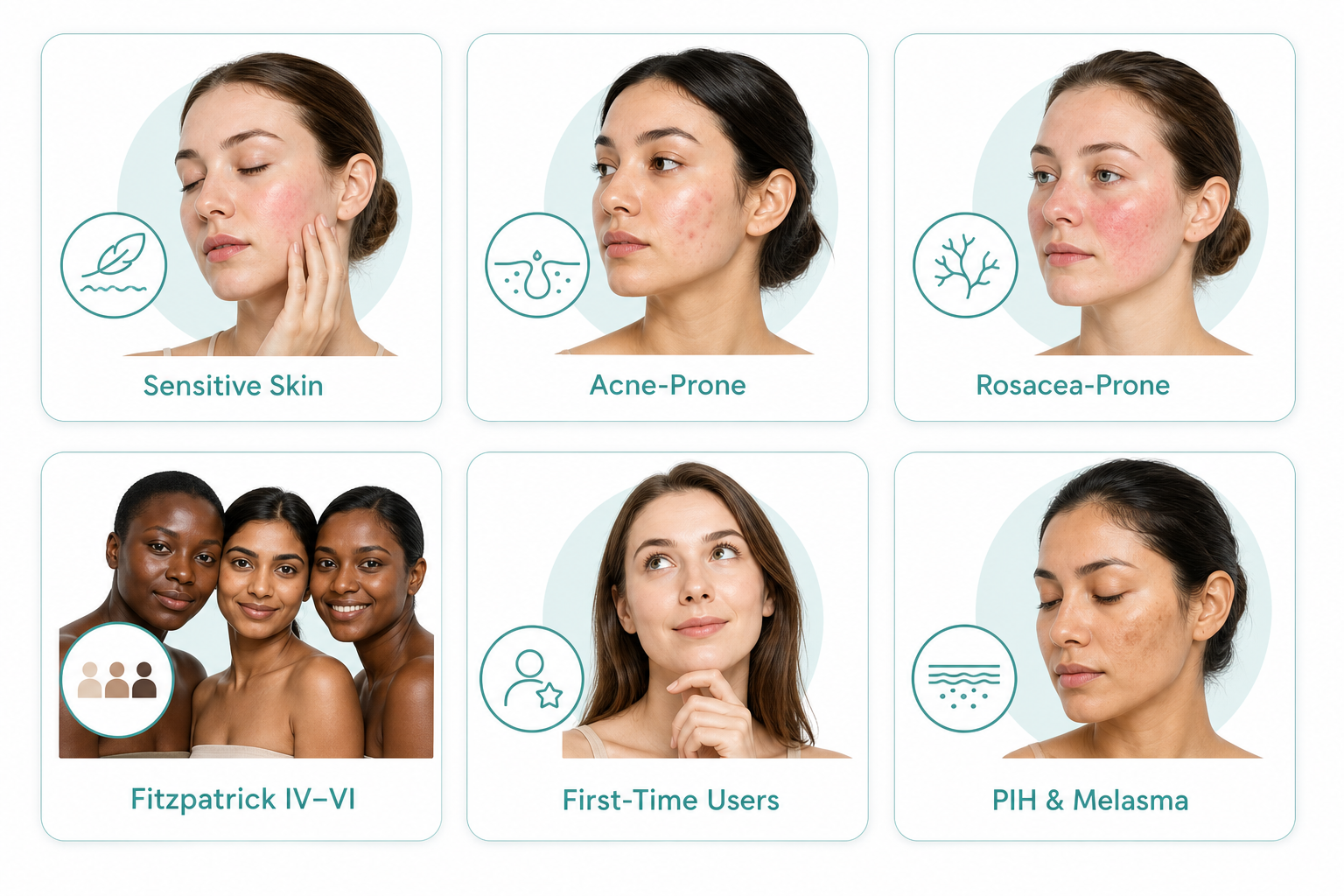
Mandelic acid peels may be appropriate for a broad range of patients, but individual suitability depends on a clinical assessment. The following groups are commonly considered good candidates:
- Sensitive or reactive skin: The slow penetration and anti-inflammatory properties make mandelic acid one of the more tolerable AHA options for easily irritated skin.
- Acne-prone skin: The comedolytic and antibacterial properties address both active breakouts and the congestion that leads to them.
- Rosacea-prone skin: Some patients with mild rosacea tolerate mandelic acid better than other acids, though this should always be assessed individually and with caution.
- Darker skin tones (Fitzpatrick types IV–VI): Lower inflammation risk and tyrosinase inhibition make mandelic acid a preferred choice for melanin-rich skin.
- First-time peel users: The minimal downtime and lower irritation profile make mandelic acid a reasonable introduction to chemical exfoliation.
- Patients with PIH or melasma: The dual exfoliating and pigment-suppressing action is relevant for both conditions.
Who Should Approach Mandelic Acid Peels with Caution
Mandelic acid peels are not appropriate for everyone. A qualified practitioner should assess the following factors before treatment:
- Active cold sores or herpes simplex history: Chemical peels can trigger herpes simplex outbreaks. Patients with a history of cold sores may require antiviral prophylaxis before treatment.
- Pregnancy and breastfeeding: The safety of chemical peels during pregnancy and breastfeeding has not been established. Patients should consult their healthcare provider before proceeding.
- Active open wounds, sunburn, or skin infections: Peeling compromised skin carries a higher risk of adverse reactions and infection.
- Recent use of isotretinoin: Patients who have recently completed a course of isotretinoin (Roaccutane) may have a thinned skin barrier that is more vulnerable to chemical exfoliation. A waiting period is typically recommended.
- Certain topical medications: Retinoids and other active ingredients can increase skin sensitivity; these are usually paused before a peel.
- Known allergy to almonds or related compounds: Given mandelic acid’s derivation from bitter almonds, patients with relevant allergies should discuss this with their practitioner.
Professional vs. At-Home Mandelic Acid Peels
The distinction between professional and at-home mandelic acid treatments is important and is often blurred in online content. Professional peels typically use concentrations of 30–50% or higher, applied under controlled conditions by a licensed esthetician or dermatologist, with precise timing and a neutralisation step. These are the concentrations used in clinical studies demonstrating significant improvements in PIH, acne, and texture. At-home products — including toners, serums, and peel pads — typically contain 5–20% mandelic acid and produce a milder, more gradual effect with regular use.
| Concentration Range | Typical Use | Notes |
|---|---|---|
| 5–8% | Daily toner or serum | Gentle maintenance; suitable for beginners and sensitive skin |
| 10–15% | Weekly at-home peel or treatment serum | Moderate exfoliation; patch test recommended before first use |
| 20–30% | Timed at-home peel | Stronger effect; follow product instructions carefully; not for reactive skin |
| 30–50%+ | Professional clinic treatment only | Requires trained application, timing, and neutralisation; clinical study concentrations |
It is worth being honest about what this means for expectations. If a clinical study demonstrates that a 45% mandelic acid peel reduces a Melasma Area and Severity Index (MASI) score significantly over six sessions, that result does not automatically apply to a 10% at-home serum used twice a week. At-home products can still produce meaningful improvements in skin tone and texture over time, but the magnitude and speed of results will differ. Patients seeking treatment for significant PIH, melasma, or acne scarring are likely to achieve better outcomes with a professional series of treatments.
What to Expect: The Treatment Experience and Recovery
A professional mandelic acid peel is often described as a lunchtime peel because the procedure is brief and recovery is typically minimal. A standard appointment involves cleansing the skin, applying the peel solution for a timed period (usually a few minutes depending on concentration and skin response), then neutralising or rinsing the acid away, followed by a calming moisturiser and broad-spectrum SPF application.
During the peel, patients may notice mild tingling, warmth, or a slight stinging sensation. These sensations are generally well tolerated and subside quickly after neutralisation. Significant pain is not expected with a superficial mandelic acid peel; if discomfort is intense, the practitioner should be informed immediately.
Recovery following a mandelic acid peel is typically straightforward. A realistic timeline looks like this:
- Days 1–3: Mild redness and a subtle glow are common. Some patients notice no visible reaction at all.
- Days 3–7: Light flaking or peeling may occur as dead skin cells shed. This is normal and should not be picked or forced.
- Weeks 1–2: Smoother skin texture becomes noticeable as the new skin surface is revealed.
- Weeks 4–8: Visible improvement in pigmentation, dark spots, and acne marks with consistent treatment.
- 3-month series: Cumulative results from a series of four to six sessions, spaced every two to four weeks, typically produce the most significant and lasting improvements.
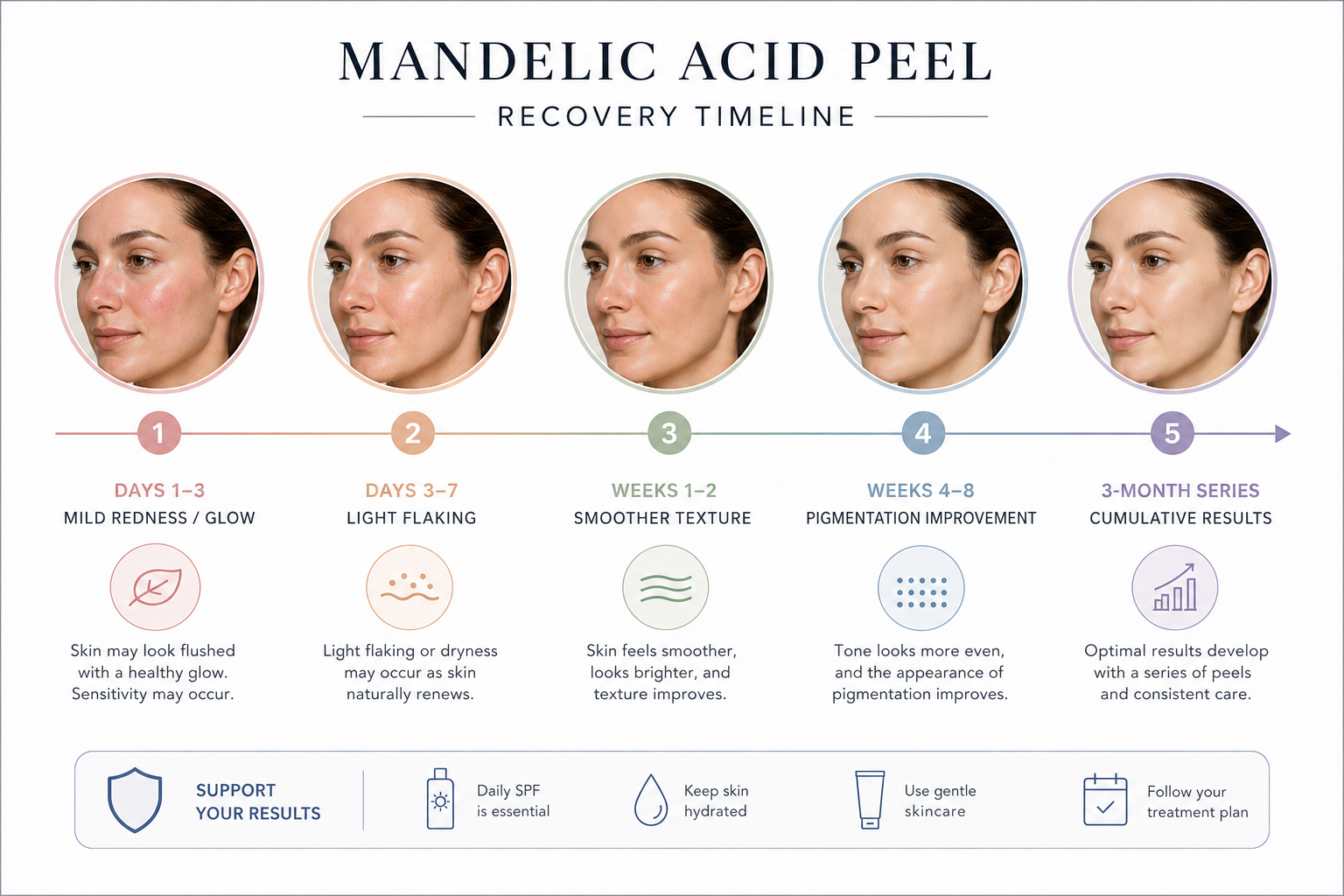
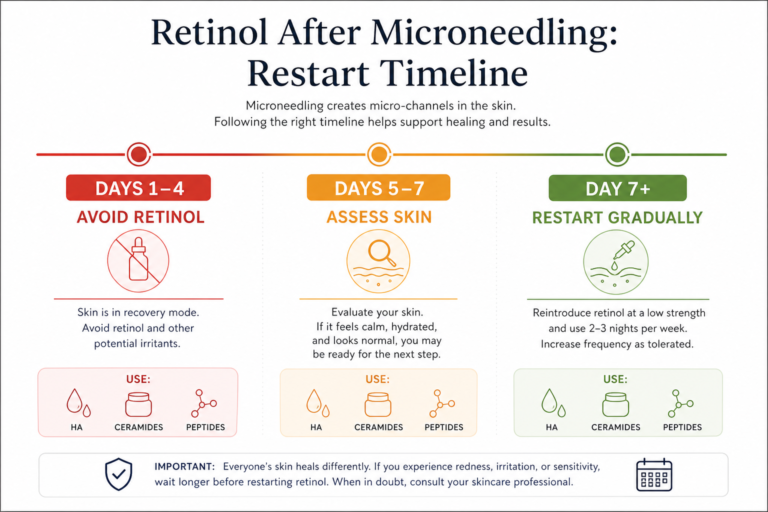
Photosensitivity is increased after any chemical peel. Applying a broad-spectrum SPF of at least 30 — ideally SPF 50 — every morning is essential during and after a course of mandelic acid peels. Avoiding direct sun exposure and not using retinoids or other strong actives for several days post-treatment helps protect the skin barrier during recovery.
Ingredient Pairing: What Works With Mandelic Acid and What to Avoid
Mandelic acid can be combined effectively with certain ingredients to enhance its benefits, but pairing it with the wrong actives can compromise the skin barrier or cause unnecessary irritation.
Ingredients That Complement Mandelic Acid
- Niacinamide: Supports the skin barrier, reduces redness, and has its own mild brightening effect — a useful pairing for PIH-prone skin.
- Hyaluronic acid: Provides hydration to offset any dryness from exfoliation without interfering with mandelic acid’s mechanism.
- Azelaic acid: Also inhibits tyrosinase and has anti-inflammatory properties; can be used alongside mandelic acid for enhanced pigmentation management, though sensitivity should be monitored.
- Kojic acid: Another tyrosinase inhibitor that may complement mandelic acid’s brightening action in a targeted pigmentation routine.
Ingredients to Avoid Around Peel Treatments
- Retinoids (retinol, tretinoin): Increase skin sensitivity and should generally be paused for several days before and after a peel.
- Other AHAs or BHAs: Layering multiple exfoliating acids increases the risk of over-exfoliation and barrier disruption.
- Benzoyl peroxide: Can interact unpredictably with acid peels; timing and separation are important.
- Physical scrubs: Mechanical exfoliation should be avoided around peel treatments to prevent excessive skin disruption.
Side Effects and Limitations
Mandelic acid peels are generally well tolerated, but side effects are possible and patients should be aware of realistic limitations. Common and expected effects include temporary redness, mild tingling during application, and light flaking in the days following treatment. These are signs of normal exfoliation rather than adverse reactions.
Less common but possible side effects include prolonged redness, increased sensitivity, or — in cases where the peel is applied incorrectly or on unsuitable skin — post-peel purging, where underlying congestion temporarily surfaces before clearing. Genuine adverse reactions such as blistering, significant swelling, or persistent hyperpigmentation are uncommon with mandelic acid at appropriate concentrations but are more likely if the peel is applied to compromised skin, if aftercare instructions are not followed, or if sun protection is neglected.
It is also worth noting that mandelic acid, while effective for superficial concerns, has limitations. It is not a substitute for medium or deep peels when significant dermal remodelling is needed, and it will not produce the same results as laser resurfacing or other energy-based treatments for deep scarring or pronounced wrinkles. Managing expectations is an important part of any pre-treatment consultation.
Frequently Asked Questions
How many mandelic acid peel sessions are typically needed?
Most practitioners recommend a series of four to six sessions spaced two to four weeks apart for meaningful results in conditions such as PIH, acne, or uneven texture. Maintenance peels every six to eight weeks may be suggested after the initial series. Individual response varies, and a practitioner will adjust the plan based on how the skin responds.
Is a mandelic acid peel safe for darker skin tones?
Mandelic acid is widely considered one of the safer AHA options for patients with darker skin tones across Fitzpatrick skin types IV–VI. Its slow penetration produces less acute inflammation than faster-acting acids like glycolic acid, reducing the risk of triggering post-inflammatory hyperpigmentation. However, individual assessment by an experienced practitioner is still essential, as skin response varies between patients.
Can I use a mandelic acid peel in summer?
Mandelic acid’s lower photosensitising effect compared to glycolic acid makes it more year-round friendly than some other peels. That said, increased sun sensitivity after any chemical peel means consistent broad-spectrum SPF use is non-negotiable regardless of season. Patients who spend significant time outdoors should discuss timing with their practitioner.
Do I need to do a patch test before a mandelic acid peel?
Yes. A patch test before any new peel or active skincare product is strongly recommended, particularly for patients with sensitive or reactive skin. A small amount of the product is applied to an inconspicuous area and monitored for 24–48 hours before full application. Professional practitioners will typically conduct their own skin assessment before proceeding.
What is post-peel purging and should I be concerned?
Post-peel purging refers to a temporary increase in breakouts that can occur as accelerated cell turnover brings congestion to the surface more quickly. It typically resolves within two to four weeks and is distinct from an allergic reaction or infection. If breakouts are severe, persistent, or accompanied by significant redness or swelling, the treating practitioner should be consulted.
Can mandelic acid peels treat melasma?
Mandelic acid peels may help improve the appearance of melasma through a combination of surface exfoliation and tyrosinase inhibition. A 1999 study cited in dermatology literature reported a 50% reduction in melasma severity over four weeks with mandelic acid treatment. However, melasma is a complex, hormonally influenced condition that often requires a multi-modal approach — including strict sun protection, topical agents, and sometimes other procedures — rather than peels alone. A dermatologist’s assessment is advisable for significant melasma.
How does a mandelic acid peel differ from a mandelic acid serum?
The key difference is concentration and application method. A professional peel uses 30–50%+ mandelic acid applied for a timed period and then neutralised, producing a more intensive exfoliation. An at-home serum typically contains 5–15% mandelic acid and is left on the skin as part of a daily or weekly routine. Both can be beneficial, but they are different interventions with different expected outcomes.
Is a Mandelic Acid Peel the Right Choice for Your Skin?
A mandelic acid peel occupies a genuinely useful position in the landscape of chemical exfoliation: it offers meaningful benefits for acne, post-inflammatory hyperpigmentation, uneven texture, and early signs of ageing, while remaining accessible to skin types that often cannot tolerate stronger acids. Its larger molecular weight, slow penetration, antibacterial properties, and tyrosinase inhibition make it a well-rounded option rather than a compromise choice.
That said, it is not the right tool for every concern. Patients seeking significant correction of deep wrinkles, pronounced scarring, or severe sun damage may need a more intensive intervention. And while at-home mandelic acid products can support skin health as part of a consistent routine, they should not be expected to replicate the results of a professional series of treatments.
If you are considering a mandelic acid peel — particularly for PIH, acne, or skin of color concerns — a consultation with a qualified practitioner is the most reliable way to assess whether it is appropriate for your skin type, determine the right concentration and frequency, and ensure the treatment is carried out safely. A practitioner experienced in treating diverse skin tones will be best placed to design a protocol that balances efficacy with the lowest possible risk of adverse reactions.