Can You Get Filler While Breastfeeding? Filler Safety for Nursing Mothers
The postpartum period brings enormous physical and emotional change, and it is entirely understandable that many new mothers want to feel like themselves again. Dermal fillers are one of the most requested aesthetic treatments in this period — yet the question of whether they are safe during breastfeeding has no simple yes or no answer. The honest position, shared by the FDA and most qualified injectors, is that safety during lactation has not been established, and the dominant recommendation is to wait. This article explains why that recommendation exists, what the research landscape actually looks like, what happens if you have already had filler while nursing, and what lactation-safe alternatives can support your skin in the meantime.
Key Takeaways
- No large-scale clinical studies have evaluated dermal filler safety during breastfeeding; the FDA states that safety is unknown for use during pregnancy or lactation.
- Hyaluronic acid fillers are theoretically low-risk due to their localized injection and large molecular size, but the absence of data means no filler type can be confirmed safe for nursing mothers.
- Most fillers contain lidocaine, a local anesthetic that does transfer into breast milk in small amounts — a factor that is often overlooked in discussions about filler safety.
- Postpartum hormonal fluctuations can make filler results less predictable, adding a practical reason — beyond safety — to consider waiting.
- A range of effective, lactation-safe aesthetic treatments exists, giving nursing mothers meaningful options while they wait.
Why Nursing Mothers Ask This Question
Pregnancy and the postpartum period affect the face in ways that many people do not anticipate. Facial volume loss, changes in skin hydration, and the appearance of fine lines can accelerate during and after pregnancy, partly because estrogen — which supports collagen production and skin moisture — is suppressed during lactation. At the same time, the cultural pressure to “bounce back” is real, and aesthetic treatments that were part of a person’s routine before pregnancy naturally come back into consideration. Acknowledging this context matters: wanting to address facial volume loss or lip enhancement as a new mother is not vanity — it reflects a legitimate desire to feel well in your own skin. The safety question deserves a thorough, honest answer rather than a dismissive one.
What Dermal Fillers Are and How They Work
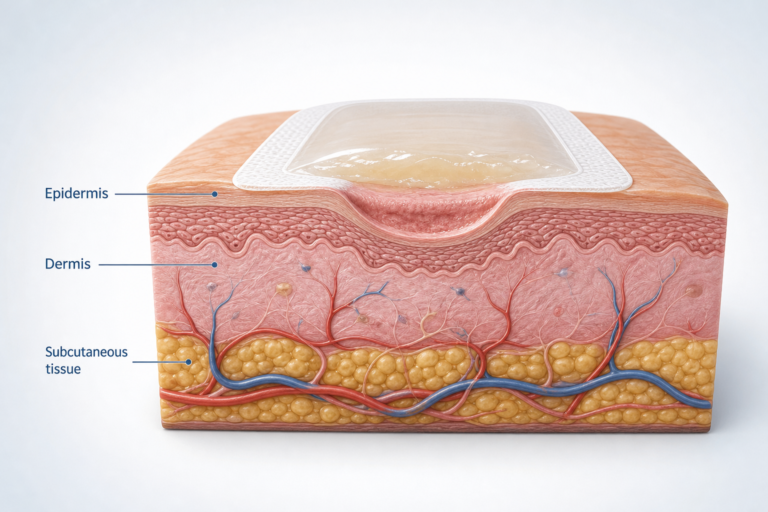
Dermal fillers are injectable substances used to restore volume, smooth lines, and reshape facial contours. The most widely used type is based on cross-linked hyaluronic acid (HA) — a modified form of a molecule that occurs naturally in the body’s connective tissue and skin. Brands such as Juvederm and Restylane are HA-based fillers. Cross-linking refers to a chemical process that bonds HA molecules together, making the gel more durable and resistant to breakdown than naturally occurring HA. These products are injected directly into the skin or deeper tissue layers at specific sites — nasolabial folds, lips, cheeks, and other areas — where they remain largely localized rather than circulating widely through the body.
Other filler types include poly-L-lactic acid (PLLA, sold as Sculptra), which stimulates collagen production over time; calcium hydroxylapatite (CaHA, sold as Radiesse), a mineral-based filler; and polymethylmethacrylate (PMMA, sold as Bellafill), a semi-permanent option. These non-HA fillers are not reversible with hyaluronidase and have even less safety data in the context of breastfeeding than HA-based products do.
Nearly all modern HA fillers also contain lidocaine hydrochloride, a local anesthetic blended into the product to reduce discomfort during injection. This is a detail that matters specifically for nursing mothers and is discussed in more depth below.
What the FDA Says About Filler During Breastfeeding
The FDA’s official position on dermal fillers — including HA-based products such as Juvederm and Restylane — is that the safety of these devices has not been established for use during pregnancy or breastfeeding. The FDA classifies dermal fillers as medical devices rather than drugs, and manufacturer labeling for all major filler products includes a warning that use during pregnancy or lactation is not recommended due to the absence of adequate safety data. This is not a statement that fillers are proven harmful during breastfeeding; it is a statement that no one has studied the question rigorously enough to confirm they are safe. That distinction is important, but it does not change the practical recommendation: proceeding with an elective procedure in the absence of safety data is a risk that most medical professionals advise against.
Why Clinical Research on This Topic Is So Limited
The lack of clinical data on filler use during breastfeeding is not an oversight — it reflects a deliberate ethical constraint. Medical ethics boards prohibit the inclusion of pregnant and breastfeeding women in most clinical trials involving cosmetic or elective interventions, because exposing a nursing infant to an unstudied substance through breast milk transfer would be ethically unjustifiable. This means that the absence of evidence is not the same as evidence of absence: researchers have not found fillers to be harmful during lactation; they simply have not been able to study the question in a controlled way. The LactMed database, maintained by the National Institutes of Health as a reference for substance safety during lactation, does not contain entries for dermal filler ingredients because no pharmacokinetic data in breastfeeding women exists to report. Understanding this gap helps explain why even experienced, evidence-based practitioners take a conservative approach — not because harm is established, but because the data needed to rule it out does not exist.
The Lidocaine Factor: An Overlooked Safety Consideration
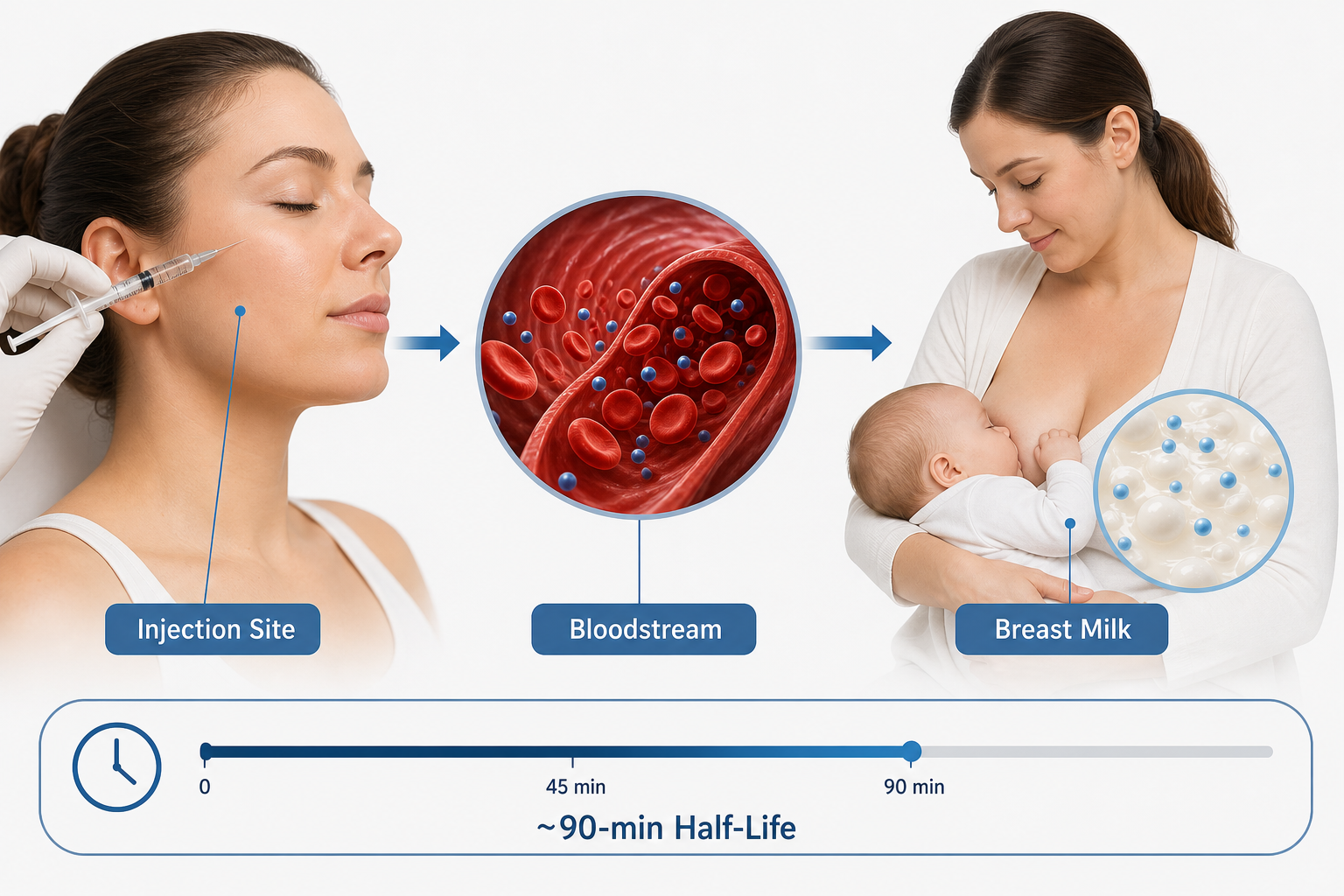
One aspect of filler safety during breastfeeding that receives far less attention than it deserves is the lidocaine component. Most HA fillers — including Juvederm and Restylane formulations — are pre-mixed with lidocaine to reduce injection discomfort. Unlike the large, cross-linked HA molecules themselves, lidocaine is a small-molecule drug that does enter systemic circulation after injection and is known to transfer into breast milk. Lidocaine has a relatively short half-life of approximately 90 minutes, and the concentrations reaching breast milk from a localized injection are generally considered low. However, the cumulative effect of multiple injection sites — as in a full-face treatment — and the sensitivity of a newborn’s immature liver to drug metabolism are factors worth considering. The LactMed database does include lidocaine and notes that occasional dental or procedural use is generally considered compatible with breastfeeding, but this guidance applies to single-site, medically necessary use rather than elective cosmetic treatment across multiple facial areas. A qualified injector and your obstetric provider should be part of any shared decision-making conversation that includes this nuance.
Does Hyaluronic Acid Enter Breast Milk?
The theoretical argument for HA filler safety during breastfeeding rests on the molecule’s size and behavior. Cross-linked hyaluronic acid is a large, gel-like substance that remains at the injection site rather than dispersing into the bloodstream in meaningful quantities. Systemic absorption of intact HA filler is considered very low, which means the pathway by which it could reach breast milk — absorption into the bloodstream, then transfer into milk — is theoretically limited. Naturally occurring hyaluronic acid is also present in the body and in some foods, and it is not considered a hazard. However, cross-linked HA is chemically modified and behaves differently from naturally occurring HA. No studies have measured HA filler concentrations in breast milk, so the theoretical reassurance cannot be confirmed with clinical data. The localized injection argument is reasonable but remains unverified in a breastfeeding context.
Non-HA Fillers: Even Less Data, Greater Caution Warranted
While most discussions of filler safety during breastfeeding focus on hyaluronic acid products, it is important to address non-HA filler types separately. Poly-L-lactic acid (PLLA/Sculptra) works by stimulating the body’s own collagen production over several months and is not reversible. Calcium hydroxylapatite (CaHA/Radiesse) is a mineral-based filler that also has biostimulatory properties. PMMA (Bellafill) contains microspheres that remain in the tissue permanently. None of these products have been studied in breastfeeding women, and none are reversible with hyaluronidase. The combination of no safety data and no reversal option makes these filler types a particularly poor choice during lactation. If a complication arose — such as an infection requiring antibiotics, or an inflammatory reaction — managing it while breastfeeding would involve additional medication decisions and potential treatment disruption. The conservative approach for non-HA fillers during breastfeeding is unambiguous: postpone until after weaning.
Dissolving Filler While Breastfeeding: What You Need to Know
Some nursing mothers find themselves in a different situation: they have pre-existing HA filler — perhaps placed before pregnancy — and are wondering whether it is safe to dissolve it while breastfeeding, or whether a complication requires urgent dissolution. Hyaluronidase is the enzyme used to break down HA filler, and it works quickly and effectively. However, hyaluronidase has not been studied in breastfeeding women either. It is a protein-based enzyme that is unlikely to survive digestion if it were to reach breast milk, but this has not been confirmed in clinical research. If dissolution is medically necessary — for example, in the event of a vascular occlusion or significant complication — the clinical urgency would outweigh the theoretical uncertainty, and a qualified injector would manage the situation accordingly. For elective dissolution (such as wanting to remove filler for aesthetic reasons), the same abundance of caution that applies to placing new filler applies here: discuss the timing with your provider and, where possible, consider waiting until after weaning.
How Postpartum Hormonal Changes Affect Filler Results
Beyond the safety question, there is a practical reason why many experienced injectors recommend waiting before having filler placed postpartum: results may be less predictable. Postpartum hormonal fluctuations — including elevated prolactin, suppressed estrogen, and shifts in immune function — affect tissue behaviour in ways that can influence how filler integrates, how much swelling occurs, and how long results last. Estrogen suppression during lactation reduces skin collagen density and hydration, which changes the tissue environment into which filler is injected. Some patients experience more pronounced bruising or swelling postpartum due to changes in vascular tone and immune reactivation. Filler longevity may also be affected, as the metabolic environment of lactating tissue differs from baseline. These are not reasons to avoid filler indefinitely, but they are meaningful reasons to consider waiting until hormonal levels have stabilised — typically several months after weaning — to achieve more consistent and predictable outcomes.
What If You Already Had Filler While Breastfeeding?
If you received dermal filler while breastfeeding — perhaps before you were aware of the recommendation to wait, or because a provider did not raise the concern — it is important to approach this situation calmly. There are no documented cases of infant harm attributed to a mother receiving HA filler while breastfeeding, and the theoretical risk from the HA component itself is considered low given its localized injection and large molecular size. The lidocaine component, if present, would have cleared from your system within a few hours given its short half-life. If you are concerned, speak with your midwife, GP, or lactation consultant rather than stopping breastfeeding abruptly. Monitoring your infant for any unusual symptoms and seeking professional reassurance is the appropriate response. Stopping breastfeeding is not automatically warranted based on a single filler treatment, but your healthcare team is best placed to advise based on your specific circumstances.
Timing: When Can You Safely Get Fillers After Breastfeeding?
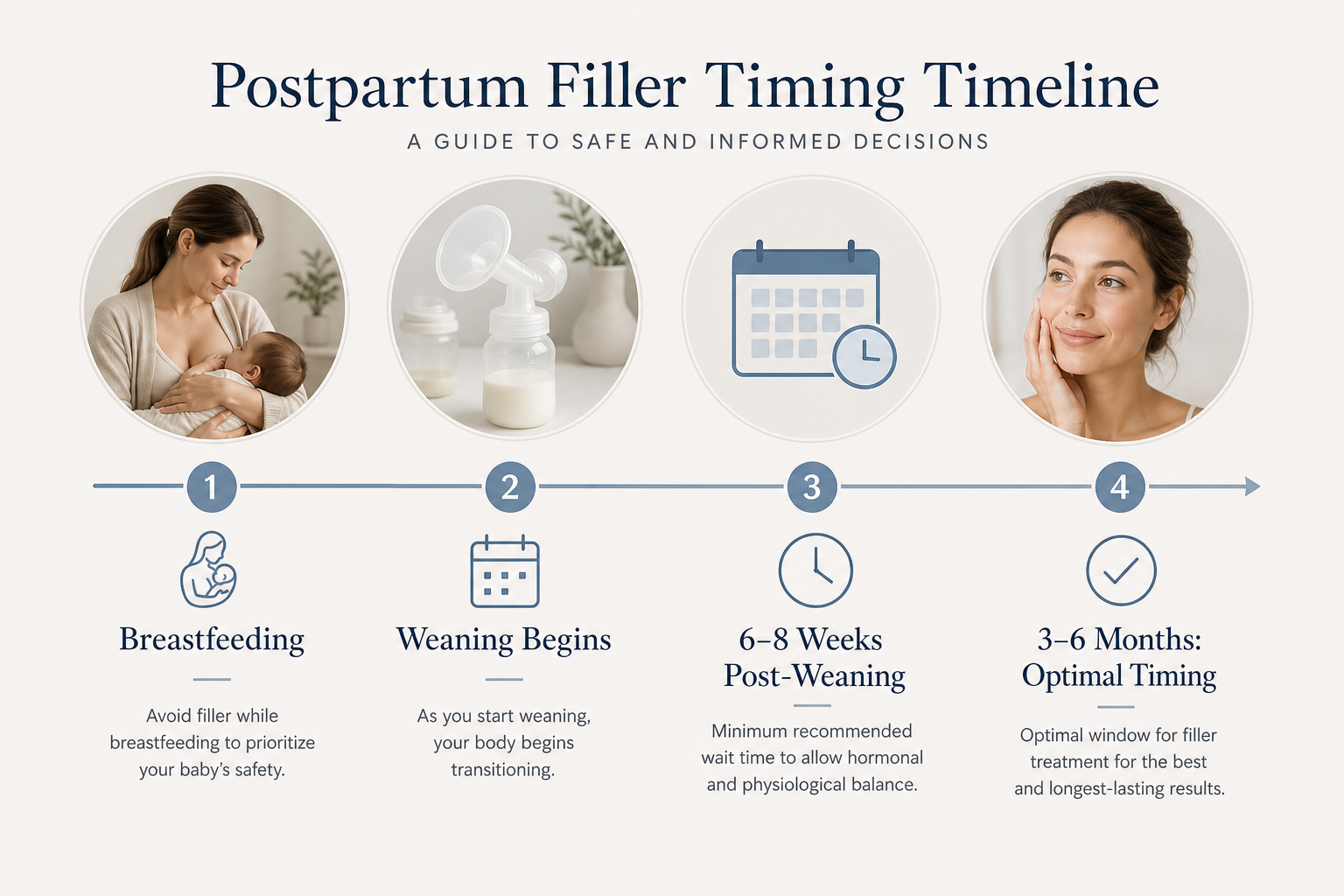
Most practitioners who take a conservative approach recommend waiting until you have fully weaned before scheduling filler treatment. This removes the breast milk transfer concern entirely and allows hormonal levels to begin stabilising. After weaning, estrogen levels gradually recover, skin hydration and collagen density begin to improve, and the tissue environment becomes more predictable for injectable treatment. A practical minimum waiting period of six to eight weeks after fully weaning is commonly suggested to allow hormonal fluctuations to settle, though some providers recommend waiting three to six months for optimal tissue stability and more reliable results. If you are not planning to breastfeed, most providers suggest waiting at least six weeks postpartum before any elective cosmetic procedure, to allow initial recovery and hormonal adjustment. These timelines are general guidance; your individual circumstances, health status, and treatment goals should be discussed with a board-certified injector and your obstetric provider.
Lactation-Safe Alternatives: What You Can Do Now
Choosing to wait does not mean putting your skin health on hold. A range of effective aesthetic treatments and skincare approaches are considered appropriate during breastfeeding, and some can meaningfully support skin quality in the postpartum period.
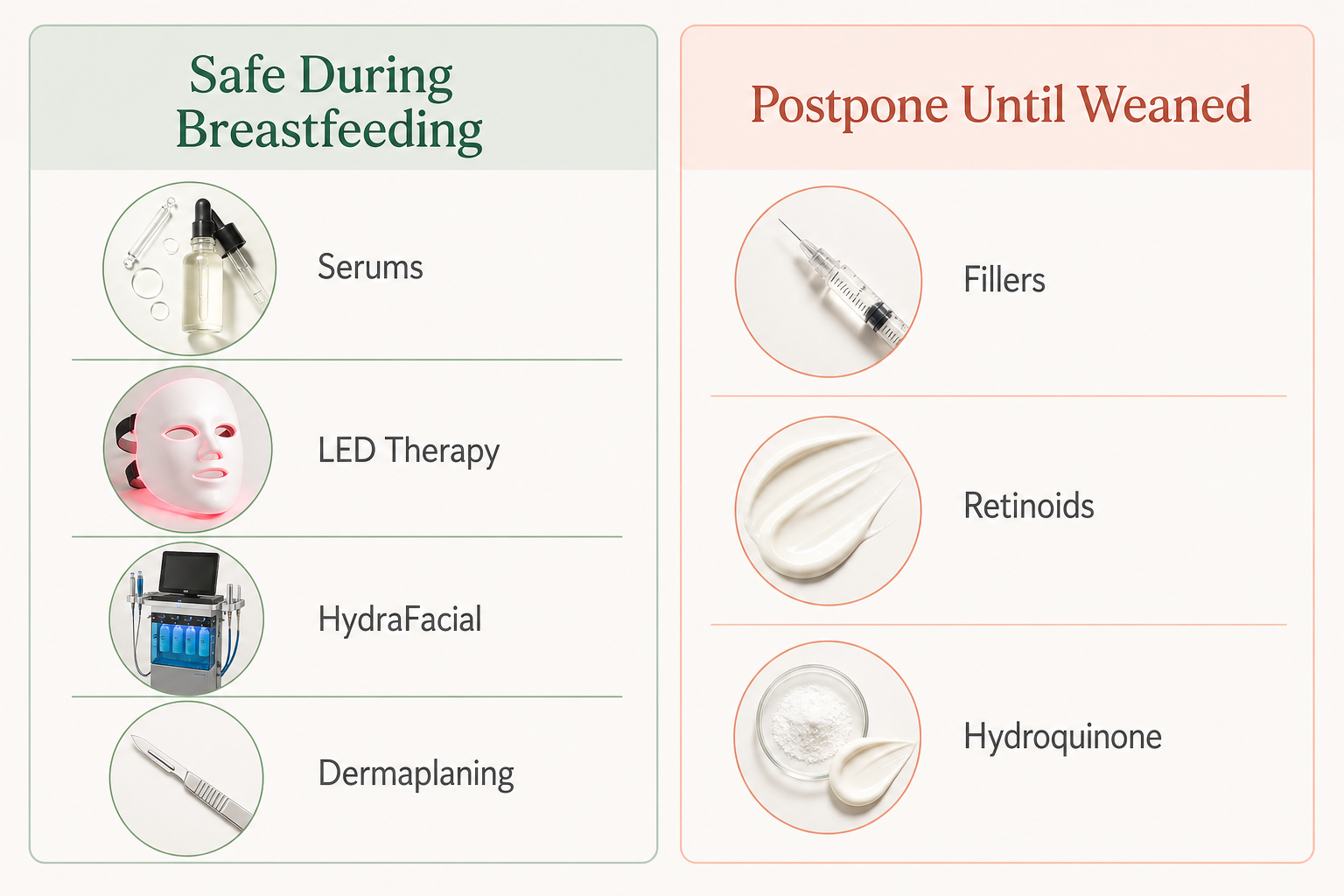
| Treatment or Ingredient | Breastfeeding Status | What It Can Help With |
|---|---|---|
| Hyaluronic acid serums (topical) | Safe | Surface hydration, plumping effect |
| Vitamin C (topical, L-ascorbic acid) | Safe | Brightening, antioxidant protection |
| Niacinamide (topical) | Safe | Pore appearance, skin tone, barrier support |
| Azelaic acid (topical, up to 20%) | Generally considered safe | Pigmentation, redness, mild acne |
| Mineral SPF (zinc oxide / titanium dioxide) | Safe | UV protection, pigmentation prevention |
| HydraFacial / gentle facials | Safe | Hydration, congestion, skin texture |
| Dermaplaning | Safe | Exfoliation, peach fuzz removal |
| LED light therapy | Safe | Skin rejuvenation, mild inflammation |
| Superficial glycolic or lactic acid peels | Generally considered safe (low concentration) | Texture, mild pigmentation |
| Retinoids (all forms) | Avoid | — |
| Hydroquinone | Avoid | — |
| High-concentration salicylic acid | Avoid | — |
| Dermal fillers (all types) | Not recommended | — |
Topical hyaluronic acid serums, niacinamide, and vitamin C can address many of the skin quality concerns that arise postpartum without any systemic exposure. Treatments such as HydraFacial, dermaplaning, and LED light therapy are non-invasive, involve no injectables, and are widely considered appropriate during breastfeeding. For nursing mothers concerned about volume loss or facial changes, these approaches will not replicate the results of filler, but they can meaningfully improve skin hydration, texture, and radiance while you wait for the right time to proceed with injectables.
Questions to Discuss With Your Provider Before Deciding
- Does the filler product you use contain lidocaine, and what is your view on its relevance to breastfeeding safety?
- What type of filler are you recommending, and is it reversible with hyaluronidase?
- Have you treated breastfeeding patients before, and what is your clinical position on this?
- What is your infection management protocol, and which antibiotics would you use if needed — are they compatible with breastfeeding?
- Given my postpartum hormonal status, how predictable do you expect my results to be?
- Would you recommend I consult my GP or midwife before proceeding?
Frequently Asked Questions
Is there a pump-and-dump protocol for filler?
No. A pump-and-dump protocol — expressing and discarding breast milk for a set period after a substance is administered — exists for some medications and alcohol, based on known pharmacokinetics. No such protocol has been established for dermal fillers because no pharmacokinetic data exists for filler ingredients in breastfeeding women. The lidocaine component clears relatively quickly given its short half-life, but there is no clinically validated timeframe for pumping and discarding milk after filler treatment. This is another reason why the conservative approach is to wait rather than attempt to work around the uncertainty.
Is lip filler while breastfeeding more or less risky than other areas?
The treatment area does not fundamentally change the safety considerations, which relate to the filler ingredients rather than the injection site. Lip augmentation involves a highly vascular area, which may slightly increase the rate of lidocaine absorption compared with less vascular sites, but the clinical significance of this during breastfeeding is unknown. The same recommendation applies regardless of the area being treated.
Can I get filler if I am only partially breastfeeding or combination feeding?
The safety considerations apply whenever breast milk is being produced and consumed by an infant, regardless of whether feeding is exclusive or partial. Combination feeding does not eliminate the breast milk transfer concern. The recommendation to wait until fully weaned applies in this context as well, though your individual circumstances are best discussed with your healthcare provider.
What about Botox — is it the same situation?
Botulinum toxin (Botox, Dysport) is a different substance from dermal filler and carries its own set of safety considerations during breastfeeding. Like fillers, botulinum toxin products are not FDA-approved for use during breastfeeding, and manufacturer labeling advises against it. The LactMed database does not contain sufficient data to confirm safety. The conservative approach recommended for fillers applies equally to botulinum toxin treatments during lactation.
Are there any fillers that are considered safe during breastfeeding?
No filler type — including HA-based products such as Juvederm or Restylane — has been confirmed safe for use during breastfeeding. The off-label use of any filler during lactation is not supported by clinical evidence, and manufacturer labeling for all major products advises against it. The absence of a confirmed safe option is the core reason practitioners recommend waiting.
Will my filler results be different postpartum compared with before pregnancy?
Potentially, yes. Postpartum hormonal fluctuations, changes in skin collagen and hydration driven by estrogen suppression during lactation, and shifts in immune function can all affect how filler integrates and how long it lasts. Many experienced injectors recommend waiting until several months after weaning — when hormonal levels have had time to stabilise — before placing filler, in order to achieve more consistent and predictable outcomes.
Making an Informed Decision About Filler After Breastfeeding
The evidence-based position on filler during breastfeeding is clear: no filler type has been confirmed safe during lactation, the FDA has not approved any filler for use during breastfeeding, and manufacturer labeling advises against it. The dominant recommendation from qualified injectors and medical professionals is to wait until you have fully weaned. This is not because fillers are proven harmful during breastfeeding — it is because the clinical data needed to confirm safety simply does not exist, and proceeding with an elective cosmetic procedure in that context is a risk that most practitioners are not willing to take on behalf of a nursing infant.
If you are eager to address postpartum skin changes now, the lactation-safe alternatives outlined in this article offer a meaningful starting point. When you are ready to discuss injectables after weaning, consulting a board-certified injector who takes a thorough medical history and engages in genuine shared decision-making will give you the best foundation for safe, effective treatment. A good provider will welcome your questions about timing, filler type, lidocaine content, and what realistic results look like given your postpartum skin changes — and will help you plan treatment at the right moment for both your safety and your results.