
How to Get Rid of Frown Lines: Treatments, Results and What to Expect
Frown lines — the vertical creases that form between the eyebrows — are one of the most common concerns patients bring to aesthetic consultations. They can appear at rest or only during expression, and the right treatment approach depends on which type you have, how deep the lines are, and what outcome you are hoping to achieve. This article explains the main treatment options, how each one works, what results are realistic, and what limitations and risks to consider before making a decision.
Key Takeaways
- Frown lines between the eyebrows are caused by repeated muscle movement, volume loss, and reduced skin elasticity — often a combination of all three.
- Botulinum toxin injections are the most widely used medical treatment for dynamic frown lines and can produce visible softening within days.
- Deeper static lines — visible even when the face is relaxed — may require additional treatments such as dermal fillers, skin resurfacing, or a combination approach.
- Results from injectable treatments are temporary and require maintenance to sustain.
- A qualified practitioner assessment is essential to identify the underlying cause and recommend the most appropriate treatment plan.
What Causes Frown Lines?
Frown lines, clinically referred to as glabellar lines, develop in the area between and just above the eyebrows. The primary cause is repeated contraction of the corrugator supercilii and procerus muscles — the muscles responsible for frowning, squinting, and concentrating. Over years of repeated movement, the overlying skin gradually loses its ability to spring back, and the creases become more persistent.
Skin ageing compounds this process. As collagen and elastin production slows with age, the skin becomes thinner and less resilient. Reduced subcutaneous fat in the glabellar region means there is less structural support beneath the skin surface. Sun exposure, smoking, and dehydration can accelerate these changes. The result is that lines which once appeared only during expression — known as dynamic lines — eventually become visible at rest, at which point they are described as static lines.
Understanding whether your frown lines are primarily dynamic, primarily static, or a mixture of both is clinically important because it directly influences which treatments are likely to be most effective.
Botulinum Toxin Injections for Frown Lines
Botulinum toxin injections are the most established medical treatment for dynamic glabellar lines. The treatment works by temporarily blocking the nerve signals that cause the corrugator and procerus muscles to contract. When these muscles are relaxed, the overlying skin is no longer repeatedly folded, which allows existing lines to soften and reduces the formation of new creases during expression.
Several botulinum toxin products are licensed for use in the glabellar area, including Botox (onabotulinumtoxinA), Dysport (abobotulinumtoxinA), and Azzalure (abobotulinumtoxinA). These products share the same mechanism but differ in formulation, unit dosing, and diffusion characteristics. Units are not interchangeable between brands, and the appropriate product and dose should be determined by a qualified practitioner based on individual anatomy and muscle strength.
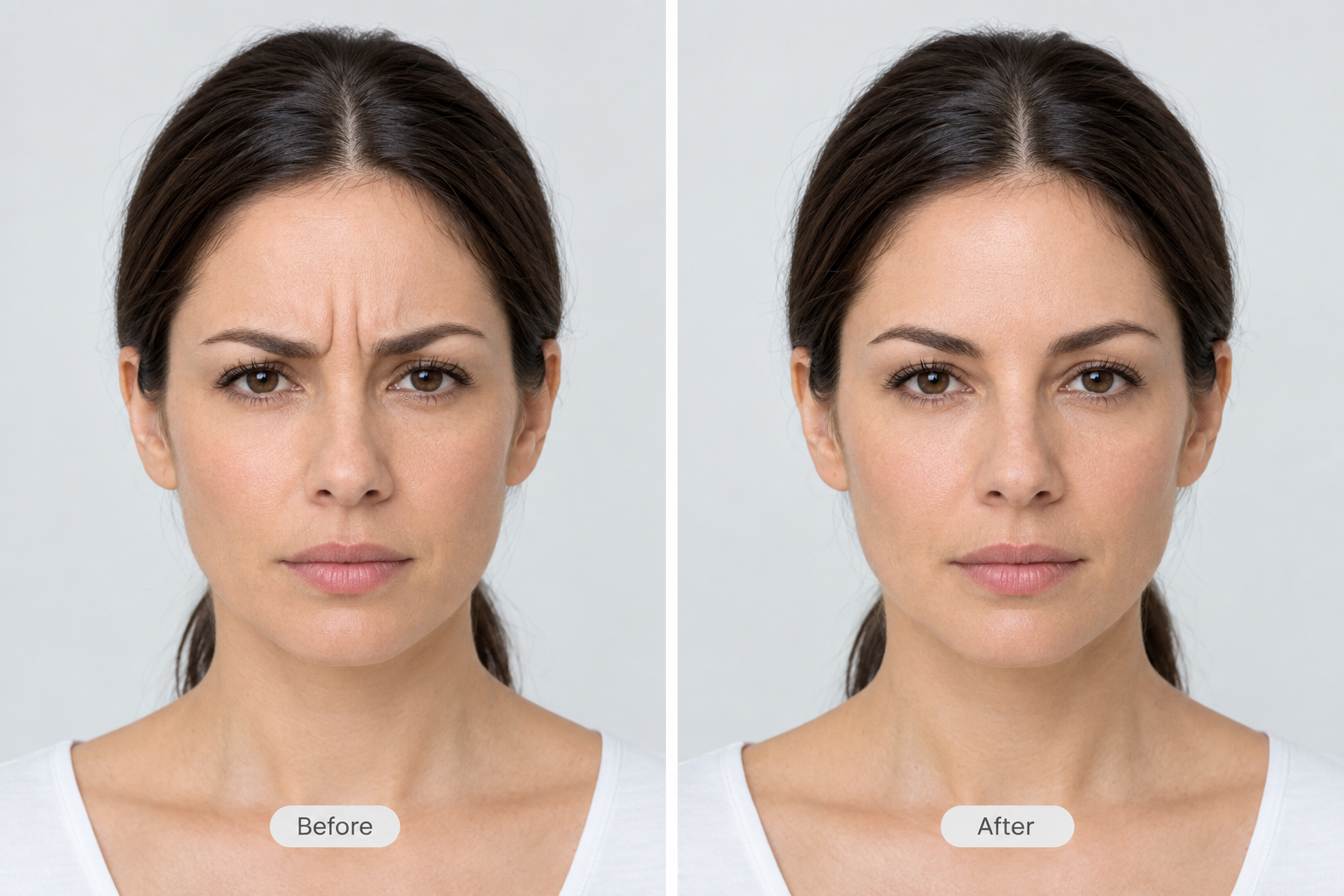
Most patients notice an initial softening of frown lines within three to five days, with the full effect typically visible by two weeks. Results generally last between three and six months, after which the muscle activity gradually returns and the lines may reappear. With consistent treatment over time, some patients find that the muscles weaken slightly and lines become less pronounced between appointments, though this varies considerably between individuals.
Botulinum toxin is most effective for dynamic frown lines. If lines are deeply etched and visible at rest, relaxing the muscle alone may not fully resolve them, and additional treatments may be needed.
What the Appointment Involves
A botulinum toxin appointment for frown lines is typically brief, often completed within fifteen to thirty minutes including consultation. The practitioner will assess your facial anatomy, muscle movement, and the depth and pattern of your lines before proceeding. A small number of injections are placed into the target muscles using a fine needle. Discomfort is usually mild and short-lived. No anaesthetic is generally required, though a topical numbing cream can be applied beforehand if preferred.
Most people return to normal activities immediately after treatment. Common short-term effects include mild redness, small bumps at injection sites, or minor bruising, which typically resolve within a few hours to a couple of days. Strenuous exercise and lying flat are usually advised against for several hours post-treatment.
Risks and Limitations of Botulinum Toxin
Botulinum toxin treatment for glabellar lines is generally well tolerated when performed by a trained and experienced practitioner, but it is not without risk. Possible side effects include bruising, headache, and temporary asymmetry. A less common but clinically significant risk is eyelid ptosis — a temporary drooping of the upper eyelid — which can occur if the product migrates to the levator palpebrae muscle. This is usually temporary and resolves as the toxin wears off, but it can be distressing while it persists.
Botulinum toxin is not suitable during pregnancy or breastfeeding. It should be used with caution in people with certain neuromuscular conditions such as myasthenia gravis. A thorough medical history should always be taken before treatment. Results are temporary, and the treatment does not address the underlying skin quality changes that contribute to static lines.
Dermal Fillers for Deep Frown Lines
When frown lines remain visible at rest — particularly deeper furrows that persist even when the face is fully relaxed — dermal fillers may be considered as part of a treatment plan. Hyaluronic acid fillers are the most commonly used type. Hyaluronic acid is a naturally occurring substance in the skin that attracts and retains water, and when injected into or beneath a line, it can physically lift and smooth the crease.
Filler treatment in the glabellar region requires particular care. The area has a relatively dense network of blood vessels, and injection into or near a vessel carries a risk of vascular occlusion — a serious complication that can, in rare cases, lead to skin necrosis or, in extremely rare circumstances, visual disturbance. For this reason, glabellar filler should only be performed by a practitioner with advanced training and a thorough understanding of facial vascular anatomy. The availability of hyaluronidase — an enzyme that can dissolve hyaluronic acid filler in an emergency — is considered an important safety requirement.
Dermal fillers in this area are often used in combination with botulinum toxin rather than as a standalone treatment. Relaxing the muscle first reduces the mechanical stress on the filler, which may help results last longer and look more natural. The combination approach is sometimes referred to as a multimodal or layered treatment strategy.
Skin Resurfacing and Collagen-Stimulating Treatments
For patients whose frown lines are partly driven by reduced skin quality, texture changes, or superficial skin damage, resurfacing and collagen-stimulating treatments may offer complementary benefit. These approaches do not relax muscles or add volume directly, but they can improve the skin’s structural integrity and surface appearance over time.
Chemical Peels
Chemical peels use acids — such as glycolic acid, lactic acid, or trichloroacetic acid — to remove the outer layers of skin and stimulate cellular renewal. Superficial peels may improve skin texture and fine surface lines, while medium-depth peels can address more established skin changes. Chemical peels are unlikely to significantly reduce deep dynamic frown lines on their own, but they can complement injectable treatments by improving overall skin quality.
Microneedling
Microneedling creates controlled micro-injuries in the skin using fine needles, which stimulates the skin’s natural wound-healing response and encourages collagen and elastin production. Over a course of treatments, microneedling may improve skin firmness, texture, and the appearance of fine lines. Evidence for its effectiveness on established glabellar lines is more limited, and it is generally considered a supportive rather than primary treatment for this concern.
Radiofrequency and Energy-Based Devices
Radiofrequency (RF) treatments deliver controlled heat energy into the deeper layers of the skin to stimulate collagen remodelling and tissue tightening. Some devices combine radiofrequency with microneedling. These treatments may help improve skin laxity and fine lines in the glabellar area, though results tend to be more modest than those achieved with botulinum toxin for dynamic lines. Multiple sessions are typically required, and results develop gradually over several weeks to months.
Topical Skincare for Frown Lines
Topical skincare cannot replicate the results of medical treatments for established frown lines, but certain ingredients have meaningful evidence for improving skin quality and may help slow the progression of fine lines over time.
Retinoids — including prescription tretinoin and over-the-counter retinol — are among the most evidence-supported topical ingredients for skin ageing. They work by increasing cell turnover, stimulating collagen synthesis, and improving skin texture. Consistent use over months is required before meaningful changes become visible, and retinoids can cause initial irritation, dryness, and photosensitivity. Broad-spectrum sun protection is essential when using retinoids and is one of the most important daily habits for slowing the development of expression lines generally.
Peptides, antioxidants such as vitamin C, and moisturising ingredients including hyaluronic acid and ceramides can support skin barrier function and hydration, which may improve the appearance of fine lines. However, topical skincare alone is unlikely to significantly reduce moderate to deep frown lines that are already established.
Who May Be Suitable for Frown Line Treatment?
Suitability for frown line treatment depends on the type and depth of lines, individual anatomy, skin quality, medical history, and personal goals. Botulinum toxin is generally most appropriate for people with dynamic glabellar lines — those that are most visible during expression — and who are in good general health with no contraindications to the treatment.
People with deeper static lines may benefit from a combination approach, and a practitioner assessment is needed to determine the most appropriate sequence and combination of treatments. Those with very thin or fragile skin, a history of keloid scarring, active skin infections, or certain autoimmune or neuromuscular conditions may not be suitable for particular treatments.
Botulinum toxin and most injectable treatments are not recommended during pregnancy or breastfeeding. Anyone taking blood-thinning medications should discuss this with their practitioner, as bruising risk may be increased. A full medical history and facial assessment should always precede any treatment decision.
How Many Treatments Are Needed?
For botulinum toxin, a single treatment session addresses dynamic frown lines for the duration of the product’s effect — typically three to six months. To maintain results, repeat treatments are needed at regular intervals. Some practitioners recommend a review appointment two weeks after the initial treatment to assess the outcome and make any adjustments.
Skin resurfacing and collagen-stimulating treatments such as microneedling or radiofrequency typically require a course of sessions — often three to six — spaced several weeks apart, followed by periodic maintenance. Dermal filler results may last six to eighteen months depending on the product used, the area treated, and individual metabolism, after which top-up treatment may be needed.
A realistic treatment plan for moderate to deep frown lines often involves more than one modality and an ongoing maintenance schedule rather than a single permanent solution.
Alternatives to Consider
Not everyone wishes to pursue injectable or energy-based treatments. For those seeking non-invasive options, consistent use of evidence-based skincare — particularly retinoids and daily SPF — represents the most supported non-procedural approach to slowing the progression of frown lines. Facial massage and expression-awareness exercises are sometimes discussed, though clinical evidence for their effectiveness on established glabellar lines is limited.

For patients with very deep or long-standing static frown lines who have not achieved satisfactory results with non-surgical treatments, surgical options such as brow lifting or forehead procedures may be discussed with a plastic surgeon. These carry greater risks and recovery time but may offer more durable structural correction in selected cases.
It is worth noting that mild frown lines are a natural part of facial ageing and expression, and treatment is entirely elective. The decision to pursue any intervention should be based on personal preference, realistic expectations, and a clear understanding of what each option can and cannot achieve.
Frequently Asked Questions
How quickly do botulinum toxin results appear for frown lines?
Most patients notice the muscles beginning to relax within three to five days of treatment. The full effect is usually visible by two weeks. A follow-up review at this point allows the practitioner to assess the outcome and address any areas that may need adjustment.
Can frown lines be permanently removed?
No currently available non-surgical treatment offers permanent removal of frown lines. Botulinum toxin results are temporary, lasting roughly three to six months. Dermal fillers are also temporary. Surgical procedures may offer longer-lasting structural changes but are not permanent either, as the ageing process continues. Consistent maintenance treatments are typically needed to sustain results over time.
Will treating frown lines make my face look frozen or unnatural?
When botulinum toxin is administered by an experienced practitioner at an appropriate dose, the goal is to soften lines while preserving natural facial movement. An overly frozen appearance is generally the result of excessive dosing or poor technique. Discussing your preferences clearly with your practitioner before treatment helps ensure the outcome aligns with your expectations.
At what age do people typically start treating frown lines?
There is no universally correct age. Some people develop noticeable glabellar lines in their late twenties or thirties due to strong muscle activity, while others may not notice significant lines until later. Treatment decisions should be based on the individual’s concern and goals rather than age alone. A practitioner can advise on whether treatment is appropriate and what approach may be most suitable.
Is there any downtime after frown line treatment?
Botulinum toxin injections for frown lines involve minimal downtime. Most people resume normal activities immediately. Mild redness or small bumps at injection sites typically resolve within hours. Bruising is possible and may take a few days to fade. Energy-based treatments such as radiofrequency or microneedling may involve a day or two of redness and sensitivity depending on the intensity of the treatment.
Can skincare alone get rid of frown lines?
Topical skincare, particularly retinoids and broad-spectrum sun protection, can help improve skin quality and may slow the development of fine lines over time. However, established moderate to deep frown lines — especially those caused by repeated muscle movement — are unlikely to be significantly reduced by skincare alone. Skincare is most effective as a preventive measure and as a complement to medical treatments.
Deciding on the Right Approach to Frown Line Treatment
Getting rid of frown lines is rarely a single-step process, and the most appropriate approach depends on the nature of your lines, your skin quality, your medical history, and what outcome you are hoping to achieve. For dynamic glabellar lines, botulinum toxin injections have the strongest evidence base and are the most widely used first-line treatment. For deeper static lines, a combination strategy involving fillers, skin resurfacing, or collagen-stimulating treatments may offer more complete improvement. Topical skincare plays a supportive role and is most valuable as part of a long-term skin health routine.
No treatment eliminates frown lines permanently, and realistic expectations are important. Results vary between individuals, and what works well for one person may not be the best option for another. A consultation with a qualified and experienced aesthetic practitioner is the most reliable way to assess your specific concerns, understand your options, and develop a treatment plan that is appropriate for your anatomy and goals. If you are considering treatment, look for a practitioner who takes a thorough medical history, explains risks clearly, and prioritises a natural-looking outcome over a one-size-fits-all approach.


