
Mascara After a Lash Lift: What You Need to Know
A lash lift is a semi-permanent treatment that curls and lifts your natural lashes from the root, giving the appearance of longer, more defined eyes without extensions. One of the most common questions people ask after the procedure is whether they can still wear mascara — and if so, when and what kind. The short answer is yes, mascara is generally compatible with a lash lift, but timing and formula choice matter more than most people expect.
Key Takeaways
- You should avoid applying mascara for at least 24 to 48 hours after a lash lift to allow the chemical process to fully set.
- Most water-based mascaras are safe to use once the initial aftercare period has passed.
- Waterproof mascara and oil-based formulas can weaken the lift and cause lashes to drop prematurely.
- Mascara removal technique matters as much as formula — aggressive rubbing can damage lifted lashes and reduce longevity.
- A lash lift typically lasts six to eight weeks, and how you care for your lashes during this period directly affects how long the results hold.
What Is a Lash Lift and How Does It Work?
A lash lift is a salon or clinic treatment that uses a chemical solution to reshape the internal structure of each natural lash. The process involves applying a silicone rod or shield to the eyelid, then using a perming solution to break down the disulfide bonds within the lash hair. The lashes are then set in a lifted position using a neutralising solution that reforms those bonds in the new shape. A tinting step is often added at the same appointment to darken the lashes further.
The result is a semi-permanent curl that lasts until the treated lashes naturally shed and are replaced by new growth — typically six to eight weeks. Because the treatment works on the internal protein structure of the hair, anything that disrupts that structure or introduces moisture too soon after the procedure can interfere with how well the lift holds. This is the core reason why aftercare instructions, including guidance on mascara, are taken seriously by trained technicians.
Can You Put Mascara on a Lash Lift?
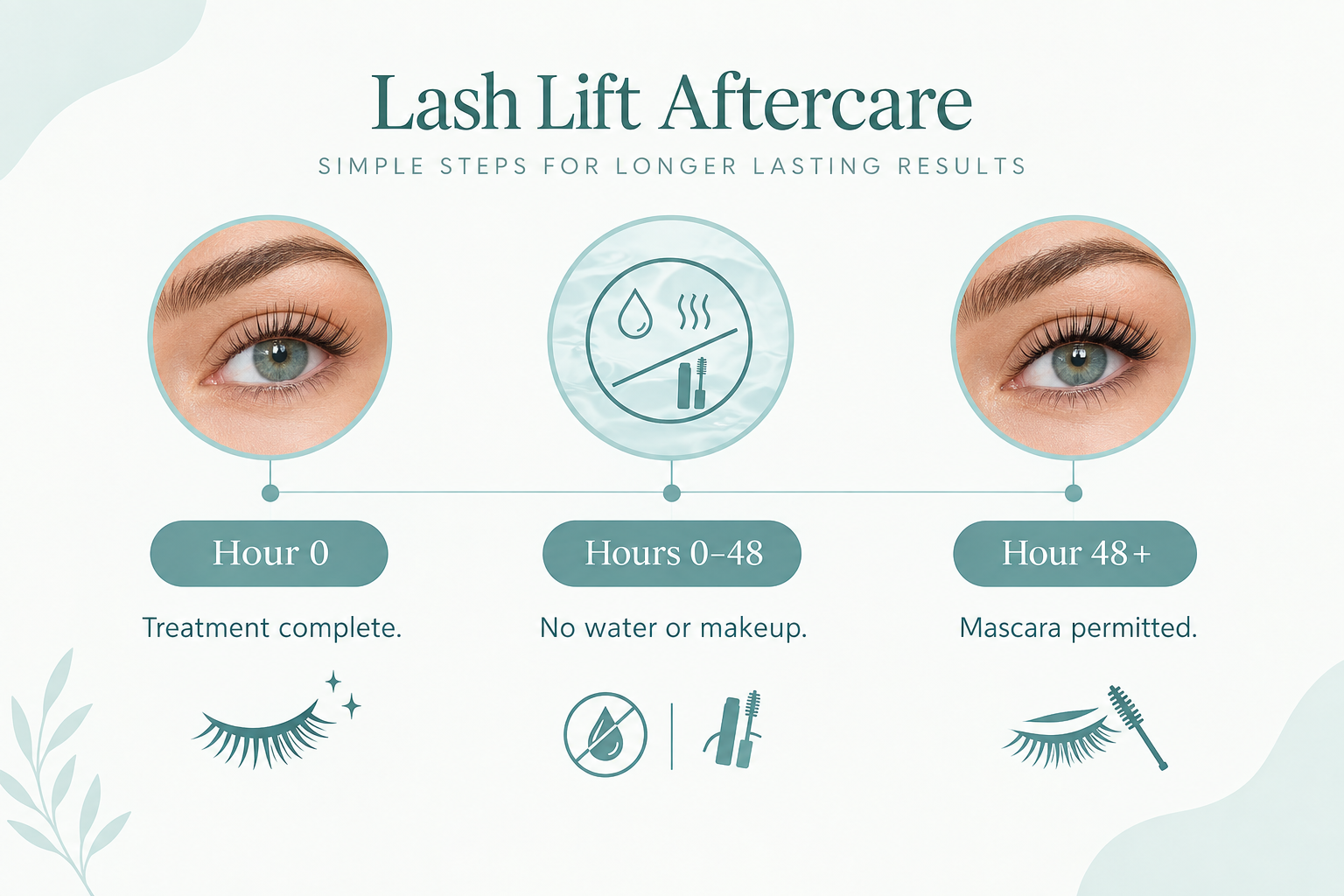
Yes, you can wear mascara on lifted lashes, but not immediately after the treatment. Most lash technicians advise waiting a minimum of 24 hours before applying any eye makeup, and many recommend 48 hours to be cautious. During this window, the lashes need to remain dry and free from products so the chemical bonds set correctly. Applying mascara too soon — particularly a formula that contains water or oils — introduces moisture and ingredients that can partially undo the lift before it has fully stabilised.
Once the waiting period has passed, mascara is generally safe and can actually enhance the lifted appearance. Many people find that a lash lift reduces or eliminates their need for mascara on a daily basis, since the curl and definition are already present. For those who still prefer mascara, choosing the right type is the most important practical decision.
Which Mascara Formulas Are Safe After a Lash Lift?
Water-based mascaras are the most compatible option for lifted lashes. These formulas apply easily, do not require heavy-duty removal, and are less likely to weigh the lashes down or introduce ingredients that break down the lift over time. Look for mascaras labelled as gentle, tubing, or water-based, and check that the formula does not contain conditioning oils such as castor oil, argan oil, or coconut oil in significant concentrations.
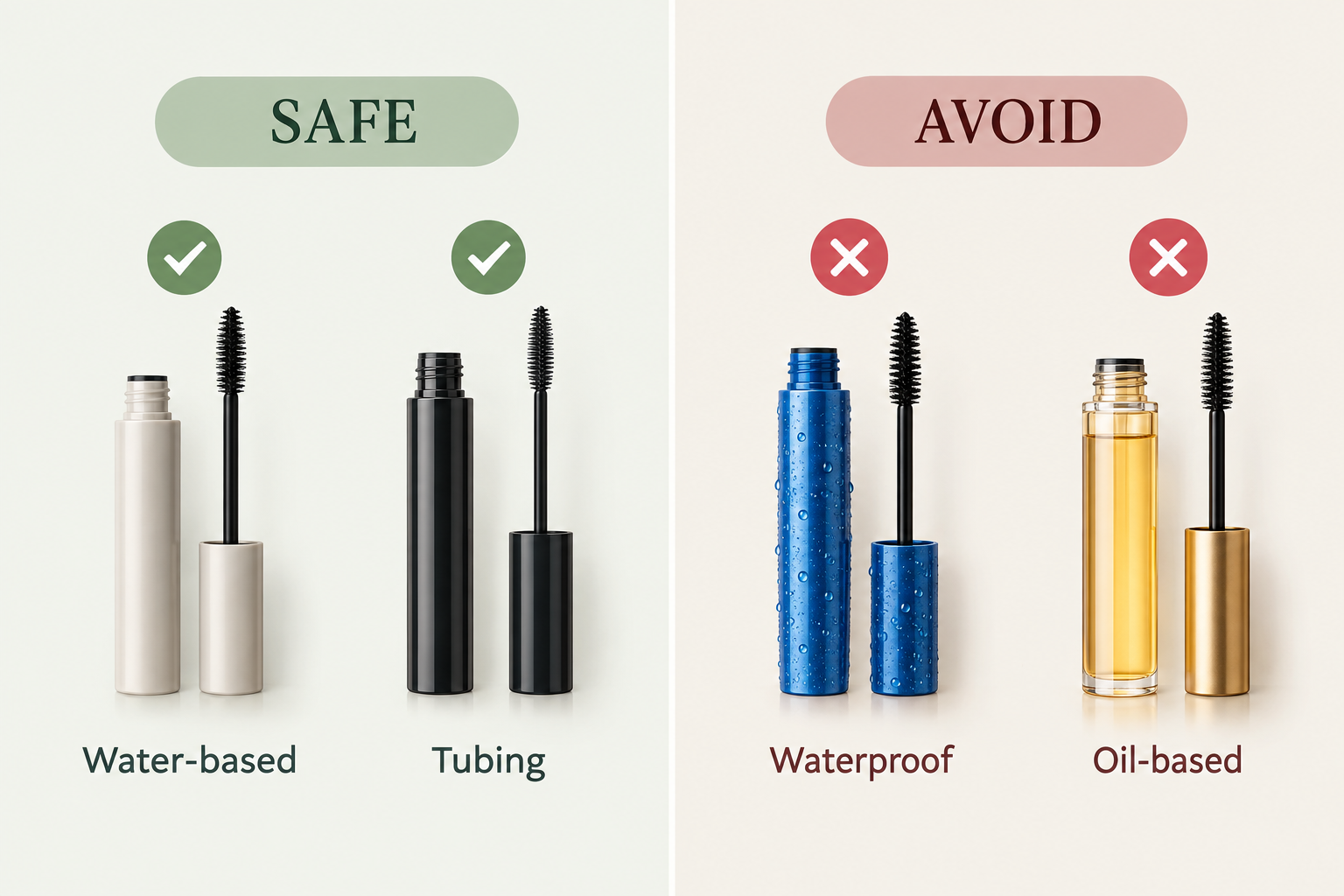
Tubing mascaras are particularly well-suited to lash lifts. Rather than coating the lash with pigmented wax or film, tubing formulas wrap small polymer tubes around each lash. These tubes slide off cleanly with warm water, which means removal requires minimal rubbing or mechanical pressure — an important advantage when you are trying to preserve a lift.
Fibre mascaras can add length and volume, but some formulations are difficult to remove without oil-based cleansers, which can compromise the lift. If you choose a fibre mascara, confirm that it is removable with a gentle water-based cleanser before committing to regular use.
What Types of Mascara Should You Avoid?
Waterproof mascara is the formula most commonly associated with reduced lash lift longevity. Waterproof formulas are designed to resist water and humidity, which means they require oil-based or solvent-based removers to break down effectively. Repeated use of these removers around the lash line introduces oils and solvents that can gradually soften the chemical bonds holding the lift in place, causing the curl to relax earlier than expected.
Beyond waterproof formulas, there are several other mascara types and ingredients worth approaching with caution after a lash lift:
- Oil-enriched or conditioning mascaras: Products marketed as nourishing or conditioning often contain oils that can weaken the lift over time with repeated application.
- Lash-growth mascaras with heavy serums: Some formulas include peptides or prostaglandin analogues that may affect lash behaviour; check with your technician if you are unsure.
- Mascaras requiring oil-based removers: The removal process is often more damaging to a lift than the mascara itself.
- Very heavy or volumising formulas: Thick, heavy mascaras can weigh lifted lashes down over time, particularly if applied in multiple coats.
How to Apply and Remove Mascara Without Damaging Your Lift
Application technique affects lash lift longevity as much as formula choice. When applying mascara to lifted lashes, use a light hand and avoid pressing the wand against the lash root. Wiggling the wand from root to tip in a single upward motion helps coat the lash without dragging it downward or sideways. Applying one or two thin coats rather than building up heavy layers reduces the weight placed on each lash.
Removal is where most damage occurs. Rubbing the eye area with a cotton pad soaked in micellar water or makeup remover creates friction and mechanical stress on the lashes. Instead, soak a cotton pad and hold it gently against the lashes for several seconds to allow the product to dissolve before wiping. A soft, downward press-and-release motion is less disruptive than a side-to-side rubbing action. Avoid pulling or tugging at the lashes during removal.
Oil-free micellar water is generally the safest daily cleanser for lifted lashes. If you use a dedicated eye makeup remover, check that it is oil-free and does not contain alcohol in high concentrations, as both oils and harsh solvents can affect the lift over repeated use.
Lash Lift Aftercare: The First 24 to 48 Hours
The aftercare period immediately following a lash lift is the most critical window for protecting your results. During the first 24 to 48 hours, lash technicians typically advise avoiding all of the following:
- Water, steam, and humidity — including showers, swimming, saunas, and steam rooms
- Eye makeup of any kind, including mascara, eyeliner, and eyeshadow
- Eye creams, serums, or any skincare product applied near the lash line
- Rubbing or touching the eye area
- Sleeping face-down, which can press the lashes against a pillow and distort the curl
These restrictions exist because the chemical bonds reformed during the neutralising step continue to stabilise for up to 48 hours after the appointment. Introducing moisture or product during this window can cause the bonds to shift before they have fully set, resulting in a weaker or uneven lift. Following aftercare instructions carefully during this period is one of the most effective ways to maximise how long the results last.
How Long Does a Lash Lift Last and Does Mascara Affect Longevity?
A lash lift typically lasts between six and eight weeks, though individual results vary depending on the natural lash growth cycle, the skill of the technician, the products used, and how well aftercare is followed. Some people find their lift holds well for the full eight weeks; others notice the curl beginning to relax after four to five weeks, particularly if they have fast lash turnover or fine, straight lashes that are more resistant to holding a curl.
Mascara use can affect longevity, but the relationship is not straightforward. Wearing a compatible water-based mascara and removing it gently is unlikely to significantly shorten the life of a well-executed lift. Regularly using waterproof mascara, applying oil-based removers, or rubbing the eye area during cleansing is more likely to cause the lift to relax earlier than expected. The cumulative effect of daily product use and removal over several weeks is more relevant than any single application.
Lash conditioning serums applied after the initial 48-hour period may help maintain lash health and flexibility, which can support the appearance of the lift over time. However, serums containing oils should be applied carefully and kept away from the lash root where possible.
Does a Lash Lift Change How Mascara Looks?
Many people find that mascara looks noticeably different — and often better — on lifted lashes compared to straight, unlifted lashes. The upward curl created by the lift means that mascara coats the lash in a position that naturally opens the eye, making the lashes appear longer and the eyes more awake. On straight lashes, mascara can sometimes clump or weigh the lash down; on lifted lashes, the same formula tends to sit more evenly along the length of the curl.
A lash tint applied at the same appointment as the lift darkens the lashes from root to tip, which further reduces the need for mascara. Some clients find that after a lift and tint, they only reach for mascara on occasions when they want a more dramatic look, rather than as part of their daily routine. This reduction in daily mascara use is itself beneficial for lash health and lift longevity.
Risks and Limitations of Lash Lifts to Be Aware Of
A lash lift is generally considered a low-risk treatment when performed by a trained technician using appropriate products, but it is not without potential side effects. Understanding these before booking helps set realistic expectations.
- Over-processing: If the perming solution is left on for too long or is too strong for the lash type, lashes can become dry, brittle, or over-curled. This is more likely with fine or previously chemically treated lashes.
- Skin irritation or allergic reaction: The chemicals used in lash lift solutions can cause irritation or, less commonly, an allergic reaction around the eye area. A patch test before the first treatment is advisable, particularly for those with sensitive skin or a history of contact dermatitis.
- Uneven results: Lash lifts do not always produce perfectly symmetrical results, particularly if the natural lashes vary in length or density between eyes.
- Temporary lash weakness: The chemical process can temporarily reduce lash flexibility. Lashes may feel slightly more fragile in the days immediately following the treatment.
- Incompatibility with lash extensions: A lash lift cannot be applied over lash extensions. Extensions must be fully removed and the natural lashes allowed to recover before a lift is performed.
Anyone with a current eye infection, recent eye surgery, or a known sensitivity to perming chemicals should discuss suitability with a qualified technician or healthcare professional before proceeding.
Alternatives to Mascara After a Lash Lift
For those who want to enhance their lashes after a lift without relying on mascara, several options are worth considering. A lash tint applied at the same appointment is the most straightforward — it darkens the lashes permanently until they shed, eliminating the need for mascara for many people. Tinting uses a semi-permanent dye and typically lasts the same duration as the lift itself.
Lash serums containing peptides or biotin may help support lash health and thickness over time, though evidence for significant growth effects from cosmetic serums is limited. These are best used as a maintenance tool rather than a replacement for mascara volume.
For those who want more dramatic volume or length than a lift alone provides, lash extensions remain an alternative — though extensions and lifts are not used together, and extensions require their own specific aftercare and maintenance schedule. Some people alternate between the two treatments depending on the occasion or season.
Frequently Asked Questions
How long after a lash lift can I wear mascara?
Most technicians recommend waiting at least 24 hours, and ideally 48 hours, before applying mascara after a lash lift. This allows the chemical bonds to fully set and reduces the risk of the lift relaxing prematurely.
Can waterproof mascara ruin a lash lift?
Waterproof mascara itself does not immediately ruin a lift, but the oil-based or solvent-based removers needed to take it off can gradually weaken the chemical bonds that hold the curl in place. Regular use of waterproof mascara is likely to shorten the lifespan of a lash lift over time.
What is the best mascara to use after a lash lift?
Water-based mascaras and tubing mascaras are generally considered the most compatible options. They apply easily, do not require harsh removers, and are less likely to weigh the lashes down or introduce ingredients that affect the lift.
Can I use micellar water to remove mascara after a lash lift?
Oil-free micellar water is one of the gentler options for removing mascara from lifted lashes. Apply it by holding a soaked cotton pad against the lashes rather than rubbing, and choose a formula that does not contain oils or alcohol in significant concentrations.
Will mascara make my lash lift last longer or shorter?
Using a compatible mascara and removing it gently is unlikely to significantly shorten a well-executed lift. However, using waterproof formulas, oil-based removers, or rubbing the eye area during cleansing can cause the curl to relax earlier than expected over the course of several weeks.
Can I use a lash serum after a lash lift?
Lash serums can generally be used after the initial 48-hour aftercare period has passed. Avoid serums that contain heavy oils, and apply them carefully to avoid saturating the lash root. If you are unsure whether a specific product is compatible, check with your lash technician before use.
Do I still need mascara after a lash lift and tint?
Many people find that a lash lift combined with a tint provides enough definition and darkness that they no longer need mascara for everyday wear. Whether mascara is still needed depends on personal preference and the desired level of drama.
Making the Most of Your Lash Lift Results
A lash lift can be a practical, low-maintenance treatment for people who want defined, curled lashes without the daily effort of a lash curler or the upkeep of extensions. Mascara is entirely compatible with a lash lift once the initial aftercare period has passed — the key is choosing a water-based or tubing formula, applying it with a light hand, and removing it gently with an oil-free cleanser. Avoiding waterproof mascara and oil-based removers is the single most effective habit for preserving the lift over its full lifespan.
If you are considering a lash lift for the first time, a consultation with a qualified and experienced lash technician is the best starting point. A technician can assess your natural lash type, recommend the most appropriate rod size and solution strength, and give you personalised aftercare guidance based on your routine and the products you already use. Taking the time to understand what the treatment involves — and what to avoid afterwards — makes a meaningful difference to how satisfied you are with the results.


