
How to Choose a Laser Clinic in Manchester: What to Look For Before You Book
Choosing a laser clinic in Manchester is a decision that deserves careful thought. Laser treatments — whether for hair removal, skin resurfacing, pigmentation, vascular concerns, or acne scarring — can deliver meaningful results when performed correctly, but the same technology carries real risks in the wrong hands. This guide explains what to look for in a reputable provider, what questions to ask before committing, and how to set realistic expectations so you can make an informed choice.
Key Takeaways
- Practitioner qualifications and clinical oversight matter more than price or promotional offers when selecting a laser provider.
- Different laser technologies suit different skin concerns and skin types — no single device is appropriate for every patient or every condition.
- A thorough consultation, including a skin assessment and medical history review, should always precede any laser treatment.
- Realistic expectations, an understanding of likely downtime, and awareness of potential risks are essential before you proceed.
- Regulation of laser treatments in the UK is evolving; understanding the current framework helps you identify safer providers.
Why Choosing the Right Laser Provider Matters
Laser devices deliver concentrated light energy to targeted tissue — whether that is a hair follicle, a pigmented lesion, a blood vessel, or the surface of the skin. When parameters such as wavelength, pulse duration, and energy level are correctly matched to the patient’s skin type and the condition being treated, outcomes can be effective and side effects manageable. When those parameters are wrong, or when the practitioner lacks the clinical knowledge to recognise contraindications, the consequences can include burns, post-inflammatory hyperpigmentation, scarring, or worsening of the original concern. This is not a theoretical risk; it is a documented pattern in aesthetic medicine, particularly where treatments have been performed without adequate training or clinical oversight.
Manchester has a large and varied aesthetic market, ranging from medically led clinics with consultant dermatologists to beauty salons offering laser services with minimal clinical governance. The variation in standards is significant, which makes it important to understand what distinguishes a genuinely safe and competent provider from one that simply markets itself well.
Understanding the Regulatory Landscape for Laser Treatments in the UK
Laser and intense pulsed light (IPL) treatments in the UK are subject to regulation, but the framework has historically been inconsistent. In England, the Care Quality Commission (CQC) regulates certain laser treatments when they are provided in a clinical context, particularly those classified as higher-risk procedures. However, many cosmetic laser services have operated outside mandatory registration requirements, which has contributed to variation in safety standards across providers.
The Keogh Review and subsequent government consultations have highlighted the need for stronger oversight of non-surgical cosmetic procedures, and legislative changes are progressing. In Scotland, Wales, and Northern Ireland, separate regulatory frameworks apply. When evaluating a laser clinic in Manchester, it is worth asking directly whether the clinic is registered with the relevant regulatory body and what governance structures are in place. A reputable clinic will be transparent about this rather than evasive.
Professional membership bodies such as the British Medical Laser Association (BMLA) and the Joint Council for Cosmetic Practitioners (JCCP) provide additional frameworks for practitioner standards, though membership is currently voluntary. Clinics affiliated with recognised professional bodies are generally more likely to maintain consistent safety and training standards.
Practitioner Qualifications: What to Look For
The qualifications of the person operating the laser device are one of the most important factors to assess. Laser treatments are not inherently safe simply because the device is sophisticated — the clinical judgement of the practitioner determines whether the treatment is appropriate, how it is delivered, and how complications are recognised and managed.
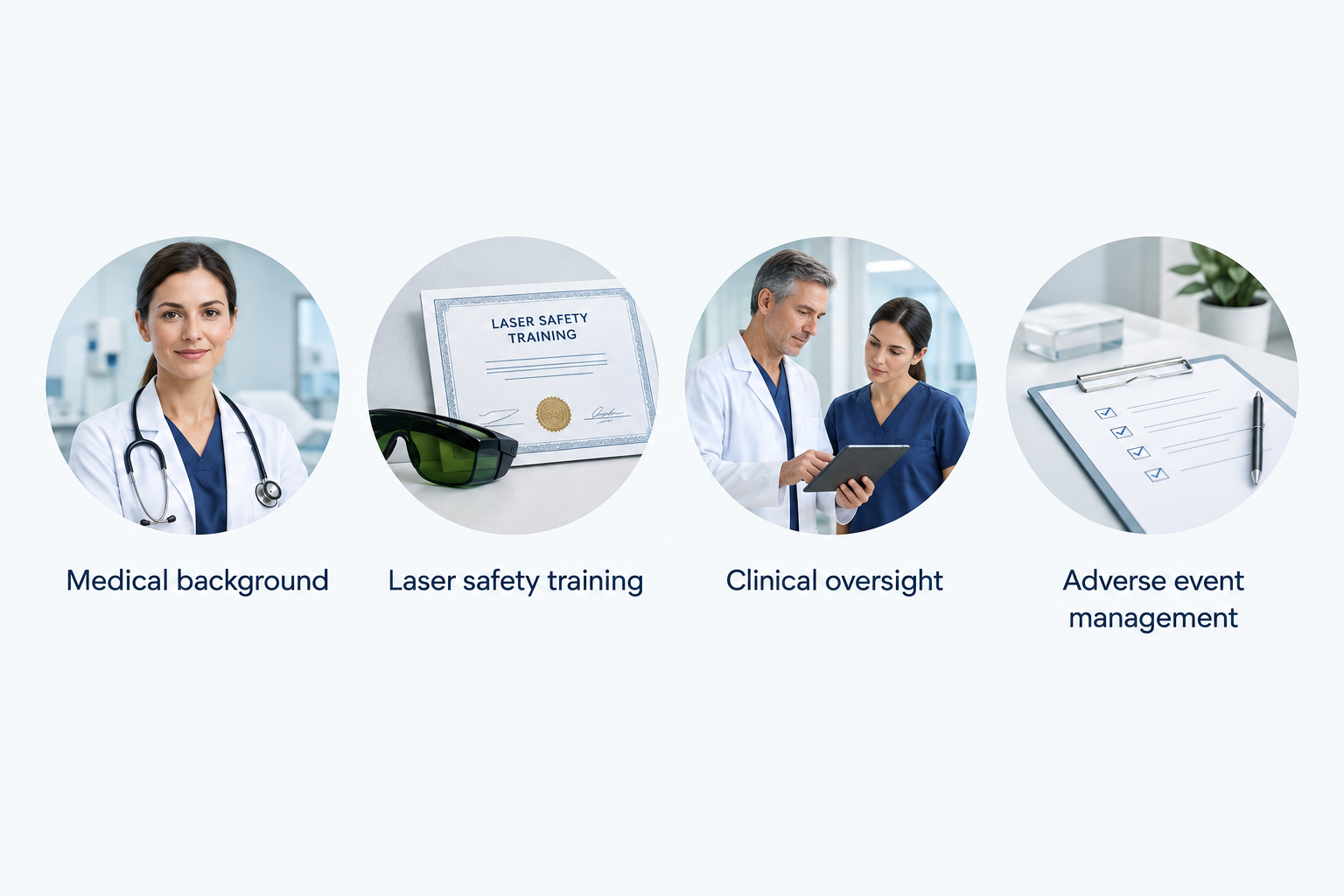
Practitioners with a background in medicine, nursing, or clinical science who have completed recognised laser safety and clinical training are generally better placed to assess suitability, manage adverse events, and adapt treatment parameters to individual patients. Look for evidence of formal laser training, ideally including a recognised laser safety qualification such as those aligned with the Laser Institute of America or equivalent UK frameworks. Some clinics employ or are supervised by consultant dermatologists or plastic surgeons, which provides an additional layer of clinical oversight for complex cases.
It is reasonable to ask a clinic the following before booking:
- What are the qualifications of the practitioner who will perform the treatment?
- What laser safety training have they completed, and how recently?
- Is there a medically qualified practitioner available for consultation or oversight?
- How does the clinic manage adverse events or complications?
A clinic that is reluctant to answer these questions clearly, or that deflects by emphasising promotional offers instead, warrants caution.
Laser Technology: Devices, Wavelengths, and What They Treat
Not all laser devices are equivalent, and understanding the basic landscape of laser technology helps you assess whether a clinic is offering an appropriate treatment for your concern. Different wavelengths of light interact with different chromophores — the targets within tissue such as melanin in hair follicles or haemoglobin in blood vessels — and the choice of device should be matched to the specific condition and the patient’s skin type.
Common Laser and Light-Based Technologies
Diode lasers, typically operating at wavelengths around 808–810 nm, are widely used for laser hair removal and are generally considered suitable for a range of skin tones, though parameters must be carefully adjusted for darker skin types to reduce the risk of pigmentary side effects. Nd:YAG lasers, operating at 1064 nm, penetrate more deeply and are often preferred for patients with darker skin tones or for vascular treatments. Alexandrite lasers at 755 nm are effective for hair removal and pigmentation in lighter skin types but carry a higher risk of adverse effects in darker skin. Fractional lasers, including fractional CO2 and fractional erbium devices, are used for skin resurfacing, acne scarring, and texture improvement, and require careful patient selection and post-treatment care.
Intense pulsed light (IPL) devices are sometimes grouped with lasers in clinic marketing, but IPL is technically a broadband light source rather than a true laser. IPL can be effective for certain pigmentation concerns, redness, and hair removal in appropriate candidates, but the broader spectrum of light it emits means that precise targeting is more challenging than with a single-wavelength laser. The distinction matters when assessing whether a clinic’s technology is genuinely suited to your concern.
Questions About Technology Worth Asking
When researching a laser clinic in Manchester, it is worth asking which specific device or devices the clinic uses, what wavelength or technology type is involved, and why that device is recommended for your particular concern. A knowledgeable practitioner should be able to explain this clearly. Clinics that use medical-grade devices from established manufacturers and that can articulate why a specific technology is appropriate for your skin type and concern are generally more credible than those that offer a single device for every condition without clinical rationale.
The Consultation Process: A Critical Safety Step
A thorough pre-treatment consultation is not a formality — it is a clinical necessity. Before any laser treatment, a competent provider should conduct a detailed assessment that includes your medical history, current medications, previous treatments, skin type classification, and the specific concern you want to address. This assessment informs whether laser treatment is appropriate for you, which technology and parameters are suitable, and what risks or contraindications apply.
Fitzpatrick skin typing — a scale that classifies skin from Type I (very fair, always burns) to Type VI (deeply pigmented, never burns) — is a standard clinical tool used to guide laser parameter selection and risk assessment. Patients with darker skin types (Fitzpatrick IV–VI) face a higher risk of post-inflammatory hyperpigmentation or hypopigmentation with certain laser technologies, and this should be discussed openly during consultation rather than minimised.
Relevant medical history factors that a responsible clinic will ask about include:
- Active skin infections, cold sores, or inflammatory skin conditions in the treatment area
- History of keloid scarring or abnormal wound healing
- Current use of photosensitising medications, including certain antibiotics, retinoids, and some herbal supplements
- Recent sun exposure or use of tanning products
- Pregnancy or breastfeeding
- History of skin cancer or suspicious lesions in the treatment area
- Use of isotretinoin (Roaccutane) within a specified period prior to treatment
- Implanted devices such as pacemakers, where relevant to the treatment area
If a clinic offers to proceed with laser treatment without conducting this level of assessment, that is a significant concern. Equally, a patch test — where a small area of skin is treated and observed before a full session — is standard practice for many laser treatments and should be offered where clinically appropriate.
Realistic Expectations: Benefits, Limitations, and Results
Laser treatments can produce meaningful improvements for a range of concerns, but results vary between individuals and are rarely instantaneous or permanent without maintenance. Understanding what is realistic for your specific concern helps you evaluate whether a clinic’s claims are credible.
Laser Hair Removal
Laser hair removal targets melanin in the hair follicle and is most effective during the active growth phase of the hair cycle. Because not all follicles are in the same phase simultaneously, multiple sessions — typically six to eight or more, spaced several weeks apart — are usually required to achieve significant reduction. Most patients experience a substantial reduction in hair density and regrowth rate, but complete permanent removal is not guaranteed for all individuals. Hormonal factors, hair colour, and skin type all influence outcomes. Maintenance sessions may be needed over time, particularly if hormonal changes occur.
Skin Resurfacing and Acne Scarring
Fractional laser treatments for skin texture, acne scarring, or fine lines work by creating controlled micro-injuries in the skin that stimulate collagen remodelling. Results develop gradually over weeks to months as the skin heals and remodels, and a course of treatments is often recommended rather than a single session. Downtime varies depending on the intensity of the treatment — ablative fractional CO2 treatments typically involve several days of redness, swelling, and skin shedding, while non-ablative fractional treatments generally involve less downtime but may require more sessions to achieve comparable results.
Pigmentation and Vascular Concerns
Laser treatment for pigmentation — such as sunspots, melasma, or post-inflammatory hyperpigmentation — requires careful assessment because some types of pigmentation can worsen with laser treatment if the wrong technology or parameters are used. Melasma in particular is a complex condition that often requires a multimodal approach rather than laser alone. Vascular concerns such as thread veins or rosacea-related redness may respond well to appropriate laser or IPL treatment, but multiple sessions are typically needed and results can vary.
Risks and Side Effects: What to Understand Before You Proceed
All laser treatments carry a risk of side effects, and a responsible clinic will discuss these openly rather than minimising them. Common side effects that may occur with various laser treatments include temporary redness, swelling, and sensitivity in the treated area, which typically resolve within hours to a few days depending on the treatment intensity. More significant side effects, which are less common but possible, include blistering, crusting, changes in skin pigmentation (either darkening or lightening), and in rare cases scarring.
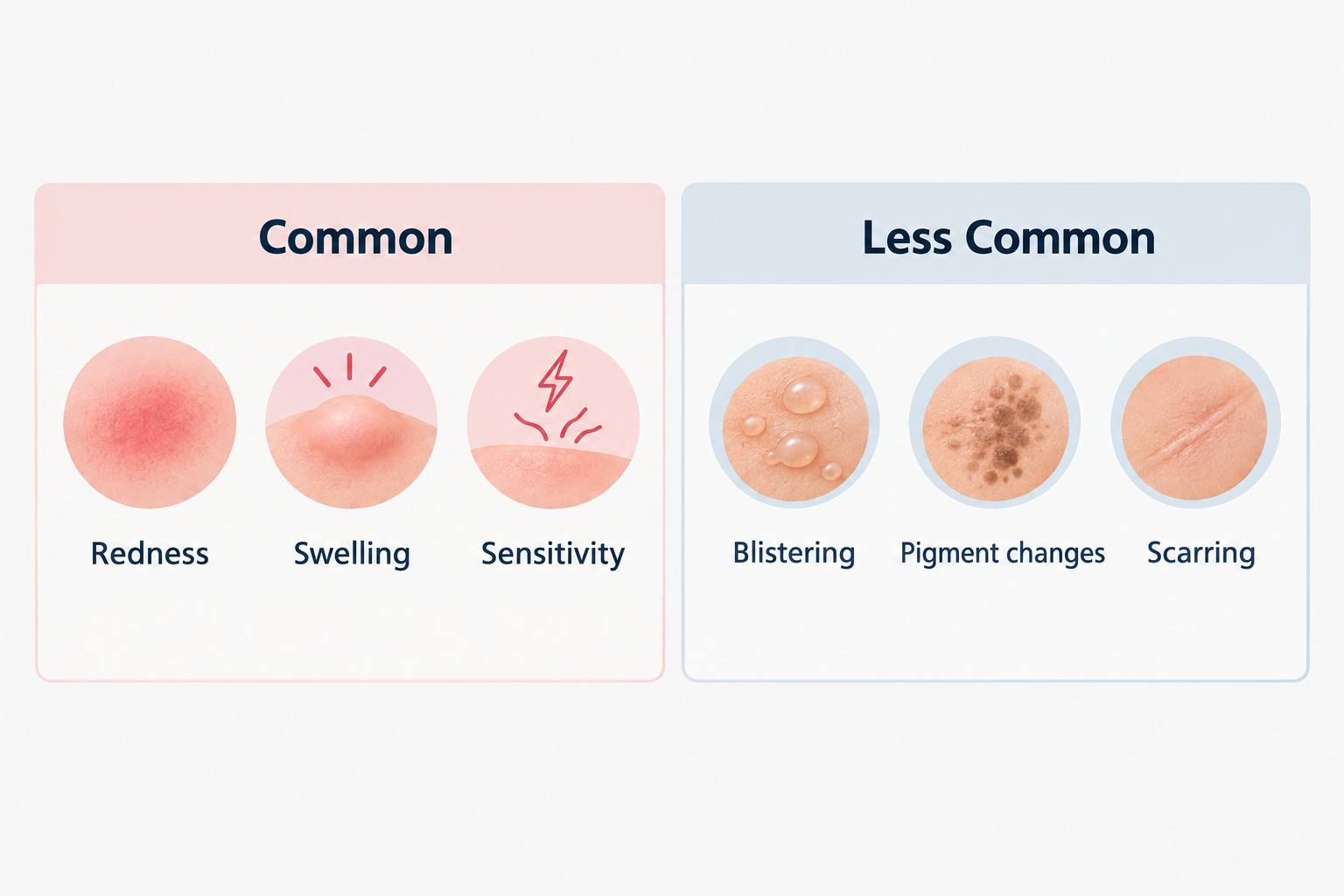
The risk of adverse effects is influenced by several factors: the type of laser used, the energy settings applied, the practitioner’s skill and clinical judgement, the patient’s skin type, and adherence to pre- and post-treatment care instructions. Sun exposure before and after treatment significantly increases the risk of pigmentary complications, which is why reputable clinics provide clear aftercare guidance and may decline to treat patients with recent sun exposure or active tans.
Understanding these risks is not a reason to avoid laser treatment if it is appropriate for your concern — it is a reason to choose a provider who takes safety seriously and who will manage your treatment with appropriate care.
Pricing, Packages, and Red Flags
Price is a legitimate consideration, but it should not be the primary factor when choosing a laser clinic. Significantly discounted laser treatments — particularly those offered through group-buying platforms or aggressive promotional campaigns — sometimes reflect compromises in device quality, practitioner training, or treatment time. This does not mean that all affordable clinics are unsafe, but it does mean that unusually low prices warrant scrutiny rather than automatic enthusiasm.
Red flags to be aware of when evaluating a laser provider include:
- Pressure to purchase packages before a consultation has taken place
- Inability or unwillingness to explain the specific device being used or the practitioner’s qualifications
- Guarantees of specific results or claims that a treatment is risk-free
- No patch test offered for treatments where one is clinically appropriate
- Consultation conducted entirely online or by non-clinical staff without a face-to-face skin assessment
- No written aftercare instructions or follow-up process
Reputable clinics are generally transparent about their pricing structure, explain what is included in a package, and do not pressure patients into committing before they have had adequate time to consider their options.
Alternatives to Laser Treatment Worth Considering
Laser is not the only option for many of the concerns that patients seek to address. Depending on your specific goal, alternatives may be worth discussing during a consultation to ensure you are choosing the most appropriate approach.
For hair removal, intense pulsed light (IPL) and electrolysis are established alternatives. IPL can be effective for suitable candidates, while electrolysis is the only method currently recognised as capable of permanent hair removal for individual follicles, though it is time-intensive for larger areas. For pigmentation concerns, topical treatments including prescription-strength hydroquinone, azelaic acid, or retinoids may be appropriate either as standalone options or in combination with laser. Chemical peels can address certain types of superficial pigmentation and skin texture concerns with a different risk and recovery profile. For vascular concerns, sclerotherapy remains a well-established option for leg veins. For skin rejuvenation and collagen stimulation, radiofrequency microneedling, ultrasound-based treatments, and medical-grade skincare programmes may be relevant alternatives or complementary approaches depending on the patient’s goals and skin condition.
A thorough consultation at a reputable clinic should include a discussion of whether laser is the most appropriate option for your concern, or whether an alternative or combination approach may better serve your goals.
Frequently Asked Questions
How many laser sessions will I need?
The number of sessions depends on the treatment type and the concern being addressed. Laser hair removal typically requires six to eight or more sessions for significant reduction, spaced several weeks apart to target different phases of the hair growth cycle. Skin resurfacing or pigmentation treatments may require fewer sessions but vary considerably based on the condition’s severity and the technology used. Your practitioner should give you a realistic estimate during consultation rather than a fixed guarantee.
Is laser treatment suitable for darker skin tones?
Laser treatment can be performed on darker skin tones, but it requires careful selection of the appropriate technology and parameters. Nd:YAG lasers at 1064 nm are generally considered safer for Fitzpatrick skin types IV–VI than shorter-wavelength devices. The risk of post-inflammatory hyperpigmentation is higher in darker skin, which makes practitioner experience and correct device selection particularly important. A thorough skin assessment before treatment is essential.
What should I do to prepare for a laser treatment?
Preparation varies by treatment type, but general guidance typically includes avoiding sun exposure and tanning products for several weeks before treatment, discontinuing certain topical products such as retinoids as advised by your practitioner, and shaving the treatment area for hair removal sessions. Your clinic should provide specific written pre-treatment instructions tailored to the treatment you are having.
Can laser treatment be combined with other aesthetic treatments?
In some cases, laser treatments can be part of a broader treatment plan that includes other modalities such as medical-grade skincare, chemical peels, or injectable treatments. However, the timing and sequencing of combined treatments matters clinically, and this should be planned by a qualified practitioner rather than self-directed. Some combinations require a recovery interval between treatments to allow the skin to heal adequately.
What aftercare is required following laser treatment?
Aftercare typically includes keeping the treated area clean, applying recommended soothing or healing products, avoiding sun exposure and using high-SPF sun protection consistently, and avoiding heat sources such as saunas or intense exercise for a specified period. Specific aftercare requirements vary by treatment type and intensity. A reputable clinic will provide clear written aftercare instructions and should be accessible if you have concerns during recovery.
How do I know if a Manchester laser clinic is reputable?
Look for transparent information about practitioner qualifications and laser training, a thorough consultation process that includes a medical history review and skin assessment, clear explanation of the specific device being used and why it is appropriate for your concern, willingness to discuss risks and realistic outcomes, and a patch test where clinically appropriate. Membership of recognised professional bodies and CQC registration where applicable are additional positive indicators.
Making a Well-Informed Decision About Laser Treatment in Manchester
Selecting a laser clinic in Manchester is ultimately about finding a provider whose clinical standards, transparency, and approach to patient safety give you confidence — not simply one that offers the lowest price or the most persuasive marketing. The questions outlined in this guide are not obstacles to booking; they are the foundation of a safe and effective treatment experience.
A reputable clinic will welcome informed patients, answer questions clearly, conduct a thorough pre-treatment assessment, and set realistic expectations about what laser treatment can and cannot achieve for your specific concern. If a clinic is evasive about qualifications, dismissive of risks, or pressures you to commit before you feel ready, those are meaningful signals worth taking seriously.
If you are considering laser treatment for hair removal, pigmentation, skin resurfacing, vascular concerns, or another indication, a face-to-face consultation with a qualified practitioner is the appropriate starting point. This allows a proper assessment of your skin type, medical history, and suitability, and gives you the opportunity to ask questions and make a genuinely informed decision before proceeding.


