
Can You Buy Syringes at a Pharmacy in the UK? Rules, Restrictions and What You Need to Know
Whether you manage a medical condition at home, care for a family member, or are simply trying to understand UK pharmacy rules, the question of whether you can buy syringes over the counter is a practical one. The short answer is that syringes and needles are generally available to purchase at pharmacies in the UK without a prescription, but the rules around who can buy them, how many, and under what circumstances are more nuanced than many people expect. This article explains the legal framework, the role of needle exchange programmes, the difference between medical and cosmetic use, and why attempting to self-administer injectable treatments at home carries serious risks.
Key Takeaways
- Syringes and hypodermic needles can be purchased at many UK pharmacies without a prescription, but individual pharmacies may apply their own policies on age, quantity, and purpose.
- NHS needle exchange programmes provide free sterile injecting equipment to people who inject drugs, without requiring a prescription or purchase.
- Purchasing a syringe is legal; however, using it to self-administer prescription-only medicines or unlicensed injectable substances at home raises separate legal and safety concerns.
- Cosmetic injectables such as botulinum toxin and dermal fillers are prescription-only medicines in the UK and must be administered by a qualified, regulated practitioner.
- If you need syringes for a legitimate medical purpose such as insulin administration, your GP or diabetes nurse can advise on the most appropriate supply route.
Are Syringes Available Over the Counter in the UK?
Syringes and hypodermic needles are not classified as prescription-only items under UK medicines law. This means that, in principle, a member of the public can walk into a pharmacy and purchase them without presenting a prescription. In practice, however, individual pharmacies exercise professional discretion. A pharmacist may ask about the intended use, may decline to sell large quantities without a clear medical reason, or may refer the customer to a more appropriate supply route such as a needle exchange service or a GP surgery.
Most community pharmacies stock insulin syringes, standard hypodermic syringes, and pen needles. Specialist sizes, gauges, and syringe types used in clinical settings may not be routinely available on the shelf and may need to be ordered. If you are buying syringes for a specific medical purpose, it is worth calling ahead to confirm availability and to explain your needs so the pharmacist can advise appropriately.
There is no universal minimum age set by law for purchasing syringes in the UK, but many pharmacies apply their own age policies, particularly for needles and injecting equipment, and may decline to sell to younger customers without a clear medical explanation. The pharmacist’s professional judgement is the governing factor in these situations.
Why Might Someone Need to Buy Syringes at a Pharmacy?
There are several legitimate medical reasons why a person might need to purchase syringes from a pharmacy. The most common include:
- Insulin administration: People with diabetes who self-inject insulin may need syringes or pen needles. In many cases these are supplied on prescription or via a GP, but some individuals purchase them directly.
- Other self-injectable medicines: Certain medicines for conditions such as rheumatoid arthritis, multiple sclerosis, fertility treatment, or blood clotting disorders are administered by injection at home. These are typically supplied with the medication, but replacement needles may occasionally be needed.
- Veterinary use: Some people purchase syringes for use with animals, particularly in agricultural or smallholder settings.
- Harm reduction: People who inject drugs may seek sterile equipment to reduce the risk of blood-borne virus transmission. Needle exchange programmes exist specifically for this purpose and are generally a more appropriate route than retail purchase.
- Medical or scientific equipment: Syringes are used in a range of non-injection contexts including laboratory work, irrigation, and feeding assistance.
Understanding the intended use helps the pharmacist provide appropriate advice and, where relevant, direct the customer to the most suitable supply route.
NHS Needle Exchange Programmes: A Free Alternative
The NHS operates needle and syringe programmes, commonly known as needle exchange schemes, across England, Scotland, Wales, and Northern Ireland. These services provide free sterile injecting equipment to people who inject drugs, with the primary aim of reducing the transmission of blood-borne viruses such as HIV and hepatitis C. No prescription is required, and in most cases no formal identification is needed either.
Needle exchange services are available through many community pharmacies, drug treatment services, and some GP surgeries. The equipment provided typically includes syringes, needles, swabs, and sharps disposal containers. Many services also offer additional support such as testing for blood-borne viruses, referral to drug treatment programmes, and access to naloxone, a medicine that can reverse opioid overdose.
If you or someone you know injects drugs and needs sterile equipment, a needle exchange programme is generally a safer, more appropriate, and more supportive route than purchasing syringes over the counter. Your local pharmacy, GP surgery, or NHS 111 can help you locate the nearest service.
Syringes and Cosmetic Injectables: Understanding the Legal Boundary
One area where confusion frequently arises is the relationship between syringe availability and cosmetic injectable treatments. Some people search for information about buying syringes at a pharmacy because they are considering self-administering cosmetic treatments such as dermal fillers or botulinum toxin at home. It is important to understand that while the syringe itself may be purchasable, the substances used in these treatments are subject to entirely separate and much stricter legal controls.
Botulinum toxin products, including those used for cosmetic purposes such as reducing the appearance of lines and wrinkles, are classified as prescription-only medicines (POMs) in the UK. This classification was reinforced by changes introduced in 2021 and 2022, which require that botulinum toxin for cosmetic use be prescribed by a qualified prescriber following a face-to-face or remote consultation, and administered by an appropriately trained practitioner. Purchasing or possessing botulinum toxin without a valid prescription is illegal.
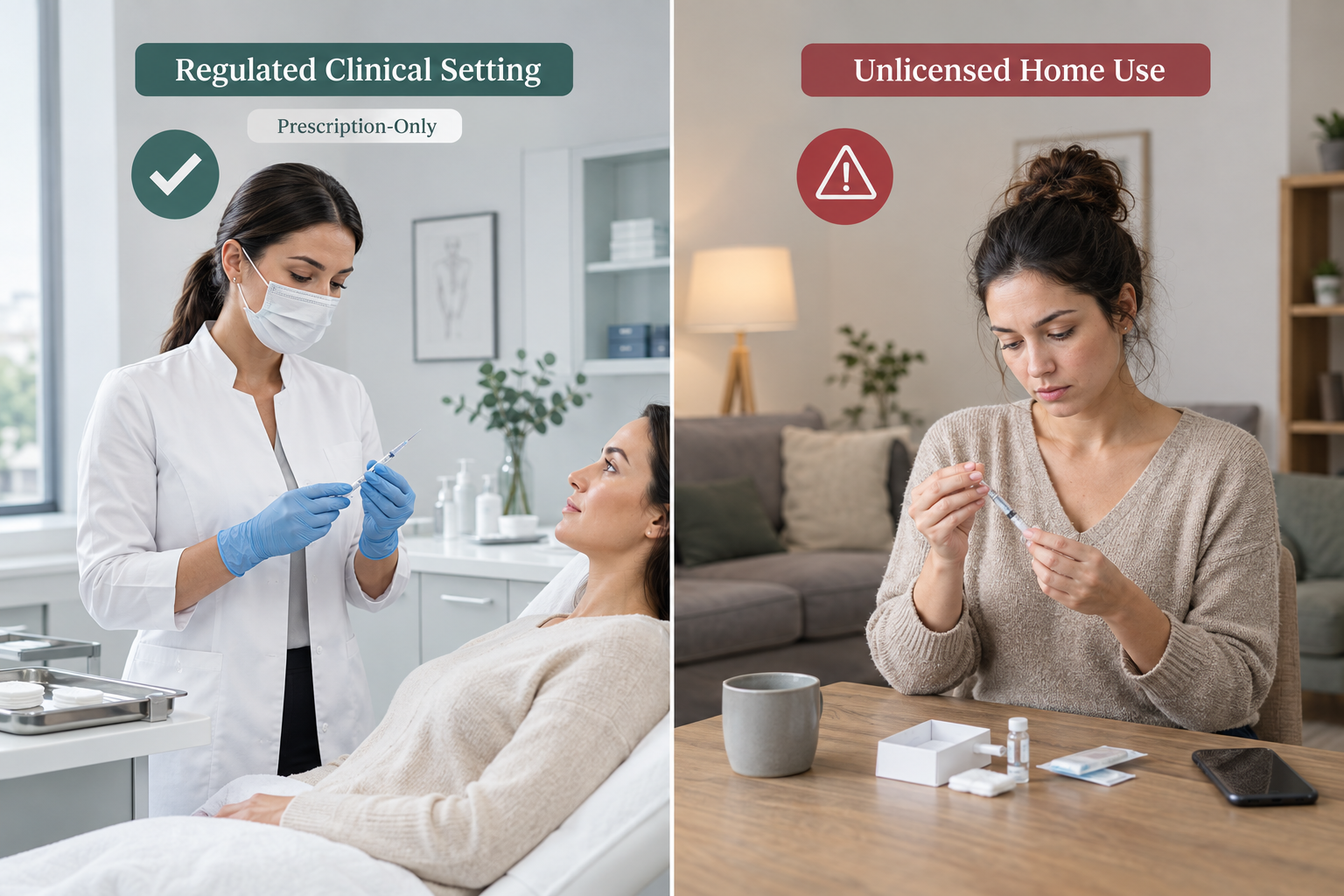
Dermal fillers occupy a different regulatory position. As of October 2023, administering certain dermal fillers in England became a licensable activity under the Health and Care Act 2022, meaning that practitioners must hold a licence issued by a local authority to perform these procedures. The regulations are intended to address the significant harm caused by unqualified individuals performing filler injections, including cases of vascular occlusion, tissue necrosis, and blindness. Scotland, Wales, and Northern Ireland have their own regulatory frameworks, which continue to evolve.
Even if a person were able to obtain both a syringe and a filler product, self-administration of dermal fillers carries extreme risks. Injecting into the face without detailed anatomical knowledge, sterile technique, and the ability to recognise and manage complications is genuinely dangerous. Vascular occlusion, where filler blocks a blood vessel, can cause permanent tissue damage or vision loss within minutes. These are not theoretical risks; they are documented outcomes that occur even in clinical settings and require immediate specialist intervention.
What About Buying Syringes Online in the UK?
Syringes and needles are available from online retailers in the UK, including medical supply companies and some general marketplaces. The same principle applies as with pharmacy purchase: the syringe itself is not a prescription item. However, buying injecting equipment online without any professional guidance removes the opportunity for a pharmacist to ask about intended use, provide harm reduction advice, or identify a situation where a different supply route would be more appropriate.
Online purchase of the substances used in injectable treatments is a separate and more serious matter. Websites selling botulinum toxin, dermal fillers, or other prescription-only injectables directly to the public without a valid prescription are operating outside UK law. Products purchased through these channels may be counterfeit, contaminated, incorrectly stored, or of unknown concentration. There is no reliable way for a consumer to verify the authenticity or safety of injectable products purchased outside a regulated supply chain.
The Medicines and Healthcare products Regulatory Agency (MHRA) regularly issues warnings about illegal online sales of prescription medicines and has taken enforcement action against suppliers of unlicensed injectable products. If you encounter a website offering to sell botulinum toxin or prescription fillers without requiring a prescription, this is a significant warning sign.
Safe Disposal of Syringes and Sharps in the UK
Disposing of used syringes and needles safely is a legal and public health responsibility. Used sharps must not be placed in household recycling or general waste bins, as this creates a risk of needle-stick injury to waste handlers and the public. The correct approach is to use an approved sharps disposal container, sometimes called a sharps bin or yellow bin, which is puncture-resistant and sealable.
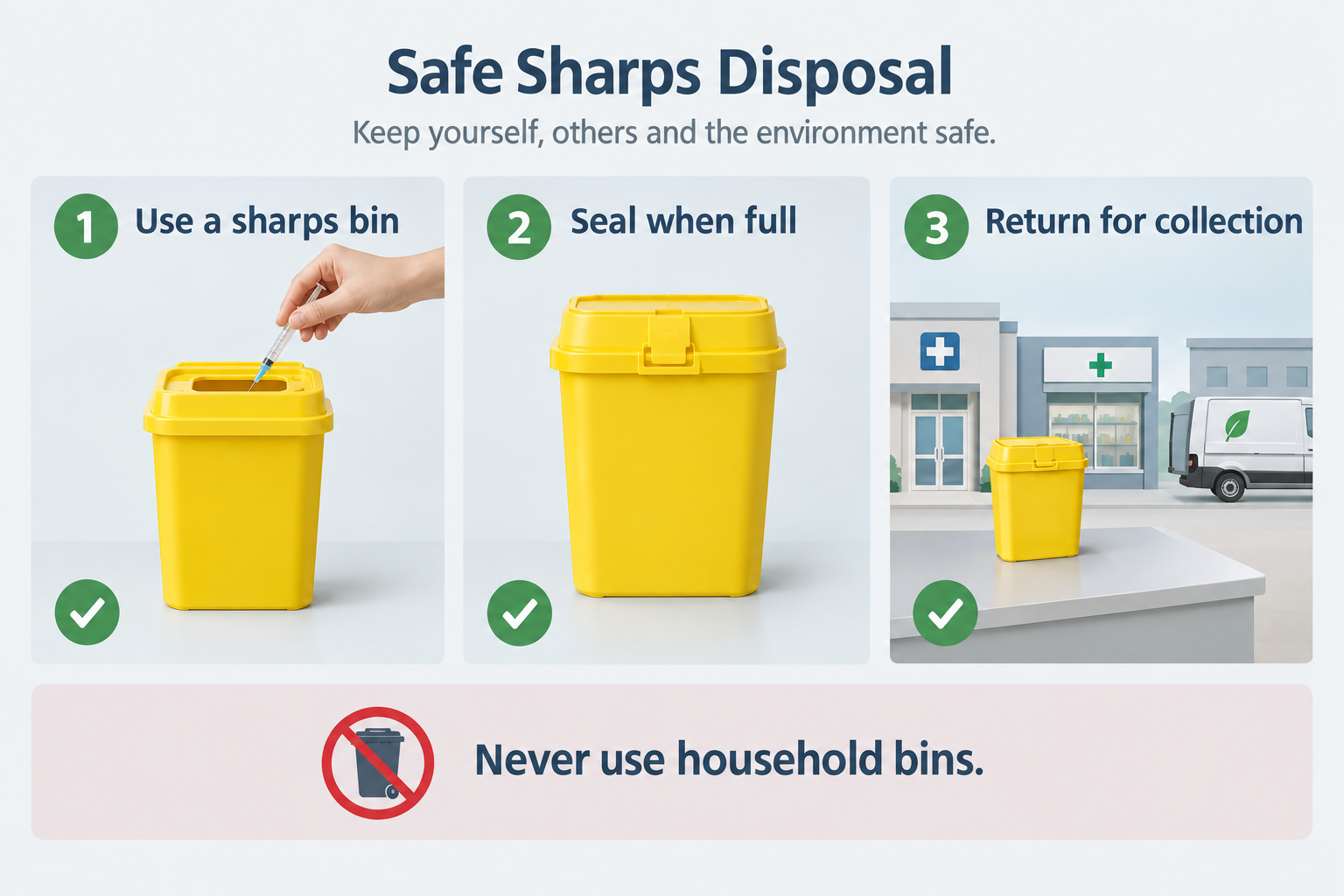
In England, people who use sharps for medical purposes at home, such as insulin-dependent diabetics, can obtain free sharps bins from their GP surgery or local council. Once full, the bin can be collected by the local council’s clinical waste service or returned to a pharmacy or GP surgery depending on local arrangements. Needle exchange services also accept used equipment and provide sharps bins as part of their standard provision.
It is worth checking with your local council or GP surgery about the specific arrangements in your area, as collection and disposal services vary by region.
When to Speak to a GP or Healthcare Professional
If you need syringes for a medical condition, the most appropriate first step is usually to speak to your GP, practice nurse, or relevant specialist. For conditions such as diabetes, the GP or diabetes care team can advise on the most suitable type of needle or syringe, ensure you receive the correct equipment on prescription where applicable, and provide training in safe injection technique. Self-injection training is a standard part of care for many conditions and significantly reduces the risk of complications such as infection, lipodystrophy (changes in fat tissue at injection sites), and incorrect dosing.
If you are caring for someone who requires injections at home, the same principle applies. District nurses and community healthcare teams can provide guidance, training, and in some cases carry out injections themselves if home administration is not appropriate.
Cosmetic Injectables: Why Professional Administration Matters
The growing availability of information about cosmetic injectable treatments online has led some people to consider whether these procedures could be performed at home. The regulatory changes described earlier reflect a recognition by UK authorities that this is not a safe or legal approach. Understanding why professional administration matters goes beyond legal compliance.
Botulinum toxin treatment for cosmetic purposes, such as reducing dynamic lines in the forehead, glabellar area, or around the eyes, requires a thorough understanding of facial anatomy, muscle function, and the pharmacological properties of the specific product being used. The dose, injection depth, and placement all affect the outcome and the risk of complications such as eyelid ptosis (drooping), asymmetry, or unwanted spread of effect. These decisions require clinical training and cannot be safely replicated from online tutorials or product instructions.
Dermal filler treatments carry even greater anatomical risk. The face contains numerous blood vessels that, if inadvertently injected with filler, can cause immediate and potentially irreversible harm. Qualified practitioners are trained to recognise the early signs of vascular compromise and to administer hyaluronidase, an enzyme that dissolves hyaluronic acid filler, as an emergency intervention. This enzyme is itself a prescription-only medicine and would not be available to someone attempting self-treatment at home.
Choosing a qualified, regulated practitioner for cosmetic injectable treatments is not simply a matter of achieving a better aesthetic result. It is a fundamental patient safety requirement. In the UK, practitioners offering botulinum toxin treatments must be prescribers or working under the supervision of a prescriber, and from October 2023 in England, those administering certain fillers must hold a local authority licence. Checking a practitioner’s qualifications, registration with a relevant regulatory body such as the General Medical Council, Nursing and Midwifery Council, or General Dental Council, and their training in managing complications is an important step before any treatment.
Frequently Asked Questions
Do I need a prescription to buy syringes at a pharmacy in the UK?
No. Syringes and hypodermic needles are not prescription-only items under UK law, so you do not need a prescription to purchase them. However, individual pharmacies may ask about the intended use and may decline to sell in certain circumstances based on professional judgement.
Can I buy insulin syringes at a pharmacy without a prescription?
Yes, insulin syringes can generally be purchased at a pharmacy without a prescription. However, if you are managing diabetes, your GP or diabetes care team can prescribe syringes and pen needles on the NHS, which is usually the more appropriate route and avoids out-of-pocket cost.
Is it legal to buy syringes for cosmetic use in the UK?
Purchasing a syringe is legal. However, the substances used in cosmetic injectable treatments, including botulinum toxin and many dermal fillers, are subject to strict legal controls. Botulinum toxin is a prescription-only medicine, and administering certain fillers without a licence in England is now unlawful. Attempting to self-administer these treatments is both illegal and extremely dangerous.
Where can I get free needles and syringes in the UK?
NHS needle exchange programmes provide free sterile injecting equipment through many community pharmacies, drug treatment services, and some GP surgeries. No prescription is required. Contact NHS 111 or your local pharmacy to find the nearest service.
How should I dispose of used syringes safely?
Used syringes must be placed in an approved sharps disposal container and must not go into household recycling or general waste. Free sharps bins are available from GP surgeries and local councils for people who use sharps for medical purposes at home. Needle exchange services also accept used equipment.
Can I buy dermal fillers or botulinum toxin online in the UK?
Botulinum toxin is a prescription-only medicine and cannot legally be sold to the public without a valid prescription. Websites selling these products directly to consumers without a prescription are operating outside UK law. Products purchased through unregulated channels may be counterfeit, contaminated, or unsafe.
What should I do if I need injections for a medical condition at home?
Speak to your GP, practice nurse, or relevant specialist. They can advise on the most appropriate equipment, provide training in safe injection technique, and arrange prescription supply where applicable. Community nursing teams can also support home injection needs in some circumstances.
Understanding Syringe Access and Making Safe Choices
Syringes are available to purchase at pharmacies in the UK without a prescription, and this accessibility serves important public health purposes, from supporting people who self-inject medicines at home to enabling harm reduction for people who inject drugs. The legal framework around syringe purchase is relatively straightforward, but it exists alongside a much stricter set of rules governing the substances that syringes might be used to administer.
For anyone considering cosmetic injectable treatments, the key practical point is that the syringe is the least significant part of the equation. The clinical knowledge, anatomical understanding, prescribing authority, and emergency management capability of a qualified practitioner are what make these treatments reasonably safe when performed correctly. Regulatory changes in the UK over recent years have been specifically designed to protect patients from the harms associated with unqualified administration of injectable cosmetic treatments, and those protections exist for good reason.
If you have a legitimate medical need for syringes, your GP or pharmacist is the right starting point. If you are interested in cosmetic injectable treatments, a consultation with a qualified, registered practitioner is the appropriate and legally required route. Taking time to verify a practitioner’s credentials, ask about their training in complication management, and understand what a treatment realistically involves is the most important step you can take before any injectable procedure.


