
Chemical Peel Timeline: What to Expect Day by Day
Understanding the chemical peel process day by day helps you prepare realistically, manage your skin correctly during recovery, and recognise what is normal versus what warrants clinical attention. Whether you are considering a superficial, medium, or deep peel, the healing timeline differs significantly depending on peel depth, the acids used, your skin type, and how your skin responds individually. This article walks through each stage of the recovery process, explains what is happening at a cellular level, and outlines what you can reasonably expect at each point.
Key Takeaways
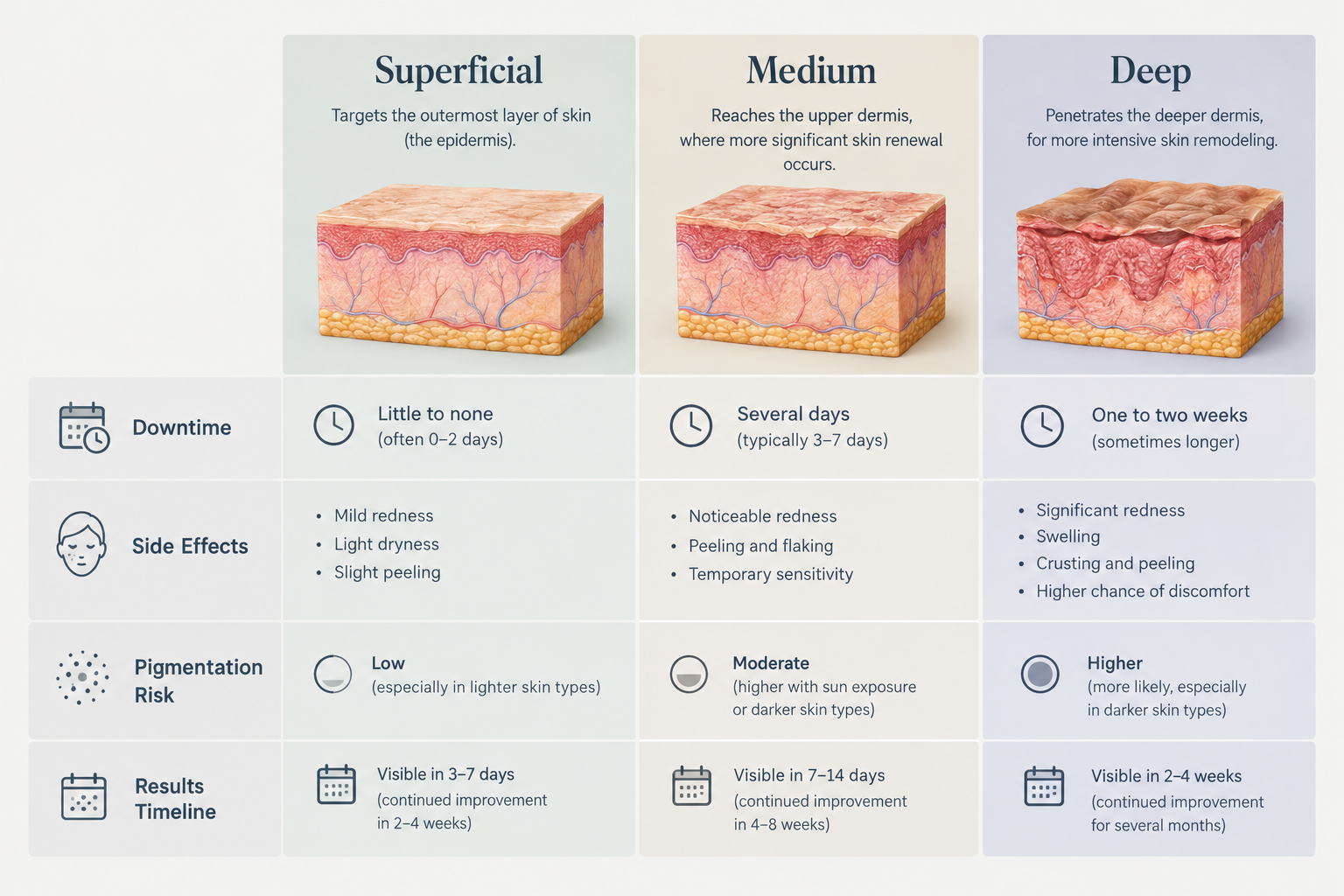
- The chemical peel recovery timeline varies considerably by peel depth: superficial peels typically resolve within three to seven days, medium-depth peels within seven to fourteen days, and deep peels may require several weeks of active healing.
- Visible peeling, redness, and tightness are expected parts of the skin renewal process, not signs that something has gone wrong.
- Strict sun avoidance and a gentle skincare routine during recovery are essential to protect the new skin and support the best possible outcome.
- Final results — including improvements in skin tone, texture, fine lines, and pigmentation — often become fully visible four to six weeks after treatment, once the skin has completed its remodelling phase.
- A qualified practitioner should assess your skin before treatment and guide your aftercare; individual responses vary and some concerns require professional review.
What a Chemical Peel Actually Does to Your Skin
A chemical peel applies an acidic solution to the skin surface to cause controlled exfoliation of damaged or aged skin cells. The depth of injury determines how much of the skin is affected and, consequently, how significant the recovery process will be. Superficial peels target only the outermost layer of the epidermis. Medium-depth peels penetrate into the papillary dermis. Deep peels reach the mid-reticular dermis, triggering a more substantial wound-healing response.
Common chemical agents include alpha-hydroxy acids such as glycolic acid and lactic acid for superficial peels; trichloroacetic acid (TCA) at varying concentrations for medium-depth treatment; and phenol-based formulations for deep peels. Some practitioners use combination peels, such as the Jessner solution followed by TCA, to achieve a more controlled medium-depth result. The specific acid, its concentration, the number of layers applied, and the contact time all influence how deeply the peel penetrates and how the skin responds during recovery.
The controlled injury stimulates the skin’s natural repair mechanisms: keratinocytes migrate to resurface the treated area, collagen synthesis increases in the dermis, and melanocyte activity may be temporarily disrupted, which can help reduce areas of hyperpigmentation over time. Understanding this process helps explain why the skin looks worse before it looks better — and why patience during the recovery period matters.
Before the Peel: Preparation and Pre-Treatment Phase
Preparation begins before the appointment itself. Many practitioners recommend a pre-treatment skincare regimen in the weeks leading up to a medium or deep peel. This may include topical retinoids to prime the skin and encourage more even penetration, hydroquinone or other brightening agents to reduce the risk of post-inflammatory hyperpigmentation, and broad-spectrum sunscreen used consistently to minimise baseline sun damage.
Patients with a history of cold sores (herpes simplex virus) are typically prescribed antiviral medication before medium or deep peels, as the procedure can trigger an outbreak. Certain medications — including isotretinoin, which affects skin healing — may require a waiting period before treatment is appropriate. A thorough consultation should cover your medical history, current medications, skin concerns, and realistic expectations before any peel is performed.
On the day of treatment, the skin is cleansed and degreased to allow even acid penetration. The practitioner applies the chemical solution and monitors the skin’s response carefully. You may experience a stinging or burning sensation during application, which varies in intensity depending on peel depth. Superficial peels are generally well tolerated; medium and deep peels may require topical anaesthetic, oral sedation, or other comfort measures.
The Chemical Peel Process Day by Day: Superficial Peel Timeline
Superficial chemical peels — including low-concentration glycolic acid, lactic acid, mandelic acid, and salicylic acid peels — cause minimal disruption to the skin barrier and carry the shortest recovery period. They are often described as “lunchtime peels” because many people return to normal activities the same day, though this depends on individual skin sensitivity.
Day 1 (Treatment Day)
Immediately after a superficial peel, the skin typically appears pink or lightly flushed, similar to mild sunburn. There may be a sensation of tightness or warmth. Visible peeling is not always present with superficial peels; some people notice only subtle dryness. The practitioner will apply a soothing moisturiser and sunscreen before you leave the clinic. Makeup is generally not recommended on the day of treatment.
Days 2 to 3
Redness usually begins to settle. The skin may feel dry and slightly rough as the outermost layer of dead skin cells begins to shed. Some people notice very fine flaking, particularly around the mouth, nose, and forehead where the skin is thinner or more expressive. Gentle cleansing and a fragrance-free moisturiser are important during this phase. Avoid exfoliating products, retinoids, and active ingredients until the skin has fully recovered.
Days 4 to 7
For most superficial peels, the skin has largely settled by day four to seven. Any residual dryness or mild flaking resolves, and the complexion may appear brighter and more even. Sun protection remains essential, as the newly revealed skin is more vulnerable to UV damage and pigmentation changes. Results from a single superficial peel are typically subtle; a course of treatments spaced several weeks apart is often recommended to achieve more noticeable improvements in skin texture and tone.
The Chemical Peel Process Day by Day: Medium-Depth Peel Timeline
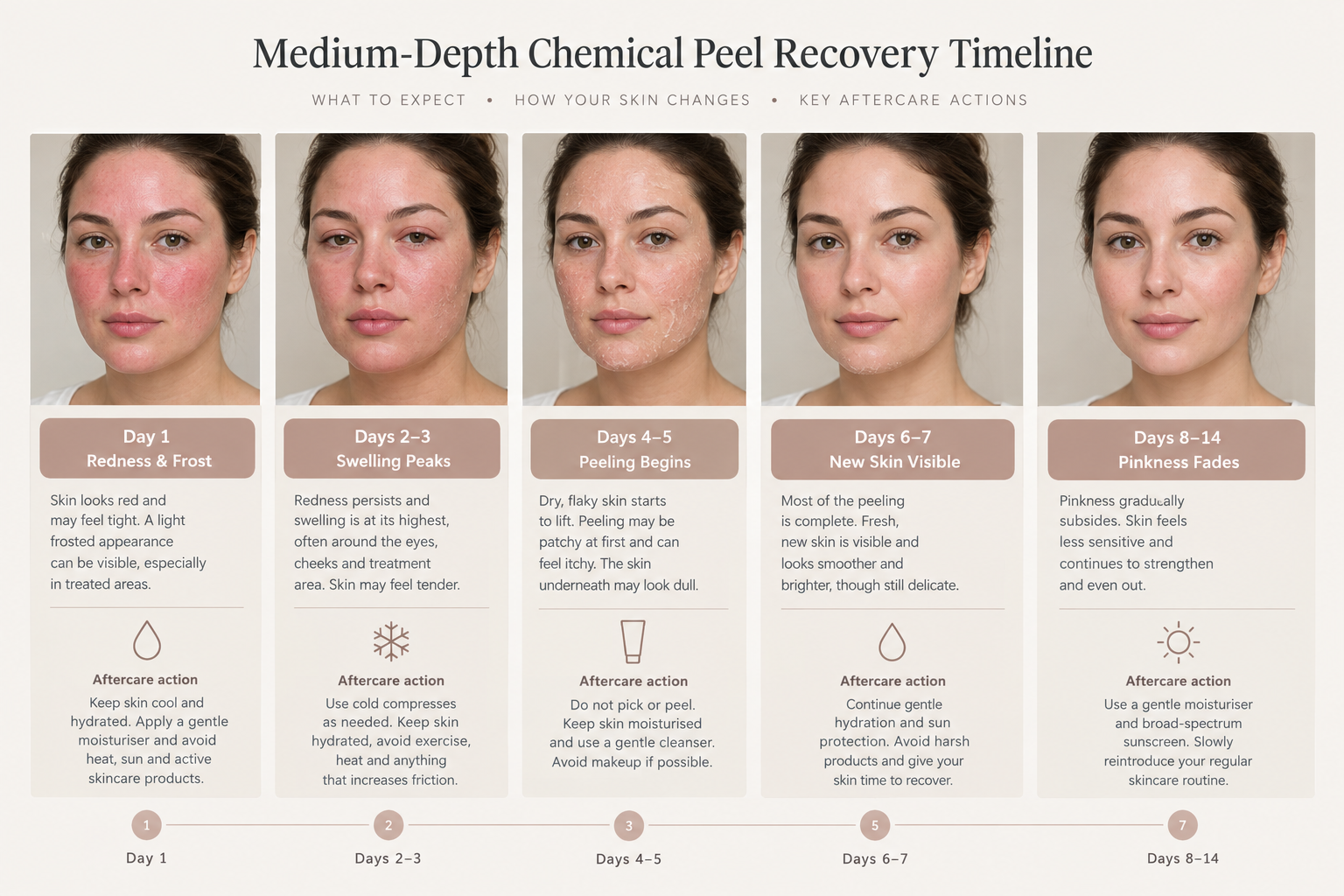
Medium-depth peels — most commonly TCA at concentrations between 20% and 35%, sometimes combined with a Jessner solution or glycolic acid — produce a more significant skin response and a longer recovery period. They are used to address moderate sun damage, uneven pigmentation, fine to moderate lines, and acne scarring.
Day 1 (Treatment Day)
Immediately after a medium-depth peel, the skin appears red and may develop a frosted or whitened appearance as the acid reacts with skin proteins — a clinical endpoint practitioners use to assess penetration depth. Swelling begins within hours, particularly around the eyes and cheeks. The skin feels tight and sensitive. A protective ointment or dressing is applied, and you will be given specific aftercare instructions to follow at home.
Days 2 to 3
Swelling often peaks around day two, and the skin may feel uncomfortable. The treated area takes on a darker, bronzed appearance as the superficial layers begin to die off. This discolouration is a normal part of the process. Keeping the skin well moisturised with the recommended ointment and avoiding any picking or rubbing is critical during this stage. Sleeping with the head slightly elevated can help reduce swelling.
Days 4 to 5
Visible peeling begins in earnest, typically starting around the mouth and chin before progressing to the cheeks and forehead. The skin peels in larger sheets compared to a superficial peel. Underneath, the new skin appears pink and sensitive. It is important not to pull or force peeling skin, as this can cause scarring or uneven pigmentation. Continue applying the recommended moisturiser frequently to support the skin barrier.
Days 6 to 7
Most of the visible peeling has occurred by the end of the first week, though some areas may still be shedding. The new skin underneath is noticeably pink and may feel tight. Many people feel comfortable returning to work or social activities at this point, though the skin is still healing and sun protection is non-negotiable. Mineral-based sunscreen is generally preferred during this phase as it is less likely to irritate the recovering skin.
Days 8 to 14
The pinkness gradually fades over the second week, though it may persist for longer in people with fairer skin or those who have had a deeper medium peel. The skin texture begins to feel smoother, and early improvements in tone and clarity become visible. Active skincare ingredients such as retinoids or acids should not be reintroduced until the practitioner confirms the skin has fully healed, which is typically assessed at a follow-up appointment.
The Chemical Peel Process Day by Day: Deep Peel Timeline
Deep chemical peels — most commonly phenol-based formulations — penetrate to the mid-reticular dermis and produce the most dramatic results alongside the most significant recovery period. Deep peels are typically performed under sedation or anaesthesia in a clinical setting and are reserved for significant sun damage, deep wrinkles, and severe pigmentation concerns. They are not suitable for all skin types and carry a higher risk profile than superficial or medium peels.
Days 1 to 2
After a deep peel, the skin is red, swollen, and may weep fluid as part of the acute inflammatory response. The face can appear significantly swollen, particularly around the eyes. Occlusive dressings or ointments are applied to protect the skin and support healing. Pain or significant discomfort is common and is managed with prescribed medication. Activity is very limited during this phase.
Days 3 to 5
The skin begins to crust and darken as the damaged layers prepare to shed. Swelling starts to reduce gradually. Strict wound care — including frequent application of prescribed ointments and gentle cleansing — is essential to prevent infection and support healing. Patients are advised to avoid sun exposure entirely during this period.
Days 6 to 10
Peeling and crusting continue, and the new skin underneath is bright pink or red. This stage can be uncomfortable and the appearance can be confronting, which is why realistic preparation and strong aftercare support are important. The skin is extremely fragile and must not be disturbed. Any signs of infection — such as increasing pain, unusual discharge, or fever — should be reported to the treating practitioner promptly.
Days 11 to 21
By the end of the second week, most of the surface peeling has resolved, though the skin remains pink and sensitive. The pinkness from a deep peel can persist for several weeks to months, gradually fading as the skin matures. Camouflage makeup may be introduced once the skin has fully re-epithelialised, typically around two to three weeks post-treatment, with practitioner guidance.
Weeks 4 to 12 and Beyond
The skin continues to remodel during this extended phase. Collagen production increases in the dermis, contributing to improvements in skin firmness and the reduction of deeper lines. Pigmentation changes become more apparent as the skin settles. Final results from a deep peel may not be fully visible for three to six months. Ongoing sun protection is essential long-term, as the skin after a deep peel may have permanently reduced melanin-producing capacity in treated areas, increasing UV sensitivity.
When Do Chemical Peel Results Become Visible?
The timing of visible results depends directly on peel depth. After a superficial peel, many people notice a brighter, more refreshed complexion within a few days of the skin settling. However, meaningful improvements in pigmentation, fine lines, or acne scarring generally require a series of superficial peels over several months. Medium-depth peels produce more noticeable changes in skin texture and tone, with results becoming clearer from around two to four weeks post-treatment as the pinkness fades. Deep peels offer the most significant and long-lasting improvements, but the full outcome may not be apparent for several months.
It is important to understand that chemical peels do not stop the ageing process. Results from medium and deep peels can last several years with appropriate sun protection and skincare, but the skin will continue to age naturally. Maintenance superficial peels and a consistent skincare routine can help prolong the benefits.
Risks, Side Effects, and What to Watch For
Chemical peels carry risks that increase with peel depth. Common and expected side effects include redness, swelling, peeling, dryness, and temporary skin sensitivity. These are part of the normal healing process. However, some complications require clinical attention.
- Post-inflammatory hyperpigmentation (PIH): Darkening of the skin after inflammation is more common in people with medium to dark skin tones (Fitzpatrick skin types III–VI). Pre-treatment with brightening agents and careful peel selection can reduce this risk, but it cannot be eliminated entirely.
- Prolonged redness: Persistent erythema beyond the expected recovery period may indicate a deeper injury than intended or an individual healing response that requires assessment.
- Infection: Bacterial, viral, or fungal infection can occur if the skin barrier is compromised. Signs include increasing pain, unusual discharge, crusting beyond the expected pattern, or fever.
- Scarring: Scarring is uncommon with superficial peels but becomes a more meaningful risk with medium and deep peels, particularly if aftercare instructions are not followed or if the skin is disturbed during healing.
- Allergic reaction: Sensitivity to the chemical agents used is possible and should be discussed during the pre-treatment consultation.
- Changes in skin texture: In rare cases, particularly with deep peels, the skin texture may change permanently.
Anyone who experiences unexpected symptoms during recovery — including signs of infection, severe pain, or skin changes that do not follow the expected pattern — should contact their treating practitioner promptly rather than waiting for a scheduled follow-up.
Who May Be Suitable for a Chemical Peel
Chemical peels may be appropriate for people seeking to address concerns such as uneven skin tone, sun damage, mild to moderate acne, post-acne marks, fine lines, rough skin texture, or dull complexion. Suitability depends on skin type, the specific concern being treated, medical history, and the depth of peel being considered.
People with darker skin tones require careful assessment before medium or deep peels, as the risk of post-inflammatory hyperpigmentation is higher. Superficial peels using agents such as mandelic acid or low-concentration salicylic acid may be more appropriate options for these skin types, though individual assessment is essential. Pregnancy and breastfeeding are generally considered contraindications for chemical peels, particularly medium and deep treatments. Active skin infections, open wounds, eczema, psoriasis, or rosacea in the treatment area may also affect suitability.
Alternatives to Chemical Peels
Chemical peels are one of several approaches to skin resurfacing and rejuvenation. Alternatives include laser resurfacing treatments such as fractional CO2 or erbium lasers, which offer precise depth control and may suit patients who are not ideal candidates for chemical peels. Microneedling stimulates collagen production through controlled micro-injuries and carries a lower risk of pigmentation changes in darker skin tones. Intense pulsed light (IPL) may address pigmentation and vascular concerns without significant surface peeling. Prescription topical regimens using retinoids, vitamin C, and brightening agents can produce gradual improvements in skin quality without any downtime. The most appropriate option depends on the specific concern, skin type, and individual circumstances, and should be discussed with a qualified practitioner.
Frequently Asked Questions
How long does it take for skin to fully heal after a chemical peel?
Surface healing — meaning the skin is no longer peeling and the barrier has restored — typically takes three to seven days for superficial peels, seven to fourteen days for medium-depth peels, and two to four weeks for deep peels. However, the skin continues to remodel beneath the surface for weeks to months after treatment, and this deeper healing phase contributes to the final result.
Is it normal for the skin to look worse before it looks better?
Yes. Redness, swelling, darkening, and visible peeling are expected parts of the process, particularly with medium and deep peels. These changes reflect the skin’s active healing response. The appearance typically improves significantly once the peeling phase is complete and the new skin has settled.
Can I wear makeup during recovery?
After a superficial peel, many people can wear makeup within a day or two once the skin has settled. After a medium or deep peel, makeup should be avoided until the skin has fully re-epithelialised, which your practitioner will confirm. Mineral-based products are generally better tolerated during the early recovery phase.
Why is sun protection so important after a chemical peel?
The newly revealed skin after a chemical peel is more sensitive to ultraviolet radiation and significantly more prone to developing post-inflammatory hyperpigmentation if exposed to the sun. Broad-spectrum SPF 30 or higher should be applied daily throughout recovery and maintained long-term to protect the results and prevent new sun damage.
How many chemical peel sessions are typically needed?
This depends on the peel depth and the concern being treated. A single medium or deep peel may produce significant improvement. Superficial peels are usually performed as a course of four to six treatments spaced two to four weeks apart to achieve cumulative benefits. Your practitioner will recommend a treatment plan based on your skin assessment and goals.
Can I pick or peel the skin myself to speed up the process?
No. Pulling or forcing peeling skin is one of the most common causes of scarring and uneven pigmentation after a chemical peel. The skin should be allowed to shed naturally. Keeping the skin well moisturised helps the peeling process feel more comfortable and supports an even result.
When can I return to exercise after a chemical peel?
After a superficial peel, light activity can usually resume within a day or two. After a medium or deep peel, strenuous exercise — which increases blood flow, heat, and sweating — should be avoided for at least one to two weeks, or until the practitioner advises it is safe. Sweat can irritate healing skin and increase infection risk.
Planning Your Chemical Peel Recovery Realistically
The chemical peel process day by day is more manageable when you know what to expect at each stage. Superficial peels offer a low-downtime option for gradual skin improvement, while medium and deep peels deliver more significant results alongside a more demanding recovery. Neither approach is universally better — the right choice depends on your skin concerns, skin type, lifestyle, and tolerance for downtime.
Preparation, careful aftercare, and consistent sun protection are as important as the peel itself in determining the final outcome. Skipping pre-treatment preparation or neglecting aftercare instructions can compromise results and increase the risk of complications. If you are considering a chemical peel, a thorough consultation with a qualified practitioner — one who can assess your skin type, discuss realistic outcomes, and tailor the treatment to your individual needs — is the most important first step.


