
How to Get Rid of Jowls Naturally: What Works and What to Expect
Jowls — the sagging skin and soft tissue that develops along the lower jawline — are one of the most common concerns people notice as they age. Many people search for natural ways to address them before considering clinical procedures. While certain lifestyle habits and facial exercises may offer modest support, it is important to understand what causes jowls in the first place, what natural approaches can and cannot realistically achieve, and when professional options may be worth exploring.
Key Takeaways
- Jowls develop primarily due to collagen loss, reduced skin elasticity, fat redistribution, and bone remodelling — processes that cannot be fully reversed through lifestyle changes alone.
- Natural approaches such as facial exercises, improved posture, sun protection, and a nutrient-rich diet may help slow progression but are unlikely to produce significant lifting in established jowls.
- Non-surgical clinic treatments including radiofrequency, ultrasound therapy, and dermal fillers can offer more measurable improvement, though results vary and are not permanent.
- Surgical options such as a lower face lift remain the most effective intervention for significant jowling, but carry greater risk and recovery time.
- A qualified practitioner can assess your anatomy and recommend the most appropriate approach for your specific degree of laxity and goals.
What Causes Jowls?
Jowls form when the structural support of the lower face gradually weakens. The skin along the jawline loses its ability to stay taut because collagen and elastin — the proteins responsible for firmness and recoil — decline with age. This process typically accelerates from the mid-thirties onwards, though genetics, sun exposure, and lifestyle factors influence the rate significantly.
Alongside skin laxity, fat compartments in the cheeks shift downward under the influence of gravity, and the underlying facial bones undergo subtle remodelling that reduces the scaffolding the soft tissue relies on. The result is a loss of definition along the jaw and the appearance of heaviness or drooping at the corners of the mouth and below. Understanding these multiple contributing factors is important because it explains why a single natural remedy is unlikely to address all of them simultaneously.
Factors that may accelerate jowl development include significant or repeated weight fluctuations, chronic sun exposure without protection, smoking, poor sleep, and high levels of oxidative stress. Genetics also play a meaningful role — some people develop noticeable jowling in their forties while others retain a defined jawline well into their sixties.
Can You Get Rid of Jowls Naturally?
The honest answer is that natural methods are unlikely to eliminate established jowls, but they may help slow their progression and support the overall health of the skin and underlying tissues. The degree of improvement achievable without clinical intervention depends heavily on how pronounced the jowling is, the individual’s skin quality, and how consistently natural approaches are applied over time.
For mild early-stage laxity, a combination of targeted facial exercises, good skincare habits, and lifestyle adjustments may produce a subtle but noticeable improvement in jawline definition. For moderate to significant jowling, natural methods alone are generally insufficient to create meaningful lifting, and managing expectations honestly is important before investing significant time and effort.
Facial Exercises and Massage
Facial exercises — sometimes called facial yoga — involve deliberate movements designed to engage and strengthen the muscles of the face and neck. The rationale is that stronger underlying muscles may provide better support for the overlying skin, potentially improving the appearance of the lower face and jawline over time.
Some small studies and clinical observations suggest that consistent facial exercise programmes may modestly improve facial fullness and muscle tone, particularly in the mid-face. However, robust, large-scale clinical evidence specifically demonstrating significant jowl reduction through facial exercise alone remains limited. Results, where reported, tend to be subtle and require months of consistent daily practice to become apparent.
Exercises commonly suggested for the lower face and jawline area include chin lifts, jaw clenches, neck stretches, and movements that engage the platysma — the broad, flat muscle running from the chest to the jaw. Performing these with controlled, deliberate movements rather than excessive force is generally recommended to avoid unnecessary strain.
Facial massage using upward and outward strokes may temporarily improve circulation and lymphatic drainage, which can reduce puffiness and give the face a slightly more defined appearance. This effect is temporary and does not address the underlying structural changes responsible for jowling. Gua sha tools and facial rollers are popular for this purpose, though clinical evidence for their long-term effect on skin laxity is limited.
Posture and the Neck
Posture has a more meaningful connection to jawline appearance than many people realise. Prolonged forward head posture — common with extended screen use — places the neck in a position that can contribute to the appearance of a less defined jawline and may accelerate the development of neck laxity over time. Correcting posture by keeping the head aligned over the shoulders and avoiding prolonged chin-down positions may help reduce unnecessary strain on the neck and lower face tissues.
Neck-strengthening exercises that encourage an upright head position can complement facial exercises as part of a broader approach to supporting the lower face. While posture correction alone will not reverse existing jowls, it is a practical and cost-free habit that supports overall facial appearance.
Skincare Ingredients That May Support Skin Firmness
Certain topical skincare ingredients have evidence supporting their role in stimulating collagen production or improving skin texture, which may contribute to a modest improvement in skin firmness over time. These ingredients do not penetrate deeply enough to address the structural fat redistribution or bone changes underlying jowls, but they can support skin quality as part of a broader approach.
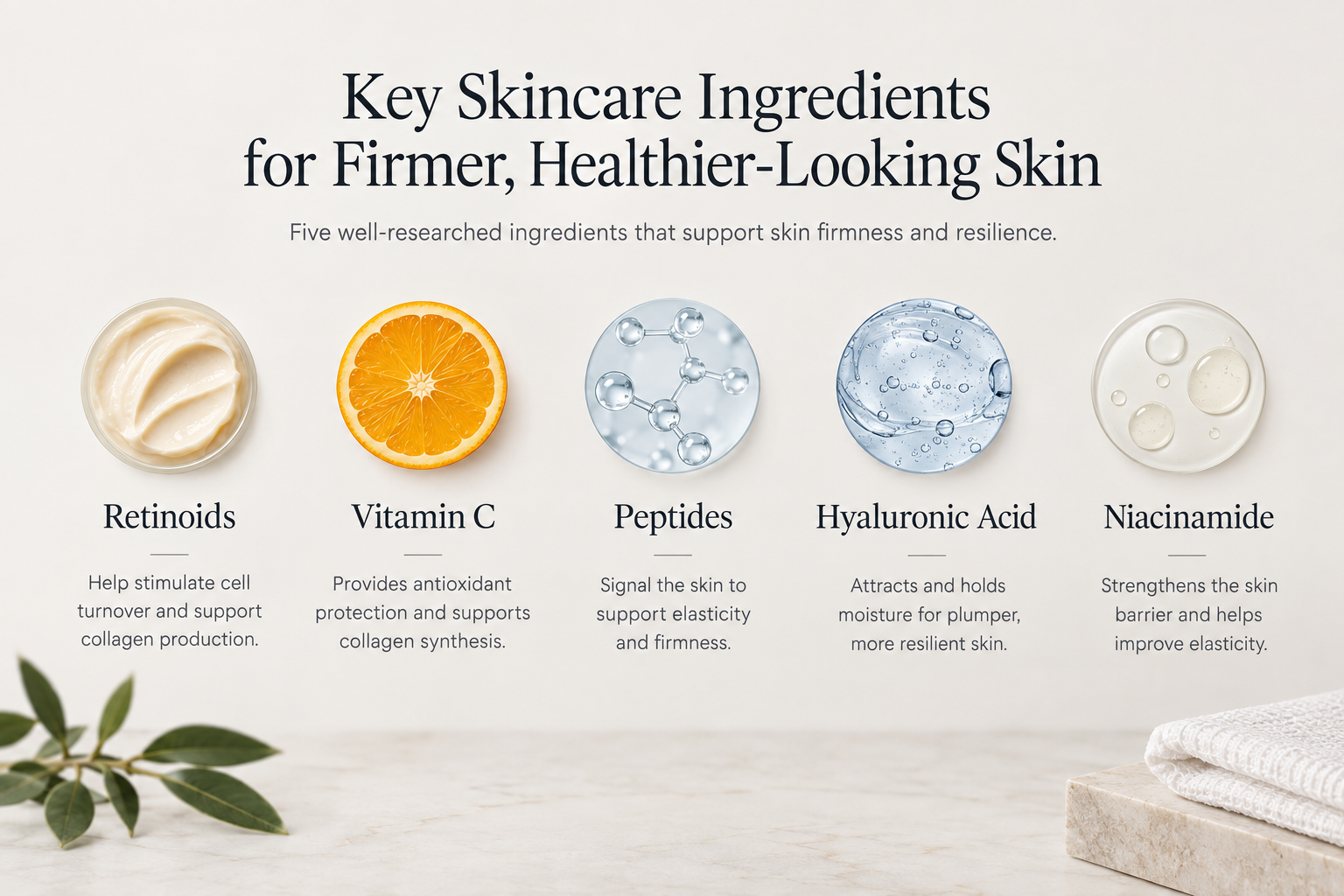
- Retinoids (retinol and prescription tretinoin): Among the most evidence-supported topical ingredients for stimulating collagen synthesis and improving skin texture. Consistent use over several months may produce a modest improvement in skin firmness. Prescription-strength tretinoin has stronger evidence than over-the-counter retinol formulations.
- Vitamin C (ascorbic acid): An antioxidant that plays a role in collagen synthesis and may help protect against UV-related collagen degradation. Most effective when used in a stable, appropriately concentrated formulation.
- Peptides: Short chains of amino acids that may signal the skin to produce more collagen. Evidence is more limited than for retinoids, but some formulations show promise for improving skin firmness with consistent use.
- Hyaluronic acid: Primarily a hydrating ingredient that improves skin plumpness and surface texture. It does not directly stimulate collagen but can make skin appear more supple and healthy.
- Niacinamide: A form of vitamin B3 with anti-inflammatory properties and some evidence for improving skin barrier function and reducing the appearance of enlarged pores and uneven tone.
Sun protection is arguably the most important skincare habit for preserving skin firmness over time. Ultraviolet radiation is a major driver of collagen breakdown and accelerated skin ageing. Daily use of a broad-spectrum SPF 30 or higher, even on overcast days, is consistently recommended by dermatologists as a foundational step in any skin health strategy.
Diet, Hydration, and Lifestyle Factors
The skin’s structural integrity is influenced by nutritional status. A diet rich in antioxidants — found in colourful vegetables, fruits, and green tea — may help reduce oxidative stress, which contributes to collagen degradation. Adequate protein intake supports the body’s ability to synthesise collagen and elastin, while foods containing vitamin C, zinc, and copper provide cofactors involved in collagen production.
Hydration affects skin plumpness and elasticity. Chronically dehydrated skin tends to appear less firm and more prone to fine lines. While drinking adequate water will not reverse jowling, it supports overall skin health and may improve the skin’s surface appearance.
Smoking is one of the most significant lifestyle contributors to accelerated skin ageing. Tobacco smoke reduces blood flow to the skin, depletes vitamin C, and generates free radicals that break down collagen and elastin. Stopping smoking is one of the most impactful steps a person can take to slow the progression of facial laxity, though it will not reverse changes that have already occurred.
Significant or repeated weight loss can worsen the appearance of jowls by reducing the volume of fat that previously supported the overlying skin. Maintaining a stable, healthy weight is generally preferable to repeated cycles of weight gain and loss when preserving facial skin quality is a concern.
The Realistic Limits of Natural Approaches
Natural methods for jowl reduction work best as preventive or supportive measures rather than corrective treatments. For someone in their late thirties with early signs of jawline softening, consistent facial exercise, good skincare, sun protection, and a healthy lifestyle may meaningfully slow the rate of change and support a more defined appearance over time.
For someone with established, moderate, or significant jowling — where the skin and soft tissue have already descended noticeably below the jawline — natural approaches are unlikely to produce the degree of lifting that many people hope for. This is not a failure of effort or consistency; it reflects the biological reality that collagen loss, fat redistribution, and bone remodelling cannot be substantially reversed through topical products or exercise alone.
Managing expectations honestly is important. Natural approaches carry no risk of side effects and support general health, making them worthwhile regardless of their cosmetic impact. However, they should not be presented as equivalent alternatives to clinical treatments when a meaningful degree of correction is the goal.
Non-Surgical Clinical Options for Jowl Reduction
For those who want more noticeable improvement than natural methods can provide but are not ready for surgery, several non-surgical clinic treatments may be worth discussing with a qualified practitioner. These treatments vary in their mechanism, evidence base, degree of improvement, and longevity.
Radiofrequency Skin Tightening
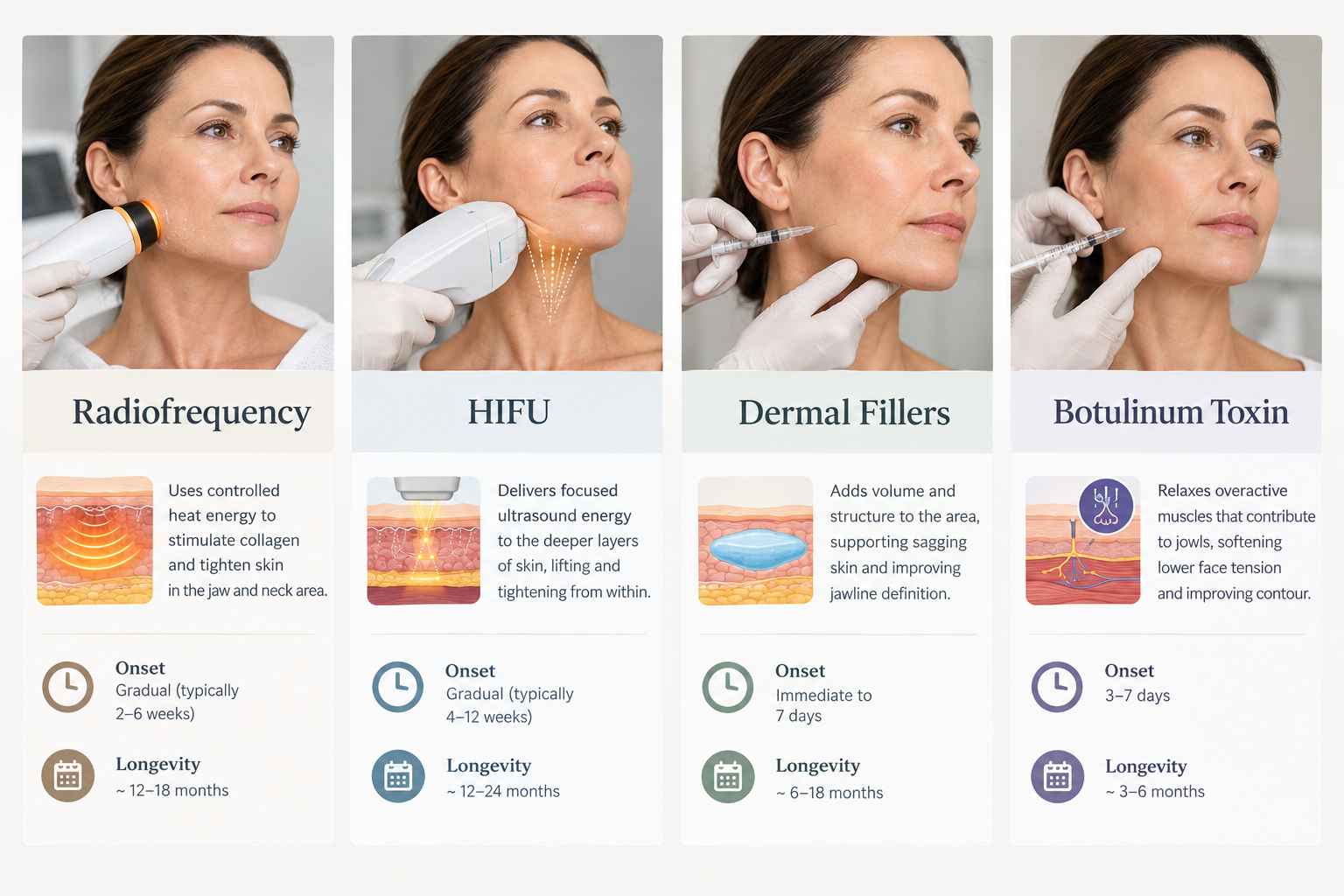
Radiofrequency (RF) treatments deliver controlled thermal energy into the deeper layers of the skin and underlying tissue, stimulating collagen remodelling and new collagen production. Devices such as monopolar, bipolar, and microneedling radiofrequency systems are used for lower face and jawline tightening. Results are typically gradual, appearing over two to six months as new collagen forms, and may last one to two years depending on the device, treatment protocol, and individual response. Multiple sessions are often recommended.
High-Intensity Focused Ultrasound (HIFU)
High-intensity focused ultrasound targets the deeper structural layer of the face — the superficial musculoaponeurotic system (SMAS) — which is the same layer addressed during surgical face lifting. By delivering focused ultrasound energy to this depth, HIFU aims to stimulate collagen contraction and remodelling. Clinical studies suggest it can produce modest but measurable lifting of the lower face and jawline in suitable candidates. Results typically develop over two to three months and may last up to a year or more, though individual variation is significant.
Dermal Fillers for Jawline Definition
Hyaluronic acid dermal fillers injected along the jawline can restore structural support and improve definition, creating the appearance of a more lifted lower face. This approach addresses volume loss and structural support rather than skin laxity directly. Results are immediate and typically last twelve to eighteen months depending on the product used and individual metabolism. Dermal filler treatment carries risks including bruising, swelling, asymmetry, and in rare cases vascular complications, which is why treatment by an experienced, medically qualified practitioner is essential.
Botulinum Toxin for the Lower Face and Neck
Botulinum toxin injections into the platysma muscle — the broad neck muscle that can pull the lower face downward — may provide a subtle lifting effect on the jawline. This approach, sometimes called a Nefertiti lift, works by relaxing the downward-pulling forces of the platysma, allowing the muscles that lift the face to work more effectively. The effect is modest and temporary, typically lasting three to four months, and is most suitable for mild laxity rather than significant jowling.
Polynucleotide and Biostimulator Injections
Polynucleotide (PDRN) injections and collagen biostimulators such as poly-L-lactic acid or calcium hydroxylapatite work by stimulating the skin’s own collagen production over time. These treatments are not immediate volumisers but aim to gradually improve skin quality, firmness, and thickness. They may be used in the lower face and jawline area as part of a broader skin quality improvement programme. Evidence for their specific effect on jowl reduction is still developing, and they are generally considered supportive rather than primary treatments for significant laxity.
Surgical Options
For significant jowling where non-surgical and natural approaches are unlikely to achieve the desired result, surgical options — primarily lower face lifting or a neck lift — remain the most effective interventions. A lower face lift addresses the underlying SMAS layer and removes or repositions excess skin and fat, producing results that can last many years. Surgery carries greater risks, requires anaesthesia, involves a recovery period of several weeks, and is associated with higher cost. It is not appropriate for everyone, and a thorough consultation with a qualified plastic or reconstructive surgeon is essential before considering this route.
Frequently Asked Questions
Can facial exercises really reduce jowls?
Facial exercises may modestly improve muscle tone in the lower face and contribute to a slightly more defined jawline over time with consistent practice. However, the evidence for significant jowl reduction through exercise alone is limited. They are most useful as a preventive measure for early-stage laxity rather than a corrective treatment for established jowling.
How long does it take to see results from natural methods?
Natural approaches such as facial exercises, improved skincare, and lifestyle changes typically require several months of consistent effort before any change becomes noticeable. Results are generally subtle and gradual. Significant improvement in established jowls through natural methods alone is unlikely regardless of the time invested.
Does losing weight help with jowls?
Weight loss can sometimes make jowls appear more pronounced rather than less, because reducing facial fat volume removes some of the support for the overlying skin. Maintaining a stable, healthy weight is generally preferable to significant weight fluctuations when preserving jawline definition is a concern.
At what age do jowls typically develop?
Jowls can begin to develop from the mid-thirties onwards, though the timing varies considerably depending on genetics, sun exposure history, lifestyle, and skin type. Some people notice early changes in their forties, while others may not develop noticeable jowling until their fifties or sixties.
Are non-surgical treatments for jowls worth considering?
Non-surgical treatments such as radiofrequency tightening, HIFU, and dermal fillers can produce measurable improvement in suitable candidates, particularly those with mild to moderate laxity. They are not permanent and require maintenance, but they offer a middle ground between natural approaches and surgery. Whether they are appropriate depends on the degree of laxity, individual anatomy, and personal goals — factors best assessed during a professional consultation.
Can skincare products tighten jowls?
Topical skincare products, including those containing retinoids, peptides, and vitamin C, can support skin quality and may modestly improve firmness over time. They cannot penetrate to the depth required to address the structural changes — fat redistribution, muscle laxity, and bone remodelling — that contribute to jowling. They are most valuable as part of a broader skin health strategy rather than as standalone jowl treatments.
Is sun protection really important for preventing jowls?
Yes. Ultraviolet radiation is one of the most significant external drivers of collagen breakdown and accelerated skin ageing. Consistent daily use of broad-spectrum sun protection is one of the most evidence-supported steps for preserving skin firmness and slowing the development of facial laxity over time.
Deciding on the Right Approach for Your Jawline Concerns
Natural methods for reducing jowls are genuinely worthwhile — not because they can reverse significant structural changes, but because they support skin health, may slow progression, and carry no risk of side effects. Facial exercises, consistent sun protection, evidence-based skincare ingredients, good nutrition, adequate hydration, and avoiding smoking all contribute to a healthier foundation for the skin and underlying tissues. For someone in the early stages of jawline softening, these habits may make a meaningful difference over time.
For those with more established jowling who are looking for a visible improvement, natural approaches alone are unlikely to deliver the result they are hoping for. Non-surgical clinic treatments — particularly radiofrequency tightening, HIFU, and strategic use of dermal fillers — can offer more noticeable improvement with manageable downtime, though results vary and are not permanent. Surgical options remain the most effective route for significant laxity but involve greater commitment in terms of risk, recovery, and cost.
The most useful step for anyone uncertain about which approach is appropriate for their specific situation is a consultation with a qualified aesthetic practitioner or dermatologist. A professional assessment of your skin quality, degree of laxity, anatomy, and goals will provide a much clearer picture of what is realistically achievable and which combination of approaches — natural, non-surgical, or surgical — is most likely to meet your expectations.


