
How Long Does a Lip Flip Last? Longevity, Results & What to Expect
A lip flip is a botulinum toxin treatment that relaxes the muscles around the upper lip, allowing it to roll slightly outward and appear fuller without adding volume through filler. It is a subtle, low-downtime option that appeals to patients who want a more defined lip border or a less gummy smile. One of the most common questions before booking is straightforward: how long does a lip flip last? The honest answer is that results are temporary and typically shorter-lived than many patients expect, which makes understanding the timeline — and the factors that influence it — essential before deciding whether the treatment suits your goals.
Key Takeaways
- A lip flip generally lasts between 6 and 12 weeks, making it one of the shorter-duration botulinum toxin treatments available.
- Results are subtle and gradual — most patients notice the full effect around 10 to 14 days after treatment.
- Duration varies depending on the botulinum toxin product used, the dose, individual metabolism, and muscle activity in the area.
- A lip flip does not add volume; it changes the position of the upper lip. Patients seeking significant fullness may find lip filler a more appropriate option.
- Maintenance treatments are typically needed every 2 to 3 months to sustain the effect.
What Is a Lip Flip and How Does It Work?
A lip flip involves injecting a small amount of botulinum toxin — most commonly a product such as Botox (onabotulinumtoxinA) or a comparable formulation — into the orbicularis oris muscle, which encircles the mouth. By partially relaxing the upper portion of this muscle, the lip edge rolls gently upward and outward rather than curling inward. The result is a slightly more visible upper lip, a softer lip line, and in some cases a modest reduction in the appearance of a gummy smile, where excess gum tissue shows when smiling.
It is important to understand that a lip flip does not inject any filler material into the lip tissue. No hyaluronic acid or other volumising substance is used. The change in appearance comes entirely from altered muscle behaviour, which is why the effect is subtle and why it fades as the botulinum toxin naturally wears off and muscle function gradually returns. This mechanism also explains why the lip flip has a shorter duration than botulinum toxin treatments in areas with less active muscles, such as the forehead.
How Long Does a Lip Flip Last?
The lip flip typically lasts between 6 and 12 weeks, with many patients reporting that the most noticeable effect is present for around 6 to 8 weeks before the lip gradually returns to its natural resting position. This is considerably shorter than the 3 to 6 months often associated with botulinum toxin treatments in the upper face. The shorter duration is largely explained by the high level of muscular activity around the mouth: speaking, eating, drinking, and facial expressions all engage the orbicularis oris repeatedly throughout the day, which accelerates the breakdown and clearance of the toxin at that site.
Some patients find their results persist closer to the 10 to 12 week mark, particularly if they have had repeated treatments over time. There is some clinical evidence suggesting that regular botulinum toxin use in a given area may lead to a degree of muscle conditioning, which can modestly extend the perceived duration of results in certain individuals. However, this varies considerably between patients and should not be assumed as a guaranteed outcome.
It is also worth noting that the lip flip effect fades gradually rather than disappearing suddenly. Most patients notice the lip slowly returning to its previous position over a period of one to two weeks rather than experiencing an abrupt change, which can make the transition less noticeable.
When Do Lip Flip Results Appear?
Botulinum toxin does not produce immediate results. After a lip flip treatment, most patients begin to notice a subtle change within 3 to 5 days, as the toxin starts to inhibit the nerve signals that cause the orbicularis oris to contract. The full effect of the treatment typically becomes visible between 10 and 14 days after the appointment. For this reason, practitioners generally recommend waiting at least two weeks before assessing whether a top-up or adjustment is needed.
During the first few days after treatment, some patients notice mild swelling, slight bruising at the injection sites, or a temporary feeling of stiffness or heaviness around the upper lip. These effects are usually short-lived and resolve within a few days. The lip may feel slightly different when drinking from a bottle or straw, and some patients notice a temporary change in how they pronounce certain sounds, particularly those requiring firm lip contact such as the letters B, P, and M. These functional changes are temporary and typically resolve as the patient adapts or as the initial treatment effect settles.
Factors That Affect How Long a Lip Flip Lasts
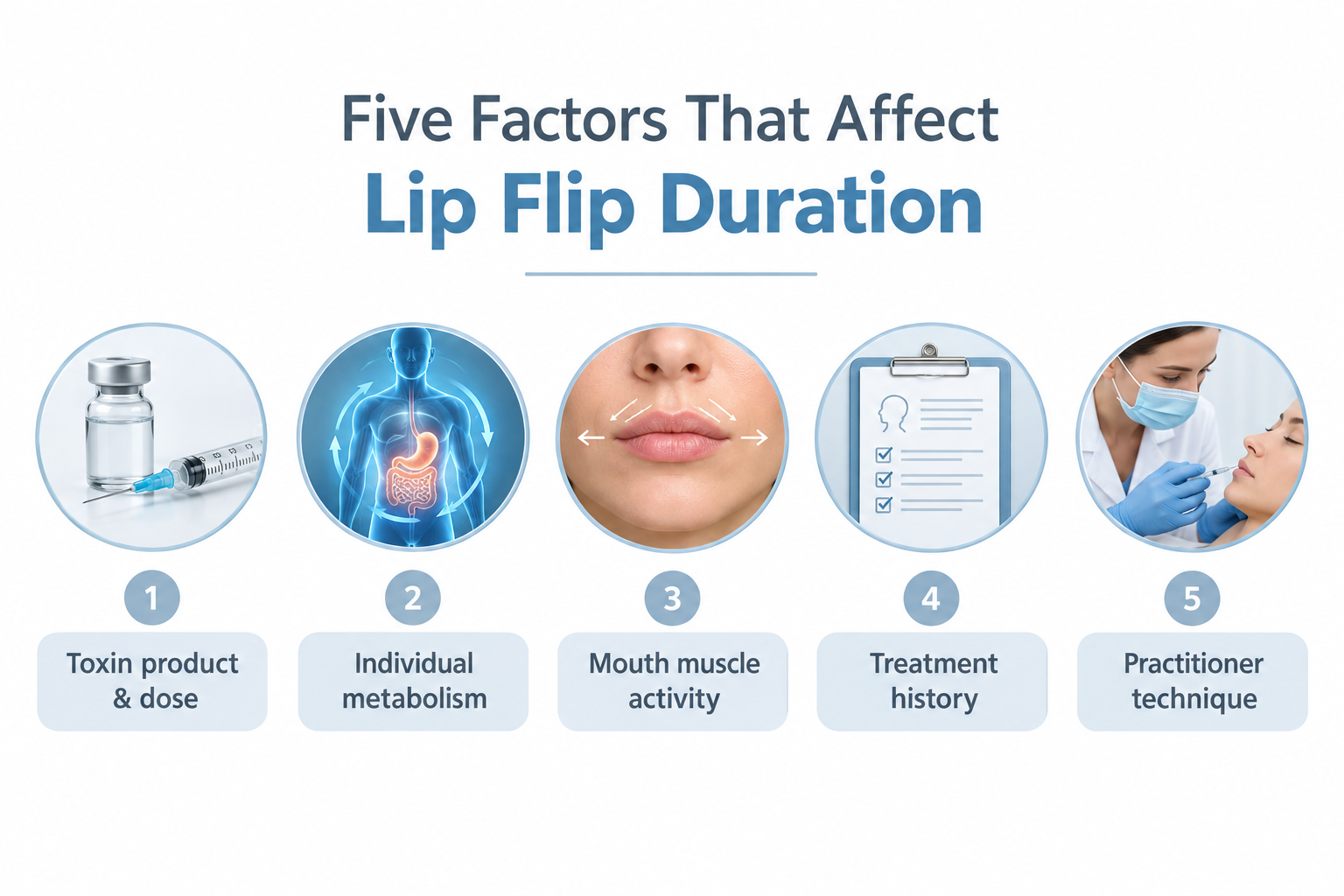
Several variables influence the duration of a lip flip, and understanding them helps set realistic expectations before treatment.
Botulinum Toxin Product and Dose
Different botulinum toxin formulations — such as onabotulinumtoxinA (Botox), abobotulinumtoxinA (Dysport or Azzalure), and incobotulinumtoxinA (Xeomin) — have distinct molecular characteristics and unit measurements that are not directly interchangeable. The product selected and the dose administered by the practitioner will influence both the strength and the duration of the effect. A lip flip typically uses a small number of units compared with treatments in larger muscle groups, and a lower dose may produce a shorter-lasting result. Practitioners balance the dose carefully to achieve the desired subtlety without over-relaxing the muscle, which could impair normal lip function.
Individual Metabolism
People metabolise botulinum toxin at different rates. Patients with a faster metabolic rate, higher levels of physical activity, or a history of shorter-than-average duration from previous botulinum toxin treatments may find that a lip flip fades more quickly than the typical range suggests. Conversely, patients who are new to botulinum toxin and have lower baseline muscle activity in the area may experience results that last toward the longer end of the expected window.
Muscle Activity Around the Mouth
The orbicularis oris is one of the most active muscles in the face. Frequent and vigorous use — through talking, eating, singing, playing wind instruments, or other activities that engage the lips intensively — may contribute to a shorter duration of effect. This is a practical consideration for patients whose daily activities involve sustained lip movement.
Treatment History
Patients who have received lip flip treatments regularly over an extended period sometimes report that results appear to last slightly longer over time. This may relate to gradual changes in muscle bulk or behaviour with repeated relaxation, though the evidence for this effect is largely observational rather than from controlled clinical trials. First-time patients should not expect the same duration as someone who has been having the treatment for a year or more.
Practitioner Technique and Injection Placement
The skill and experience of the practitioner performing the treatment influences both the quality and the duration of results. Precise placement of the botulinum toxin within the orbicularis oris is important for achieving the intended effect without compromising lip function. Suboptimal placement may result in a shorter or less consistent outcome. Choosing a qualified and experienced practitioner is therefore an important factor in the overall result.
Lip Flip vs Lip Filler: Understanding the Difference in Longevity
A common point of confusion is how the lip flip compares to lip filler in terms of both results and duration. These are fundamentally different treatments with different mechanisms, and they are not direct alternatives to one another — though they can sometimes be used together.
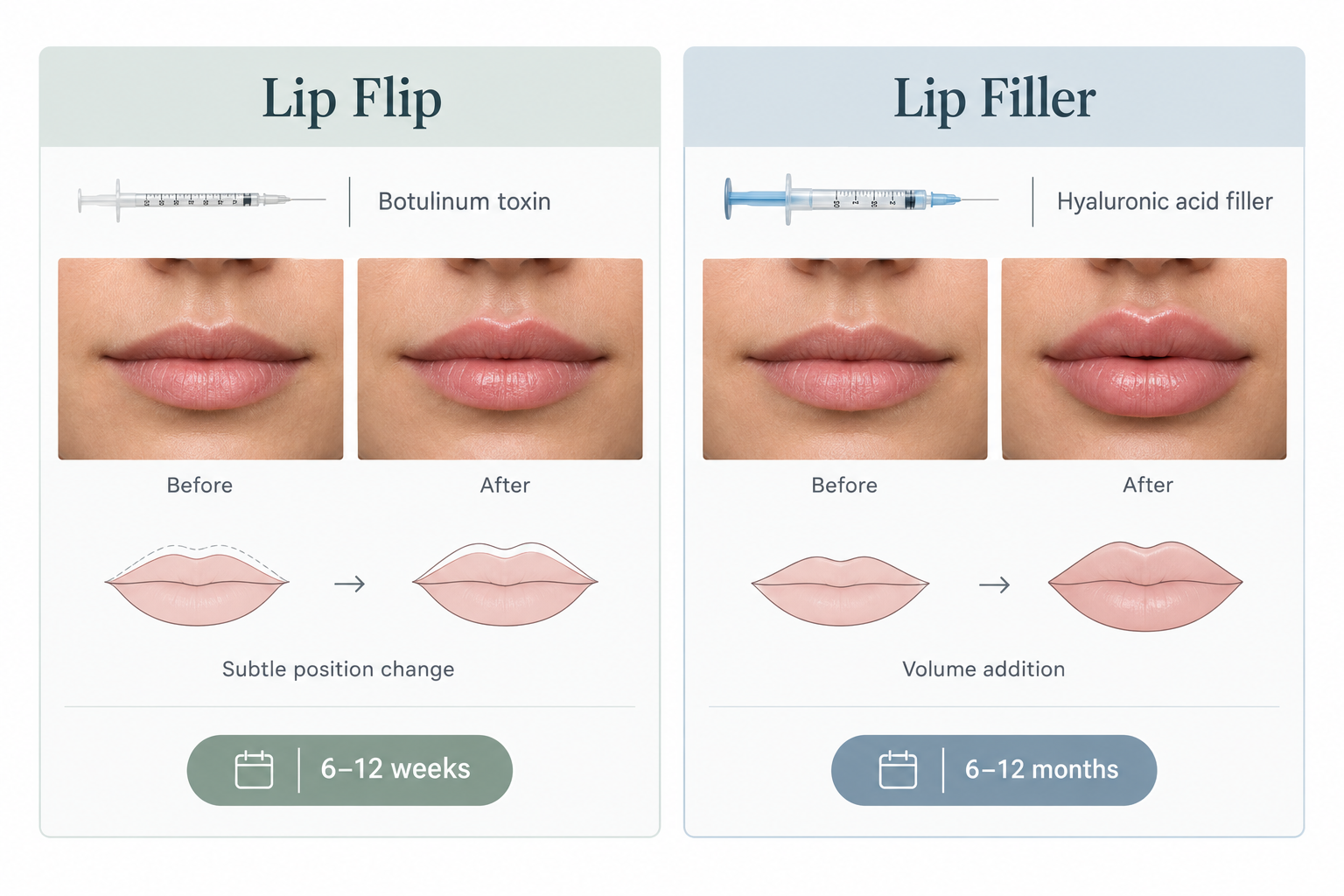
Lip filler involves injecting a hyaluronic acid-based dermal filler into the lip tissue to add volume, shape, and definition. Hyaluronic acid fillers in the lips typically last between 6 and 12 months, depending on the product used, the amount injected, the patient’s metabolism, and the area treated. This is substantially longer than the 6 to 12 weeks associated with a lip flip. Lip filler also produces a more visible and measurable change in lip size, whereas the lip flip creates a positional change without adding volume.
Patients who want a noticeably fuller lip are generally better served by lip filler. The lip flip may be more appropriate for patients who want a subtle enhancement, a softer lip line, a slight reduction in a gummy smile, or who are not yet ready for filler and want to explore a less permanent option. Some practitioners offer both treatments in combination, using a small amount of filler for volume and a lip flip to refine the upper lip border, though this approach should be discussed carefully with a qualified practitioner based on individual anatomy and goals.
How Often Will You Need Maintenance Treatments?
Because the lip flip lasts only 6 to 12 weeks, patients who wish to maintain the effect on an ongoing basis will typically need treatment every 2 to 3 months. This is a more frequent maintenance schedule than most other botulinum toxin treatments, which is an important practical and financial consideration. Over the course of a year, a patient maintaining a lip flip continuously may require four to six treatment sessions.
Some patients choose to have the lip flip seasonally or for specific occasions rather than maintaining it year-round. Because the treatment uses a small amount of botulinum toxin and the effect is temporary, there is no obligation to continue treatment if the patient decides the maintenance schedule does not suit their lifestyle or budget. The lips will return to their natural appearance as the toxin wears off, without any lasting structural change to the tissue.
Risks, Side Effects, and Limitations
The lip flip is generally considered a low-risk procedure when performed by a qualified practitioner, but it is not without potential side effects and limitations. Patients should be aware of these before proceeding.
Common Side Effects
- Bruising and swelling at the injection sites, usually mild and resolving within a few days.
- Temporary changes in lip function, including difficulty drinking from a straw or bottle, slight changes in speech, or difficulty whistling. These effects are temporary and typically resolve as the treatment settles or wears off.
- Asymmetry, which may occur if the toxin spreads unevenly or if the underlying muscle anatomy is asymmetric. Minor asymmetry often resolves as the product settles; significant asymmetry may require a review appointment.
- Headache or mild discomfort around the injection area, which is usually short-lived.
Less Common Risks
- Over-relaxation of the lip, which can impair normal lip movement more than intended. This is more likely with higher doses and resolves as the toxin wears off.
- Drooping or unintended spread of the toxin to adjacent muscles, which may temporarily affect the appearance of the surrounding area.
- Infection at the injection site, which is rare when proper sterile technique is used.
Limitations to Consider
The lip flip produces subtle results that may not be visible in photographs or noticeable to others. Patients expecting a dramatic change in lip size or shape are likely to be disappointed. The short duration means that the treatment requires a consistent commitment to maintenance appointments if the effect is to be sustained. Additionally, the lip flip is not suitable for patients who rely heavily on precise lip control for professional reasons, such as musicians who play wind instruments, as even a temporary change in lip function may be disruptive.
Who May Be Suitable for a Lip Flip?
A lip flip may be worth discussing with a qualified practitioner if you are looking for a subtle enhancement to the upper lip, want to reduce the appearance of a gummy smile, prefer to avoid dermal filler, or want to try a temporary and reversible option before committing to a more significant treatment. It may also appeal to patients who have had lip filler previously and want to refine the lip border without adding further volume.
A lip flip is generally not recommended during pregnancy or breastfeeding. Patients with certain neuromuscular conditions, known hypersensitivity to botulinum toxin or any of its components, or active infection at or near the treatment site are typically not suitable candidates. A thorough consultation with a qualified practitioner is necessary to assess individual suitability based on medical history, anatomy, and treatment goals.
Alternatives to the Lip Flip
Patients considering a lip flip should be aware of the alternatives, as the right choice depends on the specific concern being addressed.
- Lip filler (hyaluronic acid dermal filler): Adds volume and shape to the lips, lasts 6 to 12 months, and is more appropriate for patients seeking a visible increase in lip size. Hyaluronic acid filler can be dissolved with hyaluronidase if needed, offering a degree of reversibility.
- Lip liner and makeup techniques: Non-invasive options that can create the appearance of a fuller or more defined lip without any medical intervention. Results are temporary and require daily application.
- Gummy smile treatment with botulinum toxin: If the primary concern is excess gum show rather than lip shape, botulinum toxin injected into the levator labii superioris alaeque nasi muscle may be a more targeted approach. A practitioner can advise on the most appropriate injection site based on the cause of the gummy smile.
- Lip blushing or permanent makeup: A cosmetic tattooing technique that defines the lip border and adds the appearance of colour. Results last longer than injectable treatments but are not reversible in the same way.
- Surgical lip lift: A permanent surgical procedure that shortens the distance between the nose and the upper lip, creating a more visible lip border. This is a more significant intervention with a longer recovery period and is typically considered when non-surgical options have not achieved the desired result.
Frequently Asked Questions
Can a lip flip be reversed?
Unlike hyaluronic acid lip filler, which can be dissolved using an enzyme called hyaluronidase, botulinum toxin cannot be reversed once injected. The effect of a lip flip will fade naturally as the toxin wears off, which typically takes 6 to 12 weeks. If a patient is unhappy with the result, the most practical course is to wait for the effect to resolve. This is one reason why choosing an experienced practitioner and starting with a conservative dose is advisable.
Does a lip flip hurt?
Most patients describe the lip flip as mildly uncomfortable rather than painful. The injections are made with a fine needle, and the number of injection points is small — typically two to four along the upper lip border. Some practitioners apply a topical numbing cream beforehand to reduce discomfort. Any soreness at the injection sites usually resolves within a day or two.
Will a lip flip make my lips look noticeably bigger?
A lip flip does not add volume to the lips, so it will not make them look significantly bigger. The change is positional: the upper lip rolls slightly outward, which can make it appear more visible and defined. Patients who want a noticeable increase in lip size are generally better suited to hyaluronic acid lip filler rather than a lip flip.
Can I have a lip flip and lip filler at the same time?
Some practitioners offer both treatments in the same appointment, using filler for volume and botulinum toxin to refine the upper lip border. Whether this combination is appropriate depends on individual anatomy, the amount of filler being used, and the practitioner’s clinical judgement. It is important to discuss this option thoroughly during a consultation rather than assuming it is suitable for every patient.
How soon can I wear lipstick after a lip flip?
Most practitioners advise avoiding pressure on the injection sites for a short period after treatment — typically a few hours — to reduce the risk of the toxin spreading to unintended areas. Applying lipstick gently after this initial period is generally considered acceptable, but patients should follow the specific aftercare advice provided by their practitioner.
Will the lip flip affect how I speak or eat?
Some patients notice a temporary change in how they form certain sounds or drink from a cup or straw in the days immediately following treatment. These functional changes are mild and temporary for most patients, resolving as the initial effect settles. Patients whose work or daily activities require precise lip control should discuss this with their practitioner before proceeding.
Is a Lip Flip Worth Considering Given Its Short Duration?
Whether a lip flip is a worthwhile treatment depends largely on what you are hoping to achieve and how the short duration fits into your lifestyle and budget. For patients seeking a subtle, temporary enhancement to the upper lip — particularly those who are cautious about committing to filler or who want to address a mild gummy smile — the lip flip can be a practical and low-risk option. The treatment is quick, requires minimal downtime, and produces a natural-looking result when performed by a skilled practitioner.
The primary limitation is duration. At 6 to 12 weeks, the lip flip requires more frequent maintenance than almost any other aesthetic injectable treatment. Patients who want a sustained result will need to factor in the cost and time commitment of appointments every 2 to 3 months. For those who find the maintenance schedule manageable, the lip flip can be a useful addition to an aesthetic treatment plan. For those who want longer-lasting results or a more visible change, hyaluronic acid lip filler is likely to be a more suitable choice.
A thorough consultation with a qualified and experienced practitioner is the most reliable way to determine whether a lip flip aligns with your anatomy, goals, and expectations. A good practitioner will assess your lip shape, muscle activity, and overall facial balance before recommending a treatment approach, and will give you an honest assessment of what the lip flip can and cannot achieve for you specifically.


