
Infected Skin Tag: Signs, Symptoms, and When to Seek Help
Skin tags are among the most common benign skin growths, affecting a significant proportion of adults at some point in their lives. While skin tags are generally harmless, they can become irritated, inflamed, or infected — particularly when located in areas prone to friction or moisture. Recognising the signs of an infected skin tag early is important, because an untreated infection can worsen and may require medical intervention. This article explains what an infected skin tag looks like, what causes infection, how it differs from normal irritation, and when professional assessment is the appropriate next step.
Key Takeaways
- An infected skin tag typically presents with increased redness, warmth, swelling, pain, and sometimes discharge — signs that distinguish infection from ordinary irritation.
- Skin tags most commonly become infected after attempted home removal, repeated friction, or trauma to the growth.
- Not every red or sore skin tag is infected; irritation and inflammation can mimic infection without bacterial involvement.
- Home removal methods carry a meaningful risk of infection and are generally not recommended by healthcare professionals.
- A qualified practitioner can assess whether a skin tag is infected, treat the infection if present, and discuss safe removal options once the skin has healed.
What Is a Skin Tag?
A skin tag, known medically as an acrochordon, is a small, soft, benign growth that hangs from the skin on a narrow stalk called a peduncle. Skin tags are composed of loose collagen fibres, fat cells, and small blood vessels surrounded by an outer layer of skin. They are not cancerous and do not become cancerous, but they can cause discomfort when they catch on clothing, jewellery, or skin folds. Common locations include the neck, armpits, groin, eyelids, and under the breasts — areas where skin rubs against skin or fabric repeatedly.
Skin tags vary in size from a few millimetres to around one centimetre, though larger examples do occur. Their colour typically matches the surrounding skin or may appear slightly darker. Most skin tags cause no symptoms unless they are repeatedly irritated or subjected to trauma. When a skin tag does become symptomatic, the cause is usually mechanical friction, but in some cases an infection develops, which requires a different approach to management.
Can a Skin Tag Become Infected?
Yes, a skin tag can become infected, though this is not a common occurrence in undisturbed growths. Infection typically arises when the skin tag’s surface is broken, allowing bacteria to enter the underlying tissue. The most frequent trigger is attempted home removal — cutting, tying, or picking at a skin tag — which creates an open wound in an area that may already harbour bacteria due to warmth and moisture. Infection can also develop after a skin tag is accidentally torn by clothing or jewellery, or when a skin tag sits in a skin fold where sweat and friction create conditions that favour bacterial growth.
The bacteria most commonly responsible for skin infections of this type are Staphylococcus aureus and Streptococcus species, which are naturally present on the skin surface. When the skin barrier is disrupted, these organisms can penetrate and multiply, triggering the body’s inflammatory response. In most cases, infection remains localised to the skin tag and the immediately surrounding tissue, but without appropriate treatment it can spread to deeper layers or to adjacent skin.
Signs of an Infected Skin Tag
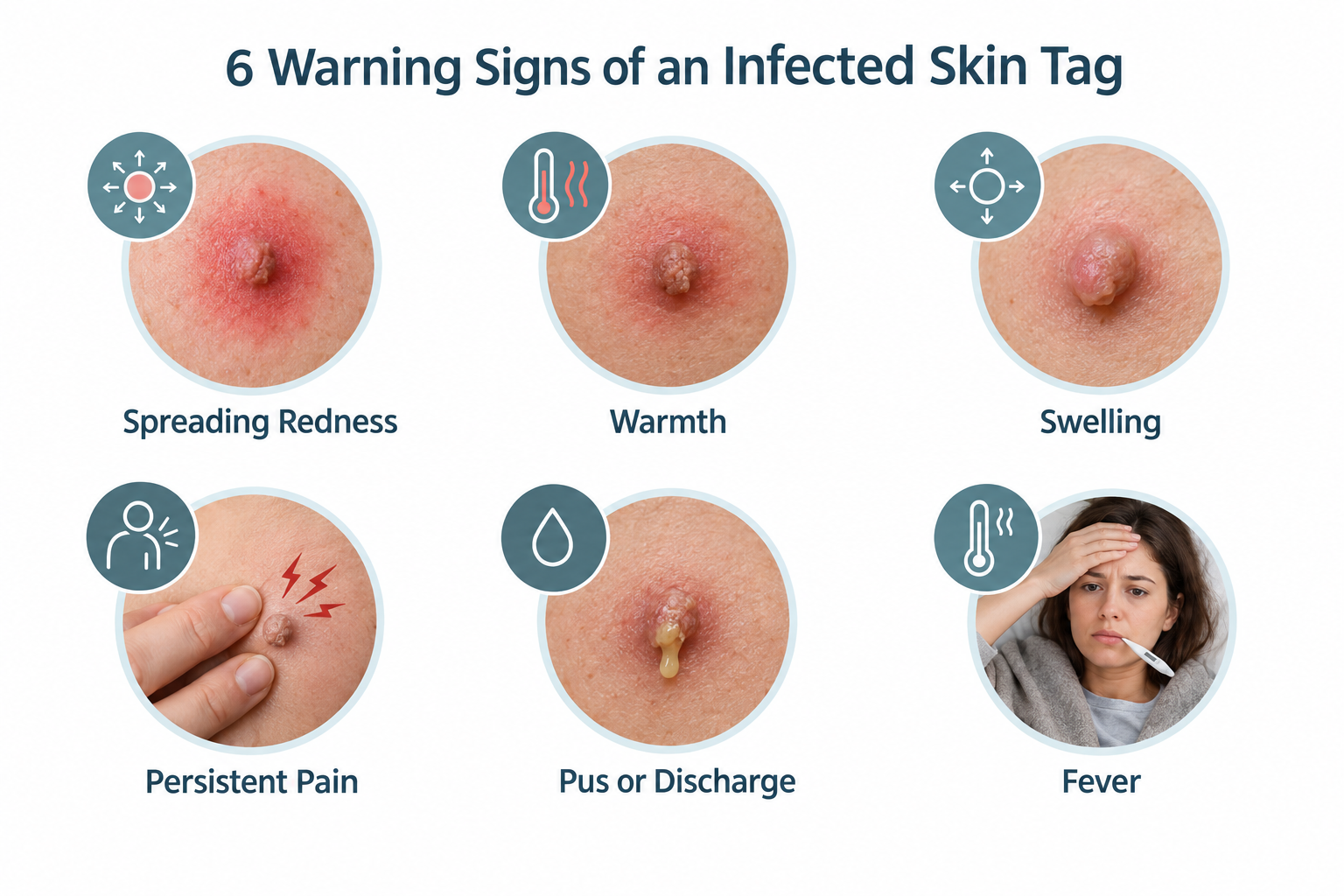
Identifying an infected skin tag requires attention to several specific changes in the appearance and feel of the growth and the surrounding skin. The following signs, particularly when they appear together or worsen over time, suggest that infection may be present and that professional assessment is warranted.
Increased Redness Around the Base
Some degree of redness around a skin tag is normal after friction or minor trauma, and it usually settles within a day or two. Redness associated with infection tends to be more intense, spreads beyond the immediate base of the skin tag into the surrounding skin, and does not improve with rest or removal of the irritating factor. A spreading red border around the skin tag is a particularly important warning sign, as it may indicate cellulitis — a bacterial infection of the deeper skin layers that requires prompt medical treatment.
Warmth and Swelling
Infected tissue typically feels warmer than the surrounding skin when touched. This warmth reflects increased blood flow to the area as the immune system responds to bacterial invasion. Swelling at the base of the skin tag or in the surrounding tissue is another hallmark of infection. The skin tag itself may appear larger or more engorged than usual, and the surrounding area may feel firm or puffy. Warmth and swelling that persist beyond 48 hours after an injury or irritation episode are worth having assessed by a healthcare professional.
Pain or Tenderness
Skin tags are not normally painful. A skin tag that has become noticeably tender to touch, or that causes a throbbing or aching sensation without being touched, may be infected. Pain that intensifies over time rather than improving is a meaningful indicator that the body is responding to an active infection rather than simple mechanical irritation. Tenderness that extends into the surrounding skin beyond the skin tag itself is also a reason to seek professional advice promptly.
Discharge or Crusting
The presence of pus — a thick, cloudy, or yellowish fluid — is a clear sign of bacterial infection. Pus forms when white blood cells accumulate at the site of infection to fight bacteria, and its presence indicates that the infection is established rather than superficial. Crusting around the base of the skin tag, particularly if the crust is yellowish or honey-coloured, can also suggest bacterial infection. Any discharge from a skin tag that has not been deliberately cut or injured should be assessed by a practitioner, as it is not a normal feature of these growths.
Darkening or Colour Change
A skin tag that turns dark purple, black, or very dark brown may have had its blood supply interrupted — a process called thrombosis or necrosis. This can happen when a skin tag is tied off at home using thread or a rubber band, or when the stalk becomes twisted. While a darkening skin tag is not always infected, the disrupted tissue is more vulnerable to bacterial invasion, and the combination of colour change with other signs such as pain, swelling, or discharge should prompt professional review. It is worth noting that a skin tag that turns black and falls off on its own after deliberate ligation may not be infected, but the wound left behind still carries infection risk and should be kept clean and monitored.
Fever or Systemic Symptoms
In most cases, an infected skin tag causes only localised symptoms. However, if the infection spreads or the individual has a weakened immune system, systemic symptoms such as fever, chills, fatigue, or swollen lymph nodes near the affected area may develop. These symptoms indicate that the infection has moved beyond the skin surface and requires urgent medical attention. Anyone experiencing fever alongside a painful, red, or swollen skin tag should seek same-day medical assessment rather than waiting to see whether the symptoms resolve.
Infected Skin Tag vs. Irritated Skin Tag: Key Differences
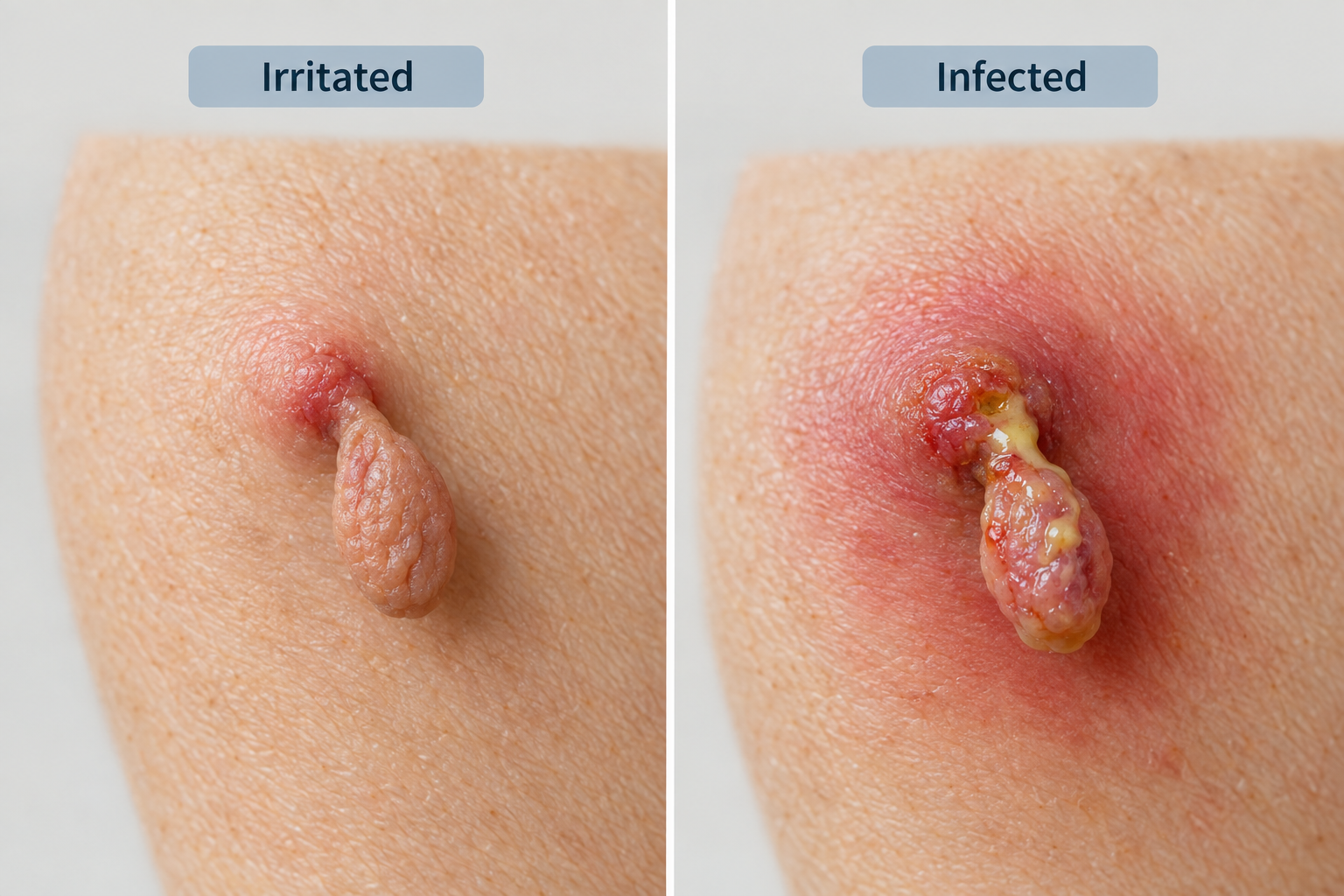
Not every uncomfortable skin tag is infected. Distinguishing between irritation and infection helps avoid unnecessary concern while also ensuring that genuine infections are not dismissed. The table below outlines the main differences between an irritated skin tag and an infected one.
| Feature | Irritated Skin Tag | Infected Skin Tag |
|---|---|---|
| Redness | Mild, localised to the base | Intense, may spread to surrounding skin |
| Warmth | Minimal or absent | Noticeable warmth at and around the site |
| Swelling | Slight puffiness, settles quickly | Persistent or worsening swelling |
| Pain | Mild tenderness after friction | Throbbing, persistent, or worsening pain |
| Discharge | None | Pus, cloudy fluid, or honey-coloured crusting |
| Duration | Improves within 24–48 hours | Worsens or does not improve over days |
| Systemic symptoms | Absent | Possible fever, fatigue, swollen lymph nodes |
| Cause | Friction, clothing, jewellery | Bacterial entry through broken skin |
If you are uncertain whether a skin tag is irritated or infected, the safest approach is to have it assessed by a qualified healthcare professional or dermatologist rather than attempting to treat it at home.
Why Home Removal Increases Infection Risk
A significant proportion of infected skin tags develop as a direct consequence of attempted home removal. Methods commonly used at home — including cutting with scissors or nail clippers, tying thread or dental floss around the stalk, applying caustic substances, or using over-the-counter freezing kits — all carry a meaningful risk of introducing bacteria into the wound or surrounding tissue.
Home cutting creates an open wound that is difficult to keep sterile, particularly in warm, moist areas such as the armpit or groin. Ligation methods, which work by cutting off blood supply to the skin tag, can cause the tissue to become necrotic before it detaches, creating a wound that is vulnerable to infection for several days. Caustic substances can cause chemical burns to the surrounding healthy skin, further disrupting the skin barrier. Even when home removal appears to succeed without immediate complications, the resulting wound may become infected in the days that follow if it is not kept properly clean.
Professional removal of skin tags, performed by a trained practitioner in a clinical setting, uses sterile equipment and appropriate technique to minimise infection risk. Common professional methods include cryotherapy (freezing with liquid nitrogen), electrocautery (using heat to remove the growth), surgical excision with a sterile blade, and laser removal. Each method has its own profile of benefits and limitations, and the most appropriate choice depends on the size, location, and number of skin tags, as well as the individual’s skin type and medical history.
Who Is at Greater Risk of a Skin Tag Infection?
While anyone with a skin tag can develop an infection following trauma or home removal, certain factors may increase the likelihood of infection or affect how quickly it resolves.
- Diabetes: Elevated blood glucose levels can impair immune function and slow wound healing, making infections more likely to develop and harder to clear. People with diabetes are also more prone to skin tag formation in the first place.
- Obesity: Skin folds in individuals with higher body weight create warm, moist environments where bacteria thrive, increasing the risk of infection in skin tags located in these areas.
- Immunosuppression: People taking immunosuppressant medications, those undergoing chemotherapy, or those with conditions that affect immune function may be less able to contain a localised skin infection before it spreads.
- Poor skin hygiene in affected areas: Inadequate cleaning of skin folds or areas prone to sweating can allow bacteria to accumulate around skin tags, increasing infection risk after any minor trauma.
- Repeated friction: Skin tags in areas of constant friction — such as the collar line, bra strap area, or inner thighs — are more likely to sustain repeated minor trauma that gradually breaks down the skin surface.
What to Do If You Suspect an Infected Skin Tag
If a skin tag shows signs of infection, the appropriate response depends on the severity of the symptoms. For mild redness and tenderness without discharge or spreading redness, keeping the area clean and dry, avoiding further friction, and monitoring for worsening symptoms over 24 to 48 hours is a reasonable initial step. Gentle cleansing with mild soap and water is appropriate; antiseptic solutions should only be used on advice from a healthcare professional, as some can irritate the surrounding skin.
If symptoms worsen, if pus or discharge is present, if redness spreads beyond the immediate area, or if any systemic symptoms such as fever develop, professional medical assessment should be sought promptly. A general practitioner or dermatologist can examine the skin tag, determine whether bacterial infection is present, and prescribe topical or oral antibiotics if appropriate. Attempting to drain pus or remove an infected skin tag at home is not recommended, as this can worsen the infection and increase the risk of scarring.
Once the infection has fully resolved and the skin has healed, a practitioner can discuss safe options for removing the skin tag to prevent recurrence of the problem. Removal of an actively infected skin tag is generally deferred until the infection has cleared, as operating on infected tissue carries additional risks.
Safe Skin Tag Removal Options After Infection Has Cleared
After a skin tag infection has been successfully treated and the surrounding skin has returned to normal, removal of the skin tag may be considered to prevent future episodes of irritation or infection. Several clinically performed methods are available, and the most suitable option depends on individual factors including the size and location of the skin tag, skin type, and any relevant medical history.
Cryotherapy involves applying liquid nitrogen to the skin tag, causing the tissue to freeze and eventually fall away. It is a commonly used method for small to medium skin tags and typically requires one or two treatment sessions. Temporary redness and blistering at the treatment site are expected side effects.
Electrocautery uses a small electrical current to burn through the stalk of the skin tag, removing it and simultaneously sealing the wound. It is effective for most skin tag sizes and locations, and the risk of bleeding is low. Some temporary discolouration or scarring at the treatment site is possible.
Surgical excision involves cutting the skin tag away with a sterile blade or surgical scissors under local anaesthetic. This method provides immediate removal and allows the tissue to be sent for histological examination if there is any clinical uncertainty about the nature of the growth.
Laser removal uses focused light energy to destroy the skin tag tissue. It is particularly useful for skin tags in sensitive areas such as around the eyelids, where precision is important. Multiple sessions may be required for larger growths.
A qualified practitioner will advise on the most appropriate method following a clinical assessment. It is important to disclose any relevant medical history, medications, or previous skin reactions before undergoing any removal procedure.
When a Skin Tag May Not Be a Skin Tag
Not every small growth that resembles a skin tag is actually an acrochordon. Several other skin conditions can present with a similar appearance, and some of these require different management. Conditions that may be mistaken for skin tags include warts (caused by human papillomavirus), molluscum contagiosum (a viral skin infection), sebaceous cysts, dermatofibromas, and in rare cases, malignant growths such as melanoma or squamous cell carcinoma.
Any growth that changes rapidly in size, bleeds without trauma, has an irregular border, contains multiple colours, or does not match the typical appearance of a skin tag should be assessed by a dermatologist rather than assumed to be benign. This is particularly important before any removal attempt, as removing a malignant lesion without proper assessment can delay diagnosis and appropriate treatment. A practitioner can examine the growth and, if necessary, arrange a biopsy to confirm its nature.
Frequently Asked Questions
Can I treat an infected skin tag at home?
Mild irritation around a skin tag can sometimes be managed at home by keeping the area clean and dry and avoiding further friction. However, signs of genuine infection — such as spreading redness, pus, persistent pain, or fever — require professional medical assessment. Attempting to drain or remove an infected skin tag at home risks worsening the infection and increasing the chance of scarring or complications.
How long does it take for an infected skin tag to heal?
With appropriate treatment, a localised skin tag infection typically begins to improve within a few days of starting antibiotics or appropriate wound care. Complete resolution of redness and tenderness may take one to two weeks depending on the severity of the infection and the individual’s general health. People with diabetes or weakened immune systems may experience a slower recovery.
Will an infected skin tag fall off on its own?
An infected skin tag is unlikely to fall off on its own in the way that a ligated skin tag might. Infection does not cause the stalk to detach; it causes inflammation and tissue damage. Without treatment, an infection may worsen rather than resolve. Professional assessment and appropriate treatment are the recommended approach.
Is it normal for a skin tag to bleed?
Minor bleeding can occur if a skin tag is caught on clothing or jewellery and torn. Persistent or spontaneous bleeding from a skin tag is not typical and should be assessed by a practitioner, as it may indicate that the growth is not a simple skin tag or that the tissue has been significantly damaged.
Can skin tags be prevented from becoming infected?
Reducing friction in areas where skin tags are present — by choosing smooth-fitting clothing, using barrier creams in skin folds, and keeping the area clean and dry — can help reduce the risk of irritation and subsequent infection. Avoiding home removal attempts is the single most effective way to prevent infection. Professional removal of troublesome skin tags eliminates the ongoing risk of irritation and infection at that site.
Should I see a GP or a dermatologist about an infected skin tag?
Either is appropriate depending on the severity of symptoms and local healthcare access. A GP can assess and treat a straightforward skin tag infection and refer to a dermatologist if there is any uncertainty about the diagnosis or if the infection does not respond to initial treatment. A dermatologist can also advise on safe removal options once the infection has resolved.
When to Act on a Skin Tag That Concerns You
Most skin tags remain entirely benign throughout a person’s life and require no treatment unless they cause discomfort or cosmetic concern. However, a skin tag that shows signs of infection — persistent redness, warmth, swelling, pain, or discharge — deserves prompt professional attention rather than a wait-and-see approach at home. Early assessment allows infection to be confirmed or ruled out, appropriate treatment to be started quickly if needed, and safe removal to be planned once the skin has healed.
If you are unsure whether a skin tag is infected, irritated, or something else entirely, a consultation with a qualified healthcare professional or dermatologist is the most reliable way to get an accurate answer. Attempting to diagnose or treat the problem at home — particularly through removal methods — carries risks that a brief clinical assessment can help you avoid. Once any infection has resolved, a practitioner can discuss the full range of safe, clinically performed removal options suited to your individual circumstances.


