
Microneedling Healing Stages: What to Expect During Recovery
Microneedling creates controlled micro-injuries in the skin to stimulate collagen production and skin remodelling. Understanding what happens to your skin during each recovery phase helps you manage expectations, follow aftercare correctly, and recognise when something may need clinical attention. This article explains the microneedling healing stages in practical detail, from the first hours after treatment through to the point where results become visible.
Key Takeaways
- Microneedling recovery typically progresses through four overlapping phases: immediate inflammation, active repair, proliferation, and remodelling.
- Redness, tightness, and mild swelling in the first 24 to 72 hours are expected responses, not signs of a problem.
- Visible skin improvements, including texture refinement and reduced scarring, generally emerge over four to twelve weeks as collagen matures.
- Aftercare choices during the healing period directly influence both comfort and the quality of the final result.
- Individual healing speed varies depending on needle depth, skin type, age, and overall health.
How Microneedling Triggers the Healing Cascade
Microneedling uses a device fitted with fine needles to create thousands of microscopic channels in the skin’s surface. These controlled punctures reach the dermis — the deeper structural layer beneath the outer epidermis — without removing tissue. The skin interprets these micro-injuries as damage and activates its natural wound-healing response. This cascade involves platelets, growth factors, fibroblasts, and eventually new collagen and elastin fibres. The healing process is not a side effect of microneedling; it is the mechanism through which the treatment produces its results. Because the injuries are superficial and uniform, the skin heals efficiently, which is why downtime is relatively short compared with more ablative procedures such as laser resurfacing.
The depth of needle penetration influences both the intensity of the healing response and the duration of recovery. Shallower settings used for general skin quality improvements typically produce milder and shorter-lived reactions. Deeper settings used for acne scarring or more significant textural concerns may produce a more pronounced inflammatory phase and a longer overall recovery period. A qualified practitioner will select needle depth based on the treatment area, skin concern, and individual skin characteristics.
Stage One: Immediate Reaction (Hours 0 to 24)
Within minutes of a microneedling session, the skin begins its acute inflammatory response. Blood vessels in the treated area dilate to increase blood flow, delivering immune cells, platelets, and growth factors to the site. This is why the skin appears red, feels warm, and may look slightly swollen immediately after treatment. The sensation is often described as similar to mild sunburn — a diffuse warmth and tightness across the treated area.
Pinpoint bleeding is common during the procedure itself, particularly at deeper needle settings, and is a normal part of the process. By the time the appointment ends, active bleeding will have stopped. Some patients notice a flushed, almost sunburned appearance that persists for several hours. Mild oedema, or puffiness, may be more noticeable the morning after treatment, particularly around the eyes and cheeks where skin is thinner.
During this first stage, the skin’s barrier function is temporarily compromised. The micro-channels created by the needles remain open for a short period, which is why aftercare in the first 24 hours is particularly important. Applying anything irritating, occlusive, or potentially contaminated to the skin during this window carries a higher risk of adverse reaction than it would on intact skin. Most practitioners advise avoiding makeup, active skincare ingredients, and sun exposure for at least the first 24 hours.
Stage Two: Active Repair and Inflammation (Days 1 to 3)
The second microneedling healing stage involves the skin actively repairing the micro-channels and managing the inflammatory signals triggered during treatment. Redness typically peaks within the first 24 hours and then gradually subsides over the following one to two days. For most patients receiving a standard facial treatment at moderate needle depth, significant redness has resolved by the end of day two or three.
Skin may feel dry, tight, or slightly rough during this phase. Some patients notice very fine flaking or a sensation of skin tightness, which reflects the early stages of epidermal repair. This is not the same as the peeling associated with chemical peels; microneedling-related flaking is usually subtle and may not be visible to others. Applying a gentle, fragrance-free moisturiser helps maintain comfort and supports barrier recovery without interfering with the healing process.
Swelling, if present, generally resolves within 48 to 72 hours. Patients who have had treatment near the eyes or lips may notice slightly more pronounced puffiness in these areas due to the looseness of the surrounding tissue. Sleeping with the head slightly elevated on the first night can help minimise morning swelling. Avoiding alcohol, strenuous exercise, and excessive heat — including saunas and hot showers — during this stage helps prevent prolonged inflammation.
It is worth noting that the degree of redness and swelling varies considerably between individuals. Patients with fair or sensitive skin, those who have had deeper needle settings, or those who have had a larger treatment area covered may experience a more pronounced reaction than someone with thicker skin receiving a superficial treatment. Neither a very mild reaction nor a more noticeable one is necessarily a sign that the treatment has or has not worked.
Stage Three: Proliferation and Early Remodelling (Days 3 to 14)
Once the acute inflammatory phase settles, the skin enters a proliferative stage in which fibroblasts — the cells responsible for producing structural proteins — become active. Fibroblasts begin synthesising new collagen and elastin in response to the growth factors released during the earlier inflammatory phase. This is the stage where the biological work that produces visible improvements is underway, even though the skin’s surface may look relatively normal by this point.
Most patients find that by day four or five, their skin looks presentable enough to return to normal social and professional activities. Residual pinkness may persist, particularly in fair-skinned individuals, but is usually mild enough to be covered with mineral makeup if needed. Many practitioners recommend waiting at least 24 to 48 hours before applying any makeup, and suggest mineral formulations over liquid foundations during the first week, as they are less likely to irritate recovering skin.
During the proliferative phase, the skin may go through a brief period where it looks slightly dull or uneven before it begins to look better. This is a normal part of the remodelling process and does not indicate a poor outcome. Some patients describe their skin as looking temporarily worse around days three to five before the improvement becomes apparent. Staying consistent with gentle aftercare — hydration, sun protection, and avoiding active ingredients such as retinoids, AHAs, and BHAs until the skin has fully settled — supports this phase effectively.
Patients who have had microneedling for acne scarring or deeper textural concerns may notice that the treated areas feel slightly firmer or that the skin has a different texture during this phase. This reflects early collagen deposition and is a positive sign of the remodelling process beginning.
Stage Four: Collagen Maturation and Visible Results (Weeks 2 to 12)
The final and longest microneedling healing stage is collagen maturation, during which newly formed collagen fibres organise, cross-link, and strengthen. This process continues for several weeks to months after treatment. The visible improvements associated with microneedling — smoother skin texture, reduced appearance of fine lines, improved scar appearance, and more even skin tone — emerge gradually as this remodelling progresses.
Most patients begin to notice meaningful changes between three and six weeks after treatment. The skin may appear more luminous, pores may look refined, and areas of scarring or uneven texture may appear softer. These changes continue to develop, with many patients reporting their best results at around eight to twelve weeks post-treatment. Because the improvement is gradual and tied to biological processes rather than an immediate surface change, microneedling results look natural rather than sudden.
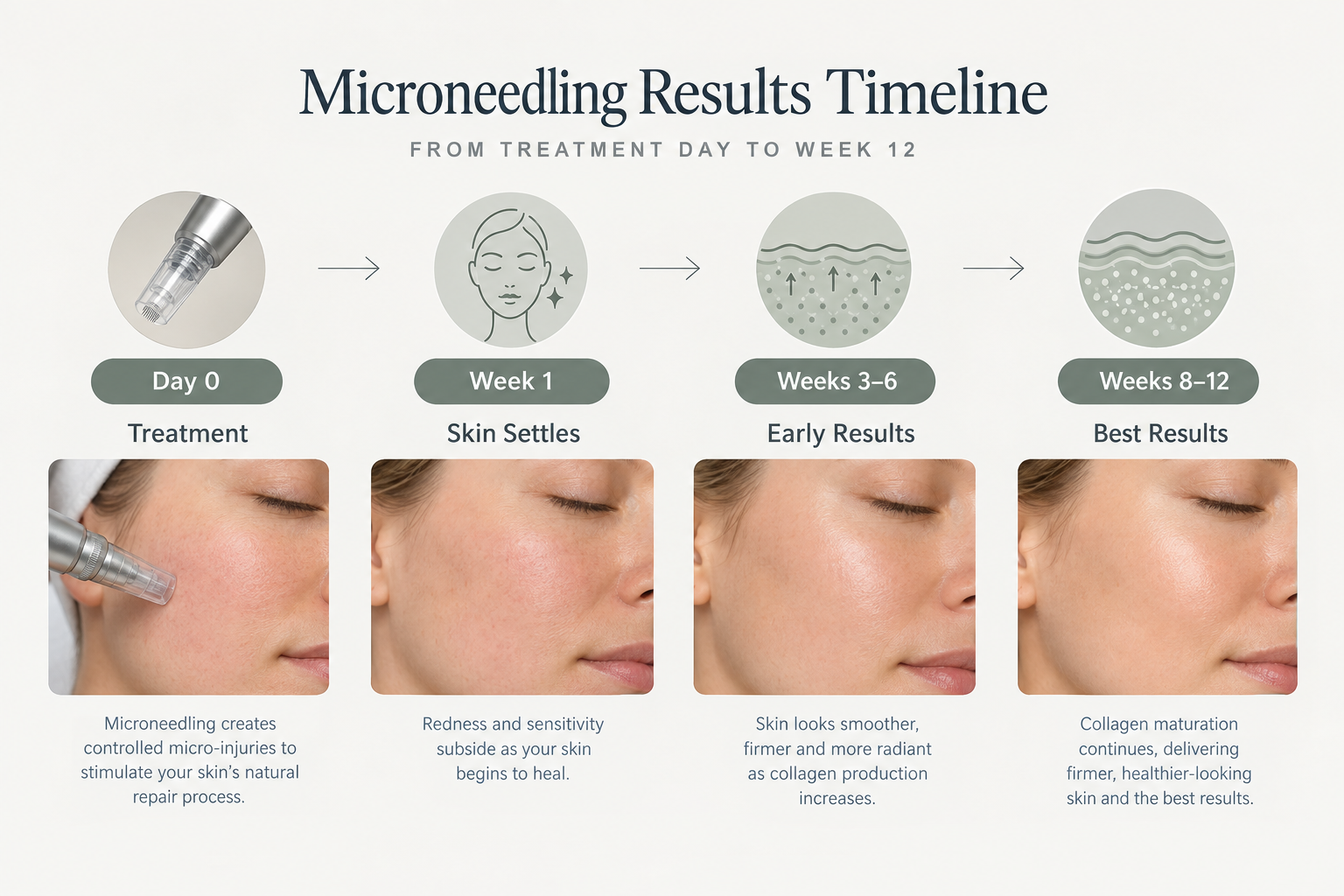
It is important to understand that a single microneedling session initiates one cycle of this healing and remodelling process. For concerns such as moderate acne scarring, significant skin laxity, or stretch marks, a course of treatments spaced four to six weeks apart is typically recommended to accumulate collagen stimulation across multiple cycles. The number of sessions required depends on the severity of the concern, the needle depth used, and individual healing capacity. A practitioner will advise on a realistic treatment plan during consultation.
Aftercare That Supports Each Healing Stage
Aftercare during the microneedling healing stages is not optional — it directly affects both comfort during recovery and the quality of the final result. The following principles apply across the recovery period, with some adjustments depending on the specific stage.
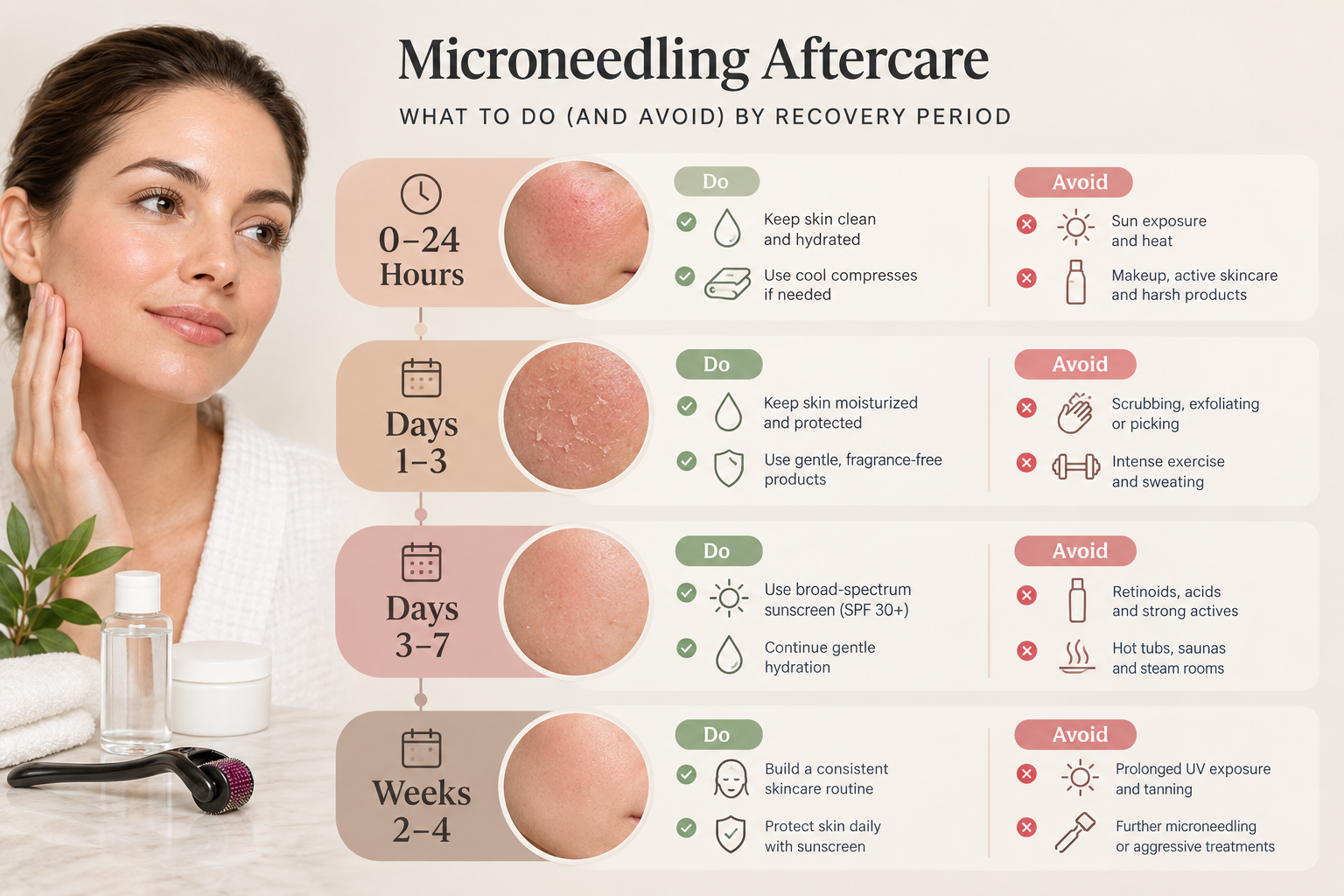
- First 24 hours: Avoid touching the face unnecessarily, do not apply makeup, avoid active skincare ingredients, and keep the skin clean with a gentle, non-foaming cleanser. Apply a practitioner-recommended soothing serum or moisturiser.
- Days 1 to 3: Continue gentle cleansing and moisturising. Avoid heat, strenuous exercise, swimming, and direct sun exposure. Do not use retinoids, vitamin C, AHAs, BHAs, or any exfoliating products.
- Days 3 to 7: Introduce SPF 30 or higher broad-spectrum sunscreen as a daily essential. The skin is more photosensitive during recovery, and UV exposure can worsen post-inflammatory pigmentation, particularly in medium to darker skin tones.
- Weeks 2 to 4: Gradually reintroduce active ingredients only when the skin feels fully settled and with practitioner guidance. Hyaluronic acid and peptide-based serums are generally well tolerated earlier than retinoids or acids.
- Ongoing: Consistent sun protection throughout the remodelling phase helps protect the new collagen being formed and reduces the risk of pigmentation changes.
Practitioners may also recommend specific post-treatment products, such as growth factor serums or calming formulations containing ingredients like centella asiatica or niacinamide, to support recovery. Always follow the specific aftercare guidance provided by your treating practitioner, as recommendations may vary depending on the device used, needle depth, and any adjunct treatments applied during the session.
What Is Normal and What May Need Attention
Understanding the difference between expected healing responses and signs that warrant clinical review helps patients feel confident during recovery. The following are generally considered normal within the expected timeframes described above.
- Redness and warmth for up to 72 hours
- Mild swelling, particularly around the eyes, for 24 to 48 hours
- Skin tightness and dryness during the first week
- Very fine, subtle flaking around days three to five
- Temporary dullness or uneven appearance before improvement becomes visible
- Mild sensitivity to skincare products for one to two weeks
The following are less typical and may warrant contacting the treating clinic for advice.
- Redness that worsens rather than improves after 72 hours
- Significant swelling that does not reduce within three days
- Pustules, crusting, or signs of infection such as increasing pain, heat, or discharge
- Prolonged or spreading rash
- Blistering or skin breakdown beyond minor surface flaking
- Darkening of the skin in treated areas that persists beyond two weeks
Post-inflammatory hyperpigmentation — a darkening of the skin in response to inflammation — is a recognised risk of microneedling, particularly in patients with Fitzpatrick skin types IV to VI. Appropriate needle depth selection, adequate skin preparation, and diligent sun protection during recovery can reduce this risk. If pigmentation changes occur, a practitioner can advise on appropriate management.
Factors That Influence Healing Speed and Outcome
Not every patient heals at the same rate, and several factors influence how quickly each microneedling healing stage progresses and how pronounced the final result may be.
Needle depth and treatment intensity are among the most significant variables. Deeper treatments produce a stronger inflammatory response and a longer recovery but may also stimulate more substantial collagen remodelling. Superficial treatments have minimal downtime but may require more sessions to achieve comparable results for deeper concerns.
Age affects healing speed because fibroblast activity and collagen synthesis naturally slow with age. Older patients may find that the remodelling phase takes longer and that results develop more gradually, though microneedling can still produce meaningful improvements across a wide age range.
Skin type and tone influence both the healing response and the risk profile. Patients with sensitive or reactive skin may experience a more pronounced inflammatory phase. Those with darker skin tones require careful needle depth selection to minimise the risk of post-inflammatory pigmentation.
Overall health and lifestyle play a role in wound healing generally. Adequate hydration, good nutrition, avoiding smoking, and limiting alcohol consumption during the recovery period all support the skin’s ability to repair and remodel efficiently.
Concurrent treatments or topical agents applied during the session — such as platelet-rich plasma (PRP), hyaluronic acid, or growth factor serums — may influence the healing environment and the degree of collagen stimulation, though the evidence for specific combinations continues to develop.
Microneedling Recovery Compared with Similar Treatments
Patients considering microneedling sometimes compare its recovery with that of other skin resurfacing or collagen-stimulating treatments. Microneedling generally involves less downtime than ablative fractional laser resurfacing, which removes layers of skin and typically requires five to ten days of more significant recovery. Chemical peels vary widely depending on depth; superficial peels may have similar or shorter downtime, while medium-depth peels involve more pronounced peeling and a longer healing period.
Radiofrequency microneedling — which combines the needle-based micro-injury with radiofrequency energy delivered into the dermis — may produce a more intense immediate reaction and slightly longer redness compared with standard microneedling, but the recovery pattern follows a similar overall trajectory. The choice between these options depends on the specific concern being treated, skin type, and the degree of downtime a patient can accommodate, and is best discussed with a qualified practitioner during a thorough consultation.
Frequently Asked Questions
How long does redness last after microneedling?
Redness typically peaks within the first few hours after treatment and begins to subside within 24 to 48 hours. Most patients find that noticeable redness has resolved by day two or three, though fair-skinned individuals or those who have had deeper treatments may experience mild pinkness for up to five days.
When can I wear makeup after microneedling?
Most practitioners recommend waiting at least 24 hours before applying makeup, and some advise waiting 48 hours. When makeup is reintroduced, mineral formulations are generally preferred during the first week as they are less likely to irritate skin that is still in the early stages of recovery.
Is it normal for skin to look worse before it looks better?
Yes. Some patients notice a brief period around days three to five where the skin appears dull, slightly uneven, or less clear than before treatment. This is a recognised part of the transition between the inflammatory and proliferative healing phases and does not indicate a poor outcome.
Can I exercise after microneedling?
Strenuous exercise is generally best avoided for the first 24 to 48 hours after treatment. Increased body heat, sweating, and elevated blood pressure can prolong inflammation and increase the risk of irritation to skin that is still in the acute healing phase. Light activity is usually acceptable after the first day, but follow your practitioner’s specific guidance.
How many microneedling sessions will I need?
The number of sessions depends on the concern being treated. General skin quality improvements may be achievable with two to three sessions, while moderate to significant acne scarring typically requires a course of three to six treatments spaced four to six weeks apart. A practitioner will recommend a treatment plan based on your individual assessment.
When will I see the final results of microneedling?
Because results depend on collagen maturation, they develop gradually. Most patients notice meaningful improvement between three and six weeks after treatment, with continued refinement up to twelve weeks or beyond. Results from a full course of treatments accumulate over several months.
Can microneedling cause permanent scarring?
When performed by a trained practitioner using appropriate settings for the patient’s skin type and concern, the risk of permanent scarring is low. However, as with any procedure that creates skin injury, adverse outcomes are possible. Choosing a qualified and experienced practitioner, disclosing your full medical history, and following aftercare instructions carefully all reduce the risk of complications.
Planning Your Recovery Around the Microneedling Healing Stages
Microneedling recovery is manageable for most patients, but it benefits from realistic planning. The acute phase — redness, tightness, and mild swelling — typically resolves within two to three days, making it practical to schedule treatment before a period when you can avoid significant social or professional commitments for at least 48 hours. The subsequent healing stages are largely invisible to others, though the skin may feel sensitive and require adjusted skincare for one to two weeks.
Understanding that the most significant biological work happens beneath the surface during the weeks following treatment helps set appropriate expectations. Visible improvements are not immediate, and patience during the remodelling phase is part of the process. Consistent sun protection, gentle skincare, and avoiding anything that could disrupt the healing environment give the skin the best conditions to produce the collagen remodelling that microneedling is designed to stimulate.
If you are considering microneedling for a specific concern — whether acne scarring, fine lines, skin texture, or enlarged pores — a consultation with a qualified aesthetic practitioner will help determine whether microneedling is appropriate for your skin type and goals, what needle depth and number of sessions may be suitable, and what a realistic recovery and results timeline looks like for your individual circumstances.


