
How Long Does Masseter Botox Take to Work?
Masseter Botox is one of the more popular non-surgical treatments for reducing jaw bulk, softening a wide or square jawline, and in some cases helping to manage teeth grinding. If you have recently had the treatment or are considering it, one of the most common questions is how long it takes before you notice a difference. The honest answer is that the timeline has two distinct phases: a relatively quick initial onset of the muscle-relaxing effect, followed by a slower, more gradual change in jaw shape that can take several months to become fully visible.
Key Takeaways
- The initial muscle-relaxing effect of botulinum toxin in the masseter typically begins within two to four weeks, though some patients notice early changes sooner.
- Visible jaw slimming or contouring results generally take three to six months to develop fully, because the masseter muscle must gradually reduce in size after its activity is reduced.
- Results from masseter botulinum toxin treatment typically last between four and six months, though individual variation is significant.
- Multiple treatment sessions are often recommended to achieve and maintain optimal results, particularly for patients with a well-developed masseter muscle.
- Onset and outcome depend on factors including the dose used, individual muscle size, metabolism, and the practitioner’s technique.
What Is Masseter Botox and How Does It Work?
Botulinum toxin type A — commonly referred to by brand names such as Botox, Dysport, or Azzalure — is a purified protein that temporarily reduces muscle activity when injected into a targeted muscle. When used in the masseter muscle, which is the large chewing muscle located at the angle of the jaw on each side of the face, the toxin partially inhibits the nerve signals that cause the muscle to contract with full force. This reduction in muscle activity, sustained over several months, can lead to a gradual decrease in the physical size of the masseter muscle — a process known as muscle atrophy or, more precisely in this context, disuse-related muscle reduction.
The masseter is one of the strongest muscles in the body relative to its size. In some individuals, it becomes enlarged — a condition sometimes called masseter hypertrophy — due to habitual teeth grinding (bruxism), jaw clenching, or simply genetic predisposition. An enlarged masseter can create a wider, squarer lower face. Botulinum toxin injections into this muscle are used both for aesthetic jaw slimming and, in some patients, to reduce the discomfort associated with bruxism and jaw tension. It is worth noting that while botulinum toxin may help reduce the symptoms of bruxism, it is not a cure for the underlying condition, and a dental assessment remains important for patients with significant teeth grinding.
The Masseter Botox Timeline: What to Expect and When
Understanding the masseter Botox timeline requires separating two distinct processes: the neuromuscular onset of the toxin itself, and the slower structural change in the muscle that produces visible jaw slimming.
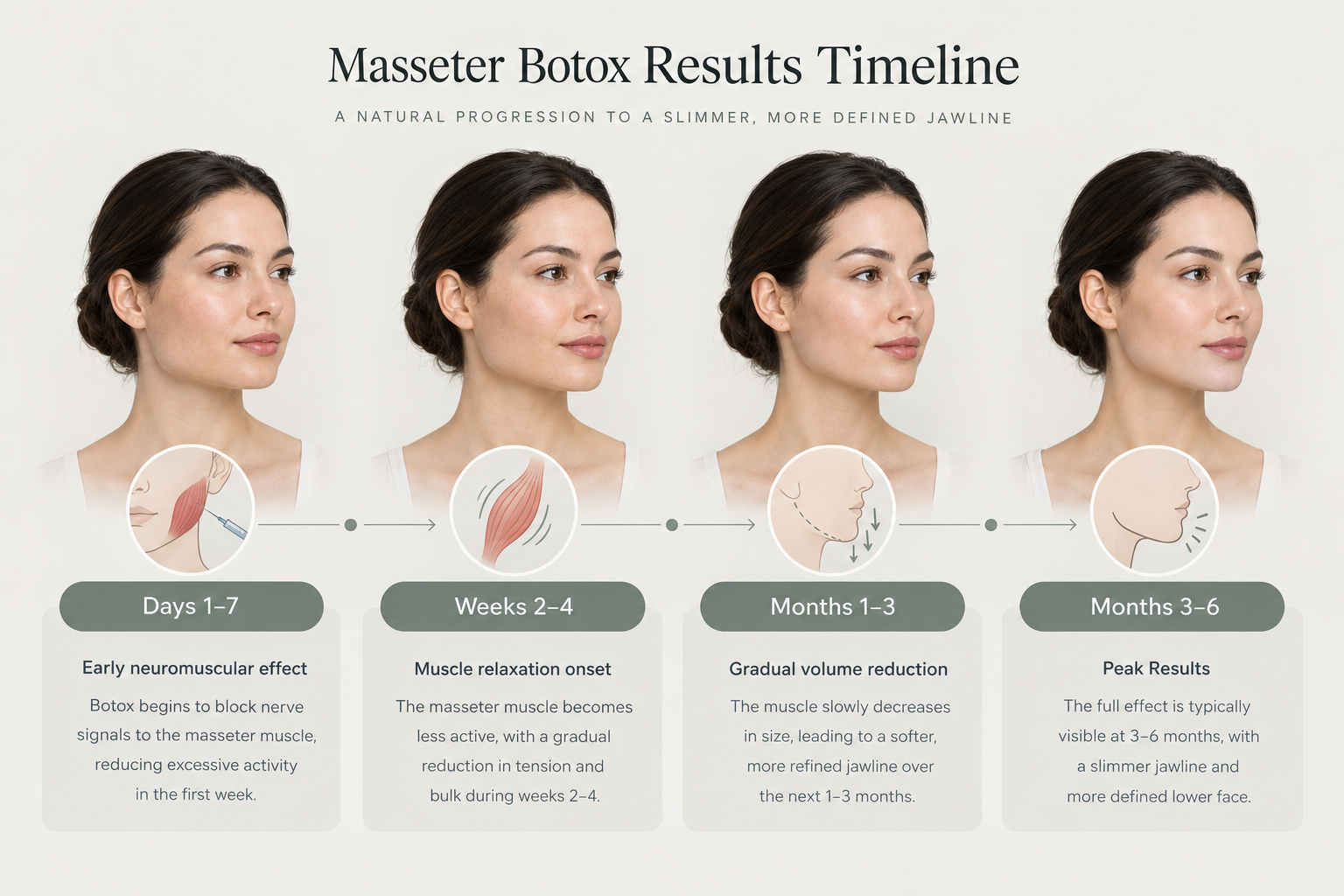
Days One to Seven: Early Neuromuscular Effect
Botulinum toxin begins binding to nerve terminals at the injection site within hours of administration, but the functional effect on muscle activity takes longer to become apparent. In the masseter, most patients do not notice a significant change in jaw strength or movement during the first week. Some individuals report a mild sense of heaviness or a subtle difference in how the jaw feels when chewing, but visible changes to the jaw shape are not expected at this stage. Mild swelling, tenderness, or small bruises at the injection sites are common in the first few days and are unrelated to the treatment’s effectiveness.
Weeks Two to Four: Initial Onset of Muscle Relaxation
The neuromuscular effect of botulinum toxin in the masseter typically becomes noticeable between two and four weeks after treatment. During this period, patients often notice that the jaw feels less tense, that clenching feels weaker or less forceful, and that symptoms of jaw tension or bruxism-related discomfort may begin to ease. For patients who had the treatment primarily for bruxism relief, this phase often brings the most immediately appreciated benefit. However, the jaw shape itself is unlikely to look significantly different at this point, because the muscle has only recently begun to experience reduced activity and has not yet had time to reduce in volume.
Months One to Three: Gradual Muscle Volume Reduction
The visible slimming effect of masseter botulinum toxin treatment develops gradually as the partially relaxed muscle begins to reduce in size. This process is not immediate — muscle tissue responds slowly to reduced workload, and meaningful volume reduction in the masseter typically becomes visible between four and eight weeks after treatment, with more noticeable changes appearing around the two to three month mark. Patients often describe the jaw appearing softer, less angular, or more tapered during this phase. The degree of change depends significantly on how developed the masseter was before treatment and the dose of botulinum toxin used.
Months Three to Six: Peak Results and Maintenance Window
For most patients, the most visible jaw contouring results from masseter botulinum toxin treatment are seen between three and six months after the injection. By this point, the combination of reduced muscle activity and gradual muscle volume reduction has had time to produce a meaningful change in the lower face profile. This is also the period during which the effects begin to wear off for many patients, as the botulinum toxin is gradually metabolised and nerve-muscle communication is restored. Repeat treatment is typically recommended before the muscle fully regains its previous level of activity, in order to maintain the slimming effect and, over successive treatments, potentially achieve longer-lasting results.
Why Does Jaw Slimming Take Longer Than Facial Line Reduction?
Patients who have previously had botulinum toxin for forehead lines or frown lines often expect a similar rapid onset when they have masseter treatment. The key difference is the mechanism of the visible result. For dynamic facial lines, the improvement is seen relatively quickly — often within one to two weeks — because the wrinkle softens as soon as the overlying muscle stops contracting. In the masseter, the aesthetic goal is not simply to relax a muscle but to reduce the physical bulk of a large, well-developed muscle over time. This structural change requires sustained reduced activity across several months, which is why the full aesthetic result of masseter botulinum toxin treatment takes considerably longer to appear than the results of botulinum toxin used for facial lines.
Factors That Affect How Quickly Masseter Botox Works
Several variables influence both the speed of onset and the degree of visible change following masseter botulinum toxin treatment.
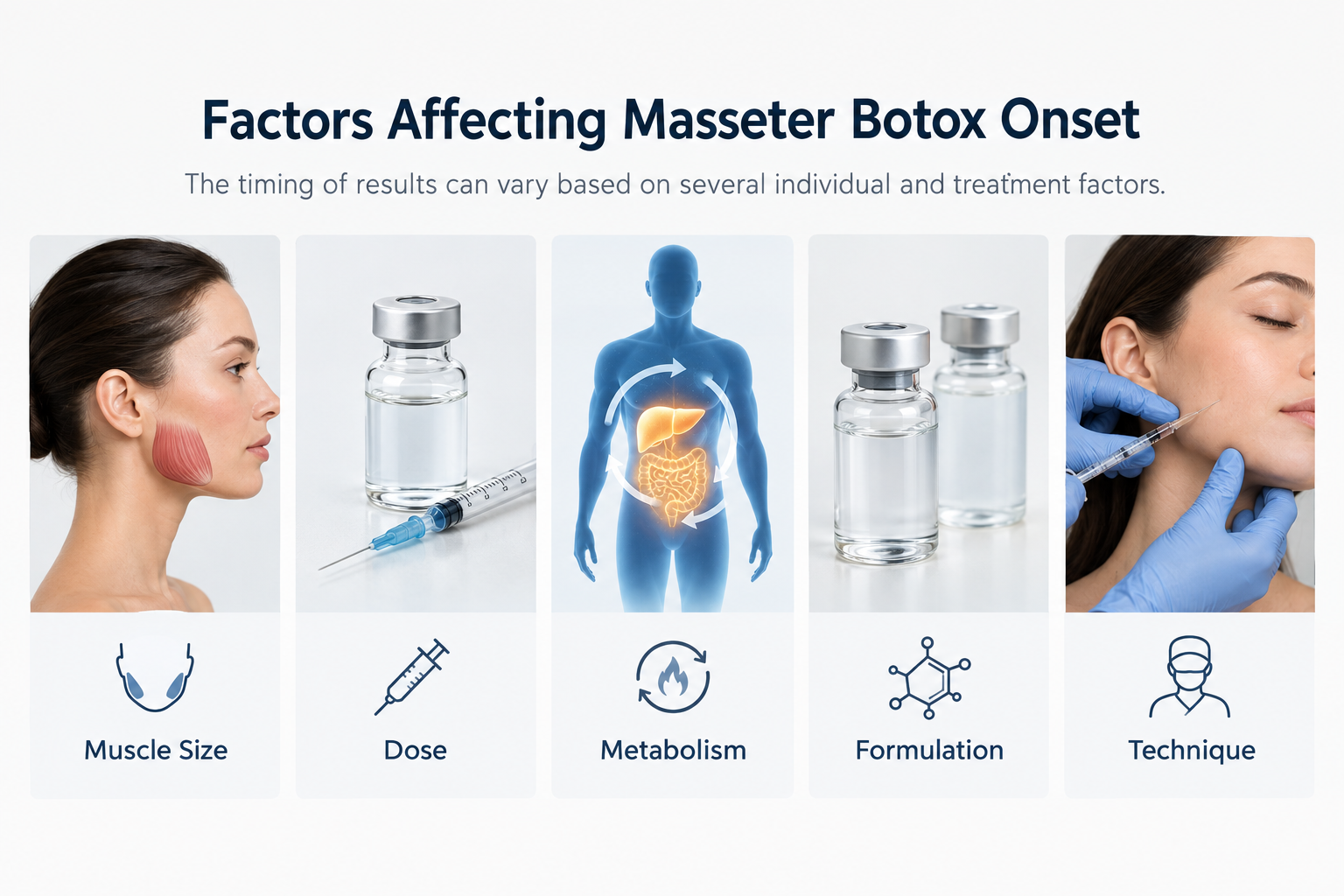
- Masseter muscle size: Patients with a significantly enlarged masseter due to hypertrophy or chronic bruxism may require more time and potentially more than one treatment session before a noticeable reduction in jaw width is visible. A smaller or moderately developed masseter may respond more quickly.
- Dose of botulinum toxin: The amount of botulinum toxin injected into each masseter influences the degree of muscle relaxation achieved. Insufficient dosing may produce a limited or slow response, while an appropriate dose for the individual’s muscle size is more likely to produce a meaningful result within the expected timeframe. Exact dosing decisions are made by the treating practitioner based on clinical assessment.
- Individual metabolism: Some individuals metabolise botulinum toxin more quickly than others, which can affect both the speed of onset and the duration of effect. Patients who metabolise the toxin rapidly may notice that results appear more slowly and wear off sooner.
- Botulinum toxin brand and formulation: Different botulinum toxin products — such as Botox (onabotulinumtoxinA), Dysport (abobotulinumtoxinA), and Azzalure — have slightly different formulations and unit systems. These differences can influence onset characteristics, though the clinical significance for masseter treatment specifically varies and units between brands are not directly interchangeable.
- Practitioner technique and injection placement: Accurate placement of the injections within the masseter muscle is important for achieving an effective and consistent result. Experienced practitioners assess the muscle’s size, shape, and distribution before determining injection points.
- Number of previous treatments: Patients who have had repeated masseter botulinum toxin treatments over time may find that the muscle has already undergone some degree of reduction, meaning subsequent treatments may produce results that appear more quickly or are more pronounced.
What Does the Treatment Appointment Involve?
A masseter botulinum toxin appointment is typically brief, often taking between fifteen and thirty minutes including consultation time. The practitioner will assess the masseter muscle by asking the patient to clench their teeth, which makes the muscle visible and palpable at the angle of the jaw. This assessment helps determine the appropriate injection sites and dose. The skin over the injection area is usually cleaned, and a topical anaesthetic cream may be offered, though many patients find the injections tolerable without it. A small number of injections are made into each masseter, and the appointment is generally well tolerated.
After the injections, patients are typically advised to avoid rubbing or massaging the treated area for several hours, to remain upright for a short period, and to avoid strenuous exercise on the day of treatment. Specific aftercare instructions vary between practitioners and should be followed carefully. Most patients return to normal activities immediately after the appointment.
How Long Do Masseter Botox Results Last?
The effects of botulinum toxin in the masseter muscle typically last between four and six months, though this varies considerably between individuals. Some patients find their results last closer to three months, while others may notice effects persisting for up to six months or slightly longer. Over time, with repeated treatments, some patients report that the intervals between sessions can be extended, possibly because the masseter muscle has undergone sustained reduction and requires less frequent maintenance. However, this is not guaranteed, and individual response varies.
When the botulinum toxin wears off, the masseter muscle gradually regains its activity and, over time, may return to its previous size if treatment is not repeated. For patients who had the treatment primarily for jaw slimming, this means that ongoing maintenance sessions are generally required to sustain the result. For bruxism-related symptoms, the return of full muscle activity may also mean a gradual return of jaw tension or grinding-related discomfort.
Realistic Results: What Masseter Botox Can and Cannot Do
Masseter botulinum toxin treatment can produce a meaningful reduction in jaw width and a softer lower face contour in patients whose wide or square jaw is primarily due to masseter muscle bulk. The degree of change varies depending on the individual’s anatomy, the size of the masseter before treatment, and the number of sessions completed. Most patients with genuine masseter hypertrophy notice a visible difference after one or two treatment sessions, though the full effect may not be apparent until several months after the first treatment.
It is important to understand that masseter botulinum toxin treatment addresses muscle bulk, not bone structure. If a wide jaw is primarily due to the shape of the mandible (jawbone) rather than muscle size, botulinum toxin injections will have a limited effect on the overall jaw width. A thorough clinical assessment before treatment helps identify whether the masseter muscle is the primary contributor to the jaw’s appearance. Additionally, botulinum toxin does not address skin laxity, fat distribution around the jaw, or jowling — concerns that may require different treatments.
Risks and Side Effects to Be Aware Of
Masseter botulinum toxin treatment is generally considered well tolerated when performed by a qualified and experienced practitioner, but it is not without potential risks and side effects. Patients should be aware of the following before proceeding.
- Injection site reactions: Temporary swelling, redness, bruising, or tenderness at the injection sites are common and usually resolve within a few days.
- Asymmetry: If the masseter muscles on each side respond differently to treatment, or if the dose is not balanced appropriately, temporary asymmetry in jaw appearance can occur. This usually resolves as the effects wear off or can be addressed at a follow-up appointment.
- Difficulty chewing: Some patients experience temporary difficulty with chewing hard foods, particularly in the first few weeks after treatment, as the masseter muscle is partially relaxed. This is usually mild and resolves as the body adapts.
- Smile changes: In some cases, if the botulinum toxin spreads to adjacent muscles, temporary changes in smile appearance or facial expression may occur. This is uncommon when the treatment is performed by an experienced practitioner using appropriate technique.
- Headache: Some patients report a mild headache in the days following treatment.
- Paradoxical bulging: In rare cases, the masseter may appear temporarily more prominent immediately after treatment before the slimming effect develops. This is usually temporary.
- Insufficient effect: If the dose is not adequate for the individual’s muscle size, the desired slimming effect may not be achieved, and a review appointment may be needed.
Botulinum toxin treatment is not suitable for everyone. It is generally not recommended during pregnancy or breastfeeding, for individuals with certain neuromuscular conditions, or for those with known hypersensitivity to botulinum toxin or its components. A full medical history should be taken before treatment, and patients should disclose all medications, including blood thinners, which may increase bruising risk.
Alternatives to Masseter Botox for Jaw Concerns
For patients who are not suitable for botulinum toxin treatment, or who are exploring their options, several alternatives may be worth discussing with a qualified practitioner.
- Surgical jaw reduction: For patients with significant bony jaw width or very pronounced masseter hypertrophy that does not respond adequately to botulinum toxin, surgical options such as mandibular angle reduction or surgical masseter reduction exist. These are more invasive procedures with longer recovery times and are typically considered when non-surgical options have been insufficient.
- Dental splints and mouthguards: For patients whose primary concern is bruxism rather than jaw aesthetics, a custom dental splint or mouthguard fitted by a dentist can help protect the teeth and reduce jaw muscle strain, though it does not reduce muscle bulk in the same way as botulinum toxin.
- Physiotherapy and jaw exercises: Some patients with jaw tension benefit from physiotherapy or targeted exercises, though these are unlikely to reduce masseter size in the way that botulinum toxin does.
- Dermal fillers for facial contouring: While fillers add volume rather than reduce it, strategic placement in areas such as the chin or cheeks can sometimes create the visual impression of a more balanced lower face without directly targeting the masseter.
Frequently Asked Questions
Can I see results from masseter Botox within a week?
It is unlikely that visible jaw slimming will be apparent within the first week. Some patients notice a subtle change in jaw tension or muscle feel within the first two weeks, but meaningful aesthetic changes to jaw shape generally take several weeks to months to develop as the masseter muscle gradually reduces in size.
Why does my jaw look the same after four weeks?
Four weeks is still relatively early in the masseter Botox timeline. While the neuromuscular effect should be established by this point, the visible reduction in jaw width typically requires two to six months to become clearly apparent. If you have concerns about your response at four weeks, a follow-up appointment with your practitioner is the appropriate next step.
Does masseter Botox work better after multiple sessions?
Many practitioners and patients report that results tend to improve with successive treatment sessions. Repeated reduction in masseter activity over time may lead to more sustained muscle volume reduction, and some patients find that the intervals between treatments can be extended after several sessions. However, individual responses vary and this is not guaranteed for everyone.
Will the masseter muscle go back to its original size if I stop treatment?
If botulinum toxin treatment is discontinued, the masseter muscle will gradually regain its activity as the toxin wears off. Over time, the muscle may return toward its original size, particularly if the habits that contributed to its enlargement — such as teeth grinding or jaw clenching — continue. The rate of return varies between individuals.
Is masseter Botox painful?
Most patients describe the injections as mildly uncomfortable rather than painful. The masseter is a relatively accessible muscle, and the injections are typically quick. Topical anaesthetic cream can be applied beforehand if preferred. Any discomfort at the injection site usually resolves within a day or two.
How do I know if my wide jaw is due to muscle or bone?
A qualified practitioner can assess this during a consultation by palpating the masseter muscle when the jaw is clenched and relaxed, and by evaluating the overall facial structure. In some cases, imaging may be helpful. If the jaw width is primarily due to bone structure rather than muscle bulk, botulinum toxin treatment is unlikely to produce a significant change in jaw width.
Can masseter Botox help with headaches caused by jaw clenching?
Some patients who clench their jaw or grind their teeth report a reduction in associated headaches and jaw tension after masseter botulinum toxin treatment. However, headaches have many potential causes, and botulinum toxin is not a treatment for headaches in general. A medical assessment is appropriate if headaches are a significant concern.
Planning Realistic Expectations Around the Masseter Botox Timeline
Masseter botulinum toxin treatment can be an effective option for patients whose jaw width or tension is primarily driven by masseter muscle bulk, but it requires patience. The neuromuscular effect begins within two to four weeks, while the visible jaw slimming that most patients are seeking typically takes three to six months to develop fully. Understanding this two-phase timeline — early muscle relaxation followed by gradual muscle volume reduction — helps set realistic expectations and avoids unnecessary concern in the weeks immediately after treatment.
If you are considering masseter botulinum toxin treatment, a thorough consultation with a qualified and experienced practitioner is the essential first step. A good consultation will assess whether your jaw concerns are likely to respond to botulinum toxin, discuss the realistic degree of change you might expect based on your anatomy, explain the treatment process and aftercare, and outline the number of sessions that may be needed to achieve your goals. Results vary between individuals, and an honest discussion of what the treatment can and cannot achieve for your specific situation is the foundation of a good outcome.


