
Best Products to Use After Microneedling: A Practical Guide
Microneedling creates thousands of microscopic channels in the skin, temporarily increasing its permeability and triggering a wound-healing response. What you apply to your skin in the hours and days that follow can meaningfully influence how well you recover and how effectively your skin responds to treatment. Choosing the right post-microneedling products is not simply a matter of comfort — it can affect both safety and outcome.
Key Takeaways
- The skin barrier is temporarily compromised after microneedling, making ingredient selection critical for the first 24–72 hours.
- Hydrating, barrier-supporting ingredients such as hyaluronic acid, ceramides, and peptides are generally well tolerated in the immediate recovery period.
- Active ingredients including retinoids, vitamin C, AHAs, BHAs, and benzoyl peroxide should typically be avoided for at least several days post-treatment.
- Growth factor serums and certain peptide formulations may be applied during or immediately after professional microneedling sessions, but only under clinical guidance.
- Sun protection is essential from the day after treatment and should be maintained consistently throughout the recovery period.
Why Product Choice Matters After Microneedling
Microneedling — whether performed with a professional device in a clinic or with a dermaroller at home — works by creating controlled micro-injuries in the skin. These micro-channels stimulate collagen and elastin production as part of the skin’s natural repair process. They also temporarily increase the absorption of topical ingredients, a property sometimes referred to as transdermal drug delivery enhancement. This heightened permeability is beneficial when the right ingredients are applied, but it also means that irritating or potentially harmful substances can penetrate more deeply than they normally would, increasing the risk of adverse reactions.
In the immediate aftermath of a professional microneedling session, the skin is typically red, sensitive, and mildly swollen. The outermost layer of the skin — the stratum corneum — has been disrupted, and the skin’s natural barrier function is temporarily reduced. During this window, the priority is to support healing, minimise inflammation, and avoid introducing anything that could cause irritation, infection, or an unexpected reaction. As the skin recovers over the following days, a gradual reintroduction of more active ingredients becomes appropriate.
Products That Are Generally Safe Immediately After Microneedling
In the first 24 to 48 hours after a professional microneedling treatment, the focus should be on gentle, fragrance-free, and clinically appropriate formulations. The following categories of ingredients are generally considered suitable during this early recovery phase, though individual skin sensitivity and the depth of treatment will influence what is appropriate for each person.
Hyaluronic Acid Serums
Hyaluronic acid is one of the most widely recommended ingredients for use immediately after microneedling. As a humectant, hyaluronic acid draws moisture into the skin and helps maintain hydration during the healing process. It is naturally present in the skin and is generally well tolerated even on compromised skin. Many professional microneedling practitioners apply a hyaluronic acid serum during the treatment itself, taking advantage of the enhanced absorption that the micro-channels provide. For home use in the hours following a session, a pure, low-molecular-weight hyaluronic acid serum without added fragrances, alcohols, or active ingredients is a practical choice. It is worth noting that formulations containing multiple molecular weights of hyaluronic acid may offer both surface hydration and slightly deeper moisturisation, though the clinical significance of this distinction in a post-needling context is not firmly established.
Ceramide-Based Moisturisers
Ceramides are lipid molecules that form a key structural component of the skin barrier. After microneedling, applying a ceramide-rich moisturiser can help support barrier repair and reduce transepidermal water loss — the process by which moisture escapes through the skin’s surface. Formulations that combine ceramides with cholesterol and fatty acids in a physiological ratio are particularly well regarded for barrier restoration. These moisturisers are typically fragrance-free, non-comedogenic, and suitable for sensitive skin, making them a practical option during the post-treatment recovery period.
Peptide Serums
Certain peptide formulations are used in professional microneedling settings to support collagen synthesis and skin repair. Peptides are short chains of amino acids that can act as signalling molecules, potentially encouraging the skin to produce more collagen and elastin. Some clinics apply peptide-containing serums during or immediately after treatment. For home use in the days following a session, a gentle peptide serum without irritating co-ingredients may be appropriate, though patients should confirm this with their treating practitioner. The evidence base for specific peptide formulations in post-microneedling care is still developing, and results will vary depending on the formulation and the individual.
Growth Factor Serums
Growth factor serums have become increasingly popular in professional post-microneedling protocols. Growth factors are proteins that play a role in cell communication, tissue repair, and collagen production. When applied to the skin immediately after microneedling, they may be absorbed more effectively due to the temporary increase in skin permeability. Some clinical studies suggest that combining microneedling with growth factor application may enhance outcomes compared to microneedling alone, though the evidence is still emerging and study quality varies. Growth factor serums are typically applied in a clinical setting rather than at home, and their use should be guided by a qualified practitioner.
Gentle, Fragrance-Free Cleansers
Keeping the skin clean after microneedling is important for reducing infection risk, but the cleanser used must be extremely gentle. A mild, soap-free, fragrance-free cleanser that does not disrupt the skin’s pH is appropriate. Foaming cleansers with sulphates, exfoliating cleansers, and anything containing essential oils or fragrance should be avoided. Lukewarm water rather than hot water is recommended, as heat can exacerbate post-treatment redness and sensitivity.
Broad-Spectrum SPF
Sun protection is non-negotiable after microneedling. The skin is more vulnerable to UV damage during the recovery period, and sun exposure can worsen post-inflammatory hyperpigmentation — a particular concern for patients with medium to deeper skin tones. A broad-spectrum SPF 30 or higher should be applied from the day after treatment and used consistently throughout the recovery period. Mineral sunscreens containing zinc oxide or titanium dioxide are often preferred in the immediate post-treatment phase because they sit on the surface of the skin rather than being absorbed, and they are generally less likely to cause irritation on compromised skin. Chemical sunscreens may be reintroduced once the skin has recovered, typically after 48 to 72 hours, depending on individual sensitivity.
Ingredients and Products to Avoid After Microneedling
Because the skin barrier is temporarily disrupted after microneedling, certain ingredients that are well tolerated on intact skin can cause significant irritation, inflammation, or adverse reactions when applied during the recovery period. Understanding what to avoid is just as important as knowing what to use.
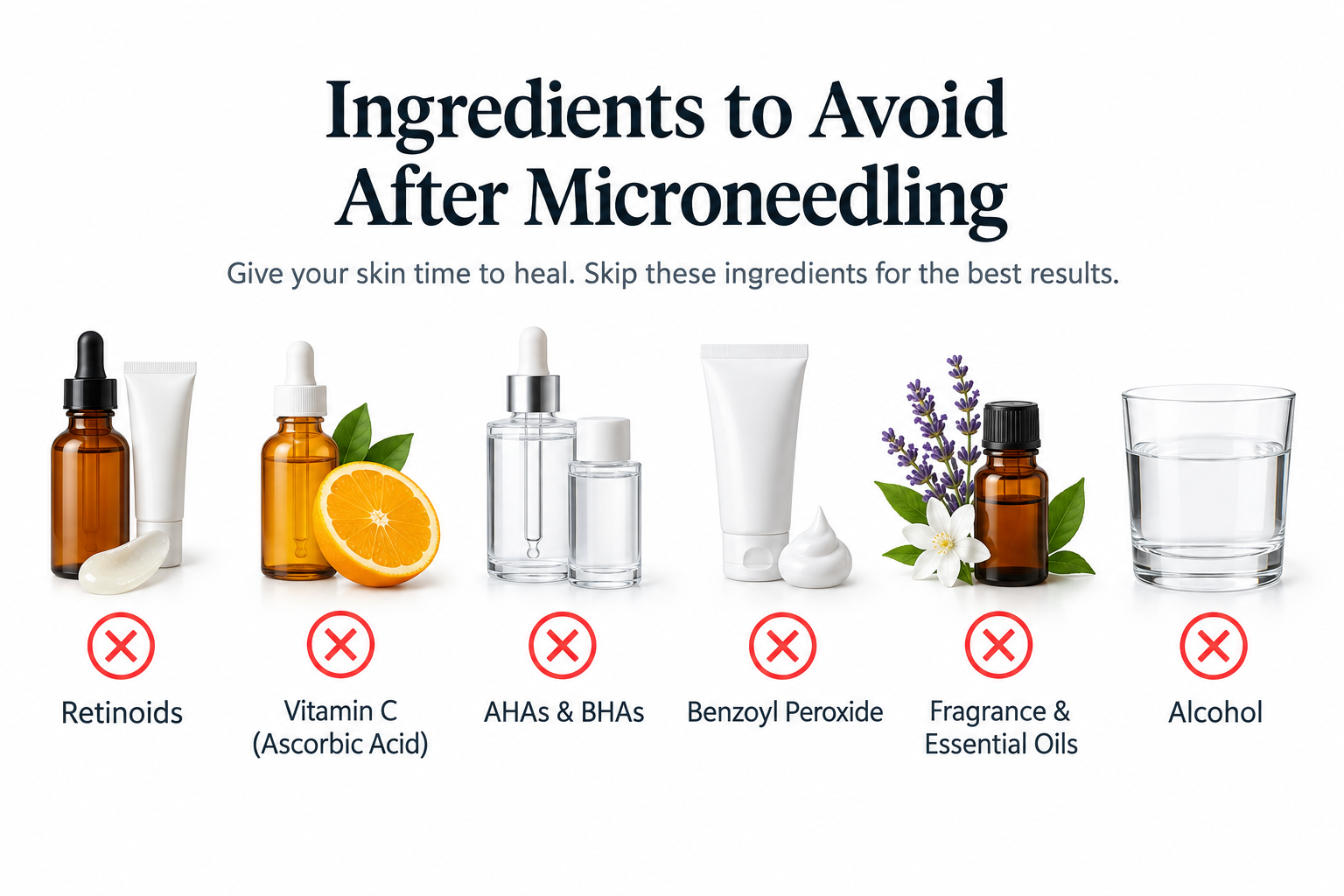
Retinoids and Retinol
Retinoids — including prescription tretinoin and over-the-counter retinol — are potent active ingredients that promote cell turnover and collagen synthesis. While they are valuable in a long-term skincare routine, they should not be applied to the skin for at least three to five days after microneedling, and some practitioners recommend waiting a full week. Applying retinoids to freshly needled skin can cause significant irritation, peeling, and inflammation. Patients who use prescription retinoids should discuss the timing of resumption with their treating clinician.
Vitamin C (Ascorbic Acid)
Vitamin C in its ascorbic acid form is an antioxidant that can be beneficial for skin brightening and collagen support in a regular skincare routine. However, pure ascorbic acid is acidic and can be highly irritating when applied to compromised skin. It should generally be avoided for at least 48 to 72 hours after microneedling. Some practitioners use stabilised vitamin C derivatives in professional post-treatment protocols, but this is distinct from applying a standard vitamin C serum at home immediately after a session.
AHAs, BHAs, and Exfoliating Acids
Alpha hydroxy acids such as glycolic acid and lactic acid, and beta hydroxy acids such as salicylic acid, are chemical exfoliants that work by loosening the bonds between dead skin cells. After microneedling, the skin does not need additional exfoliation — it is already in an active repair state. Applying these acids can cause burning, stinging, and prolonged inflammation. They should be avoided for at least five to seven days post-treatment, or until the skin has fully recovered its barrier function.
Benzoyl Peroxide
Benzoyl peroxide is commonly used in acne management, but it is a strong oxidising agent that can be highly irritating on post-needling skin. It should be avoided during the recovery period. Patients who use benzoyl peroxide regularly should discuss with their practitioner when it is safe to resume.
Fragrances, Essential Oils, and Alcohol
Fragrances — both synthetic and natural, including essential oils — are among the most common causes of contact dermatitis and skin sensitisation. On intact skin, many people tolerate them without issue, but on compromised post-microneedling skin, they carry a significantly higher risk of causing a reaction. Alcohol-based toners and astringents should also be avoided, as alcohol can be drying and irritating. During the recovery period, every product applied should be fragrance-free and formulated for sensitive or compromised skin.
Makeup
Applying makeup — particularly foundation, concealer, or powder — in the first 24 hours after microneedling is generally not recommended. Makeup products can introduce bacteria into the open micro-channels and may contain ingredients that cause irritation. Most practitioners advise waiting at least 24 hours before applying any makeup, and some recommend waiting longer depending on the depth of treatment. Mineral powder makeup is sometimes considered a gentler option when coverage is needed, but this should be discussed with the treating practitioner.
The Post-Microneedling Recovery Timeline
Understanding the typical recovery timeline helps patients plan their skincare routine appropriately. Individual recovery will vary depending on the depth and intensity of the microneedling treatment, the device used, the number of passes, and individual skin sensitivity.
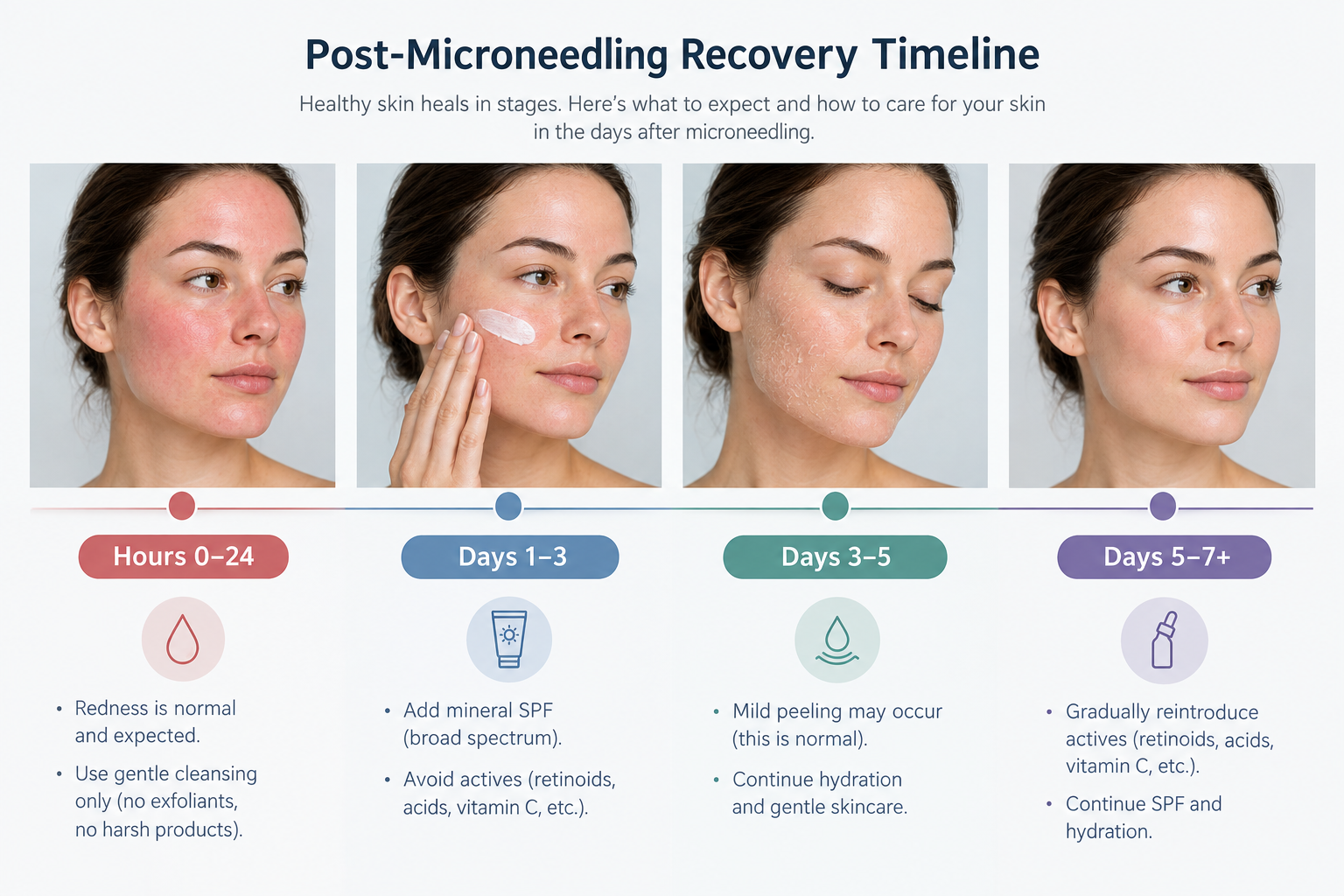
- Hours 0–24: Skin is typically red, warm, and sensitive. Focus on gentle cleansing, hyaluronic acid, and a fragrance-free moisturiser. Avoid all active ingredients and makeup.
- Days 1–3: Redness usually begins to subside. Some patients experience mild dryness, tightness, or flaking. Continue with gentle hydrating products and introduce a mineral SPF. Avoid retinoids, acids, and vitamin C.
- Days 3–5: Most patients see significant improvement in redness. Mild peeling or skin texture changes may occur as the skin renews. Gentle cleansing and moisturising remain the priority. Some practitioners allow reintroduction of gentle antioxidants at this stage.
- Days 5–7 and beyond: The skin barrier is typically recovering well. Active ingredients such as retinol and vitamin C can usually be reintroduced gradually, starting with lower concentrations and monitoring for any sensitivity. Always follow the specific guidance of your treating practitioner.
Professional Serums Applied During Treatment
In a clinical setting, practitioners often apply specific serums to the skin during the microneedling procedure itself, taking advantage of the enhanced transdermal absorption that the micro-channels provide. Commonly used professional serums include hyaluronic acid, growth factors, platelet-rich plasma (PRP), and certain peptide complexes. The use of PRP — derived from the patient’s own blood — alongside microneedling has attracted considerable interest, and some studies suggest it may enhance collagen stimulation and overall outcomes, though the evidence base continues to develop and results vary between individuals and studies.
It is important to distinguish between serums applied by a trained practitioner in a controlled clinical environment and products applied at home. Not all ingredients that are appropriate for professional in-clinic use are suitable for home application in the post-treatment period. Patients should always follow the specific aftercare instructions provided by their treating clinician rather than relying solely on general guidance.
Building a Post-Microneedling Skincare Routine
A practical post-microneedling skincare routine does not need to be complicated. In the first few days, simplicity is the guiding principle. A routine consisting of a gentle cleanser, a hydrating serum, a barrier-supportive moisturiser, and a mineral SPF covers the essential bases for most patients. As the skin recovers, additional steps can be reintroduced gradually.
Patients who have an established skincare routine with multiple active ingredients should plan to pause those actives before and after treatment. It is generally advisable to stop using retinoids and exfoliating acids for at least 24 to 48 hours before a microneedling session as well, to reduce baseline skin sensitivity. Discussing the full skincare routine with the treating practitioner before the appointment allows for a clear plan for both pre- and post-treatment care.
Hydration from within also plays a supporting role in skin recovery. Adequate water intake and a balanced diet rich in vitamins and antioxidants may support the skin’s healing process, though these factors are complementary rather than substitutes for appropriate topical care.
Risks of Using the Wrong Products After Microneedling
Using inappropriate products after microneedling can lead to a range of adverse outcomes. Contact dermatitis — an inflammatory skin reaction — can occur when irritating ingredients penetrate the compromised skin barrier. Post-inflammatory hyperpigmentation, where areas of the skin darken in response to inflammation, is a recognised risk, particularly in patients with Fitzpatrick skin types III to VI. Infection is a less common but serious risk if the skin is exposed to bacteria through unclean hands, contaminated products, or makeup applied too soon after treatment. In rare cases, inappropriate product use can contribute to prolonged healing or scarring.
These risks underline the importance of following practitioner-specific aftercare instructions rather than applying general skincare advice without consideration of the individual treatment received. The depth of needling, the device used, and the patient’s skin type and history all influence what is appropriate in the recovery period.
Frequently Asked Questions
Can I use niacinamide after microneedling?
Niacinamide is generally considered a gentle, well-tolerated ingredient that may help support the skin barrier and reduce redness. Many practitioners consider it suitable for use a day or two after microneedling, provided the formulation does not contain other irritating ingredients. However, individual sensitivity varies, and it is worth confirming with your treating practitioner before introducing it.
When can I use retinol again after microneedling?
Most practitioners recommend waiting at least five to seven days before reintroducing retinol after microneedling. For prescription-strength retinoids such as tretinoin, the waiting period may be longer. Reintroduce gradually and monitor for any signs of irritation. Your treating clinician can advise based on the specific treatment you received.
Is it safe to apply vitamin C serum immediately after microneedling?
Pure ascorbic acid vitamin C serums are generally not recommended in the first 48 to 72 hours after microneedling due to their acidity and potential to irritate compromised skin. Some stabilised vitamin C derivatives may be better tolerated, but home application of vitamin C immediately post-treatment is typically not advised without clinical guidance.
Can I use aloe vera gel after microneedling?
Pure aloe vera gel is often used for its soothing and cooling properties and is generally considered gentle enough for post-microneedling use. However, some commercial aloe vera products contain added fragrances, alcohols, or preservatives that could cause irritation. If using aloe vera, choose a pure, additive-free formulation and check with your practitioner.
How long should I wait before applying makeup after microneedling?
Most practitioners recommend avoiding makeup for at least 24 hours after microneedling, and some advise waiting 48 hours or longer depending on the depth of treatment. Applying makeup too soon can introduce bacteria into the micro-channels and may cause irritation. When you do return to makeup, ensure brushes and sponges are clean.
Do I need to buy special post-microneedling products?
Specialist post-microneedling products are not always necessary. Simple, fragrance-free formulations containing hyaluronic acid, ceramides, and a mineral SPF are often sufficient for home aftercare. Some clinics provide or recommend specific aftercare products as part of the treatment package. The most important factor is avoiding irritating ingredients rather than purchasing a particular branded product.
Can I use the same products after home microneedling as after a professional treatment?
The same general principles apply — gentle, hydrating, fragrance-free products and avoidance of active ingredients — but professional microneedling typically penetrates more deeply than home devices, which means the recovery period and the degree of skin compromise may differ. Home dermarollers generally create shallower channels and may cause less disruption to the skin barrier, but the same caution around irritating ingredients is warranted. If you are using a home device, ensure it is used hygienically and follow the manufacturer’s guidance alongside any advice from a skincare professional.
Choosing Post-Microneedling Products That Support Your Results
The recovery period after microneedling is a meaningful opportunity to support the skin’s natural healing process and maximise the benefits of the treatment. The most effective approach is not necessarily the most complex one. In the first 24 to 72 hours, a short routine of gentle, hydrating, barrier-supportive products — free from fragrance, alcohol, and active exfoliants — provides the skin with what it needs to repair without introducing unnecessary risk.
As the skin recovers over the following days, a gradual and considered reintroduction of active ingredients allows patients to return to their regular skincare routine without compromising the healing process. The specific timeline will depend on the treatment received, the device used, and individual skin sensitivity, which is why the aftercare guidance provided by a qualified practitioner should always take precedence over general recommendations.
If you are considering microneedling or have recently had a session and are unsure about your skincare routine, a consultation with a qualified aesthetic practitioner or dermatologist can help you develop a personalised aftercare plan that supports both recovery and long-term skin health.


