
How to Choose a Laser Clinic in Ealing: What Patients Should Know
Choosing a laser clinic in Ealing is a decision that deserves careful thought. Laser treatments can address a wide range of skin concerns — from unwanted hair and pigmentation to acne scarring and skin texture — but outcomes depend heavily on the technology used, the skill of the practitioner, and how well the treatment is matched to your skin type and concern. This article explains what to look for when selecting a provider, what questions to ask before committing, and what realistic expectations look like for the most common laser treatments available in the area.
Key Takeaways
- Practitioner qualifications and clinical oversight matter more than price or promotional offers when choosing a laser clinic.
- Different laser technologies suit different skin concerns and skin types; no single device is appropriate for every patient.
- A thorough consultation and skin assessment should always precede any laser treatment.
- Realistic results depend on the specific concern being treated, the number of sessions, and individual skin response.
- Understanding potential risks, downtime, and aftercare requirements before treatment helps patients make genuinely informed decisions.
Why the Choice of Laser Provider Matters
Laser treatments are medical procedures that interact with living tissue using concentrated light energy. When performed correctly on a suitable candidate, they can produce meaningful improvements in skin quality, hair reduction, and pigmentation. When performed incorrectly — using the wrong settings, the wrong device for a given skin tone, or without adequate assessment — they carry real risks including burns, post-inflammatory hyperpigmentation, scarring, and prolonged recovery. The difference between a good outcome and a harmful one often comes down to the provider rather than the technology itself.
In Ealing, as across London, the number of clinics offering laser treatments has grown considerably. This makes it more important, not less, to evaluate providers carefully. A lower price point or a convenient location should not be the primary deciding factors when the treatment involves energy-based devices applied to your skin.
What Laser Treatments Are Typically Available
Laser and light-based treatments cover a broad spectrum of technologies, each designed for specific concerns. Understanding the main categories helps patients ask better questions and assess whether a clinic’s offering is genuinely suited to their needs.
Laser Hair Removal
Laser hair removal uses targeted light energy to damage hair follicles and reduce regrowth over a course of sessions. It is one of the most commonly requested treatments at laser clinics in Ealing and across West London. Multiple sessions are required because hair grows in cycles, and only follicles in the active growth phase respond to treatment. Most patients require six to eight sessions for meaningful reduction, with maintenance sessions sometimes needed thereafter. Results vary depending on hair colour, skin tone, and the area being treated. Laser hair removal is generally less effective on very light, grey, or red hair because these lack sufficient pigment for the laser to target.
Skin Rejuvenation and Resurfacing
Fractional laser treatments and ablative resurfacing devices target the skin’s surface and deeper layers to stimulate collagen production and improve texture, fine lines, and mild scarring. Non-ablative lasers work beneath the skin surface without removing the outer layer, typically involving less downtime but requiring more sessions. Ablative treatments remove the outer skin layer and can produce more significant improvements in a smaller number of sessions, but they involve a more demanding recovery period. The appropriate choice depends on the concern being treated, the patient’s skin type, and how much downtime is acceptable.
Pigmentation and Vascular Treatments
Certain laser wavelengths are designed to target melanin in pigmented lesions such as sunspots, melasma, and post-inflammatory marks, while others target haemoglobin in visible blood vessels and redness. Intense pulsed light (IPL), though technically not a laser, is often offered alongside laser treatments and can address both pigmentation and vascular concerns. It is important to note that some pigmentation conditions, particularly melasma, can be worsened by inappropriate laser treatment, which is why thorough assessment by a qualified practitioner is essential before proceeding.
Acne and Acne Scarring
Laser treatments for active acne aim to reduce sebaceous gland activity and bacterial load in the skin. Fractional laser devices are more commonly used for acne scarring, where the goal is to remodel scar tissue and stimulate new collagen. Results for acne scarring tend to be gradual and cumulative, with improvement becoming more visible over several months following a course of treatment. Patients with active inflammatory acne may need this addressed before laser resurfacing is appropriate.
How to Assess a Laser Clinic in Ealing
Evaluating a laser provider involves looking beyond the clinic’s website and social media presence. The following factors are worth examining before booking a consultation or committing to treatment.
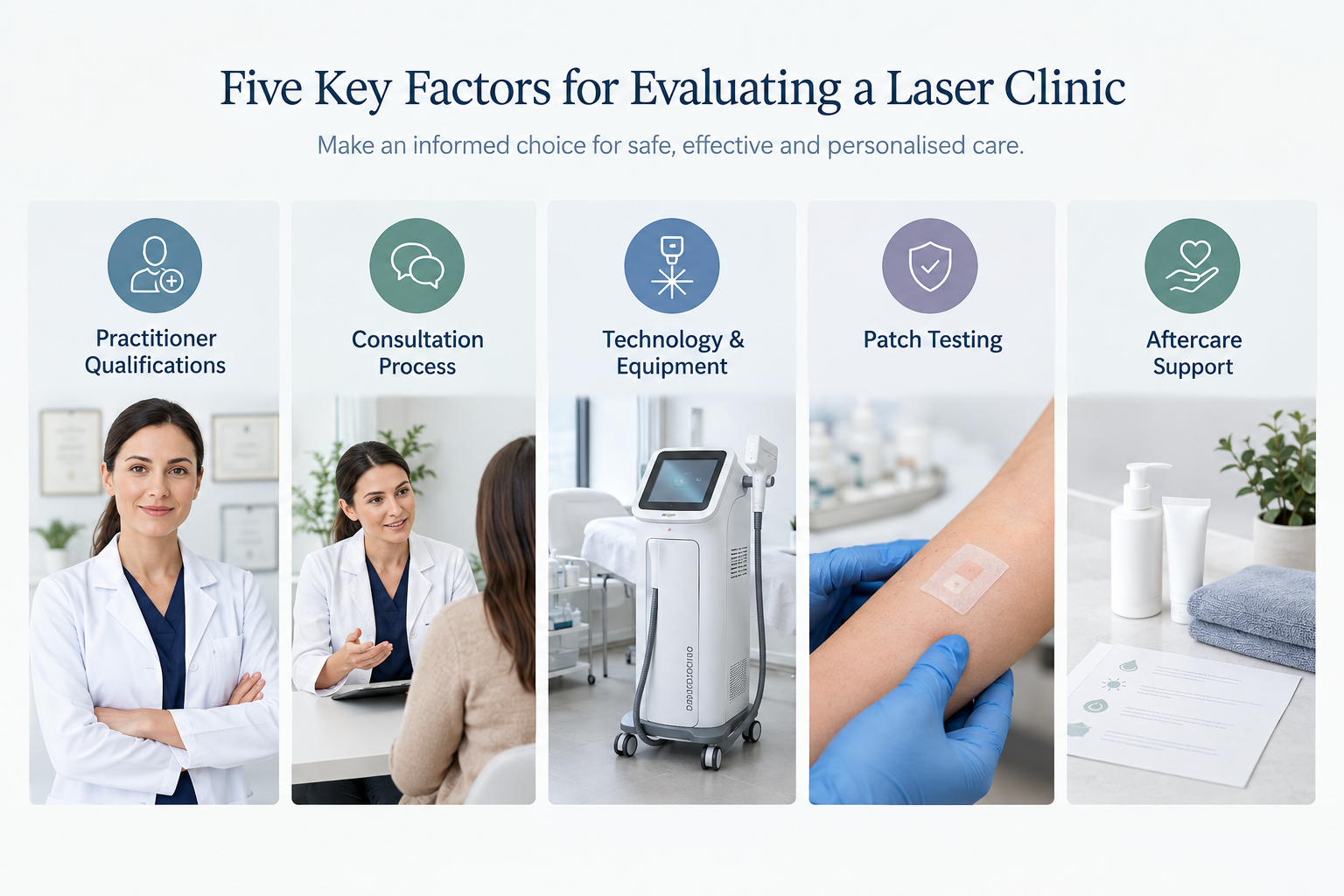
Practitioner Qualifications and Oversight
In the United Kingdom, the regulation of laser and light-based treatments has historically been inconsistent, though this has been subject to ongoing review. Some laser treatments are classified as procedures that should be performed by or under the supervision of a qualified healthcare professional, such as a doctor, nurse, or allied health practitioner with relevant training. When contacting a laser clinic in Ealing, it is reasonable to ask about the qualifications of the person who will be performing your treatment, whether a medical professional is involved in the clinic’s clinical governance, and what training the practitioners have received in laser safety and skin assessment.
Membership of professional bodies such as the British Medical Laser Association or relevant nursing and medical councils can indicate a commitment to professional standards, though membership alone does not guarantee clinical competence. Look for evidence of ongoing training and familiarity with the specific devices used at the clinic.
The Consultation Process
A reputable laser clinic should offer a thorough consultation before any treatment begins. This consultation should include a detailed skin assessment, a review of your medical history and current medications, a discussion of your skin type using a recognised classification such as the Fitzpatrick scale, and an honest conversation about what the treatment can and cannot achieve for your specific concern. Clinics that skip this process or offer to begin treatment at the first appointment without adequate assessment should be approached with caution.
The Fitzpatrick skin type classification is particularly relevant for laser treatments because darker skin tones carry a higher risk of post-inflammatory hyperpigmentation with certain laser wavelengths. A qualified practitioner should be able to explain which devices and settings are appropriate for your skin tone and why.
Technology and Equipment
The quality and suitability of the laser devices used at a clinic matters. Medical-grade laser equipment from established manufacturers is generally more reliable and better supported than lower-cost alternatives. It is worth asking what specific devices the clinic uses, whether those devices are maintained and serviced regularly, and whether the technology is appropriate for your skin type and concern. A clinic that uses a single device for every concern and every skin type may not be able to offer the most appropriate treatment for your individual situation.
Patch Testing and Skin Preparation
For many laser treatments, particularly laser hair removal and pigmentation treatments, a patch test on a small area of skin before the full treatment is a standard safety measure. This allows the practitioner to assess how your skin responds to the laser at the proposed settings before treating a larger area. Clinics that do not offer or recommend patch testing may be prioritising speed over safety. Some skin preparation, such as avoiding sun exposure and certain skincare ingredients before treatment, is also standard practice and should be explained clearly during the consultation.
Questions to Ask Before Booking
Asking the right questions during a consultation helps you assess both the clinic’s competence and whether the proposed treatment is genuinely appropriate for you. The following questions are worth raising with any laser provider in Ealing.
- What qualifications does the practitioner performing my treatment hold, and what specific training have they received in laser treatments?
- Is there a medically qualified professional involved in the clinical oversight of this clinic?
- Which specific laser device will be used for my concern, and why is it appropriate for my skin type?
- What results can I realistically expect, and over what timeframe?
- How many sessions are likely to be needed, and what is the recommended interval between them?
- What are the potential risks and side effects for someone with my skin type and medical history?
- What aftercare will I need to follow, and what should I avoid after treatment?
- What happens if I experience an adverse reaction, and how does the clinic manage complications?
- Is a patch test recommended before my full treatment?
Understanding Realistic Results and Limitations
Laser treatments can produce genuine improvements in a range of skin concerns, but it is important to approach them with realistic expectations. Most laser treatments require a course of sessions rather than a single appointment, and results often continue to develop over weeks or months following treatment as the skin’s natural repair processes take effect. Individual response varies considerably depending on skin type, the severity of the concern being treated, lifestyle factors such as sun exposure, and adherence to aftercare guidance.
Laser hair removal, for example, can achieve significant and long-lasting hair reduction in suitable candidates, but it is rarely described as permanent removal in the absolute sense. Most patients experience a substantial reduction in hair density and regrowth rate, with some requiring occasional maintenance sessions. For skin rejuvenation and resurfacing treatments, improvements in texture and fine lines may be visible after a course of treatment, but the skin continues to age naturally, and results are not indefinite.
Pigmentation treatments carry particular nuance. Some pigmented lesions respond well to laser treatment, while others — particularly melasma, which has a hormonal component — may recur or worsen without careful management. A qualified practitioner should be able to explain the likely response of your specific pigmentation concern to the proposed treatment and discuss realistic outcomes honestly.
Risks, Side Effects, and Downtime
All laser treatments carry some degree of risk, and these should be discussed openly before treatment begins. Common side effects following laser treatment include temporary redness, swelling, and sensitivity in the treated area. These typically resolve within hours to a few days depending on the treatment type and intensity. More significant treatments such as ablative resurfacing involve a longer recovery period, during which the skin may be raw, crusted, or visibly healing for one to two weeks or more.
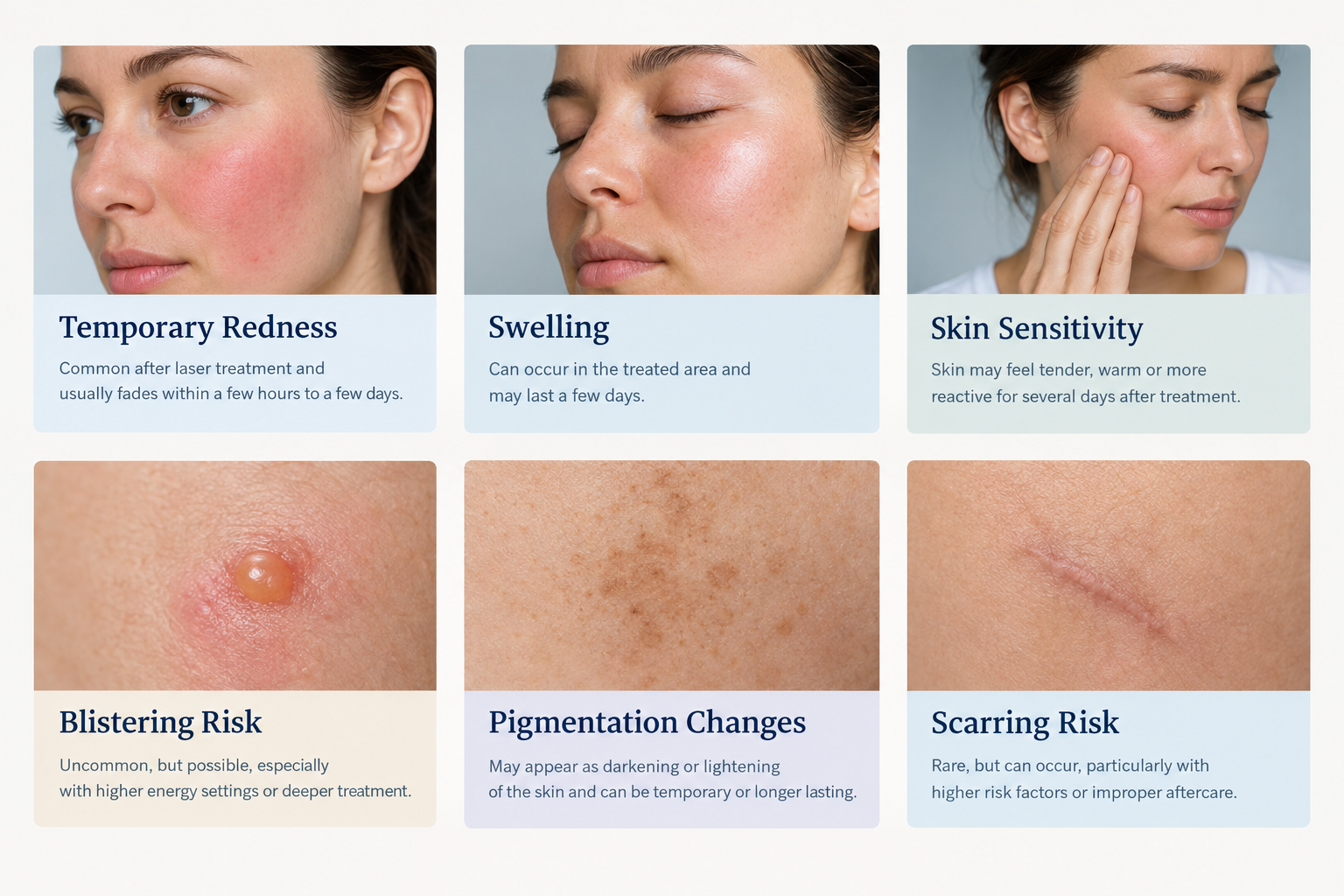
Less common but more serious risks include blistering, burns, infection, changes in skin pigmentation (both darkening and lightening), and in rare cases scarring. The risk of adverse effects is higher when treatments are performed on unsuitable candidates, when incorrect settings are used, or when aftercare guidance is not followed. Patients with darker skin tones face a higher risk of pigmentation changes with certain laser wavelengths, which is why device selection and practitioner expertise are particularly important.
Sun exposure before and after laser treatment significantly increases the risk of complications, including hyperpigmentation and burns. Most clinics will advise avoiding sun exposure and using a high-factor broad-spectrum sunscreen consistently during and after a course of laser treatment. This guidance should be taken seriously regardless of the treatment type.
Who May Not Be Suitable for Laser Treatment
Laser treatments are not appropriate for everyone, and a thorough pre-treatment assessment should identify any factors that may affect suitability or increase risk. Factors that may affect eligibility for laser treatment include the following.
- Active skin infections, cold sores, or open wounds in the treatment area.
- Certain medications, including photosensitising drugs and some acne treatments such as isotretinoin, which may need to be discontinued for a period before laser treatment.
- A history of keloid scarring or abnormal wound healing.
- Pregnancy or breastfeeding, during which many laser treatments are not recommended.
- Recent significant sun exposure or active tan in the treatment area.
- Certain autoimmune or skin conditions that may be aggravated by laser treatment.
- Implanted devices such as pacemakers, depending on the treatment type.
This list is not exhaustive, and individual suitability should always be assessed by a qualified practitioner based on a full medical history and skin assessment rather than a general checklist.
Alternatives to Laser Treatment
Laser treatments are one option among several for many skin concerns, and it is worth understanding the alternatives before committing to a course of treatment. For unwanted hair, alternatives include intense pulsed light (IPL), electrolysis, and conventional hair removal methods. IPL can be effective for hair removal in suitable candidates but may be less precise than dedicated laser devices for certain skin types.
For skin rejuvenation, alternatives to laser resurfacing include chemical peels, microneedling, radiofrequency treatments, and topical prescription skincare. Each has a different mechanism, evidence base, downtime profile, and suitability range. For pigmentation concerns, topical treatments containing ingredients such as hydroquinone, azelaic acid, or retinoids may be appropriate either as standalone treatments or in combination with laser or light-based procedures. A qualified practitioner should be able to discuss which approach or combination of approaches is most likely to be effective for your specific concern.
Frequently Asked Questions
How many laser sessions will I need?
The number of sessions required depends on the treatment type and the concern being addressed. Laser hair removal typically requires six to eight sessions for meaningful reduction, with sessions spaced several weeks apart to align with the hair growth cycle. Skin rejuvenation and pigmentation treatments may require three to six sessions or more, depending on the severity of the concern and the device used. Your practitioner should give you a realistic estimate during the consultation, though individual response can vary.
Is laser treatment painful?
Most patients describe laser treatment as uncomfortable rather than severely painful. The sensation is often compared to a rubber band snapping against the skin. The level of discomfort varies depending on the treatment area, the device used, and individual pain tolerance. Many clinics use cooling systems built into the laser handpiece, topical anaesthetic cream, or cooling devices to reduce discomfort during treatment. Your practitioner should discuss pain management options with you before the session.
Can laser treatment be used on darker skin tones?
Laser treatment can be performed on darker skin tones, but device selection and settings are critically important. Certain laser wavelengths carry a higher risk of pigmentation changes in patients with more melanin in their skin. Devices such as Nd:YAG lasers are generally considered safer for darker skin tones because their longer wavelength bypasses the melanin in the skin’s surface more effectively. A practitioner experienced in treating a range of skin tones should be able to explain which options are appropriate for your Fitzpatrick skin type.
How long do laser treatment results last?
The longevity of results varies by treatment type. Laser hair removal can produce long-lasting reduction, though some patients require occasional maintenance sessions. Skin rejuvenation results may last one to several years depending on the treatment and how well the skin is maintained with sun protection and appropriate skincare. Pigmentation treatments may need to be repeated if the underlying cause, such as hormonal fluctuation or ongoing sun exposure, is not addressed. Your practitioner should give you a realistic picture of expected longevity during the consultation.
What should I do if I experience a reaction after laser treatment?
Mild redness and sensitivity after laser treatment are expected and usually resolve within a day or two. If you experience blistering, significant swelling, signs of infection such as increasing pain, warmth, or discharge, or changes in skin colour that persist beyond the expected recovery period, you should contact the clinic promptly. A reputable clinic should have a clear process for managing post-treatment concerns and should not leave patients without support if a complication arises.
Should I avoid the sun before and after laser treatment?
Yes. Avoiding significant sun exposure for at least two to four weeks before and after laser treatment is standard guidance for most laser procedures. Tanned or sun-exposed skin has higher melanin levels, which increases the risk of burns and pigmentation changes. Using a broad-spectrum SPF 30 or higher sunscreen daily throughout a course of laser treatment and during the recovery period is strongly recommended by most practitioners.
Making an Informed Decision About Laser Treatment in Ealing
Selecting a laser clinic in Ealing involves more than comparing prices or reading online reviews. The most important factors are practitioner qualifications, the quality of the pre-treatment assessment, the suitability of the technology for your skin type and concern, and the clinic’s approach to safety and aftercare. A provider who takes time to understand your goals, explains the realistic outcomes and limitations honestly, and discusses the risks openly is more likely to deliver a safe and satisfactory result than one who prioritises speed or volume.
If you are considering laser treatment for hair removal, pigmentation, skin rejuvenation, or another concern, a thorough consultation with a qualified practitioner is the appropriate starting point. This gives you the opportunity to ask questions, have your skin properly assessed, and make a genuinely informed decision about whether laser treatment is the right approach for your individual situation. Rushing into treatment without this step increases the risk of a poor outcome and makes it harder to identify the most appropriate treatment for your needs.


