
Spots on Chin: Causes, Types, and What You Can Do About Them
Spots on the chin are one of the most frequently reported skin concerns in aesthetic and dermatology clinics. They can appear as inflamed pimples, flat dark marks, small white bumps, or persistent blemishes that resist over-the-counter products. Because the chin sits within the lower face hormonal zone, the causes are often different from spots that appear on the forehead or cheeks, and understanding those differences matters when choosing the right approach.
Key Takeaways
- Chin spots have several distinct causes, including hormonal fluctuations, blocked pores, bacterial activity, and post-inflammatory pigmentation, each requiring a different management strategy.
- The lower face and jawline are particularly sensitive to androgen hormones, which is why chin breakouts often follow a cyclical pattern in women.
- Not every bump on the chin is acne; milia, sebaceous cysts, perioral dermatitis, and ingrown hairs can all produce similar-looking lesions.
- Effective treatment depends on correctly identifying the type of spot, and a clinical assessment is often necessary before starting any active skincare or in-clinic treatment.
- Many chin spots respond well to a combination of topical treatments, lifestyle adjustments, and, where appropriate, professional procedures.
Why the Chin Is a Common Spot Location
The chin and lower jawline contain a high density of sebaceous glands and are particularly responsive to androgenic hormones such as testosterone and dihydrotestosterone (DHT). These hormones stimulate the sebaceous glands to produce more sebum, which can mix with dead skin cells and block hair follicles. When a blocked follicle becomes colonised by Cutibacterium acnes (formerly known as Propionibacterium acnes), the result is an inflamed spot. This hormonal sensitivity explains why chin breakouts are especially common during puberty, the premenstrual phase of the menstrual cycle, pregnancy, perimenopause, and periods of elevated stress, when cortisol can indirectly raise androgen activity.
The chin is also an area that people frequently touch without realising it. Resting the chin on the hand, using a mobile phone pressed against the lower face, or wearing a face mask for extended periods can all transfer bacteria and friction to the skin, contributing to what dermatologists sometimes call acne mechanica. Understanding these contributing factors is the first step toward managing chin spots more effectively.
Common Types of Spots That Appear on the Chin
Correctly identifying the type of spot is essential because different lesions have different causes and respond to different treatments. Applying the wrong product to the wrong type of blemish can sometimes worsen the skin rather than improve it.
Comedones
Comedones are non-inflamed blocked pores. Open comedones, commonly called blackheads, occur when a follicle is partially blocked and the contents oxidise on contact with air, turning dark. Closed comedones, or whiteheads, are fully blocked follicles covered by a thin layer of skin. Both types are common on the chin and often precede more inflamed lesions. Comedones are primarily driven by excess sebum production and inadequate skin cell turnover rather than by bacterial infection, which is why antibacterial products alone may not resolve them.
Inflammatory Acne Lesions
When a blocked follicle becomes infected with Cutibacterium acnes, the immune system responds with inflammation, producing papules (raised red bumps without a visible head), pustules (raised spots with a white or yellow pus-filled centre), nodules (deeper, firmer, painful lumps), and cysts (large, fluid-filled lesions deep within the skin). Nodular and cystic acne on the chin tends to be more painful, more likely to leave scarring, and more resistant to topical treatments than superficial papules or pustules. These deeper lesions often require prescription-strength treatment or in-clinic intervention.
Hormonal Acne
Hormonal acne on the chin typically presents as deep, tender papules or cysts that cluster along the jawline and lower cheeks. In women, these spots often flare in the week before menstruation and may improve during the middle of the cycle. Hormonal acne can persist well into adulthood and is frequently resistant to standard topical acne treatments. Conditions such as polycystic ovary syndrome (PCOS) can amplify hormonal acne by raising circulating androgen levels, and a GP or dermatologist may recommend investigating hormonal status if chin breakouts are severe or persistent.
Milia
Milia are small, firm, white or yellowish cysts that sit just beneath the skin surface. Unlike whiteheads, milia are not caused by blocked sebaceous glands but by keratin trapped beneath the skin. They are not inflamed and do not contain pus. Milia on the chin are common and can be mistaken for closed comedones. They do not respond to acne treatments and generally require professional extraction or a procedure such as a superficial chemical peel or microneedling to resolve. Attempting to squeeze milia at home risks scarring without effectively removing the lesion.
Perioral Dermatitis
Perioral dermatitis is an inflammatory skin condition that produces clusters of small red papules and pustules around the mouth, chin, and nose. It is more common in women and is frequently triggered or worsened by topical corticosteroids, heavy moisturisers, fluorinated toothpaste, or certain cosmetic products. Perioral dermatitis can closely resemble acne but tends to spare the skin immediately adjacent to the lips. It requires specific treatment, typically oral or topical antibiotics prescribed by a doctor, and may worsen if treated with standard acne products containing benzoyl peroxide or retinoids without medical guidance.
Ingrown Hairs
Ingrown hairs on the chin are particularly common in people who shave regularly. When a hair curls back into the skin rather than growing outward, it triggers a localised inflammatory response that can look very similar to a papule or pustule. Ingrown hairs are more frequent in people with naturally curly or coarse hair. They can become infected and, if left untreated, may develop into pseudofolliculitis barbae, a chronic condition characterised by persistent papules and hyperpigmentation along the shaving area. Adjusting shaving technique, using a single-blade razor, and applying a gentle exfoliant can help reduce their frequency.
Post-Inflammatory Hyperpigmentation
Post-inflammatory hyperpigmentation (PIH) refers to flat, darkened patches of skin that remain after an inflamed spot has healed. PIH is not a spot itself but a consequence of the skin’s healing response, in which melanocytes produce excess melanin at the site of previous inflammation. PIH on the chin can persist for weeks to months and is more pronounced in people with medium to deeper skin tones. Sun exposure without adequate SPF protection significantly prolongs PIH. Treating the underlying acne is the most important step in preventing new PIH, while existing marks may respond to topical brightening agents or professional treatments.
Sebaceous Cysts
Sebaceous cysts are benign, slow-growing lumps that develop beneath the skin when a sebaceous gland or hair follicle becomes blocked. They are typically smooth, round, and moveable, and may have a small central punctum. Sebaceous cysts on the chin are not acne and do not respond to acne treatments. If they become infected or inflamed, they can be painful and may require drainage or surgical removal by a qualified practitioner. Self-squeezing a sebaceous cyst risks introducing infection and is not recommended.
Hormonal Factors and the Chin Breakout Pattern
The concept of facial mapping, which links specific areas of the face to internal organ systems, is not supported by robust clinical evidence. However, the association between the lower face and hormonal activity does have a physiological basis. Androgen receptors are more densely distributed in the sebaceous glands of the lower face compared with the upper face, making the chin and jawline genuinely more reactive to hormonal fluctuations than areas such as the forehead or nose.
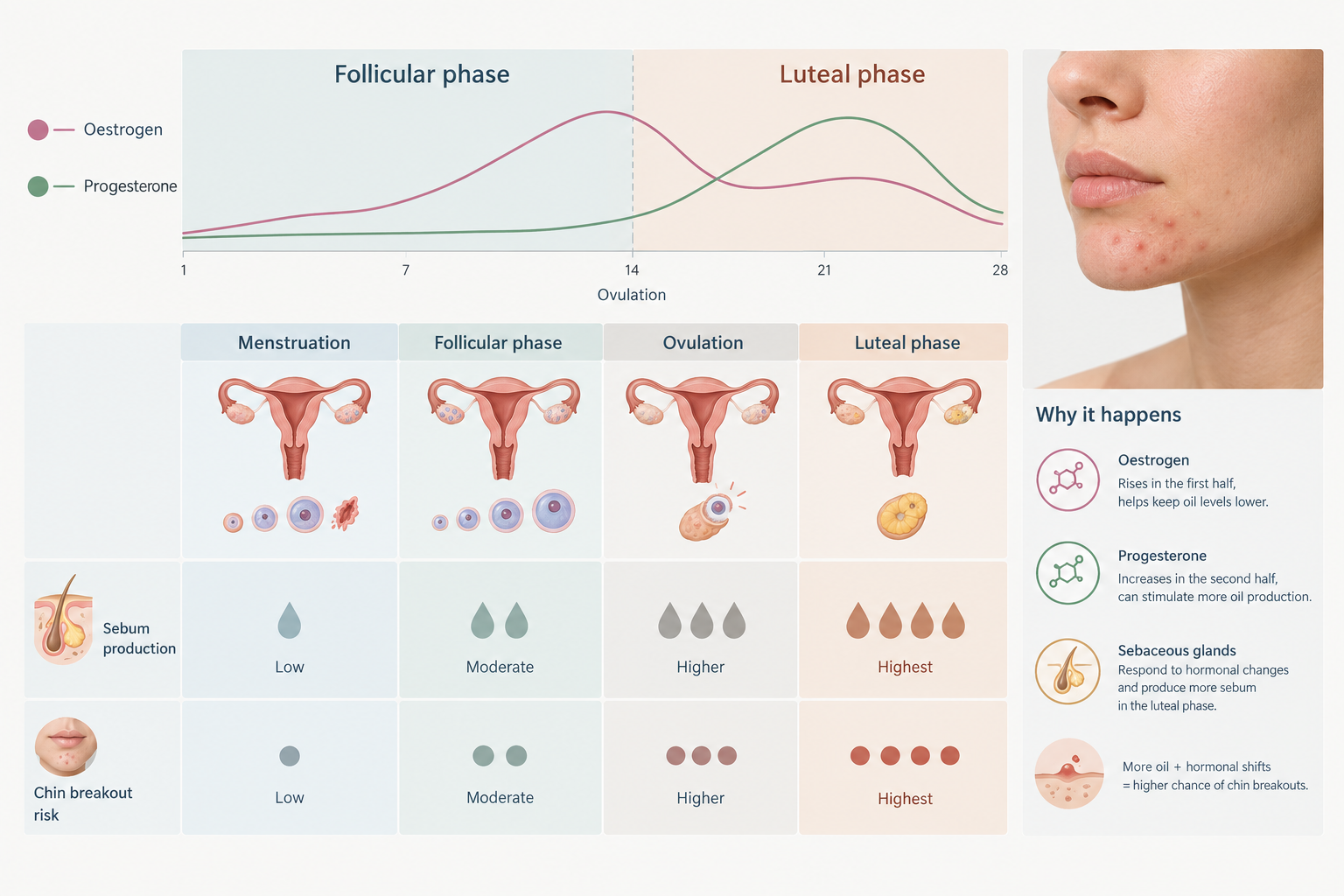
In women, oestrogen levels fall and progesterone levels rise in the luteal phase of the menstrual cycle, which can indirectly increase sebum production and skin cell shedding. This creates conditions that favour comedone formation and bacterial proliferation, explaining the common experience of chin spots appearing predictably before a period. Stress-related cortisol elevation can further amplify this effect by stimulating adrenal androgen production. Recognising a cyclical pattern in chin breakouts is clinically useful information to share with a practitioner, as it may influence whether hormonal management is appropriate.
Skincare and Lifestyle Factors That Contribute to Chin Spots
Several everyday habits can contribute to or worsen spots on the chin, independently of hormonal or genetic factors. Occlusive skincare products, particularly heavy creams or oils applied to the lower face, can trap sebum and dead skin cells within follicles, promoting comedone formation. This is sometimes referred to as cosmetic acne or acne cosmetica. Choosing non-comedogenic formulations is generally advisable for people prone to chin breakouts.
Diet may also play a role for some individuals. Evidence suggests that high-glycaemic foods and dairy products, particularly skimmed milk, may worsen acne in susceptible people by influencing insulin-like growth factor 1 (IGF-1) and androgen activity. The relationship between diet and acne is not universal, and dietary changes alone are unlikely to resolve moderate or severe chin acne, but they may be worth considering as part of a broader management plan.
Friction from face masks, chin straps, musical instruments, or sports equipment can mechanically disrupt the follicular opening and trigger acne mechanica. Keeping equipment clean and allowing the skin to breathe where possible can help reduce this type of breakout. Sleeping on unwashed pillowcases or frequently resting the chin on the hands are additional friction and contamination sources that are easy to address.
Topical Treatments for Chin Spots
The appropriate topical treatment depends on the type of spot and its severity. For comedonal acne on the chin, ingredients that promote skin cell turnover and prevent follicular blockage are generally most effective. Retinoids, including adapalene (available over the counter in some countries) and prescription-strength tretinoin, are among the most evidence-supported topical treatments for both comedonal and inflammatory acne. They work by accelerating epidermal cell turnover and reducing the stickiness of cells within the follicle, preventing blockages from forming.
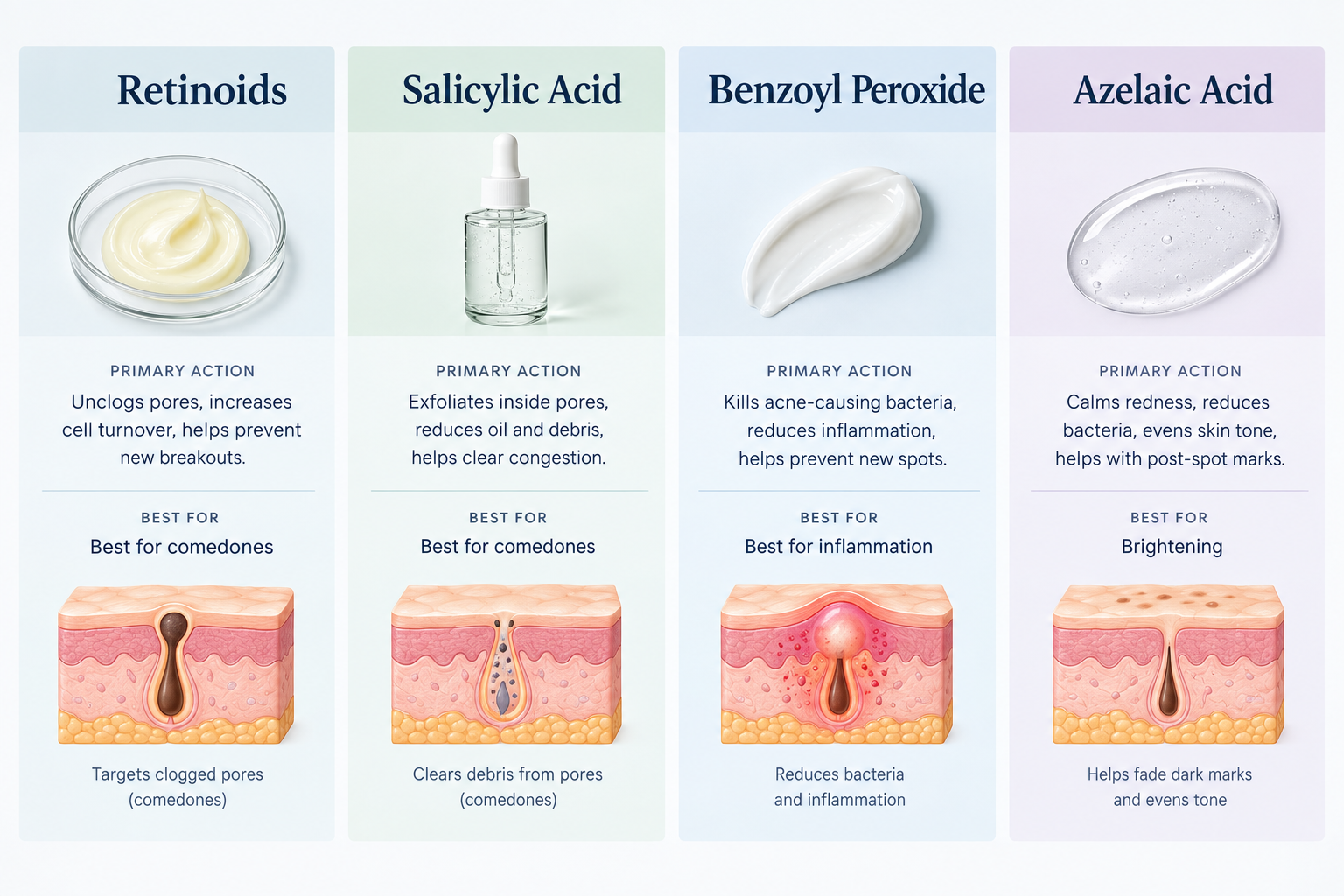
Salicylic acid is a beta-hydroxy acid that penetrates into the follicle and helps dissolve the sebum and dead cell mixture that forms comedones. It is available in a range of concentrations in cleansers, toners, and spot treatments. Benzoyl peroxide has both antibacterial and keratolytic properties and is effective against inflammatory acne lesions, though it can cause dryness and irritation, particularly at higher concentrations. Azelaic acid is a gentler option that addresses both acne and post-inflammatory hyperpigmentation and is generally well tolerated across skin tones.
Niacinamide, while not a primary acne treatment, can help regulate sebum production and reduce redness, making it a useful supporting ingredient in a chin spot management routine. It is important to introduce active ingredients gradually and to maintain adequate moisturisation and daily SPF use, as many acne treatments increase photosensitivity.
Prescription and Medical Treatments
When over-the-counter products are insufficient, a GP or dermatologist may recommend prescription-strength treatments. Topical antibiotics such as clindamycin are commonly prescribed for inflammatory chin acne, usually in combination with benzoyl peroxide to reduce the risk of antibiotic resistance. Oral antibiotics, including doxycycline and lymecycline, may be used for moderate to severe inflammatory acne but are generally intended as short-term treatments rather than long-term solutions.
For women with hormonally driven chin acne, combined oral contraceptives or anti-androgen medications such as spironolactone may be considered. These treatments address the hormonal root cause rather than the skin surface alone and can be particularly effective for cyclical lower-face breakouts. Isotretinoin (commonly known by the brand name Roaccutane) is an oral retinoid reserved for severe, scarring, or treatment-resistant acne. It requires careful medical supervision due to its side effect profile and strict prescribing protocols in most countries.
Professional In-Clinic Treatments for Chin Spots and Their Aftermath
Several in-clinic procedures may help manage active chin spots or address the marks and textural changes they leave behind. A qualified practitioner can assess which approach is most appropriate based on the type of spots, skin tone, and treatment history.
Chemical Peels
Chemical peels use acids such as glycolic acid, salicylic acid, lactic acid, or trichloroacetic acid (TCA) at concentrations higher than those available in retail products. Applied to the skin by a trained practitioner, they accelerate cell turnover, help clear blocked follicles, and can improve post-inflammatory hyperpigmentation. Superficial peels require little downtime and can be performed in a series of sessions. Medium-depth peels produce more significant results but involve several days of redness and peeling. Chemical peels are generally not performed on actively inflamed or infected skin.
Microneedling
Microneedling uses fine needles to create controlled micro-injuries in the skin, stimulating collagen production and improving skin texture. It may be useful for addressing acne scarring on the chin rather than active spots. Microneedling is not appropriate for skin with active inflammatory acne, as it risks spreading bacteria and worsening breakouts. Results typically develop gradually over several weeks and multiple sessions are usually required.
LED Light Therapy
Blue LED light therapy targets Cutibacterium acnes by activating porphyrins produced by the bacteria, generating reactive oxygen species that damage the bacterial cell. Red LED light has anti-inflammatory properties and may support skin healing. LED therapy is generally well tolerated with no downtime, though the evidence for its standalone effectiveness in moderate to severe acne is more limited than for prescription treatments. It is sometimes used as an adjunct to other therapies.
Laser and Intense Pulsed Light Treatments
Certain laser and intense pulsed light (IPL) devices can target the sebaceous glands, reduce bacterial load, or address vascular and pigmented components of acne and its aftermath. These treatments require careful patient selection, particularly regarding skin tone, as some devices carry a higher risk of post-inflammatory hyperpigmentation in darker skin tones. A thorough consultation with a practitioner experienced in treating diverse skin types is essential before proceeding.
Extraction and Comedone Removal
Professional extraction of comedones and milia by a trained aesthetician or clinician is safer and more effective than attempting to squeeze spots at home. Proper technique minimises the risk of scarring, infection, and post-inflammatory hyperpigmentation. Extraction is typically performed after steam or a softening treatment to open the follicle and is not appropriate for deep nodular or cystic lesions.
Addressing Post-Inflammatory Hyperpigmentation on the Chin
Dark marks left by healed chin spots are a common and frustrating concern, particularly for people with medium to deeper skin tones. Post-inflammatory hyperpigmentation on the chin responds to a combination of consistent sun protection, topical brightening agents, and, where appropriate, professional treatments. Daily broad-spectrum SPF 30 or higher is the single most important step in preventing existing PIH from darkening further and in allowing the skin’s natural turnover to gradually fade the marks.
Topical ingredients with evidence for reducing hyperpigmentation include vitamin C (ascorbic acid), kojic acid, alpha-arbutin, tranexamic acid, and azelaic acid. These agents work through different mechanisms, primarily by inhibiting the enzyme tyrosinase, which is involved in melanin synthesis. Results from topical brightening agents are gradual and may take several months of consistent use. Professional treatments such as chemical peels, laser toning, or targeted light-based therapies may accelerate improvement but should only be considered once active acne is adequately controlled.
When to Seek Professional Advice
Many mild chin spots can be managed with appropriate over-the-counter products and lifestyle adjustments. However, professional assessment is advisable in several situations. Spots that are deep, painful, or cystic are unlikely to respond to topical treatments alone and carry a higher risk of scarring. Breakouts that follow a clear hormonal pattern, particularly in women with other symptoms such as irregular periods, excess facial hair, or unexplained weight changes, may warrant investigation for an underlying hormonal condition such as PCOS. Spots that do not improve after two to three months of consistent appropriate treatment, or that are leaving persistent scarring or hyperpigmentation, are also good reasons to consult a GP, dermatologist, or qualified aesthetic practitioner.
It is equally important to seek advice before self-treating if the diagnosis is uncertain. Perioral dermatitis, sebaceous cysts, milia, and ingrown hairs all require different approaches from acne, and using the wrong products can delay resolution or cause additional skin damage.
Frequently Asked Questions
Why do I keep getting spots on my chin but nowhere else?
The chin and lower jawline have a higher density of androgen-sensitive sebaceous glands than other areas of the face. This makes the chin particularly reactive to hormonal fluctuations, including those related to the menstrual cycle, stress, and conditions such as PCOS. Friction from touching the chin, phone use, and face masks can also contribute to localised breakouts in this area.
Are chin spots always hormonal?
Not always. While hormonal factors are a common driver of chin acne, blocked pores, bacterial activity, friction, occlusive skincare products, and conditions such as perioral dermatitis or ingrown hairs can all produce spots on the chin without a hormonal cause. A cyclical pattern that follows the menstrual cycle is a useful indicator of hormonal involvement, but a clinical assessment is the most reliable way to identify the cause.
Can diet affect spots on the chin?
Evidence suggests that high-glycaemic diets and certain dairy products may worsen acne in some individuals by influencing hormonal and inflammatory pathways. However, the relationship between diet and acne varies between people, and dietary changes alone are unlikely to resolve moderate or severe chin acne. They may be a useful complementary measure alongside appropriate skincare or medical treatment.
How long does it take for chin spots to clear up?
This depends on the type and severity of the spots and the treatment used. Mild comedonal or inflammatory acne may begin to improve within four to eight weeks of starting an appropriate topical routine. Prescription treatments such as oral antibiotics or retinoids may take two to three months to show significant results. Post-inflammatory hyperpigmentation can persist for several months even after active spots have resolved. Consistent treatment and sun protection are important throughout.
Is it safe to squeeze spots on the chin?
Squeezing spots, particularly deep papules, nodules, or cysts, significantly increases the risk of scarring, post-inflammatory hyperpigmentation, and spreading bacterial infection. Superficial pustules are sometimes expressed by trained practitioners under controlled conditions, but self-squeezing at home is generally not recommended. Milia and sebaceous cysts should not be squeezed, as they require professional techniques to remove safely.
Can chin spots leave permanent scars?
Superficial spots that heal without significant inflammation rarely leave permanent scars. However, deep nodular or cystic acne on the chin carries a higher risk of atrophic scarring, which appears as pitting or depressions in the skin. Post-inflammatory hyperpigmentation is not scarring and will generally fade over time with appropriate care, but true atrophic scars are more persistent and may require professional treatments such as microneedling, laser resurfacing, or subcision to improve their appearance.
What ingredients should I avoid if I have chin spots?
Heavy, occlusive oils and creams can worsen comedonal acne by trapping sebum within follicles. Ingredients such as coconut oil, cocoa butter, and certain silicones are considered more comedogenic and may not be suitable for acne-prone skin. Topical corticosteroids applied to the lower face can trigger or worsen perioral dermatitis. Harsh physical scrubs can irritate inflamed spots and spread bacteria. Choosing non-comedogenic, fragrance-free formulations and avoiding unnecessary layering of products is generally advisable.
Understanding Your Chin Spots and Choosing the Right Path Forward
Spots on the chin are rarely a single, simple problem. They can reflect hormonal activity, follicular blockage, bacterial infection, friction, skincare choices, or an entirely different skin condition that resembles acne. Identifying the correct cause is the most important step, because the right treatment for hormonal cystic acne is very different from the right approach for milia, perioral dermatitis, or post-inflammatory hyperpigmentation.
For mild, occasional chin spots, a consistent routine using evidence-supported ingredients such as salicylic acid, adapalene, or azelaic acid, combined with daily SPF and reduced skin contact, is a reasonable starting point. For persistent, painful, scarring, or cyclical breakouts, a consultation with a GP, dermatologist, or experienced aesthetic practitioner is the most reliable route to an accurate diagnosis and an effective treatment plan. Professional assessment also helps avoid the common pitfall of using multiple active products simultaneously, which can compromise the skin barrier and make breakouts harder to manage. With the right approach, most types of chin spots can be meaningfully improved, even if complete resolution takes time and consistency.


