
PRP for Hair Thickness: What to Expect, How It Works, and Whether It May Help
Platelet-rich plasma (PRP) hair treatment has attracted growing interest as a non-surgical option for people experiencing hair thinning or early hair loss. The approach uses a concentration of the patient’s own blood platelets, which are rich in growth factors, to stimulate the scalp environment and potentially support thicker, healthier hair growth. While PRP is not a cure for hair loss and results vary considerably between individuals, a meaningful body of clinical research suggests it may offer measurable improvement in hair density and shaft thickness for suitable candidates — particularly those in the earlier stages of androgenetic alopecia.
Key Takeaways
- PRP hair treatment involves injecting a concentration of your own platelet-rich plasma into the scalp to deliver growth factors that may stimulate hair follicles.
- Clinical evidence suggests PRP may improve hair density and thickness, particularly in androgenetic alopecia, though results vary and the evidence base is still developing.
- Most protocols involve an initial course of three to four sessions, typically spaced four to six weeks apart, followed by maintenance treatments every three to six months.
- PRP is generally considered a low-risk procedure because it uses the patient’s own blood, but it is not without side effects, and it is not suitable for everyone.
- Realistic expectations are important: PRP may slow progression and improve existing hair quality, but it is unlikely to regrow hair in areas of complete follicle loss.
What Is PRP Hair Treatment?
Platelet-rich plasma is prepared by drawing a small amount of the patient’s blood — typically between 10 and 60 millilitres depending on the protocol — and processing it in a centrifuge. This spinning process separates the blood into its components: red blood cells, platelet-poor plasma, and platelet-rich plasma. The PRP fraction, which contains a significantly higher concentration of platelets than whole blood, is then collected and prepared for injection into the scalp.
Platelets are best known for their role in wound healing, but they also carry a range of bioactive proteins called growth factors. These include platelet-derived growth factor (PDGF), vascular endothelial growth factor (VEGF), transforming growth factor (TGF), and insulin-like growth factor (IGF), among others. When introduced into the scalp tissue, these growth factors are thought to interact with hair follicle cells, potentially prolonging the anagen (active growth) phase of the hair cycle, improving blood supply to follicles, and reducing the miniaturisation process associated with androgenetic alopecia — the most common form of pattern hair loss in both men and women.
PRP is not a standardised product. The concentration of platelets, the preparation system used, the activation method, and the injection technique can all differ between clinics and practitioners. This variability is one reason why comparing results across studies and clinics can be challenging, and why outcomes are not uniform.
How PRP May Improve Hair Thickness
Hair thinning in androgenetic alopecia is largely driven by a process called follicular miniaturisation, in which hair follicles progressively shrink over time, producing finer and shorter hairs before eventually becoming dormant. PRP is thought to address this process by delivering concentrated growth factors directly to the follicular environment, potentially reversing or slowing miniaturisation in follicles that retain some biological activity.
The growth factors in platelet-rich plasma may stimulate dermal papilla cells — specialised cells at the base of each follicle that regulate hair growth — encouraging them to remain in or re-enter the active growth phase. Some research also suggests that PRP may promote angiogenesis, meaning the formation of new small blood vessels, which could improve nutrient and oxygen delivery to follicles. Improved follicular nutrition may contribute to the production of thicker, stronger hair shafts over time.
It is important to understand that PRP is unlikely to regenerate follicles that have been completely destroyed or replaced by scar tissue. The treatment appears most relevant for follicles that are miniaturised but still present and potentially responsive. This is why earlier intervention — before significant follicle loss has occurred — is generally considered more likely to produce a meaningful response.
What Does the Clinical Evidence Show?
The evidence base for PRP in hair loss treatment has grown considerably over the past decade, though it remains an area of active research with some important limitations. A number of randomised controlled trials and systematic reviews have reported statistically significant improvements in hair density, hair count per unit area, and hair shaft diameter following a course of PRP injections compared to placebo or control groups. Several studies have specifically examined androgenetic alopecia in both men and women, with generally positive findings for hair thickness and density outcomes.
However, the overall evidence is not yet considered definitive. Study populations tend to be small, protocols vary widely between trials, follow-up periods differ, and outcome measures are not always consistent. Some reviews have noted that while many individual studies show benefit, the heterogeneity of methods makes it difficult to draw firm conclusions about the optimal treatment protocol or the magnitude of effect that patients can reliably expect. Regulatory bodies in most countries have not formally approved PRP as a licensed treatment for hair loss, and it is generally offered as an evidence-informed but off-label procedure.
In practical terms, this means that PRP for hair thickness is a treatment with a plausible biological mechanism and a growing body of supportive clinical data, but one where individual results remain variable and where the evidence does not yet support guaranteeing specific outcomes. A qualified practitioner should be able to discuss the current state of evidence honestly during a consultation.
Who May Be a Suitable Candidate?
PRP hair treatment may be worth discussing with a qualified practitioner if you are experiencing early to moderate hair thinning, particularly if the underlying cause is androgenetic alopecia. Candidates who tend to show the most favourable responses are those with miniaturised but still-active follicles, meaning the scalp still shows some hair coverage rather than areas of complete baldness.
PRP may also be considered for other forms of hair loss, including alopecia areata (an autoimmune condition causing patchy hair loss) and telogen effluvium (diffuse shedding often triggered by stress, illness, or nutritional deficiency), though the evidence base for these conditions is less robust than for androgenetic alopecia. A thorough assessment of the cause of hair loss is important before proceeding, as PRP is unlikely to be appropriate or effective for all types.
Factors that may make a candidate more suitable include:
- Early to moderate androgenetic alopecia with visible miniaturisation but retained follicular activity
- Good general health and no active scalp infection or inflammation
- Realistic expectations about the degree of improvement possible
- Willingness to commit to an initial course of sessions and ongoing maintenance
- No contraindications related to blood disorders or medications that affect platelet function
Who May Not Be Suitable?
PRP hair treatment is not appropriate for everyone. Because the procedure involves drawing blood and injecting it into the scalp, certain medical conditions and medications may affect either the safety of the procedure or the quality of the PRP produced. A thorough medical history and, in some cases, blood tests are typically required before treatment.
Conditions and circumstances that may affect suitability include:
- Active scalp infection, open wounds, or significant scalp inflammation at the treatment site
- Blood disorders affecting platelet function or count, such as thrombocytopenia or platelet dysfunction syndromes
- Anticoagulant medications (blood thinners) or long-term use of non-steroidal anti-inflammatory drugs, which may affect platelet activity
- Active cancer or a history of certain haematological malignancies
- Pregnancy or breastfeeding, where the procedure is generally avoided due to insufficient safety data
- Severe anaemia or other conditions affecting blood composition
- Advanced hair loss with complete follicle loss in the affected area, where PRP is unlikely to produce meaningful regrowth
This list is not exhaustive. A qualified practitioner will assess individual suitability based on a full medical history and clinical examination.
What Happens During a PRP Hair Treatment Session?
A typical PRP hair treatment appointment involves several stages and usually takes between 45 minutes and one and a half hours from start to finish, depending on the area being treated and the clinic’s protocol.
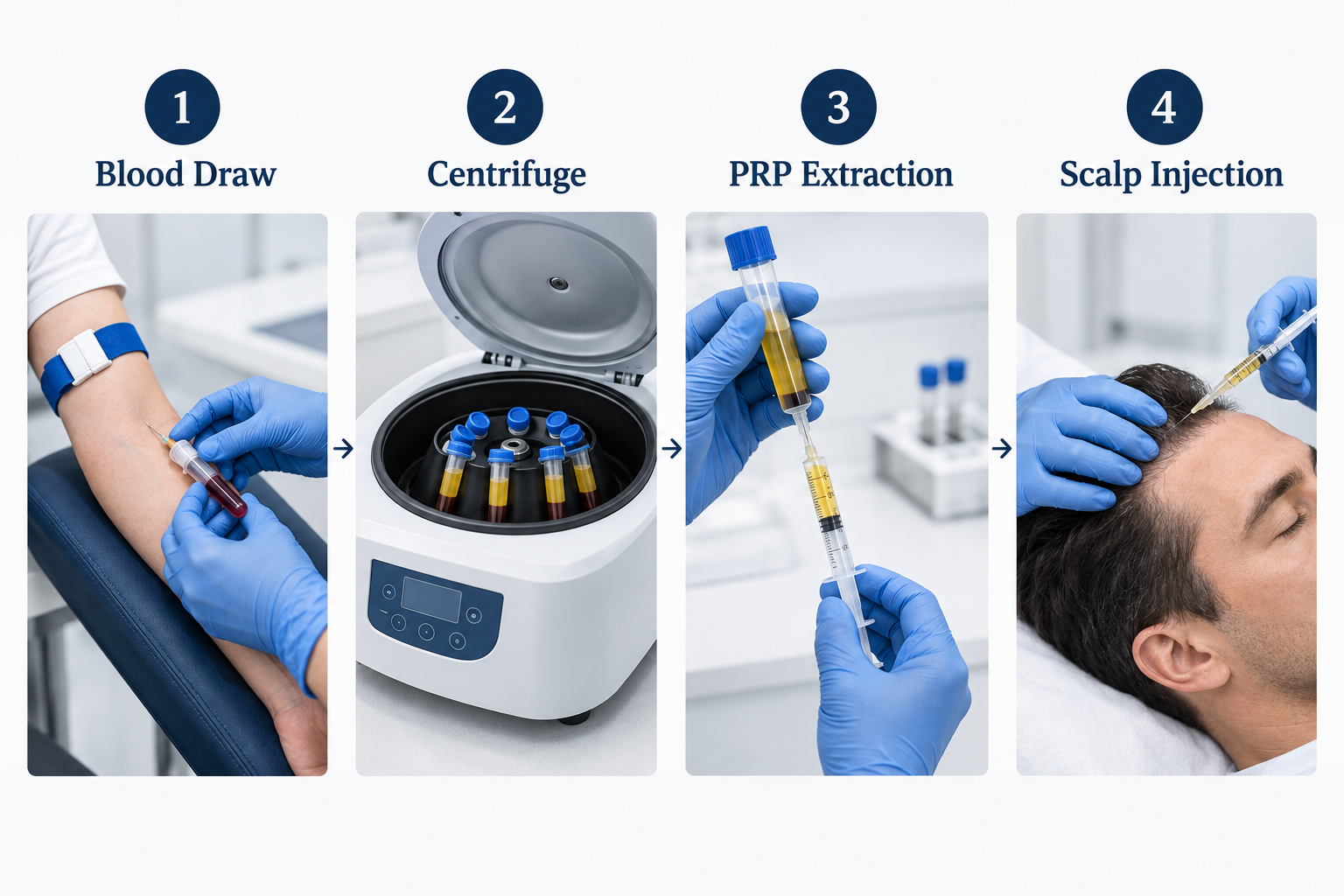
The session begins with a blood draw from the patient’s arm, similar to a standard blood test. The collected blood is then placed in a centrifuge and spun for a set period — usually around ten minutes — to separate the platelet-rich plasma from the other blood components. The PRP is then carefully extracted and may be activated using calcium chloride or other agents, depending on the practitioner’s protocol, before being drawn into syringes for injection.
The scalp is typically cleaned and may be numbed using a topical anaesthetic cream or local anaesthetic injections to reduce discomfort. The PRP is then injected across the treatment area using a fine needle, with injections placed at regular intervals into the scalp at the level of the hair follicles. Some practitioners use a microneedling device to deliver PRP across the scalp surface rather than, or in addition to, direct injections, though the evidence comparing these delivery methods is still limited.
Discomfort during the procedure varies between individuals. Most patients describe a sensation of pressure or mild stinging during the injections, which is generally manageable, particularly with adequate numbing. The scalp may feel tender or tight immediately after treatment.
Recovery and Downtime After PRP
PRP hair treatment has minimal downtime compared to surgical hair restoration options. Most patients are able to return to normal daily activities on the same day or the following day. However, there are some temporary effects and aftercare considerations to be aware of.
Immediately after treatment, the scalp may appear slightly red, feel tender, or show small areas of swelling at the injection sites. These effects typically resolve within 24 to 72 hours. Some patients notice mild bruising at the injection sites or at the blood draw site on the arm, which usually fades within a few days.
Common aftercare recommendations include avoiding washing the hair for a period of time after treatment (often 24 hours), avoiding strenuous exercise or activities that cause heavy sweating for 24 to 48 hours, and avoiding direct sun exposure to the scalp in the immediate post-treatment period. Patients are usually advised to avoid anti-inflammatory medications such as ibuprofen around the time of treatment, as these may reduce platelet activity and potentially affect the treatment’s effectiveness. Specific aftercare instructions will vary between clinics and practitioners.
How Many Sessions Are Typically Needed?
PRP for hair thickness is not a single-session treatment. Most clinical protocols and published studies involve an initial course of injections, typically three to four sessions spaced approximately four to six weeks apart. This initial course is intended to build up the growth factor stimulus in the scalp environment and allow the follicular response to develop progressively.
After completing the initial course, maintenance sessions are generally recommended to sustain any improvement achieved. Maintenance intervals vary between practitioners and are often guided by the individual’s response, but a common approach involves a session every three to six months. Without ongoing maintenance, the effects of PRP are likely to diminish over time, as the treatment does not permanently alter the underlying genetic or hormonal factors driving androgenetic alopecia.
The total number of sessions required over the long term, and the frequency of maintenance, will depend on the individual’s response, the severity of hair loss, and whether PRP is being used alongside other treatments such as minoxidil or finasteride.
When Might Results Become Visible?
Hair growth is a slow biological process, and results from PRP treatment are not immediate. Most patients who respond to treatment begin to notice changes after the second or third session of an initial course, though meaningful improvements in hair thickness and density are more commonly observed three to six months after beginning treatment. This timeline reflects the natural hair growth cycle, during which follicles stimulated by PRP need time to progress through the growth phase and produce visibly thicker hair shafts.
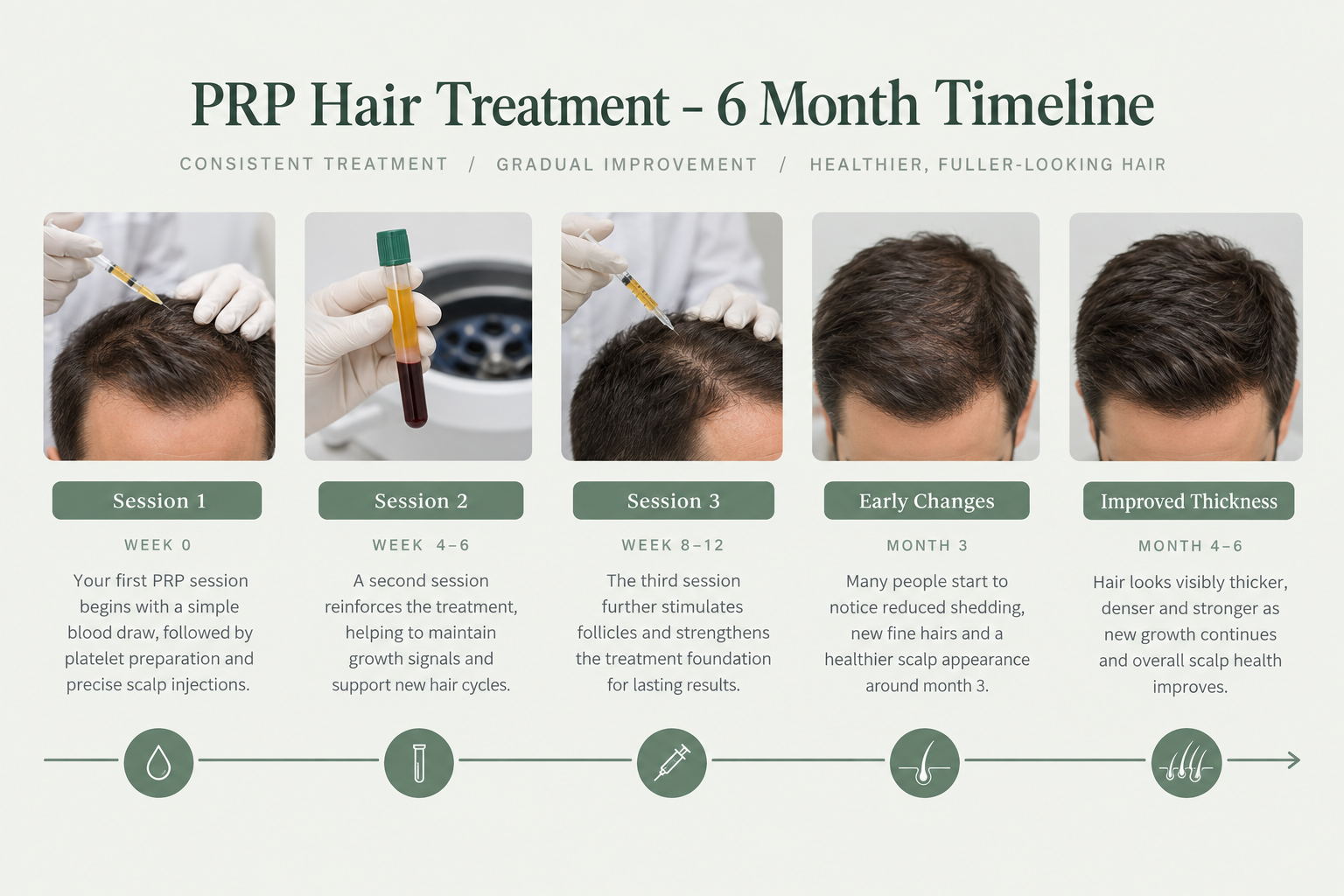
Some patients report a temporary increase in shedding in the weeks following their first one or two sessions. This is thought to reflect a shift in the hair cycle rather than treatment failure, though it can be concerning if not anticipated. A practitioner should discuss this possibility during the consultation so that patients are not alarmed if it occurs.
Not all patients respond to PRP treatment. Response rates reported in clinical studies vary, and a proportion of individuals do not show measurable improvement even after completing a full initial course. If no response is observed after a complete course of treatment, continuing with further sessions may not be warranted, and alternative approaches should be discussed.
Risks and Side Effects of PRP Hair Treatment
Because PRP uses the patient’s own blood, the risk of allergic reaction or rejection is very low. However, the procedure is not without potential side effects and risks, and patients should be fully informed before proceeding.
Common and generally temporary side effects include:
- Scalp tenderness, redness, or swelling at injection sites, typically resolving within a few days
- Mild bruising at the injection sites or the blood draw site
- Temporary headache following the procedure
- Itching or tightness of the scalp in the days after treatment
Less common but possible risks include:
- Infection at injection sites, particularly if aftercare instructions are not followed or if the procedure is performed in a non-sterile environment
- Nerve injury or vascular injury from injection, which is rare but possible with any injectable procedure
- Calcification at injection sites, which has been reported in some cases with repeated PRP injections
- Temporary increased hair shedding in the early weeks of treatment
The quality and safety of PRP treatment depend significantly on the practitioner’s training, the equipment used, and the sterility of the environment. Choosing a qualified and experienced practitioner working in an appropriate clinical setting is important for minimising risk.
PRP Alongside Other Hair Loss Treatments
PRP hair treatment is often considered as part of a broader hair loss management plan rather than as a standalone solution. For androgenetic alopecia in particular, combining PRP with evidence-based medical treatments may offer more comprehensive results than either approach alone.
Minoxidil, a topical treatment applied directly to the scalp, is one of the most widely used and evidence-supported options for both male and female pattern hair loss. Finasteride, an oral medication that reduces the hormonal driver of androgenetic alopecia in men, is another established option. Some practitioners combine PRP with one or both of these treatments, and some clinical studies have examined combination approaches with encouraging results, though the evidence for specific combinations is still developing.
Low-level laser therapy (LLLT) is another non-invasive option that may be used alongside PRP. For patients with more advanced hair loss who have not responded to non-surgical approaches, surgical hair transplantation remains an option, and PRP is sometimes used as an adjunct to hair transplant procedures to potentially support graft survival and recovery, though evidence for this specific application continues to evolve.
A practitioner experienced in hair loss management should be able to assess which combination of approaches may be most appropriate based on the individual’s diagnosis, degree of hair loss, and treatment goals.
Frequently Asked Questions
Does PRP actually make hair thicker, or does it just slow hair loss?
Clinical studies suggest PRP may do both to varying degrees. Some patients experience measurable increases in hair shaft diameter and density, while others primarily notice a slowing of progressive thinning. The extent of improvement depends on the individual’s response, the stage of hair loss, and the treatment protocol used. PRP is unlikely to produce dramatic regrowth in areas of advanced loss.
Is PRP hair treatment painful?
Most patients find the procedure manageable, particularly when topical or local anaesthetic is used to numb the scalp beforehand. The injections may cause a sensation of pressure, stinging, or mild discomfort. Scalp tenderness after the procedure is common but usually resolves within a day or two.
How long do the results of PRP hair treatment last?
Results are not permanent. Without maintenance sessions, improvements typically begin to diminish over time, as PRP does not address the underlying genetic or hormonal causes of androgenetic alopecia. Most practitioners recommend maintenance sessions every three to six months to sustain results, though the optimal interval varies between individuals.
Can PRP regrow hair in completely bald areas?
PRP is unlikely to produce meaningful regrowth in areas where follicles have been completely lost or replaced by scar tissue. The treatment appears most effective when follicles are miniaturised but still biologically active. A clinical assessment is needed to determine whether the follicles in a given area are likely to respond.
Is PRP suitable for women with hair thinning?
Yes, PRP is used for both male and female pattern hair loss. Female androgenetic alopecia often presents as diffuse thinning across the crown rather than a receding hairline, and PRP may be a relevant option for women in the earlier stages of this condition. A thorough assessment of the cause of hair thinning is important, as not all causes will respond to PRP.
How does PRP compare to a hair transplant?
PRP and hair transplantation address hair loss in fundamentally different ways. PRP is a non-surgical treatment aimed at stimulating existing follicles and is most relevant for early to moderate hair thinning. Hair transplantation is a surgical procedure that relocates follicles from donor areas to areas of loss, and is generally considered for more advanced hair loss where non-surgical options have not provided sufficient results. The two approaches are not mutually exclusive and are sometimes used together.
How many PRP sessions will I need before seeing a difference?
Most patients who respond to PRP begin to notice changes after two to three sessions of an initial course, with more visible improvements typically apparent three to six months after starting treatment. Individual response varies, and some patients may not see meaningful improvement even after completing a full course.
Is PRP Hair Treatment Worth Considering for Hair Thickness?
PRP hair treatment occupies a reasonable position in the non-surgical management of hair thinning, particularly for individuals with early to moderate androgenetic alopecia who still have active follicles. The biological rationale is sound, the safety profile is generally favourable given the use of the patient’s own blood, and a growing body of clinical research supports its potential to improve hair density and shaft thickness in suitable candidates. At the same time, the evidence is not yet definitive, results vary considerably between individuals, the treatment requires an ongoing commitment to maintenance sessions, and it is not a solution for advanced hair loss or complete follicle loss.
Whether PRP is worth pursuing depends on the individual’s diagnosis, the stage and cause of their hair loss, their expectations, and their willingness to commit to a course of treatment. It is most likely to be a useful option when considered as part of a broader hair loss management plan, potentially alongside established medical treatments, rather than as a single standalone solution.
A consultation with a practitioner experienced in hair loss assessment — ideally one who can examine the scalp, discuss the likely cause of thinning, and provide an honest appraisal of what PRP may realistically achieve in your specific situation — is the appropriate starting point before making any decision about treatment.


