
Lymecycline Side Effects: What Acne Patients Need to Know
Lymecycline is a tetracycline-class antibiotic commonly prescribed for moderate to severe acne, and understanding its side effect profile is an important part of deciding whether it is the right treatment for you. Like all antibiotics used in acne management, lymecycline carries a range of potential effects — most of which are mild and manageable, though some require prompt medical attention. This article explains what lymecycline is, how it works against acne, what side effects have been reported, who may be at higher risk, and what alternatives exist if lymecycline is not suitable for you.
Key Takeaways
- Lymecycline is a tetracycline antibiotic used to treat inflammatory acne by reducing Cutibacterium acnes bacteria and suppressing skin inflammation.
- The most commonly reported side effects are gastrointestinal, including nausea and stomach discomfort, but these are generally mild and often improve with food.
- Serious side effects such as severe headache, visual disturbances, or signs of liver problems are rare but require immediate medical assessment.
- Lymecycline is not suitable during pregnancy, breastfeeding, or for children under 12, and it interacts with several common medications and supplements.
- Antibiotic resistance is a growing concern; lymecycline is typically prescribed for a defined course alongside topical treatments rather than as a long-term standalone therapy.
What Is Lymecycline and How Does It Work for Acne?
Lymecycline is a semi-synthetic tetracycline antibiotic available in capsule form, most commonly in a 408 mg once-daily dose. It is prescribed for inflammatory acne — the type characterised by red papules, pustules, and nodules — rather than purely comedonal (blackhead and whitehead) acne. Lymecycline works through two complementary mechanisms: it inhibits bacterial protein synthesis, reducing the population of Cutibacterium acnes (formerly Propionibacterium acnes) within the hair follicle, and it has anti-inflammatory properties that help reduce the redness and swelling associated with acne lesions.
Compared with older tetracyclines such as oxytetracycline, lymecycline is better absorbed from the gastrointestinal tract and can be taken with or without food, which improves convenience and tolerability. It is generally considered to have a similar efficacy profile to doxycycline, another widely used tetracycline for acne, though individual responses vary. Lymecycline is typically prescribed for a course of 8 to 12 weeks, after which the prescribing clinician will reassess whether continued antibiotic therapy is appropriate.
Common Lymecycline Side Effects
The majority of people who take lymecycline for acne tolerate it well, and many side effects are mild and transient. The most frequently reported effects involve the gastrointestinal system, which is consistent with most oral antibiotics.
Gastrointestinal Effects
Nausea, stomach discomfort, and loose stools are the most commonly reported lymecycline side effects. These effects tend to be more noticeable in the first week of treatment and often improve as the body adjusts. Taking lymecycline with a full glass of water and a light meal can help reduce stomach irritation, even though the capsule can technically be taken without food. Persistent or severe diarrhoea should be reported to a prescriber, as it may occasionally indicate Clostridioides difficile-associated diarrhoea, a rare but serious complication of antibiotic use.
Photosensitivity
Tetracycline antibiotics, including lymecycline, can increase the skin’s sensitivity to ultraviolet light. This means that sun exposure during treatment may cause the skin to burn more easily or produce an exaggerated sunburn-like reaction. Patients taking lymecycline are generally advised to apply a broad-spectrum sunscreen with SPF 30 or higher daily, avoid prolonged sun exposure, and use protective clothing when outdoors. Photosensitivity reactions are more likely in fair-skinned individuals and during summer months or in sunny climates.
Oesophageal Irritation
If lymecycline capsules are swallowed without sufficient water or taken immediately before lying down, the capsule can lodge in the oesophagus and cause localised irritation or ulceration. To minimise this risk, lymecycline should always be swallowed with a full glass of water while sitting or standing upright, and patients should remain upright for at least 30 minutes after taking the capsule.
Skin and Mucous Membrane Effects
Some patients report mild skin reactions such as itching or rash. Oral thrush (a fungal overgrowth in the mouth) and vaginal candidiasis can occur because antibiotics alter the normal balance of microorganisms in the body. These fungal infections are generally treatable with over-the-counter antifungal preparations, but a prescriber should be informed if they develop.
Headache and Dizziness
Mild headache and occasional dizziness have been reported with lymecycline use. These are usually transient and do not require stopping treatment. However, a severe or persistent headache — particularly one accompanied by visual disturbances or nausea — should be assessed promptly, as it may indicate a rare but serious condition called intracranial hypertension (discussed further below).
Less Common and Serious Side Effects
While uncommon, some lymecycline side effects are clinically significant and require prompt medical attention. Awareness of these effects is important for anyone taking the medication.
Intracranial Hypertension (Benign Intracranial Hypertension)
Tetracycline-class antibiotics, including lymecycline, have been associated with a rare condition called intracranial hypertension — an increase in pressure around the brain. Symptoms include a severe, persistent headache, blurred or double vision, visual field changes, and pulsatile tinnitus (a whooshing sound in the ears). This condition is more commonly reported in young women with obesity, though it can occur in other patients. If any of these symptoms develop during lymecycline treatment, the medication should be stopped and urgent medical assessment sought. The condition is generally reversible once the antibiotic is discontinued.
Liver Effects
Tetracyclines can occasionally affect liver function, particularly at higher doses or with prolonged use. Symptoms that may suggest liver involvement include yellowing of the skin or whites of the eyes (jaundice), dark urine, persistent upper abdominal pain, or unusual fatigue. These symptoms are uncommon with standard lymecycline doses used for acne but should be reported to a prescriber without delay if they occur.
Allergic Reactions
Hypersensitivity reactions to lymecycline range from mild skin rashes to, very rarely, severe allergic reactions including anaphylaxis. Signs of a serious allergic reaction include swelling of the face, lips, or throat, difficulty breathing, and a widespread rash. Anyone who has previously had an allergic reaction to a tetracycline antibiotic should not take lymecycline. A mild rash that develops during treatment should be reported to a prescriber to determine whether it represents a minor reaction or a sign of a more significant hypersensitivity response.
Tooth and Bone Effects in Developing Tissues
Tetracyclines are known to bind to calcium in developing bone and teeth, causing permanent discolouration and potentially affecting bone development. This is why lymecycline is contraindicated during pregnancy, breastfeeding, and in children under 12 years of age. In adults whose bone and tooth development is complete, this effect is not a concern at standard therapeutic doses.
Antibiotic-Associated Diarrhoea and Gut Microbiome Disruption
All oral antibiotics alter the composition of the gut microbiome to some degree. Most patients experience only mild changes, but in some cases antibiotic use can lead to more significant gut disruption. Probiotic supplementation during and after antibiotic courses is sometimes suggested to support gut health, though the evidence for specific probiotic strains in this context remains mixed. Patients should discuss this with their prescriber if they have a history of gut sensitivity.
Drug Interactions and Substances to Avoid
Lymecycline interacts with several medications and supplements, and these interactions can reduce its effectiveness or increase the risk of side effects.
- Antacids, calcium supplements, iron supplements, and zinc: These can bind to lymecycline in the gastrointestinal tract and significantly reduce its absorption. They should be taken at least two to three hours apart from lymecycline.
- Dairy products: Unlike some older tetracyclines, lymecycline’s absorption is less severely affected by dairy, but large quantities of milk or calcium-rich foods taken simultaneously with the capsule may still reduce absorption to some degree.
- Oral retinoids (isotretinoin): Combining lymecycline with isotretinoin is generally contraindicated because both drugs independently carry a risk of intracranial hypertension, and concurrent use may substantially increase this risk.
- Oral contraceptives: Historically, tetracyclines were thought to reduce the effectiveness of combined oral contraceptives by altering gut bacteria involved in oestrogen recycling. Current evidence suggests this interaction is unlikely to be clinically significant for most patients, but this should be discussed with a prescriber, particularly during the first few weeks of antibiotic use.
- Warfarin and other anticoagulants: Lymecycline may enhance the anticoagulant effect of warfarin, potentially increasing bleeding risk. Patients on anticoagulant therapy require careful monitoring if lymecycline is prescribed.
- Penicillin-type antibiotics: Tetracyclines may reduce the bactericidal activity of penicillins when used concurrently, though this combination is rarely used in acne management.
Who Should Not Take Lymecycline?
Lymecycline is not appropriate for everyone, and a thorough medical history is essential before it is prescribed. The following groups are generally considered unsuitable for lymecycline treatment.
- Pregnant women: Tetracyclines cross the placenta and can cause permanent tooth discolouration and affect bone development in the foetus. Lymecycline is contraindicated throughout pregnancy.
- Breastfeeding women: Lymecycline passes into breast milk and may affect the developing infant. Alternative acne treatments should be considered.
- Children under 12: The risk of tooth discolouration and effects on developing bone means lymecycline is not recommended in this age group.
- Patients with known tetracycline allergy: A previous allergic reaction to any tetracycline antibiotic is a contraindication to lymecycline use.
- Patients with severe liver impairment: Lymecycline is metabolised by the liver, and significant hepatic impairment may affect drug clearance and increase the risk of adverse effects.
- Patients currently taking isotretinoin: As noted above, the combination carries an elevated risk of intracranial hypertension.
Antibiotic Resistance: An Important Consideration
The use of antibiotics for acne has come under increasing scrutiny due to the global problem of antibiotic resistance. Prolonged or repeated courses of antibiotics can select for resistant strains of Cutibacterium acnes and other bacteria, potentially reducing the effectiveness of antibiotics for future infections — not only in the individual patient but in the broader population. Current dermatological guidelines generally recommend limiting antibiotic courses for acne to the shortest effective duration, typically no longer than three to six months, and combining oral antibiotics with topical agents such as benzoyl peroxide to reduce the risk of resistance developing. Benzoyl peroxide is particularly useful in this context because it has no known mechanism for inducing bacterial resistance.
Patients should be aware that lymecycline is not a permanent solution for acne. It can significantly reduce inflammatory lesions during a course of treatment, but acne may return after the antibiotic is stopped, particularly if underlying hormonal or sebaceous gland factors are not addressed. A prescriber will typically plan a broader acne management strategy that does not rely indefinitely on antibiotic therapy.
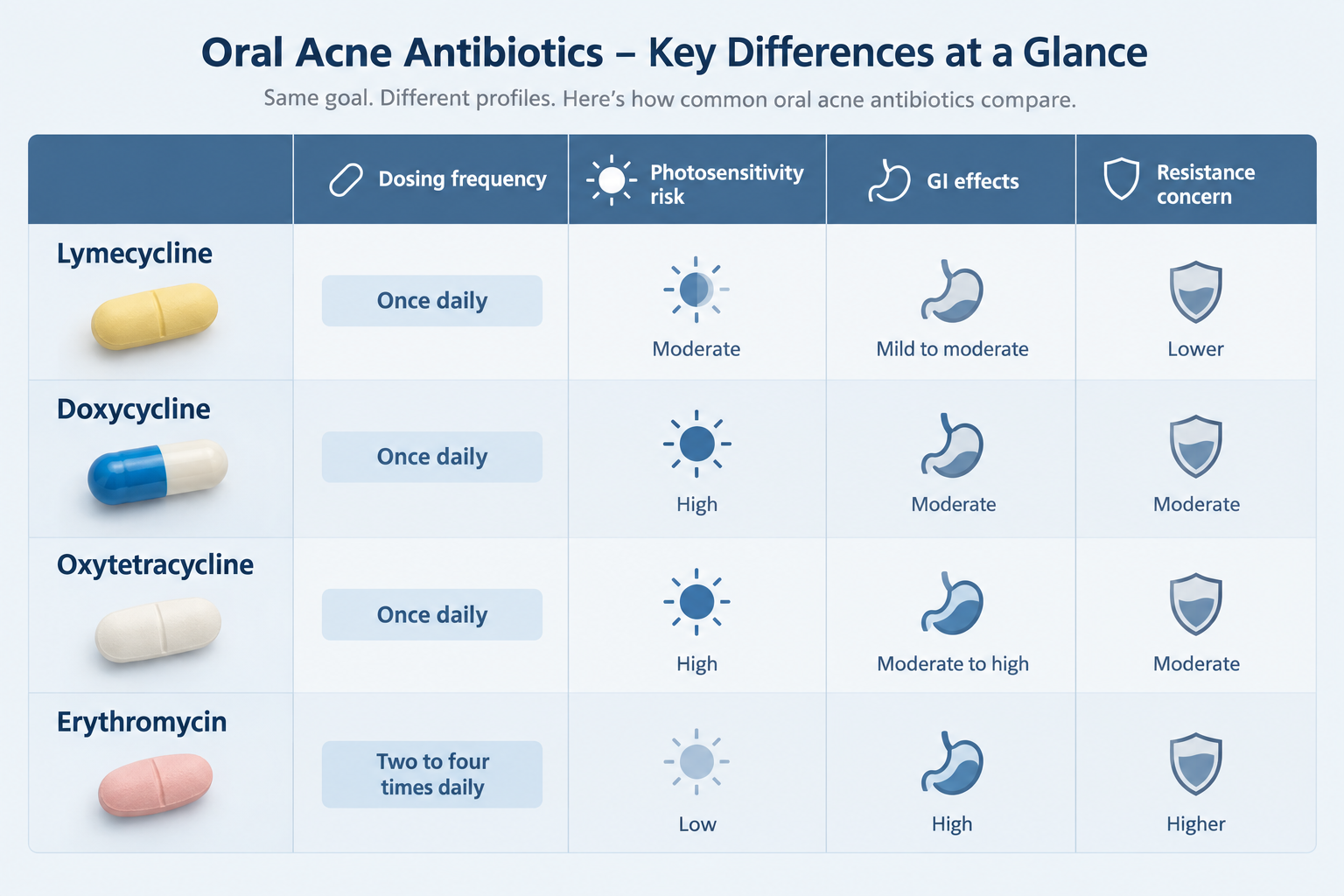
Lymecycline Compared with Other Acne Antibiotics
Lymecycline is one of several oral antibiotics used in acne management. Understanding how it compares with alternatives can help patients have a more informed conversation with their prescriber.
| Antibiotic | Class | Typical Dosing | Key Advantages | Notable Considerations |
|---|---|---|---|---|
| Lymecycline | Tetracycline | 408 mg once daily | Good absorption, can be taken with food, once-daily dosing | Photosensitivity, intracranial hypertension risk (rare) |
| Doxycycline | Tetracycline | 50–100 mg once or twice daily | Well-studied, widely available, anti-inflammatory at low dose | Higher photosensitivity risk than lymecycline, GI effects |
| Oxytetracycline | Tetracycline | 500 mg twice daily | Long-established use | Must be taken on an empty stomach, twice-daily dosing |
| Erythromycin | Macrolide | 500 mg twice daily | Alternative for tetracycline-intolerant patients | Higher rates of bacterial resistance, more GI side effects |
| Trimethoprim | Diaminopyrimidine | 300 mg once daily | Used when tetracyclines are contraindicated | Off-label for acne in some regions, different side effect profile |
Doxycycline is the most commonly compared alternative to lymecycline. Both are tetracyclines with similar mechanisms and efficacy for acne, but doxycycline is associated with a higher rate of photosensitivity reactions. Lymecycline’s once-daily dosing and ability to be taken with food are practical advantages that may improve adherence. The choice between them often depends on individual patient factors, local prescribing guidelines, and cost.
Non-Antibiotic Acne Treatment Alternatives
For patients who cannot take lymecycline, or for whom antibiotic therapy is not the most appropriate long-term strategy, several evidence-based alternatives exist.
- Topical retinoids (tretinoin, adapalene): These vitamin A derivatives regulate skin cell turnover, reduce comedone formation, and have anti-inflammatory effects. They are a cornerstone of acne management and are often used alongside or instead of antibiotics.
- Topical benzoyl peroxide: An effective antibacterial and keratolytic agent that does not induce antibiotic resistance. It is frequently combined with topical antibiotics or used as part of a maintenance regimen after an antibiotic course.
- Topical antibiotics (clindamycin, erythromycin): Used for mild to moderate inflammatory acne, typically in combination with benzoyl peroxide to limit resistance.
- Hormonal therapies: For women with hormonally driven acne, combined oral contraceptives or anti-androgen medications such as spironolactone may be appropriate. These address the underlying hormonal contribution to excess sebum production.
- Isotretinoin (oral retinoid): Reserved for severe, scarring, or treatment-resistant acne, isotretinoin is highly effective but requires careful monitoring due to its significant side effect profile, including teratogenicity (risk of birth defects).
- Azelaic acid: A topical agent with antibacterial, anti-inflammatory, and mild comedolytic properties. It is suitable for use during pregnancy and in patients with post-inflammatory hyperpigmentation.
- Professional skin treatments: Chemical peels, light-based therapies, and certain clinic-based procedures may complement medical acne treatment in appropriate patients, though these are generally adjunctive rather than primary treatments for active inflammatory acne.
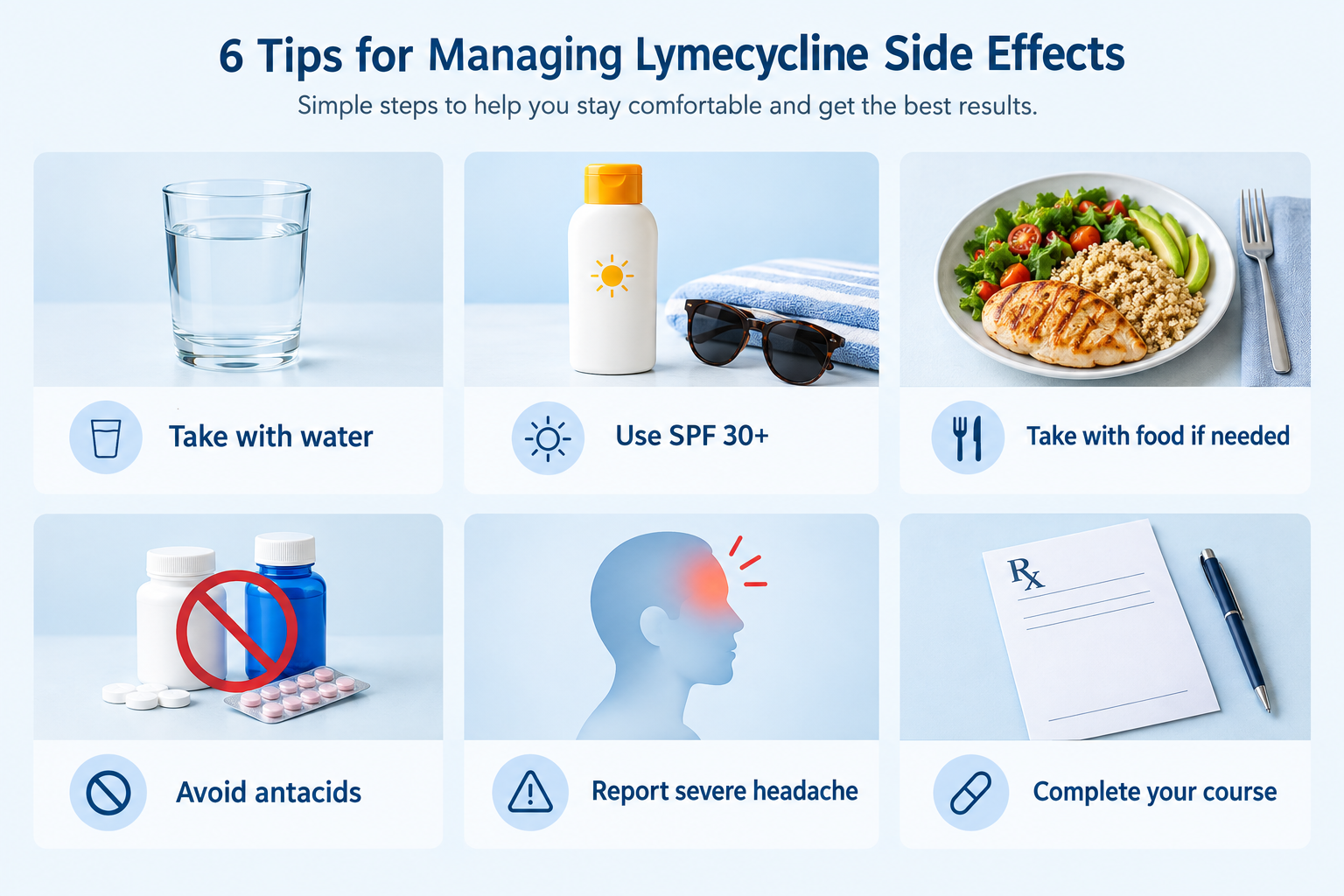
Practical Tips for Managing Lymecycline Side Effects
Most lymecycline side effects can be minimised with straightforward precautions. The following practical measures are commonly recommended.
- Take lymecycline with a full glass of water and remain upright for at least 30 minutes to reduce the risk of oesophageal irritation.
- Apply a broad-spectrum SPF 30 or higher sunscreen every morning to reduce photosensitivity reactions, and reapply during prolonged sun exposure.
- If stomach discomfort occurs, taking the capsule with a light meal may help, as lymecycline’s absorption is not significantly impaired by food.
- Avoid taking antacids, iron supplements, calcium supplements, or zinc within two to three hours of lymecycline to prevent reduced absorption.
- Report any severe headache, visual changes, or signs of allergic reaction to a prescriber promptly rather than waiting for a routine appointment.
- Complete the prescribed course as directed and do not stop early without medical advice, even if the skin appears to be improving.
Frequently Asked Questions
How long does it take for lymecycline to work for acne?
Most patients begin to notice some improvement in inflammatory acne lesions after four to six weeks of treatment, though the full benefit may take eight to twelve weeks to become apparent. Lymecycline does not produce immediate results, and it is important to continue the course as prescribed even if early improvement seems slow.
Can lymecycline cause weight gain?
Weight gain is not a recognised or commonly reported side effect of lymecycline at doses used for acne. If unexplained weight changes occur during treatment, they are unlikely to be directly related to lymecycline, but a prescriber should be consulted to rule out other causes.
Is it safe to drink alcohol while taking lymecycline?
Moderate alcohol consumption is not known to directly interact with lymecycline in the way that it does with some other antibiotics such as metronidazole. However, alcohol can contribute to dehydration and may worsen gastrointestinal side effects. It is generally advisable to keep alcohol intake moderate during any antibiotic course.
Can lymecycline affect my contraceptive pill?
Current evidence suggests that lymecycline is unlikely to significantly reduce the effectiveness of combined oral contraceptives for most patients. However, this should be discussed with a prescriber, particularly when starting lymecycline for the first time, so that an informed decision can be made based on individual circumstances.
What should I do if I miss a dose of lymecycline?
If a dose is missed, it should be taken as soon as remembered — unless it is nearly time for the next dose, in which case the missed dose should be skipped. Double doses should not be taken to compensate for a missed one. Consistent daily dosing helps maintain effective antibiotic levels in the body.
Can I use lymecycline long-term for acne?
Prolonged antibiotic use for acne is generally discouraged due to the risk of antibiotic resistance and potential cumulative side effects. Most prescribers aim to limit lymecycline courses to three to six months and will reassess the treatment plan at that point. Long-term acne management typically involves transitioning to non-antibiotic topical treatments or addressing underlying causes such as hormonal factors.
Will my acne come back after stopping lymecycline?
Acne may return after a course of lymecycline ends, particularly if the underlying factors driving acne — such as hormonal influences, excess sebum production, or follicular keratinisation — have not been addressed. A prescriber will usually plan a maintenance strategy using topical treatments to help sustain the improvement achieved during the antibiotic course.
Making an Informed Decision About Lymecycline for Acne
Lymecycline is a well-established option in the management of moderate to severe inflammatory acne, with a generally manageable side effect profile when used appropriately and for a defined duration. The most common side effects — gastrointestinal discomfort and photosensitivity — can often be minimised with straightforward precautions, and serious adverse effects such as intracranial hypertension or significant liver reactions are rare at standard acne doses.
However, lymecycline is not suitable for everyone, and it is not a standalone long-term solution for acne. Its use should be part of a broader, structured acne management plan developed with a qualified prescriber — one that considers the type and severity of acne, individual medical history, contraindications, the risk of antibiotic resistance, and the most appropriate combination of treatments for sustained improvement. If you are considering lymecycline or have concerns about side effects you are already experiencing, a consultation with a dermatologist or experienced prescriber is the most appropriate next step.


