
Chemical Peel Before and After: What Results Can You Realistically Expect?
Chemical peels are one of the most established skin resurfacing treatments available, used to address concerns ranging from uneven skin tone and fine lines to acne scarring and hyperpigmentation. Understanding what actually happens to the skin before, during, and after a chemical peel — and what results are realistic — helps prospective patients make informed decisions before booking a consultation.
Key Takeaways
- Chemical peels vary significantly in depth — superficial, medium, and deep — and the depth largely determines both the results and the recovery period.
- Visible improvements in skin texture, tone, and clarity are possible, but results depend on skin type, concern being treated, peel strength, and aftercare compliance.
- Most superficial peels require little to no downtime, while medium and deep peels involve several days to weeks of recovery.
- Multiple sessions are often recommended for superficial peels; deeper peels may produce more dramatic results from a single treatment.
- A thorough consultation with a qualified practitioner is essential to determine which peel depth and formulation may be appropriate for your skin.
What Is a Chemical Peel?
A chemical peel is a skin resurfacing procedure in which a chemical solution is applied to the skin to accelerate exfoliation and stimulate cellular renewal. The solution causes controlled damage to the outer layers of the skin, prompting the body to shed damaged cells and produce new ones. The depth of this process — and therefore the extent of results and recovery — depends on the type and concentration of the chemical agent used, as well as the duration of application and the individual’s skin characteristics.
Chemical peels are broadly categorised into three depths: superficial, medium, and deep. Superficial peels target only the outermost layer of skin (the epidermis) and are often performed using alpha-hydroxy acids such as glycolic acid or lactic acid, or low-concentration salicylic acid. Medium-depth peels penetrate into the upper dermis and commonly use trichloroacetic acid (TCA) at varying concentrations. Deep peels, such as those using phenol, reach the mid-dermis and produce the most significant changes but also carry the greatest recovery demands and risks.
What Concerns Can a Chemical Peel Address?
Chemical peels may be used to improve a range of skin concerns, though the suitability of a particular peel type depends on the specific concern, skin type, and skin tone. Common indications include:
- Uneven skin tone and hyperpigmentation — including sun damage, melasma, and post-inflammatory hyperpigmentation from acne
- Fine lines and superficial wrinkles — particularly around the mouth and under the eyes
- Acne and congested skin — salicylic acid peels are frequently used for active acne and oily skin types
- Acne scarring — medium-depth peels may help improve the appearance of shallow atrophic scars
- Rough or dull skin texture — regular superficial peels can improve overall skin smoothness and radiance
- Enlarged pores — though improvement is typically modest
- Keratosis pilaris and mild skin irregularities — depending on the formulation used
It is important to note that chemical peels are not equally effective for all concerns. Deep acne scarring, significant volume loss, and dynamic wrinkles caused by muscle movement are generally better addressed through other treatments. A practitioner will assess whether a peel is the most appropriate option for a given concern.
Before a Chemical Peel: Preparation and Skin Priming
Preparation before a chemical peel can meaningfully influence both the outcome and the risk of complications. Many practitioners recommend a pre-treatment skincare regimen in the weeks leading up to the procedure. This may include the use of topical retinoids, hydroquinone, or azelaic acid to prime the skin, improve cell turnover, and reduce the risk of post-inflammatory hyperpigmentation — particularly in patients with medium to darker skin tones.
Sun avoidance and daily broad-spectrum SPF use are typically advised before treatment, as sun-damaged or recently tanned skin may respond unpredictably to chemical agents. Patients are usually asked to discontinue certain skincare ingredients — such as retinoids, exfoliating acids, and prescription topicals — in the days immediately before the peel to reduce the risk of excessive irritation.
A thorough consultation should cover medical history, current medications, previous skin treatments, and any history of cold sores (herpes simplex), as chemical peels can trigger viral reactivation. Antiviral prophylaxis may be prescribed before medium or deep peels in susceptible individuals. Patients with a history of keloid scarring, certain autoimmune conditions, or those who are pregnant or breastfeeding are generally not suitable candidates.
What Happens During the Treatment?
The chemical peel appointment itself varies in length and experience depending on the depth of the peel. For superficial peels, the skin is cleansed, the chemical solution is applied for a controlled period — typically a few minutes — and then neutralised or removed. Patients often describe a mild tingling or stinging sensation during application. The appointment may take 30 to 60 minutes in total, including preparation.
Medium-depth peels involve a more intense application process and may cause a stronger burning sensation during treatment. Topical anaesthetic or cooling fans are sometimes used to manage discomfort. The practitioner monitors the skin’s response — including frosting, which is the whitening of the skin surface that indicates the depth of penetration — throughout the procedure.
Deep phenol peels are more involved procedures that may require sedation or anaesthesia, cardiac monitoring, and a clinical setting with appropriate resuscitation facilities. These are less commonly performed and are typically reserved for significant photoageing or deep wrinkles in carefully selected patients.
Chemical Peel Before and After: What the Skin Goes Through
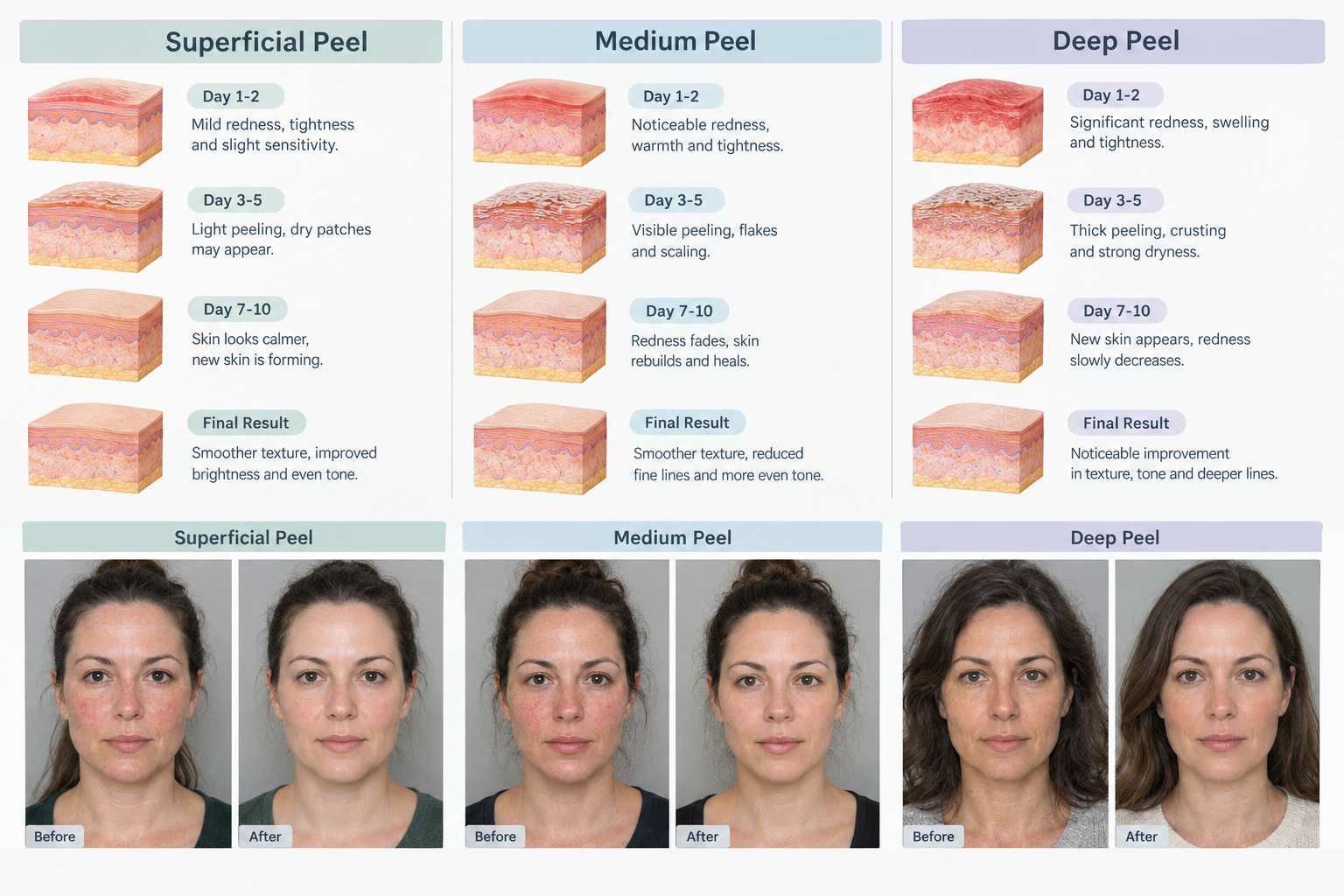
Understanding the skin’s journey from immediately after treatment through to the final result helps set realistic expectations. The timeline differs considerably between peel depths.
After a Superficial Peel
Immediately following a superficial peel, the skin may appear slightly pink or flushed, similar to mild sunburn. Some patients experience very light flaking or peeling over the following two to five days, though this is not always visible. Many people return to normal activities the same day or the next day. Skin may feel tighter and look brighter within a few days of treatment. Meaningful improvements in tone and texture typically become more apparent after a course of treatments, often spaced two to four weeks apart.
After a Medium-Depth Peel
Medium-depth peels produce a more pronounced skin response. In the first 24 to 48 hours, the skin typically appears red, swollen, and may feel tight or uncomfortable. Over the following days, the skin begins to peel and shed more noticeably — this process usually peaks around days three to five and may continue for up to ten days. The new skin underneath is initially pink and sensitive. Most patients require five to ten days of social downtime. Sun protection is critical during recovery, and the skin remains more vulnerable to UV damage for several weeks after treatment.
After a Deep Peel
Deep chemical peels involve a significant recovery period. Swelling, crusting, and oozing in the first few days are expected. The skin may take two to three weeks to re-epithelialise (form a new surface layer), and redness can persist for several months. The results, when appropriate patient selection and aftercare are in place, can be substantial — with notable improvements in deep lines, skin laxity, and severe sun damage. However, the risks are also greater, and deep peels are not suitable for all skin tones due to the risk of permanent pigmentation changes.
Realistic Results: What Chemical Peels Can and Cannot Do
Chemical peels can produce genuine improvements in skin quality, but the degree of change depends on multiple factors including the peel type, the concern being treated, the patient’s skin type, and adherence to aftercare. Superficial peels generally offer subtle, cumulative improvements — they are well suited to maintaining skin health, managing mild pigmentation, and improving overall radiance, but they are unlikely to produce dramatic changes from a single session.
Medium-depth peels can produce more visible improvements in pigmentation, fine lines, and mild acne scarring, often noticeable after one treatment. However, results are not permanent — ongoing sun exposure, ageing, and hormonal changes can cause concerns to return over time. Deep peels offer the most significant resurfacing but come with the greatest recovery burden and the highest risk profile.
Chemical peels cannot address concerns related to volume loss, muscle-related wrinkles, or significant skin laxity. For these concerns, treatments such as dermal fillers, botulinum toxin injections, or energy-based skin tightening devices may be more appropriate, either alone or in combination with peels.
How Long Do Chemical Peel Results Last?
The longevity of chemical peel results varies by peel depth and the concern being treated. Superficial peel results are typically maintained through a course of regular treatments — monthly or every few weeks — as the improvements are gradual and cumulative. Without ongoing treatment and good sun protection, the benefits may diminish over weeks to months.
Medium-depth peel results for pigmentation and texture can last one to two years or longer with diligent sun protection and a good maintenance skincare routine. However, conditions such as melasma are prone to recurrence, particularly with sun exposure or hormonal changes, and may require ongoing management.
Deep peel results for wrinkles and photoageing can be long-lasting — in some cases several years — but the skin continues to age naturally, and results are not permanent. Maintaining results from any peel depth requires consistent use of broad-spectrum SPF, appropriate skincare, and in many cases periodic maintenance treatments.
Risks and Side Effects
Chemical peels carry risks that increase with peel depth. Patients should be fully informed before proceeding with any treatment. Common and generally temporary side effects include redness, swelling, peeling, dryness, and temporary sensitivity. These are expected parts of the healing process rather than complications.
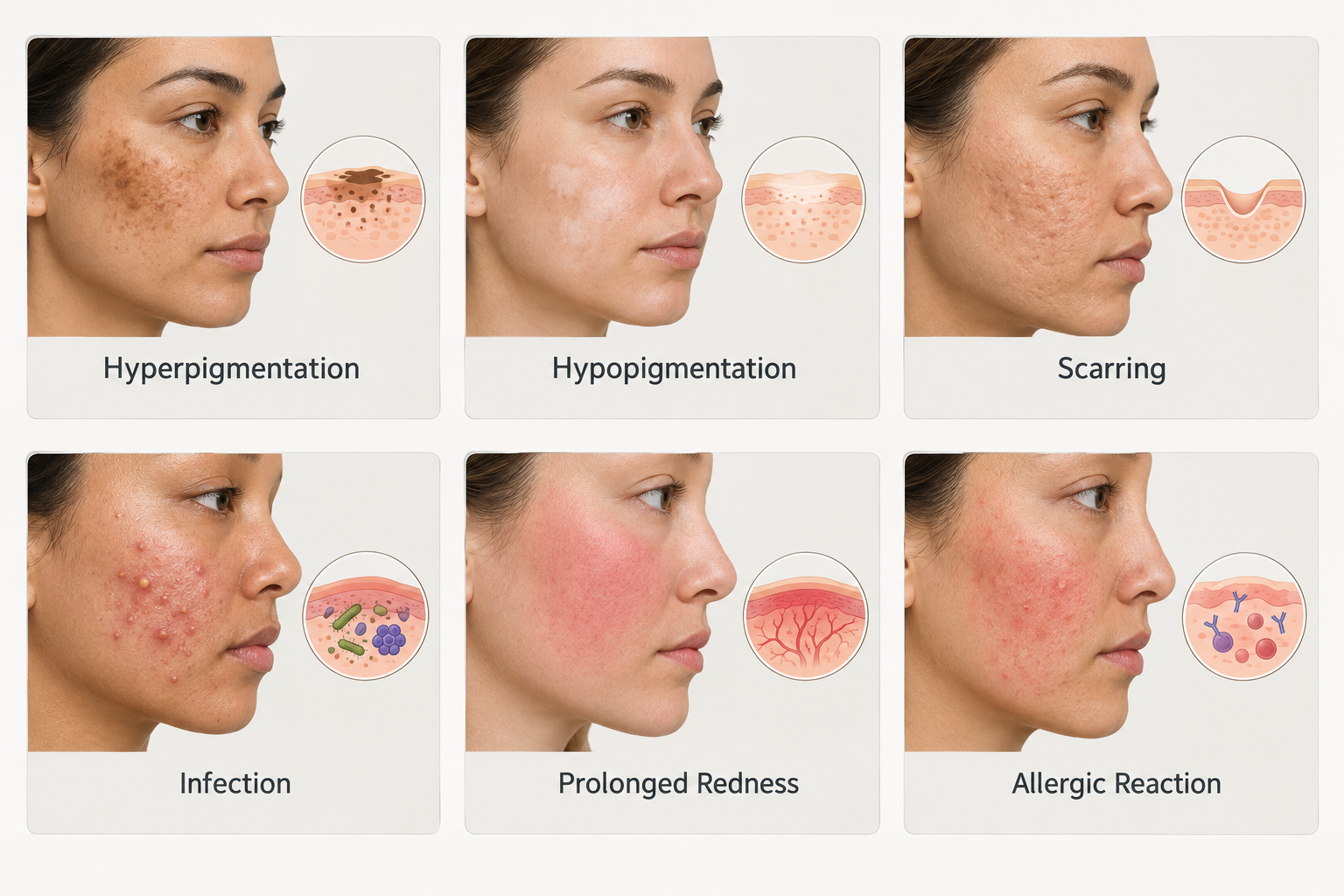
More significant risks include:
- Post-inflammatory hyperpigmentation (PIH) — darkening of the skin after treatment, more common in medium to darker skin tones (Fitzpatrick skin types IV–VI). Proper pre-treatment preparation and careful peel selection can reduce but not eliminate this risk.
- Hypopigmentation — permanent lightening of the skin, more associated with deep peels and certain skin types
- Scarring — uncommon but possible, particularly with deeper peels or if post-treatment instructions are not followed
- Infection — bacterial, viral (including herpes simplex reactivation), or fungal infections can occur during healing
- Prolonged redness — erythema lasting weeks to months, more common after medium and deep peels
- Allergic or unexpected reactions — to the chemical agent or other components of the formulation
- Systemic toxicity — a rare but serious risk associated with phenol deep peels, which is why cardiac monitoring is required during these procedures
Choosing a qualified and experienced practitioner, disclosing a full medical history, and following all pre- and post-treatment instructions are the most important factors in minimising risk.
Who May Be Suitable for a Chemical Peel?
Chemical peels may be suitable for adults with a range of skin concerns who are in generally good health and have realistic expectations. Lighter skin tones (Fitzpatrick types I–III) tend to tolerate medium and deep peels with a lower risk of pigmentation complications, though superficial peels can be used across a wider range of skin tones when formulated and applied appropriately.
Patients who may benefit from discussing chemical peels with a practitioner include those with mild to moderate sun damage, uneven skin tone, superficial acne scarring, or persistent dullness that has not responded adequately to topical skincare alone. Patients with active skin infections, open wounds, eczema, rosacea, or psoriasis in the treatment area are generally not suitable candidates at the time of treatment.
Alternatives to Chemical Peels
Several other treatments address similar skin concerns and may be considered alongside or instead of chemical peels, depending on individual suitability and goals:
- Microdermabrasion — a mechanical exfoliation technique with minimal downtime, suitable for mild texture concerns but generally less effective than chemical peels for pigmentation or scarring
- Laser resurfacing — ablative lasers such as CO2 or erbium can produce results comparable to medium or deep peels, with more precise depth control; non-ablative lasers offer improvement with less downtime
- Microneedling — stimulates collagen production and may improve acne scarring and skin texture; can be combined with topical agents for enhanced effect
- Intense pulsed light (IPL) — targets pigmentation and vascular concerns with minimal downtime, though it does not resurface the skin in the same way as a peel
- Topical prescription skincare — retinoids, hydroquinone, azelaic acid, and vitamin C can produce meaningful improvements in pigmentation and texture over time, and are often used to maintain peel results
- HydraFacial — a multi-step treatment combining cleansing, exfoliation, and hydration; suitable for skin maintenance with no downtime, though less intensive than a chemical peel
The most appropriate treatment depends on the specific concern, skin type, tolerance for downtime, and individual goals. A practitioner may recommend a combination approach for optimal results.
Frequently Asked Questions
How many chemical peel sessions will I need?
The number of sessions depends on the peel depth and the concern being treated. Superficial peels are typically performed as a course of four to six treatments, spaced two to four weeks apart, to achieve cumulative improvement. Medium-depth peels may produce meaningful results from a single session, with maintenance treatments as needed. Deep peels are usually a one-time procedure, though individual circumstances vary.
Will my skin look worse before it looks better?
After medium and deep peels, the skin goes through a visible healing phase involving redness, peeling, and temporary sensitivity before the final result becomes apparent. This is a normal part of the process. With superficial peels, the transition is usually subtle and most patients do not experience significant visible peeling.
Can chemical peels be used on darker skin tones?
Chemical peels can be used on medium to darker skin tones, but the risk of post-inflammatory hyperpigmentation is higher with deeper peels. Superficial peels using agents such as lactic acid, mandelic acid, or low-concentration salicylic acid are generally considered safer options for Fitzpatrick skin types IV–VI. Pre-treatment skin priming and careful practitioner selection are particularly important for patients with darker skin tones.
Is a chemical peel painful?
Superficial peels typically cause mild tingling or stinging during application, which most patients find tolerable. Medium-depth peels can cause a more intense burning sensation, though this usually subsides quickly after the solution is removed. Deep peels may require anaesthesia or sedation. Discomfort during recovery varies by peel depth.
Can I wear makeup after a chemical peel?
After a superficial peel, many patients can apply mineral makeup within 24 hours, though this varies by practitioner guidance. After medium or deep peels, makeup should be avoided until the skin has sufficiently healed — typically at least one to two weeks — to reduce the risk of infection and irritation.
How soon will I see results after a chemical peel?
After a superficial peel, skin may appear brighter within a few days, though meaningful improvements in tone and texture develop gradually over a course of treatments. After a medium-depth peel, results become more visible once the peeling phase is complete — usually within one to two weeks. The full benefit of any peel may take four to six weeks to appreciate as collagen remodelling continues beneath the surface.
Is a Chemical Peel the Right Choice for Your Skin Concerns?
Chemical peels offer a clinically established route to improving skin texture, tone, and clarity, with a range of options to suit different concerns and tolerance for downtime. Superficial peels are a practical choice for ongoing skin maintenance and mild concerns, while medium-depth peels may produce more noticeable improvements in pigmentation and early signs of ageing. Deep peels remain an option for significant photoageing in carefully selected patients, though they carry a more demanding recovery and a higher risk profile.
Results are real but not guaranteed, and they are influenced by skin type, the concern being treated, peel selection, practitioner experience, and how well aftercare instructions are followed. Chemical peels are not a solution for every skin concern, and for some patients, alternative or complementary treatments may be more appropriate.
If you are considering a chemical peel, a consultation with a qualified aesthetic practitioner or dermatologist is the most important first step. A thorough assessment of your skin type, concerns, and medical history will help determine whether a peel is suitable, which formulation and depth may be appropriate, and what results you can realistically expect.


