
Bunny Lines: What Causes Nose Wrinkles and How to Prevent Them
Bunny lines are the diagonal or horizontal wrinkles that appear on the sides of the nose when you scrunch your face, laugh, or squint. For many people they are barely noticeable, but over time repeated muscle contractions can etch these creases into the skin permanently, making them visible even at rest. Understanding what causes bunny lines, how they develop, and what options exist for reducing or preventing them can help you make a more informed decision before seeking professional advice.
Key Takeaways
- Bunny lines are caused by repeated contractions of the nasalis muscle on the sides of the nose, and they tend to deepen with age as skin loses collagen and elasticity.
- Botulinum toxin injections are the most established treatment for dynamic bunny lines, relaxing the underlying muscle to soften the crease.
- Bunny lines sometimes become more noticeable after treatment of the glabellar area or forehead, as the nasalis muscle compensates for restricted movement elsewhere.
- Skincare, sun protection, and lifestyle habits can support skin quality and may slow the progression of fine lines in this area.
- A qualified practitioner should assess your facial anatomy before any treatment, as the nose is a complex area with important vascular structures nearby.
What Are Bunny Lines?
Bunny lines are fine to moderate wrinkles that form on the upper sides of the nose, typically running diagonally downward from the bridge toward the nostrils, though they can also appear as horizontal creases across the nasal bridge. The name comes from the scrunching expression that rabbits make, which closely resembles the facial movement that produces these lines in humans. They are classified as dynamic wrinkles, meaning they are initially caused by muscle movement rather than by static skin changes alone.
The muscle primarily responsible for bunny lines is the nasalis, a paired muscle that compresses and widens the nostrils. Every time you laugh, squint, wrinkle your nose in disgust, or make an animated expression, the nasalis contracts and folds the overlying skin. Over years of repeated movement, the skin in this area gradually loses its ability to spring back fully, and the crease becomes a fixed feature of the face even when the muscles are at rest. This transition from a dynamic line to a static wrinkle is the same process that produces forehead lines, crow’s feet, and frown lines.
Why Do Bunny Lines Develop?
Several factors contribute to the development and deepening of nose wrinkles over time. Muscle activity is the primary driver, but the rate at which lines become permanent depends on a combination of biological and lifestyle influences.
Repeated Facial Expressions
The nasalis muscle is active during many everyday expressions, including smiling, laughing, and squinting. People who are naturally expressive or who spend significant time in bright light without sunglasses may contract this muscle more frequently, accelerating the formation of visible creases on the nose sides.
Age-Related Skin Changes
As skin ages, it produces less collagen and elastin, the structural proteins that give it firmness and the ability to recoil after movement. Reduced hyaluronic acid content also means the skin holds less moisture, making it thinner and less resilient. These changes mean that the same muscle contractions that caused no lasting mark at age twenty-five may leave a visible crease at forty or fifty.
Sun Exposure and UV Damage
Ultraviolet radiation accelerates the breakdown of collagen and elastin in the dermis, a process known as photoageing. The nose and surrounding areas are among the most sun-exposed parts of the face, making consistent sun protection particularly relevant for slowing the progression of nose wrinkles.
Compensation After Other Botulinum Toxin Treatments
One clinically important cause of bunny lines that is often overlooked is compensatory muscle activity following botulinum toxin treatment in adjacent areas. When the glabellar muscles, the corrugators and procerus responsible for frown lines, are relaxed with botulinum toxin, the nasalis muscle may recruit more strongly to produce similar expressions. This can cause bunny lines to appear or worsen after a patient’s first or second treatment for frown lines, even if the nose area was not previously a concern. Practitioners experienced in full-face assessment will often discuss this possibility during consultation.
Skin Type and Genetics
Thinner skin, fair complexion, and a genetic tendency toward early collagen loss can all make an individual more susceptible to visible nose wrinkles at a younger age. Conversely, people with naturally thicker or more sebaceous skin may notice these lines later in life.
Can Bunny Lines Be Prevented?
Complete prevention of bunny lines is not realistic, because facial expression is a normal and healthy part of human communication. However, a combination of consistent skincare, protective habits, and, where appropriate, early professional intervention may slow the rate at which dynamic nose wrinkles become permanent static creases.

Sun Protection
Daily broad-spectrum sunscreen with an SPF of at least 30, applied to the nose and surrounding skin, is one of the most evidence-supported measures for slowing photoageing. Wearing sunglasses reduces squinting, which in turn reduces unnecessary nasalis activation and limits UV exposure to the delicate skin around the nose and eyes simultaneously.
Topical Skincare
Retinoids, including prescription tretinoin and over-the-counter retinol formulations, have the strongest evidence base among topical ingredients for stimulating collagen production and improving skin texture. Regular use may help maintain skin resilience in the nasal area, though results are gradual and require consistent long-term application. Antioxidant serums containing vitamin C may complement sun protection by neutralising free radicals generated by UV exposure. Adequate moisturisation supports the skin barrier and helps maintain a plumper appearance, though it does not reverse established wrinkles.
Lifestyle Factors
Smoking accelerates skin ageing through multiple mechanisms, including reduced blood flow to the skin and increased oxidative stress. Avoiding smoking and limiting alcohol consumption, which can dehydrate the skin and impair collagen synthesis, may support overall skin quality. Adequate sleep and a diet rich in antioxidants and essential fatty acids are broadly supportive of skin health, though the direct evidence for specific dietary interventions on facial wrinkles remains limited.
Early Botulinum Toxin Treatment
Some practitioners and patients choose to address dynamic bunny lines with botulinum toxin before they become static creases, on the basis that preventing the repeated muscle movement that etches lines into the skin may delay or reduce their permanent appearance. This approach, sometimes called preventative or prophylactic botulinum toxin, is a subject of ongoing clinical discussion. Evidence for its long-term effectiveness in preventing static wrinkle formation is still developing, and the decision to treat early should be made carefully with a qualified practitioner who can assess whether treatment is appropriate for your age, skin condition, and facial anatomy.
Botulinum Toxin for Bunny Lines: How It Works
Botulinum toxin treatment is the most commonly used clinical approach for reducing the appearance of bunny lines. The treatment involves injecting a small, precisely placed amount of botulinum toxin into the nasalis muscle on one or both sides of the nose. The toxin temporarily blocks the nerve signals that cause the muscle to contract, reducing the repetitive folding of the overlying skin. As the muscle activity decreases, existing dynamic lines soften and the skin has an opportunity to recover some of its smoothness.
Several botulinum toxin products are used in aesthetic practice, including Botox (onabotulinumtoxinA), Dysport (abobotulinumtoxinA), and Azzalure (abobotulinumtoxinA). These products differ in their formulation, unit measurements, and diffusion characteristics, and units between brands are not directly interchangeable. The choice of product and the precise technique used will depend on the practitioner’s training, the patient’s anatomy, and the clinical assessment. Providing specific dosing information is not appropriate here, as treatment must be individualised by a qualified professional.
What to Expect During and After Treatment
Botulinum toxin injections for bunny lines are typically a brief in-clinic procedure. A fine needle is used to deliver the product into the target muscle, and most patients describe the sensation as a mild sting or pinch. No anaesthesia is usually required, though topical numbing cream may be offered. The appointment itself is generally short, often completed within fifteen to thirty minutes when combined with other areas.
Results from botulinum toxin treatment for nose wrinkles typically begin to appear within two to five days, with the full effect visible at around two weeks. The duration of effect varies between individuals but commonly lasts three to four months, after which the muscle gradually regains its activity and lines may return. Repeat treatments are required to maintain the result. Over time, some patients find that with consistent treatment the lines soften further as the skin is given repeated periods of reduced mechanical stress.
Risks and Limitations
The nasalis muscle plays a role in nasal airway function and facial expression, and treatment in this area requires careful technique. Potential side effects include temporary bruising, swelling, or redness at the injection site. More significant but less common risks include asymmetry, an unnatural appearance if too much product is used, or unintended effects on adjacent muscles that could alter the appearance of the nose or upper lip. The nose is also an area with important blood vessels, and treatment should only be performed by a practitioner with appropriate training and a thorough understanding of facial anatomy.
Botulinum toxin treatment is not suitable for everyone. It is generally not recommended during pregnancy or breastfeeding, for individuals with certain neuromuscular conditions, or for those with active infection at the treatment site. A full medical history and facial assessment are essential before treatment.
Other Treatment Options for Nose Wrinkles
While botulinum toxin is the primary clinical treatment for dynamic bunny lines, other approaches may be considered depending on the nature of the wrinkles, the patient’s skin condition, and their overall goals.
Dermal Fillers
For bunny lines that have become static, meaning they are visible even without muscle movement, botulinum toxin alone may not fully resolve the crease. In some cases, a small amount of hyaluronic acid dermal filler may be used to soften a persistent line by adding volume beneath the skin. However, filler use on and around the nose carries a higher risk profile than in many other facial areas due to the proximity of important blood vessels. Vascular complications, though rare, can be serious, and this treatment should only be considered by practitioners with advanced training in nasal anatomy and emergency management of complications.
Skin Resurfacing Treatments
Treatments such as laser resurfacing, radiofrequency microneedling, and chemical peels can improve overall skin texture and stimulate collagen production, which may help reduce the appearance of fine lines in the nasal area. These treatments address skin quality rather than the underlying muscle activity, so they are generally more useful for superficial lines or as a complement to botulinum toxin rather than a standalone solution for established bunny lines.
Polynucleotides and Skin Boosters
Injectable skin quality treatments, including polynucleotides and hyaluronic acid skin boosters, aim to improve hydration, stimulate collagen synthesis, and enhance overall skin resilience. These treatments do not directly address muscle activity but may improve the skin’s ability to recover between expressions, potentially making lines less pronounced over time. Evidence for their specific effectiveness on bunny lines is limited, and they are generally considered supportive rather than primary treatments for this concern.
Assessing Your Bunny Lines: Dynamic vs Static
Before deciding on any treatment approach, it is useful to understand whether your bunny lines are primarily dynamic or static. Dynamic bunny lines are only visible during facial movement and disappear completely at rest. Static bunny lines remain visible even when the face is relaxed. This distinction matters because it influences which treatments are likely to be most effective.
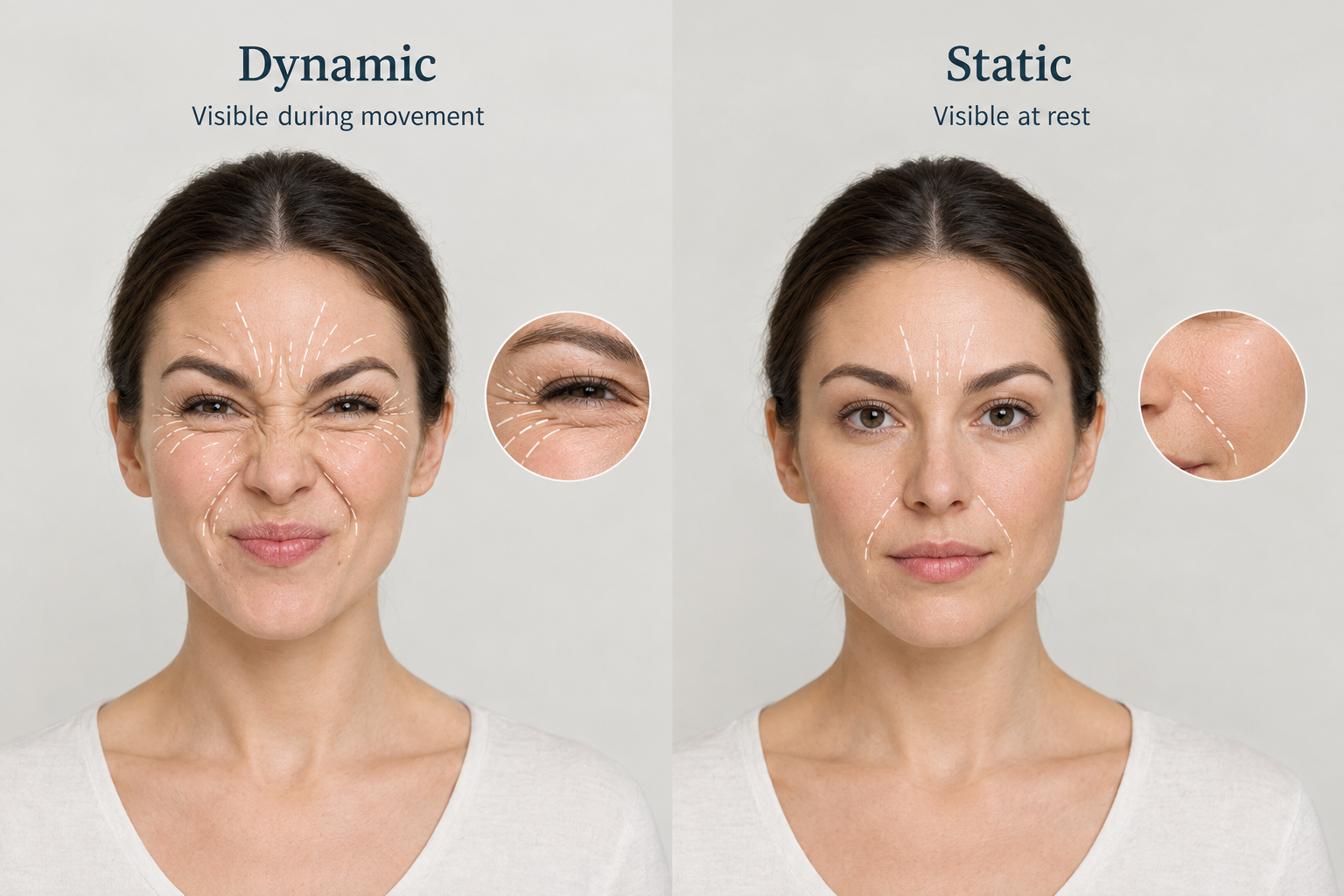
Dynamic lines respond well to botulinum toxin alone, as reducing muscle activity removes the primary cause of the crease. Static lines may benefit from botulinum toxin to prevent further deepening, but an established crease in the skin may also require additional treatment such as a skin resurfacing procedure or, in some cases, a small amount of filler to soften the residual line. A qualified practitioner can assess which category your lines fall into and recommend an appropriate treatment plan.
Risks and Considerations Specific to the Nasal Area
The nose is one of the more anatomically complex areas of the face for injectable treatments. The nasal skin is relatively thin, and the underlying blood supply includes branches of the angular artery and the lateral nasal artery, which connect to the ophthalmic circulation. Vascular complications from injections in this region, while uncommon, can be serious and require immediate management. This is why treatment of bunny lines and any other nasal concern should only be carried out by a practitioner with thorough knowledge of facial vascular anatomy and access to appropriate emergency protocols.
Patients should also be aware that over-treatment of the nasalis muscle can affect the natural movement of the nose and upper lip, potentially creating an unnatural appearance or affecting speech and eating. A conservative approach, using the minimum effective amount of product, is generally preferred in this area.
Frequently Asked Questions
Are bunny lines the same as frown lines?
No. Frown lines, also called glabellar lines, appear between the eyebrows and are caused by the corrugator supercilii and procerus muscles. Bunny lines appear on the sides of the nose and are caused by the nasalis muscle. Both are dynamic wrinkles caused by repeated muscle movement, but they involve different muscles and require separate assessment and treatment.
Can bunny lines appear after Botox treatment for frown lines?
Yes, this is a recognised phenomenon. When the glabellar muscles are relaxed with botulinum toxin, the nasalis muscle may compensate by contracting more strongly to produce similar expressions, making bunny lines more noticeable. An experienced practitioner will often assess the nasal area during a frown line consultation and may recommend treating both areas together if appropriate.
How many units of botulinum toxin are needed for bunny lines?
The amount of botulinum toxin required varies between individuals and depends on the strength of the nasalis muscle, the severity of the lines, and the product used. Providing specific unit recommendations is not appropriate here, as dosing must be determined by a qualified practitioner following a clinical assessment. Units also differ between botulinum toxin brands and are not interchangeable.
Will treating bunny lines affect how my nose looks?
When performed carefully by an experienced practitioner using an appropriate amount of product, botulinum toxin treatment for bunny lines should not significantly alter the appearance of the nose at rest. Over-treatment or incorrect placement can potentially affect the nasal tip or upper lip, which is why technique and practitioner experience are important factors in this area.
How long do results last for bunny line treatment?
Results from botulinum toxin treatment for bunny lines typically last between three and four months, though this varies between individuals. Factors such as metabolism, muscle strength, and the amount of product used can all influence duration. Repeat treatments are needed to maintain the effect.
Can I prevent bunny lines without any injections?
Consistent sun protection, retinoid-based skincare, and avoiding habits that accelerate skin ageing such as smoking may slow the progression of nose wrinkles, but they cannot prevent them entirely. Facial expression is a normal part of life, and some degree of line formation over time is a natural consequence of ageing skin. Non-injectable measures are most effective as a complement to, rather than a replacement for, clinical treatment when lines are already established.
Is it safe to treat bunny lines at a young age?
There is no universal age threshold for botulinum toxin treatment. Suitability depends on the individual’s skin condition, the severity of the lines, their goals, and their medical history. Preventative treatment in younger patients is a topic of ongoing clinical discussion, and the decision should be made on an individual basis following a thorough consultation with a qualified practitioner.
Making an Informed Decision About Bunny Line Treatment
Bunny lines are a normal part of facial ageing, and for many people they are a minor concern that does not require treatment. For those who find them bothersome, botulinum toxin remains the most established and evidence-supported option for softening dynamic nose wrinkles, with a well-characterised safety profile when administered by a trained professional. Preventative skincare and sun protection are worthwhile habits regardless of whether you choose clinical treatment, as they support overall skin health and may slow the rate at which lines deepen over time.
If you are considering treatment for bunny lines, the most important step is a thorough consultation with a qualified aesthetic practitioner who can assess your facial anatomy, discuss realistic outcomes, and explain the risks relevant to your individual situation. The nasal area requires particular care, and the experience and technique of your practitioner matter significantly in achieving a natural-looking result. Treatment should always be tailored to your specific anatomy and goals rather than applied as a standard protocol.


