
Skin Tightening Treatments Compared: Which Option Is Right for You?
Skin laxity is one of the most common concerns patients bring to aesthetic consultations, yet it is also one of the most nuanced to address. The range of available skin tightening treatments has expanded considerably, and each works through a different mechanism, suits a different patient profile, and delivers results over a different timeline. This article compares the leading non-surgical and minimally invasive options — including radiofrequency, focused ultrasound, laser resurfacing, microneedling radiofrequency, and plasma technology — so you can approach a consultation with a clearer understanding of what each treatment involves and what it may realistically achieve.
Quick Comparison
| Treatment | Mechanism | Common Areas | Downtime | Onset of Results | Longevity | Sessions Typically Needed |
|---|---|---|---|---|---|---|
| Radiofrequency (RF) | Thermal energy heats dermis to stimulate collagen | Face, jowls, neck, abdomen, arms | Minimal to none | Gradually over 2–6 months | 1–2 years (maintenance advised) | 3–6 sessions |
| High-Intensity Focused Ultrasound (HIFU) | Focused ultrasound energy targets SMAS layer and deep dermis | Brow, jawline, neck, décolletage | Minimal; temporary redness or swelling | 2–6 months | 12–18 months | 1–2 sessions per year |
| Laser Skin Resurfacing | Ablative or non-ablative light energy remodels collagen | Face, perioral area, eyelids | 3–14 days (ablative); 1–3 days (non-ablative) | Weeks to months | 1–3 years depending on type | 1–3 sessions (ablative); 3–6 (non-ablative) |
| Microneedling RF (e.g. Morpheus8) | Microneedles deliver RF energy into deeper skin layers | Face, neck, body, under-eye area | 2–5 days | 4–12 weeks | 12–18 months | 3 sessions |
| Plasma Technology (e.g. Plasma Pen) | Ionised gas creates micro-trauma to contract and remodel skin | Eyelids, perioral, small facial areas | 5–10 days | 4–8 weeks | 1–3 years | 1–2 sessions |
| Ultrasound RF Combination (e.g. Exilis, Profound) | Combined energy modalities for deeper tissue heating | Face, neck, body | Minimal to moderate | 2–4 months | 12–24 months | 2–4 sessions |
Why Skin Loses Firmness Over Time
Understanding why skin becomes lax helps clarify what each skin tightening treatment is actually targeting. From the mid-twenties onwards, the body produces progressively less collagen and elastin — the structural proteins that keep skin firm and resilient. The dermis gradually thins, the superficial muscular aponeurotic system (SMAS) layer beneath the face weakens, and fat compartments shift. Sun exposure, smoking, significant weight fluctuation, and genetic factors all accelerate this process. The result is skin that appears looser, crepey, or less defined along the jawline, neck, and other areas. Effective skin tightening treatments work by stimulating the body’s own collagen remodelling response, contracting existing collagen fibres, or both — rather than adding a filler substance.
Radiofrequency Skin Tightening
Radiofrequency (RF) skin tightening delivers controlled thermal energy into the dermis, raising tissue temperature to a level that causes immediate collagen fibre contraction and triggers a longer-term wound-healing response that stimulates new collagen production. The treatment is non-invasive, requires no needles in its surface-applied form, and is generally well tolerated. Most patients describe a warming or mild heat sensation during the session, which typically lasts 30–60 minutes depending on the area treated.
RF devices vary considerably in their depth of penetration, energy delivery method, and whether they use monopolar, bipolar, or multipolar configurations. Monopolar RF tends to penetrate more deeply and may be more suitable for significant laxity, while bipolar RF is often used for more superficial skin quality improvements. Results from RF skin tightening develop gradually as new collagen matures, with most patients noticing meaningful improvement between two and six months after a course of treatment. Maintenance sessions are generally recommended to sustain results, as the underlying ageing process continues.
RF is broadly suitable for mild to moderate skin laxity across a range of skin tones, and because it does not target melanin, it carries a lower risk of post-inflammatory hyperpigmentation compared with some laser treatments. It is not typically effective for severe or surgical-grade laxity, and results are more subtle than those achievable with a surgical facelift. Patients with implanted electrical devices such as pacemakers are generally not suitable candidates.
High-Intensity Focused Ultrasound (HIFU)
High-intensity focused ultrasound, widely known as HIFU, directs precise beams of ultrasound energy to specific depths within the skin and underlying tissue — including the SMAS layer that surgeons address during a facelift. By heating tissue at these targeted depths without affecting the skin surface, HIFU stimulates collagen remodelling and can produce a lifting and tightening effect, particularly along the brow, jawline, and neck.
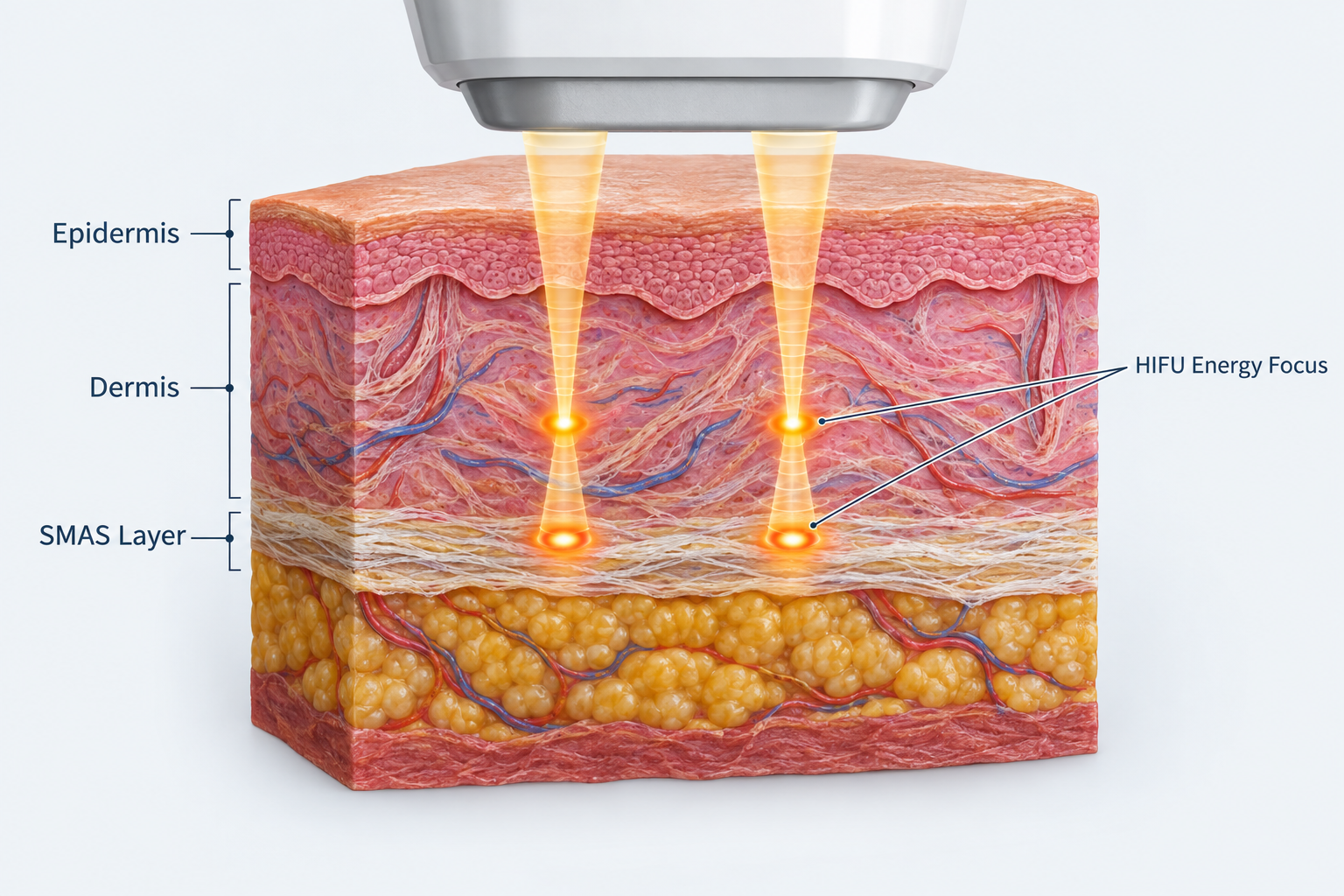
HIFU treatments are typically performed as a single session, with results developing progressively over two to six months as collagen remodelling occurs. Many patients require only one treatment per year or every 18 months to maintain results, which makes HIFU a relatively low-frequency option compared with surface-applied RF. The treatment can be uncomfortable, particularly over bony areas, and some practitioners offer topical anaesthetic or pain management to improve tolerability. Temporary redness, mild swelling, or tingling may occur after the session but usually resolves within a few days.
Clinical evidence for HIFU in facial lifting and skin tightening is reasonably well established, though results vary significantly between individuals depending on the degree of laxity, skin thickness, and the specific device used. HIFU is generally considered most effective for patients with mild to moderate laxity who are not yet candidates for surgical intervention. It is not recommended for patients with active skin infections, open wounds, or certain implanted devices in the treatment area.
Laser Skin Resurfacing for Tightening
Laser resurfacing uses focused light energy to remodel the skin, and its skin tightening effect is a meaningful component of the overall result alongside improvements in texture, tone, and pigmentation. Ablative lasers — such as CO2 and erbium — remove the outer layers of skin entirely, triggering significant collagen remodelling and producing more dramatic tightening results. Non-ablative lasers deliver heat to the dermis while leaving the skin surface intact, resulting in a more modest tightening effect with considerably less downtime.
Ablative CO2 laser resurfacing is one of the more established treatments for facial skin tightening, with a body of clinical evidence supporting its effectiveness for moderate to significant laxity, particularly around the perioral area and eyelids. However, ablative treatments require a recovery period of approximately one to two weeks, during which the skin is raw, red, and sensitive. The risk of post-inflammatory hyperpigmentation is higher in patients with darker skin tones, and careful patient selection is essential. Fractional delivery — where the laser treats a grid of micro-columns rather than the entire surface — has improved the safety profile and reduced downtime while preserving meaningful results.
Non-ablative laser treatments such as Nd:YAG or 1550 nm fractional lasers offer a gentler approach with one to three days of redness and mild swelling. Multiple sessions are usually required, and the degree of tightening is more modest. These treatments may be better suited to patients with early laxity, those who cannot accommodate significant downtime, or those seeking combined improvements in skin quality alongside mild tightening.
Microneedling Radiofrequency
Microneedling radiofrequency (also called RF microneedling) combines two established mechanisms: the micro-injury response triggered by fine needles penetrating the skin, and the thermal collagen stimulation of radiofrequency energy delivered directly into the dermis and subdermis through those needles. By bypassing the skin surface and depositing RF energy at a controlled depth, this approach can achieve more targeted heating of the deeper dermal layers than surface-applied RF alone.
Devices such as Morpheus8 have become widely used for facial and body skin tightening, with the ability to adjust needle depth to treat different tissue layers. The treatment is typically performed under topical anaesthetic and involves some discomfort, redness, and mild swelling for two to five days afterwards. Pinpoint bleeding and temporary skin texture changes are common in the immediate post-treatment period. Most treatment protocols involve three sessions spaced four to six weeks apart, with results continuing to develop for up to three months after the final session.
Microneedling RF is considered suitable for a broader range of skin tones than ablative laser treatments, as the energy is delivered below the melanin-containing epidermis, reducing the risk of pigmentation changes. It may be particularly useful for patients seeking improvement in both skin laxity and texture, including acne scarring or enlarged pores, in a single treatment course. As with all energy-based treatments, results depend on the degree of laxity, the device settings used, and individual healing response.
Plasma Skin Tightening
Plasma technology uses a device that ionises atmospheric gas to create a small electrical arc, which delivers controlled micro-trauma to the skin surface. This causes immediate tissue contraction and initiates a wound-healing response that stimulates collagen remodelling over the following weeks. Plasma treatments are particularly associated with eyelid tightening — sometimes referred to as a non-surgical blepharoplasty — as well as perioral lines and other small facial areas where precise, localised tightening is the goal.
The treatment creates small carbon crusts on the skin surface that typically take five to ten days to resolve. During this period, the treated area requires careful aftercare to reduce the risk of infection and pigmentation changes. Post-inflammatory hyperpigmentation is a meaningful risk, particularly in patients with medium to darker skin tones, and thorough pre-treatment assessment is important. Results can be long-lasting — often one to three years — but the degree of improvement is generally more localised compared with broader-area treatments such as RF or HIFU.
Plasma skin tightening is not suitable for patients with active skin conditions in the treatment area, those prone to keloid scarring, or those who cannot commit to the post-treatment care and downtime involved. It is also not appropriate as a replacement for surgical blepharoplasty in patients with significant excess skin or ptosis.
How to Choose Between Skin Tightening Treatments
The most appropriate skin tightening treatment depends on several factors that a qualified practitioner will assess during a clinical consultation. These include the degree and location of skin laxity, skin tone, medical history, tolerance for downtime, and realistic expectations about the degree of improvement achievable without surgery.
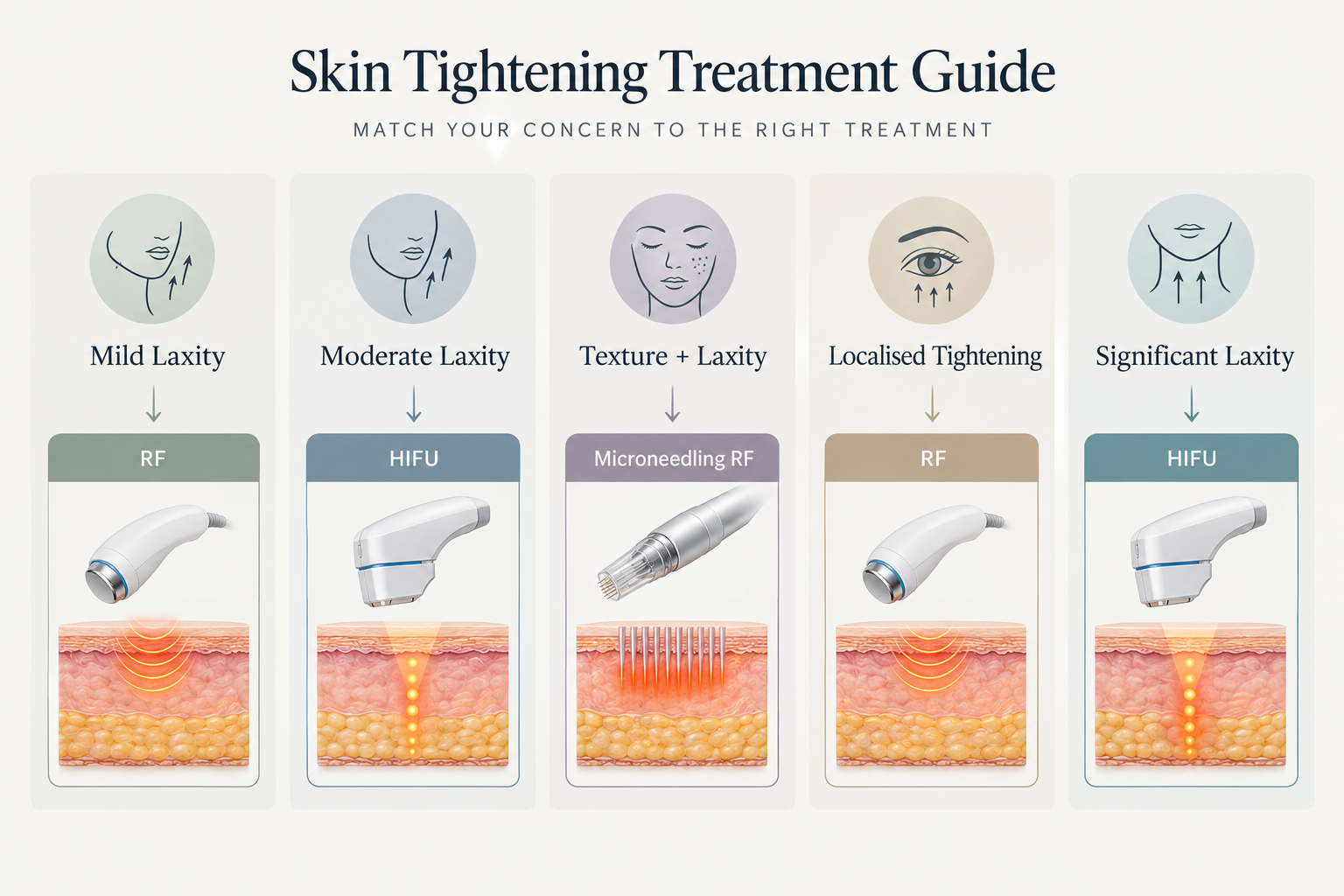
- Mild laxity with no downtime preference: Surface-applied radiofrequency or non-ablative laser treatments may be appropriate starting points, with gradual results over a course of sessions.
- Moderate laxity with lifting as the primary goal: HIFU may be worth discussing, particularly for the brow, jawline, and neck, given its ability to target deeper tissue layers.
- Combined laxity and texture concerns: Microneedling RF may address both simultaneously and is suitable for a wider range of skin tones than ablative options.
- Localised eyelid or perioral tightening: Plasma technology may be considered for small, defined areas where precise contraction is the goal.
- Significant laxity or surgical-grade concerns: Non-surgical treatments have meaningful limitations for advanced laxity, and a surgical consultation may be the more appropriate pathway.
- Darker skin tones: Treatments with a lower risk of post-inflammatory hyperpigmentation — such as RF and microneedling RF — are generally preferred, though individual assessment remains essential.
No single skin tightening treatment is universally superior. Each has a different mechanism, evidence base, risk profile, and patient suitability. A practitioner who offers multiple modalities is better placed to recommend the most appropriate option for an individual patient rather than defaulting to a single device.
Realistic Results and Limitations
One of the most important aspects of any skin tightening consultation is establishing realistic expectations. Non-surgical skin tightening treatments can produce meaningful improvements in skin firmness, contour definition, and overall skin quality, but they do not replicate the results of a surgical facelift or blepharoplasty. The degree of improvement is typically described as a subtle to moderate lift and firming rather than a dramatic transformation, and results develop gradually over weeks to months rather than immediately.
Individual response varies considerably. Factors such as skin thickness, the degree of existing collagen, lifestyle habits including sun protection and smoking, and overall health all influence how well the skin responds to collagen-stimulating treatments. Patients who maintain good sun protection, avoid smoking, and follow a consistent skincare routine that supports skin barrier function and collagen health may sustain results for longer. Most non-surgical skin tightening results are not permanent; the underlying ageing process continues, and maintenance treatments are generally required to preserve the improvement achieved.
It is also worth noting that skin tightening treatments address laxity and collagen loss, but they do not correct volume loss, which is a separate contributor to facial ageing. Patients who have lost significant facial volume may find that dermal fillers or biostimulators such as polynucleotides or Sculptra address a different dimension of their concern, and combination approaches are common in clinical practice.
Risks and Side Effects Across Treatment Types
All skin tightening treatments carry some degree of risk, and the specific risks vary by modality. Common side effects across most energy-based treatments include temporary redness, swelling, and mild discomfort during or after the session. More treatment-specific risks include the following.
- Radiofrequency: Burns or blistering if energy is applied incorrectly; rare nerve effects with deeper devices; temporary swelling.
- HIFU: Temporary numbness, tingling, or bruising; rare cases of nerve irritation; discomfort during treatment, particularly over bony areas.
- Ablative laser: Prolonged redness, post-inflammatory hyperpigmentation or hypopigmentation, scarring (rare), infection risk during healing.
- Microneedling RF: Pinpoint bleeding, temporary skin texture changes, risk of post-inflammatory hyperpigmentation if settings are not appropriate for skin tone.
- Plasma: Post-inflammatory hyperpigmentation (particularly in medium to darker skin tones), infection risk during crust healing phase, scarring (rare).
The risk of adverse outcomes is meaningfully reduced when treatments are performed by appropriately trained practitioners using properly maintained devices, with thorough pre-treatment assessment and individualised settings. Patients should ask about the practitioner’s training, the specific device being used, and what aftercare support is available if a concern arises.
Frequently Asked Questions
How many sessions of skin tightening treatment will I need?
This depends on the treatment type and the degree of laxity being addressed. Surface-applied radiofrequency typically requires three to six sessions. HIFU is often performed as a single annual session. Microneedling RF protocols usually involve three sessions spaced four to six weeks apart. Ablative laser resurfacing may achieve significant results in one to two sessions, while non-ablative laser typically requires three to six. A practitioner will recommend a protocol based on your individual assessment.
Is skin tightening treatment painful?
Tolerance varies between individuals and between treatment types. HIFU can be uncomfortable, particularly over bony areas, and topical anaesthetic is often applied beforehand. Microneedling RF is performed under topical anaesthetic and involves some discomfort during and after the session. Surface-applied RF is generally well tolerated, with most patients describing a warming sensation. Plasma treatments involve a stinging sensation during the procedure. Discussing pain management options with your practitioner before treatment is advisable.
Can skin tightening treatments replace a surgical facelift?
Non-surgical skin tightening treatments can produce meaningful improvements in mild to moderate laxity, but they do not replicate the results of a surgical facelift for patients with significant or advanced skin laxity. They are best understood as treatments that may delay or reduce the need for surgery in some patients, or that may complement surgical results, rather than as direct surgical alternatives for all degrees of concern.
Are skin tightening treatments safe for all skin tones?
Some treatments carry a higher risk of post-inflammatory hyperpigmentation in patients with medium to darker skin tones — particularly ablative laser and plasma treatments. Radiofrequency and microneedling RF are generally considered safer options across a broader range of skin tones, though individual assessment and appropriate device settings remain essential. A practitioner experienced in treating diverse skin tones should be consulted.
How long do skin tightening results last?
Results vary by treatment type and individual factors. HIFU and microneedling RF results typically last 12–18 months. Ablative laser results may last one to three years. Surface-applied RF results generally last one to two years with maintenance. Plasma results can persist for one to three years in suitable candidates. All results are influenced by ongoing ageing, sun exposure, lifestyle, and whether maintenance treatments are undertaken.
Can skin tightening treatments be combined with other aesthetic treatments?
Combination approaches are common in clinical practice. Skin tightening treatments are often used alongside dermal fillers, anti-wrinkle injections, biostimulators, or medical-grade skincare to address different aspects of facial ageing simultaneously. The timing and sequencing of combination treatments should be planned by a qualified practitioner to ensure safety and optimise results.
Choosing a Skin Tightening Treatment That Matches Your Goals
The most useful step before committing to any skin tightening treatment is a thorough consultation with a qualified aesthetic practitioner who can assess your skin in person, discuss your goals honestly, and recommend a treatment — or combination of treatments — based on your individual anatomy, skin type, and realistic expectations. The comparison in this article provides a useful framework, but it cannot replace a clinical assessment.
If your primary concern is mild to moderate laxity with minimal downtime, radiofrequency or HIFU may be worth exploring. If you are seeking combined improvements in skin texture and firmness and can accommodate a few days of recovery, microneedling RF is a well-supported option. For localised eyelid or perioral tightening, plasma technology may be appropriate if your skin tone and medical history make you a suitable candidate. For more significant laxity, a frank conversation about the limitations of non-surgical approaches — and whether a surgical consultation is warranted — is an important part of responsible aesthetic care.
Whichever treatment you consider, ask about the practitioner’s specific training and experience with that modality, the device being used, the expected number of sessions, realistic results for your degree of concern, and what the aftercare and follow-up process involves. A practitioner who takes time to answer these questions thoroughly is one who is likely to prioritise your safety and satisfaction over a quick sale.


