
Which Vitamin Deficiency Causes Hair Loss? Nutrient Shortages Behind Shedding
Hair shedding that goes beyond the normal daily loss of around 50 to 100 strands can have many causes, and nutritional deficiencies are among the more commonly overlooked ones. Several vitamins and minerals play direct roles in the hair growth cycle, and when levels fall below what the body needs, the follicle can shift prematurely into a resting or shedding phase. Understanding which specific nutrient shortages are linked to hair loss — and how each one affects follicle function — can help you have a more informed conversation with a qualified healthcare professional before pursuing any treatment.
Key Takeaways
- Iron deficiency is one of the most frequently identified nutritional causes of diffuse hair shedding, particularly in women of reproductive age.
- Vitamin D, B12, and biotin deficiencies are each associated with hair loss, though the strength of evidence varies between them.
- Zinc and selenium play supporting roles in follicle health; both deficiency and excess can negatively affect hair growth.
- Nutritional hair loss is usually diffuse rather than patterned, and a blood test is needed to confirm whether a deficiency is actually present before supplementing.
- Correcting a confirmed deficiency may help reduce shedding, but results take time and depend on the underlying cause and overall health.
How Nutrients Affect the Hair Growth Cycle
The hair follicle is one of the most metabolically active structures in the human body. Each follicle cycles through three main phases: anagen (active growth), catagen (transition), and telogen (resting and shedding). This cycle depends on a continuous supply of energy, amino acids, vitamins, and minerals. When the body experiences a nutritional shortfall — whether through poor dietary intake, malabsorption, or increased physiological demand — it tends to prioritise essential organs over non-essential structures like hair. The follicle responds by shortening the anagen phase or triggering a premature shift into telogen, which results in increased shedding several weeks to months later.
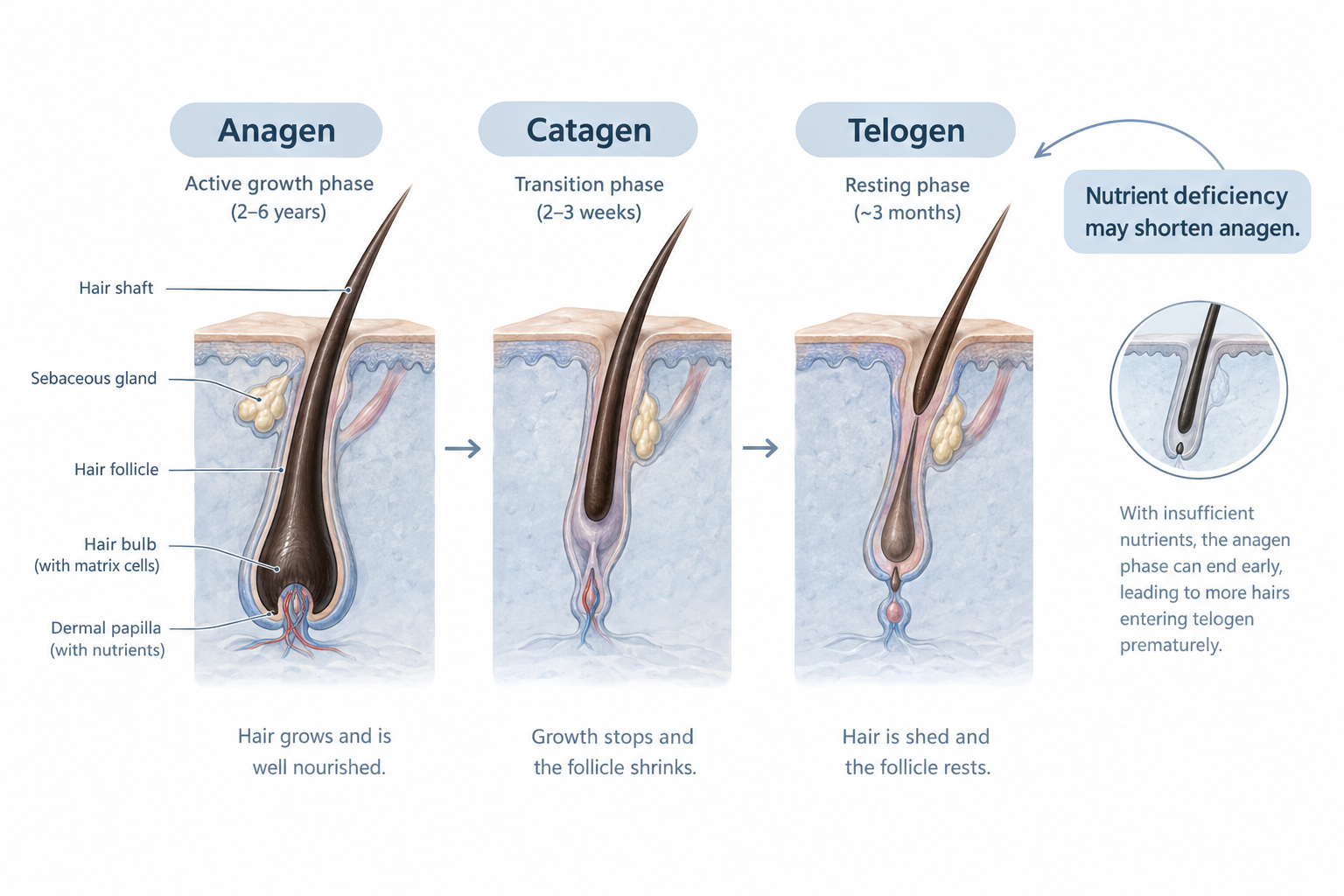
This delayed response is important to understand. Hair loss caused by a nutritional deficiency often appears two to four months after the deficiency develops, which can make it difficult to connect the shedding to its actual cause. The pattern is typically diffuse, meaning hair thins across the scalp rather than in a specific area, and it is often described clinically as telogen effluvium. Identifying the responsible deficiency requires blood testing rather than visual assessment alone.
Iron Deficiency and Hair Loss
Iron deficiency is the nutritional cause most consistently linked to diffuse hair shedding in the medical literature. Iron is essential for the production of haemoglobin, which carries oxygen to tissues including the hair follicle. It also plays a role in ribonucleotide reductase activity, an enzyme involved in DNA synthesis within rapidly dividing follicle cells. When iron stores are depleted, follicle cell proliferation slows, and the anagen phase may shorten.
Ferritin — the protein that stores iron — is the most clinically relevant marker to assess. Some research suggests that low ferritin levels, even when haemoglobin remains within the normal range, may be associated with increased hair shedding. However, the precise ferritin threshold at which hair loss becomes clinically significant is still debated among dermatologists. Women of reproductive age, those with heavy menstrual periods, vegetarians, and people with gastrointestinal conditions affecting iron absorption are at higher risk of iron deficiency. A full blood count and serum ferritin test are typically the first investigations a doctor will request when iron-related hair loss is suspected.
Vitamin D Deficiency and Hair Thinning
Vitamin D receptors are present in hair follicle keratinocytes, and research suggests that vitamin D signalling plays a role in initiating the anagen phase of the hair cycle. Studies have found associations between low serum vitamin D levels and conditions including telogen effluvium and alopecia areata, though the relationship is not yet fully established as causal. Vitamin D deficiency is widespread in many populations, particularly in regions with limited sunlight exposure, and it is one of the more commonly tested nutrients when hair loss is being investigated.
Supplementing vitamin D in people with a confirmed deficiency may support hair cycle regulation, but it is unlikely to reverse hair loss caused by other factors. Vitamin D is a fat-soluble vitamin, meaning it accumulates in the body, and taking high doses without confirmed deficiency carries a risk of toxicity. Testing serum 25-hydroxyvitamin D levels before supplementing is the appropriate first step.
B Vitamins: Biotin, B12, and Folate
B vitamins are frequently mentioned in the context of hair health, and while some have a clearer evidence base than others, each plays a distinct role in follicle function.
Biotin (Vitamin B7)
Biotin is perhaps the most commercially promoted nutrient for hair growth, yet true biotin deficiency is relatively rare in people eating a varied diet. Biotin acts as a coenzyme in fatty acid synthesis and amino acid metabolism, both of which are relevant to keratin production. Confirmed biotin deficiency — which can occur in people with certain genetic disorders, those consuming large amounts of raw egg white over time, or those on long-term antibiotic therapy — does cause hair thinning and brittle nails. However, there is limited clinical evidence that biotin supplementation improves hair growth in people who are not actually deficient. It is worth noting that high-dose biotin supplements can interfere with certain laboratory tests, including thyroid function tests and cardiac biomarker assays, which is clinically relevant if blood tests are being planned.
Vitamin B12
Vitamin B12 is required for red blood cell formation and DNA synthesis. Deficiency can lead to megaloblastic anaemia, which reduces oxygen delivery to follicle cells and may contribute to hair shedding. B12 deficiency is more common in people following strict vegan or vegetarian diets, older adults with reduced gastric acid production, and those with conditions affecting the stomach or small intestine, such as pernicious anaemia or Crohn’s disease. Serum B12 and, where available, methylmalonic acid levels can help confirm deficiency. Correcting B12 deficiency through dietary adjustment or supplementation — and in some cases intramuscular injection — may help reduce associated hair shedding over several months.
Folate
Folate (vitamin B9) supports rapid cell division, making it important for the actively proliferating cells of the hair matrix. Folate deficiency can impair follicle cell turnover and has been associated with hair loss in some studies, though it is less frequently cited as a primary cause than iron or vitamin D deficiency. Folate levels are typically assessed alongside B12, as the two deficiencies can present similarly and often coexist.
Zinc Deficiency and the Hair Follicle
Zinc is involved in protein synthesis, cell division, and the regulation of hair follicle cycling. It also has a role in the function of 5-alpha reductase, an enzyme relevant to androgenetic alopecia. Zinc deficiency can cause diffuse hair loss, and it has been observed in people with conditions such as acrodermatitis enteropathica (a rare genetic disorder of zinc absorption), as well as in those with malnutrition, inflammatory bowel disease, or very low protein intake.
Serum zinc levels can be measured, though they do not always accurately reflect total body zinc stores. Importantly, excessive zinc intake can itself be harmful and may paradoxically worsen hair loss by interfering with copper absorption. Zinc supplementation should only be considered when deficiency has been confirmed, and doses should remain within safe limits. Dietary sources of zinc include meat, shellfish, legumes, seeds, and nuts.
Selenium: A Trace Element With a Narrow Safe Range
Selenium is a trace mineral that supports antioxidant enzyme function and thyroid hormone metabolism, both of which are relevant to hair follicle health. Selenium deficiency has been associated with hair loss, but selenium is unusual in that both deficiency and toxicity can cause shedding. Selenium toxicity — which can occur with excessive supplementation — may cause diffuse hair loss, nail changes, and neurological symptoms. This narrow therapeutic window means selenium supplementation should only be considered under medical supervision and with confirmed deficiency. Dietary selenium is found in Brazil nuts, fish, meat, and eggs, and most people eating a varied diet obtain adequate amounts.
The Role of Protein and Amino Acids
Hair is composed almost entirely of keratin, a structural protein. Adequate dietary protein intake is therefore fundamental to hair growth. Severe protein restriction — as seen in conditions such as kwashiorkor or prolonged very low-calorie dieting — can cause significant hair shedding. Even moderate protein insufficiency over time may affect hair density and tensile strength. This is not strictly a vitamin deficiency, but it is a nutritional cause of hair loss that is worth considering alongside micronutrient status, particularly in people following restrictive diets or recovering from illness.
Thyroid Function and Its Connection to Nutrient Deficiency
Thyroid disorders — both hypothyroidism and hyperthyroidism — are well-established causes of diffuse hair loss. The connection to nutritional deficiency is relevant because iodine and selenium are both required for thyroid hormone synthesis and conversion. Iron deficiency can also impair thyroid peroxidase activity, potentially affecting thyroid function. When hair loss is being investigated, thyroid function tests are typically requested alongside nutritional markers, as thyroid-related hair loss and nutritional hair loss can present similarly and may coexist.
Who Is Most at Risk of Nutritional Hair Loss?
Certain groups are more likely to develop the nutritional deficiencies associated with hair shedding. These include:
- Women of reproductive age, particularly those with heavy menstrual bleeding, due to increased iron losses
- People following vegan or strict vegetarian diets, who may have lower intakes of iron, B12, zinc, and omega-3 fatty acids
- Individuals who have undergone bariatric surgery or have malabsorptive gastrointestinal conditions
- Older adults, who may have reduced absorption of B12 and vitamin D
- People recovering from significant illness, surgery, or rapid weight loss
- Pregnant and postpartum women, due to increased nutritional demands and the physiological hair shedding that commonly follows delivery
- Those with eating disorders or prolonged very low-calorie diets
It is worth emphasising that hair loss in these groups may have multiple contributing factors, and a nutritional deficiency may be one component rather than the sole cause.
Getting the Right Tests Before Supplementing
One of the most important points in this area is that supplementing without confirmed deficiency is unlikely to be beneficial and may carry risks. Over-the-counter hair supplements often contain a combination of vitamins and minerals at doses that may exceed safe upper limits, particularly for nutrients like selenium, vitamin A, and zinc. Vitamin A toxicity, for example, is itself a recognised cause of hair loss — meaning that taking high-dose vitamin A supplements without deficiency could worsen rather than improve shedding.
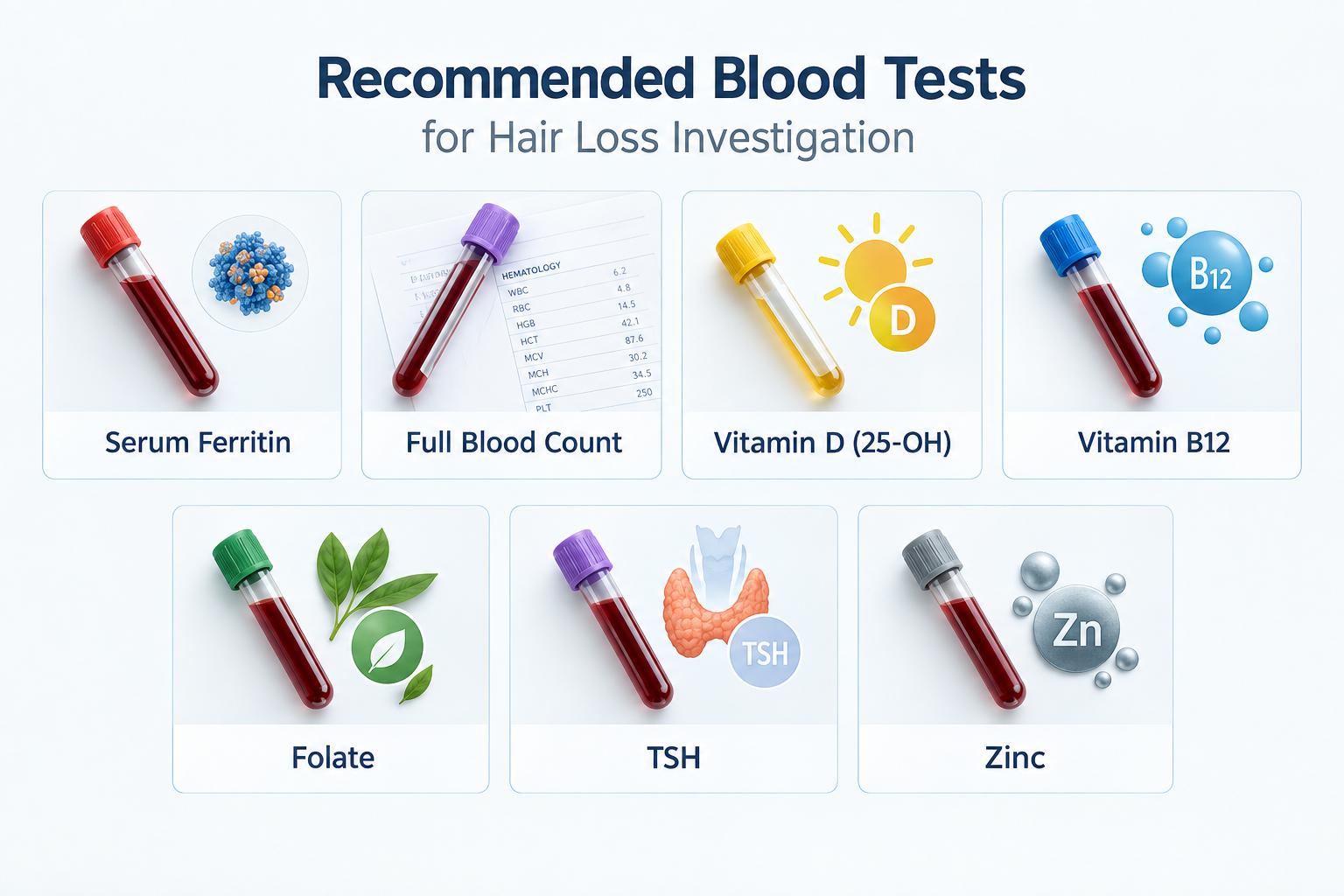
A structured blood panel for hair loss investigation typically includes serum ferritin, full blood count, serum vitamin D (25-OH), serum B12, folate, thyroid stimulating hormone (TSH), and zinc. Some clinicians also assess inflammatory markers, as chronic inflammation can affect nutrient absorption and hair cycling. Results should be interpreted by a qualified healthcare professional in the context of the individual’s symptoms, diet, and medical history.
How Long Does It Take to See Improvement?
Correcting a nutritional deficiency does not produce immediate hair regrowth. Because the hair cycle operates on a timeline of weeks to months, it typically takes three to six months after correcting a deficiency before a noticeable reduction in shedding occurs, and longer before new growth becomes visible. Patience is important, and it is reasonable to retest relevant markers after three to four months of supplementation to confirm that levels have normalised.
If hair loss continues despite correcting identified deficiencies, other causes should be investigated. These may include androgenetic alopecia (pattern hair loss), alopecia areata (an autoimmune condition), scalp conditions, hormonal imbalances, medication side effects, or chronic stress. A dermatologist or trichologist can assess the pattern and characteristics of hair loss more precisely and may recommend additional investigations such as a scalp biopsy or trichoscopy.
Dietary Approaches to Supporting Hair Follicle Health
For most people without a specific medical condition affecting absorption, a varied and balanced diet provides the nutrients needed for healthy hair growth. Foods that support the key nutrients discussed in this article include:
- Iron: Red meat, liver, lentils, spinach, fortified cereals — consumed with vitamin C to enhance non-haem iron absorption
- Vitamin D: Oily fish, egg yolks, fortified dairy products — and sensible sun exposure where appropriate
- Biotin: Eggs, nuts, seeds, sweet potato, salmon
- Vitamin B12: Meat, fish, dairy, eggs — or fortified plant-based foods and supplements for those avoiding animal products
- Zinc: Oysters, beef, pumpkin seeds, chickpeas, cashews
- Selenium: Brazil nuts (even one or two per day can meet requirements), tuna, sardines, eggs
- Protein: Adequate intake from a combination of animal or plant sources depending on dietary preference
Frequently Asked Questions
Can taking hair supplements cause harm?
Yes, in some cases. Fat-soluble vitamins such as vitamin A and vitamin D accumulate in the body and can reach toxic levels with excessive supplementation. High-dose selenium and zinc can also cause adverse effects. Biotin supplements at high doses may interfere with certain blood tests. It is advisable to confirm a deficiency before supplementing and to stay within recommended safe doses.
Is diffuse hair shedding always caused by a nutritional deficiency?
No. Diffuse hair shedding, or telogen effluvium, can be triggered by many factors including physical or emotional stress, illness, surgery, hormonal changes, thyroid disorders, medications, and autoimmune conditions. Nutritional deficiency is one possible cause among several, and a clinical assessment is needed to identify the relevant factors in each individual.
How is nutritional hair loss different from pattern hair loss?
Nutritional hair loss is typically diffuse, affecting the whole scalp relatively evenly, and is often reversible once the underlying deficiency is corrected. Androgenetic alopecia (pattern hair loss) follows a characteristic distribution — receding hairline and crown thinning in men, and diffuse thinning over the crown in women — and is driven by genetic and hormonal factors rather than nutritional ones. The two conditions can coexist.
Should I see a GP or a dermatologist about hair loss?
A GP is usually the appropriate first point of contact for investigating nutritional causes of hair loss, as they can arrange blood tests and review overall health. If the cause remains unclear after initial investigation, or if the pattern of hair loss suggests a dermatological condition, a referral to a dermatologist or trichologist may be recommended.
Can postpartum hair loss be prevented with supplements?
Postpartum hair shedding is largely a physiological response to the hormonal changes following delivery and is not primarily caused by nutritional deficiency, though iron levels should be checked after childbirth. Supplementing with nutrients that are not deficient is unlikely to prevent this type of shedding. Most postpartum hair loss resolves naturally within six to twelve months.
Does stress cause nutritional deficiencies that lead to hair loss?
Chronic stress can affect appetite, dietary intake, and gastrointestinal absorption, which may indirectly contribute to nutritional shortfalls. Stress also directly triggers telogen effluvium through hormonal pathways independent of nutrition. In practice, stress and nutritional factors may act together, which is why a comprehensive assessment is more useful than addressing a single variable in isolation.
When Nutritional Investigation Is Worth Pursuing
If you are experiencing noticeable hair shedding that has persisted for more than two to three months, or if you have risk factors for nutritional deficiency such as a restrictive diet, a history of gastrointestinal conditions, or recent significant illness, it is reasonable to discuss blood testing with a healthcare professional. Identifying and correcting a genuine deficiency is a meaningful and evidence-supported step, and it avoids the cost and potential risk of supplementing without a clear indication. Hair loss that does not respond to nutritional correction, or that follows a patterned distribution, warrants further specialist assessment to explore other contributing causes and appropriate treatment options.


