
What Causes Dark Circles Under Eyes: Reasons for Periorbital Darkness
Dark circles under the eyes are one of the most common aesthetic concerns that patients bring to aesthetic clinics, yet they are frequently misunderstood. The term covers several distinct conditions that look similar on the surface but have different underlying causes — and that respond to very different treatments. Understanding what is actually driving periorbital darkness in your specific case is the essential first step before considering any intervention.
Key Takeaways
- Dark circles under the eyes are not a single condition — they can result from pigmentation, visible blood vessels, volume loss, skin laxity, or a combination of these factors.
- Identifying the correct cause is critical, because a treatment that works well for one type may have little effect on another.
- Genetics, age, lifestyle, and skin tone all influence which type of periorbital darkness a person develops.
- Several professional treatments may help, including topical agents, chemical peels, laser therapy, polynucleotides, dermal fillers, and platelet-rich plasma — but none offers a universal solution.
- A thorough clinical assessment by a qualified practitioner is necessary to determine the most appropriate approach for your individual anatomy and skin type.
Why the Under-Eye Area Is Particularly Vulnerable
The skin beneath the eyes is among the thinnest on the entire body, typically measuring around 0.5 mm compared with approximately 2 mm on other areas of the face. This anatomical reality means that structures lying just beneath the surface — blood vessels, muscle, and fat — are far more visible here than elsewhere. The periorbital region also has relatively few sebaceous glands, making it prone to dehydration, and it is subject to constant movement from blinking and facial expression. These characteristics combine to make the under-eye area highly susceptible to discolouration, hollowing, and textural change, often earlier than other facial areas.
The Main Types of Dark Circles and Their Causes
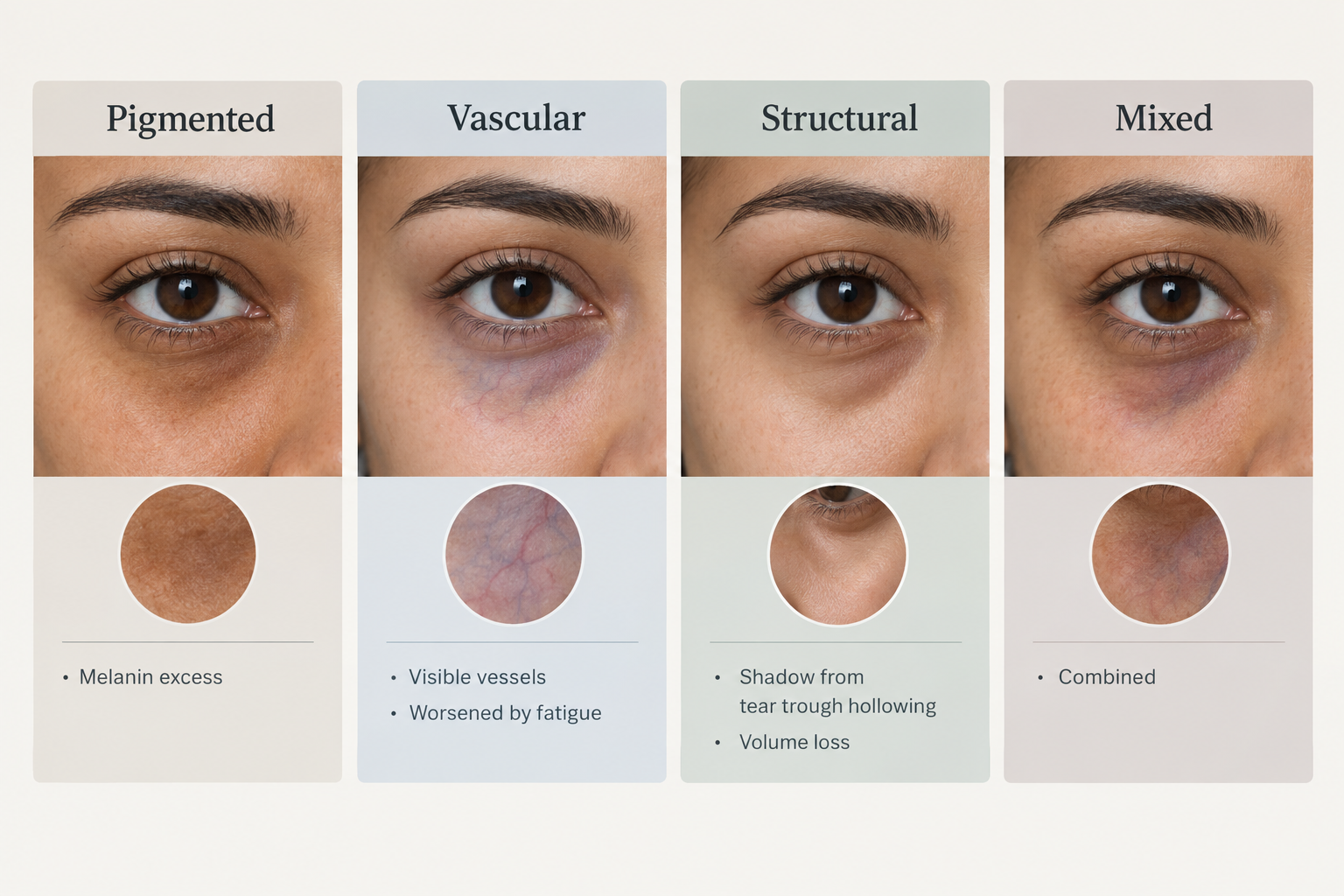
Clinicians generally categorise periorbital dark circles into four overlapping types: pigmented, vascular, structural, and mixed. Each has a distinct mechanism, and many patients present with more than one type simultaneously, which is why a careful clinical assessment matters so much before any treatment is recommended.
Pigmented Dark Circles
Pigmented dark circles arise from an excess of melanin — the pigment that gives skin its colour — in the skin of the lower eyelid. This type tends to appear brownish or greyish-brown and is particularly common in people with Fitzpatrick skin types III to VI, meaning medium to darker skin tones. Post-inflammatory hyperpigmentation, sun exposure, and chronic rubbing of the eyes can all stimulate melanocytes (the pigment-producing cells) to deposit excess melanin in the periorbital skin. Genetic predisposition plays a significant role: some individuals simply inherit a tendency toward greater pigment deposition in this area, which is why dark circles can appear even in children and young adults with no lifestyle-related triggers.
Periorbital hyperpigmentation can also be worsened by hormonal fluctuations, including those associated with pregnancy, thyroid dysfunction, or the use of certain medications. Allergic conditions such as allergic rhinitis and eczema are well-recognised contributors, partly because they cause repeated eye rubbing and partly because inflammation itself can trigger localised pigment changes — a phenomenon sometimes called the allergic shiner.
Vascular Dark Circles
Vascular dark circles occur when blood vessels beneath the thin under-eye skin become more visible, creating a bluish, purplish, or reddish tint. Because the skin in this area is so thin and relatively translucent, the colour of the underlying vasculature — particularly the orbicularis oculi muscle and the superficial venous plexus — can show through clearly. Poor circulation, venous congestion, and increased capillary fragility can all intensify this effect. Fatigue and sleep deprivation are among the most widely recognised triggers: when the body is tired, blood vessels dilate and blood flow slows, making the vascular network beneath the eyes more prominent.
Alcohol consumption, dehydration, and high salt intake can also cause fluid retention and vascular dilation in the periorbital region, temporarily worsening the appearance of vascular dark circles. Seasonal allergies contribute through nasal congestion, which impairs venous drainage from the face and increases the visibility of periorbital veins. Unlike pigmented dark circles, vascular dark circles often improve temporarily when the skin is stretched sideways — a simple clinical test that can help distinguish between the two types.
Structural and Volume-Related Dark Circles
Structural dark circles are caused not by pigment or blood vessels but by the three-dimensional shape of the periorbital area. As the face ages, several changes occur simultaneously: the orbital fat compartments that support the lower eyelid lose volume or shift position, the bony orbit (the eye socket) undergoes resorption, and the overlying skin and soft tissue lose elasticity and collagen. The result is a hollowing of the tear trough — the groove that runs from the inner corner of the eye toward the cheek — which creates a shadow that reads as a dark circle even when the skin itself has no excess pigment or visible vasculature.
This shadow effect is purely a consequence of light and depth: the indentation of the tear trough catches less light than the surrounding tissue, making it appear darker. Structural dark circles are therefore more accurately described as shadow circles, and they tend to worsen progressively with age. They are also influenced by genetics and facial bone structure — individuals with deep-set eyes or a prominent orbital rim may notice this type of periorbital darkness from a relatively young age, regardless of lifestyle factors.
Mixed-Type Dark Circles
In clinical practice, the majority of patients present with a combination of two or more of the above types. An older patient, for example, may have both volume loss creating a tear trough shadow and some degree of pigmentation accumulated from years of sun exposure. A younger patient with a genetic predisposition may have both vascular visibility and mild pigmentation. Recognising the relative contribution of each component is essential for selecting treatments that will actually address the underlying cause rather than simply targeting the most visible symptom.
Contributing Factors That Worsen Dark Circles
Beyond the primary mechanisms described above, a number of lifestyle and health-related factors can intensify periorbital darkness regardless of its underlying type. Understanding these contributors is useful both for managing expectations and for identifying changes that may reduce severity without clinical intervention.
Sleep and Fatigue
Insufficient or poor-quality sleep is one of the most frequently cited causes of dark circles, and there is a physiological basis for this association. During sleep deprivation, cortisol levels rise, blood vessels dilate, and fluid can accumulate in the periorbital tissues. The resulting puffiness can cast additional shadows beneath the eyes, while increased vascular visibility contributes a bluish tint. Chronic sleep deprivation may also impair skin barrier function and reduce collagen synthesis over time, potentially accelerating structural changes in the under-eye area.
Sun Exposure and UV Damage
Ultraviolet radiation stimulates melanin production throughout the face, and the periorbital area is no exception. Repeated sun exposure without adequate protection can worsen pigmented dark circles and accelerate the breakdown of collagen and elastin in the thin under-eye skin, contributing to both pigmentation and structural changes. Daily use of a broad-spectrum SPF is consistently recommended by dermatologists as a foundational step in managing periorbital hyperpigmentation.
Allergies and Chronic Inflammation
Allergic rhinitis, hay fever, and skin conditions such as atopic dermatitis are well-established contributors to periorbital darkness. The mechanisms include venous congestion from nasal obstruction, repeated mechanical trauma from eye rubbing, and localised inflammatory responses that stimulate pigment production. Managing the underlying allergic condition can meaningfully reduce the severity of associated dark circles.
Dehydration and Nutrition
Dehydration causes the skin to appear dull and sunken, which can accentuate both vascular visibility and structural hollowing beneath the eyes. Nutritional deficiencies — particularly of iron, vitamin K, vitamin C, and vitamin B12 — have been associated with periorbital discolouration in some individuals, though the evidence for specific supplementation as a treatment is limited and should not replace a balanced diet and appropriate medical investigation where deficiency is suspected.
Genetics and Ethnicity
Genetic predisposition is one of the strongest determinants of dark circle severity and type. Family history of periorbital hyperpigmentation, deep tear troughs, or prominent orbital vasculature significantly increases an individual’s likelihood of developing dark circles. Certain ethnic backgrounds — including South Asian, Middle Eastern, East Asian, and African heritage — are associated with a higher prevalence of pigmented periorbital darkness, partly due to greater baseline melanin activity in the skin. This does not mean dark circles are inevitable or untreatable in these groups, but it does mean that treatment expectations should be calibrated accordingly.
Ageing
Age-related changes in the periorbital area are progressive and multifactorial. Collagen and elastin fibres in the under-eye skin degrade over time, reducing skin thickness and elasticity. Orbital fat redistributes, with some compartments losing volume and others prolapsing forward to create puffiness. The underlying bone resorbs, deepening the tear trough and increasing the shadow effect. Skin pigmentation may also accumulate from decades of cumulative sun exposure. These changes mean that structural dark circles typically become more prominent with age, even in individuals who had little periorbital darkness in their youth.
How Dark Circles Are Clinically Assessed
A thorough clinical assessment of periorbital darkness involves more than a visual inspection. A qualified practitioner will typically evaluate skin tone and texture, the depth and extent of the tear trough, the presence and distribution of pigmentation, the visibility of underlying vasculature, the degree of orbital fat prolapse or loss, and the overall facial anatomy. Simple clinical tests — such as stretching the skin to assess whether discolouration is pigment-based or vascular, or using a light source to evaluate shadow depth — can help distinguish between types. Photographs taken under standardised lighting conditions are often used to document the baseline and track treatment response over time.
It is also important to rule out systemic causes of periorbital discolouration, including thyroid disease, anaemia, and chronic kidney or liver conditions, particularly when dark circles appear suddenly or are accompanied by other symptoms. In these cases, referral to a general practitioner or specialist may be appropriate before aesthetic treatment is considered.
Treatment Options by Dark Circle Type
Because dark circles have multiple distinct causes, no single treatment is universally effective. The most appropriate intervention depends on the predominant type identified during clinical assessment, the patient’s skin tone, their medical history, and their realistic goals.
Treatments for Pigmented Dark Circles
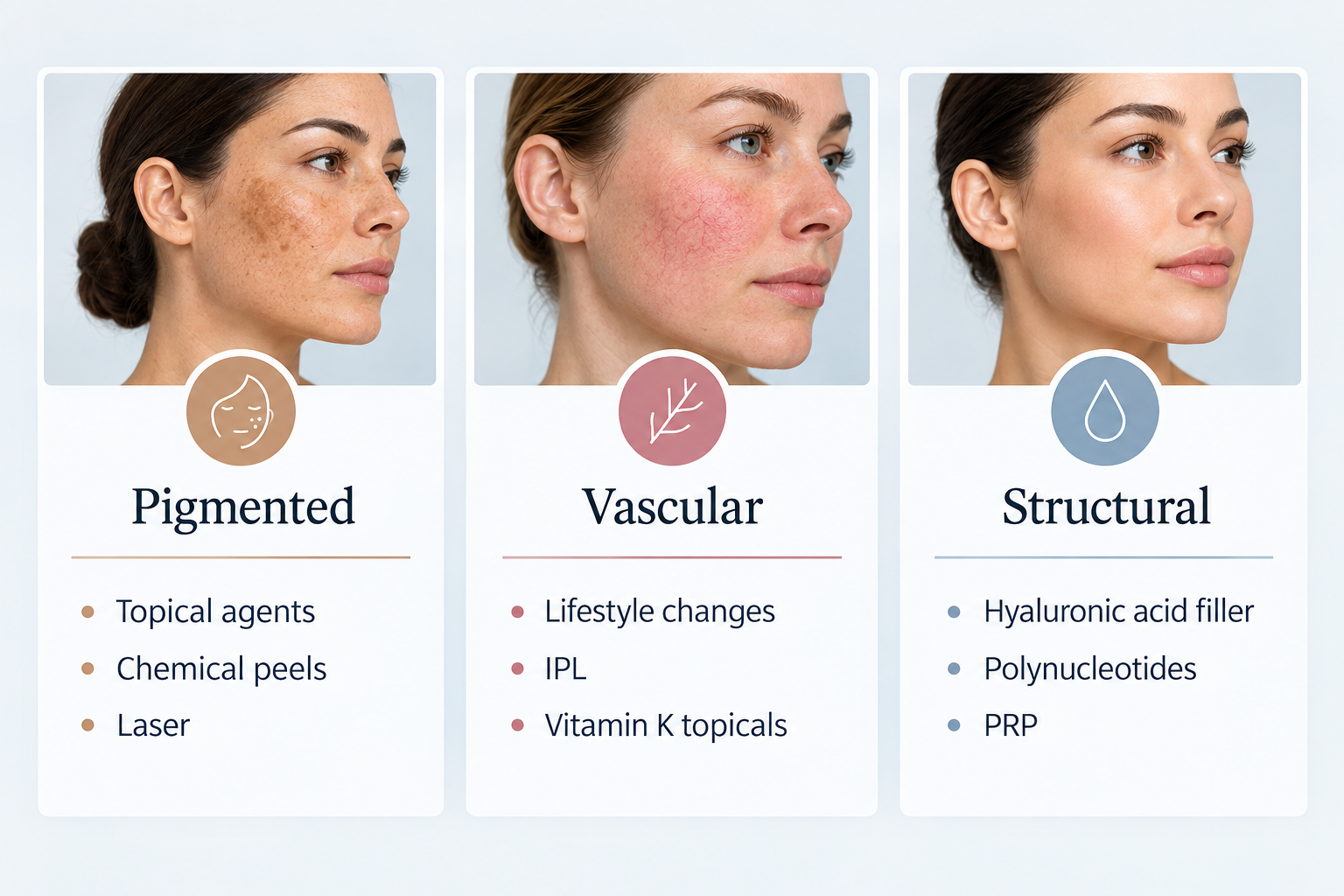
Topical depigmenting agents are typically the first-line approach for pigmented periorbital darkness. Ingredients with evidence for reducing melanin production or accelerating its turnover include hydroquinone (where available and appropriate), kojic acid, azelaic acid, niacinamide, tranexamic acid, and retinoids. These agents require consistent use over several weeks to months before meaningful improvement becomes visible, and they must be used with caution in the periorbital area due to the sensitivity of the surrounding skin and eyes.
Chemical peels using agents such as glycolic acid, lactic acid, or trichloroacetic acid at appropriate concentrations may help reduce superficial pigmentation in the under-eye area, though the risk of post-inflammatory hyperpigmentation — particularly in darker skin tones — means that careful patient selection and practitioner experience are essential. Laser treatments, including Q-switched Nd:YAG and fractional lasers, have been used for periorbital pigmentation with variable results; evidence suggests they can be effective but carry a meaningful risk of worsening pigmentation in patients with higher Fitzpatrick skin types if not used appropriately.
Treatments for Vascular Dark Circles
Vascular periorbital darkness is among the most challenging types to treat, partly because the underlying vasculature cannot easily be targeted without risk to the delicate surrounding structures. Topical agents containing vitamin K, caffeine, or retinol are sometimes used to reduce vascular visibility, though clinical evidence for their efficacy is limited. Certain laser and intense pulsed light (IPL) devices can target haemoglobin in superficial blood vessels and may reduce the bluish or reddish tint associated with vascular dark circles, but results are variable and multiple sessions are typically required.
Improving sleep quality, managing allergies, reducing alcohol intake, and staying well hydrated can all help reduce the severity of vascular dark circles, particularly when lifestyle factors are significant contributors. These measures are unlikely to eliminate vascular dark circles entirely but may meaningfully reduce their prominence.
Treatments for Structural Dark Circles and Tear Trough Hollowing
Structural dark circles caused by tear trough hollowing and volume loss are often most effectively addressed with dermal filler injections. Hyaluronic acid fillers placed carefully in the tear trough region can restore lost volume, reduce the depth of the groove, and diminish the shadow that creates the appearance of darkness. This approach requires considerable anatomical knowledge and technical skill, as the periorbital area carries specific risks including vascular occlusion, the Tyndall effect (a bluish discolouration caused by superficially placed filler), and bruising. Results typically last between nine and eighteen months depending on the product used and individual metabolism, after which repeat treatment may be needed.
Polynucleotides — injectable preparations derived from purified DNA fragments — have gained attention as a treatment for under-eye skin quality, hydration, and fine lines. Polynucleotide injections such as those marketed under the brand name Lumi Eyes are thought to stimulate fibroblast activity and collagen production in the treated area, potentially improving skin thickness and texture over a course of treatments. Evidence for polynucleotides in the periorbital area is still developing, and they are generally considered more appropriate for improving skin quality than for correcting significant volume loss or deep pigmentation. They may be used alongside other treatments as part of a combined approach.
Platelet-rich plasma (PRP) therapy, which involves injecting a concentration of the patient’s own growth factors derived from their blood, has also been used for periorbital rejuvenation. Some studies suggest PRP may improve skin quality and reduce the appearance of dark circles, particularly those with a vascular or skin-quality component, though evidence remains limited and results are variable.
Combined and Maintenance Approaches
Because most patients present with mixed-type dark circles, a combined treatment strategy is often the most effective approach. This might involve a course of topical depigmenting agents alongside a series of polynucleotide or PRP sessions, followed by tear trough filler if structural hollowing is a significant component. Maintenance treatments are typically required to sustain results, as the underlying causes — particularly ageing and genetic pigmentation — are ongoing processes rather than one-time events. A qualified practitioner can help design a realistic treatment plan that addresses the specific combination of factors present in each individual case.
Frequently Asked Questions
Can dark circles be permanently removed?
Permanent elimination of dark circles is rarely achievable, because most underlying causes — including genetics, ageing, and ongoing sun exposure — are continuous processes. Treatments can meaningfully reduce the appearance of dark circles and, with appropriate maintenance, sustain improvement over time, but complete and permanent resolution is not a realistic expectation for most patients.
Do dark circles indicate a health problem?
In most cases, dark circles are a cosmetic concern rather than a sign of illness. However, sudden onset or significant worsening of periorbital discolouration — particularly when accompanied by other symptoms such as fatigue, swelling, or changes in skin colour elsewhere — may warrant investigation for systemic conditions including anaemia, thyroid disease, or kidney dysfunction. A general practitioner can advise on whether further investigation is appropriate.
Are dark circles worse in certain skin tones?
Pigmented dark circles are more prevalent and often more pronounced in individuals with medium to darker skin tones, due to greater baseline melanin activity. Vascular dark circles may be more visible in lighter skin tones where the skin is more translucent. Structural dark circles can affect any skin tone and are primarily determined by facial anatomy and age-related changes.
Can lifestyle changes alone get rid of dark circles?
Lifestyle modifications — including improving sleep quality, managing allergies, protecting the skin from UV exposure, staying hydrated, and reducing alcohol intake — can reduce the severity of dark circles, particularly those with a significant vascular or lifestyle-related component. However, dark circles with a strong genetic or structural basis are unlikely to resolve with lifestyle changes alone and may benefit from professional assessment and treatment.
How do I know which type of dark circle I have?
A simple self-assessment involves gently stretching the skin beneath the eye sideways: if the discolouration largely disappears, it is more likely to be vascular or structural in origin; if it remains, pigmentation is more likely to be the primary cause. However, a definitive assessment requires clinical evaluation by a qualified practitioner who can examine the area under appropriate lighting and consider the full range of contributing factors.
Is tear trough filler safe for dark circles?
Tear trough filler can be an effective option for structural dark circles caused by volume loss, but it carries specific risks in this anatomically complex area, including bruising, swelling, the Tyndall effect, and — in rare cases — vascular complications. It is essential that this treatment is performed by a practitioner with appropriate training and experience in periorbital anatomy. A thorough consultation to assess suitability is required before proceeding.
Understanding Your Dark Circles Before Choosing a Treatment
Dark circles under the eyes are a genuinely complex concern, and the wide range of available treatments reflects the fact that no single approach addresses every underlying cause. Pigmented dark circles respond to different interventions than vascular or structural ones, and many patients have a combination of all three. Pursuing a treatment without first identifying the predominant cause is one of the most common reasons patients are disappointed with results — not because the treatment failed, but because it was not matched to the actual problem.
If periorbital darkness is affecting your confidence or quality of life, the most useful first step is a consultation with a qualified aesthetic practitioner or dermatologist who can assess your specific anatomy, skin type, and the likely contribution of each causative factor. From that starting point, a realistic, personalised treatment plan — whether it involves topical agents, injectable treatments, energy-based devices, or a combination — can be developed with appropriate expectations and a clear understanding of what improvement is achievable over time.


