
Does Microneedling Hurt? Pain Levels, Numbing, and What to Expect
Microneedling is one of the most commonly asked-about skin treatments, and the question of whether it hurts is usually among the first things prospective patients want to know. The honest answer is that most people experience some discomfort, but the level of sensation varies considerably depending on the area being treated, the needle depth used, and whether a topical anaesthetic is applied beforehand. For the majority of patients, microneedling with numbing cream is described as tolerable rather than painful — though certain areas of the face and body are noticeably more sensitive than others.
Key Takeaways
- Most patients describe microneedling as mildly uncomfortable rather than acutely painful, particularly when a topical numbing cream is applied before treatment.
- Pain levels vary by treatment area, needle depth, and individual sensitivity — bony areas such as the forehead and jawline tend to feel more intense than the cheeks.
- Without topical anaesthetic, microneedling can feel noticeably more uncomfortable, especially at deeper needle settings used for concerns such as acne scarring.
- Redness, sensitivity, and a sunburn-like sensation are common in the hours following treatment and usually resolve within one to three days.
- A qualified practitioner will adjust needle depth and speed to balance effectiveness with patient comfort, and should discuss your pain tolerance during consultation.
What Is Microneedling and How Does It Work?
Microneedling is a minimally invasive skin treatment that uses a device fitted with fine needles to create controlled micro-injuries in the skin’s surface. These tiny punctures trigger the skin’s natural wound-healing response, stimulating the production of collagen and elastin — two structural proteins responsible for skin firmness, texture, and elasticity. The process is sometimes referred to as collagen induction therapy, which describes its primary mechanism of action.
Professional microneedling devices — including motorised pen-style devices and roller systems — allow a practitioner to adjust needle depth, typically ranging from 0.5 mm to 2.5 mm or more depending on the concern being addressed. Superficial depths are used for general skin texture and fine lines, while deeper settings may be used for acne scars, stretch marks, or more significant skin laxity. The depth selected has a direct bearing on how the treatment feels, since deeper penetration reaches more nerve-rich layers of the dermis.
Microneedling is used for a range of skin concerns including uneven skin tone, enlarged pores, fine lines, acne scarring, hyperpigmentation, and overall skin quality. It can be performed on the face, neck, décolletage, and body areas such as the abdomen and thighs. The treatment is distinct from at-home dermaroller use, which operates at much shallower depths and carries different risk and efficacy profiles.
What Does Microneedling Feel Like?
The sensation during microneedling is most commonly described as a scratching, prickling, or vibrating feeling across the skin. Some patients compare it to light sandpaper being moved across the face, while others describe a mild stinging or warmth. The experience is rarely described as sharp or acutely painful when a topical anaesthetic has been applied, though the sensation is almost always noticeable.
The intensity of sensation tends to build slightly as the treatment progresses, particularly if the skin becomes more sensitised during the session. Most patients find the first few passes of the device more surprising than painful, and many report that they adapt to the sensation within the first few minutes. Practitioners typically work methodically across the treatment area, which means no single spot is treated for an extended period.
Without numbing cream, the experience is meaningfully more uncomfortable. Patients who have undergone microneedling without topical anaesthetic often describe a sharper stinging sensation, particularly over bony prominences and thinner skin. For this reason, the majority of professional clinics apply a topical numbing cream as standard practice before beginning treatment.
How Much Does Microneedling Hurt by Treatment Area?
Pain levels during microneedling are not uniform across the face and body. Certain anatomical areas are consistently reported as more sensitive than others, and understanding this can help patients prepare for what to expect.
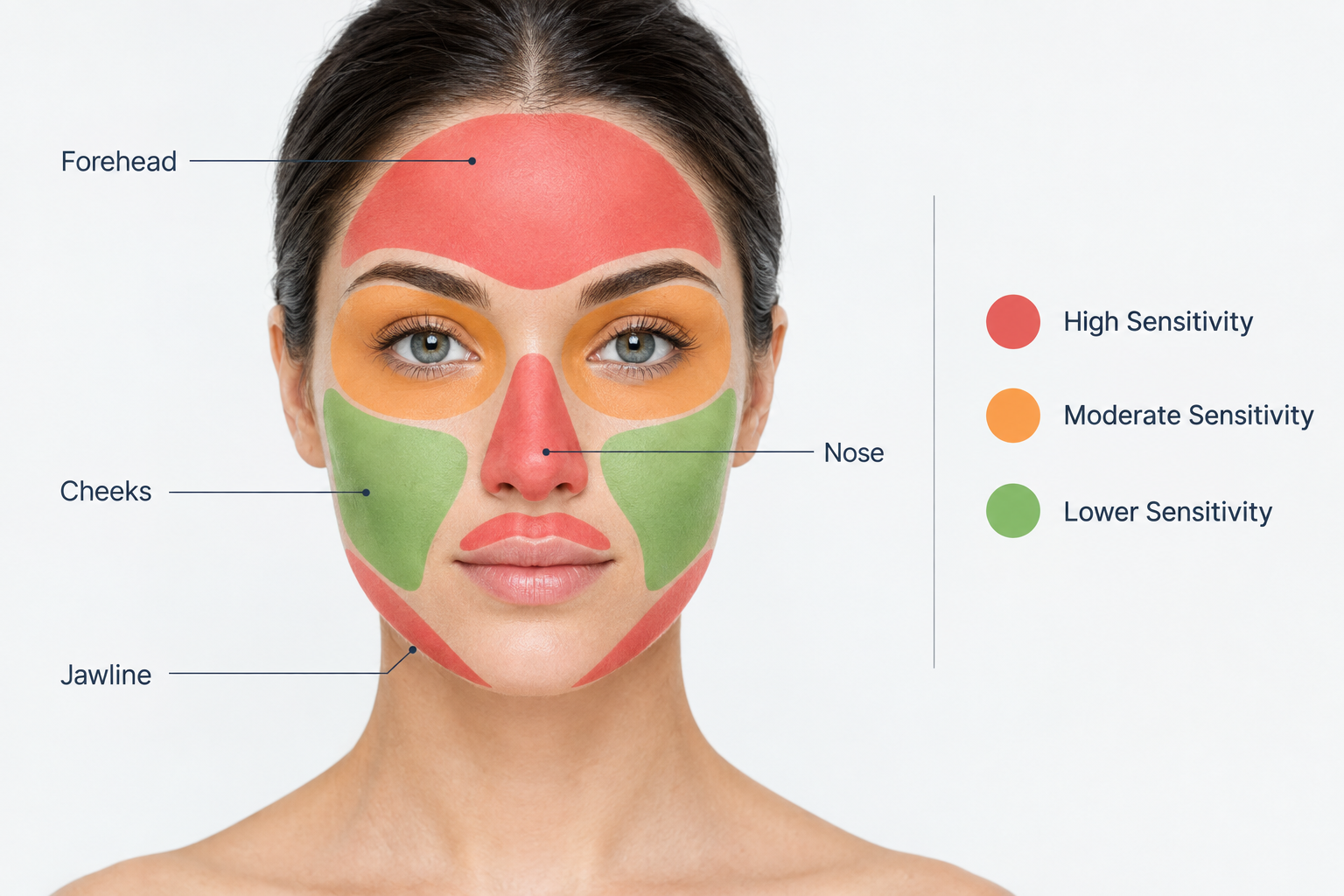
More Sensitive Areas
- Forehead: The skin here is thinner and sits closer to bone, which tends to amplify the sensation of the needles. Many patients find the forehead one of the more uncomfortable areas.
- Jawline and chin: Similar to the forehead, the proximity to bone makes these areas feel more intense, particularly along the mandibular border.
- Nose: The nose is highly sensitive due to its dense nerve supply and thin skin. Treatment over the nose is often described as the most uncomfortable part of a facial microneedling session.
- Upper lip: This area has a high concentration of nerve endings and is frequently cited as particularly sensitive.
- Around the eyes: The periorbital area has very thin, delicate skin. Practitioners exercise particular caution here, and treatment may be limited or avoided depending on the concern.
Less Sensitive Areas
- Cheeks: The cheeks have more subcutaneous tissue beneath the skin, which tends to cushion the sensation. Most patients find this area the most comfortable part of a facial treatment.
- Neck and décolletage: These areas are generally well tolerated, though the neck can feel more sensitive than the cheeks.
- Body areas: The abdomen, thighs, and upper arms tend to be less sensitive than the face, though deeper needle depths used for stretch marks or body scarring can increase discomfort.
Does Numbing Cream Make a Significant Difference?
Topical anaesthetic cream — most commonly containing lidocaine, sometimes in combination with prilocaine or tetracaine — is applied to the skin approximately 20 to 45 minutes before microneedling begins. When given adequate time to take effect, numbing cream substantially reduces the sensation of the needles and is considered standard practice in professional clinical settings.
The effectiveness of topical anaesthetic depends on several factors: the concentration of the active ingredient, how long it is left on the skin before treatment, whether it is applied under occlusion (covered with a film to enhance absorption), and individual variation in skin thickness and sensitivity. In most cases, patients who have had microneedling both with and without numbing cream report a marked difference in comfort.
It is worth noting that topical anaesthetics are not entirely without consideration. Some patients may have sensitivities to local anaesthetic agents, and practitioners should take a brief medical history before application. Numbing cream should always be applied and managed by a trained professional in a clinical setting, particularly when used over larger body areas where systemic absorption becomes a more relevant consideration.
How Does Needle Depth Affect Pain During Microneedling?
Needle depth is one of the most significant variables influencing how much discomfort a patient experiences during microneedling. Shallower depths — typically 0.5 mm to 1.0 mm — are used for surface-level concerns such as fine lines, general skin texture improvement, and product absorption enhancement. At these depths, most patients experience only mild prickling, even with moderate numbing.
Deeper needle settings — from approximately 1.5 mm to 2.5 mm — are used for more significant concerns such as atrophic acne scars, deeper wrinkles, or stretch marks. At these depths, the needles penetrate further into the dermis, where nerve density is higher and the wound-healing response is more pronounced. Patients undergoing deeper microneedling sessions typically report more noticeable discomfort, a stronger post-treatment burning sensation, and a longer period of skin redness and sensitivity afterward.
A skilled practitioner will calibrate needle depth according to the specific concern being treated and the patient’s skin type, adjusting settings across different zones of the face or body to optimise both efficacy and comfort. Deeper treatment does not automatically mean better results for every concern — appropriate depth selection is a clinical decision based on individual assessment.
Pain During Microneedling vs. After Treatment
Many patients find that the discomfort during the procedure itself is more manageable than they anticipated, but that the post-treatment period brings its own sensations. Immediately after microneedling, the skin typically feels warm, tight, and sensitive — similar to the feeling of mild sunburn. This is a normal response to the controlled micro-injuries created during treatment.
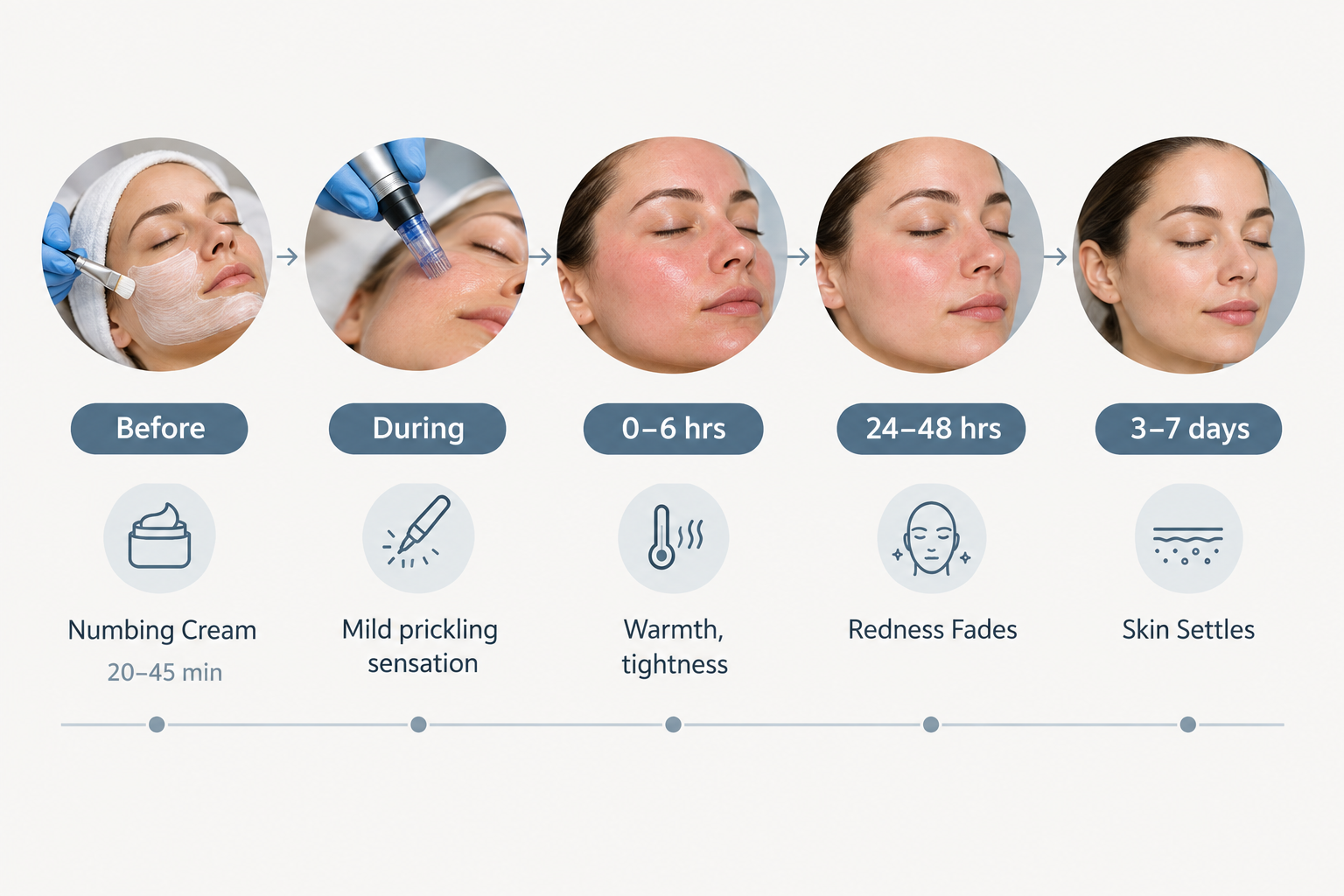
In the hours following treatment, the skin may feel tender to the touch, and some patients experience a mild throbbing or heat sensation. Redness is expected and can range from a light pink flush to a more pronounced red appearance depending on the depth of treatment and individual skin response. This redness generally begins to subside within 24 hours for superficial treatments, though deeper sessions may result in redness and sensitivity lasting two to three days.
Swelling is possible, particularly around the eyes and cheeks, and is more common after deeper treatments or when the periorbital area has been included. Pinpoint bleeding during the procedure is normal at deeper needle depths and is not a cause for concern. Patients should avoid touching the treated skin, applying makeup, or using active skincare ingredients such as retinoids, vitamin C serums, or exfoliating acids for at least 24 to 48 hours post-treatment, as the skin’s barrier is temporarily compromised and sensitivity is heightened.
Factors That May Influence Your Pain Tolerance During Microneedling
Individual pain perception during microneedling is influenced by a range of factors beyond the treatment parameters themselves. Understanding these can help patients and practitioners plan sessions more effectively.
- Skin sensitivity: Patients with naturally sensitive skin or conditions such as rosacea may find microneedling more uncomfortable and may require lower needle depths or additional numbing time.
- Menstrual cycle: Some patients report heightened skin sensitivity in the days before or during menstruation, which may make treatment feel more intense during this time.
- Anxiety and anticipation: Psychological factors genuinely influence pain perception. Patients who are anxious about the procedure may experience it as more uncomfortable than those who feel relaxed and well-informed.
- Previous treatments: Patients who have had multiple microneedling sessions often report that subsequent treatments feel more familiar and manageable, even if the objective sensation is similar.
- Skin thickness: Thicker skin, more common in male patients and in certain body areas, may tolerate deeper needle depths with less discomfort than thinner facial skin.
- Hydration and skin condition: Well-hydrated, healthy skin may respond differently to treatment than dehydrated or compromised skin.
Risks and Side Effects Beyond Discomfort
While pain level is a common concern, it is important for prospective patients to understand the broader risk and side effect profile of microneedling. Most side effects are mild and temporary, but some require clinical attention.
Common and expected side effects include redness, mild swelling, skin sensitivity, and a tight or dry feeling in the days following treatment. These typically resolve within two to three days for standard facial treatments. Pinpoint bruising is possible, particularly in thinner-skinned areas or in patients taking blood-thinning medications.
Less common but possible side effects include prolonged redness, post-inflammatory hyperpigmentation (particularly in patients with darker skin tones who are not appropriately assessed and prepared), infection if aftercare instructions are not followed, and flare-up of cold sores in patients with a history of herpes simplex virus. Patients with active acne, open wounds, certain skin conditions, or a history of keloid scarring may not be suitable candidates for microneedling, and a thorough consultation is essential before proceeding.
Microneedling is generally not recommended during pregnancy or breastfeeding, and patients taking certain medications — including isotretinoin — should discuss timing with their practitioner. The risk of adverse outcomes is meaningfully reduced when treatment is performed by a trained and experienced practitioner using appropriate sterile technique and properly maintained devices.
Microneedling Alternatives If You Are Concerned About Pain
For patients who are particularly concerned about discomfort, or who may not be suitable for microneedling, several alternative treatments address overlapping skin concerns with different sensation profiles.
- Chemical peels: Superficial and medium-depth chemical peels can improve skin texture, tone, and fine lines. They typically cause a stinging or tingling sensation during application rather than the prickling of needles, and may suit patients who prefer a different type of treatment experience.
- Laser skin resurfacing: Fractional laser treatments such as fractional CO2 or erbium lasers address similar concerns to microneedling — including acne scars and skin texture — but use light energy rather than physical needles. Discomfort levels vary by device and settings, and some laser treatments require stronger anaesthesia than topical cream alone.
- Radiofrequency microneedling: This combines the microneedling mechanism with radiofrequency energy delivered through the needle tips, targeting collagen remodelling at a deeper level. It is generally performed under stronger topical anaesthesia and may feel more intense than standard microneedling, but is considered by some practitioners to offer enhanced skin tightening results.
- HydraFacial: For patients primarily concerned with skin texture, hydration, and mild congestion rather than scarring or significant laxity, a HydraFacial is a non-invasive option with no needles and minimal discomfort.
- Polynucleotide treatments or skin boosters: Injectable treatments that improve skin quality and hydration may be considered for patients seeking skin rejuvenation without surface-level needling, though these involve injections and carry their own considerations.
The most appropriate alternative depends on the specific skin concern, skin type, and individual goals. A qualified practitioner can help determine which treatment — or combination of treatments — is most likely to be effective and well tolerated for a given patient.
Frequently Asked Questions
Is microneedling painful without numbing cream?
Without topical anaesthetic, microneedling is noticeably more uncomfortable for most patients. The sensation is typically described as a sharper stinging or scratching, particularly over bony areas such as the forehead and jawline. Most professional clinics apply numbing cream as standard, and patients should confirm this is included before booking.
How long does the discomfort last after microneedling?
The immediate post-treatment sensation — warmth, tightness, and sensitivity similar to mild sunburn — typically peaks in the first few hours and begins to ease within 24 hours. For deeper treatments, mild sensitivity and redness may persist for two to three days. Significant or worsening pain beyond this period should be assessed by the treating practitioner.
Can I take a painkiller before microneedling?
This should be discussed with your practitioner before treatment. Some over-the-counter pain medications, particularly non-steroidal anti-inflammatory drugs such as ibuprofen, may affect platelet function and could theoretically influence bruising. Your practitioner is best placed to advise on whether any pre-treatment medication is appropriate for your individual circumstances.
Does microneedling on the body hurt more than on the face?
Body microneedling for concerns such as stretch marks or body scarring often uses deeper needle settings than facial treatments, which can increase discomfort. However, body skin is generally thicker and may be less sensitive to the needles themselves. The overall experience varies by area and individual, and numbing cream is typically applied for body treatments as well.
Will microneedling hurt more if I have sensitive skin?
Patients with sensitive skin or conditions such as rosacea may find microneedling more uncomfortable and may be at higher risk of post-treatment redness or irritation. A thorough consultation is important to assess suitability, and practitioners may recommend shallower needle depths, additional numbing time, or alternative treatments for patients with significant skin sensitivity.
How many sessions will I need, and does it get easier?
The number of microneedling sessions recommended depends on the concern being treated — typically three to six sessions spaced four to six weeks apart for concerns such as acne scarring or skin texture improvement. Many patients report that subsequent sessions feel more familiar and manageable, though the objective treatment parameters may remain similar. Results generally develop gradually over several weeks as collagen remodelling progresses.
Is Microneedling Worth It If You Are Worried About Pain?
For most patients, the level of discomfort associated with professional microneedling — particularly when performed with appropriate topical anaesthesia — is manageable and does not represent a significant barrier to treatment. The sensation is real and should not be minimised, but it is rarely described as severe or intolerable by patients who have been properly prepared and who have realistic expectations.
The more meaningful questions to consider are whether microneedling is appropriate for your specific skin concern, whether you are a suitable candidate based on your skin type and medical history, and whether the expected results justify the treatment experience and recovery period for your individual goals. Microneedling has a reasonable evidence base for concerns such as acne scarring and skin texture improvement, though results vary between individuals and multiple sessions are typically required.
If you are concerned about pain, discussing this openly during your consultation allows the practitioner to explain what to expect for your specific treatment plan, confirm that adequate numbing will be used, and address any questions about aftercare and recovery. A practitioner who takes your comfort concerns seriously and tailors the approach accordingly is an important part of a safe and positive treatment experience.


