
Lip Filler Aftercare: Recovery Tips After Injections
Lip filler injections using hyaluronic acid are one of the most commonly performed aesthetic treatments, but what happens in the hours and days after the appointment matters just as much as the procedure itself. Following appropriate aftercare guidance can help minimise discomfort, reduce the risk of complications, and support the best possible outcome. This article explains what to expect during recovery, which aftercare steps are genuinely useful, and when to seek professional advice.
Key Takeaways
- Swelling, tenderness, and minor bruising after lip filler are normal and typically resolve within one to two weeks.
- Avoiding heat, strenuous exercise, and certain medications in the first 24 to 48 hours may help reduce bruising and swelling.
- Final results are usually visible once swelling has fully settled, often around two weeks post-treatment.
- Certain symptoms — including severe pain, skin discolouration, or signs of infection — require prompt contact with your practitioner.
- Individual recovery varies depending on the amount of filler used, the technique, and personal factors such as skin sensitivity.
What Happens to Your Lips Immediately After Filler
Immediately after hyaluronic acid lip filler injections, the lips will typically appear swollen, feel tender to the touch, and may look uneven or larger than the intended final result. This is a normal physiological response to the injection process itself, not a sign that something has gone wrong. The needle or cannula used to deliver the filler causes minor tissue disruption, and the body responds with localised inflammation. Small amounts of bruising at the injection sites are also common, particularly along the lip border where the vermillion edge is defined.
Swelling tends to peak within the first 24 to 48 hours and then gradually subsides over the following days. Because the lips have a rich blood supply and relatively thin skin, they can appear quite swollen in this early phase — sometimes significantly more than the intended volume. Patients are generally advised to expect this and not to judge the final result until swelling has fully resolved, which typically takes around ten to fourteen days. In some individuals, mild residual swelling may persist slightly longer.
The First 24 Hours: Immediate Aftercare Steps
The first day after lip filler treatment is when the most important aftercare measures apply. Keeping the lips cool can help manage swelling during this period. Applying a clean, wrapped ice pack or a cold compress to the area for short intervals — typically ten to fifteen minutes at a time — may reduce inflammation and ease discomfort. Ice should never be applied directly to the skin, as this can cause cold injury to already-sensitised tissue.
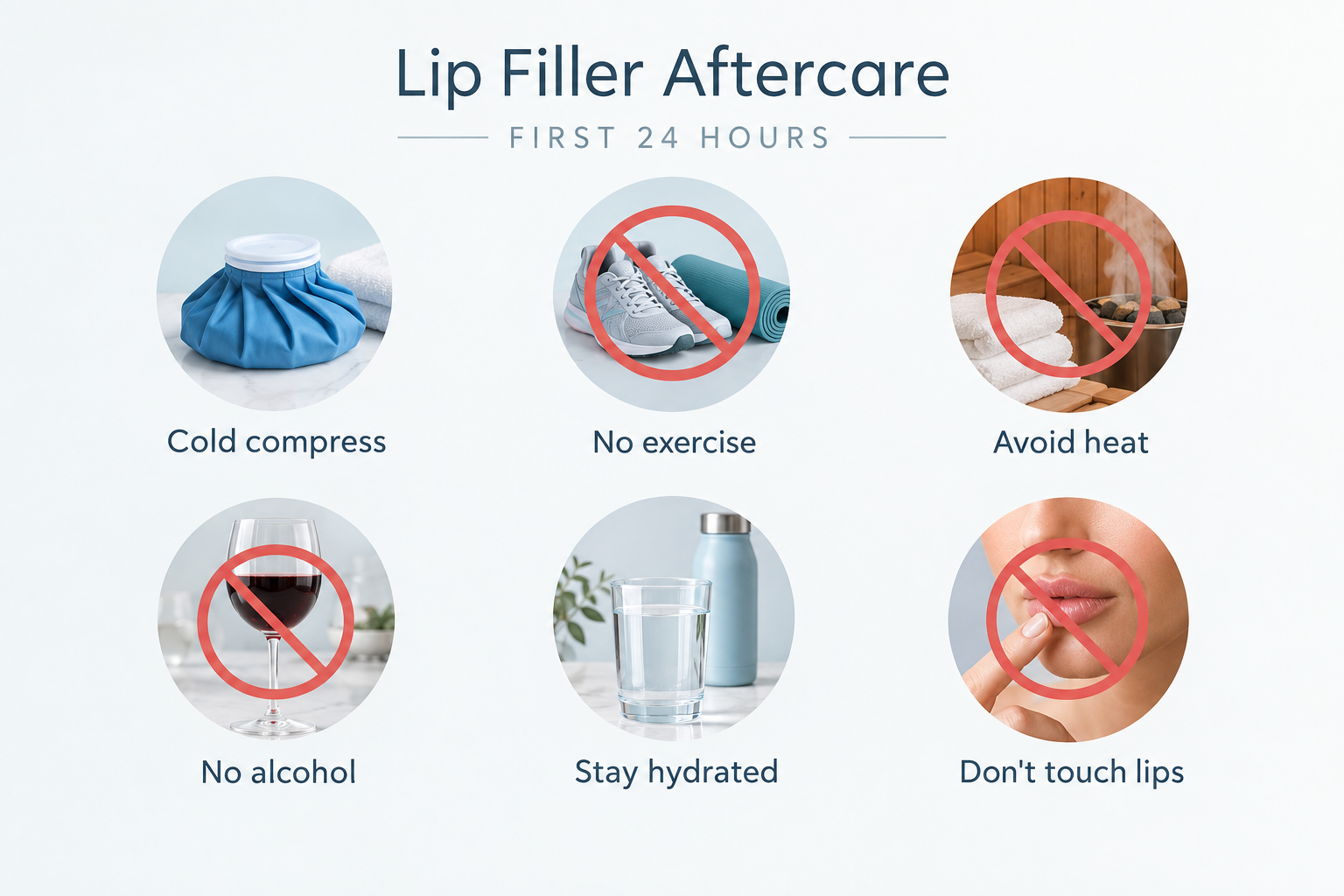
Avoiding strenuous physical exercise for at least 24 hours is commonly recommended. Elevated heart rate and increased blood pressure from exercise can worsen bruising and prolong swelling by increasing blood flow to the treated area. Similarly, exposure to significant heat sources — including saunas, steam rooms, hot baths, and direct sunlight — should be avoided during this initial period for the same reason.
Alcohol consumption is best avoided for at least 24 hours after lip filler injections. Alcohol acts as a vasodilator, widening blood vessels and potentially increasing bruising. It can also contribute to dehydration, which is counterproductive when the body is managing post-injection inflammation. Staying well hydrated with water supports general recovery.
Touching, pressing, or massaging the lips in the first 24 hours is generally discouraged unless a practitioner has specifically instructed otherwise. Unnecessary manipulation of the filler before it has settled may affect its distribution. Sleeping on your back rather than face-down during the first night can also help avoid unintended pressure on the treated area.
Days Two to Seven: Managing Swelling and Bruising
Swelling typically begins to reduce noticeably from the second or third day onward, though the lips may still feel firm or slightly tender. Bruising, if present, usually follows the same trajectory as a typical bruise — progressing through yellow and green tones before fading. Arnica-based topical preparations or oral arnica supplements are sometimes used by patients to help manage bruising, though clinical evidence for their effectiveness in this context remains limited. If you are considering any supplement, discuss this with your practitioner beforehand, as some products may interact with medications.
Continuing to avoid heat exposure, vigorous exercise, and alcohol during the first week supports a smoother recovery. Spicy foods and very salty foods may temporarily worsen swelling in some individuals, so a relatively bland diet during the first few days is a sensible precaution. Dental procedures that require significant stretching of the mouth are best postponed for at least two weeks after lip filler treatment, as this can displace the product before it has fully integrated.
Sun protection remains important throughout recovery. The lips and surrounding skin may be more sensitive than usual, and UV exposure can worsen post-inflammatory changes. Using a lip balm with SPF when outdoors is a practical measure during this period.
Lip Filler Aftercare: What to Avoid and for How Long
Understanding which activities and products to avoid — and for how long — helps patients plan their recovery around their usual routine. The following guidance reflects commonly recommended timeframes, though individual practitioners may advise variations based on the specific product used, the volume injected, and the patient’s response.
- Strenuous exercise: Avoid for at least 24 to 48 hours; some practitioners recommend up to one week for high-intensity activity.
- Heat exposure (saunas, steam rooms, hot baths, sunbeds): Avoid for at least 48 hours, ideally one week.
- Alcohol: Avoid for at least 24 hours post-treatment.
- Blood-thinning medications and supplements (such as aspirin, ibuprofen, fish oil, vitamin E): Discuss with your practitioner before stopping any prescribed medication; over-the-counter supplements are often paused before and after treatment to reduce bruising risk.
- Lip massage or manipulation: Avoid unless specifically instructed by your practitioner.
- Lip cosmetics (lipstick, lip liner): Many practitioners advise avoiding these for at least 24 hours to reduce infection risk at injection sites.
- Dental appointments: Postpone for at least two weeks where possible.
- Facial treatments (chemical peels, laser, microneedling): Avoid for at least two weeks or as advised by your practitioner.
- Kissing or significant lip pressure: Avoid for at least 24 to 48 hours.
Managing Discomfort After Lip Filler
Mild discomfort, tenderness, and a sensation of tightness or pressure in the lips are expected in the first day or two after treatment. Paracetamol (acetaminophen) is generally considered appropriate for managing mild post-injection discomfort, as it does not carry the same blood-thinning properties as non-steroidal anti-inflammatory drugs such as ibuprofen. However, patients should always follow the dosage instructions on the packaging and consult a pharmacist or their practitioner if they are unsure which pain relief is appropriate for their individual circumstances.
Topical numbing cream is sometimes used before the procedure to reduce discomfort during injection, and many hyaluronic acid lip fillers also contain lidocaine — a local anaesthetic — within the formulation itself. This means the injection experience is often more comfortable than patients anticipate, and significant pain after the procedure has settled is not typical. Persistent or worsening pain beyond the first 48 hours warrants contact with the treating practitioner.
When to Contact Your Practitioner
Most lip filler recovery is straightforward, but certain symptoms require prompt professional assessment. Knowing which signs to watch for is an important part of being an informed patient. The following symptoms should prompt immediate contact with your practitioner or, in urgent cases, emergency medical services.
- Severe or worsening pain that does not improve after the first 48 hours, or that is disproportionate to what was described as expected.
- Skin colour changes — particularly a white or bluish-grey discolouration of the skin around the lips or nose. This may indicate vascular compromise, a rare but serious complication in which filler has affected blood supply to the tissue. This requires immediate emergency treatment.
- Signs of infection — increasing redness, warmth, swelling beyond the expected timeframe, pus, or fever.
- Asymmetry or lumps that persist beyond two weeks and do not resolve as swelling subsides.
- Delayed swelling or allergic reaction — significant swelling that develops days after the procedure rather than immediately, or symptoms such as hives, difficulty breathing, or widespread rash.
- Cold sore outbreak — patients with a history of cold sores (herpes simplex virus) are at increased risk of an outbreak triggered by lip injections. Antiviral prophylaxis is sometimes prescribed before treatment for those with a known history. If an outbreak occurs, contact your practitioner promptly.
Recovery Timeline: What to Expect Week by Week
Recovery after lip filler injections follows a broadly predictable pattern, though individual variation is common. The timeline below reflects typical experiences and should not be taken as a guarantee of any individual’s recovery.
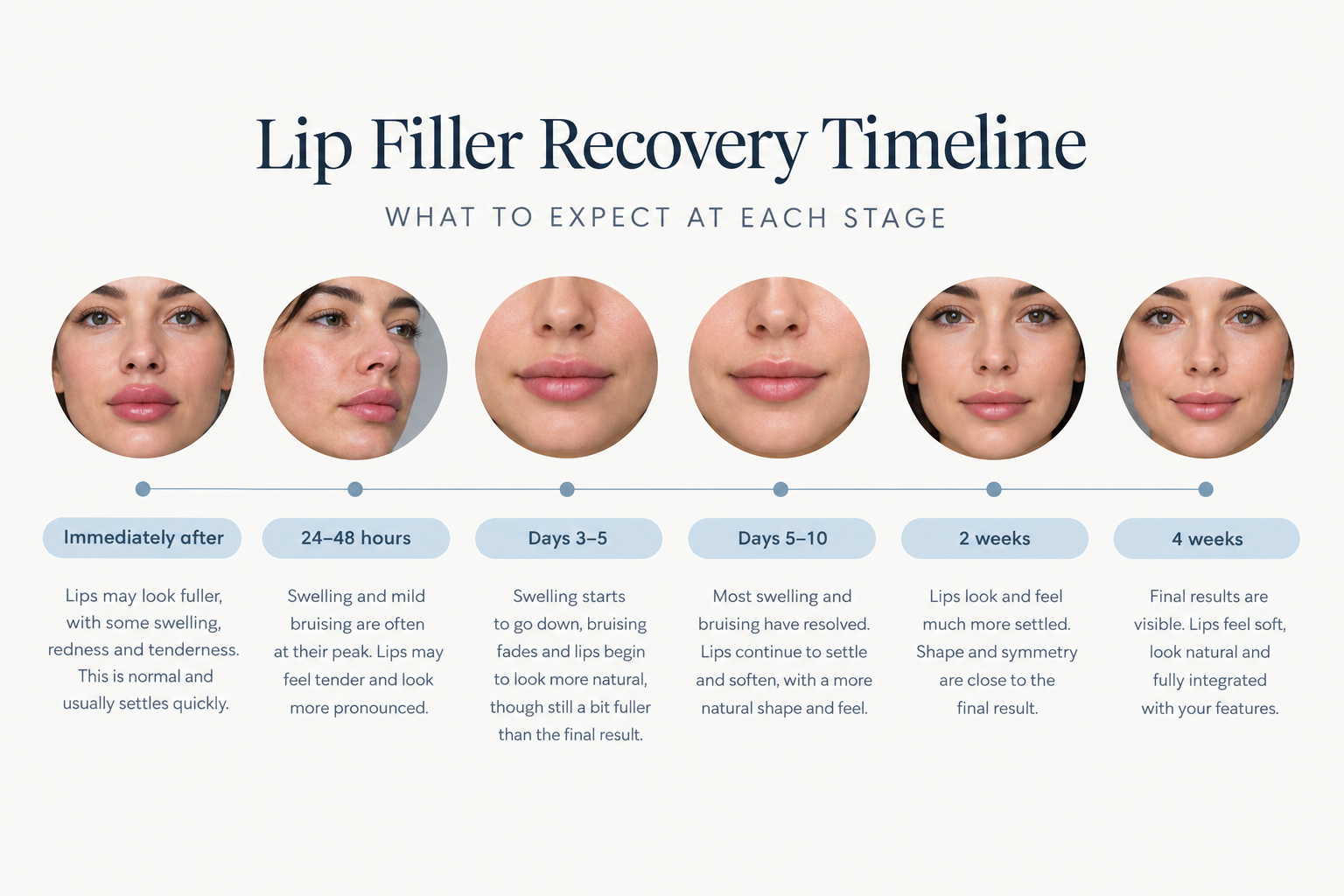
| Timeframe | What Is Typically Experienced |
|---|---|
| Immediately after | Swelling, tenderness, possible bruising; lips appear larger than intended result |
| 24–48 hours | Swelling at its peak; bruising may develop or deepen; lips feel firm and sensitive |
| Days 3–5 | Swelling begins to reduce; bruising starts to fade; tenderness lessens |
| Days 5–10 | Significant improvement in swelling; lips begin to look more natural; bruising mostly resolved |
| 2 weeks | Swelling largely settled; results more representative of the final outcome |
| 4 weeks | Filler fully integrated; final result visible; review appointment typically appropriate at this stage |
How Long Do Lip Filler Results Last?
Hyaluronic acid lip fillers are not permanent. The duration of results varies depending on the specific product used, the volume injected, the individual’s metabolism, and lifestyle factors. Most hyaluronic acid lip fillers last between six and twelve months, though some patients find results persist longer and others notice earlier fading. The lips are a highly mobile area of the face, and the constant movement involved in speaking, eating, and facial expression means that filler in this location tends to metabolise more quickly than in less active areas.
Maintaining results typically requires repeat treatment at intervals determined by how the individual responds to the product. A review appointment around four weeks after the initial treatment allows the practitioner to assess the settled result and discuss whether any refinement is appropriate. Patients who are new to lip filler often benefit from a conservative initial approach, with the option to add further volume at the review stage once swelling has resolved and the result can be properly evaluated.
Factors That Can Affect Recovery
Several individual factors can influence how quickly and smoothly recovery progresses after lip filler injections. Patients who take blood-thinning medications or supplements may experience more pronounced bruising. Those with a history of cold sores face a higher risk of a post-treatment outbreak. Skin sensitivity, the volume of filler used, the number of injection points, and the technique employed by the practitioner all play a role in the extent of post-treatment swelling and bruising.
Lifestyle factors also matter. Smoking impairs circulation and wound healing, which may affect recovery. Poor hydration and a diet high in sodium can contribute to prolonged swelling. Stress and poor sleep, while not directly causing complications, may affect the body’s general inflammatory response. Patients who have had lip filler before may find that their recovery is similar to previous experiences, though this is not guaranteed.
Alternatives to Lip Filler
Hyaluronic acid lip filler is the most widely used approach for lip augmentation and definition, but it is not the only option. Patients who are concerned about the recovery period, the injectable nature of the treatment, or the temporary results may wish to discuss alternatives with a qualified practitioner.
Lip flip treatments using small amounts of botulinum toxin can subtly enhance the appearance of the upper lip by relaxing the muscle that causes the lip to curl inward, creating the impression of a slightly fuller upper lip without adding volume. This approach involves minimal downtime but produces a more subtle effect than hyaluronic acid filler and lasts a shorter time — typically two to three months. It does not add volume and is not suitable for patients seeking significant augmentation.
Skin booster injections containing hyaluronic acid can improve lip hydration and texture without adding significant volume, which may suit patients who want improved lip quality rather than a fuller appearance. Topical lip-plumping products are available over the counter but produce only temporary and superficial effects through mild irritation or hydration, and are not comparable to injectable treatments in terms of outcome.
For patients who have previously had lip filler and are unhappy with the result, hyaluronidase — an enzyme that dissolves hyaluronic acid — can be used to partially or fully reverse the treatment. This is an important safety consideration and one of the reasons hyaluronic acid remains the preferred filler material for the lips.
Frequently Asked Questions
Can I wear lipstick after lip filler?
Most practitioners advise avoiding lip cosmetics, including lipstick and lip liner, for at least 24 hours after treatment. This reduces the risk of introducing bacteria to the injection sites while they are still healing. After this period, cosmetics can generally be applied normally, though patients should be gentle around any areas that remain tender.
Is it normal for lips to feel lumpy after filler?
Some lumpiness or unevenness in the first one to two weeks is common and usually reflects swelling rather than a problem with filler placement. As swelling resolves, the texture typically becomes smoother. Lumps that persist beyond two weeks, are visible at rest, or are accompanied by pain should be assessed by the treating practitioner.
When can I exercise after lip filler?
Light activity such as walking is generally acceptable after the first 24 hours. Strenuous exercise — including running, gym sessions, and high-intensity training — is typically recommended to be avoided for at least 24 to 48 hours, and some practitioners advise waiting up to one week. Elevated heart rate increases blood flow and can worsen bruising and swelling.
How do I reduce bruising after lip filler?
Applying a cold compress in the first 24 hours, avoiding alcohol, and refraining from blood-thinning supplements before and after treatment can all help reduce bruising. Some patients use arnica preparations, though evidence for their effectiveness is limited. Bruising typically resolves within one to two weeks and can be covered with makeup after the first 24 hours if needed.
Can I get lip filler if I have a history of cold sores?
A history of cold sores (herpes simplex virus) is not an absolute contraindication to lip filler, but it does increase the risk of a post-treatment outbreak. Practitioners often recommend antiviral prophylaxis — medication taken before and after the procedure — for patients with a known history. This should be discussed at the consultation stage.
What should I do if my lips look very uneven after filler?
Asymmetry immediately after treatment is common and usually reflects uneven swelling rather than a placement issue. Waiting until swelling has fully resolved — typically around two weeks — before assessing symmetry is advisable. If asymmetry persists at the four-week review, the practitioner can discuss whether a small refinement is appropriate.
Planning Your Recovery Before Your Appointment
Lip filler aftercare is most effective when patients understand what to expect before they attend their appointment. Recovery is generally straightforward for most people, with swelling and bruising resolving within one to two weeks and final results visible around the four-week mark. Following the aftercare guidance provided by your practitioner — including avoiding heat, alcohol, and strenuous exercise in the first 24 to 48 hours — supports a smoother recovery and helps protect the result.
If you are planning lip filler treatment, consider timing the appointment to allow a few days of recovery before any significant social or professional commitments. Discuss your medical history, any medications or supplements you take, and any previous reactions to injectable treatments at your consultation. A qualified and experienced practitioner will provide personalised aftercare instructions and should be your first point of contact if you have any concerns during recovery. Choosing a practitioner with appropriate training and access to emergency protocols — including hyaluronidase for reversal if needed — is one of the most important decisions you can make before undergoing any injectable treatment.


