Non-Surgical Chin Augmentation: Chin Projection Without Surgery
A recessed or underprojected chin can affect the overall balance of the face more than most people realise. Because the chin anchors the lower third of the face, even a modest lack of projection can make the nose appear larger, the neck less defined, and the jawline softer than it actually is. Non-surgical chin augmentation — most commonly achieved with injectable dermal filler — offers a way to address mild to moderate underprojection without an operation, with minimal downtime and results that can be assessed before any permanent decision is made.
Key Takeaways
- Non-surgical chin augmentation uses injectable dermal filler — most often a hyaluronic acid filler or calcium hydroxylapatite — to add chin projection and improve lower facial definition without surgery.
- Results typically last 12–18 months with hyaluronic acid fillers and up to 18–24 months with Radiesse; hyaluronic acid filler is reversible with hyaluronidase if needed.
- The treatment works best for mild to moderate underprojection; it cannot reposition bone, significantly increase chin height, or correct severe structural asymmetry.
- Combining chin filler with Botox to the mentalis muscle and, where relevant, Kybella for submental fat can produce a more complete non-surgical lower face result.
- Choosing a qualified, experienced injector with a thorough understanding of facial anatomy is the single most important safety factor.
What Is Non-Surgical Chin Augmentation?
Non-surgical chin augmentation is a minimally invasive procedure in which injectable filler is placed at or around the chin to improve its projection, shape, and contribution to overall facial balance. Unlike a chin implant — which involves surgery, general anaesthesia, and a recovery period of one to two weeks — injectable treatment is performed in a clinic setting, typically takes between 15 and 45 minutes, and requires little to no downtime. The results are visible immediately, though some swelling in the first 48–72 hours means the final outcome is best assessed after about two weeks.
The procedure is sometimes called a liquid chin augmentation or non-surgical mentoplasty. It is not a single product but a category of treatment, and the specific filler chosen, the injection technique used, and the volume placed all depend on the individual patient’s anatomy and goals.
Understanding Chin Projection and Facial Proportions
Aesthetic assessment of the chin is not simply a matter of personal preference — it is grounded in measurable facial proportions. One widely used reference is the Ricketts E-line, an imaginary line drawn from the tip of the nose to the tip of the chin. In a balanced profile, the lips should sit just behind this line, with the lower lip slightly closer to it than the upper lip. When the chin is underprojected, the E-line tilts forward relative to the lips, making the lower face appear recessed and the nose more prominent by comparison.
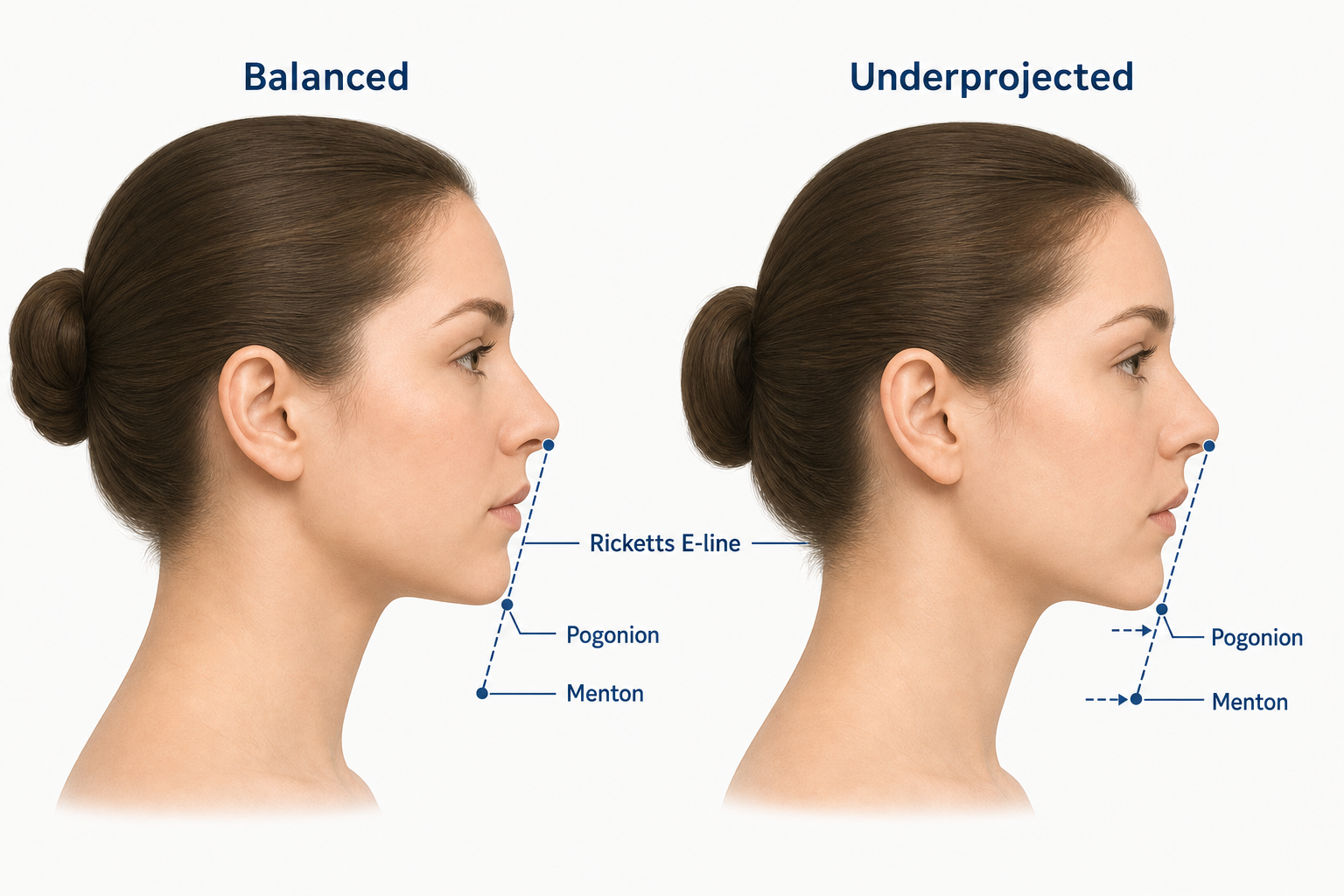
Practitioners also assess the face using the concept of facial thirds — dividing the face vertically into roughly equal upper, middle, and lower segments. The lower third, from the base of the nose to the chin tip, should ideally match the other two thirds in height. A hypoplastic or recessed chin shortens the apparent lower third and disrupts this vertical balance. Cephalometric analysis, which maps specific anatomical landmarks including the pogonion (the most anterior point of the chin) and the menton (the lowest point), provides a more precise framework for planning treatment.
Understanding these proportions matters because the goal of chin filler is not simply to make the chin larger — it is to restore or improve the relationship between the chin, lips, nose, and neck so that the face reads as balanced from the front and in profile.
Who May Be a Suitable Candidate?
Non-surgical chin augmentation is generally most appropriate for patients with mild to moderate underprojection who are seeking improvement in lower facial definition without committing to surgery. Suitable candidates often include:
- Individuals with a naturally recessed or weak chin that affects facial profile balance
- Patients who want to assess what a more projected chin would look like before considering a permanent surgical option
- Those who have experienced some volume loss in the lower face with age
- Patients with mild chin asymmetry that could be improved with targeted filler placement
- Individuals who also have submental fat or a soft jawline and want a coordinated non-surgical approach
The treatment is less likely to produce satisfying results in patients with severe retrognathia (a significantly retruded jaw and chin), those who need meaningful changes in chin height rather than projection, or anyone whose underprojection is primarily skeletal and would require bone repositioning through a procedure such as sliding genioplasty. A thorough consultation with a qualified practitioner is essential to determine whether filler is the right tool for a given patient’s anatomy and goals.
Filler is not appropriate during pregnancy or breastfeeding, in the presence of active infection at or near the treatment site, or in patients with certain autoimmune conditions or bleeding disorders. A full medical history review is part of any responsible consultation.
Filler Options for Chin Augmentation
Two main categories of injectable filler are used for chin augmentation: hyaluronic acid fillers and calcium hydroxylapatite filler. Each has distinct characteristics that influence which is chosen for a given patient.
Hyaluronic Acid Fillers
Hyaluronic acid (HA) filler is the most commonly used option for non-surgical chin augmentation. Hyaluronic acid is a naturally occurring substance found in connective tissue, and when formulated as a dermal filler it creates a gel that can be injected to add volume and structure. For the chin, practitioners typically select a high G-prime filler — one with a high elastic modulus, meaning it resists deformation under pressure and holds its shape rather than spreading into surrounding tissue. This structural quality is important in the chin, where the filler needs to project forward rather than disperse laterally.
Juvéderm Voluma (also marketed as VOLUMA XC) is one of the most widely used HA fillers for chin augmentation and has FDA clearance for use in the chin area. Restylane Lyft is another HA option used in this region. HA fillers for the chin typically last approximately 12–18 months before gradual metabolization occurs, though individual variation is significant. A key advantage of HA filler is that it is reversible with hyaluronidase — an enzyme that can dissolve the filler if the result is unsatisfactory or if a complication arises, providing an important safety margin.
Radiesse (Calcium Hydroxylapatite)
Radiesse is a calcium hydroxylapatite (CaHA) filler that works differently from HA products. It consists of microspheres suspended in a gel carrier, and once injected it not only provides immediate volume but also stimulates the body’s own collagen production over time. Radiesse tends to offer greater longevity than most HA fillers — results in the chin area may last 18–24 months — and it has a firm, structural quality that suits the chin well. The important limitation is that Radiesse is not reversible with hyaluronidase; if the result needs to be adjusted, the practitioner must wait for natural metabolization or use other techniques. This makes the choice of an experienced injector particularly important when Radiesse is used.
| Characteristic | Hyaluronic Acid Filler (e.g. Juvéderm Voluma) | Radiesse (Calcium Hydroxylapatite) |
|---|---|---|
| Mechanism | Volume replacement via HA gel | Volume + collagen stimulation via CaHA microspheres |
| Typical longevity (chin) | 12–18 months | 18–24 months |
| Reversible? | Yes — with hyaluronidase | No |
| Structural support | High (with high G-prime formulations) | High |
| Best suited for | First-time patients, those wanting reversibility | Patients comfortable with longer commitment |
The Role of the Mentalis Muscle — and Why Botox Is Often Combined
One aspect of chin augmentation that is rarely discussed in patient-facing information is the role of the mentalis muscle. The mentalis is the muscle that runs from the chin bone to the skin of the chin, and its primary function is to elevate the lower lip and wrinkle the chin skin. In some patients, an overactive or hypertonic mentalis actively works against filler projection — the muscle’s constant tension can compress the filler and limit how far forward the chin appears to project. An overactive mentalis also commonly causes the characteristic dimpled or “orange-peel” texture on the chin surface.
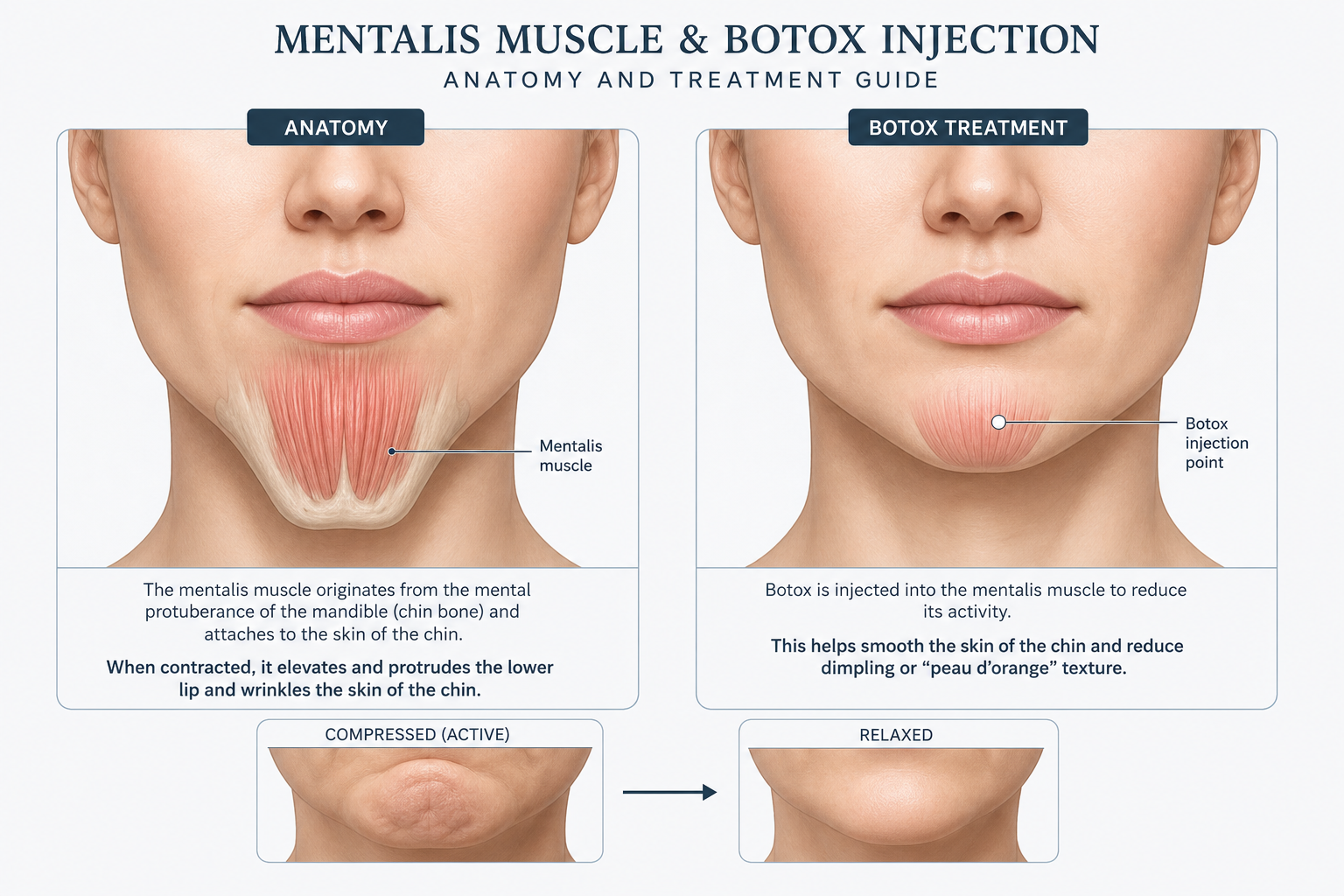
For these patients, injecting a small amount of botulinum toxin (Botox) into the mentalis muscle before or alongside filler placement can relax the muscle, reduce dimpling, and allow the filler to project more effectively. This combination approach — HA filler for structural projection plus neuromodulator for mentalis relaxation — is increasingly used by experienced practitioners and can produce a noticeably better result than filler alone in patients where mentalis overactivity is a contributing factor. The Botox effect typically lasts three to four months and can be repeated as needed.
A Multi-Modality Non-Surgical Approach to the Lower Face
For patients whose lower face concerns extend beyond chin projection alone, a coordinated non-surgical plan may address several issues simultaneously. Submental fat — the layer of fat beneath the chin that contributes to a double chin appearance — can make even a well-projected chin look less defined. Kybella (deoxycholic acid) is an injectable treatment that permanently destroys fat cells in the submental area, reducing fullness beneath the chin over a series of sessions.
When submental fat reduction with Kybella is combined with chin projection using filler and mentalis relaxation with Botox, the overall lower face result can be considerably more balanced than any single treatment would achieve. Jawline contouring filler placed along the mandibular border can further sharpen the transition from chin to jaw. This kind of multi-modality planning requires a practitioner who can assess the lower face as a whole rather than treating individual areas in isolation. Not every patient needs all of these components — the appropriate combination depends on a thorough facial assessment.
Non-Surgical Chin Augmentation vs. Chin Implant
The most common surgical alternative to chin filler is a silicone chin implant, placed through a small incision either under the chin or inside the mouth. Sliding genioplasty — in which the chin bone itself is surgically repositioned — is a more involved option used when significant structural change is needed. Understanding the genuine differences between filler and surgery helps patients make a realistic decision.
| Factor | Chin Filler (Non-Surgical) | Chin Implant (Surgical) | Sliding Genioplasty |
|---|---|---|---|
| Invasiveness | Minimally invasive | Surgical — general or local anaesthesia | Surgical — general anaesthesia |
| Downtime | Minimal (24–48 hours) | 1–2 weeks | 2–4 weeks |
| Longevity | 12–24 months | Permanent | Permanent |
| Reversible? | Yes (HA filler) | Implant can be removed surgically | No |
| Degree of change | Mild to moderate | Moderate to significant | Significant — can also change height |
| Approximate cost | £400–£900 per session | £3,500–£6,000+ (one-time) | Higher — specialist surgical fee |
| Surgical risks | No surgical risks | Infection, nerve injury, implant displacement | Infection, nerve injury, bone healing |
One point worth addressing honestly: filler is sometimes described as a way to “preview” a surgical result before committing to an implant. This is partially true — filler can give a useful impression of increased chin projection — but it is an imperfect preview. Filler is placed in soft tissue and works by adding volume within the existing anatomy, while a chin implant sits directly on the bone and can produce a different shape and projection pattern. The two results are not identical, and patients should understand this distinction before using filler as a definitive test of whether they want surgery.
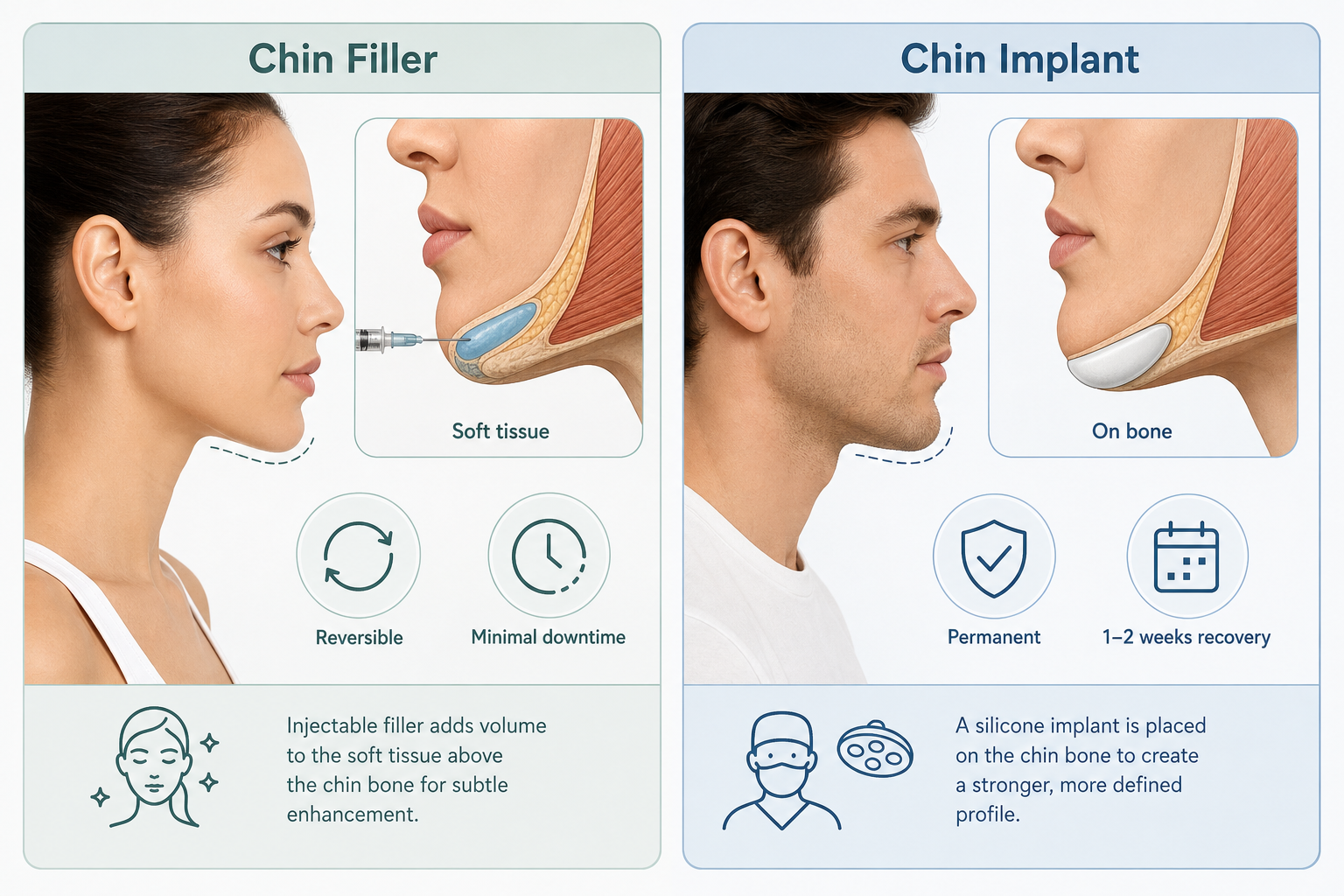
From a long-term cost perspective, repeated filler sessions over five to ten years can accumulate to a cost comparable to or exceeding a one-time surgical procedure. This does not make surgery the automatic choice — the absence of surgical risk, the reversibility, and the flexibility of filler remain genuine advantages — but it is a factor worth considering in a long-term plan.
What Happens During the Procedure?
A non-surgical chin augmentation appointment typically follows a consistent sequence, though the specifics vary by practitioner and patient.
- Consultation and facial assessment: The practitioner evaluates the chin in the context of the whole face — assessing projection, height, width, symmetry, skin quality, and the relationship to the nose, lips, and jawline. Photographs are usually taken. Goals and realistic outcomes are discussed.
- Preparation: The treatment area is cleaned and a topical numbing cream is applied, usually left for 20–30 minutes. Some practitioners use a local anaesthetic injection for additional comfort.
- Injection: Filler is injected using either a fine needle or a blunt-tipped cannula. The cannula technique involves a single entry point and allows the practitioner to deposit filler along a wider area with potentially less bruising and a reduced risk of inadvertent vascular injury. The choice of technique depends on the practitioner’s training and the specific area being treated. Filler is typically placed at the supraperiosteal level — just above the bone — for structural projection.
- Assessment and adjustment: The practitioner assesses the result from multiple angles and may add small additional amounts of filler to refine symmetry or projection.
- Aftercare guidance: Written aftercare instructions are provided before the patient leaves.
Recovery, Aftercare, and What to Expect
Most patients experience some degree of swelling, tenderness, and occasionally bruising in the 24–72 hours following treatment. The chin area may feel firm or slightly uneven immediately after injection — this is normal and typically resolves as the filler integrates with surrounding tissue over one to two weeks. The final result is best assessed at a two-week review appointment.
Practical aftercare guidance generally includes:
- Avoid applying direct pressure to the treated area for at least 48 hours (including sleeping face-down)
- Avoid strenuous exercise for 24–48 hours to minimise swelling and bruising
- Avoid extreme heat — saunas, steam rooms, and intense sun exposure — for approximately one week
- Avoid alcohol for 24 hours before and after treatment to reduce bruising risk
- Contact the clinic promptly if you experience unusual pain, skin colour changes, or persistent lumps beyond two weeks
Lumps or irregularities that persist beyond two to three weeks should be reviewed by the treating practitioner. In the case of HA filler, hyaluronidase can be used to dissolve the product if needed.
Risks and Limitations
Non-surgical chin augmentation carries a lower risk profile than surgery, but it is not without potential complications. Patients should be aware of both common and rare adverse effects before proceeding.
Common and expected effects include temporary swelling, bruising, tenderness, and firmness at the injection site. These typically resolve within one to two weeks.
Less common effects include visible lumps or nodules, asymmetry, and filler migration — where product moves slightly from the intended placement area. These are more likely when large volumes are placed in a single session or when technique is suboptimal.
Rare but serious risks include vascular occlusion — where filler inadvertently enters or compresses a blood vessel, potentially compromising blood supply to the overlying skin. This is a medical emergency requiring immediate treatment with hyaluronidase (for HA filler) and is one of the primary reasons why treatment should only be performed by a practitioner with thorough knowledge of facial vascular anatomy and emergency protocols. Infection is also possible, though uncommon when standard sterile technique is used.
Filler cannot change the underlying bone structure, increase chin height, straighten a deviated chin caused by skeletal asymmetry, or produce results equivalent to surgery in patients with significant underprojection. Being clear about these limitations before treatment is part of responsible patient selection.
Ethnic and Gender Considerations in Chin Projection
Ideal chin projection is not a single universal standard — it varies meaningfully by gender and ethnicity, and a skilled practitioner will tailor treatment accordingly. In general, a more anteriorly projected, broader, and squarer chin tends to read as masculine, while a softer, more tapered, and slightly less prominent chin is typically considered more feminine. Treating a female patient with the same projection target as a male patient can produce a result that feels incongruent with the rest of the face.
Ethnic variation in facial bone structure also influences what constitutes balanced chin projection for a given individual. Cephalometric norms developed on one population group do not automatically apply to patients of different ethnic backgrounds. An experienced practitioner will assess each patient’s proportions in the context of their own facial structure rather than applying a single template.
How to Choose a Provider
The safety and quality of non-surgical chin augmentation depend heavily on the practitioner’s training, anatomical knowledge, and clinical judgement. When selecting a provider, consider the following:
- Look for a medically qualified practitioner — doctor, dentist, or nurse prescriber — with specific training in facial anatomy and injectable treatments
- Ask whether the practitioner has experience with chin augmentation specifically, not just general filler treatments
- Confirm that the clinic holds hyaluronidase on-site and has a protocol for managing vascular complications
- Ask to see before and after photographs of previous chin augmentation cases
- Be cautious of unusually low pricing, high-pressure sales tactics, or practitioners who do not conduct a thorough consultation before recommending treatment
- A reputable practitioner will tell you honestly if filler is not the right option for your anatomy
Frequently Asked Questions
Is chin filler painful?
Most patients find the procedure tolerable. Topical numbing cream is applied beforehand, and many filler formulations contain lidocaine (a local anaesthetic) within the product itself. Some pressure or mild discomfort during injection is normal, but significant pain is uncommon.
How long does non-surgical chin augmentation last?
Results with hyaluronic acid filler typically last 12–18 months, while Radiesse may last 18–24 months. Individual variation is significant and depends on the filler used, the volume placed, the patient’s metabolism, and lifestyle factors. Maintenance treatments are needed to sustain the result.
Can chin filler go wrong, and what happens if it does?
Complications are possible, though serious adverse events are uncommon when treatment is performed by a qualified practitioner. Minor issues such as bruising, swelling, or temporary unevenness usually resolve on their own. If HA filler has been used, hyaluronidase can dissolve it if the result is unsatisfactory or if a complication arises. Vascular occlusion is a rare but serious risk that requires immediate medical attention.
Will chin filler make my nose look smaller?
Improving chin projection can alter the perceived relationship between the chin and nose, sometimes making the nose appear more proportionate in profile. This is an optical effect based on improved facial balance rather than any change to the nose itself. The degree of this effect varies by individual anatomy.
Can I combine chin filler with other treatments?
Yes. Chin filler is commonly combined with Botox to the mentalis muscle (to reduce dimpling and improve projection), jawline contouring filler, and Kybella for submental fat reduction. A practitioner experienced in lower face aesthetics can assess which combination, if any, is appropriate for your specific concerns.
Is non-surgical chin augmentation permanent?
No. All currently available injectable fillers used for chin augmentation are temporary. Hyaluronic acid fillers are also reversible with hyaluronidase. Patients who want a permanent result would need to consider a surgical option such as a chin implant, following a thorough discussion of the risks and benefits with a qualified surgeon.
Is Non-Surgical Chin Augmentation the Right Choice for You?
Non-surgical chin augmentation with injectable filler is a well-established approach for improving chin projection and lower facial definition without surgery. For patients with mild to moderate underprojection, it offers a meaningful improvement in facial balance, minimal downtime, and — with hyaluronic acid filler — the reassurance of reversibility. The addition of Botox for mentalis relaxation and, where appropriate, Kybella for submental fat can extend the benefit across the lower face as part of a coordinated non-surgical plan.
The treatment has genuine limitations. It cannot reposition bone, significantly increase chin height, or replicate the degree of change achievable with a chin implant or sliding genioplasty in patients with significant structural underprojection. The cumulative cost of maintenance sessions over several years is also worth factoring into a long-term decision. These are not reasons to dismiss the treatment — they are reasons to approach it with realistic expectations and a thorough consultation.
If you are considering non-surgical chin augmentation, the most important step is a consultation with a qualified, experienced practitioner who will assess your facial anatomy honestly, explain what filler can and cannot achieve for your specific situation, and help you decide whether this approach — or a different one — is genuinely aligned with your goals.