
Milia Under Eye: Causes, Removal Options and What to Expect
Milia under the eye are among the most common minor skin concerns seen in aesthetic and dermatology clinics. These small, white or yellowish cysts sit just beneath the surface of the skin and are often mistaken for whiteheads, yet they behave quite differently and require a different approach to removal. Understanding what milia are, why they form in the delicate under-eye area, and which removal methods are appropriate can help you make an informed decision before seeking professional treatment.
Key Takeaways
- Milia are keratin-filled cysts that form just beneath the skin surface and cannot be squeezed out safely at home like ordinary spots.
- The under-eye area is particularly prone to milia because the skin there is thin, delicate, and has fewer oil glands to help shed dead skin cells naturally.
- Professional removal is the safest and most effective approach; common methods include manual extraction, electrocautery, laser treatment, and chemical exfoliation.
- Milia are harmless and do not indicate a serious medical condition, but they rarely resolve on their own in adults without some form of intervention.
- Preventing recurrence involves appropriate skincare, gentle exfoliation, and avoiding heavy occlusive products around the eye area.
What Are Milia and Why Do They Form Under the Eyes?
Milia (singular: milium) are small epidermal inclusion cysts filled with keratin, a protein naturally produced by skin cells. Unlike a whitehead, which is a blocked pore containing sebum and bacteria, a milium has no pore opening. Keratin becomes trapped beneath the skin surface and forms a firm, pearly white or pale yellow dome-shaped bump, typically one to two millimetres in diameter. Because there is no natural exit point, milia cannot be popped or squeezed out without creating a small opening in the overlying skin.
The under-eye area is particularly susceptible to milia formation for several anatomical reasons. The periorbital skin is among the thinnest on the face, measuring roughly half the thickness of skin elsewhere. It also contains fewer sebaceous glands, which means the natural desquamation process — the shedding of dead skin cells — is less efficient in this region. When dead keratinocytes accumulate faster than they can be shed, they may become trapped and form a cyst. Trauma, sun damage, heavy skincare products, and certain skin conditions can all contribute to this process.
Milia are broadly classified as primary or secondary. Primary milia arise spontaneously, often without a clear trigger, and are the type most commonly seen under the eyes in adults. Secondary milia develop following skin trauma such as burns, blistering conditions, dermabrasion, or prolonged use of topical corticosteroids. Identifying which type is present helps guide the most appropriate treatment approach.
Common Causes of Under-Eye Milia in Adults
Several factors are associated with the development of milia in the periorbital region. Heavy or occlusive eye creams and serums are frequently implicated; when a product is too rich for the delicate under-eye skin, it can impede normal cell turnover and contribute to keratin trapping. Ingredients such as petrolatum, mineral oil, and certain waxes, while beneficial for barrier repair in other contexts, may not be well tolerated by milia-prone skin around the eyes.
Cumulative sun damage is another recognised contributing factor. Ultraviolet exposure can alter the structure of the upper layers of the skin, making it harder for dead cells to shed normally. This is one reason milia are more frequently observed in adults with a history of significant sun exposure, and why the under-eye area — which is often inadequately protected by sunscreen — is a common site.
Certain skin conditions, including rosacea and bullous pemphigoid, are associated with secondary milia formation. Previous cosmetic procedures such as laser resurfacing, chemical peels, or dermabrasion can occasionally trigger milia as the skin heals. Some individuals appear to have a genetic predisposition to milia formation regardless of skincare habits or sun exposure history.
Are Under-Eye Milia Harmful?
Milia under the eyes are benign and do not pose any medical risk. They are not infectious, not contagious, and not a sign of an underlying systemic condition in the vast majority of cases. They do not become malignant. The primary concern for most patients is cosmetic: the small white bumps can be visible, particularly in certain lighting, and may be difficult to conceal with makeup because of their raised, firm texture.
In rare cases, a persistent or unusually large lesion in the periorbital area may warrant professional assessment to rule out other conditions that can mimic milia, such as syringomas (benign sweat gland tumours), xanthelasma (cholesterol deposits), or comedones. A qualified practitioner can differentiate between these conditions during a clinical assessment, which is an important reason to seek professional evaluation rather than attempting self-diagnosis.
Can Milia Under the Eyes Go Away on Their Own?
In newborns, milia are extremely common and typically resolve spontaneously within a few weeks as the skin matures. In adults, however, primary milia under the eyes rarely disappear without some form of intervention. Unlike neonatal milia, adult milia tend to persist indefinitely if left untreated. Some patients report that adjusting their skincare routine — switching to lighter, non-comedogenic products and introducing gentle exfoliation — leads to gradual improvement over several months, but this is not a reliable outcome for everyone.
Attempting to remove milia at home by squeezing, picking, or using a needle without proper training and sterile technique carries a meaningful risk of scarring, infection, and post-inflammatory hyperpigmentation, which is particularly concerning in the thin, sensitive skin beneath the eyes. Professional removal is generally recommended for adult under-eye milia that have persisted for more than a few weeks.
Professional Milia Removal Methods
Several evidence-based techniques are used by dermatologists and trained aesthetic practitioners to remove milia safely. The most appropriate method depends on the number of milia present, their depth, the patient’s skin type, and the practitioner’s clinical judgement. A thorough consultation and skin assessment should always precede any removal procedure.
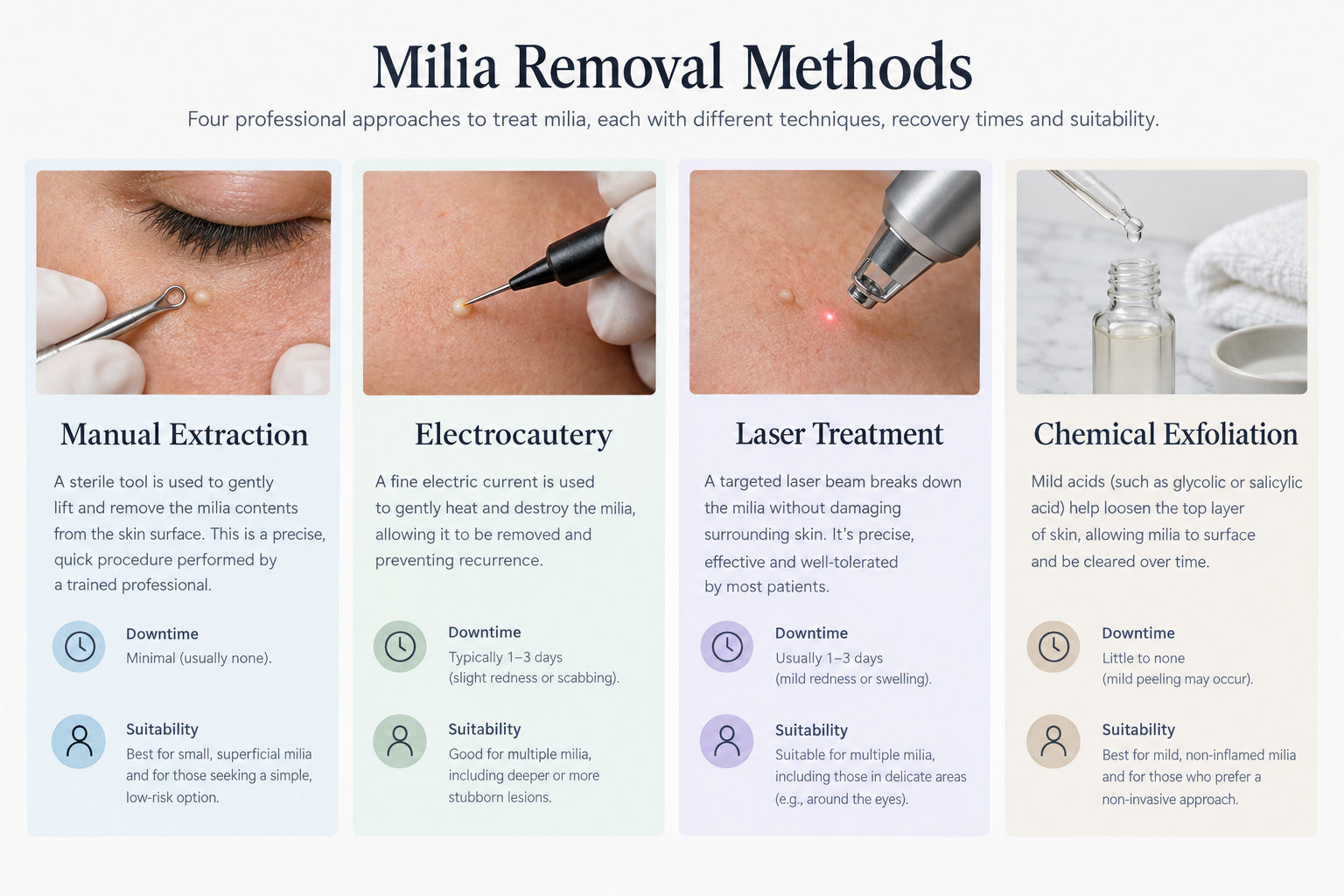
Manual Extraction
Manual extraction is the most widely used method for removing individual milia. The practitioner uses a sterile lancet or fine needle to create a tiny opening in the overlying skin, then gently expresses the keratin contents using a comedone extractor or light manual pressure. When performed by a trained professional using sterile equipment, manual extraction is precise, effective, and associated with minimal downtime. The under-eye area requires particular care due to the proximity of the eye and the fragility of the surrounding skin. Patients typically experience mild redness and slight tenderness at the treated sites for one to two days following the procedure.
Electrocautery and Electrodesiccation
Electrocautery uses a fine electrical current to precisely destroy the milia cyst. A small probe delivers controlled heat to the lesion, causing it to dry out and eventually slough off. This technique can be effective for milia that are slightly deeper or more resistant to manual extraction. The risk of post-procedural hyperpigmentation or a small mark at the treatment site is slightly higher with electrocautery than with manual extraction, particularly in patients with darker skin tones, so careful patient selection and practitioner experience are important considerations.
Laser Treatment
Ablative laser treatments, including fractional CO2 laser and erbium laser, can be used to remove milia by precisely vaporising the cyst and its contents. Laser removal may be particularly useful when multiple milia are present across a wider area, or when milia are combined with other skin concerns such as fine lines or sun damage that the patient also wishes to address. Laser treatment around the eyes requires appropriate protective eyewear and careful technique. Downtime is typically longer than with manual extraction, and the risk of temporary redness, swelling, and pigmentation changes should be discussed during consultation.
Chemical Exfoliation and Topical Retinoids
Topical treatments are not a primary removal method for established milia, but they can play a role in preventing new milia from forming and may gradually improve the appearance of superficial lesions over time. Topical retinoids, such as tretinoin, work by accelerating cell turnover, which can help prevent keratin from becoming trapped beneath the skin surface. Alpha-hydroxy acids (AHAs) such as glycolic acid and lactic acid provide chemical exfoliation that supports the shedding of dead skin cells. These ingredients must be used with caution around the eyes, as the periorbital skin is sensitive and prone to irritation. Professional chemical peels using carefully selected acids at appropriate concentrations may also be considered as part of a broader treatment plan.
Cryotherapy
Cryotherapy involves applying liquid nitrogen to freeze and destroy the milia cyst. It is less commonly used for under-eye milia than for lesions elsewhere on the face or body, primarily because the periorbital area is sensitive and the risk of pigmentation changes following freezing is a relevant consideration. Where it is used, cryotherapy is typically reserved for isolated, persistent milia that have not responded to other approaches.
What to Expect During a Milia Removal Appointment
A professional milia removal appointment typically begins with a consultation during which the practitioner examines the lesions, confirms the diagnosis, discusses the patient’s skincare history, and recommends the most appropriate removal technique. Patients should inform the practitioner of any relevant medical history, current medications, known skin sensitivities, and any previous cosmetic procedures in the area.
For manual extraction, the skin is usually cleansed and may be prepared with a mild topical antiseptic. The procedure itself is brief; individual milia can often be removed in a matter of seconds each, and a typical session treating several lesions under the eyes may take fifteen to thirty minutes in total. Discomfort is generally mild and described by most patients as a brief sharp sensation at the moment of extraction. Topical anaesthetic cream is not always necessary but may be offered for patients with lower pain tolerance or when a larger number of milia are being treated.
Immediately after treatment, the treated sites may appear slightly red and feel tender. Small scabs or crusts may form over the next day or two as the skin heals. Most patients can return to their normal activities the same day, though makeup application directly over the treated sites is usually advised against for at least twenty-four hours to reduce the risk of irritation or infection.
Recovery, Downtime and Aftercare
Recovery following professional milia removal under the eyes is generally straightforward. For manual extraction, most patients experience only minor redness and sensitivity for one to two days. For laser-based removal, downtime may extend to several days, with redness, mild swelling, and crusting that gradually resolves as the skin heals. Electrocautery typically falls between these two in terms of recovery time.
Aftercare instructions commonly include keeping the treated area clean, avoiding rubbing or touching the skin around the eyes, applying a gentle fragrance-free moisturiser, and using a broad-spectrum SPF daily to protect the healing skin from ultraviolet exposure. Sun protection is particularly important after any skin procedure in the periorbital area, as UV exposure can increase the risk of post-inflammatory pigmentation changes. Patients are generally advised to avoid active exfoliating products such as retinoids and AHAs for a short period following treatment while the skin recovers.
Risks and Potential Side Effects
Professional milia removal performed by a trained and experienced practitioner is associated with a low risk of serious complications. However, as with any skin procedure, potential side effects exist and should be discussed before treatment. These include temporary redness and tenderness at the treated sites, small scabs or crusts during healing, and a low risk of infection if aftercare instructions are not followed. Post-inflammatory hyperpigmentation — darkening of the skin at the treated site — is a recognised risk, particularly in patients with medium to darker skin tones or those with a history of pigmentation changes following skin trauma. In most cases, any pigmentation change is temporary and fades over weeks to months, but this should be factored into the decision-making process.
Scarring is uncommon when milia are removed by a skilled practitioner using appropriate technique, but the risk is not zero, particularly if the skin is manipulated too aggressively or if the patient picks at healing scabs. The proximity of the eye means that any procedure in this area requires particular care, and patients should ensure they are treated by a practitioner with relevant experience in periorbital skin treatments.
Who May Be Suitable for Professional Milia Removal
Most adults with persistent milia under the eyes who are in good general health are likely to be suitable candidates for professional removal. Suitability is assessed during a clinical consultation and may be influenced by factors including skin type, the number and depth of milia present, any history of keloid scarring, current skincare routine, and whether any active skin conditions such as eczema or dermatitis are present in the treatment area. Patients with active skin infections or open wounds near the treatment site would not be treated until the skin has healed.
Patients who are pregnant or breastfeeding should discuss this with their practitioner, as some treatment modalities and topical preparations may not be recommended during this period. Individuals taking certain medications, including blood thinners or immunosuppressants, should also disclose this information during consultation.
Preventing Milia Under the Eyes from Returning
Once milia have been professionally removed, a number of skincare adjustments may help reduce the likelihood of recurrence. Switching to lighter, non-comedogenic eye creams and avoiding heavy occlusive products around the orbital area is a practical first step. Incorporating a gentle exfoliating ingredient such as a low-concentration AHA or a retinoid into the skincare routine — used carefully and not directly on the eyelid skin — can support regular cell turnover and reduce keratin accumulation. Consistent daily use of a broad-spectrum sunscreen helps protect the periorbital skin from UV-related changes that may contribute to milia formation over time.
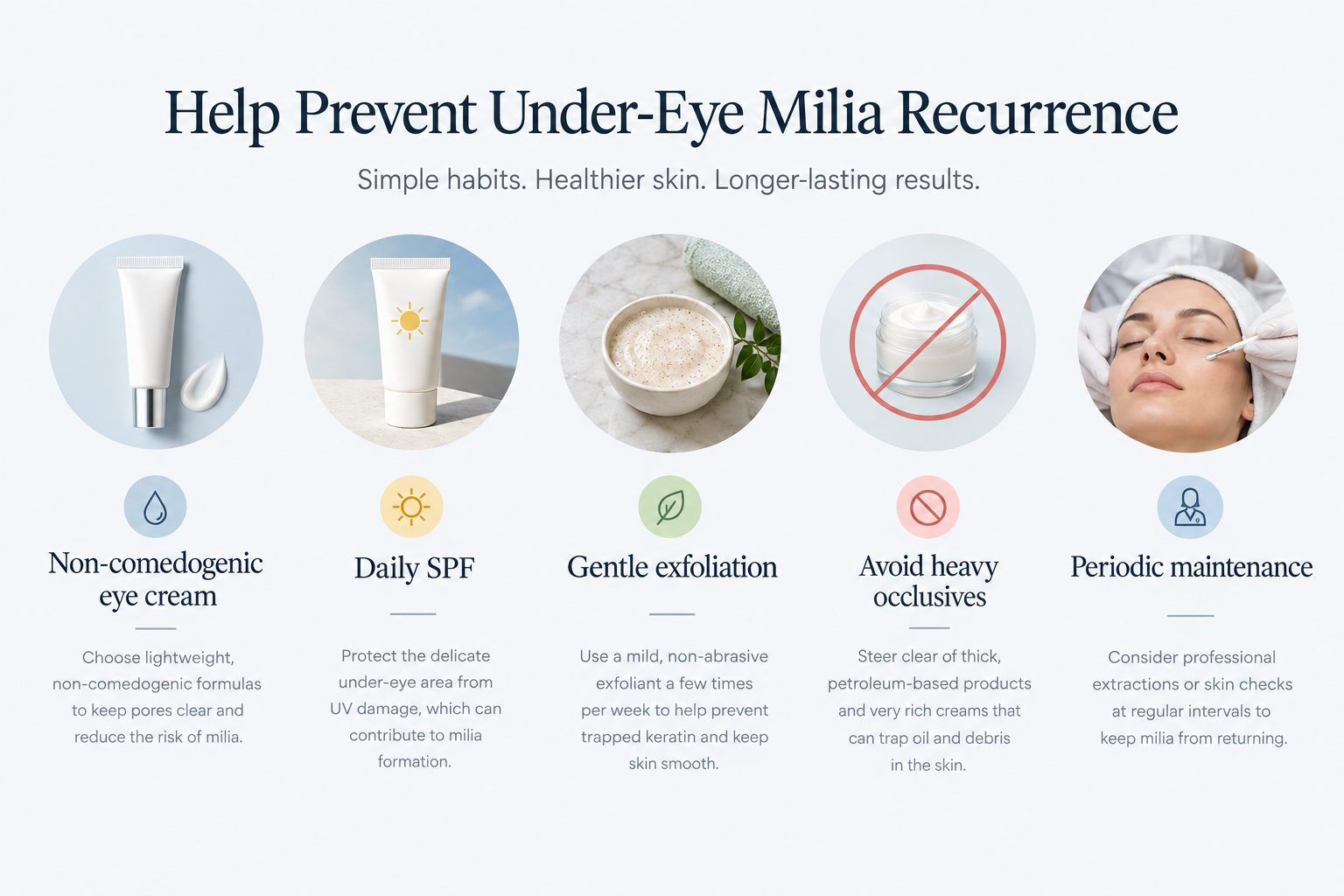
It is worth noting that some individuals are simply more prone to milia than others, and even with optimal skincare habits, occasional new milia may develop. In these cases, periodic professional maintenance treatments may be a practical long-term approach rather than a single definitive solution.
Alternatives to Professional Milia Removal
For patients who prefer a non-procedural approach, or who have very superficial milia that may respond to skincare changes, a trial of topical retinoids or AHA-based products under professional guidance may be a reasonable first step. Results from topical treatments alone are slower and less predictable than professional extraction, and they are unlikely to resolve established, deeper milia without some form of physical intervention.
Some patients explore microdermabrasion or superficial chemical peels as adjunctive treatments to support skin cell turnover and reduce the tendency to form new milia. These approaches are generally more useful as preventive measures than as primary removal methods for existing lesions. A qualified practitioner can advise on whether any of these alternatives are appropriate based on an individual assessment.
Frequently Asked Questions
Can I remove milia under my eyes at home?
Attempting to remove milia at home by squeezing or using a needle is not recommended. The under-eye skin is very thin and sensitive, and without sterile technique and proper training, home removal carries a real risk of scarring, infection, and pigmentation changes. Professional removal by a trained practitioner is the safer and more effective option.
How many sessions will I need to remove under-eye milia?
Many patients find that a single professional session is sufficient to remove existing milia. However, if new milia develop over time — which can happen in individuals who are prone to them — further sessions may be needed. Your practitioner can advise on a maintenance plan based on your skin’s behaviour after the initial treatment.
Will milia removal leave a scar under my eyes?
Scarring is uncommon when milia are removed by an experienced practitioner using appropriate technique. The risk is low but not zero, and it is slightly higher if the skin is treated too aggressively or if post-procedure scabs are picked. Choosing a practitioner with specific experience in periorbital skin treatments helps minimise this risk.
Is milia removal painful?
Most patients describe the discomfort of manual milia extraction as mild — a brief sharp or stinging sensation at the moment of treatment. The under-eye area can be more sensitive than other parts of the face, and topical anaesthetic cream may be offered if needed. Laser-based removal may involve slightly more discomfort, depending on the device and settings used.
How long does it take for skin to heal after milia removal?
After manual extraction, most patients see the treated sites settle within one to two days. Small scabs may form and typically resolve within a week. Laser-based removal may involve a longer healing period of several days to one week, with redness and crusting that gradually improves. Your practitioner will provide specific aftercare guidance based on the method used.
Can heavy eye creams cause milia?
Heavy or occlusive eye creams are frequently associated with milia formation in the periorbital area. Products containing petrolatum, mineral oil, or certain waxes may impede normal skin cell shedding in this region. Switching to a lighter, non-comedogenic formulation is often recommended as part of a prevention strategy after milia removal.
Are milia under the eyes the same as whiteheads?
No. Although both appear as small white bumps, milia and whiteheads are structurally different. Whiteheads are blocked pores containing sebum and can be expressed through the pore opening. Milia are keratin-filled cysts with no pore opening, which is why they cannot be squeezed out and require a different removal approach.
Deciding Whether Professional Milia Removal Is Right for You
Milia under the eyes are a common, benign skin concern that rarely resolves on its own in adults. Professional removal is safe, effective, and associated with minimal downtime when performed by a trained and experienced practitioner. Manual extraction remains the most widely used and practical approach for most patients, while laser treatment and electrocautery offer alternatives for more resistant or numerous lesions.
The decision to seek treatment is a personal one. Because milia are harmless, there is no medical urgency to remove them, and some patients choose to leave them untreated. For those who find them cosmetically bothersome, professional removal offers a reliable solution with a low risk of complications when appropriate technique and aftercare are followed. Adjusting skincare habits after treatment — particularly avoiding heavy occlusive products and incorporating gentle exfoliation — can help reduce the chance of new milia forming.
If you are considering milia removal under the eyes, a consultation with a qualified dermatologist or trained aesthetic practitioner is the appropriate starting point. A clinical assessment will confirm the diagnosis, rule out other conditions that can mimic milia, and allow a personalised treatment recommendation based on your skin type, the characteristics of the lesions, and your overall skincare goals.


