
Microneedling Aftercare: Step-by-Step Guide to Recovery and Results
Microneedling creates controlled micro-injuries in the skin to stimulate collagen production and improve skin texture, tone, and firmness. What happens in the hours and days after your treatment has a direct influence on how well your skin heals and how visible your results become. Following the right aftercare steps reduces the risk of complications, minimises unnecessary downtime, and helps your skin make the most of the healing process that microneedling sets in motion.
Key Takeaways
- The first 24 to 48 hours after microneedling are the most critical period for skin recovery; keeping the skin clean, calm, and protected during this window matters most.
- Certain skincare ingredients, including retinoids, exfoliating acids, and vitamin C serums, should be avoided for several days post-treatment to prevent irritation.
- Sun protection is essential throughout the recovery period, as freshly treated skin is significantly more vulnerable to UV damage and post-inflammatory pigmentation.
- Most people experience redness, mild swelling, and skin sensitivity for one to three days; more intense treatments may involve a longer recovery period.
- Consistent aftercare across multiple sessions supports cumulative collagen remodelling and helps maintain results over time.
What Happens to Your Skin After Microneedling
During a microneedling treatment, a device fitted with fine needles creates thousands of microscopic channels in the skin’s surface. This controlled injury triggers the skin’s natural wound-healing response, which involves three overlapping phases: inflammation, proliferation, and remodelling. The inflammatory phase begins immediately and typically lasts 24 to 72 hours. During this phase, the skin recruits growth factors and signalling proteins that initiate repair. The proliferation phase follows, during which new collagen and elastin fibres begin to form. The remodelling phase, which is responsible for the visible improvements in skin texture and firmness, can continue for several weeks to months after treatment.
Understanding this biological process helps explain why aftercare decisions matter. The micro-channels created during treatment temporarily compromise the skin’s barrier function, making it more permeable and more reactive than usual. Applying the wrong products, exposing the skin to UV radiation, or introducing bacteria during this window can disrupt healing, cause irritation, or increase the risk of post-inflammatory hyperpigmentation, particularly in people with medium to deeper skin tones.
Immediate Aftercare: The First 24 Hours
The first 24 hours after microneedling require the most careful attention. Immediately after the procedure, the skin will typically appear red, feel warm, and may be slightly swollen, similar in appearance to moderate sunburn. Some pinpoint bleeding or a mild seeping of fluid is normal, particularly after deeper treatments. Your practitioner will usually apply a calming serum or a hyaluronic acid-based product immediately after the session to begin supporting the skin barrier.
Cleansing
Gentle cleansing is important to keep the treated area free from bacteria without disrupting the healing process. Use a mild, fragrance-free, non-foaming cleanser and lukewarm water. Avoid scrubbing or using a flannel or exfoliating cloth. Pat the skin dry with a clean, soft towel rather than rubbing. Most practitioners recommend waiting at least four to six hours before washing the face after treatment, though specific guidance may vary depending on the depth of treatment and the products applied during the session.
Moisturising
Keeping the skin hydrated supports barrier recovery. A simple, unfragranced moisturiser or a hyaluronic acid serum is appropriate during the first 24 hours. Hyaluronic acid is well tolerated by post-treatment skin because it is a naturally occurring molecule in the body and does not typically cause irritation. Avoid any moisturiser containing active ingredients such as retinol, glycolic acid, salicylic acid, or vitamin C during this period, as these can cause significant stinging and may interfere with healing.
Sun Protection
Sun exposure should be avoided entirely on the day of treatment. If you need to go outdoors, apply a broad-spectrum mineral sunscreen with an SPF of at least 30 once the skin has been gently cleansed and moisturised. Mineral sunscreens containing zinc oxide or titanium dioxide are generally better tolerated than chemical sunscreens in the immediate post-treatment period, as they sit on the surface of the skin rather than being absorbed.
Days Two and Three: Managing Redness and Sensitivity
Redness and skin sensitivity typically peak within the first 24 hours and begin to subside over the following one to two days. By day two or three, many people notice that the skin feels tighter and may appear slightly flaky or dry as the surface begins to shed. This is a normal part of the healing process and should not be confused with a reaction or complication.
Continue using a gentle cleanser and a simple, hydrating moisturiser. Avoid any temptation to exfoliate, pick, or peel flaking skin, as this can disrupt the healing tissue beneath and increase the risk of scarring or uneven pigmentation. Applying a cool, damp compress can help relieve discomfort if the skin feels particularly warm or tight, but avoid applying ice directly to the skin.
Makeup should generally be avoided for at least 24 to 48 hours after microneedling, and ideally for the full 72-hour period if possible. Applying makeup too soon introduces bacteria and potential irritants into open micro-channels. When you do return to makeup, choose mineral-based, non-comedogenic formulas and apply them with clean brushes or sponges.
What to Avoid After Microneedling
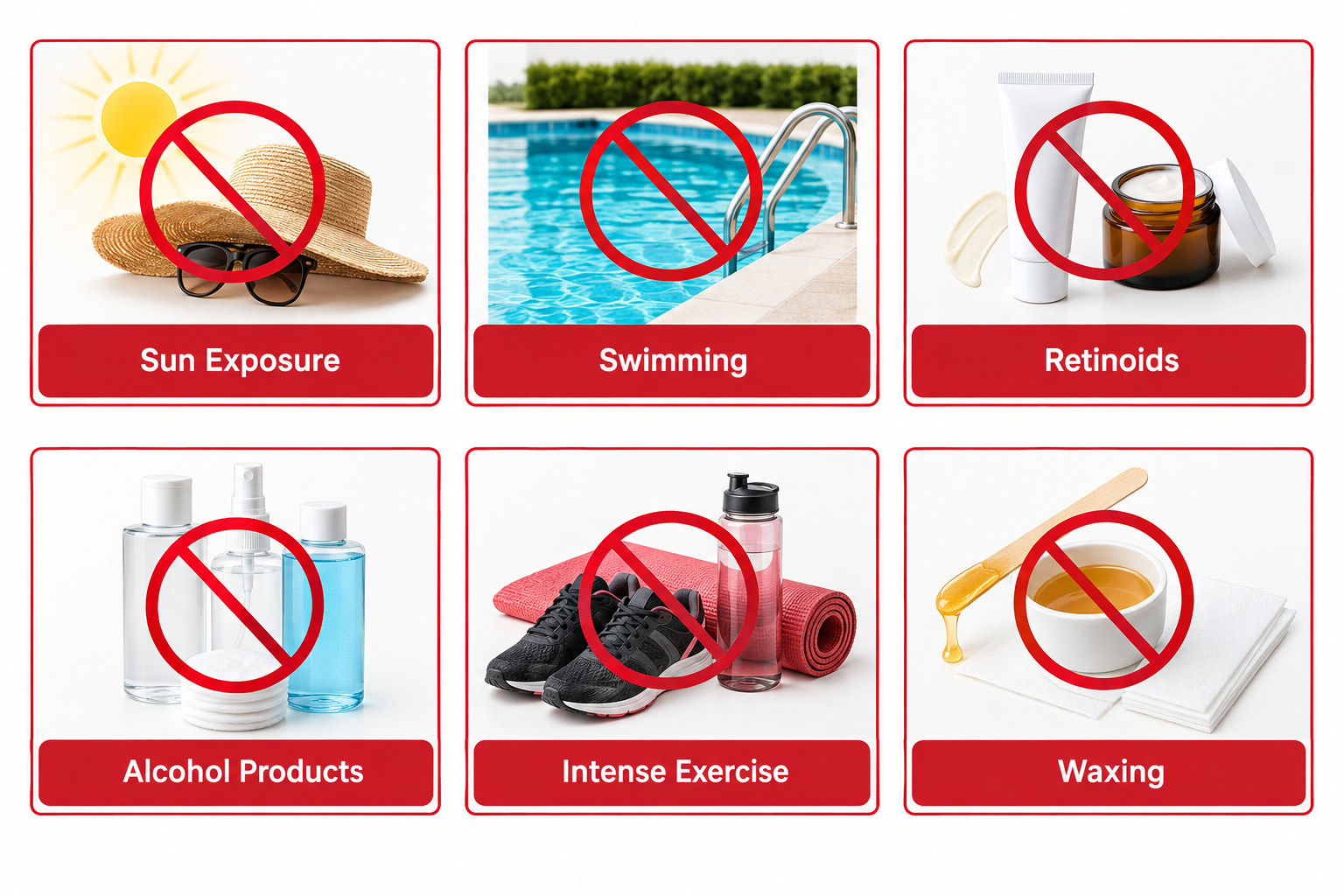
Knowing what to avoid is just as important as knowing what to apply. Several common skincare habits and lifestyle factors can interfere with healing or increase the risk of adverse effects during the recovery period.
Skincare Ingredients to Avoid
- Retinoids and retinol: These vitamin A derivatives increase cell turnover and can cause significant irritation on post-treatment skin. Most practitioners recommend avoiding retinoids for at least five to seven days after microneedling.
- Exfoliating acids: Alpha hydroxy acids such as glycolic acid and lactic acid, and beta hydroxy acids such as salicylic acid, should be avoided for at least five days. These ingredients can disrupt the skin barrier and cause stinging or chemical irritation when applied to compromised skin.
- Vitamin C serums: While vitamin C is a beneficial antioxidant in a stable skincare routine, ascorbic acid formulations can cause stinging and irritation on freshly treated skin. Most practitioners advise waiting at least three to five days before reintroducing vitamin C.
- Benzoyl peroxide: Commonly used in acne management, benzoyl peroxide is too drying and potentially irritating for post-microneedling skin.
- Fragranced products: Fragrance is a common cause of contact irritation and should be avoided in all skincare products used during the recovery period.
- Alcohol-based toners or astringents: These strip the skin barrier and should be avoided until the skin has fully recovered.
Activities and Habits to Avoid
- Intense exercise: Sweating heavily during the first 24 to 48 hours can introduce bacteria into open micro-channels and may worsen inflammation. Avoid vigorous exercise, saunas, steam rooms, and hot baths during this period.
- Swimming: Chlorinated pools and open water should be avoided for at least 48 to 72 hours, as both can introduce irritants or bacteria to healing skin.
- Direct sun exposure: UV radiation is one of the most significant risks during the post-microneedling period. Freshly treated skin is more susceptible to UV-induced damage and post-inflammatory hyperpigmentation. Avoid prolonged sun exposure for at least one week and use broad-spectrum SPF daily throughout the recovery period.
- Touching the face unnecessarily: Hands carry bacteria that can cause infection in micro-channels. Avoid touching the treated area unless you are cleansing or applying products with clean hands.
- Other skin treatments: Avoid chemical peels, laser treatments, IPL, waxing, or any other active skin treatment for at least two weeks after microneedling, unless specifically advised otherwise by your practitioner.
Microneedling Aftercare Timeline
Recovery from microneedling is generally straightforward, but the timeline can vary depending on the depth of the needles used, the number of passes performed, and individual skin sensitivity. The following is a general guide; your practitioner may provide more specific instructions based on your treatment.
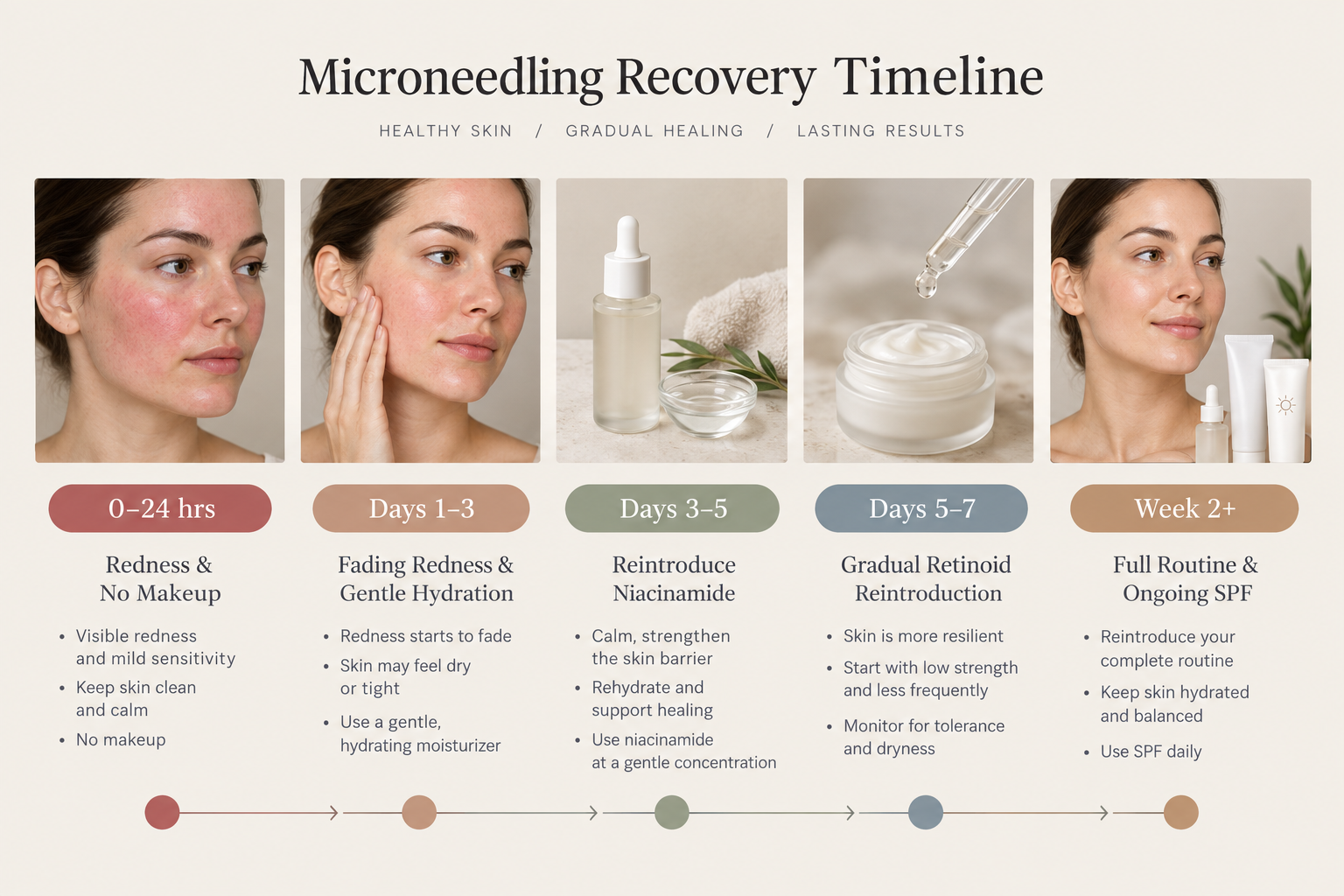
Hours 0 to 24
Expect redness, warmth, and mild swelling. The skin may feel tight and sensitive. Use only a gentle cleanser, a simple hydrating moisturiser, and mineral SPF if going outdoors. Avoid makeup, active skincare ingredients, exercise, and sun exposure.
Days 1 to 3
Redness typically begins to fade. The skin may feel dry or slightly rough as surface shedding begins. Continue with gentle cleansing and hydration. Avoid exfoliants, retinoids, and vitamin C. Mineral SPF remains essential. Makeup can usually be reintroduced after 48 hours if the skin feels settled, though waiting 72 hours is preferable.
Days 3 to 5
Most visible redness and sensitivity should have resolved for standard treatments. The skin may still feel slightly dry or look dull as the surface continues to shed. You can begin reintroducing gentle antioxidant serums and niacinamide if tolerated. Continue daily SPF use.
Days 5 to 7
For most people, the skin will feel largely normal by this point. Retinoids and exfoliating acids can typically be reintroduced gradually, starting with lower concentrations and less frequent application. Confirm the appropriate timing with your practitioner, particularly if you had a deeper or more intensive treatment.
Week 2 and Beyond
The skin’s surface should be fully recovered, though the deeper collagen remodelling process continues for weeks to months. Maintaining a consistent skincare routine that includes daily SPF, hydration, and appropriate active ingredients supports the ongoing results of microneedling. If you are having a course of treatments, your practitioner will advise on the recommended interval between sessions, which is typically four to six weeks.
Recommended Products During Recovery
Choosing the right products during the recovery period does not need to be complicated. The goal is to support the skin barrier, maintain hydration, and protect against environmental damage without introducing unnecessary irritants.
A fragrance-free, low-pH gentle cleanser is appropriate throughout the recovery period. For moisturising, look for formulations containing hyaluronic acid, ceramides, or glycerin, all of which support barrier repair without causing irritation. Centella asiatica extract and panthenol (provitamin B5) are ingredients with a reasonable evidence base for supporting skin healing and reducing inflammation, and are generally well tolerated after microneedling. Niacinamide, a form of vitamin B3, can typically be reintroduced from around day three to five and may help with redness and barrier support.
Avoid multi-ingredient serums with long ingredient lists during the first week, as it becomes difficult to identify the cause if a reaction occurs. Keeping the routine simple reduces this risk.
Managing Common Post-Treatment Concerns
Prolonged Redness
Some degree of redness is expected and normal for the first one to three days. If redness persists beyond five days, worsens after initially improving, or is accompanied by increasing pain, swelling, or discharge, contact your practitioner. These signs may indicate an infection or an unexpected skin reaction that requires assessment.
Breakouts After Microneedling
Some people experience small pimples or pustules in the days following microneedling. This can occur because the micro-channels temporarily allow bacteria or comedogenic products to enter the skin more easily. Using only non-comedogenic, fragrance-free products and avoiding touching the face reduces this risk. If breakouts are significant or do not resolve within a week, seek advice from your practitioner.
Dryness and Flaking
Mild flaking is a normal part of the skin’s surface renewal process after microneedling. Keeping the skin well hydrated with a suitable moisturiser helps manage this. Do not attempt to accelerate the process by exfoliating or picking at the skin, as this can cause micro-tears and increase the risk of post-inflammatory pigmentation.
Post-Inflammatory Hyperpigmentation
Post-inflammatory hyperpigmentation (PIH) refers to darkening of the skin that can occur following inflammation or injury. People with medium to deeper skin tones are at higher risk of developing PIH after microneedling. Consistent and diligent sun protection throughout the recovery period is the most important preventive measure. If PIH develops, discuss appropriate management options with your practitioner, which may include topical brightening agents or a modified treatment approach for future sessions.
How Aftercare Supports Your Results
Microneedling results develop gradually as collagen remodelling progresses. Most people begin to notice improvements in skin texture and tone within two to four weeks of their first treatment, with more significant changes becoming visible after a course of sessions. The quality of aftercare during each recovery period directly influences how effectively the skin heals and how well the collagen remodelling process proceeds.
Protecting the skin from UV damage during recovery is particularly important because UV radiation can degrade newly forming collagen and increase the risk of pigmentation changes. Maintaining adequate hydration supports the skin’s barrier function and creates a more favourable environment for cellular repair. Avoiding unnecessary irritants during the healing window reduces the likelihood of inflammation that could interfere with the remodelling process.
For people undergoing a course of microneedling treatments, consistent aftercare between sessions also helps maintain the skin in good condition, which may improve tolerance and outcomes for subsequent treatments.
Frequently Asked Questions
How long does redness last after microneedling?
Redness typically lasts between 24 and 72 hours for standard microneedling treatments. Deeper or more intensive treatments may result in redness that persists for up to five days. Individual skin sensitivity also plays a role. If redness worsens or persists beyond five days, consult your practitioner.
Can I wear makeup after microneedling?
Most practitioners advise avoiding makeup for at least 24 to 48 hours after microneedling, with 72 hours being preferable. When you do return to makeup, choose mineral-based, non-comedogenic products and apply them with clean tools to minimise the risk of introducing bacteria or irritants to healing skin.
When can I use retinol again after microneedling?
Retinol and other retinoids should generally be avoided for at least five to seven days after microneedling. Reintroduce them gradually, starting with a lower concentration and less frequent application, and only once the skin feels fully settled. Your practitioner can advise on the appropriate timing based on your specific treatment.
Is it normal for skin to peel after microneedling?
Mild flaking or peeling is a normal part of the skin’s surface renewal process following microneedling and typically occurs between days two and five. It should not be confused with a chemical peel-type reaction. Keep the skin hydrated and avoid picking or exfoliating the flaking areas.
Can I exercise after microneedling?
Vigorous exercise, including activities that cause heavy sweating, should be avoided for at least 24 to 48 hours after microneedling. Sweat can introduce bacteria into the micro-channels and may worsen inflammation. Light walking is generally acceptable, but saunas, steam rooms, and hot baths should also be avoided during this period.
How soon can I have another microneedling session?
The recommended interval between microneedling sessions is typically four to six weeks, allowing sufficient time for the skin to heal and for the collagen remodelling process to progress. Your practitioner will advise on the appropriate treatment schedule based on your skin concerns and the depth of treatment used.
What should I put on my face immediately after microneedling?
Immediately after microneedling, your practitioner will typically apply a calming serum, hyaluronic acid product, or a growth factor serum to the treated area. At home, use only a gentle fragrance-free cleanser, a simple hydrating moisturiser, and mineral SPF if going outdoors. Avoid all active skincare ingredients for the first 24 to 48 hours.
Getting the Most from Your Microneedling Treatment
Microneedling aftercare is not a passive process. The steps you take in the days following each session play a meaningful role in how your skin heals, how comfortable the recovery period is, and how clearly the results of treatment become visible over time. The core principles are straightforward: keep the skin clean and hydrated, protect it from UV exposure, avoid known irritants during the healing window, and allow the natural repair process to proceed without interference.
If you are unsure about a specific product or activity during your recovery, the safest approach is to check with your practitioner before proceeding. Individual skin types, treatment depths, and concurrent skincare routines all influence what is appropriate for a given person. A qualified practitioner can provide personalised aftercare guidance tailored to your treatment and skin concerns, and can assess any unexpected reactions promptly. Consistent, informed aftercare across a course of treatments gives microneedling the best opportunity to deliver meaningful, lasting improvements to skin quality.


