
Lymphatic Drainage Massage: How Manual Drainage Works
Lymphatic drainage massage is a specialised manual therapy designed to encourage the movement of lymph fluid through the body’s lymphatic system. Unlike conventional massage, which primarily targets muscles and soft tissue, manual lymphatic drainage uses light, rhythmic strokes directed along specific pathways to support the body’s natural fluid regulation. Understanding how this technique works — and what it can and cannot realistically achieve — helps patients make informed decisions before booking a session.
Key Takeaways
- Manual lymphatic drainage uses gentle, structured hand movements to stimulate lymph flow rather than deep tissue pressure.
- It is most commonly used to manage lymphoedema, reduce post-surgical swelling, and support recovery after certain aesthetic procedures.
- Evidence for its clinical benefits is strongest in lymphoedema management; evidence for cosmetic or wellness applications is more limited.
- The technique is generally well tolerated but is not appropriate for everyone — certain medical conditions are contraindications.
- Results depend on the underlying cause of swelling or concern, the number of sessions, and individual response.
What Is the Lymphatic System?
The lymphatic system is a network of vessels, nodes, and organs that runs throughout the body alongside the circulatory system. Its primary roles include transporting lymph fluid — a clear, protein-rich liquid — back into the bloodstream, filtering waste products and cellular debris, and supporting immune function. Unlike the cardiovascular system, the lymphatic system has no central pump equivalent to the heart. Instead, lymph moves through the vessels largely as a result of surrounding muscle contractions, breathing movements, and the natural pulsation of adjacent tissues.
When the lymphatic system functions normally, excess interstitial fluid — the fluid that surrounds cells in tissues — is collected by lymph capillaries, filtered through lymph nodes, and eventually returned to the venous circulation near the collarbone. If this drainage process is disrupted, whether by surgery, infection, inflammation, or structural damage to lymph vessels, fluid can accumulate in the tissues, causing swelling known as oedema or, in more persistent cases, lymphoedema.
What Is Manual Lymphatic Drainage?
Manual lymphatic drainage (MLD) is a therapeutic massage technique developed in the 1930s by Danish physiotherapists Emil and Estrid Vodder. The Vodder method remains one of the most widely taught and referenced approaches, though other systems — including the Földi, Casley-Smith, and Leduc methods — have since been developed and are used in clinical practice. All share the same underlying principle: applying light, rhythmic pressure in specific directions to stimulate the contraction of lymph vessels and encourage fluid movement toward functioning lymph nodes.
The pressure used in manual lymphatic drainage is notably lighter than in conventional massage. Practitioners typically apply only enough pressure to gently stretch the skin, since the superficial lymph capillaries lie just beneath the skin’s surface and can be compressed or damaged by excessive force. Sessions usually follow a structured sequence, beginning at the lymph node clusters closest to the trunk — such as those in the neck, axilla (armpit), or groin — before working outward toward the affected area. This approach is intended to clear the central drainage pathways before encouraging fluid to move from the periphery inward.
How Manual Lymphatic Drainage Works: The Mechanism
Lymph vessels contain smooth muscle in their walls and are divided into segments called lymphangions, each separated by one-way valves. These segments contract rhythmically in a process called lymphangiomotoricity, propelling lymph fluid forward through the vessel. Manual lymphatic drainage is thought to work by mechanically stimulating this intrinsic pumping action, increasing the frequency and amplitude of lymphangion contractions and thereby accelerating the rate at which lymph moves through the system.
The light skin-stretching strokes used in MLD are applied in the direction of lymph flow — generally toward the nearest functioning lymph node group. Each stroke is followed by a release phase, allowing the skin and underlying tissue to return to their resting position. This stretch-and-release rhythm is believed to mimic and amplify the natural mechanical stimuli that prompt lymph vessel contraction. Research using lymphoscintigraphy — a nuclear medicine imaging technique that tracks the movement of a radioactive tracer through lymph vessels — has provided visual evidence that MLD can increase lymph transport velocity in treated limbs, though the magnitude of this effect varies between individuals and studies.
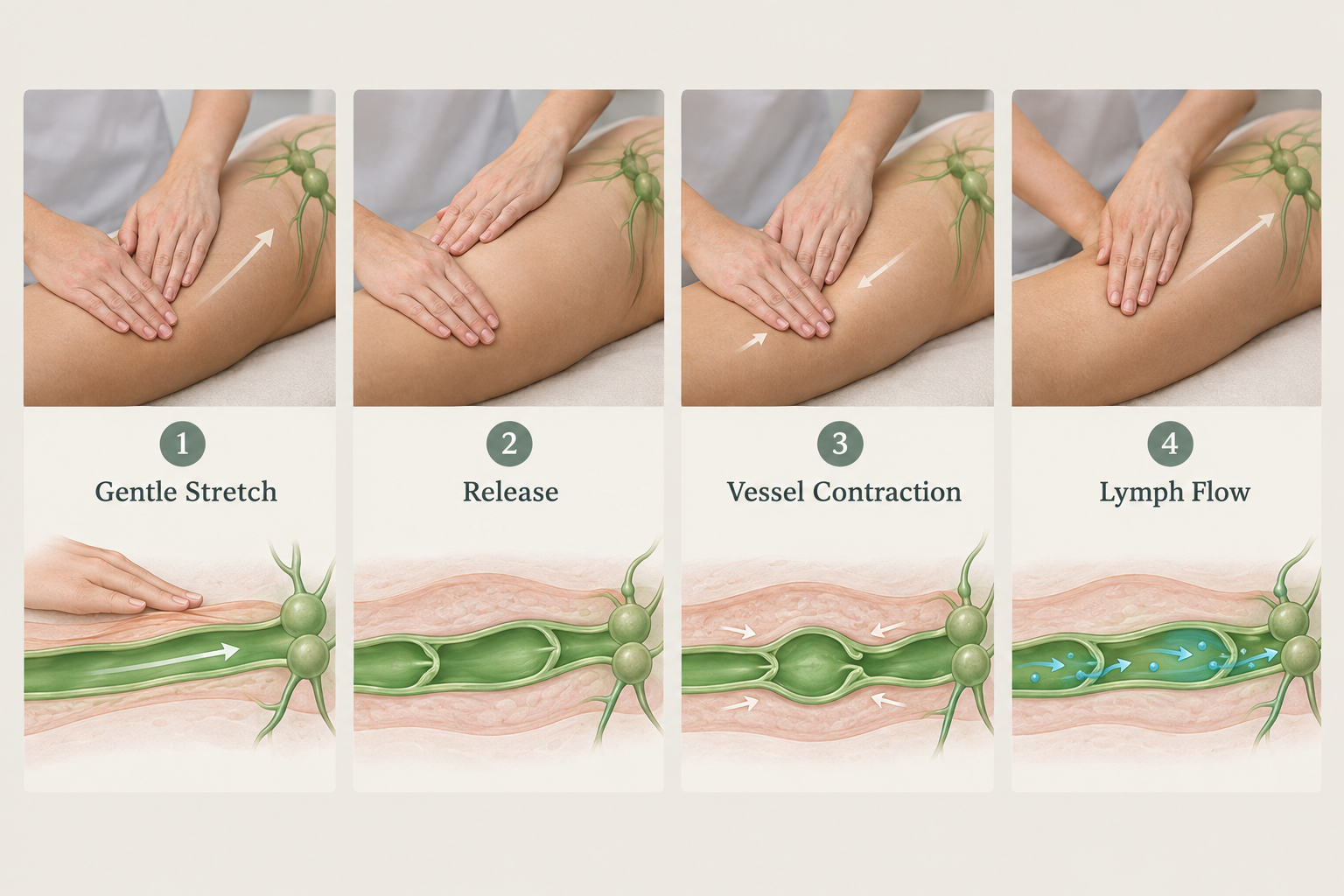
In addition to its direct mechanical effect on lymph vessels, manual lymphatic drainage may also influence the autonomic nervous system, promoting a parasympathetic response that reduces tissue tension and may contribute to the relaxation many patients report during and after treatment. Some researchers have also proposed that MLD may help reduce local inflammation by facilitating the removal of inflammatory mediators from tissues, though this mechanism is less well established in the clinical literature.
What Conditions May Benefit from Lymphatic Drainage Massage?
Lymphoedema
Lymphoedema — chronic swelling caused by impaired lymphatic drainage — is the condition for which manual lymphatic drainage has the strongest clinical evidence. Primary lymphoedema arises from developmental abnormalities in the lymphatic system, while secondary lymphoedema most commonly results from damage to lymph nodes or vessels following cancer treatment, particularly surgery or radiotherapy involving the axillary or inguinal lymph nodes. MLD is a core component of Complete Decongestive Therapy (CDT), the internationally recognised treatment approach for lymphoedema, which also includes compression bandaging, specific exercises, and skin care. Clinical guidelines from organisations including the British Lymphology Society and the International Society of Lymphology support the use of MLD as part of CDT for appropriate patients.
Post-Surgical Swelling and Recovery
Swelling is a normal response to surgical trauma, as tissue injury triggers an inflammatory reaction and disrupts local fluid balance. Manual lymphatic drainage is frequently used in the weeks following surgery to help reduce post-operative oedema and support tissue healing. It is particularly common after procedures such as liposuction, abdominoplasty (tummy tuck), breast surgery, and joint replacement. Some surgeons and physiotherapists recommend MLD as part of a structured post-operative recovery plan, though the evidence base for its effectiveness in this context is less robust than for lymphoedema management, and protocols vary considerably between practitioners and settings.
Aesthetic and Wellness Applications
Lymphatic drainage massage has gained considerable popularity as a wellness and aesthetic treatment, with claims ranging from reduced facial puffiness and improved skin tone to detoxification and enhanced immune function. It is offered in many spas and aesthetic clinics as a standalone treatment or as an add-on following body contouring procedures. It is important to approach these applications with appropriate caution: while many patients report subjective improvements in how they feel and look after treatment, the clinical evidence supporting lymphatic drainage massage as a cosmetic or general wellness intervention is limited and largely based on observational data, case reports, and patient-reported outcomes rather than robust controlled trials. Claims about detoxification in particular are not well supported by current evidence, as the body’s primary detoxification organs — the liver and kidneys — operate independently of lymphatic massage.
Chronic Venous Insufficiency and Related Conditions
Some practitioners use MLD as a supportive therapy for conditions involving impaired venous return, such as chronic venous insufficiency, where fluid can accumulate in the lower limbs. Evidence in this area is limited, and MLD is generally considered a complementary rather than primary treatment. Any patient with significant venous disease should be assessed by a vascular specialist before undertaking lymphatic drainage massage.
What Happens During a Lymphatic Drainage Massage Session?
A qualified practitioner will typically begin with a brief consultation to understand the patient’s medical history, the reason for seeking treatment, and any relevant contraindications. The patient usually lies on a treatment table, and the session may be performed over light clothing or directly on the skin, depending on the area being treated and the practitioner’s approach.
The strokes used in manual lymphatic drainage are slow, gentle, and repetitive. They feel quite different from conventional deep tissue or Swedish massage — there is no kneading, friction, or significant pressure. Many patients describe the sensation as soothing or even soporific. A full-body session typically lasts between 60 and 90 minutes, though targeted sessions focusing on a specific area may be shorter. The practitioner will work systematically, usually starting at the neck or trunk to open the central drainage pathways before addressing the area of primary concern.
For post-surgical patients or those with lymphoedema, MLD is often combined with other elements of a broader treatment programme, such as compression garments or bandaging applied after the session to maintain the fluid reduction achieved during treatment.
How Many Sessions May Be Needed?
The number of sessions required depends significantly on the underlying reason for treatment. Patients with lymphoedema typically undergo an intensive phase of daily or near-daily MLD sessions — sometimes for two to four weeks — followed by a maintenance phase with less frequent treatment. Post-surgical patients may benefit from a course of several sessions in the weeks immediately following their procedure, with frequency tapering as swelling resolves. For general wellness or aesthetic purposes, there is no established evidence-based protocol; practitioners may recommend a course of sessions followed by periodic maintenance, but individual response varies considerably.
It is worth noting that the effects of a single lymphatic drainage massage session on fluid balance are temporary. Sustained improvement in conditions such as lymphoedema requires ongoing management, including compression therapy and lifestyle measures, rather than massage alone.
Potential Benefits of Manual Lymphatic Drainage
- Reduction in swelling: MLD may help reduce oedema in conditions where lymphatic drainage is impaired, particularly lymphoedema and post-surgical swelling.
- Improved comfort: Reducing tissue fluid accumulation can relieve the sensation of heaviness, tightness, or discomfort associated with swelling.
- Support for wound healing: By reducing local oedema and potentially facilitating the removal of inflammatory mediators, MLD may support tissue repair after surgery or injury, though evidence is still developing.
- Relaxation: The gentle, rhythmic nature of the technique promotes a parasympathetic response, which many patients find calming and restorative.
- Complementary role in CDT: As part of Complete Decongestive Therapy, MLD has a well-established role in the clinical management of lymphoedema.
Limitations and Realistic Expectations
Manual lymphatic drainage is not a cure for lymphoedema or any other condition involving structural damage to the lymphatic system. In lymphoedema, MLD manages symptoms and helps control swelling, but the underlying impairment in lymphatic function persists. Patients with lymphoedema typically require lifelong management, and discontinuing treatment — including compression — often leads to a return of swelling.
For post-surgical swelling, MLD may accelerate the resolution of oedema, but normal post-operative swelling will generally resolve over time regardless of treatment. The degree to which MLD meaningfully shortens recovery compared with standard care alone is difficult to quantify from current evidence, and individual responses vary.
Claims that lymphatic drainage massage can produce significant fat reduction, permanent skin tightening, or systemic detoxification are not supported by robust clinical evidence. Patients seeking these outcomes should discuss realistic expectations with a qualified practitioner and consider whether other treatments may be more appropriate for their specific goals.
Risks, Side Effects, and Contraindications
Manual lymphatic drainage is generally considered a low-risk therapy when performed by a trained practitioner on an appropriate patient. However, it is not without potential side effects or contraindications.
Some patients experience mild fatigue or a temporary increase in the frequency of urination after treatment, which is thought to reflect the increased fluid being returned to the circulation and subsequently filtered by the kidneys. Temporary mild soreness or skin sensitivity at the treatment site is occasionally reported, though this is less common than with deeper massage techniques.
More significant concerns arise when MLD is performed on patients for whom it is contraindicated. Conditions that may contraindicate or require caution with lymphatic drainage massage include:
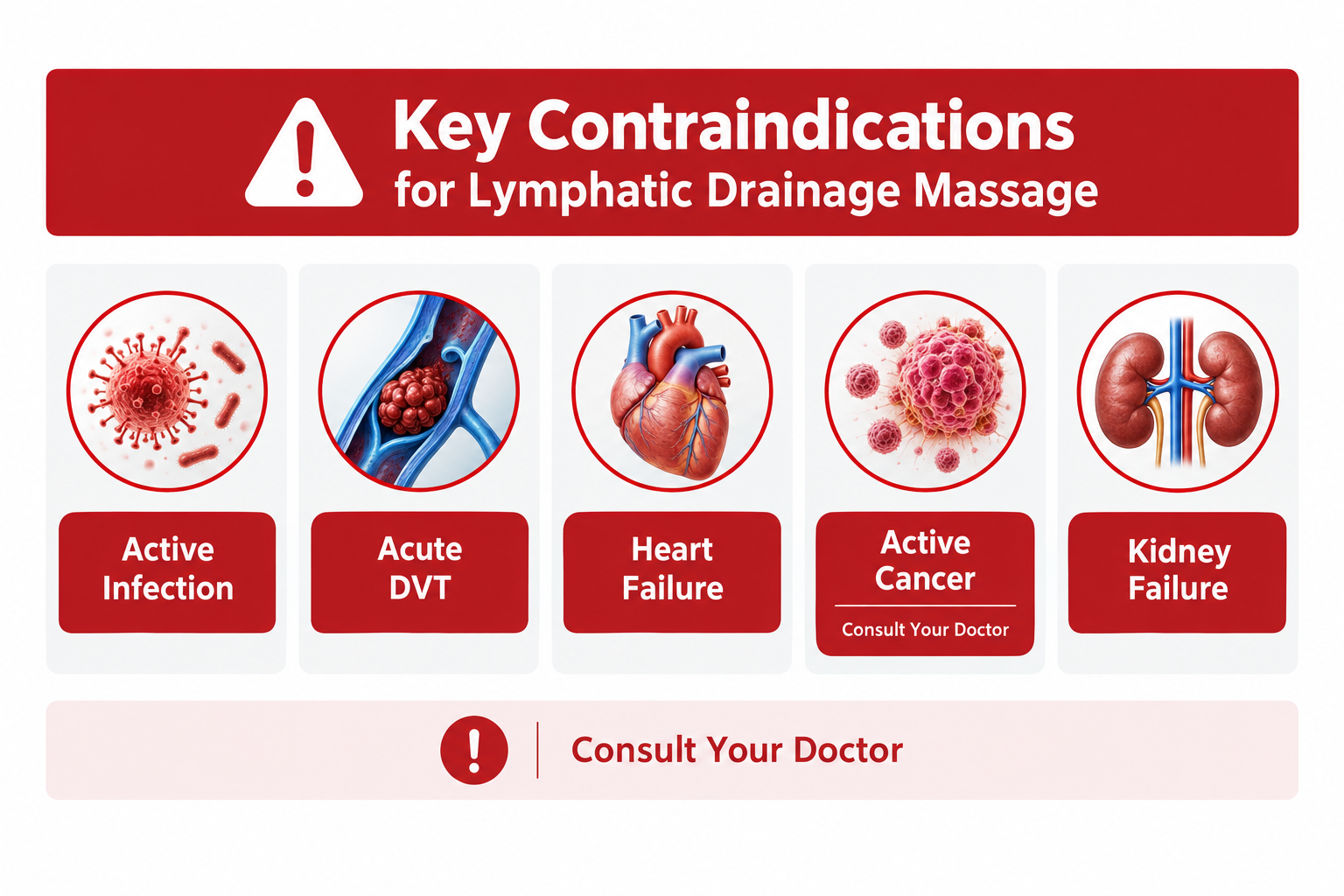
- Active infection or cellulitis: MLD should not be performed over areas of active skin infection, as it may spread bacteria through the lymphatic system.
- Active cancer: The use of MLD in patients with active malignancy is a complex clinical decision. While MLD is used in cancer-related lymphoedema management, it should only be undertaken under appropriate medical supervision in this context.
- Acute deep vein thrombosis (DVT): MLD is contraindicated in the presence of an acute DVT due to the risk of dislodging a clot.
- Congestive heart failure: Increasing the volume of fluid returned to the circulation may place additional strain on a compromised heart.
- Acute kidney failure: The kidneys may be unable to process the increased fluid load.
- Untreated thyroid conditions: Caution is advised, particularly in the neck region.
- Pregnancy: MLD during pregnancy should only be undertaken with appropriate medical guidance.
This list is not exhaustive. A thorough medical history and, where appropriate, consultation with the patient’s GP or specialist is important before beginning treatment, particularly for patients with complex medical backgrounds.
Who May Be Suitable for Lymphatic Drainage Massage?
Lymphatic drainage massage may be appropriate for patients who have been diagnosed with lymphoedema and are undertaking a structured management programme, those recovering from surgery where post-operative swelling is a concern, individuals with certain inflammatory conditions where a qualified practitioner and relevant clinician have agreed it may be beneficial, and patients seeking a gentle, relaxation-focused treatment with realistic expectations about cosmetic or wellness outcomes.
Suitability should always be assessed on an individual basis. Patients with significant medical conditions, those taking anticoagulant medications, or those who have recently undergone surgery should seek guidance from their treating clinician before starting lymphatic drainage massage.
Alternatives to Manual Lymphatic Drainage
Several other approaches may be used alongside or instead of manual lymphatic drainage, depending on the patient’s condition and goals.
Compression therapy — including compression garments, bandaging, and pneumatic compression devices — is a cornerstone of lymphoedema management and is often used in combination with MLD as part of Complete Decongestive Therapy. Pneumatic compression devices use an inflatable sleeve or garment to apply sequential pressure to a limb, mechanically encouraging lymph flow, and may be used at home between clinic sessions.
Exercise and movement play an important role in lymphatic health, since muscle contractions during physical activity help drive lymph through the vessels. Specific exercise programmes designed for patients with lymphoedema are an established component of management.
Kinesiology taping applied over lymphatic pathways is sometimes used as an adjunct to MLD, particularly in post-surgical settings, though evidence for its independent effectiveness is limited.
Low-level laser therapy has been investigated as a treatment for lymphoedema, with some studies suggesting it may help reduce fibrosis in affected tissues, though evidence remains limited and it is not yet a standard first-line treatment.
For patients seeking aesthetic improvements such as reduced facial puffiness or improved skin quality, other treatments — including topical skincare, radiofrequency, or microneedling — may be more directly relevant depending on the underlying concern. A qualified aesthetic practitioner can help identify the most appropriate approach for individual goals.
Frequently Asked Questions
Is lymphatic drainage massage painful?
Manual lymphatic drainage uses very light pressure and should not be painful. Most patients find it gentle and relaxing. If you experience discomfort during a session, inform your practitioner immediately so they can adjust their technique.
How soon after surgery can I have lymphatic drainage massage?
The appropriate timing depends on the type of surgery, the extent of the procedure, and your surgeon’s guidance. Some surgeons recommend beginning MLD within the first one to two weeks after procedures such as liposuction, while others advise waiting until initial wound healing is established. Always follow your surgeon’s specific post-operative instructions and seek their approval before starting any massage therapy.
How long do the effects of a session last?
The immediate fluid-reducing effects of a single session are temporary. For conditions such as lymphoedema, sustained benefit requires a course of treatment combined with compression therapy and ongoing management. For post-surgical swelling, improvement tends to be cumulative over a series of sessions as the body heals.
Can lymphatic drainage massage help with weight loss?
Lymphatic drainage massage is not a weight loss treatment. Any temporary reduction in measurements immediately after a session reflects a reduction in fluid retention rather than fat loss. It should not be presented or understood as a substitute for evidence-based approaches to weight management.
Do I need a referral to access lymphatic drainage massage?
In many settings, patients can self-refer to a qualified lymphatic drainage therapist. However, for medically complex conditions such as lymphoedema, cancer-related swelling, or significant post-surgical concerns, it is advisable to involve your GP or specialist to ensure the treatment is appropriate and coordinated with your overall care.
What qualifications should I look for in a practitioner?
Look for practitioners who have completed recognised training in manual lymphatic drainage, such as certification in the Vodder, Földi, or Leduc method. In the context of lymphoedema management, practitioners are often physiotherapists or occupational therapists with specialist lymphoedema training. For aesthetic or wellness applications, ask about the practitioner’s specific training and experience with the technique.
Is Lymphatic Drainage Massage Worth Considering for Your Needs?
Manual lymphatic drainage has a well-established role in the clinical management of lymphoedema and is a recognised component of Complete Decongestive Therapy for appropriate patients. Its use in post-surgical recovery is widely practised and generally considered safe when timed and performed correctly, though the evidence base is less definitive than for lymphoedema. For general wellness or cosmetic purposes, the evidence is more limited, and patients should approach claims about detoxification or significant aesthetic transformation with realistic expectations.
The technique is gentle, low-risk when performed by a trained practitioner on a suitable patient, and well tolerated by most people. Its value depends heavily on the reason for treatment, the patient’s medical background, and whether it is integrated into an appropriate overall management plan. If you are considering lymphatic drainage massage — whether for a medical condition, post-operative recovery, or general wellbeing — a consultation with a qualified practitioner who can assess your individual circumstances is the most reliable starting point for understanding whether it may be beneficial for you.


