
Lip Flip vs Filler: Key Differences, Results & Which Is Right for You
Deciding between a lip flip and lip filler is one of the most common questions patients ask before a lip appointment. Both treatments can enhance the appearance of the lips, but they work through entirely different mechanisms, produce different results, and suit different goals. Understanding those distinctions clearly can help you have a more productive conversation with your practitioner and set realistic expectations before you commit to either option.
Quick Comparison
| Characteristic | Lip Flip | Lip Filler |
|---|---|---|
| Treatment type | Botulinum toxin injection | Dermal filler injection (typically hyaluronic acid) |
| Mechanism | Relaxes the orbicularis oris muscle so the upper lip rolls slightly outward | Adds physical volume and shape to the lips |
| Primary goal | Subtle definition, reduced gummy smile, natural-looking curl | Increased volume, improved symmetry, enhanced border definition |
| Onset of results | Approximately 3–7 days, full effect around 2 weeks | Immediate, with final result visible after swelling settles (1–2 weeks) |
| Longevity | Approximately 8–12 weeks | Approximately 6–12 months depending on product and individual metabolism |
| Downtime | Minimal; some redness or small marks at injection sites | Mild to moderate swelling and possible bruising for several days |
| Volume added | None — effect is positional, not volumetric | Yes — measurable volume increase |
| Reversibility | Wears off naturally; not easily reversed early | Hyaluronic acid filler can be dissolved with hyaluronidase |
| Suitable for | Thin upper lip, gummy smile, patients wanting subtle change | Patients wanting noticeable volume, shape correction, or border definition |
| Limitations | Short duration, no volume, may affect speech or drinking temporarily | Swelling, bruising, risk of migration or overfilling if not carefully placed |
What Is a Lip Flip?
A lip flip is a cosmetic procedure that uses a small amount of botulinum toxin — the same active ingredient found in brands such as Botox or Dysport — injected into the orbicularis oris muscle along the upper lip border. By partially relaxing this circular muscle, the upper lip rolls slightly outward and upward, making it appear fuller and more defined without adding any physical volume. The change is subtle and positional rather than structural.
The treatment typically involves a small number of injection points along the cupid’s bow and the corners of the upper lip. Because the doses used are very low compared with other botulinum toxin treatments, the procedure is relatively quick and requires no anaesthetic for most patients, though a topical numbing cream may be offered. Results begin to appear within three to seven days and reach their full effect at around two weeks, consistent with the general onset timeline of botulinum toxin treatments.
One important distinction is that a lip flip does not add volume. Patients who want a noticeably fuller lip will not achieve that outcome with a lip flip alone. The procedure is better suited to patients who feel their upper lip disappears when they smile, who have a mildly gummy smile, or who want a more defined lip line without the commitment of filler.
What Is Lip Filler?
Lip filler refers to the injection of a dermal filler product directly into the lip tissue to add volume, reshape the lip border, or improve symmetry. The most widely used products are based on hyaluronic acid, a naturally occurring substance found in connective tissue and skin. Hyaluronic acid fillers attract and retain water within the tissue, creating a soft, pliable increase in volume that integrates with the surrounding lip structure.
Lip filler can be placed in several areas depending on the patient’s goals: the body of the upper or lower lip to increase overall fullness, the vermilion border to sharpen definition, the cupid’s bow to enhance its shape, or the philtrum columns to improve the appearance of the area between the nose and upper lip. A skilled practitioner will assess the natural lip anatomy and facial proportions before deciding on placement and volume.
Results from hyaluronic acid lip filler are visible immediately after treatment, though initial swelling can make the lips appear larger than the final outcome. The settled result is typically visible within one to two weeks. Because hyaluronic acid filler can be dissolved using an enzyme called hyaluronidase, it is considered a reversible treatment — an important safety consideration that distinguishes it from some other filler types.
How Each Treatment Works: The Mechanism Explained
Understanding the mechanism behind each treatment helps clarify why they produce such different outcomes. A lip flip works by temporarily inhibiting the neuromuscular junction in the orbicularis oris muscle. Botulinum toxin blocks the release of acetylcholine, the chemical messenger that signals the muscle to contract. With the upper portion of this muscle partially relaxed, the lip edge rolls outward rather than curling inward when the face is at rest or during movement. The lip itself does not change in size — only its resting position shifts.
Lip filler works through a physical mechanism. Hyaluronic acid gel is deposited within the lip tissue, occupying space and increasing the three-dimensional volume of the lip. The gel also draws in water molecules, contributing to the soft, hydrated quality that well-placed hyaluronic acid filler can produce. The result is a structural change to the lip rather than a positional one. This is why filler can address volume loss, asymmetry, and border definition in ways that a lip flip cannot.
Results: What Each Treatment Can and Cannot Achieve
A lip flip can make the upper lip appear slightly fuller and more visible, particularly when the patient smiles. It may also reduce the appearance of a gummy smile by limiting how far the upper lip rises. However, the change is modest. Patients who expect a dramatic increase in lip size are likely to be disappointed. The lip flip is best understood as a refinement tool rather than a transformation treatment.
Lip filler offers a wider range of achievable outcomes. Depending on the volume used and the placement technique, filler can create a subtle natural enhancement or a more pronounced increase in fullness. It can also correct asymmetry between the upper and lower lip, restore volume that has been lost with age, and sharpen the vermilion border for greater definition. The degree of change is more controllable and more visible than with a lip flip, which is why filler remains the more popular choice for patients seeking a noticeable result.
Some patients and practitioners combine both treatments. A small amount of botulinum toxin along the upper lip border alongside a conservative volume of hyaluronic acid filler can, in some cases, produce a more refined result than either treatment alone — though this approach should be discussed carefully with a qualified practitioner based on individual anatomy and goals.
How Long Results Last
The longevity of a lip flip is significantly shorter than that of lip filler. Botulinum toxin effects in the lip area typically last approximately eight to twelve weeks, though individual variation exists. The orbicularis oris muscle is highly active — involved in speaking, eating, drinking, and facial expression — which means the toxin may metabolise more quickly here than in less mobile areas such as the forehead. Patients who choose a lip flip should expect to repeat the treatment every two to three months to maintain the effect.
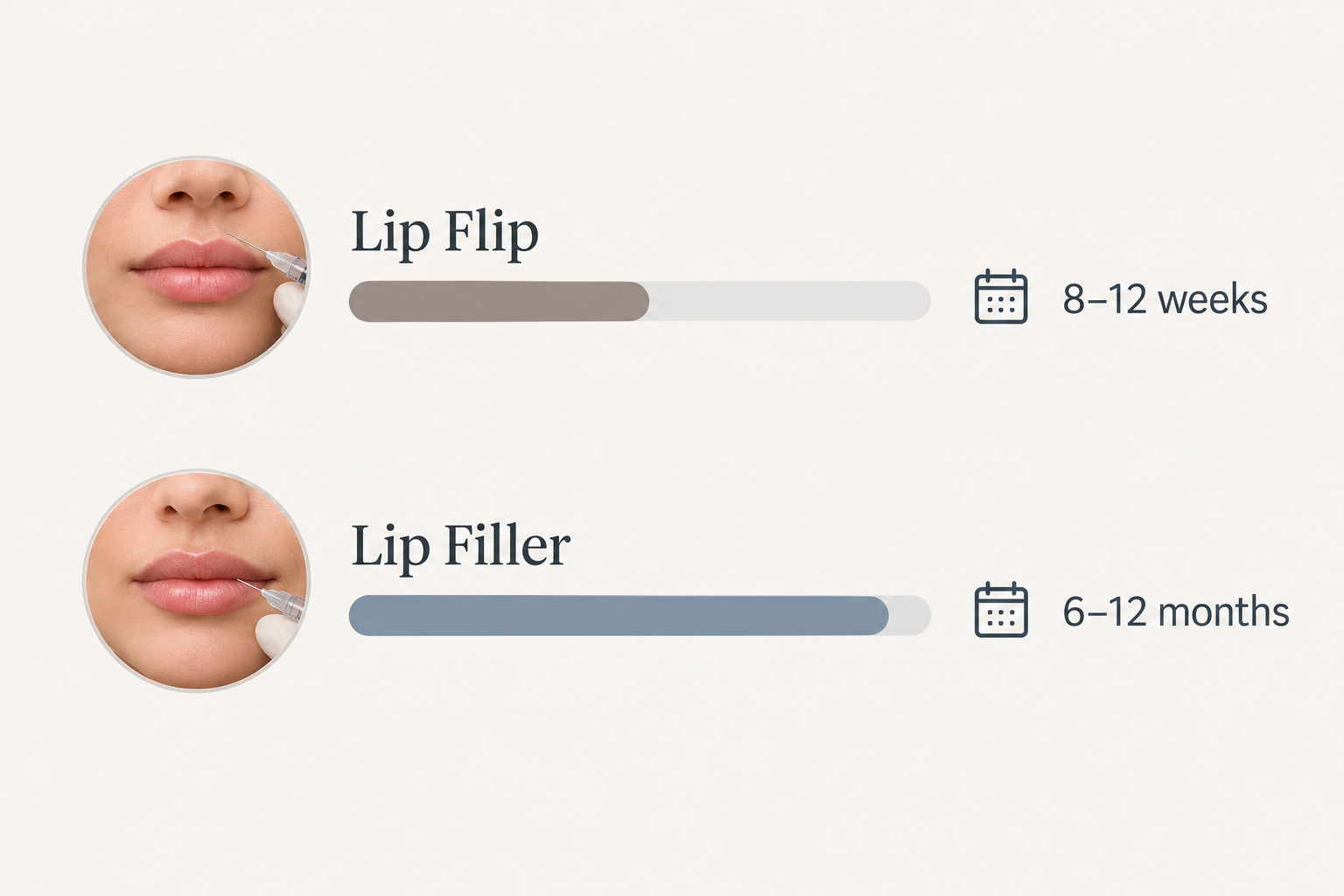
Hyaluronic acid lip filler generally lasts between six and twelve months, with considerable variation depending on the specific product used, the volume injected, the patient’s metabolism, and lifestyle factors. Some patients find their filler lasts closer to six months; others retain a visible result for longer. Repeated treatments over time may have a cumulative effect on lip tissue, though this varies between individuals and products. A practitioner can advise on an appropriate maintenance schedule based on the patient’s response to treatment.
Downtime, Discomfort, and the Treatment Experience
Both treatments involve injections and carry some degree of discomfort, though most patients describe the experience as tolerable. A topical anaesthetic cream is commonly applied before lip filler to reduce discomfort during the procedure. Many hyaluronic acid lip filler products also contain lidocaine, a local anaesthetic, within the gel itself, which can improve comfort as the treatment progresses. A lip flip involves fewer injections and a smaller volume of product, so it is generally quicker and associated with less discomfort.
After a lip flip, patients may notice small marks or mild redness at the injection sites, which typically resolve within a few hours. Swelling is usually minimal. Some patients experience temporary functional changes such as slight difficulty with certain sounds, drinking through a straw, or whistling, because the orbicularis oris muscle is partially relaxed. These effects are temporary and resolve as the botulinum toxin wears off, but they are worth considering for patients whose work or lifestyle involves frequent public speaking or musical performance.
After lip filler, swelling is more pronounced and is a normal part of the healing process. Bruising is also possible, particularly around the vermilion border and the body of the lip. Most swelling subsides within three to five days, though some residual swelling may persist for up to two weeks. Patients are generally advised to avoid strenuous exercise, alcohol, and excessive heat for the first twenty-four to forty-eight hours after treatment.
Risks and Side Effects
Both treatments carry risks that patients should understand before proceeding. For a lip flip, the most common side effects are temporary and include redness, small bruises at injection sites, and the functional changes to lip movement described above. If too much botulinum toxin is used or placement is imprecise, the upper lip may appear overly relaxed, affecting the natural smile or causing difficulty with lip closure. These effects resolve as the toxin wears off but cannot be reversed early.
Lip filler carries a broader range of potential side effects. Common effects include swelling, bruising, tenderness, and asymmetry in the days following treatment. Less common but more serious risks include nodule formation, filler migration away from the intended area, and delayed inflammatory reactions. The most serious risk associated with any injectable filler is vascular occlusion — a situation in which filler is inadvertently injected into or compresses a blood vessel, potentially compromising blood supply to surrounding tissue. This is a rare but serious complication that requires immediate treatment. Choosing a qualified and experienced practitioner who understands facial anatomy and has access to hyaluronidase for emergency reversal is an important safety consideration.
Infection is a risk with any injectable procedure and can be minimised by ensuring treatment is performed in a clean clinical environment using sterile technique. Patients with active cold sores should inform their practitioner before treatment, as injections around the lip area can trigger a herpes simplex outbreak in susceptible individuals.
Who May Be Suitable for Each Treatment
A lip flip may be worth discussing with a practitioner if the upper lip appears thin or disappears when smiling, if there is a mild gummy smile that the patient finds bothersome, or if the patient wants a subtle, low-commitment enhancement without added volume. It may also appeal to patients who are new to cosmetic treatments and want to try a conservative option before considering filler.
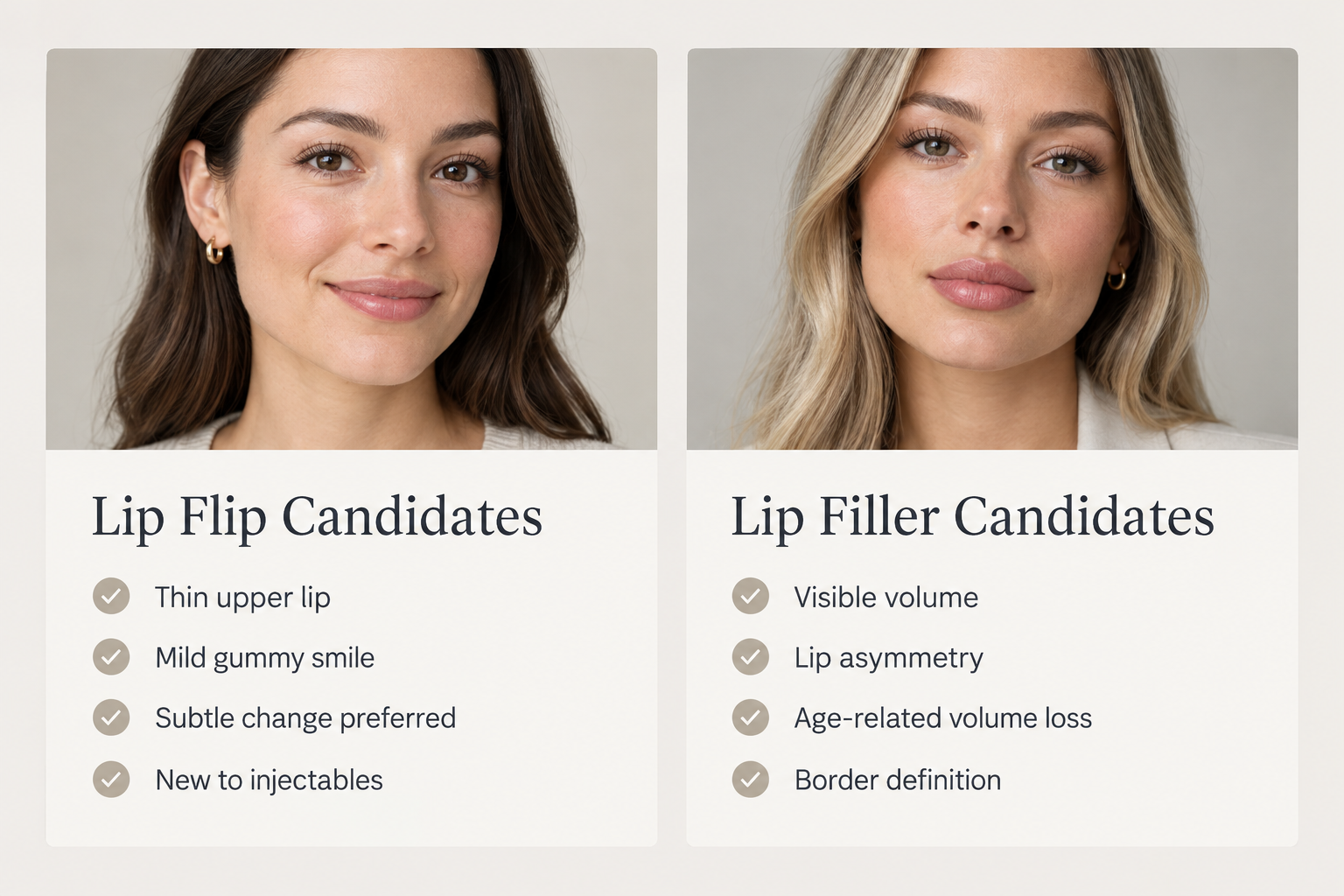
Lip filler may be more appropriate for patients who want a visible increase in lip volume, who have noticeable asymmetry between the upper and lower lip, who have experienced age-related volume loss in the lip area, or who want to improve the definition of the lip border. Filler offers more versatility in terms of achievable outcomes and is the more established option for patients with clear volume-related goals.
Neither treatment is suitable during pregnancy or breastfeeding. Patients with certain neurological conditions, bleeding disorders, or known allergies to treatment components should discuss their medical history in full before proceeding. A thorough consultation with a qualified practitioner is essential to assess individual anatomy, medical history, and suitability before any injectable treatment.
Who May Not Be Suitable
Botulinum toxin treatments, including a lip flip, are generally not recommended for patients who are pregnant or breastfeeding, those with certain neuromuscular conditions such as myasthenia gravis, or those taking medications that may interact with the toxin. Patients who rely heavily on precise lip movement for professional reasons — such as wind instrument musicians or professional singers — should consider the temporary functional effects carefully before proceeding.
Lip filler may not be appropriate for patients with active infection or inflammation in the treatment area, those with a history of severe allergic reactions to filler components, or those with unrealistic expectations about the degree of change achievable. Patients who have previously had permanent or semi-permanent fillers in the lip area should disclose this to their practitioner, as the presence of existing product can affect treatment planning and safety.
Cost Considerations
A lip flip typically costs less per appointment than lip filler, reflecting the smaller amount of product used and the shorter treatment time. However, because the results last only eight to twelve weeks, the cumulative cost of maintaining a lip flip over a year may approach or exceed the cost of one or two lip filler treatments. Patients comparing costs should factor in treatment frequency alongside the per-appointment price.
Lip filler costs vary depending on the volume of product used, the specific product chosen, the practitioner’s experience, and the clinic’s location. Patients should be cautious of unusually low prices, as the quality of the product, the practitioner’s training, and the clinical environment all affect both the result and the safety of the procedure.
Alternatives to Consider
For patients who are uncertain about either option, it is worth knowing that other approaches exist. Lip blushing — a semi-permanent cosmetic tattooing technique — can enhance the appearance of the lip border and add the impression of colour and definition without injections, though it does not add volume. Skin booster injections placed around the lip area may improve hydration and skin quality in the perioral region without directly altering lip shape. For patients concerned about vertical lip lines rather than volume or shape, botulinum toxin placed in the perioral area or resurfacing treatments such as laser or chemical peels may be more relevant options.
Patients with significant volume loss or structural changes related to ageing may benefit from a broader facial assessment, as lip changes often occur alongside changes in the surrounding facial anatomy. A practitioner experienced in facial aesthetics can help determine whether treating the lips in isolation addresses the patient’s concern or whether a more comprehensive approach would produce a more harmonious result.
Frequently Asked Questions
Can I have a lip flip and lip filler at the same time?
Some practitioners do combine both treatments in the same appointment, using a small amount of botulinum toxin along the upper lip border alongside a conservative volume of hyaluronic acid filler. Whether this combination is appropriate depends on individual anatomy and goals. Discuss this option with your practitioner during consultation rather than assuming it is automatically suitable.
Will a lip flip make my lips look bigger?
A lip flip does not add volume, so it will not make the lips physically larger. It can make the upper lip appear slightly more visible by rolling it outward, which may create the impression of a fuller lip — particularly when smiling. Patients wanting a noticeable increase in size are generally better suited to lip filler.
Does a lip flip hurt?
Most patients describe the lip flip as mildly uncomfortable rather than painful. The number of injections is small and the volume of product is very low. A topical numbing cream can be applied beforehand if preferred. Discomfort is typically brief and resolves quickly after the injections are complete.
How soon can I wear lipstick after lip filler?
Most practitioners advise waiting at least twenty-four hours before applying makeup to the lip area after filler, to reduce the risk of introducing bacteria to the injection sites while they are healing. Your practitioner will give specific aftercare guidance based on the products used.
Can lip filler be removed if I don’t like the result?
Hyaluronic acid lip filler can be dissolved using an enzyme called hyaluronidase, which breaks down the hyaluronic acid gel. This makes it a reversible treatment, which is one of its key safety advantages. Reversal is not always immediate and may require more than one session depending on the volume of filler present. Not all filler types are reversible — this applies specifically to hyaluronic acid products.
Is a lip flip suitable for a gummy smile?
A lip flip may help reduce the appearance of a mild gummy smile by partially relaxing the muscle that elevates the upper lip, limiting how far it rises when smiling. It is not a treatment for all types of gummy smile, as the underlying cause varies between individuals. A practitioner can assess whether a lip flip is likely to be effective for a specific patient’s anatomy.
How many units of botulinum toxin are used in a lip flip?
The amount used is small compared with other botulinum toxin treatments, but specific unit counts are not provided here as dosing decisions depend on the product brand, the individual patient’s anatomy, and the practitioner’s clinical judgement. Units are not interchangeable between different botulinum toxin brands. Your practitioner will determine the appropriate dose during your consultation.
Lip Flip or Lip Filler: Matching the Treatment to Your Goals
The choice between a lip flip and lip filler is not a matter of one being universally better than the other — it depends on what the patient is trying to achieve. A lip flip is a subtle, short-duration option that works by changing the position of the upper lip rather than its size. It suits patients who want a natural-looking refinement, who are cautious about adding volume, or who want to address a mild gummy smile. Its main limitations are its short duration and the absence of any volumetric effect.
Lip filler is the more versatile option for patients with volume-related goals, asymmetry, or a desire for a more visible change. Hyaluronic acid filler offers the additional reassurance of reversibility, which is a meaningful safety consideration. Its limitations include a higher risk of swelling and bruising, the possibility of migration or nodule formation if not carefully placed, and the rare but serious risk of vascular complications — all of which underline the importance of choosing a qualified and experienced practitioner.
If you are uncertain which option is more appropriate for your anatomy and goals, a consultation with a qualified aesthetic practitioner is the most reliable next step. A thorough assessment of your lip structure, facial proportions, and expectations will allow for a personalised recommendation rather than a one-size-fits-all approach.


