
Lip Filler Practitioner Qualifications: What to Check Before Your Appointment
Choosing where to have lip filler in London is not simply a matter of finding the nearest clinic or the lowest price. The qualifications, training, and clinical experience of the person performing your treatment have a direct bearing on both your safety and the quality of your results. This article explains what practitioner qualifications actually mean in the context of lip filler, which credentials carry genuine weight, and what questions to ask before you commit to an appointment.
Key Takeaways
- Lip filler involves injecting hyaluronic acid dermal filler into and around the lips, a procedure that carries real medical risks if performed by an inadequately trained practitioner.
- In the United Kingdom, regulations around who can legally administer injectable treatments have been strengthening, but the landscape is still transitioning — making your own due diligence essential.
- Relevant qualifications include a regulated healthcare professional background, specific injectable training, and evidence of ongoing professional development.
- A thorough consultation, a full medical history review, and a clear discussion of risks are signs of a responsible practitioner — not optional extras.
- Price alone is a poor guide to quality or safety; the cheapest option in London may carry the highest clinical risk.
Why Practitioner Qualifications Matter for Lip Filler
Lip filler treatment uses injectable hyaluronic acid gel to add volume, improve definition, or restore shape to the lips and surrounding area. Although the procedure is often described as minimally invasive, the lips and perioral region contain a dense network of blood vessels, including branches of the facial artery. An incorrectly placed injection can cause vascular occlusion — a blockage of blood supply — which, if not recognised and treated promptly, can lead to tissue damage or, in rare cases, more serious complications. This is not a theoretical risk; it is documented in the medical literature and is one of the primary reasons that practitioner competence matters so much.
A qualified and experienced injector understands the relevant anatomy, recognises early warning signs of complications, and knows how to manage them — including the use of hyaluronidase, an enzyme that can dissolve hyaluronic acid filler in an emergency. Someone without a clinical background or adequate training may lack both the anatomical knowledge and the emergency management skills to respond appropriately if something goes wrong.
The UK Regulatory Landscape for Aesthetic Injectables
The regulation of aesthetic injectables in the United Kingdom has historically been inconsistent. For many years, there was no legal requirement for a person administering dermal filler to hold any medical qualification, which led to a significant number of treatments being performed by individuals with minimal relevant training. This situation has been widely criticised by professional bodies, patient safety organisations, and the medical community.
Following the recommendations of the 2013 Keogh Review and subsequent government consultations, the regulatory framework has been moving toward stricter controls. In England, the Health and Care Act 2022 introduced provisions to restrict certain aesthetic procedures — including the administration of botulinum toxin and dermal fillers — to regulated healthcare professionals or those working under their supervision. Implementation of these provisions has been phased, and the full picture of enforcement continues to develop. Scotland, Wales, and Northern Ireland have their own regulatory frameworks, which differ in some respects from England.
The practical implication for anyone seeking lip filler in London is that, while the regulatory environment is improving, it remains important to verify a practitioner’s credentials independently rather than assuming that any clinic operating openly must meet a minimum standard of qualification.
What Qualifications Should a Lip Filler Practitioner Hold?
There is no single universally recognised qualification that automatically confirms competence to administer lip filler. Instead, a combination of factors — professional registration, specific training, and clinical experience — together indicate whether a practitioner is appropriately prepared.
Regulated Healthcare Professional Registration
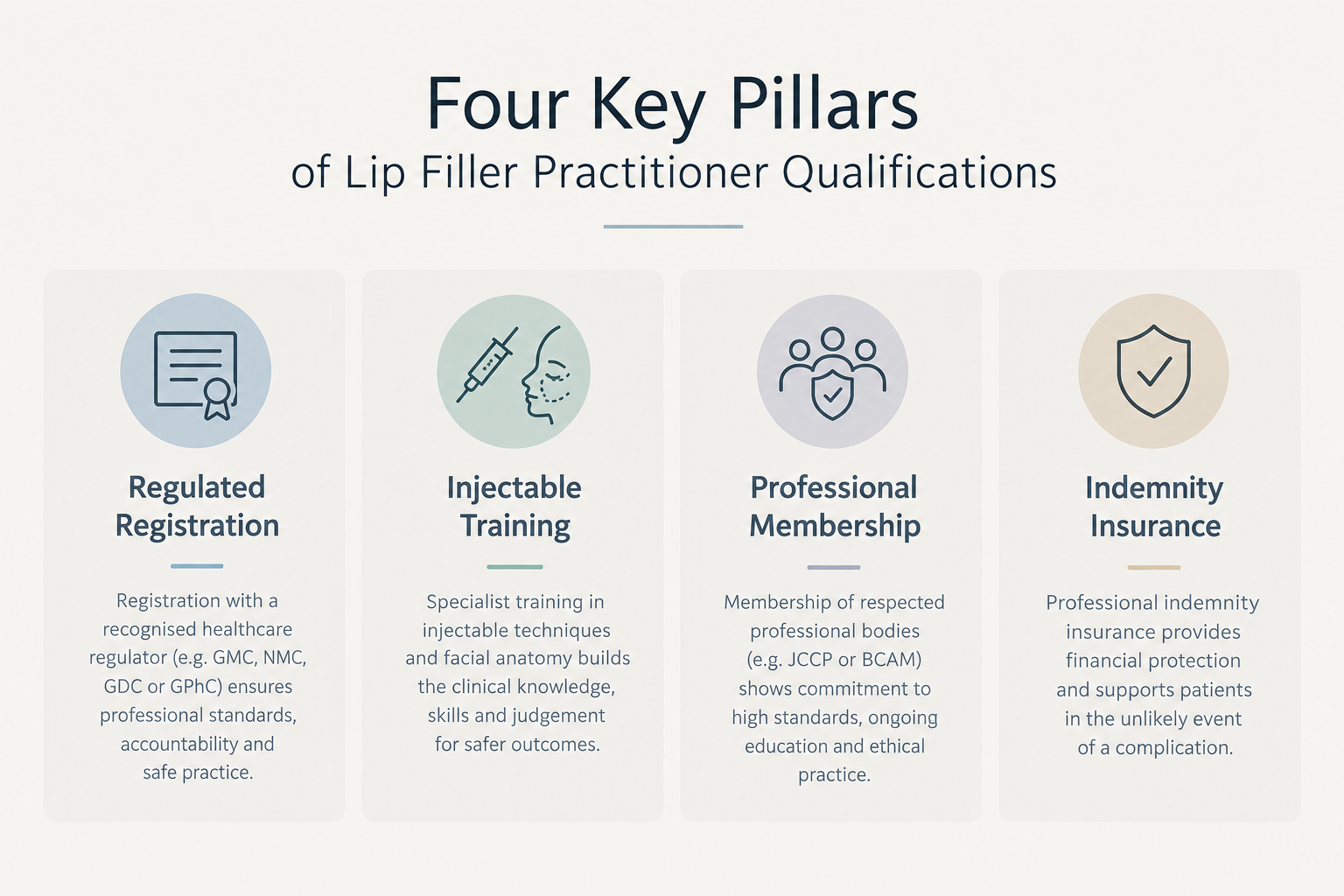
The most important baseline is whether the practitioner is a registered healthcare professional. In the United Kingdom, the relevant regulatory bodies include the General Medical Council (GMC) for doctors, the Nursing and Midwifery Council (NMC) for nurses and midwives, the General Dental Council (GDC) for dentists and dental therapists, and the General Pharmaceutical Council (GPhC) for pharmacists. Registration with one of these bodies means the practitioner is accountable to a professional regulator, is required to maintain their skills through continuing professional development, and can face formal disciplinary action if they fall below required standards.
You can verify registration status directly on each regulator’s public online register. This takes only a few minutes and is one of the most straightforward checks available to a prospective patient. A practitioner who is reluctant to provide their full name or registration number for this purpose is a significant concern.
Specific Training in Aesthetic Injectables and Facial Anatomy
Professional registration alone does not confirm that a practitioner has received specific training in aesthetic injectables. A registered nurse, for example, may have extensive clinical experience in a hospital setting but no specific training in facial anatomy or dermal filler technique. Responsible practitioners in aesthetic medicine typically complete accredited training courses in facial anatomy, injection technique, and complication management, delivered by recognised training providers or professional bodies such as the British College of Aesthetic Medicine (BCAM), the Aesthetic Complications Expert (ACE) Group, or similar organisations.
When assessing a practitioner, it is reasonable to ask where and when they completed their injectable training, whether that training included hands-on supervised practice, and whether it covered complication recognition and management — including the use of hyaluronidase. A short online course without practical supervised components does not provide the same level of preparation as a structured, clinically supervised programme.
Membership of Professional Aesthetic Bodies
Membership of professional organisations such as the British Association of Aesthetic Plastic Surgeons (BAAPS), the British Association of Dermatologists (BAD), the British College of Aesthetic Medicine (BCAM), or the Joint Council for Cosmetic Practitioners (JCCP) indicates that a practitioner has chosen to align themselves with organisations that set standards, provide guidance, and in some cases require members to meet specific competency criteria. Membership is not a guarantee of competence, but it is a positive indicator of professional engagement and accountability.
The JCCP, in particular, maintains a public register of practitioners who have met its standards for training and professional conduct in aesthetic practice. Checking this register is a useful additional step when researching a practitioner offering lip filler in London.
Insurance and Indemnity Cover
A practitioner performing lip filler should hold appropriate professional indemnity insurance that specifically covers aesthetic injectable procedures. This protects both the patient and the practitioner in the event of an adverse outcome. It is entirely reasonable to ask a clinic whether their practitioners hold this cover. Reputable clinics will confirm this without hesitation.
Red Flags to Watch for When Choosing a Lip Filler Practitioner
Certain patterns should prompt caution when evaluating a practitioner or clinic offering lip filler in London. These are not definitive proof of unsuitability, but they warrant further investigation before proceeding.
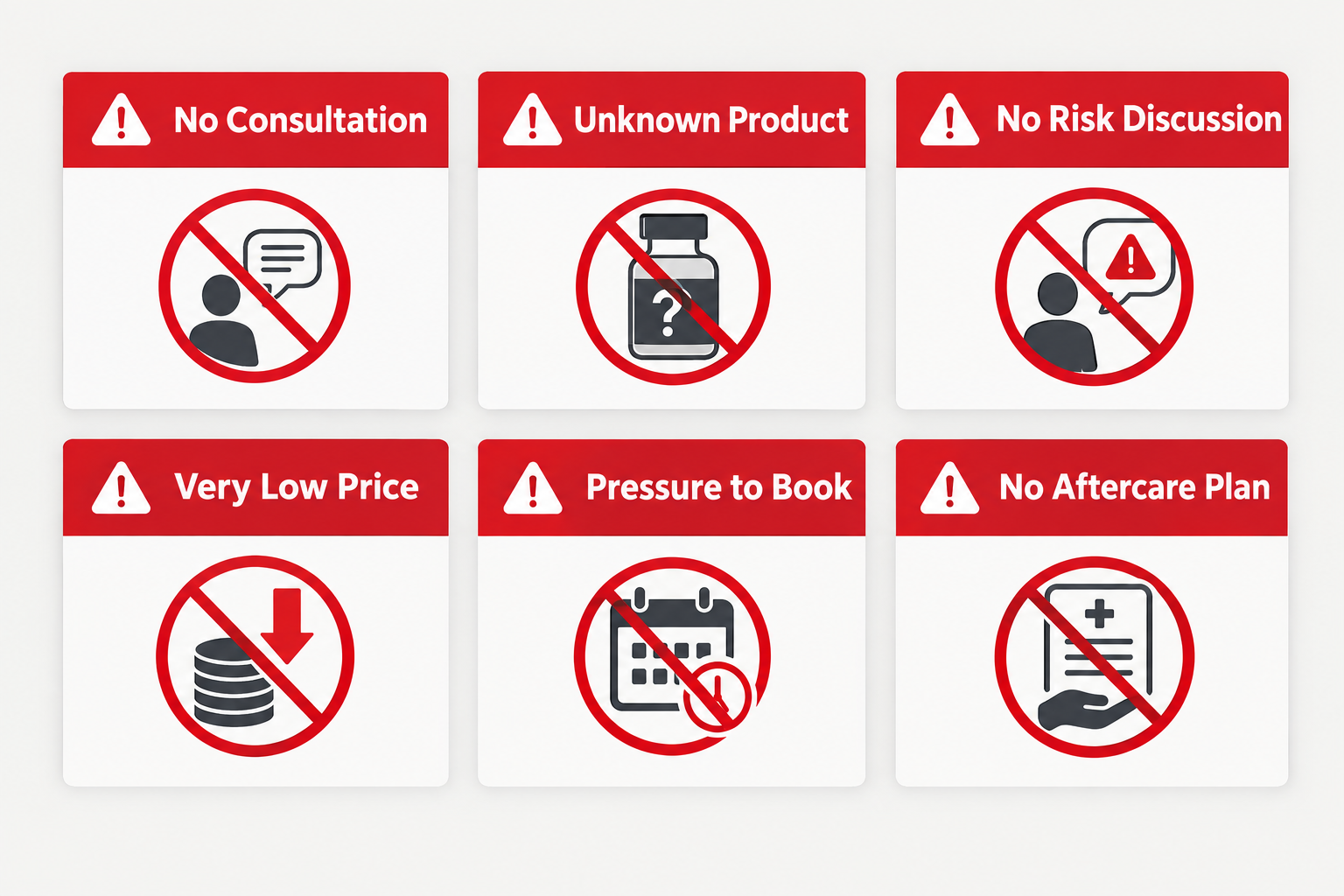
- No consultation offered or a very brief consultation: A responsible practitioner will conduct a thorough consultation before any treatment, reviewing your medical history, discussing your goals, explaining the procedure and its risks, and assessing whether you are a suitable candidate.
- Inability or unwillingness to name the product being used: You have a right to know which dermal filler product will be injected, including the brand, the hyaluronic acid concentration, and whether it is a CE-marked or otherwise appropriately regulated product.
- No discussion of risks or aftercare: Informed consent is a clinical and ethical requirement. If a practitioner does not discuss potential side effects, complications, and aftercare before treatment, this is a serious concern.
- Unusually low pricing: While cost should not be the primary factor, prices that are significantly below the London market average may reflect the use of unregulated or counterfeit filler products, inadequately trained practitioners, or both.
- Pressure to book immediately or accept a same-day treatment without prior consultation: Responsible practitioners allow time for reflection and do not use high-pressure sales tactics.
- No clear information about what to do if something goes wrong: A reputable clinic will provide aftercare guidance and a clear point of contact if you experience concerns following treatment.
What a Responsible Lip Filler Consultation Should Include
A thorough pre-treatment consultation is one of the clearest indicators of a practitioner who takes patient safety seriously. During a consultation for lip filler, a qualified practitioner should take a full medical history, including any history of cold sores (herpes simplex), autoimmune conditions, bleeding disorders, allergies, or previous filler treatments. Certain medications — including blood thinners and some supplements — may increase the risk of bruising and should be discussed.
The practitioner should assess your lip anatomy, skin quality, and facial proportions, and discuss realistic outcomes based on your individual anatomy rather than simply agreeing to whatever volume you request. They should explain the type of filler to be used, the injection technique, expected discomfort, likely downtime, and the possibility of bruising or swelling. They should also explain what happens if you are unhappy with the result, including the option of dissolving the filler with hyaluronidase.
Informed consent should be documented in writing. A practitioner who skips this process or treats it as a formality is not meeting the standard expected of a responsible aesthetic clinician.
Hyaluronic Acid Filler Products: What Matters Beyond the Brand
Most lip filler treatments in reputable London clinics use hyaluronic acid-based dermal fillers. Hyaluronic acid is a naturally occurring substance found in the body, and its use in injectable form has a well-established safety profile when administered correctly by a trained practitioner. Several established brands are used in clinical practice, and a qualified practitioner will select a product appropriate for the lip area based on its rheological properties — meaning its thickness, elasticity, and how it behaves once injected.
What matters from a patient safety perspective is that the product is a licensed, CE-marked or UKCA-marked medical device from a reputable manufacturer, stored and handled correctly, and used within its approved indications. Counterfeit or unregulated filler products do exist in the market and carry additional risks. A practitioner who cannot or will not confirm the product details, including the batch number for traceability, should be viewed with caution.
Risks and Side Effects of Lip Filler
Understanding the risks associated with lip filler is part of making an informed decision, and a qualified practitioner will discuss these with you before treatment. Common and generally temporary side effects include swelling, bruising, tenderness, and redness at the injection sites. These typically resolve within a few days to two weeks, though individual recovery varies.
Less common but more serious complications include asymmetry, lumps or nodules, prolonged swelling, infection, and allergic or inflammatory reactions. The most serious complication associated with dermal filler injection is vascular occlusion, where filler inadvertently enters or compresses a blood vessel, potentially compromising blood supply to surrounding tissue. Symptoms can include blanching, pain, or skin discolouration and require immediate treatment. This complication is rare but is more likely to occur when treatment is performed by someone without adequate anatomical knowledge and injection training.
Delayed inflammatory reactions, sometimes called delayed hypersensitivity reactions, can also occur weeks or months after treatment, particularly following illness or dental procedures. A practitioner with appropriate training will be able to advise on these risks and manage them if they arise.
How Long Lip Filler Results Last and What Affects Longevity
Hyaluronic acid lip filler is not permanent. Results typically last between six and twelve months, though this varies depending on the specific product used, the volume injected, individual metabolism, lifestyle factors, and the area treated. The lips are a highly mobile area of the face, which means filler in this region tends to break down more quickly than filler placed in less dynamic areas.
Some patients find that with repeated treatments over time, results may last slightly longer, though this is not universal. A qualified practitioner will give you a realistic expectation of longevity based on the product selected and your individual circumstances, rather than making promises about how long results will last.
Alternatives to Lip Filler Worth Discussing
Lip filler is not the only option for patients seeking improvement in lip appearance. Depending on your specific concern, a qualified practitioner may discuss alternatives during your consultation.
Lip flip treatment using botulinum toxin involves small injections around the upper lip border to relax the orbicularis oris muscle, causing the lip to roll slightly outward and appear fuller without adding volume. This is a subtle effect and is not equivalent to filler in terms of volume enhancement, but it may suit patients who want a modest change or who are not yet ready for filler.
Skin booster injections in the perioral area can improve lip hydration and skin quality without adding significant volume. These treatments use highly diluted hyaluronic acid and may be appropriate for patients whose primary concern is lip texture or fine lines rather than volume.
For patients with significant volume loss related to ageing, a practitioner may also discuss whether addressing volume in adjacent areas — such as the nasolabial folds or oral commissures — might complement or reduce the need for direct lip augmentation.
Questions to Ask Before Booking Lip Filler in London
- What is your professional registration, and which regulatory body can I check this with?
- What specific training have you completed in aesthetic injectables and facial anatomy?
- Which filler product will you use, and can you confirm it is a licensed medical device?
- Do you hold professional indemnity insurance that covers aesthetic injectable procedures?
- What is your protocol if I experience a complication after treatment?
- Do you have hyaluronidase available on-site in case of a vascular emergency?
- Can I see before and after photographs of your previous lip filler patients?
- What is included in the aftercare support following my treatment?
Frequently Asked Questions
Can a beautician legally perform lip filler in London?
Under provisions introduced by the Health and Care Act 2022, the administration of dermal fillers in England is being restricted to regulated healthcare professionals or those working under their prescription and supervision. The implementation of these rules has been phased, and the situation continues to evolve. Regardless of the current legal position at any given time, choosing a registered healthcare professional with specific injectable training significantly reduces your clinical risk.
How do I verify a practitioner’s registration in the UK?
You can check registration status directly on the public registers maintained by the GMC (for doctors), NMC (for nurses and midwives), GDC (for dentists), and GPhC (for pharmacists). The JCCP also maintains a public register of practitioners who have met its aesthetic practice standards. These checks are free and take only a few minutes.
Is it safe to have lip filler at a beauty salon or mobile practitioner?
The setting itself is less important than the qualifications and training of the individual performing the treatment. However, a clinical environment with appropriate facilities — including the availability of emergency medications such as hyaluronidase — is preferable. A mobile practitioner or salon setting may not always have these resources readily available.
What should I do if I think I am having a complication after lip filler?
If you experience significant pain, blanching or white discolouration of the skin, blue or purple skin changes, or vision disturbance after lip filler, you should contact your treating practitioner immediately. If you cannot reach them, seek urgent medical attention. These symptoms may indicate a vascular complication requiring prompt treatment.
Does a higher price guarantee a better or safer practitioner?
Not automatically. Price can reflect clinic location, overheads, and marketing rather than clinical quality. However, very low prices in London may indicate cost-cutting in areas that affect safety, such as product quality or practitioner training. Qualifications, registration, and the quality of the consultation process are more reliable indicators than price alone.
Can lip filler be dissolved if I am unhappy with the result?
Hyaluronic acid filler can be partially or fully dissolved using hyaluronidase, an enzyme injection. This is also the treatment used in the event of a vascular complication. A qualified practitioner should be able to offer or arrange this service and should discuss it as part of your pre-treatment consultation.
Choosing a Lip Filler Practitioner in London: Making an Informed Decision
Lip filler in London is widely available, but the quality and safety of treatment varies considerably depending on who performs it. The most important step you can take as a prospective patient is to verify that your practitioner is a registered healthcare professional with specific training in aesthetic injectables, facial anatomy, and complication management. Checking their registration on the relevant regulatory body’s public register takes only a few minutes and provides meaningful reassurance that cannot be obtained from social media reviews or clinic marketing alone.
Beyond registration, look for evidence of a thorough consultation process, transparent communication about the products being used, clear aftercare guidance, and a practitioner who is willing to answer your questions without pressure or evasion. These are the hallmarks of a clinician who prioritises your safety and wellbeing over a quick booking.
If you are considering lip filler, a consultation with a qualified aesthetic practitioner — one who takes the time to assess your individual anatomy, discuss realistic outcomes, and explain the relevant risks — is the appropriate starting point. The right practitioner will help you make an informed decision about whether lip filler is suitable for you and, if so, how to achieve a result that is both safe and aligned with your goals.


