
How to Get Rid of Vertical Lip Lines: Treatments, Natural Options and What Actually Works
Vertical lip lines — sometimes called lipstick bleed lines, perioral lines, or smoker’s lines — are fine to moderate creases that radiate outward from the border of the lips. They develop gradually and can appear in people who have never smoked, making them one of the more frustrating signs of facial ageing. This article explains what causes these lines, which natural approaches may offer modest improvement, and which clinical treatments are available for more noticeable results, so you can make an informed decision before booking a consultation.
Key Takeaways
- Vertical lip lines form due to repeated muscle movement, collagen loss, volume depletion, and sun damage — often a combination of all four.
- Natural and at-home approaches may slow progression and improve skin quality, but they are unlikely to eliminate established lines on their own.
- Clinical treatments such as botulinum toxin, dermal fillers, skin resurfacing, and polynucleotides can offer more meaningful improvement, with results and suitability varying by individual.
- No single treatment addresses every contributing factor; a qualified practitioner can assess which approach or combination is most appropriate for your anatomy and skin type.
- Realistic expectations are important — most treatments reduce the appearance of perioral lines rather than erasing them completely.
What Causes Vertical Lip Lines?
Perioral lines develop where the orbicularis oris muscle — the circular muscle surrounding the mouth — repeatedly contracts during speaking, eating, and facial expression. Over time, this repetitive movement breaks down the collagen and elastin fibres in the overlying skin, creating permanent creases. Smoking accelerates this process significantly because it combines repeated lip pursing with direct exposure to chemicals that degrade collagen, which is why these lines are often called smoker’s lines even when the patient has never smoked.
Collagen and hyaluronic acid production decline naturally from the mid-twenties onward, reducing the skin’s ability to spring back after movement. The lips and the surrounding vermilion border also lose volume with age, which means the skin above the lip has less structural support and folds more easily. Cumulative ultraviolet exposure further degrades the extracellular matrix, making sun protection a meaningful preventive measure at any age. Genetics, skin thickness, and habitual facial expressions all influence how early and how deeply these lines appear.
Can You Get Rid of Vertical Lip Lines Naturally?
Natural approaches cannot reverse established structural changes in the dermis, but they can support skin health, slow further deterioration, and in some cases soften the appearance of very fine surface lines. The evidence for most topical and lifestyle interventions is modest, and results depend heavily on the depth and duration of the lines already present.
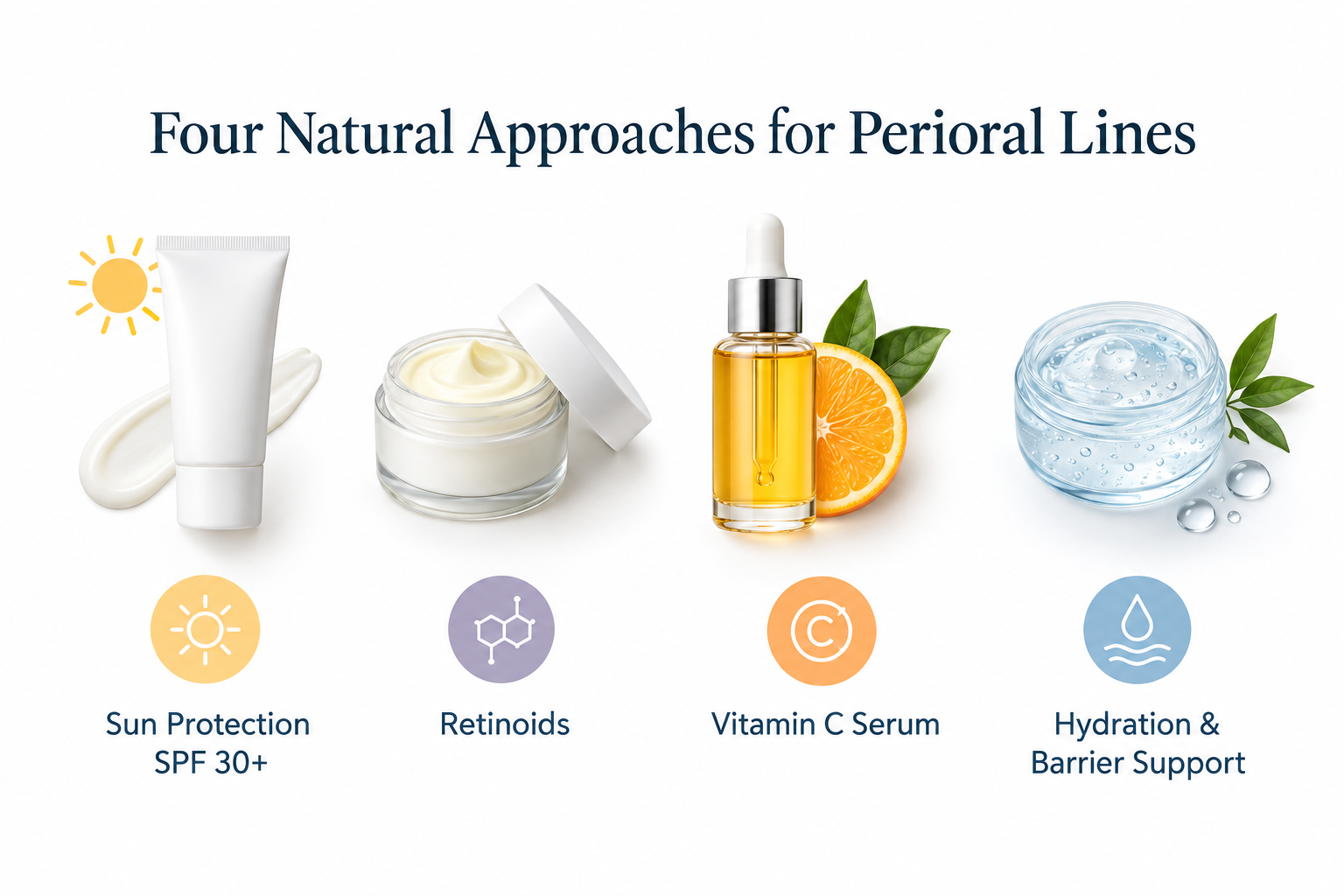
Sun Protection
Daily broad-spectrum SPF application is the single most evidence-supported step for preventing further collagen degradation around the mouth. Ultraviolet radiation is a primary driver of photoageing in the perioral area, and consistent sun protection can meaningfully slow the worsening of existing lines. An SPF 30 or higher applied to the lip border and surrounding skin each morning is a practical starting point.
Topical Retinoids
Retinoids — including over-the-counter retinol and prescription-strength tretinoin — are among the best-studied topical ingredients for stimulating collagen synthesis and accelerating skin cell turnover. Applied consistently to the perioral area, retinoids may gradually improve fine surface lines and skin texture over several months. The skin around the mouth can be sensitive, so starting with a low concentration and building tolerance slowly is advisable. Prescription tretinoin tends to produce more noticeable results than cosmetic retinol, but both require patience and consistent use.
Vitamin C Serums
Topical vitamin C in a stable, well-formulated serum can support collagen production and provide antioxidant protection against environmental damage. Applied in the morning before SPF, vitamin C may help maintain skin quality and reduce the rate at which new lines form. Its effect on already-established vertical lip lines is limited, but it contributes usefully to an overall skin maintenance routine.
Hydration and Barrier Support
Well-hydrated skin appears plumper and lines look less pronounced. Ingredients such as hyaluronic acid, ceramides, and peptides in moisturisers can temporarily improve the appearance of fine perioral lines by supporting the skin barrier and drawing moisture into the upper layers of the skin. This effect is cosmetic and temporary rather than structural, but it can make a visible difference in day-to-day appearance, particularly when combined with other approaches.
Lifestyle Factors
Stopping smoking is the most impactful lifestyle change for anyone who smokes, both to prevent new lines and to allow the skin’s natural repair processes to function more effectively. Staying well hydrated, eating a diet rich in antioxidants and protein, and getting adequate sleep all support general skin health. Habitual facial movements — such as drinking through straws repeatedly — may contribute marginally to perioral creasing over many years, though the evidence for this is less robust than for smoking or sun exposure.
Clinical Treatments for Lipstick Bleed Lines
When natural approaches are insufficient, a range of clinical treatments can address vertical lip lines more directly. Each works through a different mechanism, and the most appropriate option depends on the depth of the lines, the degree of volume loss, skin quality, and individual anatomy. Many practitioners recommend a combination approach for the best outcome.
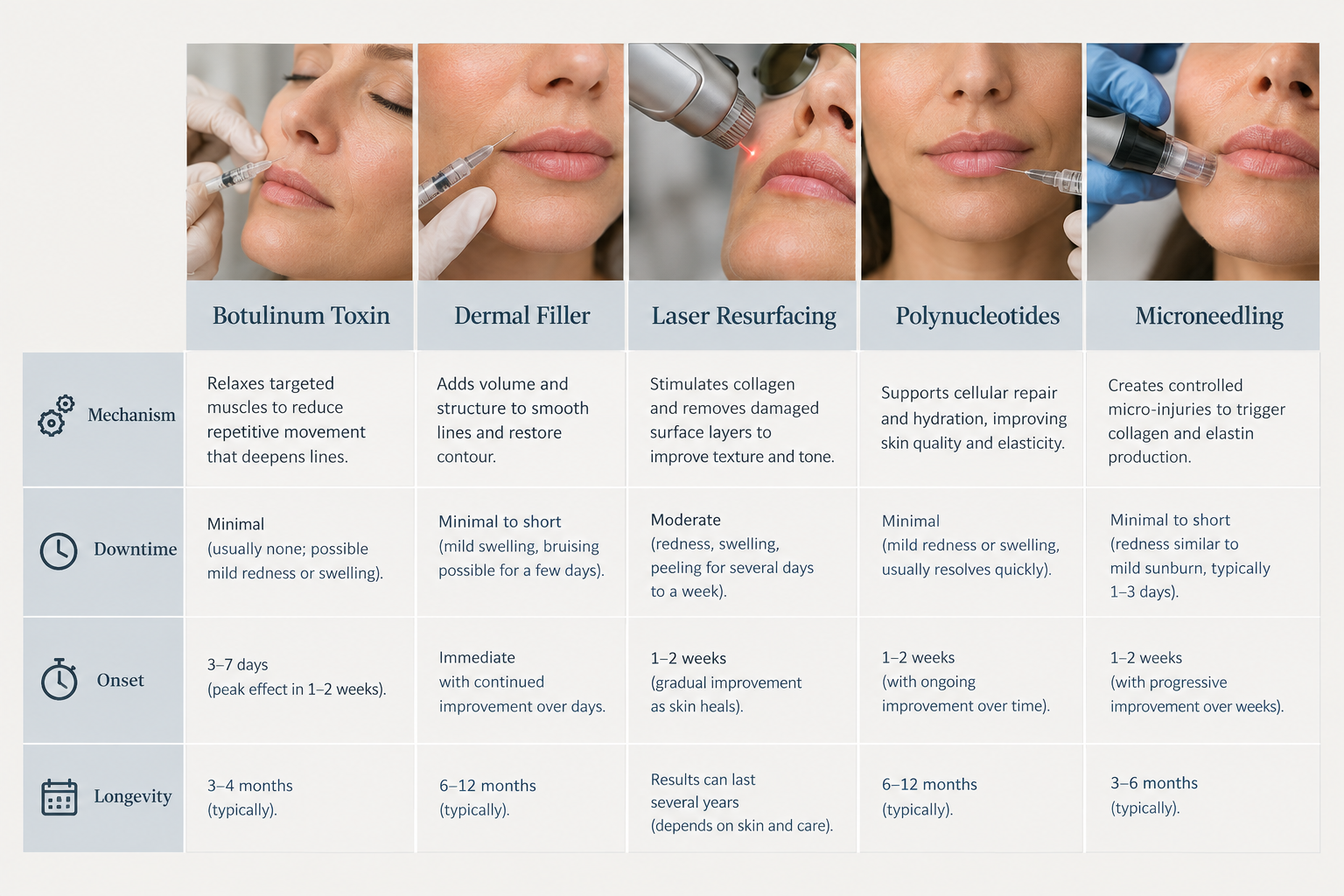
Botulinum Toxin Injections
Botulinum toxin — commonly known by brand names such as Botox, Dysport, or Azzalure — can be injected in very small amounts into the orbicularis oris muscle to reduce the repetitive contractions that deepen perioral lines. This approach is sometimes called a lip flip when used near the lip border. By partially relaxing the muscle, botulinum toxin allows existing lines to soften and reduces the rate at which new creases form.
The treatment requires precise technique and conservative dosing in the perioral area, because over-treatment can affect speech, eating, and the ability to use a straw. Results typically become visible within a few days to two weeks and generally last three to four months, after which repeat treatment is needed to maintain the effect. Botulinum toxin is most effective for dynamic lines — those caused by muscle movement — and has a more limited effect on deep static lines that are present even at rest.
Dermal Fillers
Hyaluronic acid dermal fillers can be used to restore volume to the lips and the surrounding perioral area, providing structural support that reduces the appearance of vertical lip lines. Filler placed along the vermilion border can also help prevent lipstick from bleeding into the creases. Hyaluronic acid is a naturally occurring substance in the skin, and fillers based on it can be dissolved with an enzyme called hyaluronidase if the result is unsatisfactory or if a complication occurs.
Results from hyaluronic acid filler are typically visible immediately and can last from six months to over a year depending on the product used, the area treated, and individual metabolism. Swelling and bruising are common in the days following treatment. The perioral area has a rich blood supply, making careful technique and a thorough understanding of facial anatomy essential to minimise the risk of vascular complications, which, while uncommon, are a recognised risk of filler injections in this region.
Skin Resurfacing: Laser and Chemical Peels
Resurfacing treatments work by removing or injuring the outer layers of the skin in a controlled way, stimulating the body’s wound-healing response and encouraging new collagen production. Ablative laser treatments — such as fractional CO2 or erbium laser — can produce significant improvement in perioral lines, particularly deep or long-standing creases that do not respond well to injectables alone. Non-ablative laser options and intense pulsed light treatments offer a milder effect with less downtime.
Chemical peels using trichloroacetic acid (TCA) or phenol can also resurface the perioral skin and improve line depth and skin texture. Medium to deep peels require meaningful recovery time — often one to two weeks of redness, peeling, and sensitivity — and carry a risk of post-inflammatory hyperpigmentation, particularly in darker skin tones. A thorough consultation and patch testing where appropriate are important before any resurfacing procedure. Results from ablative resurfacing can be long-lasting, but the skin continues to age, and maintenance treatments may be needed over time.
Polynucleotides
Polynucleotide (PDRN) injections are a relatively newer option in aesthetic medicine that use purified DNA fragments to stimulate fibroblast activity and support collagen and elastin production in the skin. When injected into the perioral area, polynucleotides may improve skin quality, hydration, and fine line appearance over a course of treatments. The evidence base for polynucleotides in perioral rejuvenation is still developing, and results tend to be gradual rather than immediate, typically becoming more apparent after two to four sessions spaced several weeks apart.
Polynucleotide treatments are generally well tolerated, with mild swelling and redness as the most common side effects. They are often used alongside other treatments — such as botulinum toxin or filler — as part of a combination approach rather than as a standalone solution for significant vertical lip lines.
Microneedling
Microneedling uses fine needles to create controlled micro-injuries in the skin, triggering collagen and elastin synthesis. When performed around the perioral area, microneedling may gradually improve skin texture and soften fine lines over a course of sessions. It is generally considered a milder option than ablative laser resurfacing and carries a lower risk of pigmentation changes, making it a consideration for a broader range of skin tones. Multiple sessions are typically required, and results develop over weeks to months as new collagen matures.
Radiofrequency and Energy-Based Treatments
Radiofrequency (RF) devices deliver controlled heat energy into the deeper layers of the skin to stimulate collagen remodelling and provide a degree of skin tightening. Some RF devices combine microneedling with radiofrequency energy for a more targeted effect. These treatments may be useful for improving overall skin laxity and texture in the perioral area, though their effect on deep vertical lip lines is generally more modest than that of ablative resurfacing or injectables. Downtime is typically shorter than with laser resurfacing.
Combination Approaches
Vertical lip lines often have more than one contributing factor — muscle movement, volume loss, and skin quality changes may all be present simultaneously. For this reason, many practitioners find that combining treatments produces better outcomes than any single approach alone. A common combination might involve botulinum toxin to reduce dynamic muscle activity, a small amount of hyaluronic acid filler to restore border definition and support, and a resurfacing or biostimulator treatment to improve the skin’s texture and collagen content. The specific combination and sequencing should be tailored to the individual after a thorough assessment.
Risks, Side Effects, and Limitations
Every clinical treatment carries potential risks, and the perioral area requires particular care because of its functional importance and complex anatomy. Common side effects across injectable treatments include bruising, swelling, tenderness, and temporary asymmetry. More serious but less common risks include infection, allergic reaction, and — with filler injections — vascular occlusion, which requires immediate treatment. Choosing a qualified and experienced practitioner who understands perioral anatomy and has access to emergency protocols is essential.
Resurfacing treatments carry risks of prolonged redness, scarring, and changes in skin pigmentation, particularly in individuals with darker skin tones or a history of post-inflammatory hyperpigmentation. Botulinum toxin in the perioral area can temporarily affect lip function if over-dosed, which is why conservative treatment is standard practice in this region. No treatment can guarantee complete elimination of vertical lip lines, and results vary between individuals based on skin type, age, line depth, and lifestyle factors.
Who May Be Suitable for Clinical Treatment?
Most adults with established perioral lines who are in good general health may be candidates for one or more of the treatments described above. Suitability depends on the type and depth of lines, skin tone, medical history, current medications, and individual goals. Certain conditions and circumstances may affect eligibility, including pregnancy or breastfeeding, active skin infections or cold sores in the treatment area, autoimmune conditions, blood-thinning medications, and a history of severe allergic reactions. A thorough consultation with a qualified practitioner is the appropriate way to determine which options are suitable for a specific individual.
What to Expect at a Consultation
A consultation for perioral line treatment should involve a detailed assessment of the lines themselves — their depth, whether they are dynamic or static, the degree of volume loss in the lips and surrounding area, and the overall quality of the perioral skin. A good practitioner will discuss realistic outcomes, explain the options most appropriate for your anatomy, outline the risks and recovery involved, and give you the opportunity to ask questions before any treatment is agreed. Photographs are often taken for comparison. You should not feel pressured to proceed at the first appointment.
Frequently Asked Questions
Can vertical lip lines be prevented?
Prevention is more effective than reversal. Daily broad-spectrum sun protection, not smoking, consistent use of retinoids, and maintaining good skin hydration can all slow the development of perioral lines. Genetics and natural ageing mean that some degree of perioral creasing is likely for most people over time, but these measures can delay and reduce their severity.
How long does it take to see results from clinical treatments?
Botulinum toxin results typically appear within a few days to two weeks. Dermal filler results are visible immediately, though final results are clearer once initial swelling settles, usually within one to two weeks. Resurfacing treatments and polynucleotides produce more gradual improvements over weeks to months as collagen remodelling occurs.
Are there any treatments that work without downtime?
Botulinum toxin and polynucleotide injections typically involve minimal downtime, with mild swelling or redness that usually resolves within a day or two. Hyaluronic acid filler may cause bruising that lasts up to a week or two. Ablative laser resurfacing and medium-to-deep chemical peels involve more significant recovery periods. Non-ablative treatments and microneedling generally sit in between, with a few days of redness and sensitivity.
Will filler make my lips look unnatural?
When hyaluronic acid filler is used conservatively and placed by an experienced practitioner, the goal is a natural-looking result that restores definition and support rather than dramatically enlarging the lips. The amount of filler used and the technique applied are key factors. Discussing your goals clearly at consultation and reviewing before-and-after photographs of the practitioner’s work can help set appropriate expectations.
How often do treatments need to be repeated?
Botulinum toxin in the perioral area typically needs repeating every three to four months. Hyaluronic acid filler may last six to eighteen months depending on the product and individual. Resurfacing treatments may provide longer-lasting improvement but the skin continues to age, so periodic maintenance is usually beneficial. Polynucleotides are often given as a course of two to four sessions and then repeated annually or as needed.
Is it safe to combine treatments?
Combining treatments is common practice in aesthetic medicine and can produce better outcomes than a single approach for complex concerns like perioral ageing. However, the timing and sequencing of combined treatments matters, and not all combinations are appropriate for every patient. A qualified practitioner will advise on what can safely be done together and what should be staged over separate appointments.
Deciding on the Right Approach for Your Lip Lines
Vertical lip lines are a genuine cosmetic concern for many people, and the range of available options — from consistent skincare to clinical procedures — means there is usually something meaningful that can be done regardless of budget or tolerance for downtime. Natural approaches are a sensible starting point and an important part of long-term maintenance, but they are unlikely to significantly reduce lines that are already well established. Clinical treatments offer more noticeable improvement, with the best outcomes often achieved through a tailored combination that addresses muscle activity, volume, and skin quality together.
The most important step is a thorough consultation with a qualified aesthetic practitioner who can assess your specific anatomy, explain realistic outcomes, and recommend an approach proportionate to your concerns and goals. Perioral treatments require precision and experience, so choosing a practitioner with a demonstrable track record in this area is worthwhile. If you are considering treatment, use the consultation to ask about the practitioner’s experience, the specific products or devices they plan to use, what results you can realistically expect, and what the plan would be if you experienced a complication.


