
Does Microneedling Tighten Skin? What to Realistically Expect
Microneedling can contribute to skin tightening, but the degree of improvement depends on several factors including skin laxity, age, treatment depth, and whether the procedure is combined with other technologies. For patients with mild to moderate skin looseness, microneedling may produce a noticeable firming effect over a course of sessions. For more significant laxity, it is unlikely to deliver the same outcome as surgical or more intensive energy-based treatments. Understanding what microneedling can and cannot do is essential before committing to a course of treatment.
Key Takeaways
- Microneedling stimulates collagen and elastin production through controlled micro-injuries, which may gradually improve skin firmness and texture.
- Results are typically gradual and cumulative; most patients require a course of three to six sessions to see meaningful skin tightening.
- Microneedling is generally better suited to mild to moderate skin laxity rather than significant sagging, which may require surgical or more intensive interventions.
- Radiofrequency microneedling (RF microneedling) delivers additional heat energy into the dermis and may produce more pronounced tightening than standard microneedling alone.
- Realistic expectations, a thorough consultation, and appropriate patient selection are essential for a satisfactory outcome.
How Microneedling Works on Skin Laxity
Microneedling — also called collagen induction therapy — uses a device fitted with fine needles to create thousands of controlled micro-channels in the skin’s surface. These micro-injuries trigger the skin’s natural wound-healing response without causing significant visible damage to the outer layer. The healing cascade involves the release of growth factors and the stimulation of fibroblasts, the cells responsible for producing collagen and elastin. Both proteins are fundamental to skin firmness and elasticity, and their production naturally declines with age.
The depth to which the needles penetrate is adjustable, typically ranging from 0.5 mm to 2.5 mm depending on the treatment area and the concern being addressed. Deeper needle depths are generally used when targeting skin laxity or acne scarring, as they reach the dermis where collagen remodelling occurs. Superficial depths are more appropriate for surface texture concerns and product absorption. A qualified practitioner will select the appropriate depth based on a clinical assessment of the patient’s skin.
The new collagen formed through this process is not immediate. Collagen remodelling is a biological process that unfolds over weeks and months, which is why microneedling results appear gradually rather than straight after treatment. The skin’s structural support network is incrementally rebuilt, which can lead to a firmer, smoother appearance over time.
What the Evidence Suggests About Skin Tightening
Clinical studies on microneedling for skin tightening generally show positive outcomes for mild to moderate laxity, particularly in areas such as the face, neck, and décolletage. Research published in peer-reviewed dermatology journals has demonstrated measurable improvements in skin elasticity and firmness following a course of microneedling treatments, with histological evidence of increased collagen and elastin deposition in the dermis. However, the overall body of evidence is still developing, and study designs vary considerably in terms of needle depth, device type, number of sessions, and patient demographics.
It is important to note that most studies involve relatively small patient groups and short follow-up periods. Longer-term data on how well results are maintained beyond twelve months remains limited. The evidence is more robust for microneedling’s effects on acne scarring and skin texture than it is specifically for skin tightening, though the underlying mechanism — collagen induction — is the same. Patients should approach published results with realistic expectations and discuss the available evidence with their practitioner.
Radiofrequency microneedling, which combines the needle-based collagen induction mechanism with targeted radiofrequency heat energy delivered directly into the dermis, has a growing body of evidence supporting more pronounced skin tightening compared to standard microneedling. The thermal energy from radiofrequency causes immediate collagen contraction as well as longer-term neocollagenesis, potentially offering a more significant firming effect. Devices such as Morpheus8 and Genius fall into this category, though availability and specific indications vary by country and clinic.
Treatment Areas Where Microneedling May Help
Microneedling for skin tightening is most commonly performed on the face, with the cheeks, jawline, and neck being frequent treatment areas where patients notice early signs of laxity. The procedure can also be applied to the décolletage, abdomen, inner arms, and thighs, though evidence for body areas is less extensive than for facial skin. The skin on the body is generally thicker and may require different needle depths and more sessions to achieve comparable results.
For facial skin tightening specifically, microneedling may help address:
- Early jowling and mild jawline definition loss
- Fine lines and superficial wrinkles associated with reduced skin elasticity
- Crepey skin texture on the neck and décolletage
- Mild skin looseness following moderate weight loss
- Overall skin quality improvements that contribute to a firmer appearance
It is worth noting that microneedling addresses skin quality and mild structural laxity rather than repositioning deeper facial tissues. Concerns involving significant volume loss, deep structural sagging, or pronounced jowling are unlikely to be adequately addressed by microneedling alone and may require a different approach.
Standard Microneedling vs Radiofrequency Microneedling for Tightening
Standard microneedling relies entirely on the mechanical stimulus of needle penetration to trigger collagen induction. Radiofrequency microneedling adds a thermal component by delivering radiofrequency energy through the needle tips directly into the dermis at a controlled depth. This dual mechanism — mechanical injury plus targeted heat — is thought to produce a more significant tightening response, particularly for patients with moderate laxity who may not achieve sufficient results from standard microneedling alone.
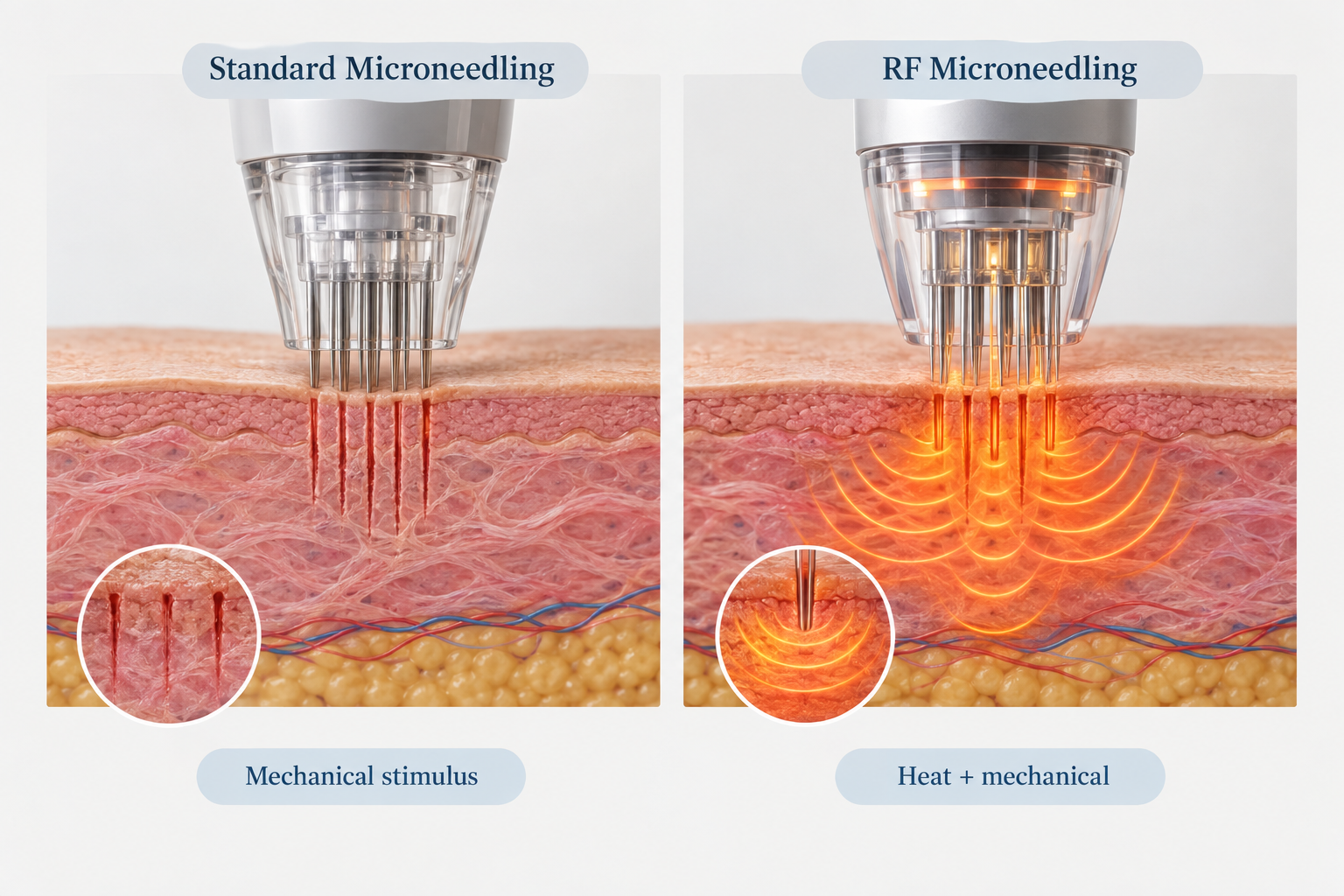
The choice between standard and radiofrequency microneedling depends on the degree of laxity, the patient’s skin type, budget, and tolerance for downtime. Radiofrequency microneedling typically involves more post-treatment redness and swelling and may carry a higher cost per session. However, some patients may achieve comparable results with fewer sessions compared to standard microneedling. A practitioner experienced in both modalities can help determine which approach is more appropriate for a given patient’s goals and anatomy.
Insulated needle tips used in some radiofrequency microneedling devices are designed to protect the epidermis while delivering energy to the dermis, which may make the treatment more suitable for a broader range of skin tones compared to some other energy-based devices. However, all microneedling procedures carry risks in patients with certain skin conditions, and a thorough pre-treatment assessment remains essential regardless of device type.
What to Expect During and After Treatment
Before a microneedling session, a topical anaesthetic cream is typically applied to the treatment area and left for approximately 30 to 45 minutes to minimise discomfort. The microneedling device is then passed systematically across the skin. Most patients describe the sensation as a mild scratching or vibrating pressure rather than sharp pain, though comfort levels vary depending on the area treated and the needle depth used. Deeper passes for skin tightening may be more uncomfortable than superficial treatments for texture refinement.
Immediately after treatment, the skin typically appears red and may feel warm, similar to mild sunburn. Some patients experience minor swelling, particularly around the eyes and cheeks. These effects generally resolve within 24 to 72 hours for standard microneedling, though radiofrequency microneedling may involve a longer period of visible redness and swelling, sometimes lasting three to five days. Pinpoint bleeding during the procedure is normal and expected at deeper needle depths.
During the recovery period, patients are usually advised to avoid direct sun exposure, apply a gentle moisturiser and broad-spectrum SPF, and refrain from using active skincare ingredients such as retinoids, acids, or vitamin C for several days. Makeup is typically avoided for at least 24 hours. Strenuous exercise and heat exposure, including saunas and steam rooms, are generally discouraged for 48 hours post-treatment to reduce the risk of irritation and infection.
When Results May Appear and How Long They May Last
Skin tightening from microneedling is a gradual process. Some patients notice an initial improvement in skin texture and a subtle glow within the first week as surface healing occurs, but the more meaningful firming effects associated with new collagen formation typically become visible four to six weeks after treatment. The full benefit of a single session may not be apparent for up to three months, as collagen remodelling continues well beyond the visible recovery period.
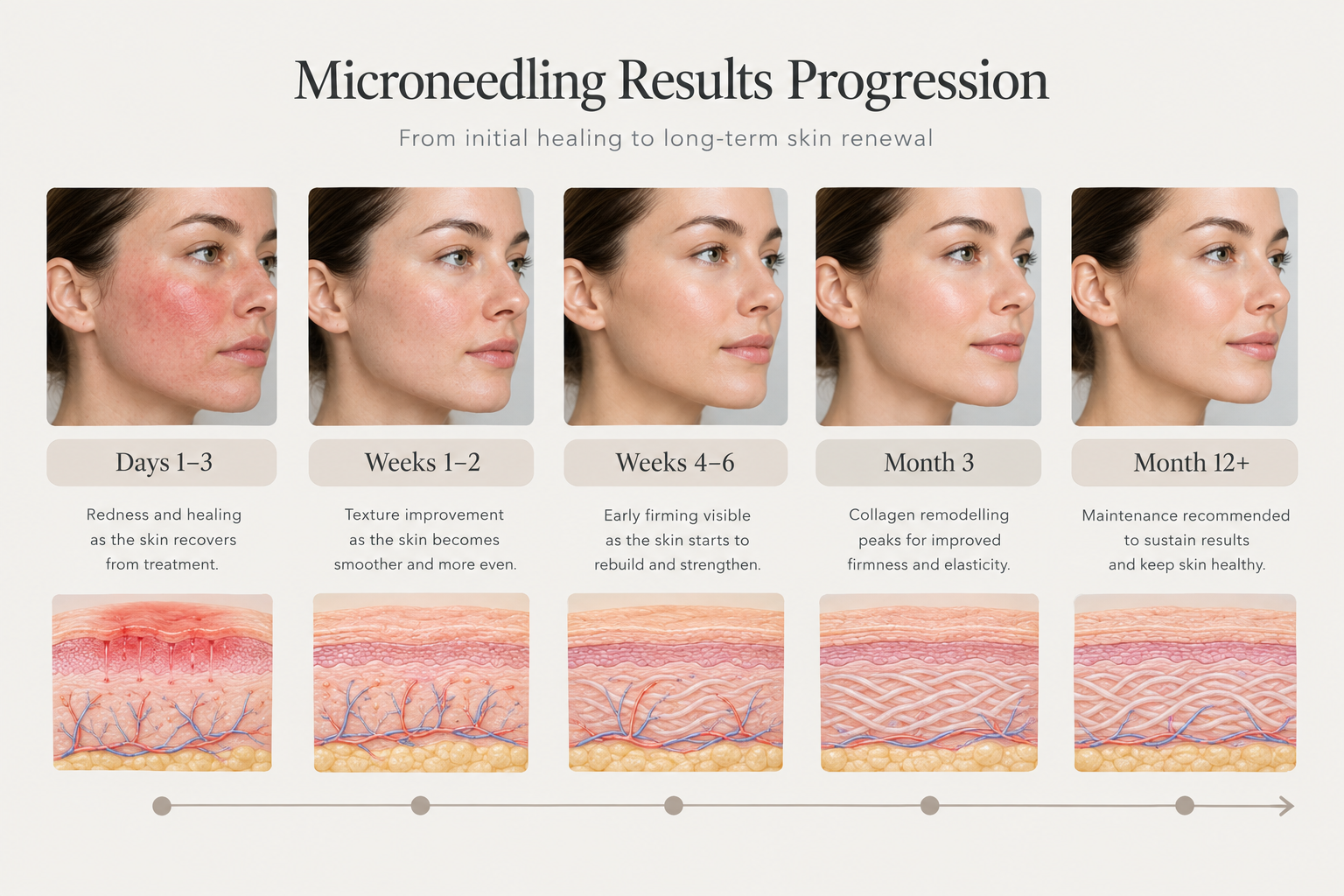
Because results are cumulative, a course of treatments is usually recommended rather than a single session. Most practitioners suggest three to six sessions spaced four to six weeks apart for skin tightening goals, though the optimal number varies depending on the individual’s skin condition, age, and the degree of laxity being addressed. Patients with more significant laxity or older skin may require additional sessions or a combination approach to achieve their desired outcome.
How long the results last is influenced by the patient’s age, lifestyle, sun exposure, and ongoing skincare habits. Collagen production naturally continues to decline with age, meaning that maintenance sessions — typically once or twice a year — are often recommended to sustain the improvements achieved during the initial course. Without maintenance, the gradual effects of ageing will continue, and the skin may return towards its pre-treatment appearance over time.
Who May Be Suitable for Microneedling Skin Tightening
Microneedling for skin tightening may be appropriate for adults who have noticed early to moderate signs of skin laxity and are seeking a non-surgical approach to improving skin firmness. Patients who tend to respond well include those with mild jowling, early neck laxity, crepey skin texture, or a general loss of skin elasticity associated with the natural ageing process or moderate weight changes. Individuals with good overall skin health and realistic expectations about the degree of improvement achievable are generally the most suitable candidates.
Patients with darker skin tones may find microneedling a more accessible option than some laser or light-based treatments, as the risk of post-inflammatory hyperpigmentation is generally lower with microneedling, particularly when performed correctly. However, this does not mean microneedling is without risk for any skin type, and a thorough assessment by an experienced practitioner is always necessary.
Who May Not Be Suitable
Microneedling is not appropriate for everyone, and certain conditions may contraindicate treatment or require careful consideration. A qualified practitioner will assess the following before proceeding:
- Active acne, rosacea flares, eczema, or psoriasis in the treatment area
- Active skin infections, cold sores, or open wounds
- A history of keloid scarring or hypertrophic scarring
- Use of isotretinoin (roaccutane) within the preceding six to twelve months
- Pregnancy or breastfeeding
- Blood-thinning medications or clotting disorders
- Implanted electronic devices such as pacemakers (particularly relevant for radiofrequency microneedling)
- Recent cosmetic procedures in the same area, including dermal fillers or surgical interventions
Patients with significant skin sagging — for example, pronounced jowling, heavy neck laxity, or excess skin following major weight loss — are unlikely to achieve satisfactory tightening from microneedling alone and should discuss whether a surgical or more intensive non-surgical approach would be more appropriate for their goals.
Risks and Side Effects
Microneedling is generally considered a well-tolerated procedure when performed by a trained and experienced practitioner using appropriate equipment. However, it is not without risk, and patients should be aware of the following potential side effects and complications:
- Redness and swelling: Common and expected; usually resolves within a few days.
- Skin sensitivity and dryness: The skin may feel tight and dry during the healing phase.
- Bruising: Can occur, particularly at deeper needle depths or in patients taking blood-thinning medications.
- Post-inflammatory hyperpigmentation: More likely if the skin is exposed to UV light during healing or if the procedure is performed on inflamed skin.
- Infection: A risk if aftercare instructions are not followed or if the procedure is performed in a non-sterile environment.
- Scarring: Rare but possible, particularly in patients with a predisposition to abnormal scarring.
- Reactivation of herpes simplex virus: Patients with a history of cold sores may require antiviral prophylaxis before treatment.
The risk of complications is significantly reduced when microneedling is performed by a qualified practitioner in a clinical setting using sterile, single-use needle cartridges. At-home microneedling devices, which use much shorter needles, are unlikely to produce meaningful skin tightening and carry their own risks if used incorrectly.
Alternatives to Microneedling for Skin Tightening
Several other non-surgical and surgical options exist for patients seeking skin tightening, and the most appropriate choice depends on the degree of laxity, the treatment area, budget, tolerance for downtime, and individual anatomy. Understanding the alternatives helps patients make a more informed decision in consultation with their practitioner.
Ultrasound skin tightening (HIFU): High-intensity focused ultrasound targets the deeper structural layers of the skin and superficial muscular aponeurotic system (SMAS), which is the same layer addressed in a surgical facelift. HIFU may be more effective than standard microneedling for moderate to significant laxity, though it can be more uncomfortable and results vary considerably between patients.
Radiofrequency skin tightening: Non-invasive radiofrequency devices deliver heat energy to the dermis to stimulate collagen production without needles. Results are generally more gradual than radiofrequency microneedling, and multiple sessions are typically required.
Laser skin resurfacing: Ablative and non-ablative laser treatments can improve skin texture and stimulate collagen remodelling. Ablative lasers tend to produce more significant results but involve greater downtime and a higher risk of pigmentation changes, particularly in darker skin tones.
Surgical options: For significant skin laxity, surgical procedures such as a facelift, neck lift, or blepharoplasty remain the most effective interventions. These carry greater risks and recovery time but can address structural sagging that non-surgical treatments cannot adequately correct.
Combination approaches: Many practitioners use microneedling alongside other treatments — such as polynucleotides, platelet-rich plasma (PRP), or topical growth factors — to enhance collagen stimulation and overall skin quality. Whether combination treatment offers a meaningful advantage over microneedling alone depends on the individual patient and the specific combination used.
Frequently Asked Questions
How many microneedling sessions are needed to see skin tightening?
Most patients require a course of three to six sessions spaced four to six weeks apart before noticing meaningful skin tightening. Results continue to develop for several months after the final session as collagen remodelling progresses. The exact number of sessions depends on the individual’s skin condition, age, and the degree of laxity being treated.
Is radiofrequency microneedling better than standard microneedling for tightening?
Radiofrequency microneedling generally produces more pronounced skin tightening than standard microneedling because it combines mechanical collagen induction with targeted thermal energy in the dermis. It may be more appropriate for patients with moderate laxity, though it typically involves more downtime and a higher cost per session. A practitioner can advise which option is more suitable based on a clinical assessment.
Can microneedling tighten loose skin on the body?
Microneedling can be applied to body areas such as the abdomen, inner arms, and thighs, and may help improve skin texture and mild laxity in these areas. However, the evidence for body skin tightening is less robust than for facial applications, and significant loose skin — for example, following major weight loss — is unlikely to respond adequately to microneedling alone.
Does microneedling hurt?
A topical anaesthetic cream is applied before treatment to minimise discomfort. Most patients describe the sensation as mild pressure or scratching rather than sharp pain. Deeper needle depths used for skin tightening may be more uncomfortable than superficial treatments. Radiofrequency microneedling can involve more intense sensations due to the heat energy delivered during the procedure.
How long do microneedling skin tightening results last?
Results from a course of microneedling treatments may last twelve months or longer, though this varies between individuals. Maintenance sessions — typically once or twice a year — are usually recommended to sustain improvements, as the natural ageing process continues to reduce collagen production over time. Sun protection and a consistent skincare routine can help prolong results.
Can microneedling replace a surgical facelift?
Microneedling cannot replicate the results of a surgical facelift. It is a non-surgical treatment suited to mild to moderate skin laxity and skin quality improvement. Significant structural sagging, pronounced jowling, or excess skin that requires repositioning of deeper tissues is beyond the scope of what microneedling can address. Patients with more advanced laxity should discuss surgical options with a qualified surgeon.
Is Microneedling a Realistic Option for Your Skin Tightening Goals?
Microneedling is a clinically supported, non-surgical option for patients seeking gradual improvement in skin firmness, texture, and elasticity. Its ability to stimulate collagen and elastin production through controlled micro-injury makes it a reasonable choice for those with mild to moderate skin laxity who prefer to avoid surgery or more aggressive interventions. The treatment is generally well tolerated, involves manageable downtime, and can be adapted to different skin types and treatment areas.
The most important factor in determining whether microneedling is appropriate for your skin tightening goals is an honest assessment of the degree of laxity you want to address. Patients with early signs of skin looseness, crepey texture, or reduced elasticity are more likely to benefit than those with significant structural sagging. If standard microneedling is unlikely to achieve the desired outcome, radiofrequency microneedling or an alternative treatment may be worth discussing with your practitioner.
A thorough consultation with a qualified and experienced aesthetic practitioner is the most reliable way to determine whether microneedling — alone or as part of a combination approach — is the right treatment for your specific concerns, skin type, and realistic expectations. Results are never guaranteed, and individual responses to treatment vary, but for the right candidate, microneedling can be a valuable part of a considered skin health strategy.


