How Long Does a Botox Bruise Take to Go Away?
Bruising after Botox is one of the most common concerns patients raise after their appointment — and one of the most misunderstood. Most injection-site bruising resolves within 3 to 14 days, depending on the size of the bruise, the area treated, and individual factors such as skin fragility and medication use. This guide explains exactly what to expect at each stage, which remedies have genuine evidence behind them, and when a bruise warrants a call to your practitioner.
Key Takeaways
- Most Botox bruises fade within 3 to 7 days; deeper or larger bruises may take up to 10 to 14 days to fully resolve.
- Bruising is caused by the needle, not the botulinum toxin itself — it is a common and temporary side effect of any injection.
- The bruise often looks darker on day 2 or 3 before it begins to fade; this is a normal part of healing, not a sign of worsening.
- Cold compress within the first 24 hours can help limit bruise size; topical arnica may support healing, though evidence remains mixed.
- Certain medications, supplements, and lifestyle factors significantly increase bruising risk and can be addressed before your next appointment.
Why Does Bruising Happen After Botox?
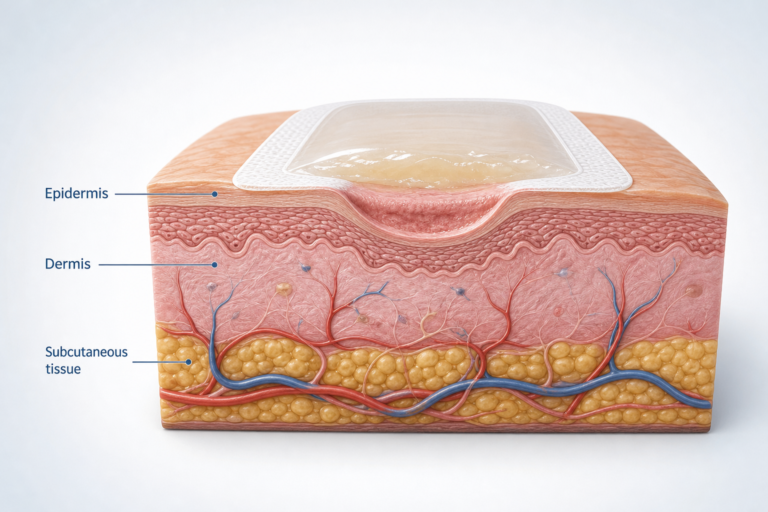
Bruising after neuromodulator injections occurs when the needle nicks a small blood vessel or capillary beneath the skin. Blood leaks into the surrounding tissue — a process called extravasation — and becomes visible as a bruise, or in clinical terms, ecchymosis. It is important to understand that the bruise comes from the needle passing through tissue, not from the botulinum toxin medication itself. This means bruising can happen with any skilled injector and does not indicate that something went wrong with the treatment.
The likelihood of bruising depends on several factors: the density of blood vessels in the treatment area, the depth of injection, the number of injection points used, and individual patient characteristics. Treatments that require multiple closely spaced injections — such as skin-quality Botox across the forehead — carry a higher cumulative risk simply because more needle passes are involved. An experienced injector uses technique and anatomical knowledge to minimise vessel contact, but cannot eliminate the possibility entirely.
Which Areas Are Most Prone to Bruising?
Not all treatment areas carry the same bruising risk. The periorbital region — including crow’s feet and the area around the eyes — has thin skin, a dense network of small vessels, and very little subcutaneous fat to buffer the needle. This makes it the highest-risk zone for visible bruising after Botox. The glabella (between the brows) also has a relatively rich blood supply and is a common site for injection-site bruising.
| Treatment Area | Bruising Risk | Key Reason |
|---|---|---|
| Crow’s feet / eye area | High | Thin skin, dense superficial vessels, orbicularis oculi muscle |
| Under-eye / periorbital region | High | Very thin skin, high vessel visibility, minimal fat padding |
| Glabella (between brows) | Medium–High | Rich vascular supply, corrugator muscle proximity |
| Forehead | Medium | Thicker skin offers some protection; frontalis vessels present |
| Masseter / jaw | Low | Thicker tissue, fewer superficial vessels |
| Lip lines (perioral) | Medium | Orbicularis oris vascularity; thin skin |
How Long Does Botox Bruising Last? A Day-by-Day Timeline
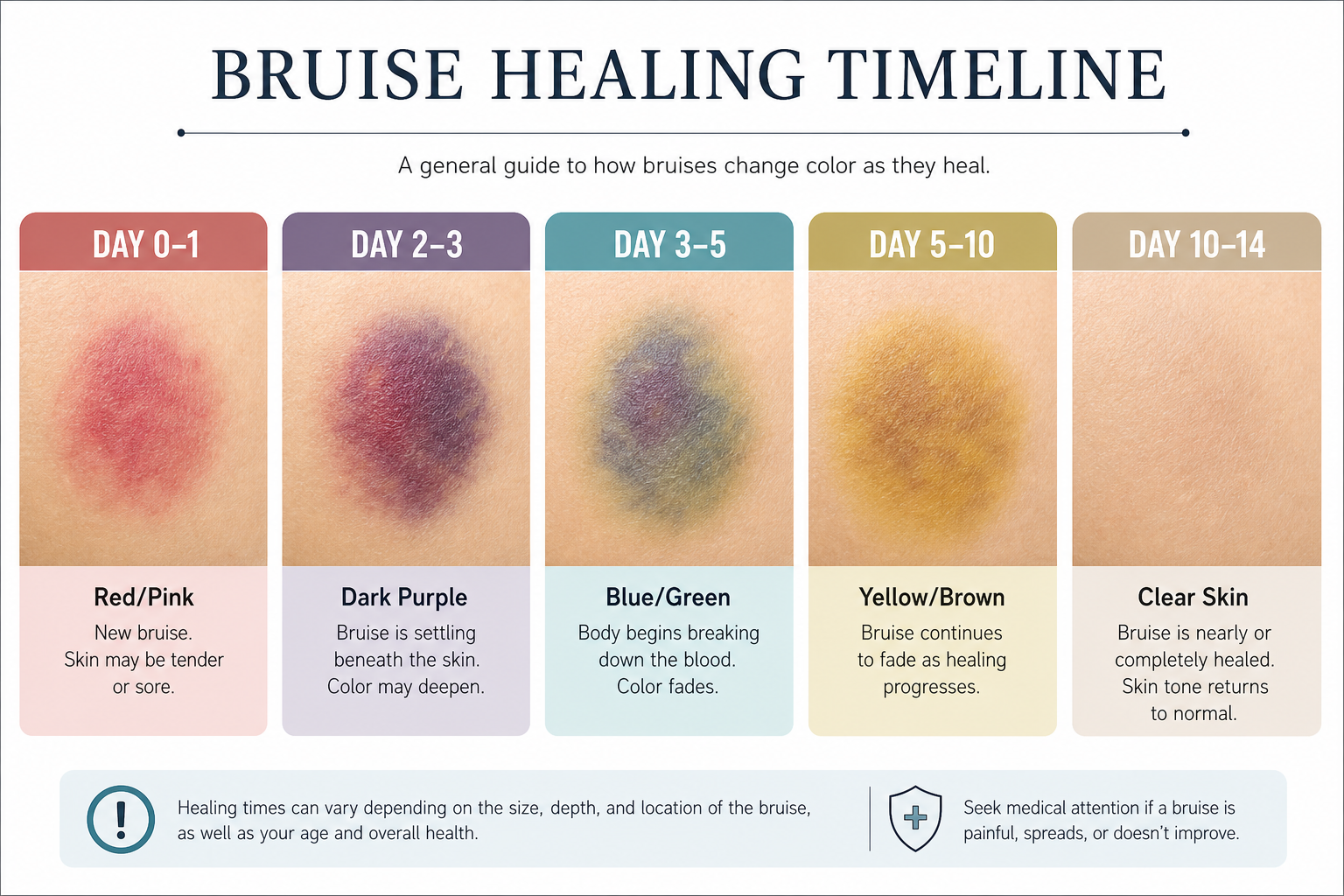
Understanding the bruise color progression helps patients distinguish normal healing from a genuine concern. Bruise color changes are driven by hemoglobin breakdown: fresh blood appears red or purple, and as the body breaks down haemoglobin into biliverdin and then bilirubin, the bruise shifts through blue, green, and finally yellow before disappearing. The timeline below reflects typical mild-to-moderate bruising; larger bruises or patients who are prone to bruising may progress more slowly.
| Day(s) | Typical Color | What Is Happening | Normal? |
|---|---|---|---|
| 0–1 | Red / pink | Fresh blood at injection site; may appear as a small dot or flat patch | Yes |
| 2–3 | Dark purple / blue | Blood spreads slightly into surrounding tissue; bruise may look larger — this is normal | Yes |
| 3–5 | Blue / green | Hemoglobin breakdown begins; biliverdin gives a greenish tint | Yes |
| 5–10 | Yellow / brown | Bilirubin stage; bruise fades to yellow at the edges first | Yes |
| 10–14 | Fading / resolved | Bruise fully clears in most patients | Yes |
| Beyond 14 days | Still dark or growing | May indicate hematoma or other concern — seek practitioner review | Seek advice |
Why Does My Bruise Look Worse on Day 2 or 3?
This is one of the most common patient concerns after Botox, and it has a straightforward explanation. In the first 24 to 48 hours, leaked blood continues to spread slightly through the loose connective tissue beneath the skin. The bruise may appear larger or darker than it did immediately after the appointment — not because more damage is occurring, but because the blood is redistributing. This is a normal part of the healing process and does not mean the bruise is worsening in a harmful sense. By day 3 to 5, the colour typically begins to shift from purple toward blue-green as hemoglobin breakdown progresses, and the bruise starts to fade from the edges inward.
Risk Factors That Make Bruising More Likely
Several patient-specific factors increase the likelihood and severity of bruising after Botox. Being aware of these before your appointment gives you the opportunity to reduce modifiable risks.
- Blood-thinning medications and supplements: Aspirin, ibuprofen, naproxen, warfarin, and similar medications impair normal clotting. Blood-thinning supplements including fish oil, vitamin E, ginkgo biloba, and turmeric have similar effects. Do not stop any prescribed medication without speaking to your prescribing doctor first — but non-essential supplements can often be paused in the days before treatment after discussing this with your practitioner.
- Alcohol consumption: Alcohol causes vasodilation — widening of blood vessels — which increases blood flow to the skin and makes bruising more likely. Avoiding alcohol for at least 24 hours before treatment is a practical precaution.
- Age and skin fragility: Older patients tend to have thinner skin and more fragile capillaries, which increases bruising risk regardless of injection technique.
- Hormonal cycle: Some patients report increased bruising when treated just before or during menstruation. Oestrogen fluctuations may affect vascular tone and platelet function. Scheduling treatment mid-cycle, when hormone levels are more stable, may reduce this risk — though individual responses vary.
- History of easy bruising: Patients who bruise easily in everyday life are more likely to bruise after injections. This is worth discussing with your practitioner before treatment.
- Intense exercise before treatment: Strenuous physical activity raises heart rate and blood pressure, increasing blood flow to the skin. Avoiding intense exercise on the day of treatment is a reasonable precaution.
Hematoma vs. Bruise: What Is the Difference?
A standard bruise after Botox is flat, soft to the touch, and discolours the skin without raising it. A hematoma is a collection of blood that pools in a defined space rather than dispersing through tissue. Hematomas feel firm or fluctuant (fluid-filled), may be raised or lumpy, and are often more painful than a flat bruise. They are uncommon after Botox but more likely in areas with larger vessels or in patients on anticoagulant therapy.
| Feature | Flat Bruise (Ecchymosis) | Hematoma |
|---|---|---|
| Texture | Flat, soft | Raised, firm or fluctuant |
| Pain | Mild or none | Often tender or painful |
| Typical timeline | Resolves in 3–14 days | May take several weeks; sometimes requires drainage |
| Action needed | Monitor; standard aftercare | Contact your practitioner for assessment |
If you notice a firm, raised lump at an injection site that is growing or becoming more painful rather than improving, contact your practitioner rather than waiting for it to resolve on its own.
How to Help a Botox Bruise Heal Faster
Post-treatment aftercare cannot erase a bruise overnight, but several measures may support the healing process or limit how large a bruise becomes in the first place.
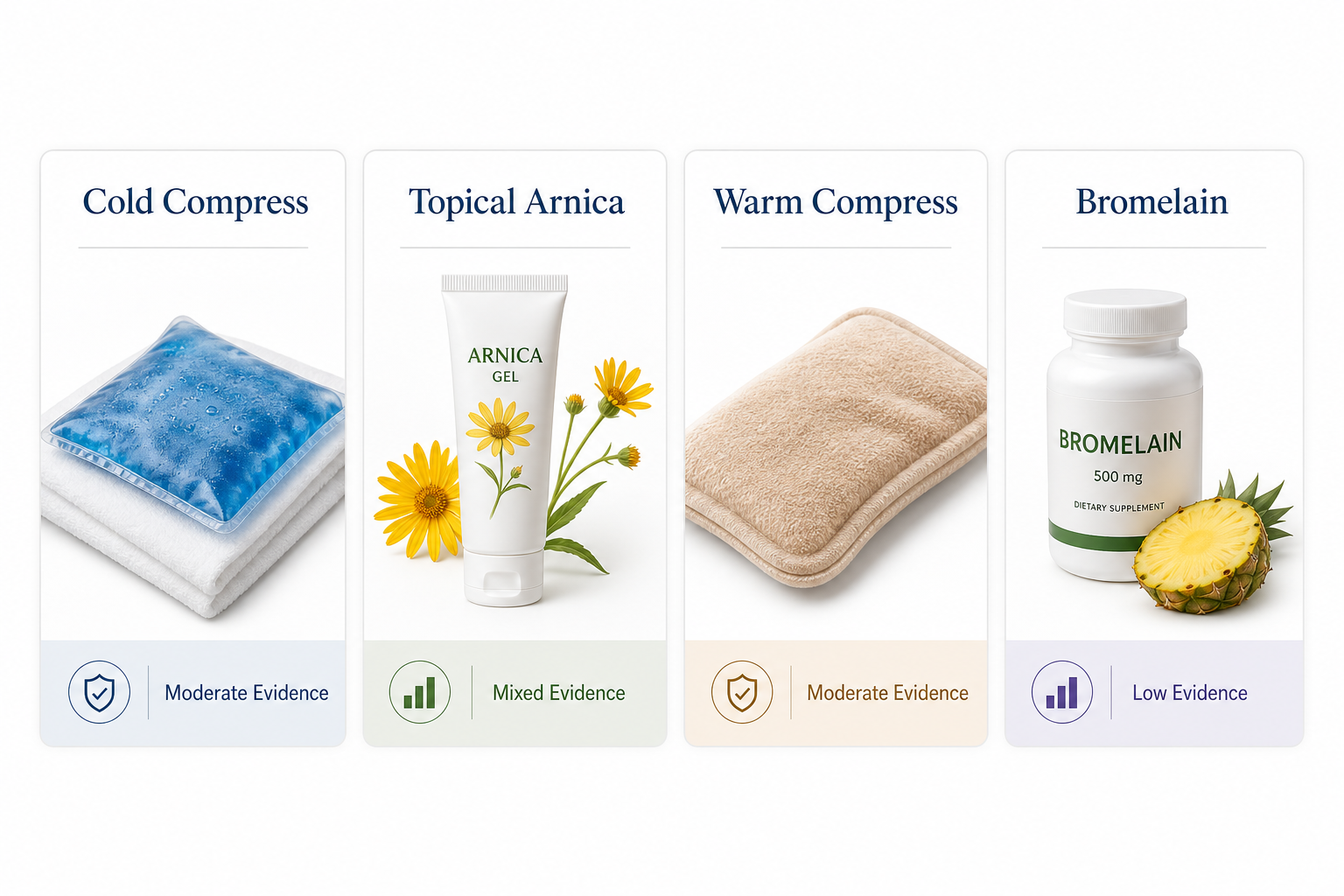
Cold Compress in the First 24 Hours
Applying a cold compress within the first 24 hours after treatment causes local vasoconstriction — narrowing of blood vessels — which can help limit the amount of blood that leaks into surrounding tissue. Wrap an ice pack or cold gel pack in a clean cloth and apply it gently to the bruised area for 10 to 15 minutes at a time. Avoid pressing firmly on the treated area, as this could theoretically affect product placement in the very early hours after injection. Cold application is most useful in the first few hours; once a bruise has fully formed, cold does not meaningfully speed its resolution.
Warm Compress After 48 Hours
After the first 48 hours, switching to a warm compress after 48 hours may help by promoting local circulation and encouraging the body to reabsorb the pooled blood more efficiently. Apply a warm (not hot) cloth for 10 to 15 minutes, two to three times daily. This is a low-risk measure that many practitioners recommend, though robust clinical trial evidence specifically for Botox bruises is limited.
Topical Arnica
Topical arnica is one of the most frequently recommended remedies for bruising after cosmetic injections. Arnica montana contains helenalin, a compound thought to have mild anti-inflammatory properties. One randomised controlled trial (Leu et al., 2010) found that a 20% topical arnica preparation outperformed placebo in reducing laser-induced bruising, but systematic reviews of the broader evidence base describe the overall evidence as insufficient to draw firm conclusions. Topical arnica is generally well tolerated when applied to intact skin and is unlikely to cause harm, but patients should have realistic expectations: it may modestly support healing rather than dramatically accelerating it. Oral arnica supplements have less evidence and are not routinely recommended.
Bromelain
Bromelain is a pineapple-derived enzyme sometimes suggested for bruise healing. Some studies in surgical settings have shown a signal toward reduced bruising and swelling, but the evidence is mixed and no trials have specifically tested bromelain on Botox-related bruising. It may be worth discussing with your practitioner if you are prone to bruising, but it should not be presented as a proven solution.
Vitamin K Cream
Topical vitamin K cream has some evidence for reducing bruising associated with laser treatments. Its mechanism involves supporting the coagulation pathway locally. Evidence for its use specifically after injectable treatments is limited, but it is considered low-risk when applied to intact skin after a bruise has formed.
Evidence Scorecard for Common Bruise Remedies
| Remedy | Evidence Quality | Practical Verdict |
|---|---|---|
| Cold compress (first 24 h) | Moderate — limits bruise formation; does not speed resolution of formed bruise | Useful immediately post-treatment |
| Warm compress (after 48 h) | Low — theoretical benefit; widely recommended in practice | Reasonable low-risk measure |
| Topical arnica (20%) | Mixed — one positive RCT; systematic reviews inconclusive | May help; set realistic expectations |
| Bromelain (oral) | Mixed — some surgical evidence; not tested on Botox bruises | Discuss with practitioner if prone to bruising |
| Vitamin K cream | Limited — some laser-bruise evidence; not Botox-specific | Low risk; may offer modest benefit |
| Red light therapy | Emerging / anecdotal — no robust Botox-specific trials | Insufficient evidence to recommend routinely |
What to Avoid After Botox to Reduce Bruising
Certain activities and substances can worsen bruising or slow healing in the days following treatment. Standard post-treatment aftercare guidance typically includes the following:
- Alcohol: Avoid for at least 24 hours post-treatment. Alcohol causes vasodilation and can increase bruise size.
- Strenuous exercise: Avoid intense physical activity for 24 hours. Elevated heart rate and blood pressure increase blood flow to the skin and may worsen bruising.
- Saunas and hot baths: Heat causes vasodilation. Avoid for at least 24 hours after treatment.
- Touching or massaging the treated area: Avoid pressing, rubbing, or massaging injection sites in the first few hours, as this may affect product distribution and could aggravate bruising.
- Non-essential blood-thinning supplements: If you did not pause these before treatment, continuing them after treatment may prolong bruising. Discuss with your practitioner.
Can You Cover a Botox Bruise with Makeup?
Most practitioners advise waiting at least 24 hours before applying makeup to treated areas, to allow injection sites to close and reduce the risk of introducing bacteria. After this window, makeup can be used to conceal bruising. Mineral formulas are generally preferred as they are less likely to irritate recently injected skin.
A color-correcting concealer can be particularly effective at neutralising bruise tones before applying foundation. The principle is to use a corrector in the opposite colour on the colour wheel to the bruise:
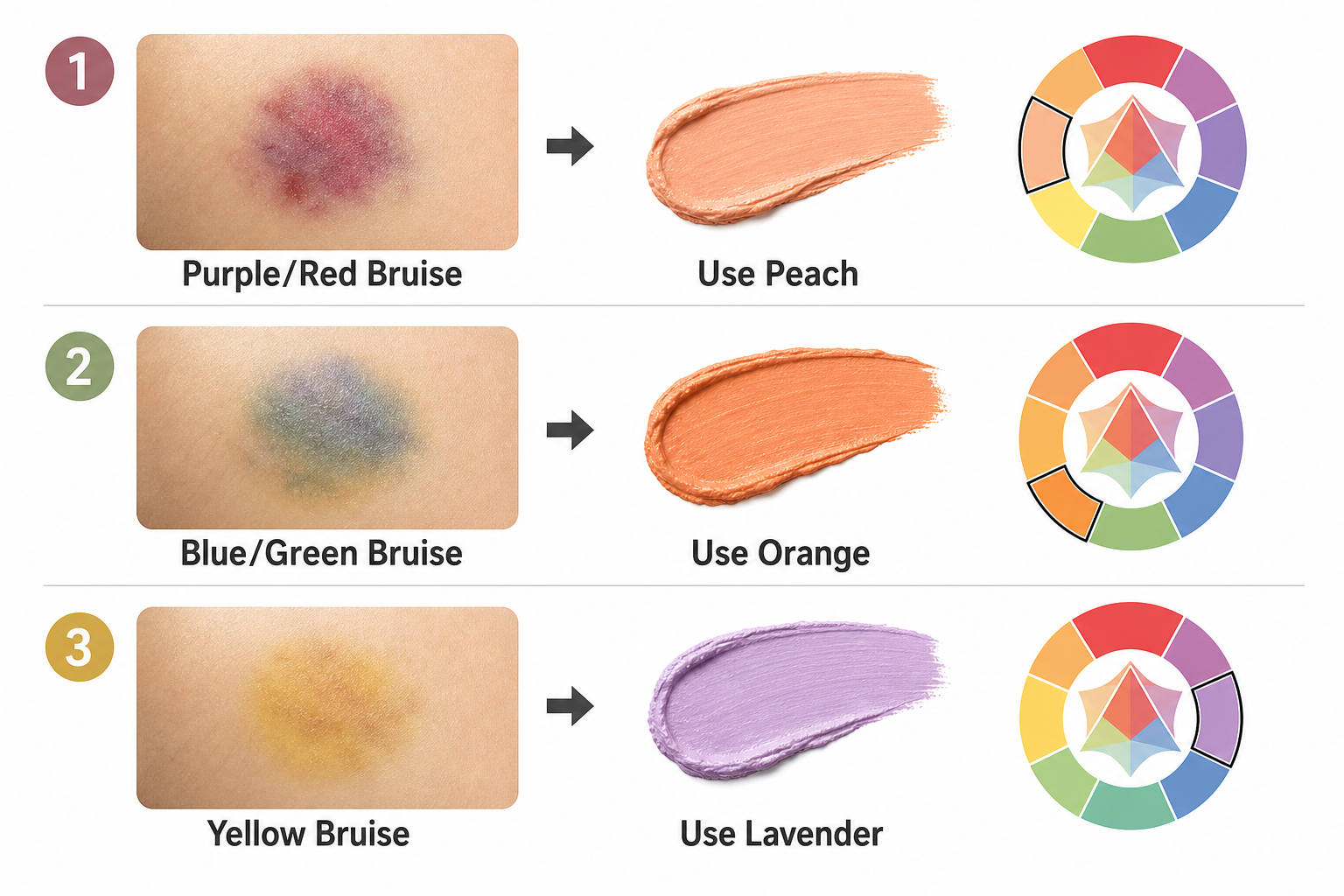
- Purple or red bruise (days 1–3): Use a peach or salmon-toned color-correcting concealer to neutralise the purple-red tone before applying foundation.
- Blue or green bruise (days 3–5): A peach or orange corrector works well for blue tones; a red or pink corrector can counteract green.
- Yellow bruise (days 5–10): A lavender or light purple corrector neutralises yellow tones. At this stage, the bruise is usually faint enough that standard concealer alone may be sufficient.
Apply corrector sparingly with a clean brush or sponge, set with a light translucent powder, and layer foundation or concealer over the top. Avoid heavy rubbing over injection sites.
How to Reduce Bruising Before Your Next Appointment
If you bruised significantly after a previous Botox treatment, there are practical steps you can take before your next appointment to reduce the likelihood of it happening again.
- Pause non-essential blood-thinning supplements — such as fish oil, vitamin E, ginkgo biloba, and high-dose turmeric — for approximately 5 to 7 days before treatment, after discussing this with your practitioner. Do not stop any prescribed anticoagulant or antiplatelet medication without explicit guidance from your prescribing doctor.
- Avoid alcohol for at least 24 hours before your appointment.
- Schedule treatment mid-cycle if you have noticed increased bruising around menstruation.
- Avoid intense exercise on the day of treatment.
- Ask your practitioner about applying a cold pack to the treatment area immediately before injection — some evidence suggests pre-cooling may reduce bruise formation.
- Choose an experienced injector with a strong knowledge of facial anatomy. Technique, needle gauge, and injection depth all influence bruising risk.
- Schedule Botox at least two weeks before an important event to allow adequate time for any bruising to resolve.
Does Bruising Get Better with Repeated Treatments?
This is a question that rarely appears in patient-facing resources. The honest answer is that there is no strong clinical evidence showing that bruising consistently improves or worsens with repeated Botox treatments. Some patients report less bruising over time, possibly because their practitioner becomes more familiar with their individual anatomy and vessel patterns. Others find bruising remains similar across sessions. Skin fragility tends to increase with age, which may offset any technique-related improvements over years of treatment. Discussing your bruising history with your practitioner before each appointment remains the most practical approach.
Botox Bruising in Darker Skin Tones
Most published guidance on bruise color progression is written with lighter skin tones in mind, and this represents a genuine gap in patient education. In patients with medium to deep skin tones, bruise color changes may be less visible at the surface — the purple and green stages may appear more muted or may present as a darker patch rather than a distinctly coloured bruise. This does not mean bruising is less likely to occur; it means the visual cues used to track healing may look different. Patients with deeper skin tones should still follow the same aftercare principles and the same timeline expectations, and should contact their practitioner if a bruise feels firm, is growing, or has not improved after two weeks.
When Should You Contact Your Practitioner?
The vast majority of bruises after Botox are normal and temporary. However, certain signs warrant professional assessment rather than watchful waiting.
- The bruise is still dark, growing, or has not begun to fade after 14 days.
- The bruise is raised, firm, or feels like a lump under the skin — this may indicate a hematoma rather than a flat bruise.
- Pain at the injection site is worsening rather than improving after the first day or two.
- The skin around the bruise is becoming red, warm, or swollen in a way that suggests infection.
- You develop a fever alongside localised skin changes.
- The skin immediately around the bruise appears pale or blanched — this may indicate pressure on local blood supply.
- You notice drooping of an eyelid or brow, or any change in vision — these are unrelated to bruising and require prompt practitioner contact.
Eyelid drooping and vision changes are not caused by bruising; they relate to product placement and are a separate clinical concern. If either occurs, contact your practitioner promptly regardless of whether bruising is present.
Frequently Asked Questions
Is bruising after Botox normal?
Yes. Bruising is a recognised and common side effect of any injection, including neuromodulator injections. It occurs when the needle passes through a small blood vessel. It does not indicate that the treatment was performed incorrectly or that the product has been placed in the wrong area.
How long does a Botox bruise last on average?
Most mild bruises resolve within 3 to 7 days. Larger bruises, or those in patients who are prone to bruising or take blood-thinning medications, may take up to 10 to 14 days to fully clear. Bruising beyond two weeks is uncommon and warrants a practitioner review.
Can I exercise after Botox if I have a bruise?
It is generally advisable to avoid strenuous exercise for at least 24 hours after Botox treatment, with or without bruising. Elevated blood pressure and heart rate from exercise can worsen bruising in the early hours after injection. Light walking is usually acceptable.
Will arnica definitely get rid of my bruise faster?
Topical arnica may offer modest support for bruise healing, but the evidence is mixed and no trials have specifically tested it on Botox bruises. It is unlikely to cause harm when applied to intact skin, but patients should not expect dramatic acceleration of healing.
Should I stop my blood thinners before Botox?
You should never stop a prescribed anticoagulant or antiplatelet medication — such as warfarin, aspirin prescribed for cardiovascular protection, or clopidogrel — without explicit guidance from your prescribing doctor. Non-essential supplements with blood-thinning properties, such as fish oil or vitamin E, can often be paused before treatment after discussing this with your practitioner. Always disclose all medications and supplements at your consultation.
How soon before an event should I book Botox?
It is generally recommended to schedule Botox at least two weeks before an important event. This allows time for any bruising to fully resolve and for the treatment results to settle. Some practitioners suggest allowing three to four weeks if you have a history of significant bruising.
Can petechiae appear after Botox?
Petechiae — tiny pinpoint red dots at the needle entry points — can occasionally appear after Botox injections, particularly in areas with very fine skin. They are caused by minor capillary bleeding at the surface and typically resolve within a few days. They are distinct from a spreading bruise and are generally not a cause for concern.
Planning Your Recovery Realistically
Bruising after Botox is a common, temporary, and manageable side effect. For most patients, injection-site bruising is mild and resolves within a week without any specific intervention beyond basic post-treatment aftercare. Understanding the bruise color progression — and knowing that a bruise often looks darker on day 2 or 3 before it begins to fade — removes much of the anxiety that patients experience in the days after treatment.
If you are prone to bruising, a conversation with your practitioner before your next appointment is worthwhile. Adjusting your supplement routine, timing your appointment mid-cycle, avoiding alcohol beforehand, and choosing an experienced injector with strong anatomical knowledge are all practical steps that can meaningfully reduce your risk. Covering residual bruising with a color-correcting concealer and mineral makeup is a safe and effective short-term option once injection sites have closed.
If you have concerns about a bruise that is not following the expected timeline, feels firm or raised, or is accompanied by worsening pain or skin changes, contact your practitioner for an assessment rather than waiting. Most bruises resolve without any intervention — but knowing when to seek advice is an important part of safe post-treatment care.