What Is a TCA Peel? Uses, Benefits, Risks and What to Expect
Trichloroacetic acid (TCA) is a medical-grade chemical compound used in controlled skin resurfacing treatments. A TCA peel applies this acid to the skin at carefully selected concentrations to remove damaged outer layers, stimulate collagen production, and improve a range of skin concerns — from acne scars and hyperpigmentation to fine lines and sun damage. Understanding how TCA works, what it can realistically achieve, and where its limitations lie can help you decide whether a consultation with a qualified practitioner is the right next step.
Key Takeaways
- TCA (trichloroacetic acid) is a self-neutralizing chemical peel that can be applied at superficial, medium, or deep concentrations depending on the skin concern being treated.
- It is most commonly used for acne scarring, hyperpigmentation, photoaging, fine lines, and uneven skin texture, with clinical evidence supporting its effectiveness across these indications.
- Downtime ranges from a few days to two weeks depending on concentration; medium-depth peels typically require 7–14 days of recovery.
- Skin of color requires careful pre-treatment and lower concentrations to reduce the risk of post-inflammatory hyperpigmentation (PIH).
- TCA concentrations above approximately 20–25% should only be applied by a trained professional; higher-strength treatments carry meaningful risks if performed without clinical oversight.
What Is Trichloroacetic Acid?
Trichloroacetic acid is a halogenated derivative of acetic acid. In aesthetic medicine, it has been used as a chemical peeling agent for decades and remains one of the most clinically studied options available. Unlike some other chemical peels, TCA is self-neutralizing — meaning it does not require a separate neutralizing agent to stop its action. Once applied to the skin, the acid reacts with skin proteins and halts its own penetration as the tissue response develops, which gives practitioners a degree of predictability when managing peel depth.
TCA is water-soluble and can be formulated at a wide range of concentrations, typically from around 10% up to 50% or higher. This flexibility makes it suitable for a broad spectrum of clinical applications, from mild skin refreshing to more intensive resurfacing. The concentration selected directly determines how deeply the peel penetrates the skin and, consequently, how significant the results and recovery period will be.
How Does a TCA Peel Work?
When trichloroacetic acid contacts the skin, it causes protein denaturation — a process sometimes called keratocoagulation — in which the structural proteins within skin cells are disrupted. This creates a controlled injury that triggers the skin’s natural repair response. Dead skin cells are shed, fibroblasts are activated, and the body begins producing new collagen and elastin as part of the healing process. This collagen remodeling is central to the long-term improvements in skin texture and firmness that TCA peels can provide.
A visible sign of TCA’s action during treatment is frosting — a white or grey-white discolouration that appears on the skin as the acid reacts with keratin proteins. Practitioners use frosting as a clinical indicator of peel depth. Frosting is broadly categorized into three levels: Level I presents as mild erythema (redness) with a light frost, indicating superficial penetration; Level II shows a more uniform white coating over a pink background, suggesting the peel has reached the upper papillary dermis; Level III produces a solid, opaque white frost with little or no background redness, indicating deeper penetration into the reticular dermis. Monitoring frosting levels allows a trained professional to gauge how deeply the peel is working and to avoid over-treatment.
TCA Peel Concentrations and Depth
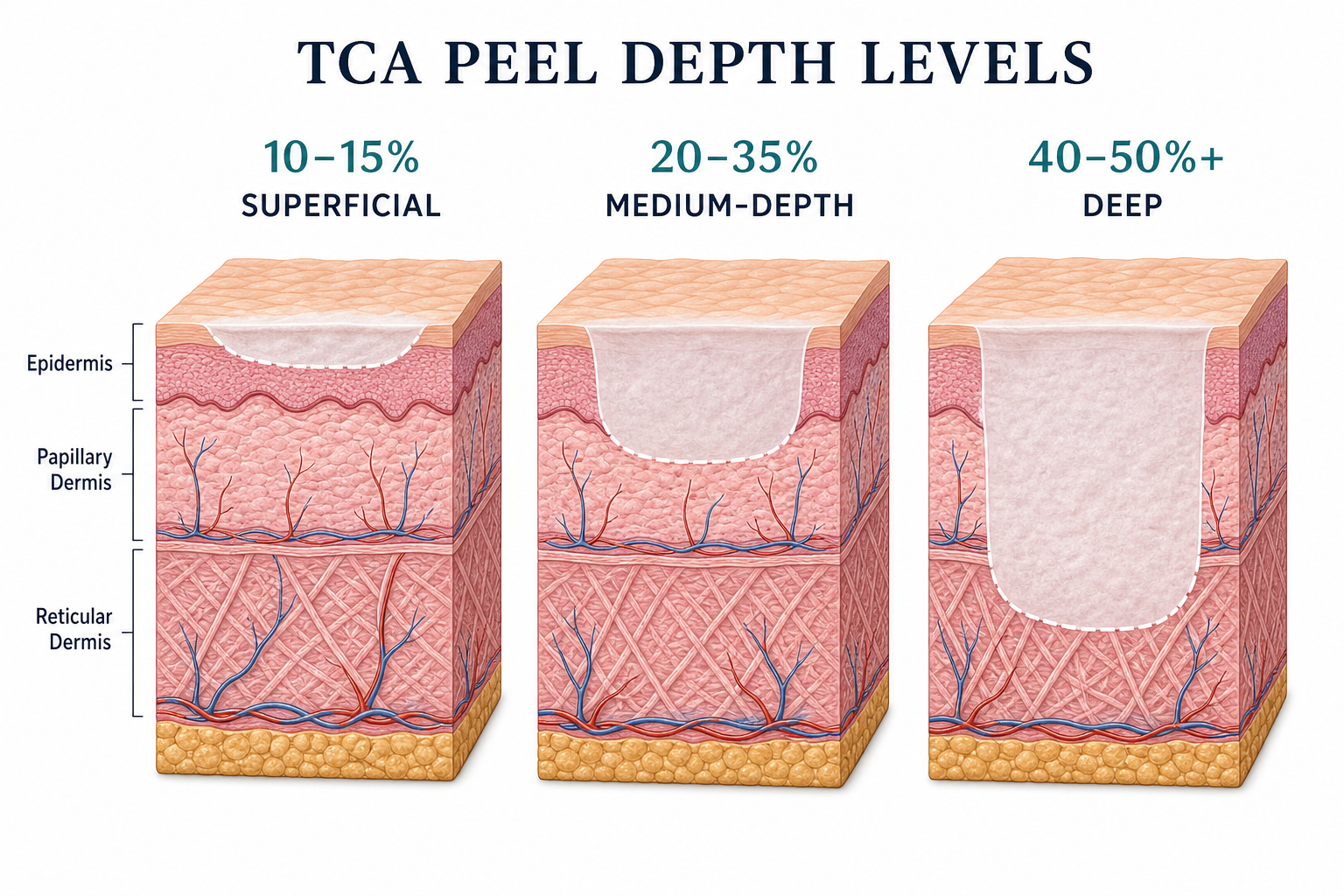
The relationship between TCA concentration and peel depth is one of the most important concepts for understanding what a given treatment can and cannot achieve. The table below summarizes the general clinical framework, though individual skin characteristics, application technique, and the number of passes applied can all influence actual depth.
| Concentration Range | Peel Depth | Typical Uses | Expected Downtime |
|---|---|---|---|
| 10–15% | Superficial (epidermis) | Mild texture, dullness, minor pigmentation | 2–5 days of light flaking |
| 20–35% | Medium-depth (papillary dermis) | Acne scars, moderate hyperpigmentation, fine lines, photoaging | 7–14 days |
| 40–50%+ | Deep (reticular dermis) | Deep wrinkles, significant scarring, severe photodamaged skin | 2–4 weeks or more |
Superficial TCA peels at 10–15% remove dead skin cells from the outermost epidermal layers and are associated with minimal downtime. Medium-depth peels at 20–35% are the most commonly performed in clinical settings and represent the concentration range with the strongest evidence base for treating acne scars, melasma, and photoaging. Deep peels at 40% and above carry a higher risk profile and are less commonly used as standalone treatments today, partly because fractional laser technology can achieve comparable results with a more controllable safety margin.
What Is a TCA Peel Used For?
TCA peels are among the most versatile chemical peeling options available, with clinical applications spanning several common skin concerns.
Acne Scars and TCA CROSS
One of the most evidence-supported uses of TCA is in the treatment of acne scarring, particularly ice-pick scars. The TCA CROSS technique (Chemical Reconstruction of Skin Scars) involves applying a high concentration of TCA — typically 70–100% — focally to individual scar pits using a fine applicator, rather than spreading it across the whole face. This focal application causes controlled necrosis within the scar channel, stimulating collagen production and gradually filling the depressed scar from the base upward. Clinical studies suggest that TCA CROSS may achieve meaningful improvement in ice-pick scar depth over a series of three to six sessions, with published improvement rates in the range of 50–80% in suitable candidates. Results vary depending on scar depth, skin type, and the number of sessions completed.
Hyperpigmentation and Melasma
TCA peels at medium concentrations are used to address hyperpigmentation, including sunspots, age spots, and melasma. By removing pigment-containing epidermal cells and stimulating cell turnover, TCA can help even out uneven skin tone. However, melasma is a complex condition with a dermal as well as epidermal component in some patients, and TCA peels do not reliably address the dermal pigment. Comparative studies have examined TCA against glycolic acid peels for melasma, with results suggesting both can be effective, though neither offers a permanent solution. Melasma is prone to recurrence, particularly with sun exposure, and ongoing sun protection is essential after treatment.
Photoaging and Sun Damage
Photodamaged skin — characterized by fine lines, rough texture, dullness, and irregular pigmentation caused by cumulative UV exposure — responds well to medium-depth TCA peels. By removing the damaged epidermal and superficial dermal layers and triggering collagen remodeling, TCA can improve skin texture, reduce the appearance of fine lines and wrinkles, and restore a more even skin tone. Actinic keratosis, a precancerous skin lesion caused by chronic sun damage, is also a recognized indication for TCA peeling, and treatment should be discussed with a dermatologist in this context.
Fine Lines, Wrinkles, and Skin Texture
Medium-depth TCA peels can reduce the appearance of fine lines and superficial wrinkles by stimulating new collagen and elastin formation in the papillary dermis. Improvements in rough skin texture and overall skin quality are commonly reported. Deeper wrinkles may require higher concentrations, combination approaches, or alternative treatments such as fractional laser resurfacing for meaningful improvement.
Body Applications
While TCA peels are most frequently applied to the face, they can also be used on the chest, back, hands, and upper arms to address sun damage, rough texture, and pigmentation in these areas. Body skin generally tolerates peels differently from facial skin — it tends to heal more slowly and may carry a higher risk of scarring — so concentration selection and technique require adjustment when treating non-facial areas.
Who May Be a Suitable Candidate?
TCA peels may be appropriate for adults with realistic expectations who are seeking improvement in one or more of the skin concerns described above. Good candidates typically have stable overall health, are not currently experiencing active skin infections or inflammatory conditions in the treatment area, and are willing to follow pre- and post-treatment care instructions carefully.
Fitzpatrick skin type is an important consideration. The Fitzpatrick scale classifies skin from Type I (very fair, always burns) to Type VI (deeply pigmented, never burns). Patients with Fitzpatrick Types I–III generally carry a lower risk of post-inflammatory hyperpigmentation following TCA peels. Those with Fitzpatrick Types IV–VI — including many patients with South Asian, East Asian, Middle Eastern, Latin American, or African heritage — have a higher risk of PIH, which can temporarily worsen pigmentation after treatment. This does not mean TCA peels are unsuitable for skin of color, but it does mean that careful pre-treatment priming, lower starting concentrations, and close clinical monitoring are essential. A board-certified dermatologist with experience treating diverse skin tones should be consulted before proceeding.
TCA peels are generally not recommended during pregnancy or breastfeeding, in patients with active cold sores or open wounds in the treatment area, in those taking isotretinoin (typically a waiting period of at least six months after stopping is advised), or in individuals with a history of abnormal scarring such as keloids.
Pre-Peel Preparation
Pre-peel priming is an important step that can improve outcomes and reduce the risk of complications, particularly PIH. A typical preparation protocol may begin four to six weeks before the peel and can include daily application of a broad-spectrum SPF, a retinoid such as tretinoin to accelerate cell turnover and thin the stratum corneum, and a tyrosinase inhibitor such as hydroquinone or azelaic acid to suppress melanin production and reduce PIH risk in higher Fitzpatrick skin types.
In the days immediately before treatment, certain products and medications need to be paused. Retinoids are typically stopped three to five days before the peel to avoid excessive sensitivity. Waxing, laser treatments, and other resurfacing procedures should be avoided in the weeks prior. Your practitioner will provide a specific pre-treatment schedule tailored to your skin type and the concentration planned.
What Happens During a TCA Peel Appointment?
A TCA peel is typically performed as an outpatient procedure in a dermatologist’s office or medical spa. The appointment usually begins with thorough cleansing of the skin to remove oils and residue that could affect acid penetration. A degreasing agent such as acetone may also be applied. The TCA solution is then carefully applied to the treatment area using gauze, cotton-tipped applicators, or a brush, depending on the technique and concentration being used.
During application, patients typically experience a burning or stinging sensation, which is expected and usually subsides within a few minutes as the self-neutralizing process takes effect. Frosting is observed and used to guide the depth of treatment. For medium-depth peels, the entire process from application to completion generally takes 30–60 minutes including preparation. A fan or cool air may be used to provide comfort during the procedure. No separate neutralizing step is required, which distinguishes TCA from glycolic acid peels that must be actively neutralized.
Recovery and Downtime Timeline
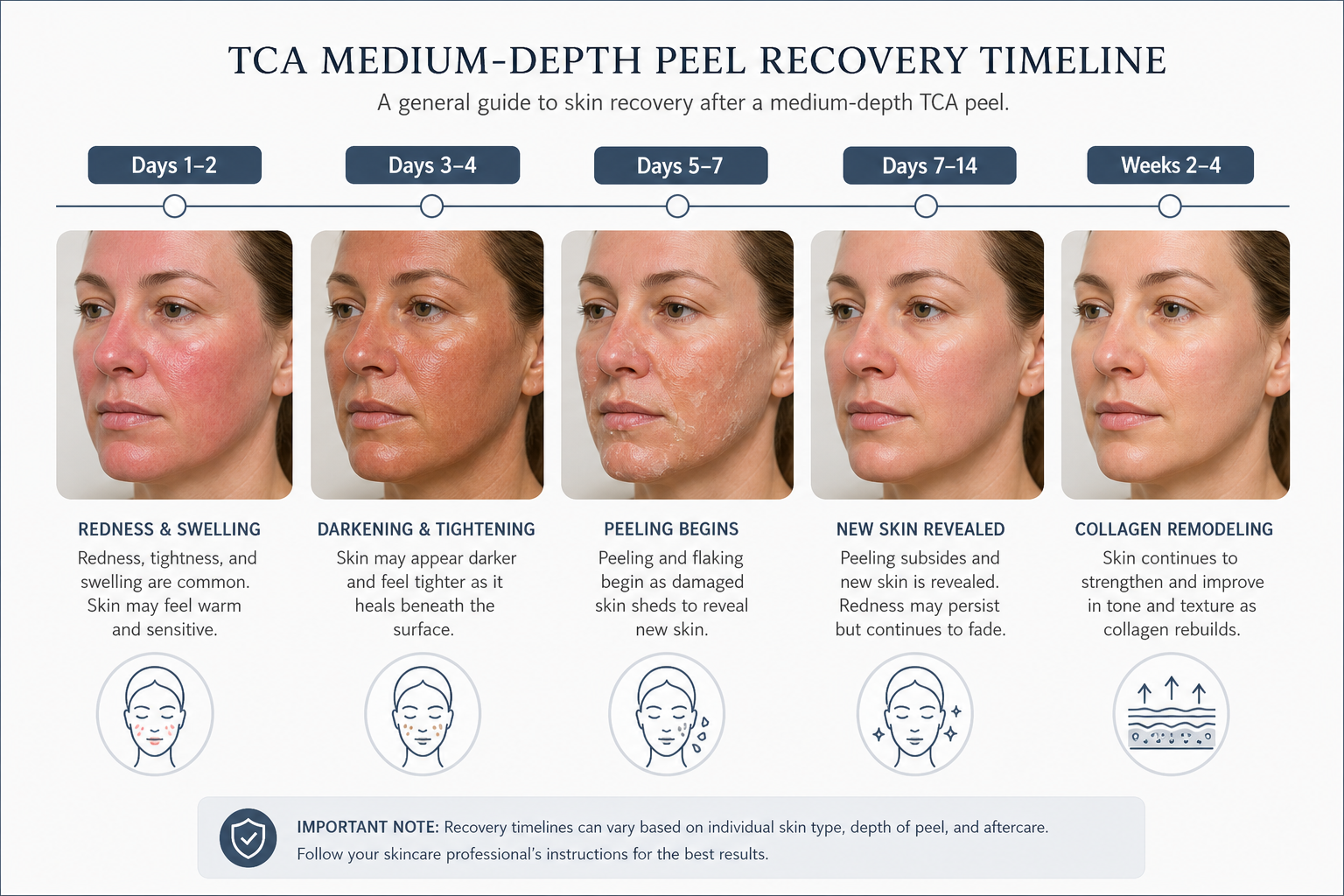
Recovery from a TCA peel varies significantly depending on the concentration used. The following timeline reflects a typical medium-depth peel at 20–35%.
- Days 1–2: Redness, tightness, and mild swelling. The skin may feel warm and appear sunburned. Some patients experience mild discomfort.
- Days 3–4: The skin begins to darken and tighten. A brown or bronze discolouration is common and indicates that the outer layers are preparing to shed.
- Days 5–7: Peeling and flaking begin, often starting around the mouth and nose. It is important not to pick or forcibly remove peeling skin, as this can increase the risk of scarring or PIH.
- Days 7–14: Peeling resolves and new skin is revealed. The skin may appear pink or sensitive initially. Most patients feel comfortable returning to normal activities by the end of this period, though some redness may persist.
- Weeks 2–4 and beyond: Collagen remodeling continues beneath the surface. Improvements in texture, tone, and fine lines typically become more apparent over the following weeks to months.
Superficial TCA peels involve considerably less downtime — typically two to five days of light flaking — while deep peels may require two to four weeks or more of recovery and carry a higher risk of complications.
Risks and Side Effects
TCA peels are associated with a range of potential side effects, most of which are temporary and expected as part of the healing process. These include redness, swelling, burning, tightness, crusting, and peeling. Temporary darkening of the skin before it sheds is normal.
More significant risks include post-inflammatory hyperpigmentation, which is more common in darker Fitzpatrick skin types and can be prolonged if sun protection is not maintained. Hypopigmentation — a lightening of the skin — is a less common but more concerning risk, particularly with deeper peels, and may be permanent in some cases. Infection, including reactivation of herpes simplex virus (cold sores), is possible; prophylactic antiviral medication is often prescribed for patients with a history of cold sores. Scarring is rare when TCA peels are performed by a trained professional at appropriate concentrations, but the risk increases with higher concentrations, improper technique, or post-peel trauma such as picking at the skin.
Prolonged sun exposure after a TCA peel significantly increases the risk of PIH and can compromise results. Broad-spectrum SPF 30 or higher should be applied daily throughout recovery and maintained as an ongoing habit afterward.
TCA Peel vs. Other Chemical Peels and Treatments
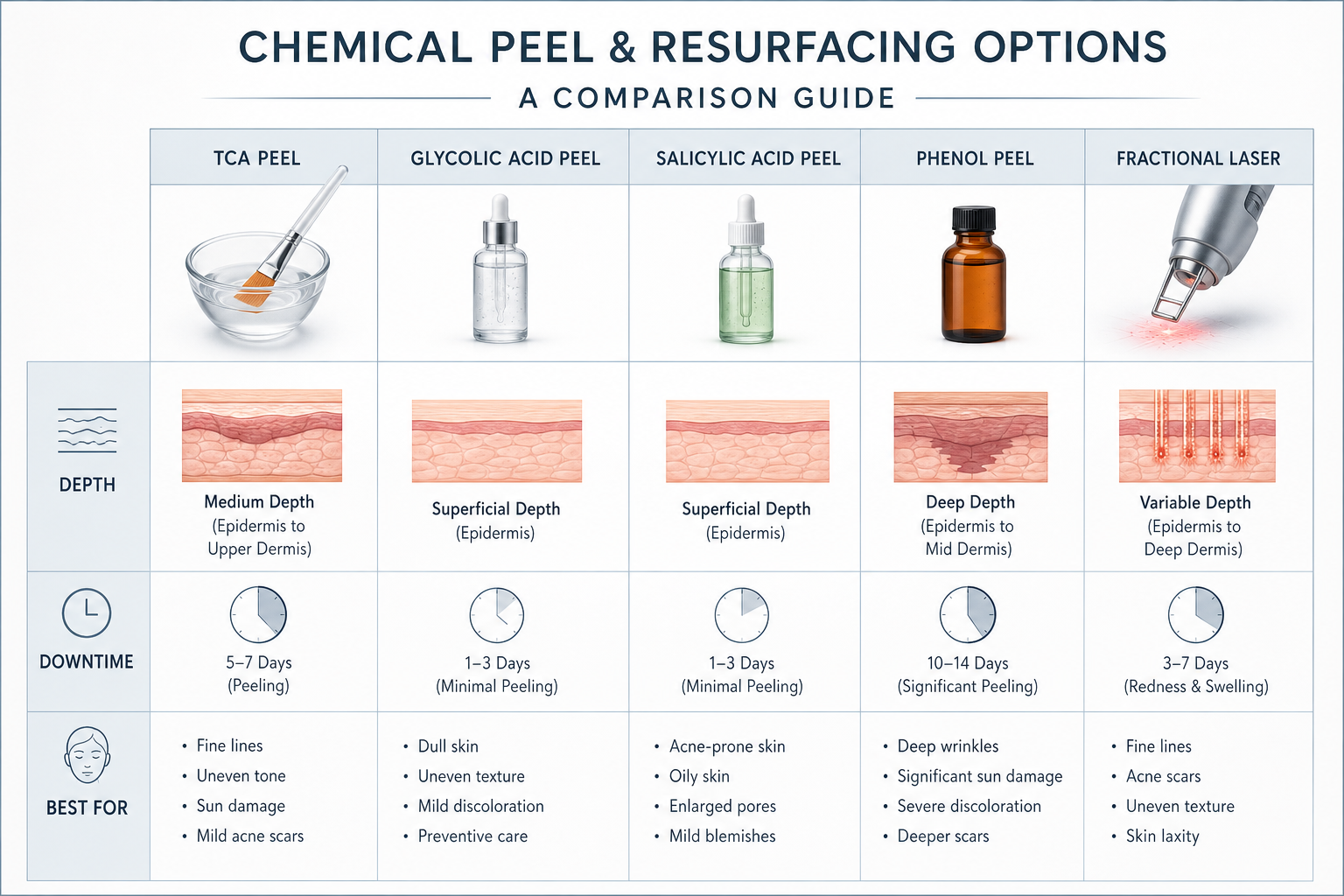
Understanding how TCA compares to other peeling agents and resurfacing options can help clarify whether it is the most appropriate choice for a given concern.
| Treatment | Type | Depth | Key Uses | Downtime | Notable Consideration |
|---|---|---|---|---|---|
| TCA peel (20–35%) | Medium-depth chemical peel | Papillary dermis | Acne scars, pigmentation, photoaging | 7–14 days | Self-neutralizing; versatile concentration range |
| Glycolic acid peel | Superficial chemical peel (AHA) | Epidermis | Mild texture, dullness, mild pigmentation | 1–3 days | Requires active neutralization; milder results |
| Salicylic acid peel | Superficial chemical peel (BHA) | Epidermis | Acne, oily skin, mild pigmentation | Minimal | Oil-soluble; good for acne-prone skin |
| Phenol peel | Deep chemical peel | Reticular dermis | Deep wrinkles, severe photoaging | 3–6 weeks | Cardiac monitoring required; significant risks |
| Fractional laser | Energy-based resurfacing | Variable | Scars, wrinkles, texture, pigmentation | 5–14 days | More controllable depth; higher cost per session |
Glycolic acid peels are gentler and require less downtime but generally produce more modest results for deeper concerns such as acne scarring. Salicylic acid peels are particularly useful for acne-prone and oily skin types. Phenol peels achieve the deepest penetration but carry significant systemic risks and require careful medical monitoring. Fractional laser resurfacing offers precise depth control and may be preferable for patients with darker skin tones or those seeking a more controlled risk profile, though it typically comes at a higher cost per session. The choice between TCA and fractional laser often depends on the specific concern, skin type, budget, and the practitioner’s clinical judgment.
Combination therapy protocols — such as applying Jessner’s solution before 35% TCA to enhance penetration — are used by some practitioners to achieve more consistent medium-depth results. These combination approaches require clinical expertise and are not appropriate for at-home use.
At-Home vs. Professional TCA Peel
At-home TCA peel kits are commercially available, typically at concentrations of 10–15%. At these lower concentrations, the risk profile is considerably lower than professional-strength formulations, and the treatment is broadly comparable to other superficial peels available for home use. Results at these concentrations are modest — primarily mild improvements in texture and dullness — and are unlikely to address deeper concerns such as acne scarring or significant hyperpigmentation.
TCA concentrations above approximately 20–25% should only be applied by a licensed professional. At these strengths, the margin between a therapeutic result and a complication such as scarring or PIH narrows considerably. Many US states regulate the application of TCA above certain concentrations, requiring a licensed medical or aesthetic professional to perform the treatment. Attempting medium- or deep-depth TCA peels at home carries a meaningful risk of permanent skin damage. If your concern warrants a concentration above 15%, an in-office consultation is the appropriate route.
How Much Does a TCA Peel Cost?
The cost of a professional TCA peel varies depending on the concentration used, the treatment area, the practitioner’s qualifications, and the geographic location of the clinic. In general, superficial TCA peels may range from approximately £80–£200 per session, while medium-depth peels typically fall in the range of £150–£500 or more. Deep peels and specialist techniques such as TCA CROSS may be priced differently and often require multiple sessions to achieve optimal results. At-home kits at lower concentrations are available for £20–£80, though their clinical utility is limited compared to professional treatments. A consultation with a board-certified dermatologist or qualified aesthetic practitioner is the best way to receive an accurate cost estimate based on your specific skin concerns and treatment plan.
Frequently Asked Questions
Is a TCA peel painful?
Most patients experience a burning or stinging sensation during TCA peel application, which typically lasts a few minutes and subsides as the self-neutralizing process takes effect. The intensity varies with concentration — superficial peels are generally well tolerated, while medium-depth peels may cause more noticeable discomfort. Practitioners often use a fan or cool air to improve comfort during the procedure.
How many TCA peel sessions are needed?
This depends on the concern being treated and the concentration used. A single medium-depth TCA peel may produce noticeable improvement in photoaging or pigmentation. Acne scarring, particularly with the TCA CROSS technique, typically requires a series of three to six sessions spaced four to six weeks apart. Your practitioner will recommend a treatment plan based on your individual assessment.
How long do TCA peel results last?
TCA peel results are not permanent. Collagen remodeling continues for several months after treatment, and improvements in texture, tone, and fine lines can be long-lasting with proper sun protection and skincare maintenance. However, ongoing photoaging, hormonal changes, and lifestyle factors can cause concerns to recur over time. Periodic maintenance treatments and consistent broad-spectrum SPF use are important for sustaining results.
Can TCA peels be used on darker skin tones?
TCA peels can be used on darker Fitzpatrick skin types, but they require careful pre-treatment priming with agents such as hydroquinone or azelaic acid, lower starting concentrations, and close monitoring by an experienced practitioner. The risk of post-inflammatory hyperpigmentation is higher in Fitzpatrick Types IV–VI, and this risk must be discussed and managed proactively. A practitioner with specific experience in treating skin of color is strongly recommended.
What is the difference between a TCA peel and a VI Peel?
The VI Peel is a branded combination peel that contains TCA alongside other acids including salicylic acid, phenol, and vitamin C. It is formulated to be suitable for a range of skin types including darker tones, and is marketed as a medium-depth peel with a relatively straightforward recovery. A standalone TCA peel gives the practitioner more direct control over concentration and depth. Both approaches have their place; the choice depends on the specific concern, skin type, and the practitioner’s preferred protocol.
Can TCA peels be used on the body?
Yes, TCA peels can be applied to areas such as the chest, back, hands, and upper arms to address sun damage, rough texture, and pigmentation. Body skin heals more slowly than facial skin and may carry a higher risk of scarring, so concentration selection and technique require adjustment. Body TCA peels should always be performed by an experienced professional.
Is a TCA Peel the Right Choice for Your Skin Concerns?
A TCA peel is a well-established, clinically supported skin resurfacing option with a meaningful evidence base across several common concerns — including acne scarring, hyperpigmentation, photoaging, and uneven skin texture. Its versatility across concentration levels makes it adaptable to a range of treatment goals and skin types, though the risk profile increases meaningfully at higher concentrations and in patients with darker skin tones who have not undergone appropriate pre-treatment preparation.
TCA peels are not suitable for everyone, and realistic expectations are important. They can produce significant improvements in skin quality, but results are not permanent, downtime is real, and the treatment requires careful pre- and post-peel management to minimize the risk of complications. For deeper concerns such as ice-pick acne scars, multiple sessions are typically needed before meaningful improvement becomes apparent.
If you are considering a TCA peel, a consultation with a board-certified dermatologist or qualified aesthetic practitioner is the appropriate starting point. A clinical assessment of your skin type, concerns, medical history, and treatment goals will determine whether TCA is the most suitable approach — and if so, which concentration and technique are most appropriate for you.