Dental Block for Lip Filler: How Nerve Blocks Work, Benefits and Risks
A dental block for lip filler is a form of regional anesthesia that numbs the nerves supplying the lips before injections begin, offering a significantly more comfortable experience than topical numbing cream alone. Whether one is appropriate for you depends on your pain threshold, the complexity of the treatment planned, and your injector’s clinical judgement. This guide explains how dental blocks work, which nerves are involved, what the procedure actually feels like, and the genuine trade-offs you should understand before deciding.
Key Takeaways
- A dental block targets specific facial nerves — typically the infraorbital nerve for the upper lip and the mental nerve for the lower lip — to create deep, regional numbness before lip filler is placed.
- Topical numbing cream, pre-incorporated lidocaine in modern fillers, and the cannula technique are all alternatives that may be sufficient for many patients without the need for a nerve block.
- Dental blocks offer meaningful benefits for patients with low pain tolerance, needle anxiety, or complex treatment plans, but they carry their own risks and practical limitations that are worth understanding.
- The numbness from a dental block typically lasts one to two hours, during which eating, drinking hot liquids, and assessing lip symmetry can all be affected.
- Only a qualified practitioner with appropriate training in facial anatomy and local anaesthetic administration should perform a dental block in an aesthetic setting.
What Is a Dental Block for Lip Filler?
A dental block for lip filler is a type of nerve block — an injection of local anaesthetic delivered close to a specific nerve to interrupt pain signals across a wider area than a simple surface numbing cream can reach. The term “dental block” is used because the technique is closely related to the nerve blocks dentists use before procedures on the teeth and gums. In an aesthetic context, the same anatomical principles are applied to numb the lips and surrounding perioral area before hyaluronic acid filler is injected.
Unlike topical numbing cream, which works only on the outermost layers of skin, a dental block provides deep anaesthesia that extends through the full thickness of the lip tissue. This means the patient feels little or no discomfort during the filler injections themselves, even when multiple entry points are used or larger volumes are placed. The block is administered by the injector before the lip filler procedure begins, and the lips remain numb for the duration of the treatment.
It is worth noting that a dental block is not a routine requirement for every lip filler appointment. Many patients tolerate lip injections well with topical anaesthetic alone, particularly when modern fillers containing pre-incorporated lidocaine are used. The decision to offer or request a dental block should be based on individual patient factors and clinical assessment.
The Anatomy Behind the Block: Which Nerves Are Targeted?
Understanding why two separate nerve blocks are often needed for full lip coverage requires a brief look at facial anatomy. The lips are supplied by branches of the trigeminal nerve — the large sensory nerve that covers most of the face. The upper lip and the skin below the nose receive sensation primarily from the infraorbital nerve, a branch of the maxillary division of the trigeminal nerve. This nerve exits the skull through a small opening in the cheekbone called the infraorbital foramen, located roughly one centimetre below the lower rim of the eye socket.
The lower lip and chin are supplied by the mental nerve, which is the terminal branch of the inferior alveolar nerve (itself a branch of the mandibular division of the trigeminal nerve). The mental nerve exits through the mental foramen, a small opening on the lower jaw roughly below the first or second premolar tooth. Injecting local anaesthetic near each of these exit points — an infraorbital nerve block for the upper lip and a mental nerve block for the lower lip — produces regional anaesthesia across the relevant area without needing to inject directly into the lip tissue itself.
Because the upper and lower lips have entirely separate nerve supplies, treating both lips fully typically requires bilateral nerve blocks on each side of the face — meaning up to four separate block injections in total. This is an important practical point: a dental block is not a single injection but a small series of precisely placed anaesthetic deposits.
How Is a Dental Block Administered?
The two main routes for delivering a dental block are the intraoral approach (through the inside of the mouth) and the transcutaneous or percutaneous approach (through the skin of the face). The intraoral approach is more commonly used in aesthetic practice because it avoids visible injection marks on the face and is generally well tolerated. The injector places a fine needle through the mucosa inside the upper or lower lip and advances it toward the relevant nerve foramen, depositing a small volume of local anaesthetic — typically lidocaine, sometimes formulated as lidocaine with epinephrine to prolong the effect and reduce bleeding.
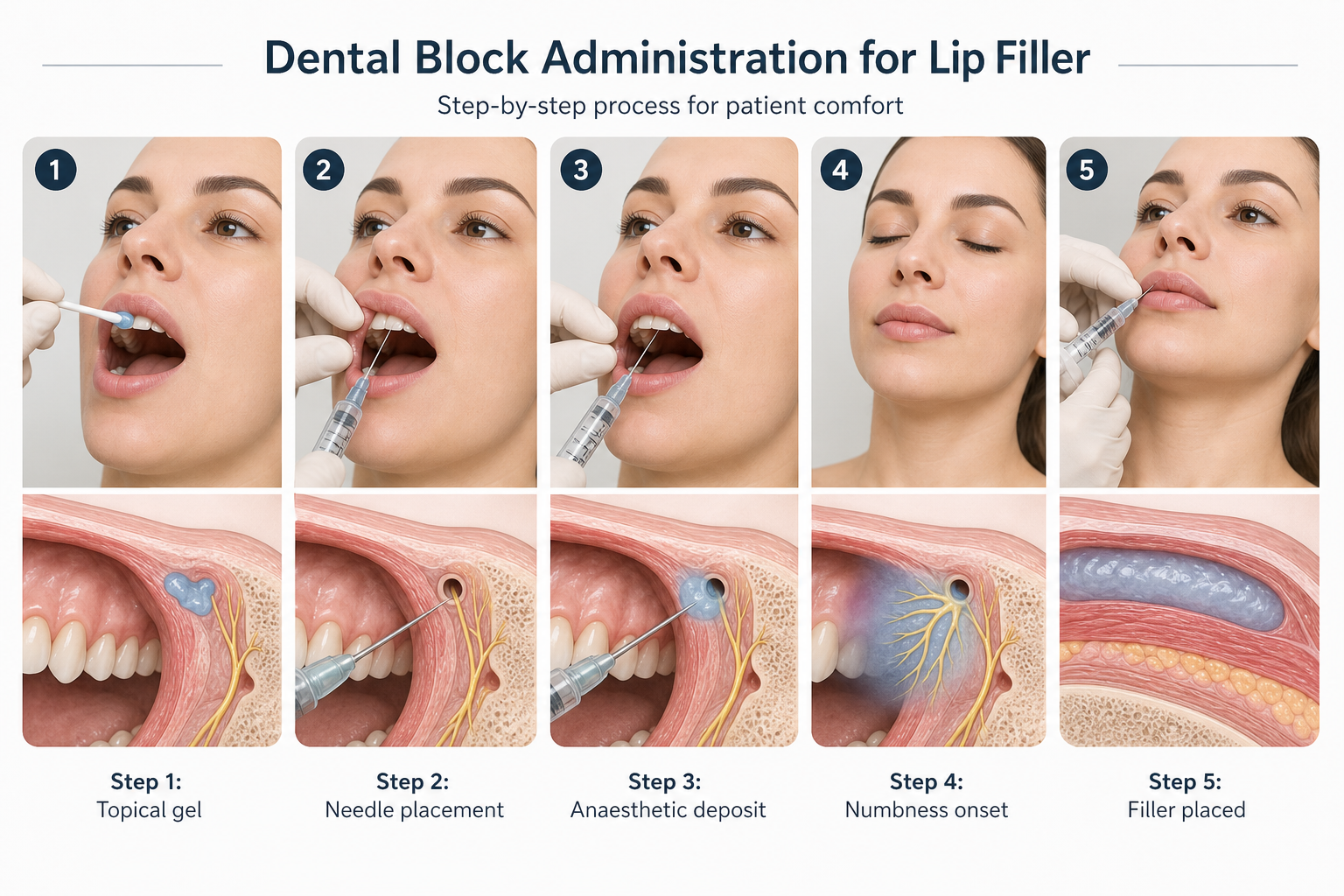
The onset of numbness after a dental block is usually rapid, typically within two to five minutes, though the injector will generally wait a few minutes to confirm adequate anaesthesia before beginning filler placement. Patients often describe a spreading warmth or tingling sensation as the block takes effect, followed by a feeling of heaviness or fullness in the lip area.
The block injection itself can be briefly uncomfortable — a common patient experience is a sharp or stinging sensation lasting a few seconds as the needle passes through the oral mucosa and the anaesthetic is deposited. Some practitioners apply a small amount of topical anaesthetic gel inside the mouth beforehand to reduce this initial discomfort. Setting realistic expectations here matters: the block injection is not painless, but for most patients the brief discomfort is considerably less than the cumulative discomfort of multiple filler injections without adequate anaesthesia.
Comparing Anaesthesia Options for Lip Filler
A dental block is one of several approaches to managing patient comfort during lip filler. Understanding how the options compare helps you have a more informed conversation with your practitioner.
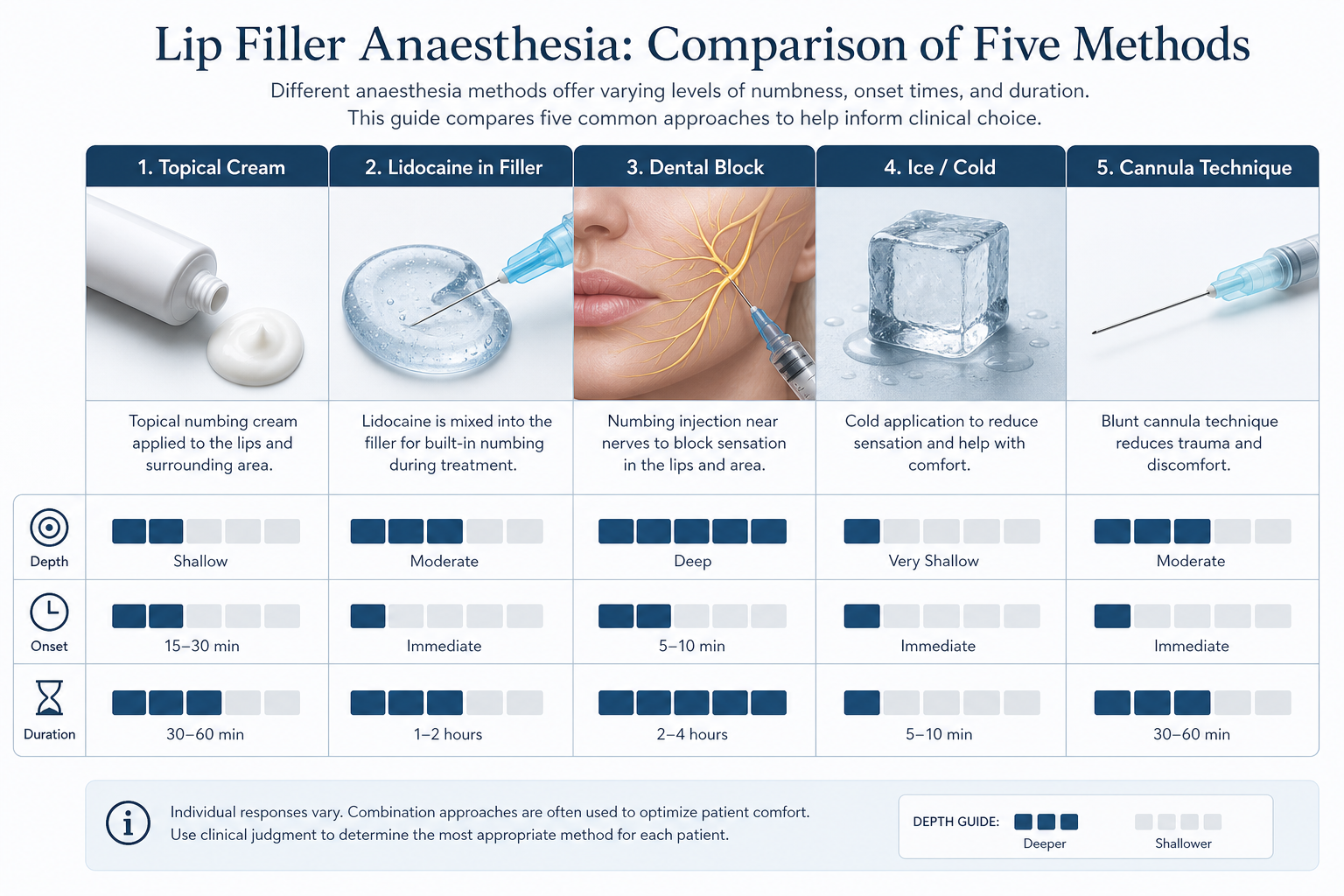
| Method | How It Works | Depth of Numbness | Onset | Duration | Key Advantages | Key Limitations |
|---|---|---|---|---|---|---|
| Topical numbing cream | Applied to skin surface 20–30 minutes before treatment | Superficial only | 20–30 min | 45–60 min | Non-invasive, no extra injections, no distortion of lip shape | Does not numb deeper tissue; may be insufficient for sensitive patients |
| Pre-incorporated lidocaine in filler | Lidocaine mixed into the filler (e.g. 0.3% in some hyaluronic acid products) numbs tissue as it is injected | Local, builds during treatment | Immediate at injection site | 30–60 min | No additional injections; comfort improves as treatment progresses | First injection still felt; not suitable for very anxious patients |
| Dental block / nerve block | Local anaesthetic injected near infraorbital and mental nerves | Deep regional anaesthesia | 2–5 min | 1–2 hours (up to 3 hours) | Most complete pain relief; allows relaxed, precise filler placement | Block injections themselves cause brief discomfort; temporary lip ptosis; distortion of symmetry assessment |
| Ice / cold application | Vasoconstriction and cold-induced numbness | Superficial | Immediate | Minutes only | Reduces bruising; adjunct comfort measure | Minimal anaesthetic effect; not a standalone solution |
| Cannula technique | Blunt-tipped cannula reduces number of skin punctures | N/A (technique, not anaesthetic) | N/A | N/A | Fewer entry points; some experienced injectors find it reduces need for blocks | Technique-dependent; not universally available; does not eliminate discomfort entirely |
Benefits of a Dental Block for Lip Filler
The primary benefit of a dental block is a substantially more comfortable treatment experience. For patients with a low pain threshold, significant needle anxiety, or a previous experience of finding topical cream insufficient, a dental block can transform what might otherwise be a distressing appointment into a manageable one. Deep regional anaesthesia means the patient can remain still and relaxed throughout the procedure, which in turn supports filler placement precision — an injector working with a calm, comfortable patient is better placed to assess lip shape, volume distribution, and symmetry in real time.
A dental block is also particularly well suited to more complex or higher-volume lip augmentation procedures. When a practitioner is sculpting the Cupid’s bow, defining the vermillion border, adding volume to the philtrum columns, or placing filler across multiple zones of the lip in a single session, the cumulative discomfort of multiple injections without deep anaesthesia can be significant. Regional anaesthesia removes this barrier and allows the treatment to proceed at a measured pace without the patient needing to manage ongoing pain.
For first-time filler patients who are uncertain about their pain tolerance, a dental block offered as an option — rather than a default — can reduce anticipatory anxiety and make the overall experience more positive. This may also support better outcomes by allowing the patient to communicate clearly with their injector throughout the appointment rather than bracing against discomfort.
Risks, Limitations and Practical Drawbacks
A dental block is not without its own risks and practical complications, and these deserve honest discussion. Understanding them helps patients and practitioners make a genuinely informed decision rather than treating nerve blocks as a universally superior option.

Temporary Lip Ptosis and Symmetry Assessment
One of the most clinically significant limitations of a dental block is the effect it can have on lip muscle function. Local anaesthetic deposited near the infraorbital or mental foramen may temporarily affect not only sensory nerves but also nearby motor fibres, causing a degree of lip ptosis — a temporary drooping or reduced muscle tone in the lip. This can make it genuinely difficult for the injector to assess the natural resting position of the lips, the symmetry of the result, or how the filler will look once normal muscle action returns. Experienced injectors are aware of this limitation and may adjust their assessment technique accordingly, but it remains a meaningful clinical consideration.
Vascular Occlusion Monitoring
A less commonly discussed but important safety consideration is that the blanching (whitening) of tissue that can occur as a normal response to local anaesthetic containing epinephrine may resemble the early warning signs of vascular occlusion — a rare but serious complication of filler in which a blood vessel becomes blocked. Practitioners need to be alert to this distinction and should not dismiss blanching during a procedure simply because a block has been administered. This is a nuance that requires clinical training and vigilance.
Incomplete Coverage
A dental block does not always produce complete numbness across the entire lip area. Anatomical variation in the position of nerve foramina, individual differences in nerve distribution, and the volume and placement of the anaesthetic can all affect coverage. Some patients find that certain areas — particularly the corners of the mouth or the central philtrum — remain partially sensitive even after bilateral blocks. In these cases, supplementary local anaesthetic infiltration may be needed.
Prolonged Numbness and Post-Procedure Risks
The temporary numbness duration following a dental block — typically one to two hours, occasionally up to three — means patients need to take care after leaving the clinic. Eating, drinking hot liquids, or biting the lip while numb carries a real risk of unintentional injury because normal protective sensation is absent. Patients should be advised to wait until sensation has fully returned before eating a meal or drinking hot beverages.
Haematoma, Bruising and Swelling
The block injections themselves carry a small risk of haematoma (a collection of blood under the tissue), bruising, and localised swelling at the injection site inside the mouth. The volume of anaesthetic injected can also temporarily alter the apparent shape of the lips, making it harder to assess the starting point accurately before filler is placed.
Rare Complications
Rare complications associated with nerve blocks in aesthetic practice include temporary facial nerve palsy, prolonged or altered nerve sensitivity, and — in very rare cases — more significant neurological effects. These are uncommon when the procedure is performed by a trained and experienced practitioner, but they are not zero-risk. Allergy to local anaesthetic agents, while rare, is also a contraindication that must be screened for before any block is administered.
Who May Be Suitable for a Dental Block?
A dental block is most likely to be appropriate for patients who have a genuinely low pain threshold or who have found topical numbing cream insufficient in a previous lip filler appointment. It is also worth considering for patients undergoing more extensive lip augmentation — for example, those having a larger volume of filler placed across multiple lip zones in a single session — where the cumulative discomfort of multiple injections would otherwise be significant.
Patients with marked needle anxiety who might otherwise avoid treatment they would benefit from may find that the option of a dental block makes the procedure accessible. Similarly, patients who have had a previous difficult experience with lip injections may find that a nerve block changes their experience substantially.
A dental block is less likely to be necessary for patients having a small top-up of filler, those who have previously tolerated lip injections well with topical cream, or those being treated with a cannula technique by an experienced injector. In these situations, the additional injection points, the risk of lip ptosis affecting symmetry assessment, and the prolonged numbness may outweigh the comfort benefit.
Who Should Not Have a Dental Block?
Certain patients may not be suitable candidates for a dental block. A known allergy to lidocaine or other amide-type local anaesthetics is a clear contraindication. Patients taking certain anticoagulant medications may have an increased risk of haematoma at the injection site, and this should be discussed with the practitioner. Pregnancy is a consideration that requires individual clinical assessment, as the safety of local anaesthetic agents in aesthetic procedures during pregnancy is not well established.
Active infection in or around the mouth — including cold sores — is generally a reason to postpone any lip filler procedure, including one involving a dental block. Patients with certain bleeding disorders or those who have had recent dental or oral surgery should also discuss their history with their practitioner before proceeding.
Provider Qualifications and What to Ask
The administration of a dental block in an aesthetic setting requires a thorough understanding of facial anatomy, local anaesthetic pharmacology, and the management of potential complications. In most countries and jurisdictions, only registered medical professionals — such as doctors, dentists, or appropriately trained nurses and nurse practitioners — are permitted to administer injectable local anaesthetics. Dentists, in particular, have extensive training in intraoral nerve block techniques and may be well placed to offer this as part of an aesthetic service.
Before agreeing to a dental block, it is reasonable to ask your practitioner about their training and experience with facial nerve blocks, which local anaesthetic agent they use and at what concentration, how they would manage an adverse reaction, and what their protocol is for monitoring vascular occlusion during a procedure where a block has been administered. A practitioner who can answer these questions clearly and confidently is demonstrating the level of clinical knowledge the procedure requires.
What to Expect After the Block Wears Off
As the local anaesthetic wears off — usually within one to two hours of the procedure — normal sensation gradually returns to the lips and surrounding area. Some patients notice a tingling or pins-and-needles sensation during this recovery phase, which is normal and temporary. Once sensation has returned, any tenderness, swelling, or bruising from the filler injections themselves will become more apparent. This is expected and does not indicate a problem.
Post-procedure swelling from lip filler typically peaks within the first 24 to 48 hours and then gradually subsides over the following week. Bruising, if it occurs, usually resolves within seven to ten days. The final result of the filler is generally best assessed at around two weeks, once all swelling has settled. If you notice any unusual blanching, prolonged pain, or changes in skin colour in the lip area after the block has worn off, contact your practitioner promptly, as these could be early signs of a vascular complication requiring urgent assessment.
Frequently Asked Questions
Does the dental block injection itself hurt?
The block injection typically causes a brief sharp or stinging sensation lasting a few seconds as the needle passes through the oral mucosa. Some practitioners apply topical anaesthetic gel inside the mouth beforehand to reduce this. Most patients find the brief discomfort of the block considerably less than the cumulative discomfort of lip filler injections without adequate anaesthesia, but it is not a painless step.
How long does the numbness from a dental block last?
The numbness typically lasts between one and two hours, though this varies depending on the local anaesthetic used, the concentration, and individual metabolism. Some patients find sensation returns within an hour; others may remain numb for up to three hours. You should avoid eating, drinking hot liquids, or biting your lip until full sensation has returned.
Will a dental block distort my lips or affect the result?
The volume of anaesthetic injected near the nerve foramina is small and is not placed directly into the lip tissue, so it does not add volume to the lips themselves. However, the temporary muscle weakness (lip ptosis) that can accompany a block may affect how the lips appear during the procedure, making symmetry assessment more challenging. An experienced injector will account for this when planning and placing the filler.
Is a dental block safe?
When administered by a qualified practitioner with appropriate training, a dental block is generally considered safe. Rare risks include haematoma, temporary nerve sensitivity, and — in very rare cases — temporary facial nerve palsy. Allergy to local anaesthetic agents is uncommon but must be screened for. The procedure should only be performed by someone with the relevant clinical training and knowledge of facial anatomy.
Do I need a dental block for lip filler?
Most patients do not require a dental block for routine lip filler. Topical numbing cream and modern fillers containing pre-incorporated lidocaine provide adequate comfort for many people. A dental block is most useful for patients with a low pain threshold, significant needle anxiety, or those undergoing more complex or higher-volume lip augmentation. Your practitioner can help you decide which approach is most appropriate for your individual situation.
Can a dental block cause an allergic reaction?
True allergy to amide-type local anaesthetics such as lidocaine is rare but possible. Before any block is administered, your practitioner should take a thorough medical history including any known drug allergies. If you have previously had a reaction to a local anaesthetic at the dentist or elsewhere, inform your practitioner before your appointment.
Is a Dental Block the Right Choice for Your Lip Filler Appointment?
A dental block for lip filler offers genuine, meaningful comfort benefits — particularly for patients who are anxious about needles, have a low pain threshold, or are planning a more involved lip augmentation procedure. The ability to undergo treatment in a virtually pain-free state, with the opportunity for more relaxed and precise filler placement, is a real clinical advantage in the right circumstances.
At the same time, a dental block is not a universally superior option. The block injections themselves involve brief discomfort, the temporary lip ptosis can complicate symmetry assessment, and the prolonged numbness requires care in the hours after treatment. For many patients having straightforward lip filler with topical numbing cream and a modern lidocaine-containing filler, a nerve block adds complexity without a proportionate benefit.
The most useful step is to discuss your pain tolerance, treatment goals, and any previous experiences with lip injections openly with your practitioner at consultation. A clinician with appropriate training in regional anesthesia and facial anatomy can assess whether a dental block is genuinely warranted for your situation, explain the specific risks and benefits in the context of your health history, and help you make a decision that prioritises both your comfort and your safety.