Thread Lift Cost Factors: What Determines the Price You Pay
Thread lift cost in the United States typically ranges from around $1,200 to $5,500 or more, yet two patients seeking the same result can receive quotes that differ by thousands of dollars. That gap is not arbitrary. The price of a thread lift reflects a combination of clinical decisions, material choices, provider qualifications, and geographic factors that are worth understanding before you book a consultation. This guide breaks down each cost driver clearly so you can evaluate quotes with confidence and ask the right questions.
Key Takeaways
- Thread lift pricing is not standardized. The same treatment area can cost significantly more or less depending on thread type, thread count, provider credentials, and clinic location.
- PDO thread lift procedures are generally the most affordable option, while PLLA and PCL threads cost more upfront but may offer longer-lasting results, affecting the true cost per year of result.
- Provider qualifications matter beyond price. A board-certified provider working in a surgical setting typically charges more than a med spa, but the difference reflects training, thread quality, and complication management capability.
- Thread lift is an out-of-pocket expense not covered by insurance, so understanding what is and is not included in a quoted price is essential before committing.
- Repeat treatments every 12 to 24 months mean cumulative costs can be substantial over time. Comparing long-term value against alternatives such as a surgical facelift is a worthwhile exercise.
Average Thread Lift Cost: What the Numbers Actually Mean
Patient-reported data from platforms such as RealSelf places the average thread lift cost at approximately $2,100 to $2,500, but this figure covers a wide range of procedures performed under very different conditions. A single-area PDO thread lift using smooth mono threads at a med spa sits at the lower end of the range. A full-face lift using barbed cog threads performed by a board-certified facial plastic surgeon in a major metropolitan area sits at the upper end or beyond it. Treating the average as a reliable budget figure without understanding the variables behind it can lead to unrealistic expectations or poorly matched provider choices.
Thread lift is always an out-of-pocket expense. Because the procedure is cosmetic rather than medically necessary, no standard health insurance plan covers it. This makes understanding the full cost structure before treatment particularly important.
Thread Type and Material: The Biggest Single Cost Variable
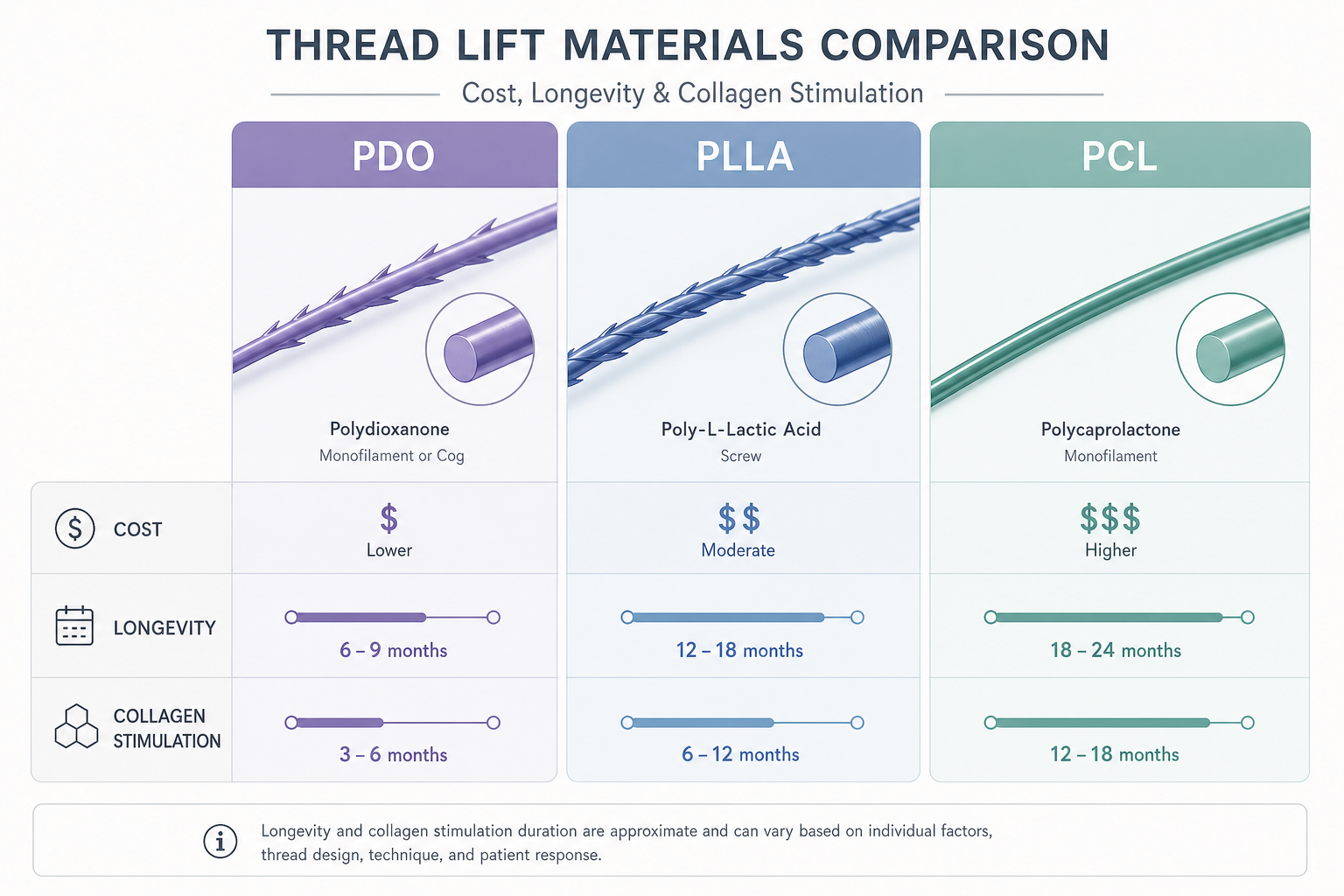
The type of absorbable suture used in a thread lift is the most significant driver of per-treatment cost. Three materials dominate the market, each with different price points and longevity profiles.
| Thread Material | Typical Cost Range | Estimated Results Duration | Primary Mechanism |
|---|---|---|---|
| PDO (Polydioxanone) | $1,200 – $2,800 | 6 – 12 months | Mechanical lift + collagen stimulation |
| PLLA (Poly-L-lactic acid) | $2,000 – $4,000 | 12 – 24 months | Biostimulation, neocollagenesis |
| PCL (Polycaprolactone) | $2,500 – $5,000+ | 18 – 36 months | Slow-release collagen stimulation |
PDO threads are the most widely used and most affordable option. They dissolve within approximately six months, but the collagen stimulation they trigger can extend visible improvements somewhat beyond that point. PLLA threads and PCL threads are more expensive per treatment because the raw materials cost more and the threads remain active in tissue for longer, sustaining collagen production over a greater period. When evaluating cost, it is worth calculating the cost per year of result rather than comparing upfront prices alone. A PCL thread lift costing $3,500 with results lasting two years represents a lower annual cost than a PDO thread lift at $1,800 repeated every ten months.
Barbed (Cog) Threads vs. Smooth Mono Threads
Within each material category, thread design also affects price. Barbed cog threads have small projections along their length that physically anchor into tissue and create an immediate mechanical lift. They are more complex to manufacture and require greater technical skill to place correctly, making them more expensive per unit. Smooth mono threads have no barbs and work primarily by stimulating collagen production rather than providing a structural lift. They are less expensive individually but are typically used in larger numbers per session. A provider may use ten to twenty smooth mono threads in a single treatment area compared to two to four barbed threads for a comparable lift effect. Per-thread pricing for smooth mono threads typically ranges from around $20 to $80, while barbed cog threads can range from $150 to $500 or more per thread depending on material and brand.
Thread Count: Why the Number of Threads Directly Affects Your Quote
Many clinics price thread lift procedures partly or entirely by thread count rather than by a flat per-area fee. Understanding this is important because two quotes for a “cheek lift” may involve very different numbers of threads and therefore very different levels of correction. A patient with mild skin laxity in their mid-thirties may need four to six threads in the cheek area. A patient in their mid-fifties with more significant facial sagging may need ten to fourteen threads to achieve a comparable result. The thread count required depends on the degree of skin laxity, the treatment area, the thread type chosen, and the provider’s technique.
When requesting a quote, ask for the thread count in writing. This allows you to compare quotes from different providers on a like-for-like basis and understand whether a lower total price reflects fewer threads, a less expensive thread type, or genuinely better value. A quote that does not specify thread count is difficult to evaluate fairly.
Treatment Area and Anatomical Complexity
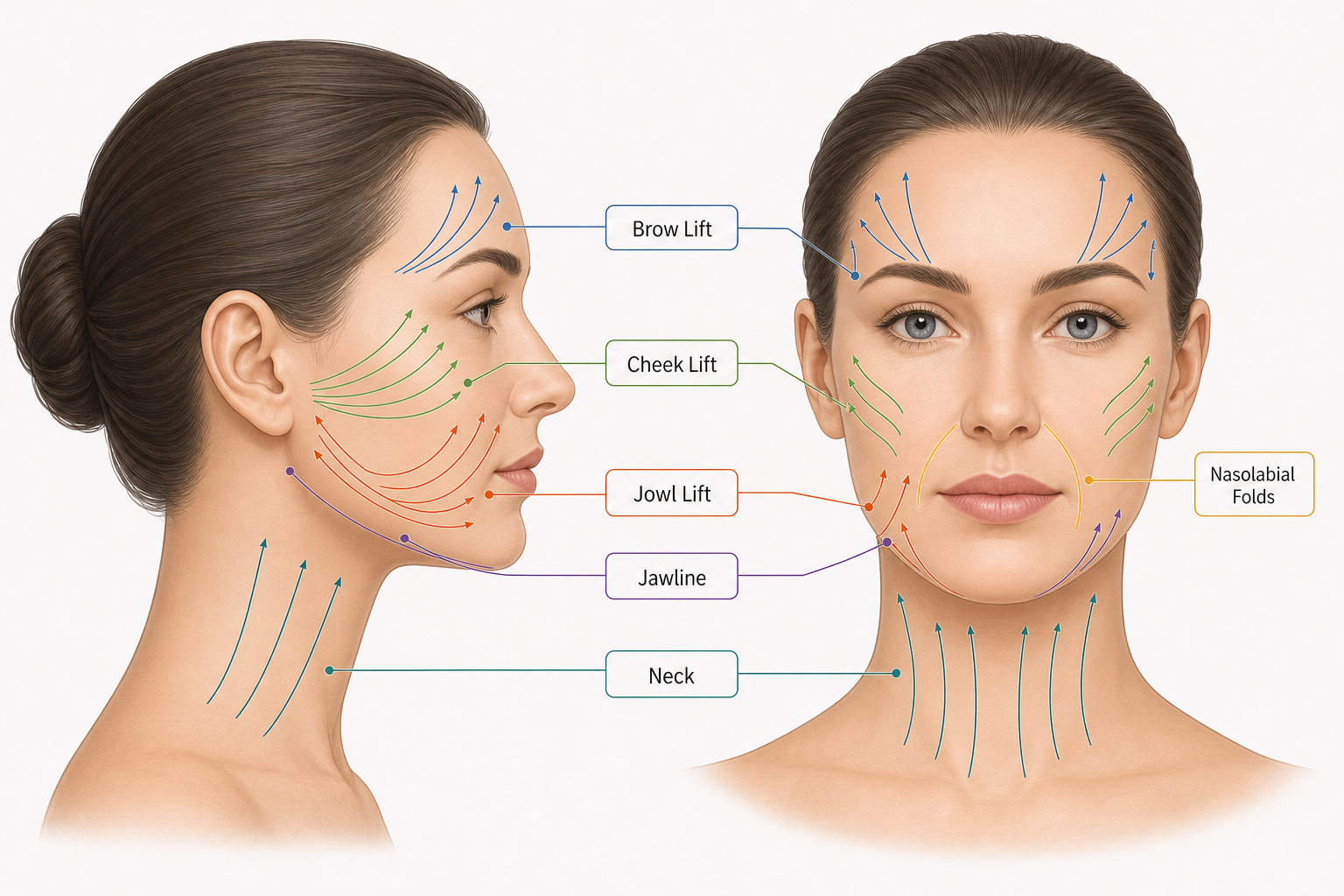
The treatment area affects cost in two ways: the number of threads required and the technical difficulty of placement. Some anatomical regions require more precise vector planning and carry a higher risk of complications if threads are placed incorrectly, which is reflected in provider fees.
| Treatment Area | Typical Cost Range (PDO) | Notes |
|---|---|---|
| Brow lift | $800 – $1,800 | Fewer threads; technically precise area |
| Cheek lift / mid-face | $1,200 – $2,500 | Common treatment area; moderate thread count |
| Jowl lift / jawline | $1,500 – $3,000 | Higher thread count often needed |
| Neck lift | $1,500 – $3,200 | Technically demanding; variable results |
| Nasolabial folds | $800 – $1,800 | Often combined with cheek treatment |
| Full-face thread lift | $2,500 – $5,500+ | Multiple areas; highest thread count |
A full-face thread lift addressing the brow, cheeks, jowls, and jawline simultaneously requires the most threads and the longest procedure time, which is why it carries the highest price. Treating a single area such as the brow or nasolabial folds is considerably less expensive, though results are naturally more limited in scope.
Provider Credentials and Clinical Setting
Provider qualifications represent one of the most significant and least discussed cost variables in thread lift pricing. The gap between a med spa nurse practitioner charging $1,500 and a board-certified facial plastic surgeon charging $4,000 or more for a comparable procedure reflects meaningful differences in training, thread quality, technique, and the ability to manage complications if they arise.
A board-certified provider with specialized training in facial anatomy and thread placement has typically completed extensive procedural training beyond their core qualification. They are more likely to use premium, FDA-cleared thread systems, to perform a thorough pre-treatment assessment, and to have the clinical infrastructure to address adverse events. Med spas may offer competitive pricing and skilled practitioners, but the range of training and oversight varies considerably between facilities. When evaluating providers, asking about their specific thread lift training, the thread brands they use, and their complication management protocol is reasonable and appropriate.
The clinical setting also affects cost. Procedures performed in a plastic surgery clinic or surgical suite typically carry higher facility fees than those performed in a standard treatment room. However, for a procedure performed under local anesthesia with no sedation, the setting difference is primarily one of infrastructure and oversight rather than a meaningful difference in patient experience during the appointment itself.
Geographic Location and Its Effect on Pricing
Geographic location influences thread lift cost substantially. Clinics in major metropolitan areas such as New York, Los Angeles, Miami, and San Francisco typically charge 30 to 50 percent more than clinics in mid-size cities or suburban markets, reflecting higher operating costs, real estate, and local demand. Patients in smaller cities or rural areas often find pricing 20 to 30 percent below the national average for comparable procedures performed by similarly qualified providers. If you are considering traveling to a different city for treatment, factor in travel costs, accommodation, and the practical difficulty of attending follow-up appointments when calculating the true cost difference.
What Should Be Included in Your Quote: Hidden Costs to Clarify
Thread lift pricing is not always presented on a fully itemized basis, and some costs that patients assume are included may be billed separately. Before committing to a provider, ask for clarification on each of the following items.
- Consultation fee: Some clinics charge a consultation fee of $50 to $200, which may or may not be credited toward the procedure cost if you proceed.
- Local anesthesia: Topical numbing cream is standard and usually included. Injectable local anesthesia, if used, may be billed separately.
- Facility fee: Some surgical settings charge a separate facility or operating room fee not included in the procedure quote.
- Follow-up appointments: Post-procedure check-ups are sometimes included and sometimes billed separately.
- Touch-up threads: If a thread breaks or migrates shortly after placement, the policy on complimentary correction varies by provider.
- Aftercare products: Prescribed skincare or compression garments may be an additional cost.
- Combination treatments: Many patients combine thread lifts with Botox, dermal fillers, or radiofrequency skin tightening in the same session. These are almost always priced separately and can add $500 to $2,000 or more to the total appointment cost.
Requesting a fully itemized quote before your appointment eliminates surprises and allows you to compare providers accurately. A reputable clinic will provide this without hesitation.
Skin Laxity and Patient Age as Cost Variables
The degree of skin laxity a patient presents with directly affects the thread count required and therefore the total cost. A younger patient in their late thirties with mild facial sagging may achieve a satisfying result with a modest number of threads. An older patient with more significant jowling, deeper nasolabial folds, and reduced skin elasticity will typically need a higher thread count to achieve a comparable degree of correction. This is not a reason to delay treatment, but it is a reason to have a thorough consultation before assuming that a quoted price for a standard procedure will apply to your specific anatomy. Providers who assess your skin laxity carefully before quoting are more likely to give you an accurate and realistic cost estimate.
Thread Lift vs. Surgical Facelift: Long-Term Cost Comparison
Thread lift is frequently described as a non-surgical facelift alternative, and for patients with mild to moderate skin laxity it can provide meaningful improvement without surgery. However, the long-term cost comparison with a surgical facelift is worth examining honestly.
| Factor | Thread Lift | Surgical Facelift |
|---|---|---|
| Upfront cost | $1,200 – $5,500+ | $8,000 – $15,000+ |
| Results duration | 6 – 36 months (varies by thread type) | 5 – 10 years or more |
| Downtime | 3 – 7 days typically | 2 – 4 weeks typically |
| Degree of correction | Mild to moderate | Moderate to significant |
| Anesthesia | Local anesthesia | General or sedation anesthesia |
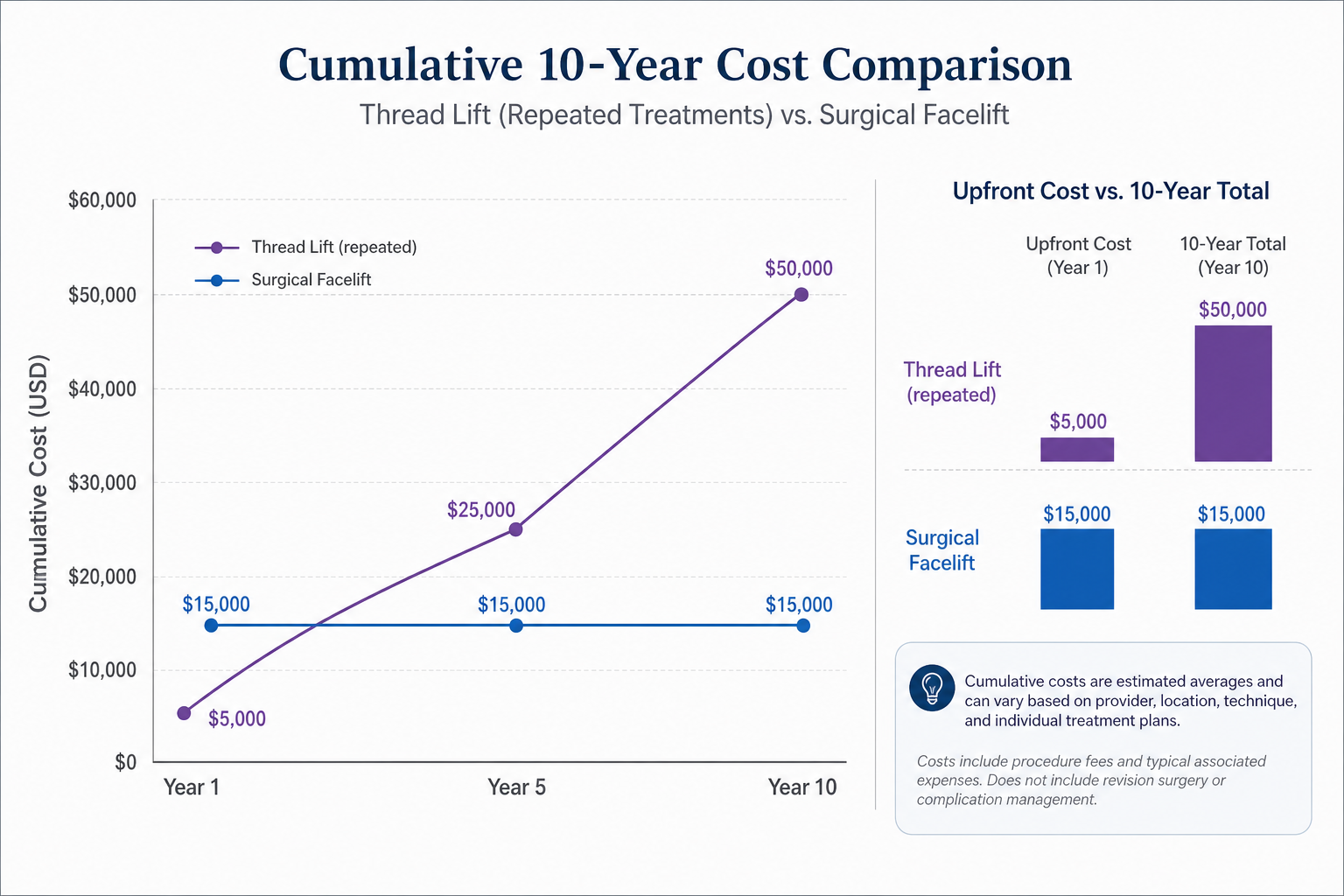
| Cumulative 10-year cost (estimated) | $9,000 – $22,000+ (with repeat treatments) | $8,000 – $15,000 (single procedure) |
Patients who undergo PDO thread lift procedures every twelve to eighteen months over a decade can accumulate costs that exceed the price of a single surgical facelift, while achieving a lesser degree of correction. This is not an argument against thread lifting, which remains a genuinely useful option for patients who are not ready for surgery, prefer minimal downtime, or have mild laxity that does not yet warrant a surgical approach. It is, however, a reason to consider long-term value alongside upfront cost when making a decision.
Financing Options for Thread Lift Procedures
Because thread lift is an out-of-pocket expense, many clinics offer third-party financing to make the cost more manageable. CareCredit and Cherry are among the most widely accepted financing platforms in aesthetic medicine. Both allow patients to spread the cost of treatment over monthly installments, with promotional interest-free periods available depending on the plan and the amount financed. Approval is subject to a credit check, and interest rates after any promotional period can be significant, so reading the terms carefully before enrolling is important. Some clinics also offer in-house payment plans, though these are less common. Financing does not reduce the total cost of treatment, but it can make a higher-quality provider or a more comprehensive treatment plan accessible within a monthly budget.
Touch-Up and Maintenance Treatment Costs
Thread lift results are temporary. As absorbable sutures dissolve and the collagen they stimulate gradually remodels, the visible lift diminishes over time. Most patients who are satisfied with their initial results choose to undergo maintenance treatment at intervals ranging from twelve months for PDO threads to twenty-four to thirty-six months for PCL threads. Touch-up treatments typically cost 60 to 75 percent of the original procedure price, as fewer threads are usually needed to maintain a result than to establish one from baseline. Factoring maintenance treatment costs into your long-term budget from the outset gives a more accurate picture of the true financial commitment involved.
Red Flags in Thread Lift Pricing
Unusually low quotes deserve scrutiny rather than celebration. A thread lift priced significantly below the market range for your area may reflect the use of older or lower-grade thread stock, a provider with limited specialized training, a very low thread count that is unlikely to produce a meaningful result, or a facility that cuts costs in ways that affect safety and hygiene standards. Equally, an extremely high price is not automatically a guarantee of superior results. The most useful approach is to obtain two or three itemized quotes from qualified providers, ask specifically about thread brand, thread count, and the provider’s training and experience with the procedure, and make your decision based on the full picture rather than price alone.
Frequently Asked Questions
How much does a thread lift cost on average in the US?
Patient-reported averages suggest a range of approximately $2,100 to $2,500 for a single treatment area, but the full range across all thread types, areas, and provider settings runs from around $1,200 to $5,500 or more. A full-face thread lift using premium PCL threads performed by a board-certified surgeon in a major city will sit at the upper end of this range or beyond it.
Is thread lift covered by insurance?
No. Thread lift is a cosmetic procedure and is not covered by any standard health insurance plan. The full cost is an out-of-pocket expense for the patient.
Why do some clinics charge per thread while others charge per area?
Pricing structures vary by clinic. Per-thread pricing is more transparent because it allows you to see exactly what you are receiving, but per-area pricing can be easier to budget for. When comparing quotes, always ask for the thread count regardless of how the price is presented, so you can evaluate whether the quoted thread count is appropriate for your treatment area and degree of skin laxity.
How long do thread lift results last?
Results duration depends primarily on thread material. PDO thread lift results typically last six to twelve months. PLLA threads may sustain results for twelve to twenty-four months. PCL threads, which dissolve more slowly, may maintain visible improvement for eighteen to thirty-six months. Individual results vary based on skin quality, age, lifestyle factors, and the number of threads used.
Can I combine a thread lift with other treatments to save money?
Combining a thread lift with Botox, dermal fillers, or radiofrequency skin tightening in the same appointment is clinically common and can produce complementary results. However, combination treatments are almost always priced separately and will increase the total appointment cost. The potential saving is in reducing the number of separate appointments rather than in a discount on individual treatments.
What questions should I ask before booking a thread lift?
Ask your provider about their specific thread lift training and how many procedures they have performed, the brand and material of threads they plan to use, the thread count included in your quote, what is and is not included in the quoted price, their policy on touch-up threads if a thread breaks or migrates, and what financing options are available. A provider who answers these questions clearly and without pressure is a positive indicator of professional practice.
Making an Informed Decision About Thread Lift Cost
Thread lift cost is not a single number. It is the product of thread material, thread count, treatment area, provider qualifications, clinical setting, and geographic location, all of which interact to produce the quote you receive. Understanding each of these variables allows you to evaluate whether a given price represents appropriate value rather than simply comparing totals. A lower quote is not inherently better if it reflects fewer threads, a less experienced provider, or a thread material unlikely to meet your longevity expectations. A higher quote is not inherently better if it cannot be justified by the provider’s credentials and the specifics of what is included.
For most patients, the most useful next step is a consultation with a qualified provider who will assess your skin laxity, discuss realistic outcomes for your anatomy, and provide a fully itemized quote. If you are considering thread lift as a longer-term strategy, discussing the cumulative cost of maintenance treatments and how it compares to alternative approaches, including surgical options, is a worthwhile part of that conversation. A provider who engages honestly with these questions is one worth trusting with your treatment.