Laser Tattoo Removal Aftercare: A Complete Healing Guide
Laser tattoo removal aftercare is one of the most important factors determining how well your skin heals, how quickly ink clears, and whether complications such as scarring or pigment changes occur. The laser creates a controlled injury to the skin, and what you do in the hours, days, and weeks that follow directly influences the outcome of each session and the overall removal process.
Key Takeaways
- The treated area behaves like a superficial burn wound and requires gentle, consistent care for at least two weeks after each session.
- Blistering, redness, swelling, and temporary whitening (frosting) are normal responses — do not pick, pop, or scratch any blisters or scabs.
- Sun protection is clinically significant: UV exposure on recently treated skin can trigger post-inflammatory hyperpigmentation that is difficult to reverse.
- Keeping the skin moisturised, clean, and protected supports the lymphatic system in clearing fragmented ink particles between sessions.
- Recognising the signs of infection or abnormal healing early allows prompt treatment and reduces the risk of lasting skin changes.
What Happens to Skin During Laser Tattoo Removal
Understanding the biology of laser tattoo removal helps explain why aftercare matters beyond simple comfort. A Q-switched or picosecond laser delivers rapid pulses of energy that shatter ink particles embedded in the dermis into smaller fragments. This process creates a superficial burn wound at the skin surface and triggers an acute inflammatory response — redness, warmth, swelling, and sometimes pinpoint bleeding are all expected. Immediately after treatment, many patients notice a temporary whitening of the treated area known as frosting, caused by rapid gas formation in the skin. This usually fades within 20 to 30 minutes.
Once the ink particles are fragmented, the body’s lymphatic system and immune cells gradually transport them away over the following weeks. This is why the interval between sessions matters: the lymphatic system needs adequate time to clear ink before the next treatment is effective. A compromised skin barrier during this period is more susceptible to bacterial infection, UV damage, and post-inflammatory hyperpigmentation, which is why the aftercare period carries genuine clinical significance rather than being merely a matter of comfort.
Immediate Aftercare: The First 24 to 48 Hours
The first two days after a session are when the skin is most vulnerable. The treated area will typically feel hot, tender, and look red — similar in sensation to a moderate sunburn. Swelling is common, particularly on areas with thinner skin such as the wrist, ankle, or face.
Apply a cool compress or wrapped ice pack to the area for 10 to 15 minutes at a time during the first few hours to reduce swelling and discomfort. Do not apply ice directly to the skin. If the treated area is on a limb, elevating it slightly can also help minimise swelling. A sterile, non-stick bandage or breathable dressing should be applied to protect the skin for the first 24 hours. Your clinician will usually do this before you leave the appointment.
Avoid touching the treated area unnecessarily. Keep it dry and protected from friction — loose, breathable clothing over the site is important, particularly if the tattoo is in an area prone to rubbing such as the waistband, inner arm, or behind the knee. Avoid strenuous activity and any exercise that causes significant sweating on the day of treatment and the day after, as perspiration can irritate the open skin barrier and increase infection risk.
Week-by-Week Recovery: What to Expect
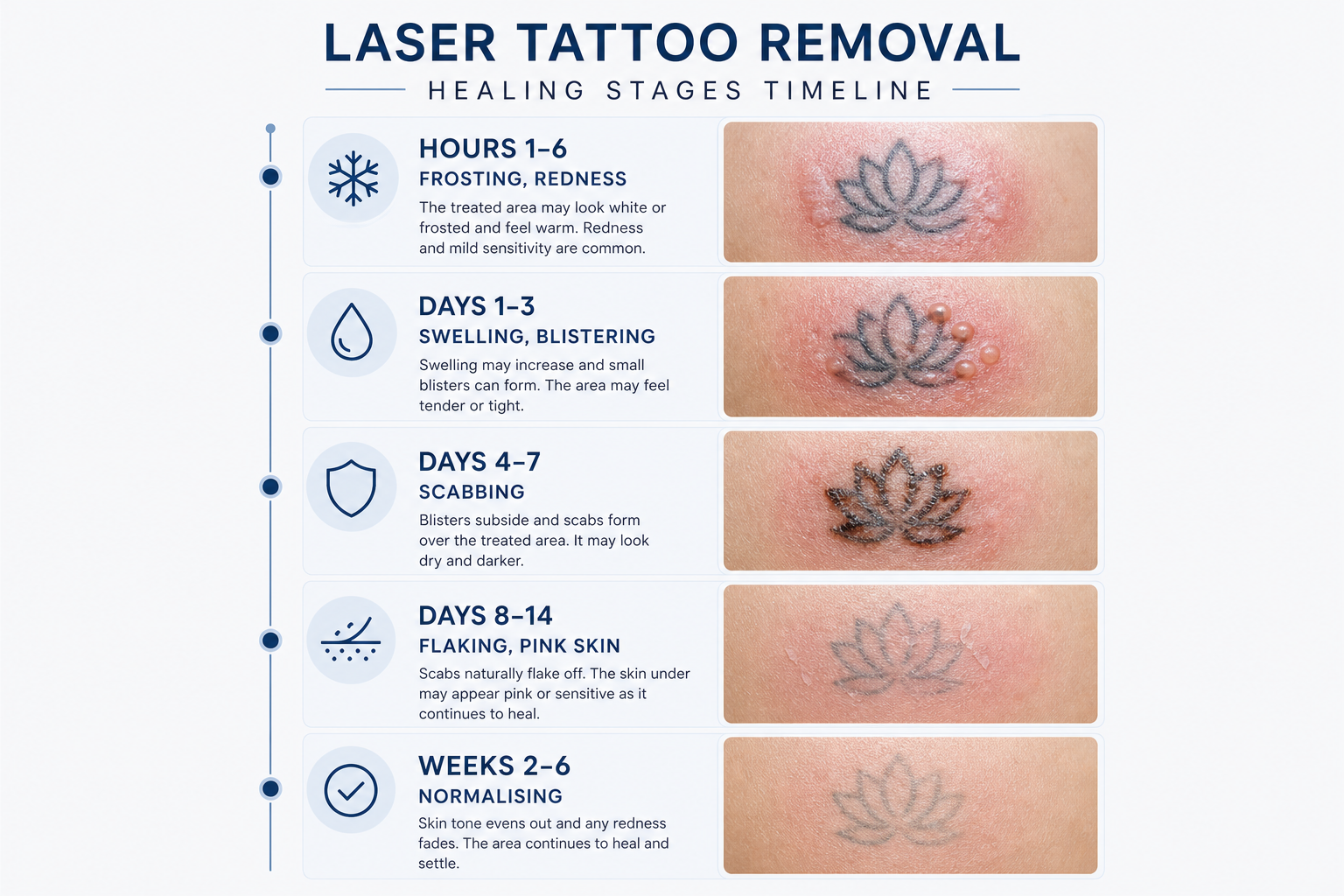
The healing timeline after laser tattoo removal follows a broadly predictable pattern, though individual variation is significant depending on skin type, tattoo size, ink colours, and the laser technology used. Picosecond laser systems may produce a shorter acute reaction compared with older Q-switched devices, though both require the same standard of aftercare.
| Timeframe | What to Expect | Care Focus |
|---|---|---|
| Hours 1–6 | Frosting fades; redness, warmth, and swelling develop; area feels like a sunburn | Cool compress, elevation, sterile dressing, avoid touching |
| Days 1–3 | Swelling peaks then begins to settle; blistering may appear; pinpoint bleeding possible | Keep clean and dry, apply petroleum jelly, wear loose clothing, avoid exercise |
| Days 4–7 | Blisters begin to flatten or rupture naturally; scabbing and crusting may form | Do not pick or pop; continue gentle cleansing and moisturising; avoid sun |
| Days 8–14 | Scabs and crusts flake away; skin may look pink, slightly uneven, or temporarily lighter or darker | Continue SPF protection; avoid exfoliants and active skincare ingredients |
| Weeks 2–6 | Skin surface normalises; ink fading becomes more visible; lymphatic clearance continues | Maintain sun protection; stay hydrated; allow full healing before next session |
This week-by-week recovery pattern is a general guide. Some patients heal faster; others, particularly those with darker skin tones or larger tattoos, may need additional time before the skin is ready for the next session.
How to Clean and Moisturise the Treated Area
Keeping the treated area clean is essential to prevent infection, but the method matters. Gently cleanse the skin once or twice daily using a fragrance-free, mild soap and lukewarm water. Avoid hot water directly over the treated site, as heat can worsen inflammation. Pat dry with a clean, soft cloth or gauze — do not rub, as friction can disrupt fragile healing tissue and increase the risk of scarring.
After cleansing, apply a thin layer of petroleum jelly such as Vaseline or Aquaphor to keep the skin barrier moist and protected. These occlusive products help prevent the wound from drying out excessively, which can slow healing and increase discomfort. A fragrance-free moisturiser or a clinician-recommended post-laser cream may also be appropriate once the initial wound phase has passed. Avoid products containing retinoids, alpha hydroxy acids, salicylic acid, or other chemical exfoliants until the skin has fully healed — these ingredients can disrupt the recovering skin barrier and cause irritation or pigment changes.
Avoid soaking the treated area in water. This means no baths, swimming pools, hot tubs, or saunas for at least the first week, and ideally until any blistering or scabbing has fully resolved. Showering is generally fine, but direct high-pressure water over the treated site should be avoided.
Blistering and Scabbing: What Is Normal
Blistering is a common and expected response to laser tattoo removal, not a sign that something has gone wrong. The laser energy creates enough heat in the skin to cause fluid to accumulate beneath the surface, forming blisters that may range from small and superficial to larger fluid-filled sacs. These typically appear within 24 to 72 hours and usually resolve on their own within one to two weeks.
The most important rule is: do not pick or pop blisters. Intact blisters act as a natural protective barrier over the healing skin beneath. Rupturing them prematurely exposes raw tissue to bacteria and significantly increases the risk of infection and scarring. If a blister ruptures on its own, keep the area clean, apply a thin layer of petroleum jelly, and cover it with a non-stick sterile dressing. Similarly, scabs and crusts that form as the skin heals should be left to fall away naturally. Picking at scabs is one of the most common causes of post-treatment scarring.
Some flaking and peeling of the outer skin layer is normal during the second week of healing. This is part of the skin’s natural renewal process and does not require any intervention beyond continued gentle moisturising.
Sun Protection After Laser Tattoo Removal
UV exposure is one of the most clinically significant risks during the laser tattoo removal process. Freshly treated skin has a disrupted barrier and reduced natural UV protection, making it highly susceptible to sun damage. Exposure to sunlight or tanning beds on recently treated skin can trigger post-inflammatory hyperpigmentation — a darkening of the skin caused by an overactive melanin response — which may be difficult to reverse and can complicate subsequent laser sessions by making it harder to target ink without affecting surrounding pigment.
Avoid direct sun exposure on the treated area for a minimum of two to four weeks after each session. When sun exposure cannot be avoided, apply a broad-spectrum sunscreen with SPF 30 or higher to the healed skin, and cover the area with protective clothing where possible. Tanning beds should be avoided throughout the entire course of treatment. It is equally important to avoid sun exposure in the two weeks before a session, as tanned skin increases the risk of adverse reactions during treatment.
Patients with darker skin tones or higher Fitzpatrick skin types are at greater risk of both hyperpigmentation and hypopigmentation (lightening of the skin) following laser treatment. For these patients, strict sun avoidance and the use of a broad-spectrum sunscreen are particularly important, and longer intervals between sessions may be recommended to allow full pigment stabilisation.
Skin-Type-Specific Aftercare Considerations
Laser tattoo removal is generally considered safe across a range of skin tones, but aftercare requirements are not identical for everyone. Patients with darker skin tones — typically Fitzpatrick skin types IV through VI — have more active melanocytes (pigment-producing cells) in the dermis, which means the laser energy can more easily affect surrounding pigment as well as the ink. This increases the risk of both hyperpigmentation and hypopigmentation in the treated area.
For patients with darker skin tones, aftercare should include particularly diligent sun protection, the use of fragrance-free and non-irritating topical products, and careful monitoring for any pigment changes during healing. If hyperpigmentation develops, a clinician may recommend a topical treatment to help manage it before the next session. Longer intervals between sessions — sometimes beyond the standard six to eight weeks — may also be appropriate to allow full pigment recovery. Choosing a clinic with documented experience treating diverse skin types is an important part of minimising these risks.
Lifestyle Factors That Support Healing
The body’s ability to heal the treated area and clear fragmented ink particles depends significantly on the health of the lymphatic system and immune function. Staying well hydrated supports lymphatic drainage and helps the immune system transport ink particles away from the treatment site more efficiently. Aim for adequate daily water intake throughout the course of treatment, not just immediately after sessions.
A balanced diet rich in vitamins A, C, and E supports skin regeneration and immune function. Vitamin C in particular plays a role in collagen synthesis, which is relevant to skin repair after a laser-induced wound. While no specific supplement has been proven to accelerate tattoo removal, maintaining good general nutrition is a reasonable and evidence-consistent approach to supporting healing.
Avoid smoking during the treatment course where possible. Smoking impairs circulation and reduces the efficiency of the lymphatic system, which may slow ink clearance and prolong healing. Alcohol in excess can also impair immune function and skin repair. These are not absolute contraindications, but they are meaningful factors in the overall healing process.
Once the skin has fully healed — typically after two weeks — gentle massage of the treated area for five to ten minutes daily may help improve local circulation and support lymphatic drainage. This should only be done on fully healed skin with no open wounds, blisters, or active scabbing.
Products to Avoid During Healing
Several commonly used skincare ingredients can interfere with healing or cause adverse reactions when applied to recently treated skin. Avoiding these during the recovery period is an important but often overlooked part of aftercare.
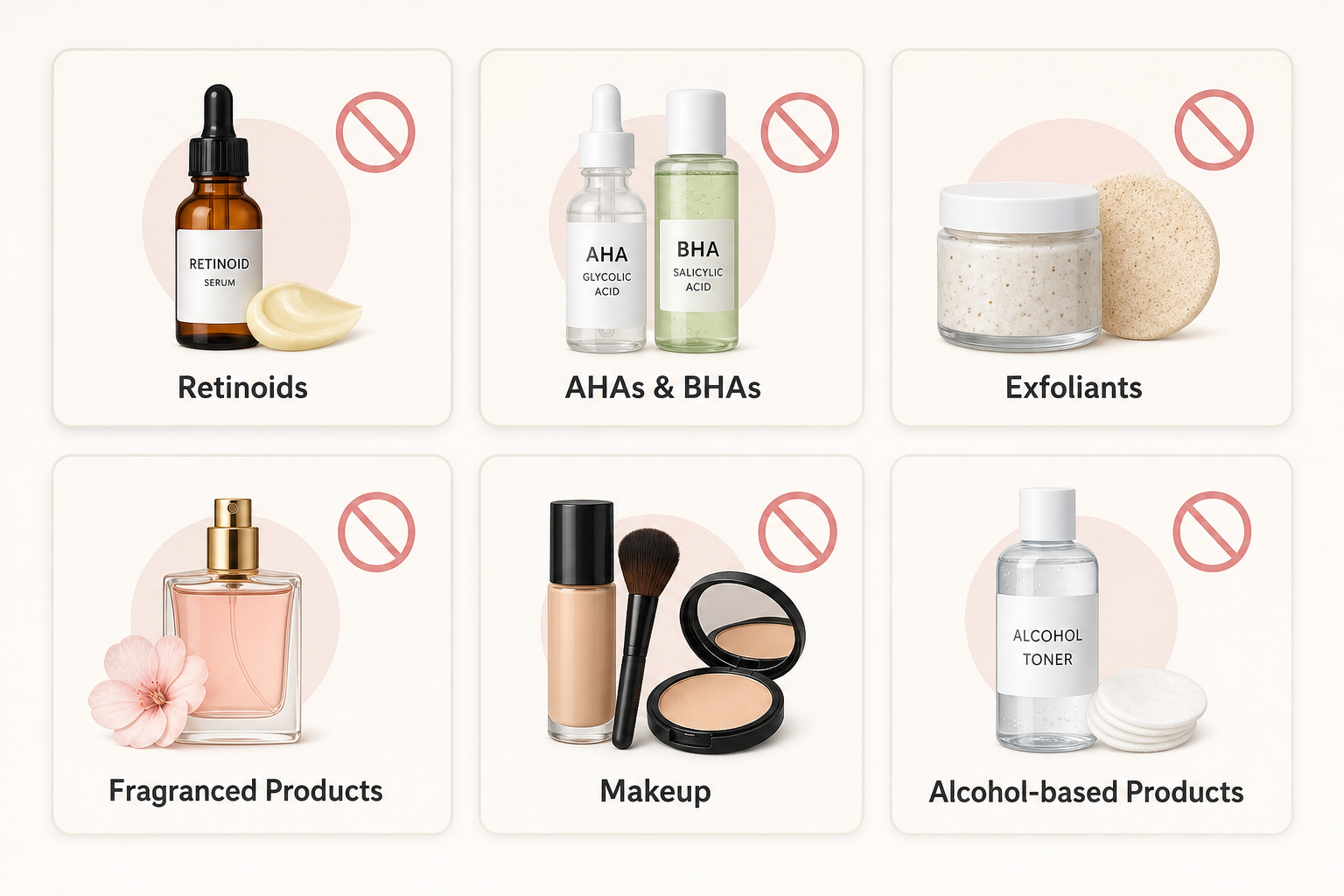
- Retinoids and retinol — increase skin cell turnover and can cause significant irritation on a compromised skin barrier.
- Alpha hydroxy acids (AHAs) and beta hydroxy acids (BHAs) — glycolic acid, lactic acid, and salicylic acid are exfoliating agents that can disrupt healing tissue.
- Physical and chemical exfoliants — scrubs, exfoliating brushes, and peeling products should be avoided until the skin is fully healed.
- Fragranced products — perfumes, fragranced lotions, and scented soaps can cause contact irritation or allergic reactions on sensitised skin.
- Makeup and cosmetic products — if the treated tattoo is on the face or neck, avoid applying makeup, perfume, or skincare products directly to the treated area for at least a few days, or until the skin surface is intact.
- Hydrogen peroxide and alcohol-based products — these can damage healing tissue and delay recovery.
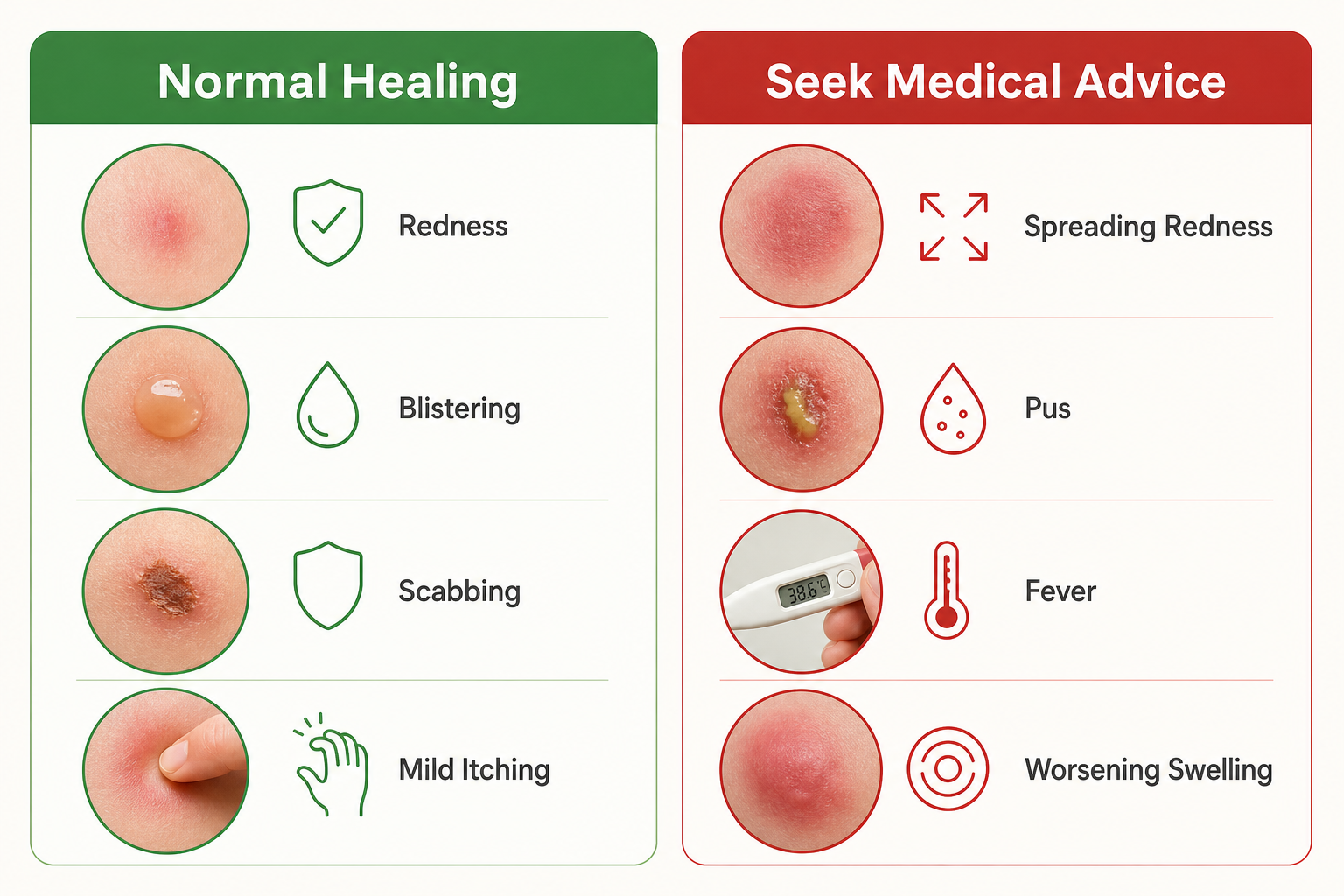
Signs of Normal Healing vs. Warning Signs
Knowing the difference between expected healing responses and signs of a complication allows patients to seek help promptly when needed, while avoiding unnecessary concern about normal reactions.
| Normal Healing | Seek Medical Advice |
|---|---|
| Redness and warmth for 24–72 hours | Redness spreading beyond the treated area after 3 days |
| Swelling that peaks within 48 hours and settles | Increasing swelling or swelling that worsens after day 3 |
| Blistering within 24–72 hours | Blisters that become very large, painful, or filled with cloudy fluid |
| Scabbing and crusting that falls away naturally | Wound that does not begin to heal within two weeks |
| Temporary skin lightening or darkening during healing | Persistent or worsening pigment change after 6–8 weeks |
| Mild itching as the skin heals | Intense itching, hives, or rash spreading beyond the site |
| Slight tenderness for a few days | Increasing pain, pus, fever, or red streaking from the site |
Signs of infection — including increasing pain, warmth, swelling, pus, or fever — require prompt medical assessment. Allergic reactions, though uncommon, can also occur, particularly with certain ink colours such as red or yellow. If you notice a widespread rash, significant swelling beyond the treated area, or systemic symptoms, contact your clinician or seek medical attention promptly.
Between Sessions: Preparing for the Next Treatment
The standard interval between laser tattoo removal sessions is typically six to eight weeks. This spacing allows the skin barrier to fully recover and gives the lymphatic system adequate time to clear the fragmented ink particles released by the previous session. Attending sessions too frequently does not accelerate removal and may increase the risk of cumulative skin damage.
Before each subsequent session, the skin should be fully healed with no active blistering, scabbing, or open areas. Sun protection in the two weeks before a session is as important as aftercare after it — tanned or sun-damaged skin is more likely to react adversely to laser energy and may require the session to be postponed. Inform your clinician of any changes to your skin, medications, or health between sessions, as these may affect treatment parameters or timing.
For patients pursuing tattoo fading rather than complete removal — for example, to prepare for a cover-up design — the aftercare principles remain the same. The skin still needs to recover fully before a new tattoo is placed over the treated area. A cover-up tattoo artist and laser clinician should ideally coordinate timing to ensure the skin is stable and pigment has settled before new ink is introduced.
Frequently Asked Questions
Can I shower after laser tattoo removal?
Yes, showering is generally fine from the day after treatment. Keep the water temperature cool or lukewarm over the treated area and avoid directing high-pressure water at the site. Do not soak the area — baths, swimming pools, hot tubs, and saunas should be avoided until the skin has fully healed.
How long do blisters last after laser tattoo removal?
Blisters typically appear within 24 to 72 hours and resolve on their own within one to two weeks. Do not attempt to pop or drain them. If a blister ruptures naturally, keep the area clean, apply a thin layer of petroleum jelly, and cover it with a sterile non-stick dressing.
When can I exercise after a session?
Avoid strenuous exercise and activities that cause significant sweating on the day of treatment and the following day. Light activity is generally acceptable from day two or three, provided the treated area is not subject to friction or impact. Resume normal exercise once the skin surface is intact and no longer tender.
What should I apply to the treated area?
A thin layer of petroleum jelly (such as Vaseline or Aquaphor) is the most commonly recommended product for the first week. It keeps the skin moist without causing irritation. Avoid fragranced products, retinoids, acids, and exfoliants until the skin has fully healed. Your clinician may recommend a specific post-laser product suited to your skin type.
How long should I avoid sun exposure?
Avoid direct sun exposure on the treated area for at least two to four weeks after each session. Apply a broad-spectrum sunscreen with SPF 30 or higher once the skin surface has healed, and use protective clothing when outdoors. Sun avoidance in the two weeks before a session is equally important.
Is it normal for the skin to look lighter or darker after treatment?
Temporary pigment changes during healing are common. The skin may appear slightly lighter (hypopigmentation) or darker (hyperpigmentation) as it recovers. In most cases, pigment normalises over several weeks to months. Persistent or worsening pigment changes should be discussed with your clinician, as they may affect the timing or parameters of subsequent sessions.
How many sessions will I need before the tattoo is gone?
The number of sessions required varies considerably depending on factors including ink colours, tattoo age, depth of ink, skin type, and the laser technology used. Most tattoos require multiple sessions spaced six to eight weeks apart. A clinician can provide a more specific estimate after assessing the tattoo in person.
Getting the Most from Your Laser Tattoo Removal Treatment
Consistent, careful aftercare is not optional — it is a direct contributor to the quality of your results. Each session creates a controlled wound that the body must heal before ink clearance can proceed efficiently. Protecting the skin barrier, avoiding UV exposure, keeping the area clean and moisturised, and allowing adequate time between sessions all support this process in clinically meaningful ways.
If you have concerns about how your skin is healing, notice signs of infection, or experience pigment changes that persist beyond the expected healing window, contact your treating clinician promptly. Early intervention for complications is far more effective than delayed treatment. A qualified practitioner can also adjust laser parameters, session spacing, or aftercare recommendations based on how your skin responds over the course of treatment — making the consultation relationship an ongoing part of the process, not just a one-time assessment.